Best .25-06 Ammo for Mule Deer: Top Loads for Western Hunts
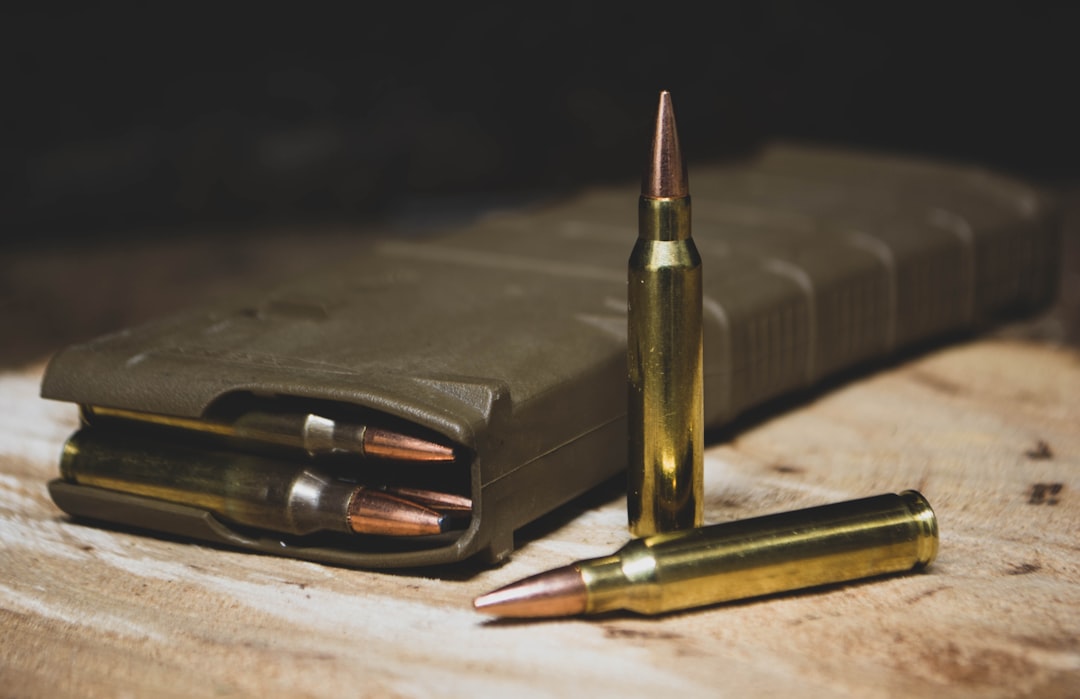
The .25-06 Remington has quietly taken mule deer across the West for over five decades. It delivers flat trajectory, mild recoil, and deadly accuracy when you match the right bullet to the job. The challenge is not whether the cartridge works — it does — but which factory load gives you the best balance of speed, energy retention, and terminal performance from 50 yards to 400.
Mule deer hunts demand different things from your ammunition depending on where you hunt. Glassing ridges in Nevada's high desert requires a bullet that bucks wind and holds velocity. Thick timber in Idaho's breaks needs reliable expansion at close range. Public land hunts across Colorado and Wyoming often present both scenarios on the same day. The loads below cover the full spectrum.
Why the .25-06 Still Works for Mule Deer
The .25-06 pushes a .257-inch diameter bullet to velocities that compete with magnums while generating less recoil than a .270 Winchester. A 110-grain bullet leaves the muzzle around 3,200 fps. A 120-grain load runs closer to 3,000 fps. Both carry enough energy to anchor a mule deer buck cleanly past 300 yards when you place the shot.
The cartridge's efficiency shows up in wind deflection numbers. A 110-grain AccuBond drifts about 8 inches in a 10 mph crosswind at 400 yards. That is roughly 20 percent less drift than a comparable .243 Winchester load. For hunters who glass and stalk in open country, that difference translates to more margin for error when the wind gusts during your shot window.
Recoil stays manageable in typical hunting rifles. Most .25-06 rifles weigh between 7 and 8 pounds scoped. Felt recoil runs around 10 to 12 foot-pounds depending on rifle weight and load. That is enough to stay on target through the scope during recoil and spot your hit or miss. New shooters and younger hunters handle it without flinching.
Best All-Around Factory Loads
These three factory loads cover the widest range of mule deer hunting situations without compromise.
Federal Premium 115-Grain Nosler Partition
The Partition remains the gold standard for controlled expansion. The front core mushrooms on impact while the rear core stays intact for deep penetration. Federal's 115-grain load runs about 2,990 fps from a 24-inch barrel. It shoots flat enough for long shots and hits hard enough for quartering angles through the shoulder. Expect consistent sub-MOA accuracy in most rifles and reliable performance on everything from whitetails to elk.
Hornady Precision Hunter 110-Grain ELD-X
The ELD-X combines match-grade accuracy with a heat shield tip that resists deformation in flight. Hornady loads this bullet to 3,150 fps. The high ballistic coefficient (.465) keeps velocity up and wind drift down past 400 yards. The bullet expands reliably at impact velocities as low as 1,600 fps, which gives you a working range past 500 yards if conditions and skill allow. This is the load for spot-and-stalk hunters who need pinpoint accuracy at distance.
Winchester Deer Season XP 117-Grain Extreme Point
Winchester designed this polymer-tipped bullet specifically for whitetails and mule deer. The large diameter polymer tip initiates rapid expansion even at lower velocities. Velocity runs around 2,990 fps. The bullet performs best inside 300 yards where it delivers dramatic wound channels and short blood trails. It is less wind-resistant than the ELD-X but costs less per box and shoots accurately enough for most hunting situations.
Long-Range Precision Loads
If your hunt involves long glassing sessions and shots beyond 300 yards, these loads prioritize ballistic efficiency and downrange energy.
Browning BXR 115-Grain Rapid Expansion
Browning's BXR line uses a polymer matrix tip designed for rapid expansion. The 115-grain .25-06 load runs 3,000 fps and maintains over 1,200 foot-pounds of energy at 400 yards. The bullet's boat tail design and sleek profile minimize wind drift. It groups around .75 MOA in most rifles. This load works for hunters who spend most of their time above timberline where shots come in the 250 to 400 yard range.
Nosler Trophy Grade 115-Grain Ballistic Tip
Nosler loads the Ballistic Tip to 3,060 fps in this configuration. The tapered jacket and polymer tip produce explosive expansion on deer-sized game. Some hunters worry about over-expansion, but the Ballistic Tip performs well on mule deer when you avoid heavy shoulder bones on close shots. The real advantage shows up past 300 yards where the bullet's .453 BC keeps it supersonic and stable. Accuracy averages around .5 to .75 MOA.
Heavy-for-Caliber Penetrators
Quartering shots through thick shoulders or steep downhill angles call for bullets that hold together and drive deep.
Federal Fusion 120-Grain
Fusion welds the core to the jacket electrochemically, which eliminates core-jacket separation. The 120-grain .25-06 load runs 2,900 fps and produces some of the deepest penetration in the caliber. It is not the flattest-shooting option, but it anchors deer reliably when the angle is bad or you punch through brush. Recoil stays mild and accuracy runs around 1 MOA in most hunting rifles. This is the load for timber hunters and anyone who wants maximum margin for error on shot placement.
Remington Core-Lokt 120-Grain
The Core-Lokt has killed more deer than any bullet in history. Remington's 120-grain .25-06 load runs about 2,990 fps. The tapered copper jacket controls expansion and the lead core stays locked in place through bone and tissue. It does not expand as dramatically as polymer-tipped bullets, but it penetrates deeper and leaves an easy blood trail. Accuracy runs around 1 to 1.5 MOA. The real selling point is availability and price. You can find Core-Lokt in almost any sporting goods store for less than premium loads.
Free to join
Download mobile app
- Detailed draw odds
- Point tracking
- Deadline reminders
- 18 states covered


Free to join
Download mobile app
- Detailed draw odds
- Point tracking
- Deadline reminders
- 18 states covered
Free to join
Download mobile app
- Detailed draw odds
- Point tracking
- Deadline reminders
- 18 states covered

What Bullet Weight Works Best
Bullet weight in the .25-06 breaks down into three practical ranges: 100 to 110 grains for speed and flat trajectory, 115 to 117 grains for all-around performance, and 120 grains for penetration and wind resistance.
Light bullets (100–110 grains) run fast and shoot flat. They work well for open-country shots where you can pick your angle and avoid heavy bone. Wind deflection is slightly higher than heavier bullets, but the difference is minor inside 350 yards. Recoil is the lightest in this weight class.
Mid-weight bullets (115–117 grains) balance speed and penetration. They retain velocity better than lighter bullets and expand reliably across a wider range of impact velocities. This is the weight range most hunters should start with unless they have a specific reason to go lighter or heavier.
Heavy bullets (120 grains) sacrifice some velocity for deeper penetration and better wind performance. They are the best choice for timber hunting, bad angles, or hunters who want maximum insurance on shot placement. The trajectory difference compared to lighter bullets is measurable but not dramatic inside 300 yards.
How TAGZ Helps You Plan Your Mule Deer Hunt
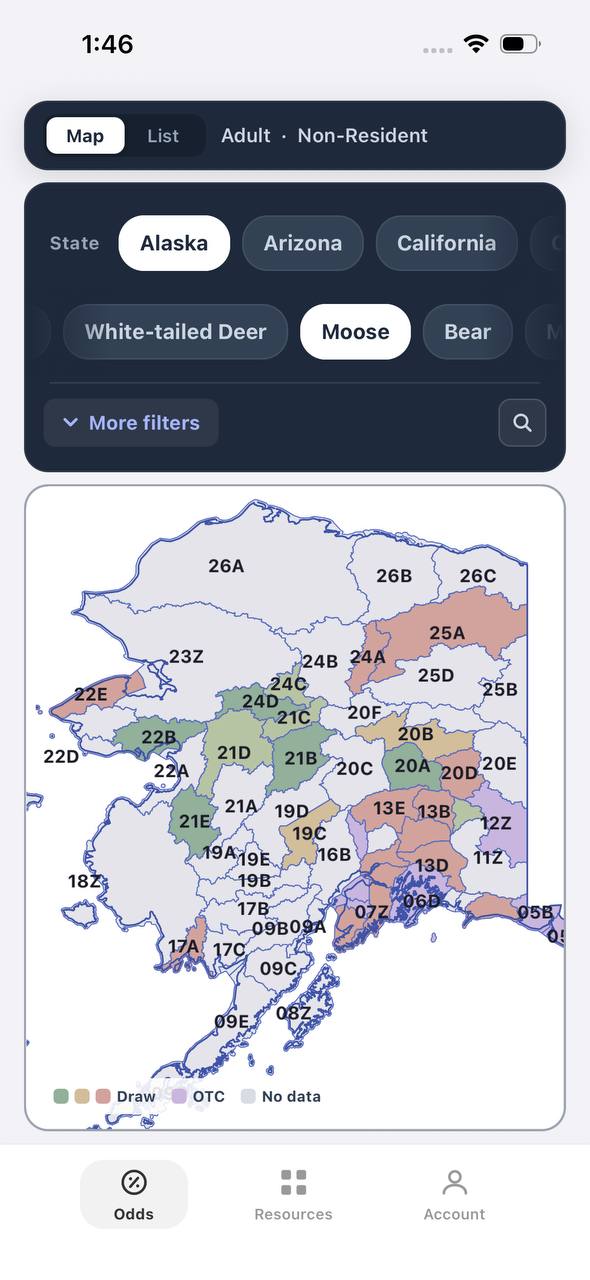
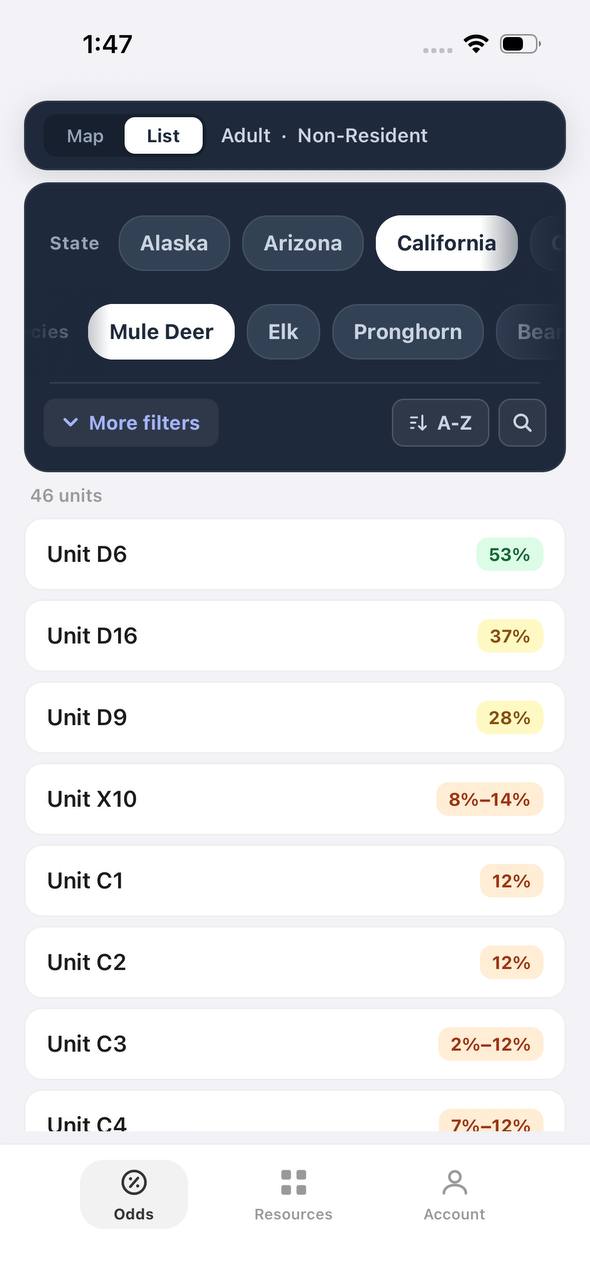
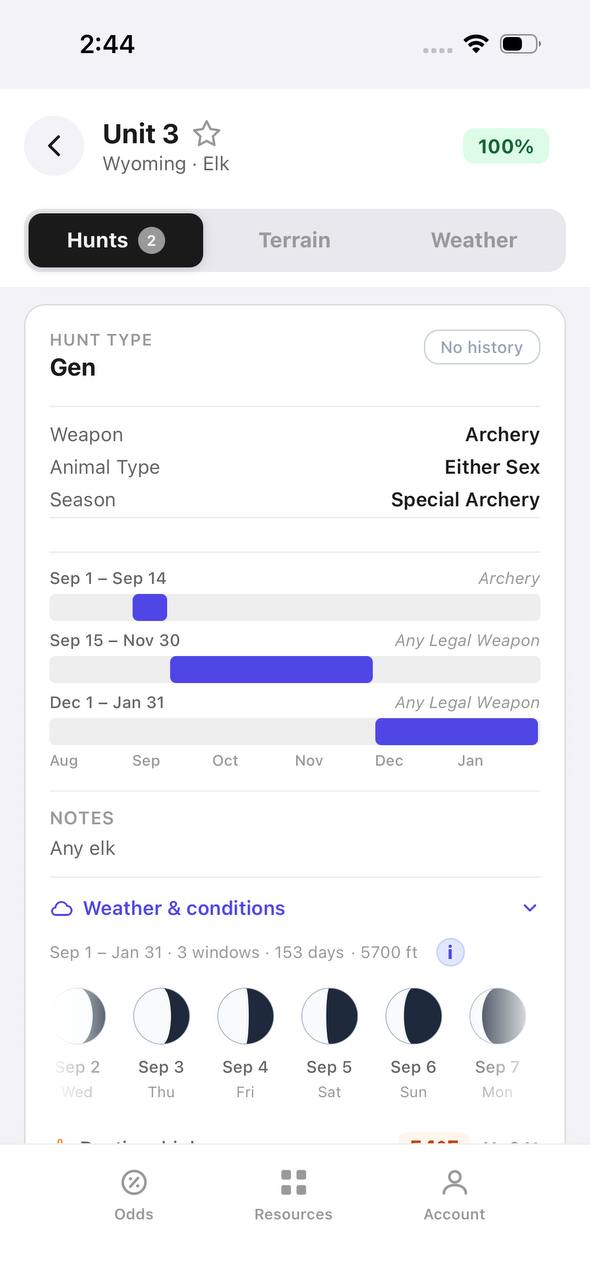
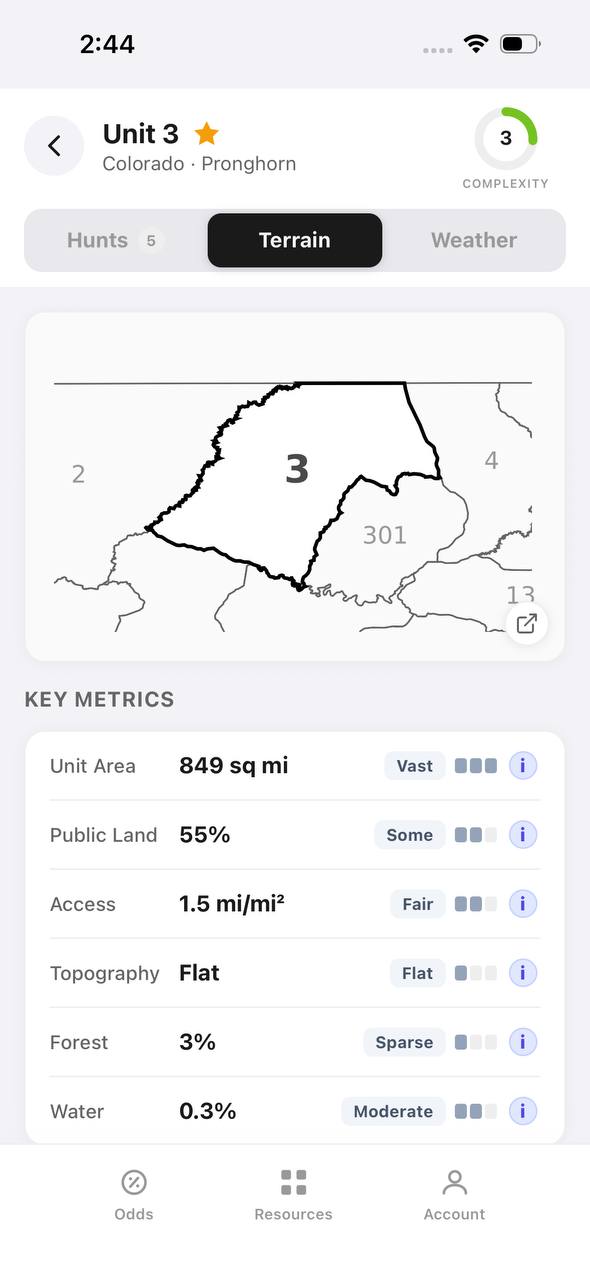
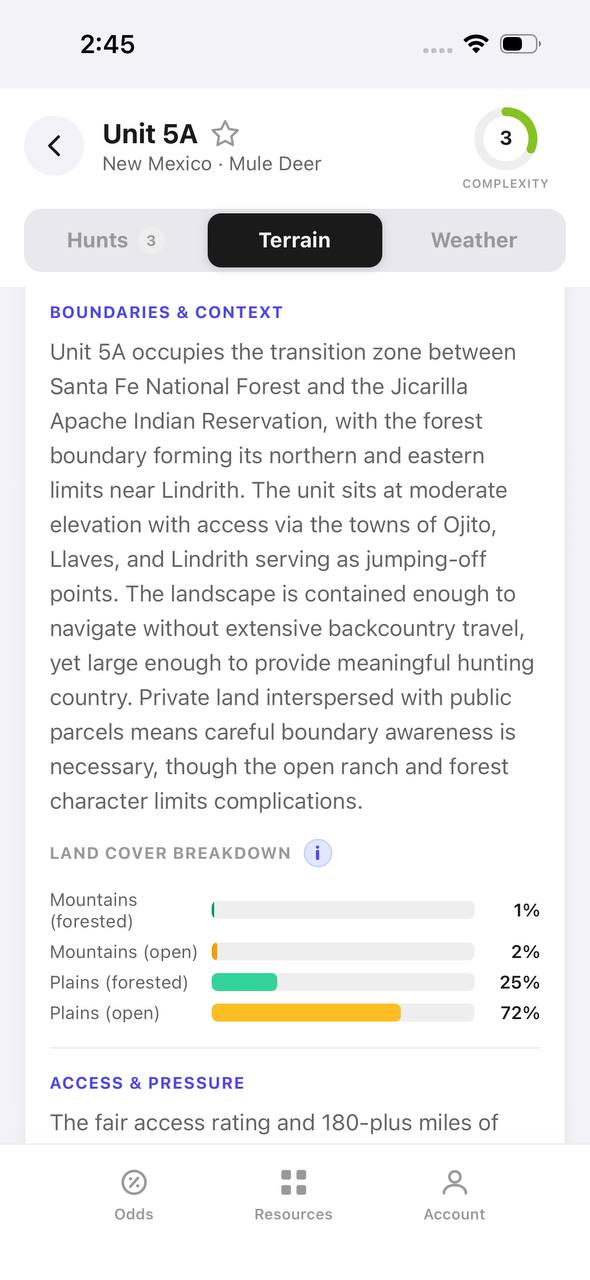
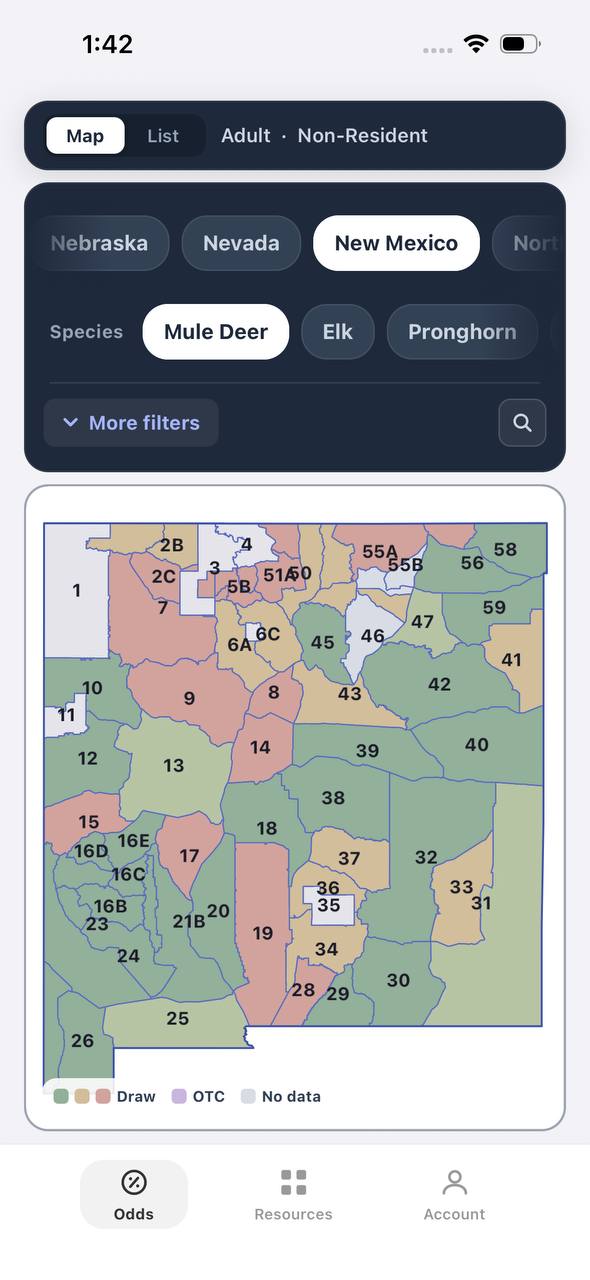
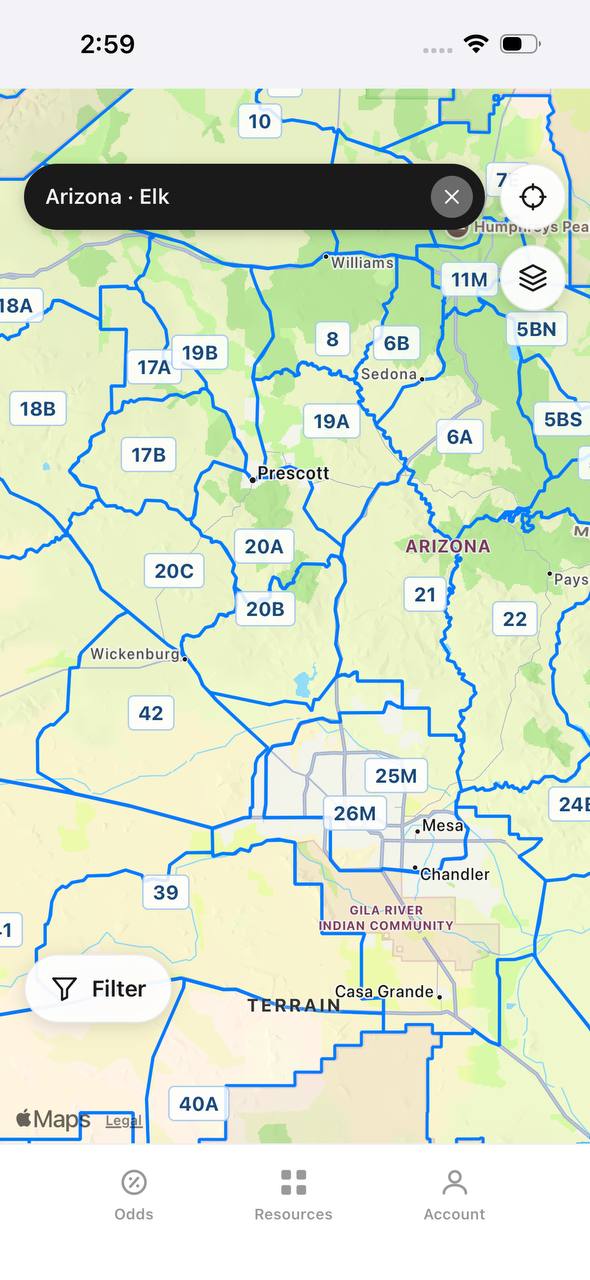
Selecting the right ammunition is one decision. Drawing the right tag in a state where you can actually use that ammunition is another. TAGZ helps you compare mule deer units side by side using terrain maps, unit boundaries, and historical draw data. Track your preference points and bonus points across multiple states so you never miss a draw deadline.
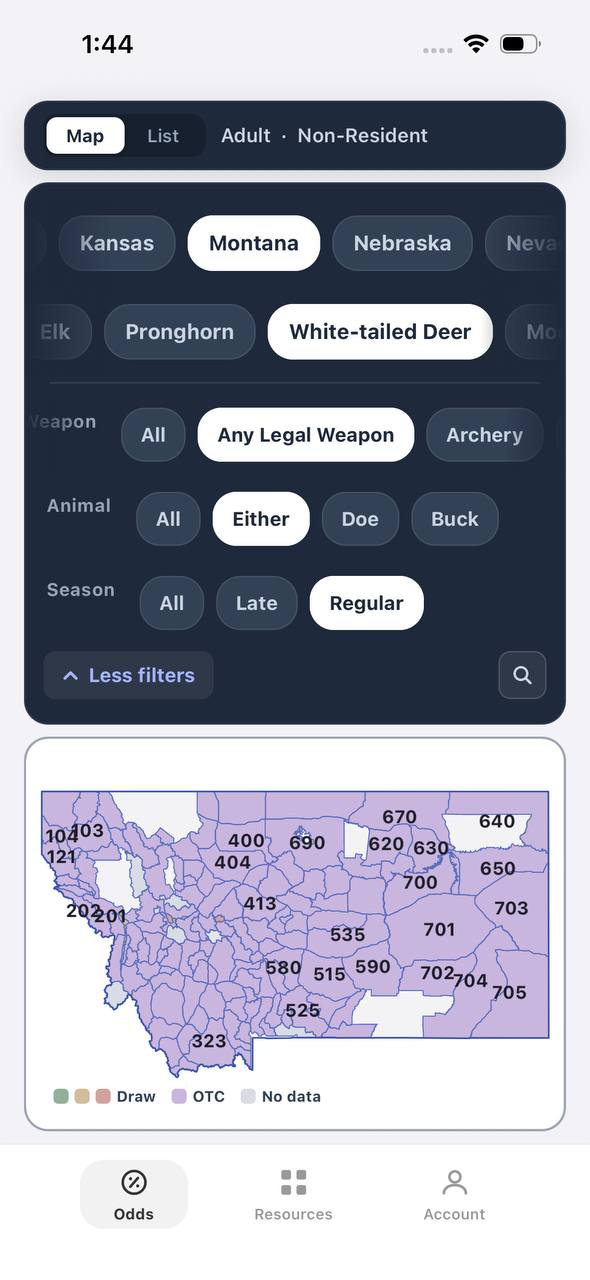
Whether you are chasing OTC tags in Colorado or planning a trophy limited-entry hunt in Nevada, TAGZ gives you the tools to make smarter decisions before you ever step into the field. Filter units by weapon type, season dates, public land access, and draw odds. The platform shows you exactly what it takes to draw a tag and where to focus your applications based on your points and hunting style.
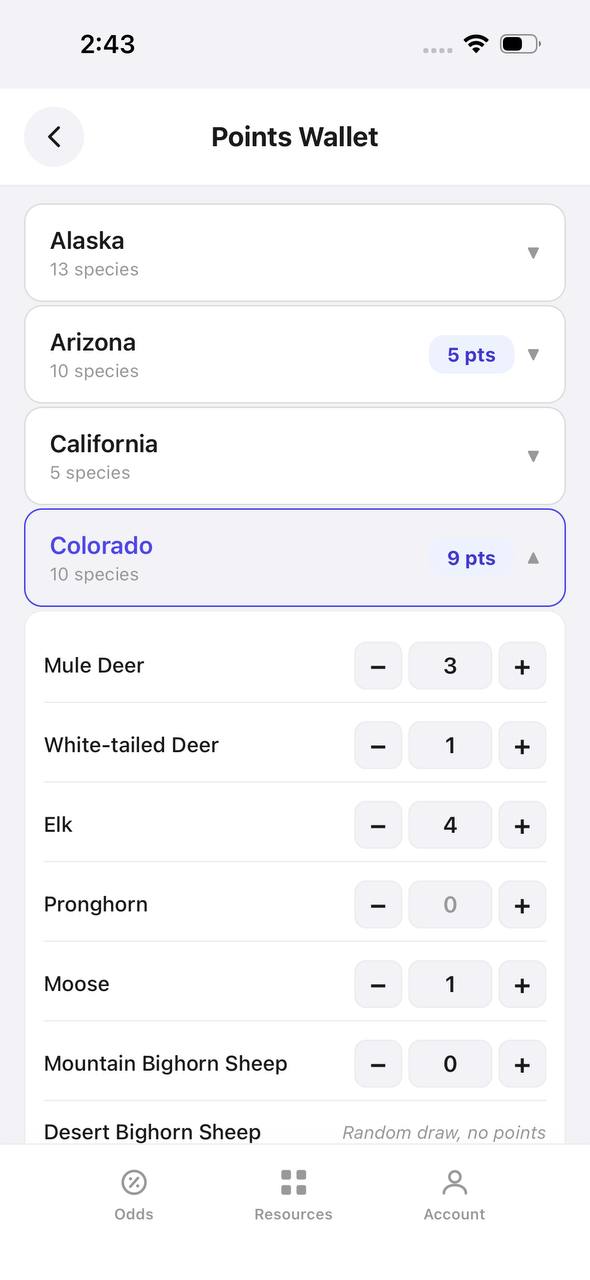
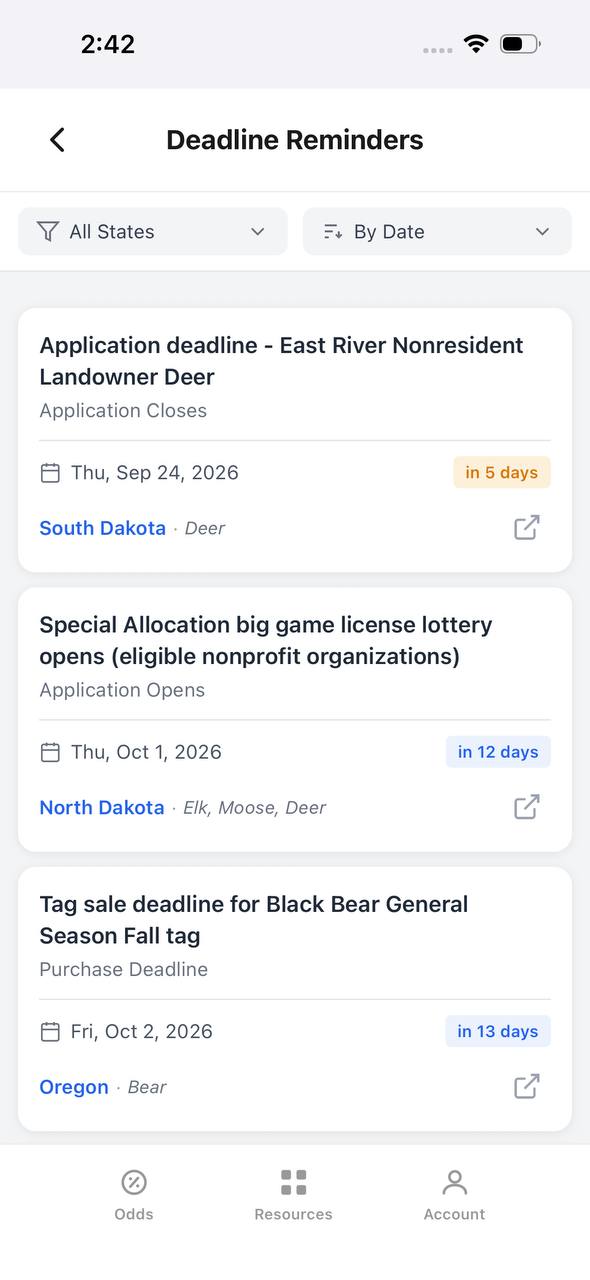
Mule deer draw systems vary by state. Some states like Wyoming and Montana use preference points that guarantee you will eventually draw. Others like Nevada and Arizona use bonus points that only improve your odds. TAGZ tracks it all in one place and sends reminders before application deadlines. You can see which units had the best buck-to-doe ratios last season and compare harvest success rates across multiple years.
Matching Ammo to Your Rifle
Every rifle shoots different ammunition differently. The loads above represent proven performers, but your rifle might prefer one over another.
Start by testing three to five different loads at 100 yards. Shoot three-round groups with each load and measure group size. Most hunting rifles will shoot at least one factory load under 1 MOA. If your rifle groups everything around 1.5 to 2 MOA, the problem is likely the rifle or scope, not the ammunition.
Once you find a load that groups well, verify zero at 200 yards and confirm your trajectory data matches the manufacturer's ballistic table. Atmospheric conditions affect velocity, so run your actual muzzle velocity through a ballistic calculator if you plan to shoot past 300 yards. Most hunting situations do not require that level of precision, but it matters when you are shooting across a canyon in thin air at 8,000 feet.
Clean your rifle after testing and before your hunt. Copper fouling builds up faster with lighter bullets at high velocity. A clean bore improves accuracy and reduces the chance of a flier on your first cold-bore shot.
Shot Placement Matters More Than Bullet Choice
The best ammunition in the world will not fix a bad shot. Mule deer vitals measure roughly 10 inches across. At 300 yards, a 1 MOA rifle puts every shot within a 3-inch circle if you do your part. That gives you margin for slight wind calls or minor elevation errors.
Most mule deer are lost due to poor shot placement, not bullet failure. A 110-grain Ballistic Tip through the lungs kills just as quickly as a 120-grain Partition. A 120-grain Partition through the guts results in a long tracking job and possibly a lost animal. Practice from field positions. Shooting off a bench at the range does not prepare you for shooting off a backpack on a steep sidehill with your heart pounding.
Know your maximum effective range before the hunt. That range is determined by your ability to hit a 10-inch circle from field positions, not by how far the bullet retains energy. For most hunters, that range is between 250 and 350 yards. If you cannot consistently hit a paper plate at a given distance in practice, do not take that shot on a live animal.
FAQ — .25-06 Mule Deer Ammo
Is the .25-06 powerful enough for mule deer?
Yes. The .25-06 generates between 1,200 and 1,500 foot-pounds of energy at 400 yards with most hunting loads, which exceeds the minimum threshold for clean kills on deer-sized game. Proper bullet selection and shot placement matter more than raw power.
What is the best bullet weight for .25-06 mule deer hunting?
Most hunters should start with 115 to 117-grain bullets. They balance flat trajectory, wind resistance, and terminal performance across the widest range of hunting scenarios. Go lighter for extreme long range in open country or heavier for timber hunting and bad shot angles.
How far can you shoot a mule deer with a .25-06?
The cartridge remains effective past 400 yards with the right load and shooter skill. Most ethical hunting shots should occur inside 350 yards where you can reliably hit the vitals from field positions. Your effective range is determined by your ability to place the shot, not the cartridge's maximum capability.
Does the .25-06 have enough energy for elk?
The .25-06 is legal for elk in most states but sits at the minimum end of acceptable cartridges for animals that size. Stick to deer and pronghorn unless you are an experienced shot-placer willing to pass on anything but perfect broadside presentations. Better elk cartridges exist.
Which factory load is most accurate in the .25-06?
Hornady Precision Hunter and Nosler Trophy Grade consistently produce sub-MOA groups in most rifles. Federal Premium loads with Nosler bullets also shoot very accurately. Every rifle is different, so test multiple loads to find what your specific rifle prefers.
Can you use .25-06 for long-range mule deer hunting?
Yes. High-BC bullets like the Hornady 110-grain ELD-X and Nosler 115-grain Ballistic Tip retain velocity and resist wind drift well enough for ethical shots past 400 yards. Make sure you practice extensively at distance and verify your ballistic data in field conditions before attempting long shots on game.
Was this article helpful?
Previous
Best Rangefinders for Bowhunters in 2025: Expert Picks & Buying Guide
Choosing the right rangefinder can make or break your bowhunting success. We break down the top models for 2025, what features actually matter in the field, and how to pick the best rangefinder for your hunting style and budget.
Related
Hornady Outfitter Ammo Review: Is It Worth the Premium for Western Hunts?
Hornady Outfitter ammunition promises extreme weather reliability and consistent terminal performance across North America's toughest hunts. This review breaks down real-world field performance, accuracy testing, and whether the nickel-plated premium justifies the cost for backcountry hunters.
Next
Bear Behavior in 2026: What Western Hunters Need to Know
Understanding bear behavior patterns, seasonal movements, and threat assessment helps hunters stay safe and successful in bear country. Learn how recent population trends and habitat changes are shaping 2026 encounters.