Bear Behavior in 2026: What Western Hunters Need to Know
Western hunters operating in bear country face evolving challenges as grizzly and black bear populations expand across Montana, Wyoming, Idaho, Colorado, and Washington. Understanding bear behavior — from feeding patterns to territorial aggression — directly impacts your safety and hunt success in 2026.
Bear populations continue their recovery trajectory. Grizzlies now occupy traditional ranges in the Greater Yellowstone and Northern Continental Divide ecosystems while pushing into new territories in central Idaho and northwestern Montana. Black bears remain widespread across forested mountain states, with densities highest in Idaho, Montana, and Colorado's high country. Both species exhibit predictable seasonal behaviors, but individual encounters remain inherently unpredictable.
Spring Emergence and Feeding Patterns
Bears exit dens between March and May depending on elevation and latitude. Males emerge first, followed by solitary females, then sows with cubs. Post-denning bears focus obsessively on calorie intake after months of dormancy.
Spring bear hunters encounter animals feeding on winter-killed ungulates, emerging vegetation, and spawning fish. Grizzlies actively seek elk and moose carcasses, while black bears focus on grasses, forbs, and emerging shoots. Both species may prey on newborn elk and deer calves through late May.
Hyperphagia — the intense feeding drive — makes spring bears more predictable but also more defensive around food sources. A bear on a carcass represents the highest-risk encounter scenario. Always glass carcasses from distance and avoid approaching any dead animal without thoroughly scanning the surrounding timber.
Summer Movement and Territory
June through August sees bears dispersing across home ranges that span 50 to 300 square miles for black bears and 200 to 500 square miles for grizzlies. Males travel constantly, while females with cubs maintain smaller territories near reliable food sources.
Summer bears feed on vegetation, insects, and opportunistic protein. Army cutworm moths in alpine talus fields attract both species to high elevations in Wyoming and Montana. Berry crops — huckleberries, serviceberries, chokecherries — become critical food sources from July onward.
Archery elk hunters in August and September operate during peak bear activity. Calling elk brings bears. Bugling mimics distress sounds that attract predators, and meat poles near camps create attractants. Store all food, toiletries, and game meat in bear-resistant containers or hang them 12 feet high and 6 feet from tree trunks.
Fall Hyperphagia and Aggression
September through November marks hyperphagia's peak intensity. Bears consume 20,000 calories daily, feeding 20 hours per day to build fat reserves for denning. This desperation-driven feeding creates the most dangerous period for hunter-bear encounters.
Bears become aggressive around any concentrated food source. Gut piles, meat poles, and even hunter camps with minimal food odor can trigger confrontations. Rifle hunters packing out elk quarters in grizzly country face genuine risk, especially in low-visibility timber.
Bear behavior during fall hunts demands constant vigilance. Make noise in thick cover. Glass ahead before entering dark timber. Never leave meat unattended on the mountain overnight. If you must leave a kill temporarily, hang the meat if possible or move it 100-plus yards from the kill site to separate gut pile scent from your meat.
Threat Assessment and Response
Not all bear encounters escalate to charges, but recognizing threat indicators prevents dangerous situations. A bear that sees you and moves away poses no threat. A bear that approaches while huffing, popping jaws, or slapping the ground is warning you off. A bear that lowers its head and pins its ears back may charge.
Defensive charges — protecting cubs or food — usually stop short or veer off. Predatory approaches — rare but documented — involve silent stalking with intense focus on you as prey. Defensive encounters require you to stand your ground, speak calmly, and avoid sudden movements. Predatory encounters require aggressive response: yell, throw rocks, fight back if attacked.
Carry bear spray in a chest holster, not buried in your pack. Spray works at 25 to 30 feet in calm conditions. Firearms provide backup, but shot placement under stress is difficult. Practice deploying spray with inert canisters before hunting season. The muscle memory may save your life.
Free to join
Download mobile app
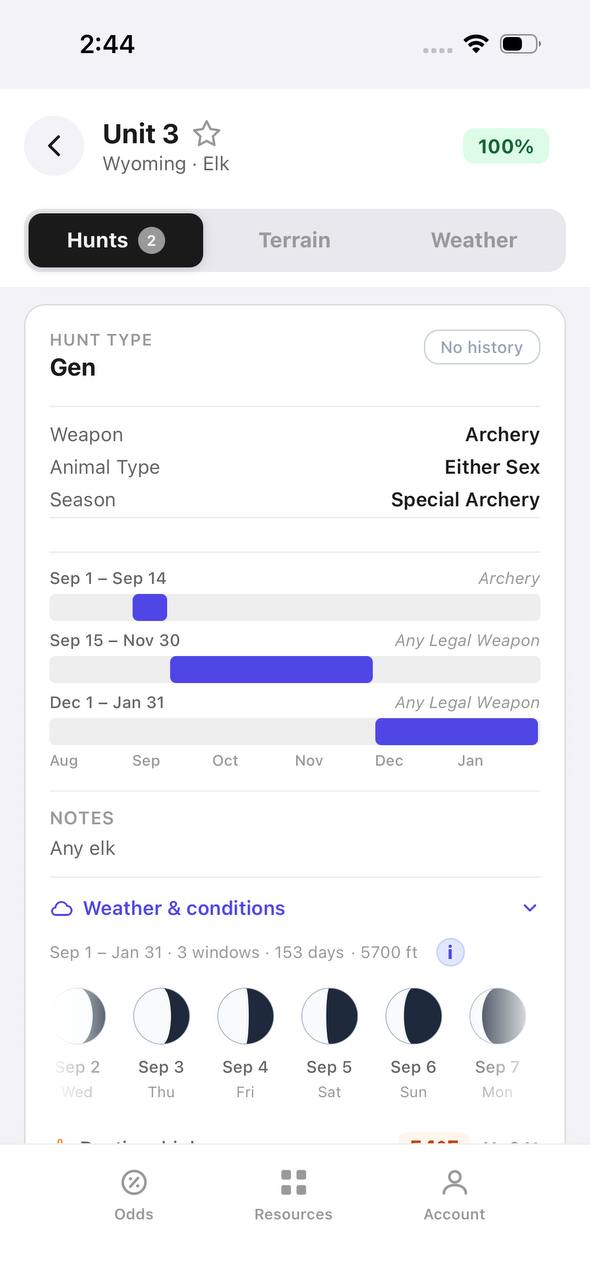
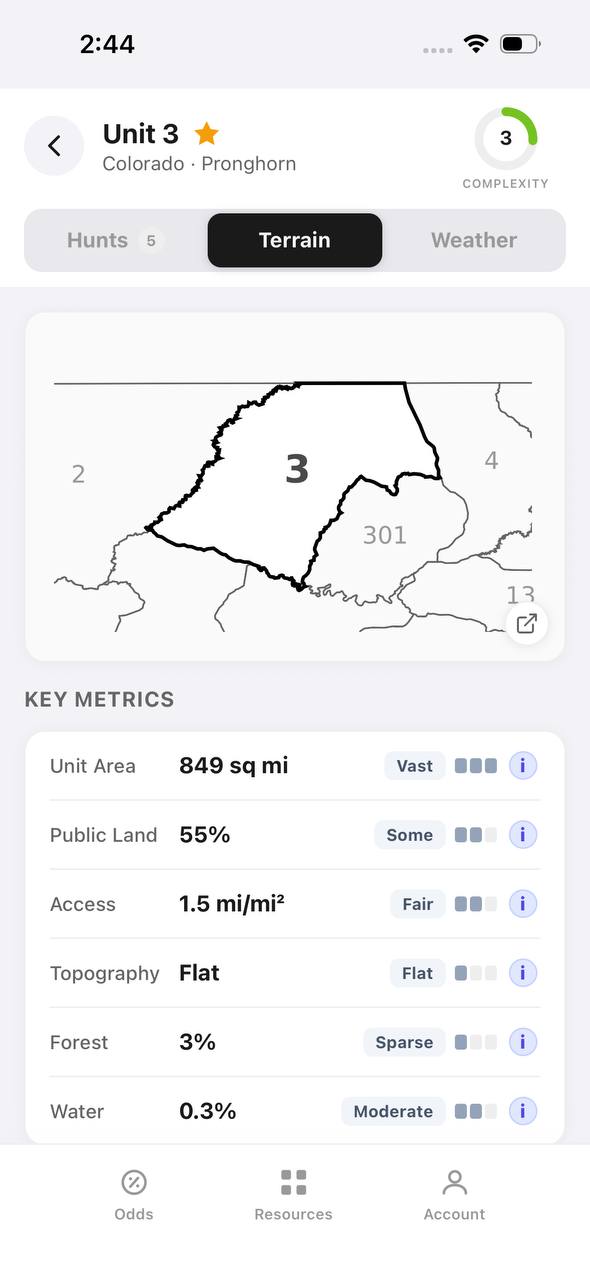
- Detailed draw odds
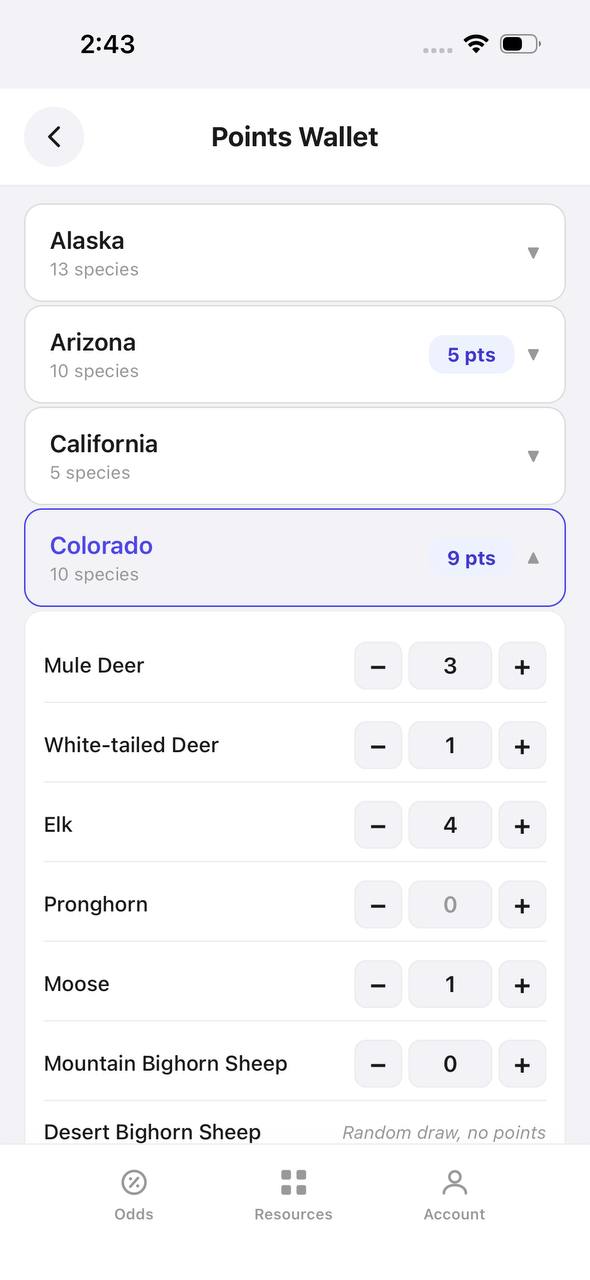
- Point tracking
- Deadline reminders
- 18 states covered

Free to join
Download mobile app
- Detailed draw odds
- Point tracking
- Deadline reminders
- 18 states covered
Free to join
Download mobile app
- Detailed draw odds
- Point tracking
- Deadline reminders
- 18 states covered
Grizzly vs. Black Bear Behavior Differences
Grizzlies defend food sources and cubs more aggressively than black bears. They also claim carcasses — yours included — as their property once they find them. Black bears typically flee from humans unless cornered or protecting cubs. However, black bears account for more total attacks nationwide simply due to higher population densities and human interaction.
Identifying species matters because response strategies differ. If a grizzly attacks defensively, play dead — lie flat, protect your neck, stay still until the bear leaves. If a black bear attacks, fight back immediately. If any bear attacks at night in your tent, fight back regardless of species — that is predatory behavior.
Color alone does not identify species. Black bears range from black to cinnamon to blonde. Grizzlies show shoulder humps, dished facial profiles, and longer claws. When in doubt, assume grizzly and respond accordingly.
Habitat Overlap with Elk and Deer
Bears and ungulates share identical habitat preferences: timbered ridges, avalanche chutes, berry patches, and north-facing slopes with cover and food. Prime elk country is prime bear country. Accept that reality and plan accordingly.
Glass from distance before entering feeding or bedding areas. Thermals and wind shift constantly in mountain terrain, so bears may smell you before you see them. Hunt with a partner when possible — two sets of eyes and voices provide better detection and deterrence.
Pre-rut and rut elk concentrate in predictable locations where bears also hunt. September archery hunters calling bulls should expect bears to investigate. Keep spray accessible while calling. Some hunters call from elevated positions on logs or boulders to improve visibility and reaction time.
Bear Populations by State in 2026
Montana hosts approximately 15,000 black bears and 1,000-plus grizzlies concentrated in the northwest corner and Greater Yellowstone. Wyoming holds 600-plus grizzlies in the northwest and 10,000 black bears statewide. Idaho supports 30,000 black bears and expanding grizzly populations in the Panhandle and Selway-Bitterroot regions.
Colorado's black bear population exceeds 20,000 with densities highest in the San Juan Mountains, White River country, and northern Front Range. Washington holds 25,000 black bears and small grizzly populations in the North Cascades. Grizzly numbers remain stable in 2026 with continued range expansion into historical territories.
These population trends mean more bear encounters for hunters across all Western states. Adapt your backcountry protocols to match this reality. What worked a decade ago when bear densities were lower no longer provides adequate safety margins.
Free to join
Download mobile app
- Detailed draw odds
- Point tracking
- Deadline reminders
- 18 states covered
Free to join
Download mobile app
- Detailed draw odds
- Point tracking
- Deadline reminders
- 18 states covered
Free to join
Download mobile app
- Detailed draw odds
- Point tracking
- Deadline reminders
- 18 states covered
Practical Field Tactics for Bear Country
Make noise in thick cover — talk, clap, whistle every 50 yards. Bears usually avoid humans when given warning. Glass heavily before moving into bedding areas, dark timber, or berry patches. Wind direction matters more than silence in bear country.
Hunt with bear spray and know how to use it. Practice drawing from the holster with your eyes closed. Two-second delays matter at 30 feet when a grizzly covers ground at 35 mph. Spray should be your primary defense, not your backup plan.
Avoid hunting alone in grizzly country, especially during September and October hyperphagia. Solo hunters account for disproportionate bear attack statistics. Partners provide vigilance, backup, and critical response capacity if an encounter escalates.
Never approach a carcass without thorough glassing and wind-checking. Bears claim carcasses aggressively and defend them violently. If you find a gut pile disturbed or a kill site torn apart, leave immediately. That bear is nearby and considers the area its territory.
Night Protocols and Camp Safety
Bears become nocturnal in areas with heavy human activity but maintain day-and-night feeding during hyperphagia. Set camps 100-plus yards from cooking areas. Cook and eat away from sleeping areas. Store all scented items — food, toothpaste, deodorant, game meat — in bear canisters or hung food bags.
Never bring food into tents. Even small amounts of gum or energy bar wrappers create attractant scent that persists for days. Electric fences work for spike camps where you are staying multiple nights. For one-night camps, focus on scent discipline and proper food storage.
If a bear enters camp at night, make noise immediately. Yell, bang pots, shine lights. Defensive bears usually retreat. If a bear enters your tent or approaches persistently despite noise, deploy spray or shoot. Nighttime tent approaches are predatory behavior requiring aggressive response.
Free to join
Download mobile app
- Detailed draw odds
- Point tracking
- Deadline reminders
- 18 states covered
Free to join
Download mobile app
- Detailed draw odds
- Point tracking
- Deadline reminders
- 18 states covered
Free to join
Download mobile app
- Detailed draw odds
- Point tracking
- Deadline reminders
- 18 states covered
Processing Game Meat in Bear Country
Quarter elk and deer rapidly to minimize time on kill sites. Separate meat from gut piles by 100-plus yards and preferably across terrain features like ridges or drainages. Hang meat 12 feet high if possible. If you cannot hang meat, move it far from the kill site and monitor it.
Never leave meat overnight on the mountain without planning to surrender it to bears. Grizzlies and black bears will claim unattended kills. Montana and Wyoming require hunters to report game losses to bears, and regulations mandate carcass tagging and site abandonment in some grizzly zones.
Bone out meat to reduce pack weight and trips if regulations allow. Fewer trips mean fewer hours in the danger zone around kill sites. Pack out as much meat as possible on the first trip. Returning to a kill site 12 to 24 hours later dramatically increases bear encounter risk.
Understanding Bear Sign and Fresh Activity
Recognize bear sign to assess current activity levels. Fresh scat, tracks in soft soil, torn logs, and overturned rocks indicate recent feeding. Grizzly scat contains ungulate hair, vegetation, and berry seeds during fall. Black bear scat is similar but generally smaller in diameter.
Bear tracks show five toes and claw marks. Grizzly front paw tracks measure 5 to 7 inches wide with prominent claw marks extending 2-plus inches beyond toe pads. Black bear tracks are smaller with shorter claws. Rear paw tracks resemble human footprints but with claw marks.
Bear trees — trunks with claw marks and rubbed bark — mark territory and communication sites. Fresh claw marks and hair indicate active use. Rub trees appear along travel corridors between feeding areas. High densities of sign mean high bear activity. Adjust your movement patterns and noise levels accordingly.
TAGZ Tools for Bear Country Hunt Planning
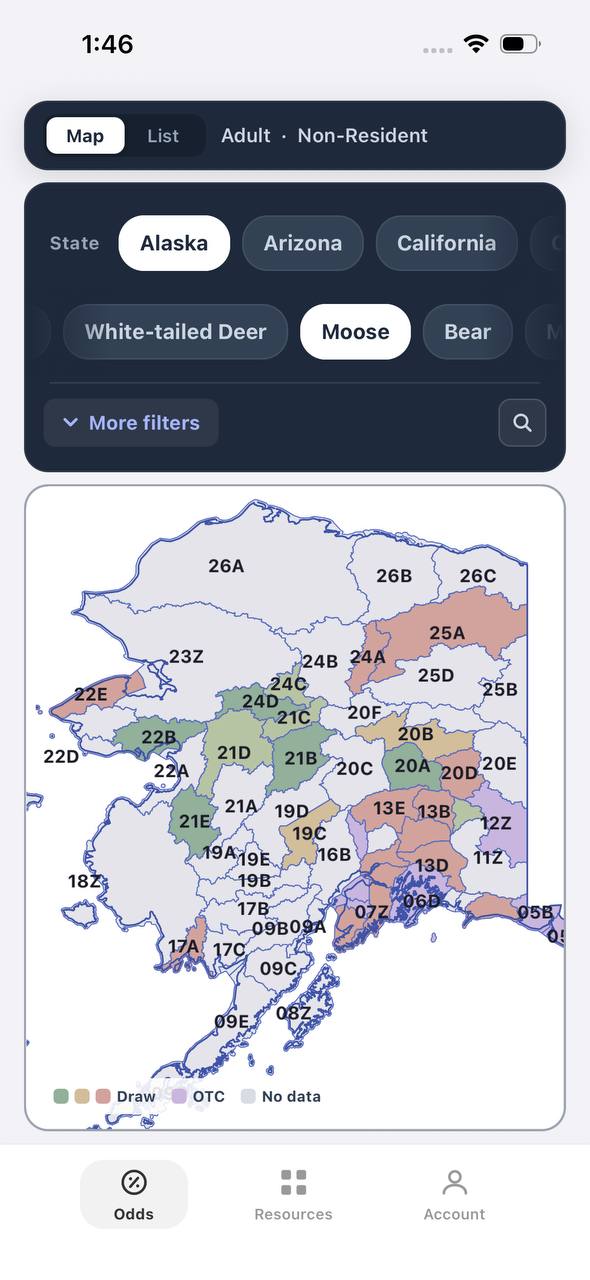
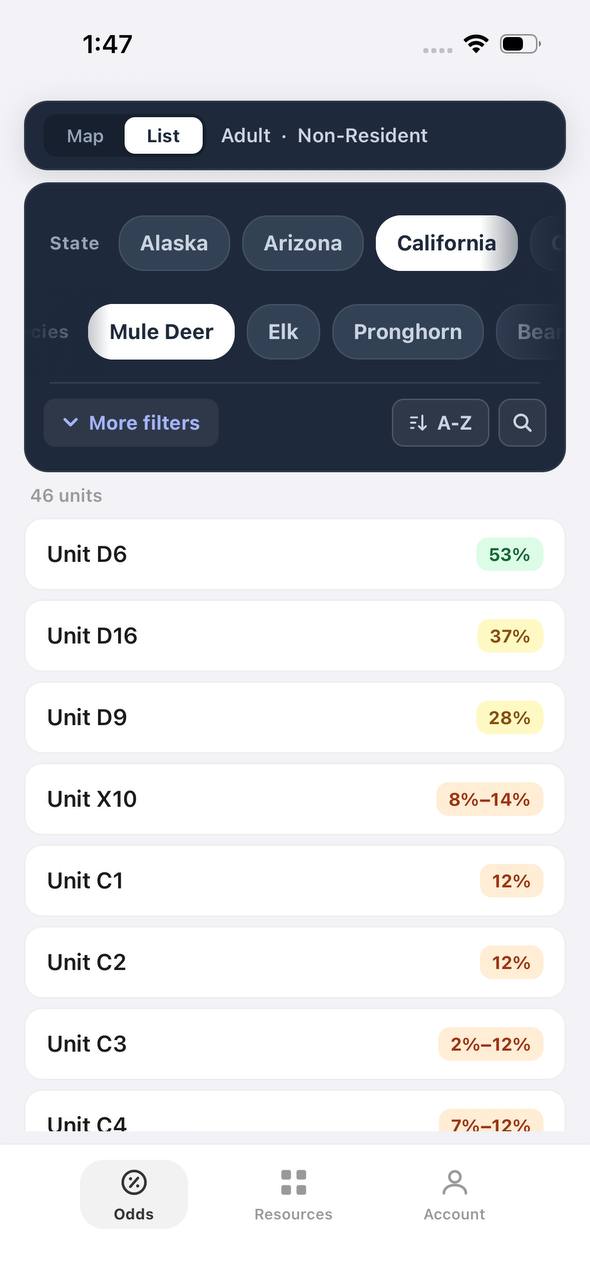
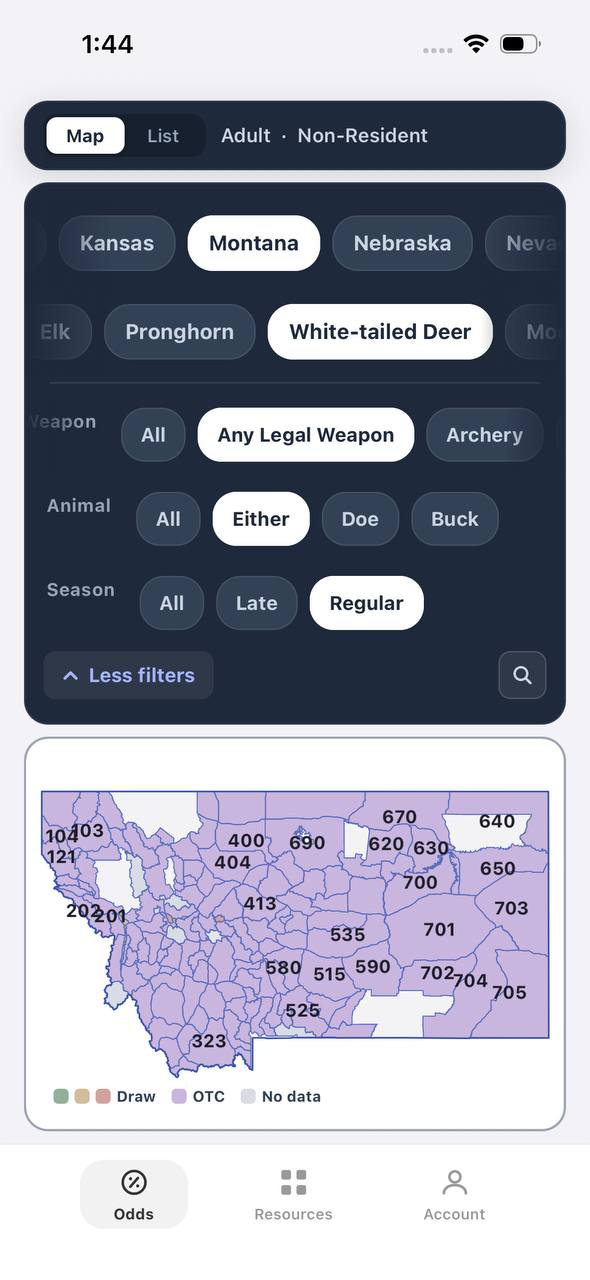
TAGZ helps you research unit-level bear populations and historical activity using terrain maps and public land boundaries. Compare units based on grizzly presence, black bear densities, and harvest statistics from previous seasons. Plan hunts with bear behavior in mind by filtering units for weapon type, season dates, and species.
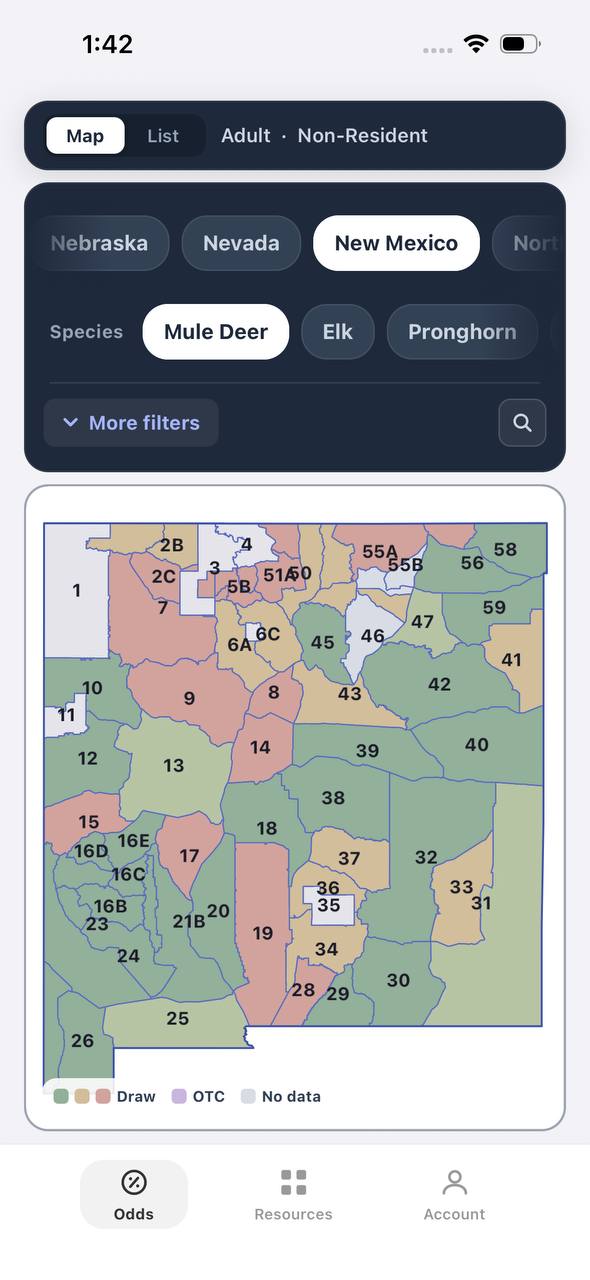
Track draw deadlines and preference points for bear tags in Idaho, Montana, and Wyoming. Monitor bonus point accrual for limited-entry bear units in Colorado. TAGZ simplifies multi-state applications so you never miss a bear hunting opportunity or overlook spring seasons that align with elk scouting trips.
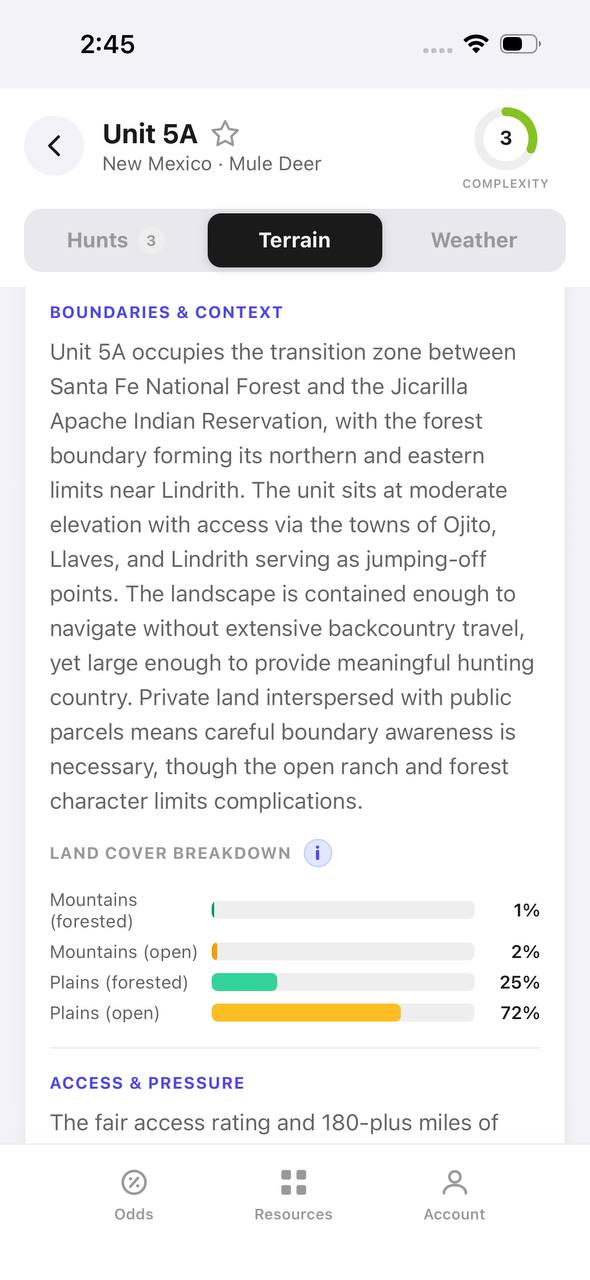
Use TAGZ unit maps to identify campsite locations away from riparian zones and berry patches where bear activity concentrates. Overlay public land boundaries with topographic features to plan approaches that minimize surprise encounters in thick cover. Better pre-hunt planning reduces in-field risk and improves success rates for both bear hunting and bear avoidance during ungulate seasons.
FAQ — Bear Behavior
What time of year are bears most dangerous to hunters? September through November during fall hyperphagia when bears feed 20 hours daily and aggressively defend food sources. Gut piles and meat poles create the highest-risk scenarios.
How do you tell if a bear is being defensive or predatory? Defensive bears huff, pop jaws, slap the ground, and usually charge then veer off or stop. Predatory bears approach silently with intense focus, showing none of the warning behaviors.
Should you play dead or fight back if a bear attacks? Play dead for defensive grizzly attacks — lie flat, protect your neck, stay still. Fight back for all black bear attacks and any nighttime tent attack regardless of species. Predatory behavior requires aggressive response.
Does bear spray actually work on charging bears? Yes. Field studies show 92 percent effectiveness at stopping charges when deployed correctly at 25 to 30 feet. Spray works better than firearms for most hunters under stress because it requires less precision and creates a chemical barrier.
Can you hunt alone safely in grizzly country? Technically yes, but solo hunters face disproportionate attack risk. Partners provide vigilance, deterrence through noise and numbers, and critical backup if an encounter escalates. Avoid solo hunting during fall hyperphagia in known grizzly zones.
What should you do if you find a bear on your elk kill? Leave immediately and do not return. Bears claim carcasses as their territory and will defend them violently. Report the incident to wildlife officials. In many grizzly zones, regulations require you to abandon the meat and tag the carcass for documentation.
Was this article helpful?
Previous
How to Pack a Side-by-Side for an Elk Hunt: Complete Gear and Organization Guide
Learn how to efficiently pack your UTV for elk hunting with proven organization strategies, essential gear lists, and weight distribution tips that maximize storage while keeping critical equipment accessible in the backcountry.
Related
Best Rangefinders for Bowhunters in 2025: Expert Picks & Buying Guide
Choosing the right rangefinder can make or break your bowhunting success. We break down the top models for 2025, what features actually matter in the field, and how to pick the best rangefinder for your hunting style and budget.
Next
Emergency Communications in the Backcountry: Satellite Messengers, PLBs, and When to Use Them
Backcountry emergencies happen fast. Learn which satellite communication devices work best for western hunters, how to use them effectively, and why having a backup plan can save your life when cell service disappears.