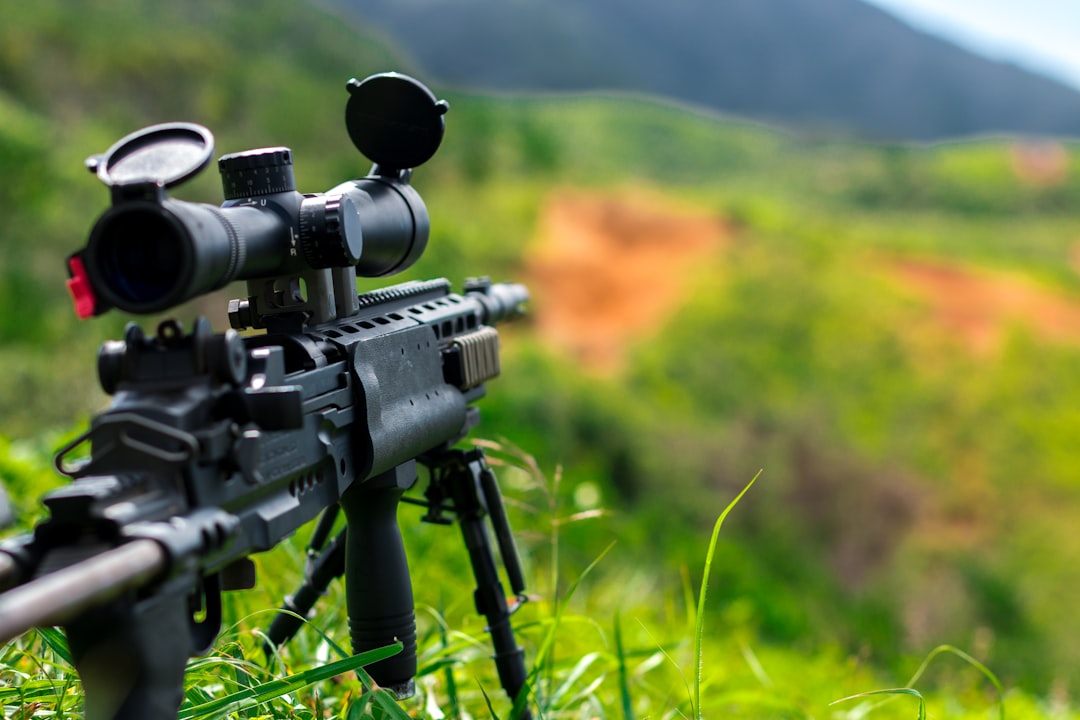
6 Christensen Arms Rifles Every Western Hunter Should Consider
Christensen Arms has earned a reputation among western hunters for building rifles that balance precision, durability, and weight savings without the custom-shop price tag. Whether you are glassing ridges for mule deer in Wyoming or packing into Colorado's high country for elk, the right rifle can make the difference between a successful hunt and a missed opportunity. We have tested and hunted with Christensen rifles across multiple seasons and terrain types. Here are six models that consistently deliver for western big-game hunters.
Ridgeline — The Backcountry Standard
The Ridgeline is Christensen's flagship hunting rifle and the model most western hunters know by name. It weighs 6.3 pounds in standard configuration thanks to a carbon fiber-wrapped barrel and an aircraft-grade aluminum chassis paired with a carbon fiber stock. That weight savings matters on day five of a backcountry elk hunt when you are climbing switchbacks at 10,000 feet.
The Ridgeline is chambered in all the calibers western hunters rely on — 6.5 Creedmoor, .270 Winchester, 7mm Remington Magnum, .300 Winchester Magnum, and .28 Nosler among others. The carbon fiber barrel resists heat buildup better than traditional steel, so your zero holds through multiple shots when a bull steps out at last light. The stock features flush-mount sling swivels and a removable side-mounted Picatinny rail for attaching a bipod without adding permanent weight.
Christensen guarantees sub-MOA accuracy out of the box. That claim holds up in the field — we have consistently printed half-MOA groups at 100 yards with factory match ammunition. The trigger breaks clean at 2.5 to 3.5 pounds with minimal overtravel. For hunters who prioritize accuracy and packability over budget concerns, the Ridgeline delivers.
Mesa — Best Value for the Money
The Mesa offers Christensen performance at a price point that makes sense for hunters who want a dependable rifle without the carbon fiber premium. It uses a stainless steel barrel instead of carbon fiber and a traditional fiberglass stock instead of carbon. The result is a rifle that weighs around 6.5 to 7 pounds depending on caliber and still shoots sub-MOA groups.
Where the Mesa shines is versatility. It is available in short-action and long-action chamberings from .243 Winchester up to .300 Winchester Magnum. The stock comes in multiple color options including tungsten cerakote and burnt bronze. The barrel is hand-lapped and free-floated, and the action is blueprinted and trued like Christensen's premium models.
For hunters who spend most of their time hunting from tree stands, glassing from ridges, or making shorter backcountry trips where an extra pound does not matter, the Mesa is an excellent choice. It is also a solid platform for hunters who want to add their own custom touches — swapping stocks, installing a muzzle brake, or upgrading the trigger — without modifying a $3,000 rifle.
Traverse — Lightweight Precision Meets Tactical Features
The Traverse bridges the gap between a dedicated hunting rifle and a long-range precision platform. It shares the Ridgeline's carbon fiber barrel and lightweight chassis but adds features that appeal to hunters who shoot beyond 400 yards or need suppressor-ready options.
The most notable difference is the Traverse's straight-taper barrel profile, which improves long-range ballistics and heat dissipation. The rifle comes standard with a threaded muzzle and a match-grade chamber. The stock is fully adjustable for length of pull and comb height, which matters when you are prone behind a rock trying to settle a crosshair on a bull elk at 550 yards.
Weight sits around 7 to 7.5 pounds depending on barrel length and caliber. That is heavier than the Ridgeline but lighter than most long-range hunting rifles. The Traverse is available in popular western cartridges including 6.5 PRC, .280 Ackley Improved, 7mm Remington Magnum, and .300 PRC. If you hunt units where long shots are common — Nevada pronghorn, Wyoming mule deer, or open-country Montana elk — the Traverse gives you the accuracy and stability to make ethical shots at extended range.
Ridgeline FFT — Ultralight Without Compromise
The Ridgeline FFT (Flash Forged Technology) is Christensen's lightest production hunting rifle. It weighs just over 5 pounds in most configurations — light enough that you barely notice it on your shoulder during all-day glassing sessions or steep ascents above treeline.
The FFT uses Christensen's proprietary flash-forged carbon fiber stock, which is lighter and stiffer than traditional carbon fiber layups. The barrel is a carbon fiber wrap around a match-grade stainless core. The bolt is fluted and skeletonized to shave ounces without sacrificing strength. Even the magazine follower is made from lightweight polymer.
Despite the weight savings, the FFT maintains sub-MOA accuracy and handles recoil well for its weight class. The stock features a raised comb and a vertical grip angle that promotes consistent cheek weld and trigger control. Flush-cup sling mounts keep the rifle snag-free when moving through timber or climbing over deadfall.
The FFT is ideal for hunters chasing mountain goats, bighorn sheep, high-country mule deer, or backcountry elk in steep terrain where every ounce matters. It is available in calibers ranging from 6.5 Creedmoor up to .300 Winchester Magnum. If you have ever carried a traditional nine-pound rifle on a sheep hunt, the FFT feels like cheating.
Free to join
Download mobile app
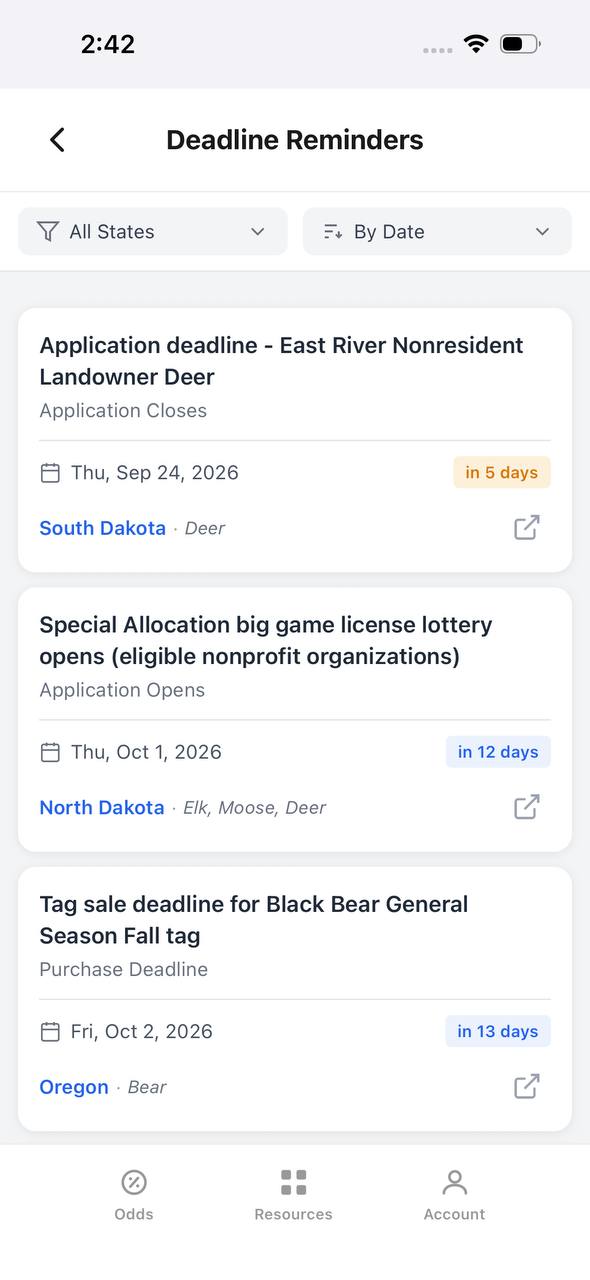
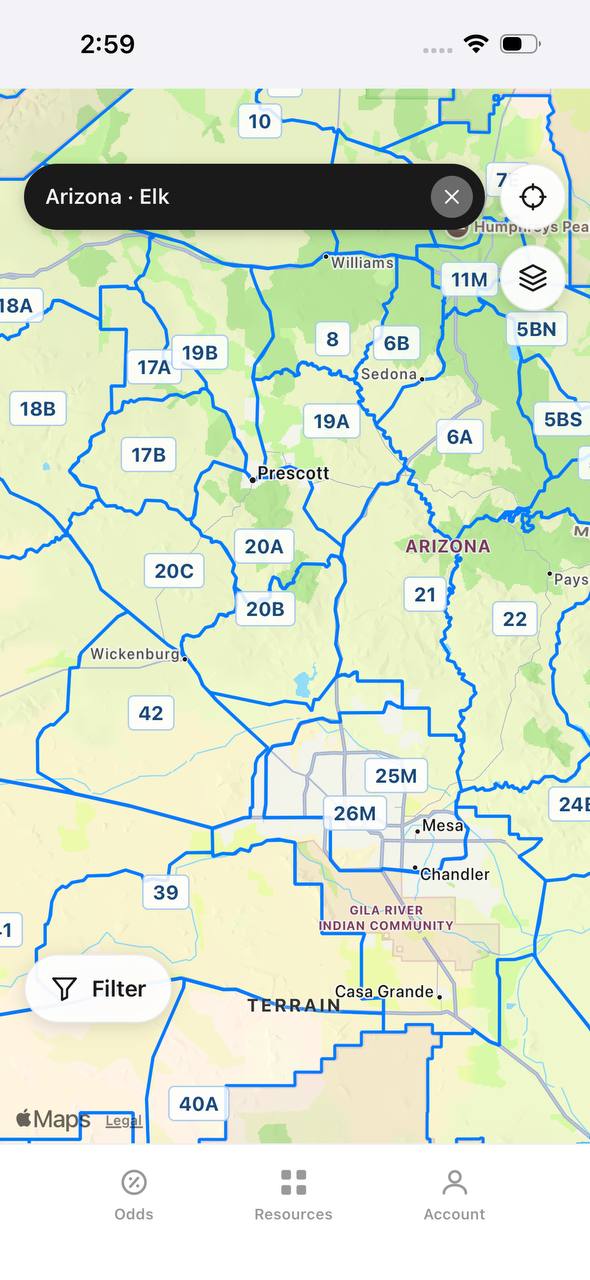
- Detailed draw odds
- Point tracking
- Deadline reminders
- 18 states covered

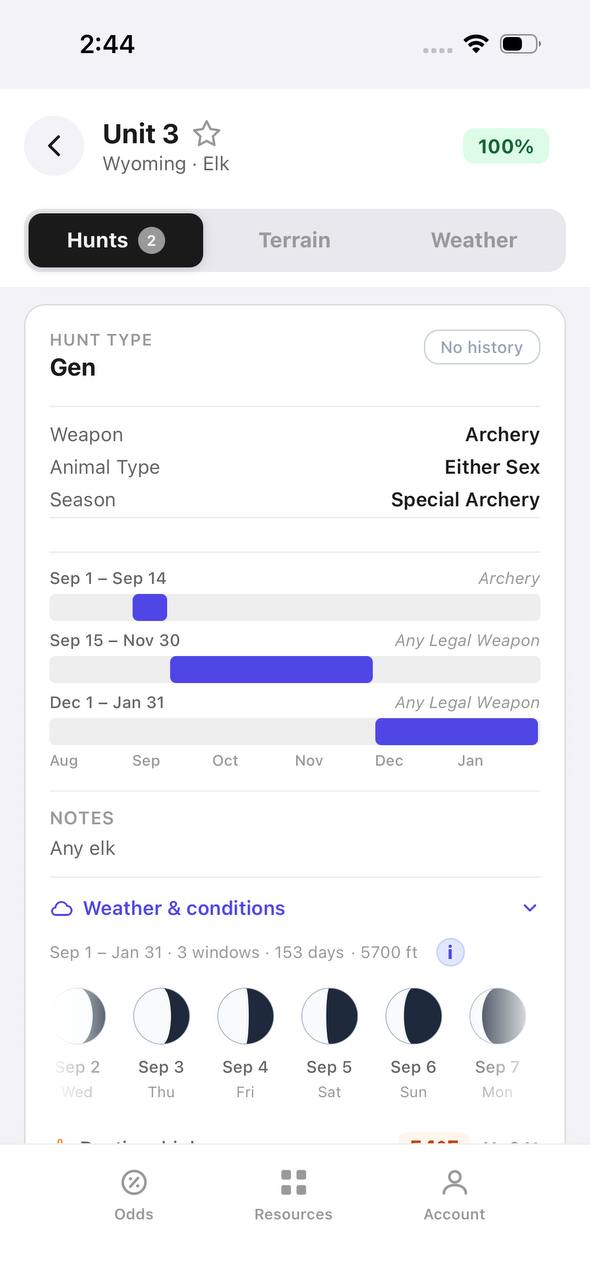
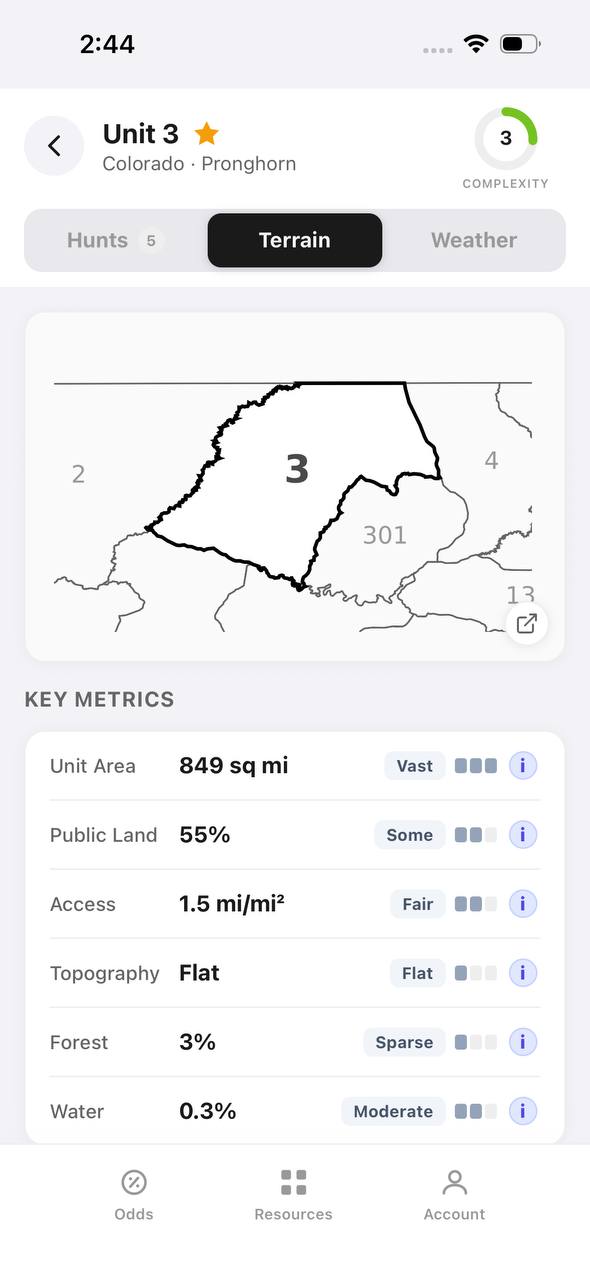
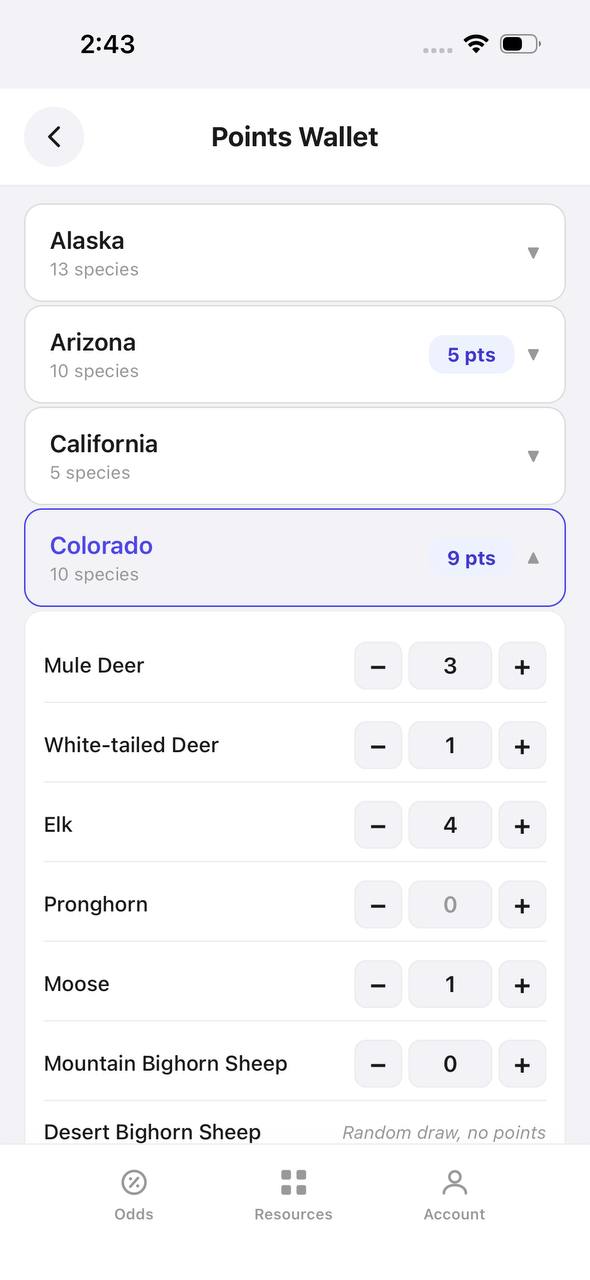
Free to join
Download mobile app
- Detailed draw odds
- Point tracking
- Deadline reminders
- 18 states covered
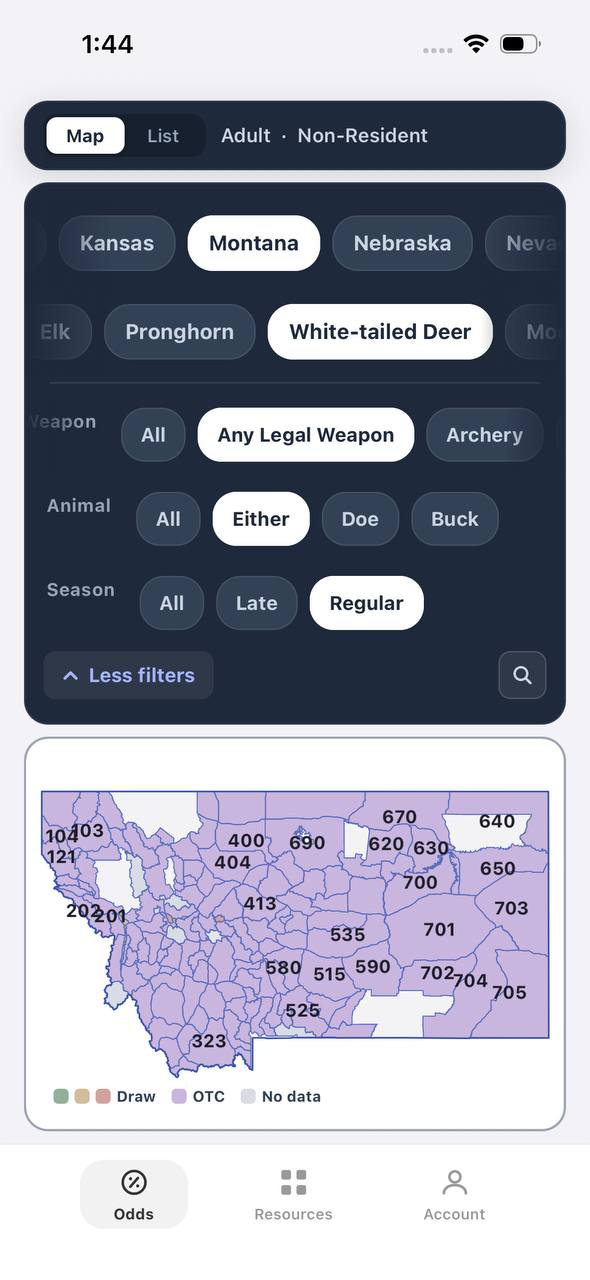
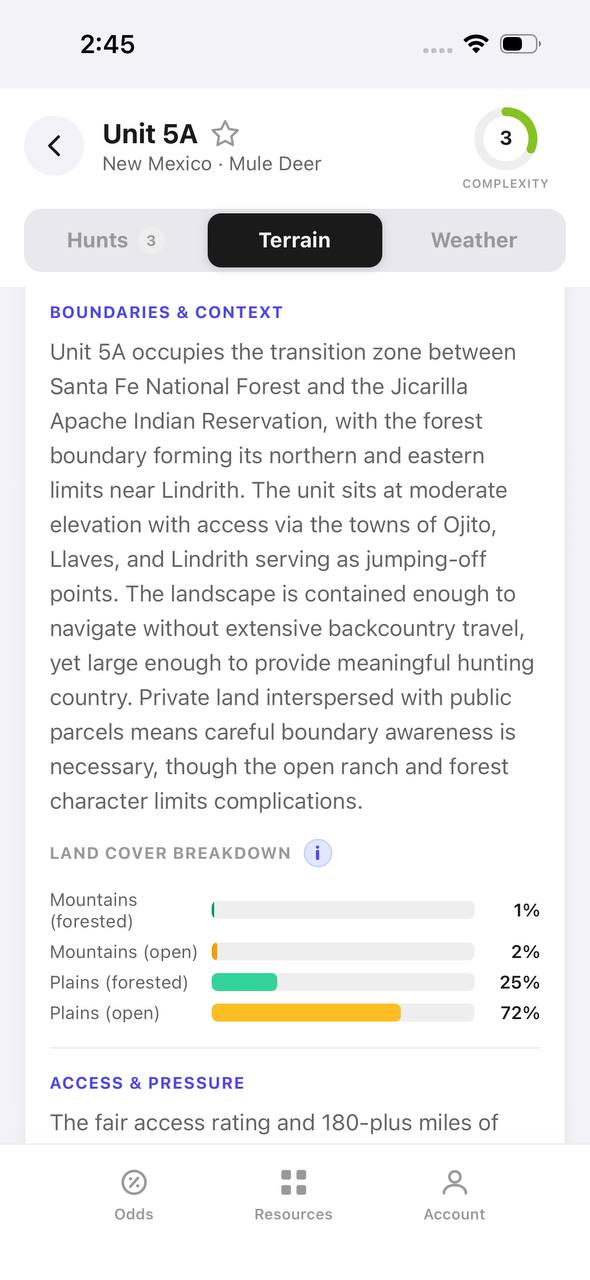
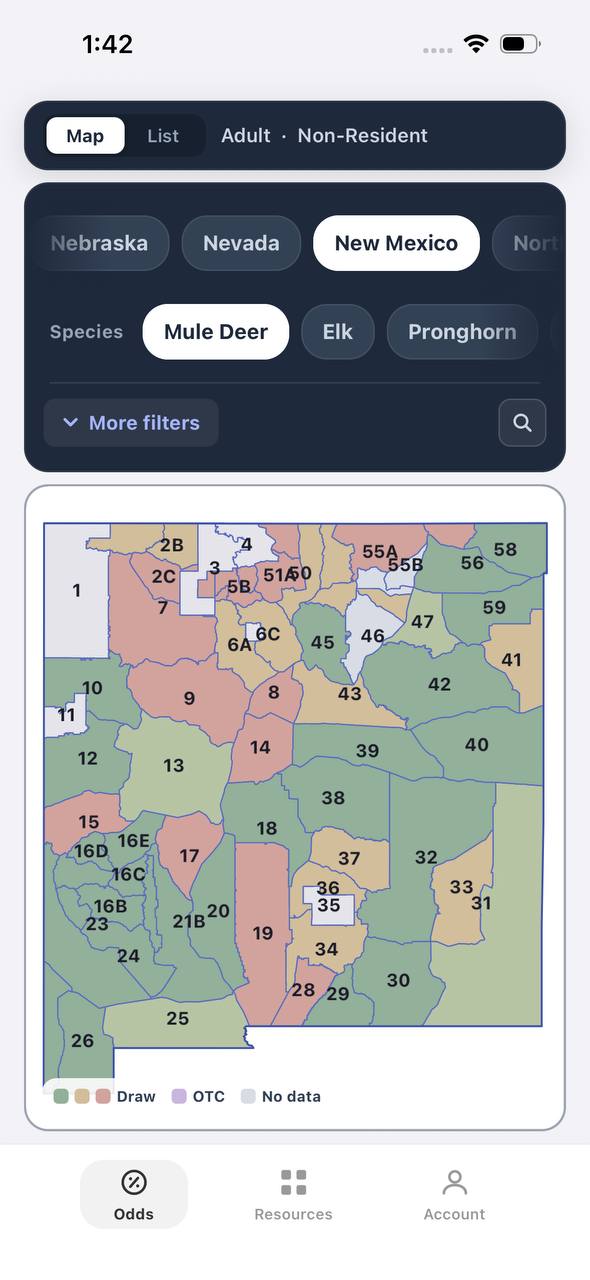
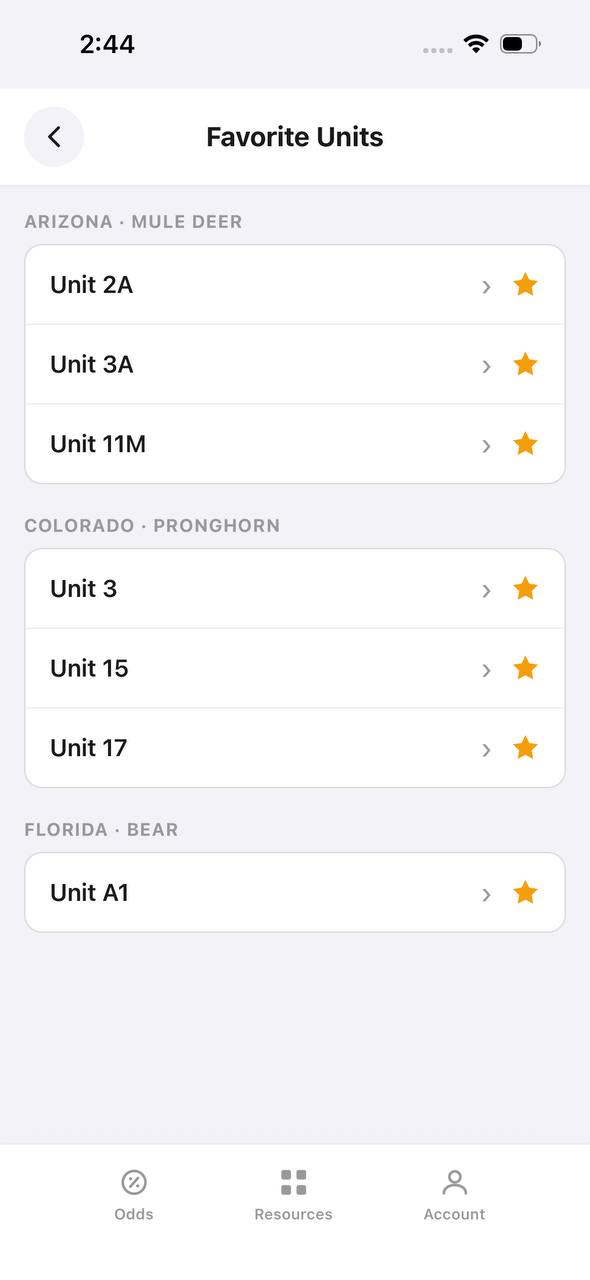
Free to join
Download mobile app
- Detailed draw odds
- Point tracking
- Deadline reminders
- 18 states covered

BA Tactical — Built for Harsh Conditions
The BA Tactical is Christensen's answer to hunters who need a rifle that can handle weather extremes, rough handling, and extended shooting sessions. It features a heavy-profile carbon fiber barrel, a full-length Picatinny rail, and a tactical-style stock with an adjustable cheek riser and length of pull.
This rifle is heavier than Christensen's backcountry models — around 8 to 9 pounds depending on configuration — but that weight translates to stability and recoil management. The BA Tactical is chambered in magnum calibers including .300 Winchester Magnum, .300 Norma Magnum, and .338 Lapua Magnum. These are not the calibers most hunters need for elk at 300 yards, but they make sense for hunters targeting brown bears in Alaska, shooting across canyons in Montana, or hunting in conditions where wind and distance demand extra energy on target.
The stock is fully adjustable and features a flat bottom for shooting off barricades, packs, or bipods. The rifle comes with a threaded muzzle and a removable muzzle brake. The trigger is adjustable from 2.5 to 4 pounds. For hunters who prioritize durability and long-range capability over weight savings, the BA Tactical is a serious tool.
ELR — Extreme Long Range for Open Country
The ELR (Extreme Long Range) is Christensen's dedicated long-range hunting rifle built for shooters who regularly engage targets beyond 600 yards. It is not a rifle for most western hunts, but for hunters chasing pronghorn in Wyoming, mule deer in Nevada, or elk in open Montana basins, it offers capabilities that standard hunting rifles cannot match.
The ELR features a heavy carbon fiber barrel, a chassis-style stock with full adjustability, and a 20 MOA Picatinry rail for mounting long-range optics. Weight runs 8 to 9 pounds, and barrel lengths range from 24 to 27 inches depending on caliber. Chamberings include 6.5 PRC, 7mm Remington Magnum, .28 Nosler, .300 PRC, and .300 Norma Magnum.
The stock is designed for prone shooting with a wide forend, adjustable cheek riser, and a hook-style buttstock. The rifle ships with a removable muzzle brake that significantly reduces recoil — critical when shooting magnums from field positions. Christensen guarantees half-MOA accuracy with match ammunition, and the ELR consistently delivers on that promise.
This rifle is built for hunters who practice long-range shooting regularly, understand ballistics and wind calls, and hunt terrain where long shots are the norm rather than the exception. It is overkill for timber hunting or short-range archery-season elk hunts, but in the right hands and the right country, it extends ethical shooting range beyond what most hunting rifles can achieve.
Choosing the Right Christensen for Your Hunt
Christensen offers options for nearly every western hunting scenario, but matching the rifle to your hunt style and terrain matters more than chasing the lightest or longest-range model. If you hunt steep backcountry and prioritize packability, the Ridgeline FFT makes sense. If you split time between backcountry elk and open-country mule deer, the standard Ridgeline or Traverse offers the best balance of weight and capability. If budget is a concern and you do not need carbon fiber, the Mesa delivers Christensen accuracy at half the price.
All six rifles share common strengths — sub-MOA accuracy guarantees, match-grade barrels, and build quality that holds up across seasons. Christensen also offers excellent customer service and a transferable warranty that protects your investment. Whether you are applying through TAGZ for a limited-entry elk tag in Colorado or planning an OTC archery hunt in Idaho, the right rifle sets you up for success when the moment arrives.
FAQ — Christensen Arms Rifles
Are Christensen Arms rifles worth the price?
Yes for serious western hunters who prioritize accuracy and weight savings. The carbon fiber models cost more than traditional hunting rifles, but they deliver measurable performance advantages in backcountry terrain. The Mesa offers similar accuracy at a lower price point if carbon fiber is not a priority.
What is the most popular Christensen rifle for elk hunting?
The Ridgeline in .300 Winchester Magnum or 7mm Remington Magnum. It balances weight, power, and accuracy for the ranges and conditions most elk hunters encounter. The Mesa in the same calibers is a close second for hunters who want to save money.
How accurate are Christensen Arms rifles out of the box?
Christensen guarantees sub-MOA accuracy with match-grade ammunition. Most rifles shoot half-MOA or better once broken in and paired with quality factory loads or hand loads. Accuracy rivals custom rifles that cost significantly more.
Can you suppress a Christensen rifle?
Yes. Most models come with threaded muzzles and handle suppressors well. The carbon fiber barrels are stiffer than traditional steel, which helps maintain accuracy with a suppressor attached. The Traverse and BA Tactical are particularly well-suited for suppressed hunting.
What is the difference between the Ridgeline and Ridgeline FFT?
The FFT is lighter — around 5 pounds versus 6.3 pounds for the standard Ridgeline. The FFT uses a flash-forged carbon fiber stock and a more aggressively weight-reduced bolt and action. Both shoot the same accuracy, but the FFT is better for extreme backcountry hunts where ounces matter.
Do Christensen rifles hold their value?
Yes. The brand has strong resale demand among western hunters. Carbon fiber models depreciate slower than traditional hunting rifles because the materials and craftsmanship appeal to serious buyers. Well-maintained Christensen rifles often sell for 70 to 80 percent of retail on the used market.
Continue Planning Your Hunt
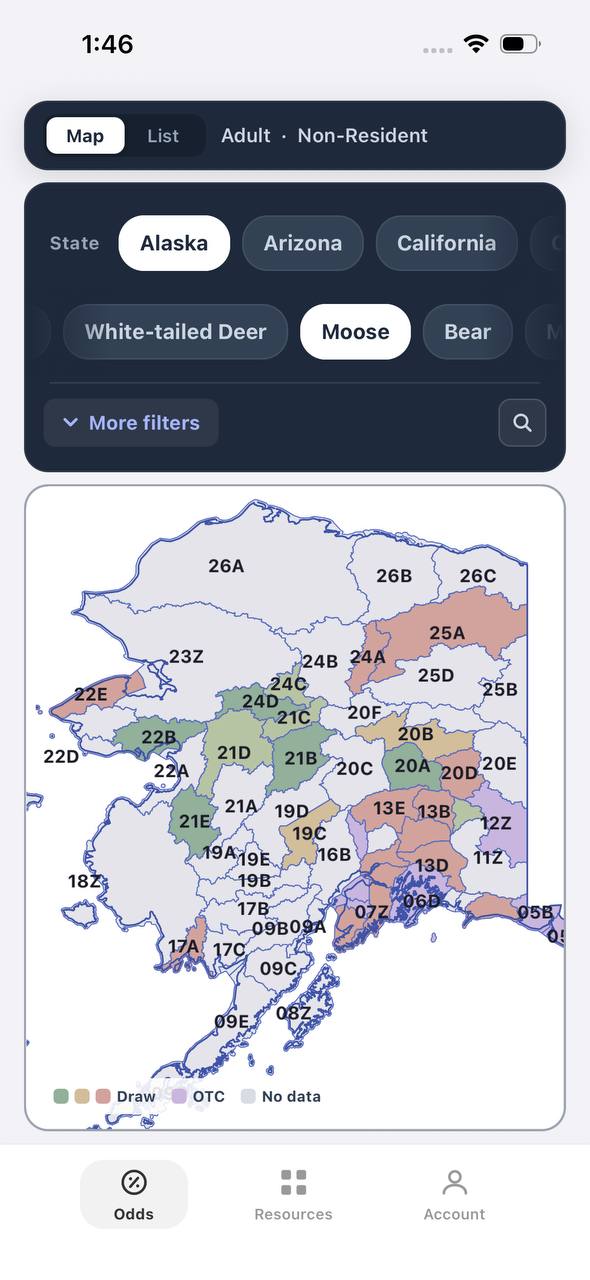
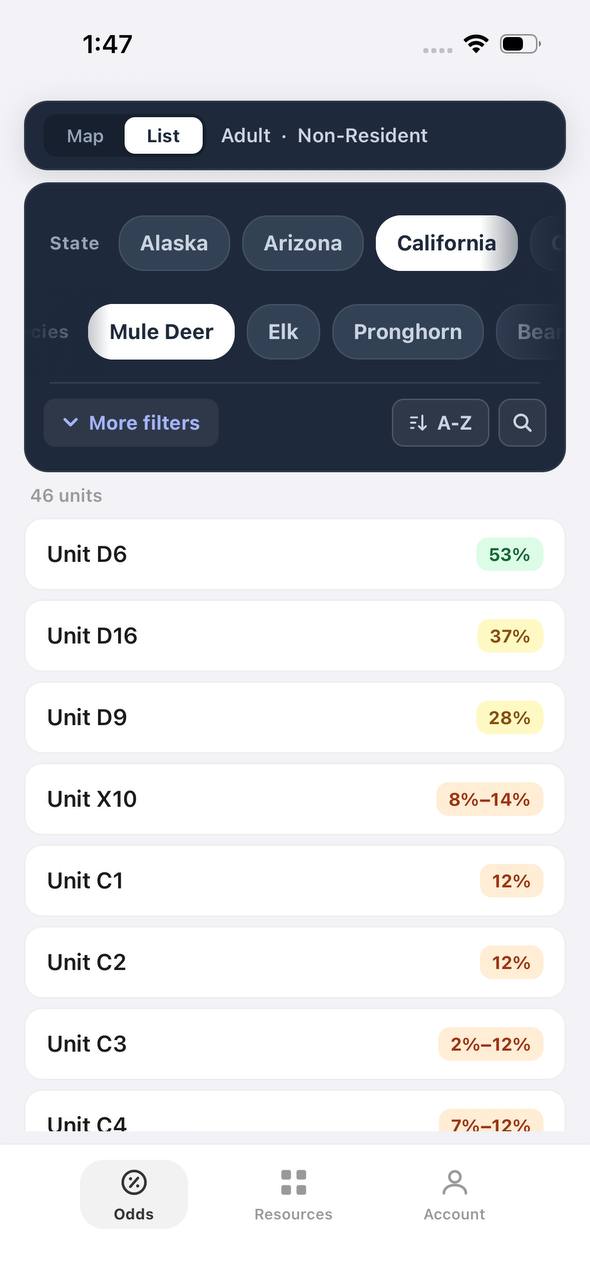
Choosing the right rifle is just one part of a successful western hunt. TAGZ helps you compare draw odds, track preference points, and plan hunts across multiple states so you can focus on what matters — getting into the field with a tag in your pocket and a rifle you trust.
Whether you are chasing limited-entry elk tags in Colorado or researching OTC opportunities in Montana, TAGZ gives you the tools to make smarter decisions before you ever step into the field. Compare units side by side using terrain maps, unit boundaries, and historical draw data. Track your preference points and bonus points across multiple states so you never miss a draw deadline. Explore the TAGZ platform to see how it simplifies hunt planning and maximizes your draw opportunities.
For more insights on gear, unit strategy, and hunt planning, visit the TAGZ Insights page. If you are ready to start building your hunt strategy for the upcoming season, check out TAGZ pricing and see which plan fits your hunting goals. The right rifle paired with the right tag makes all the difference — TAGZ helps you secure both.
Was this article helpful?
Previous
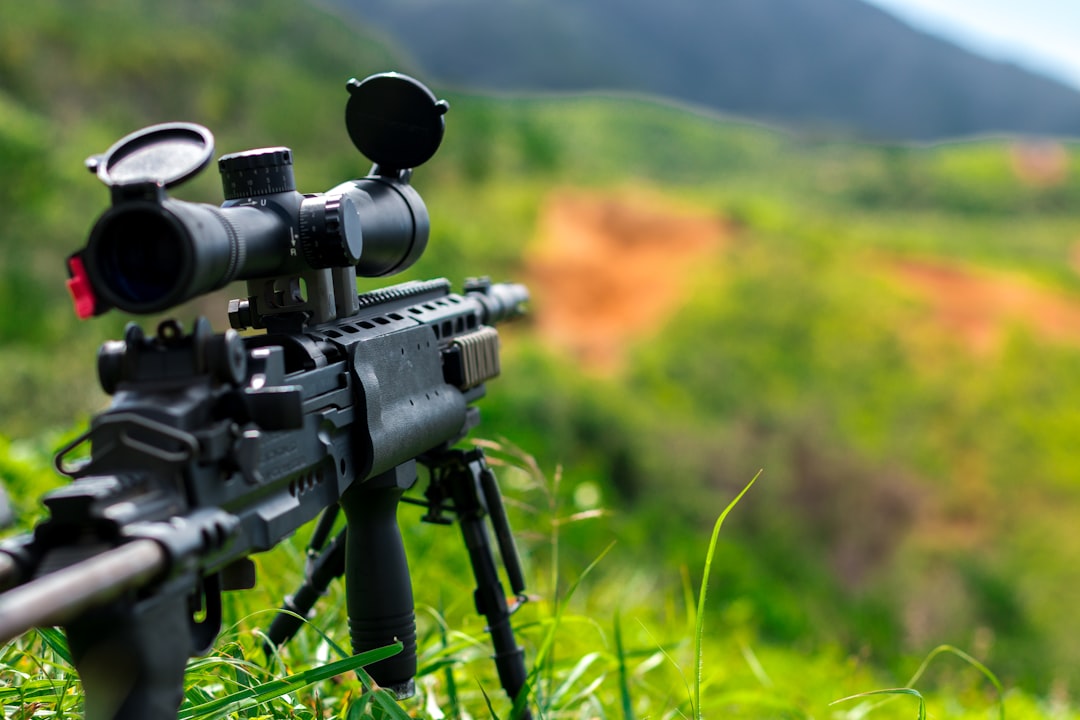
Best Custom Rifle Actions for Western Big-Game Hunting in 2026
Custom rifle actions transform accuracy and reliability for western hunters pursuing elk, mule deer, and other big game at distance. We break down the top precision actions—Defiance, Curtis, Bighorn, Impact, and Lone Peak—and explain which builds match your hunting style and budget.
Related
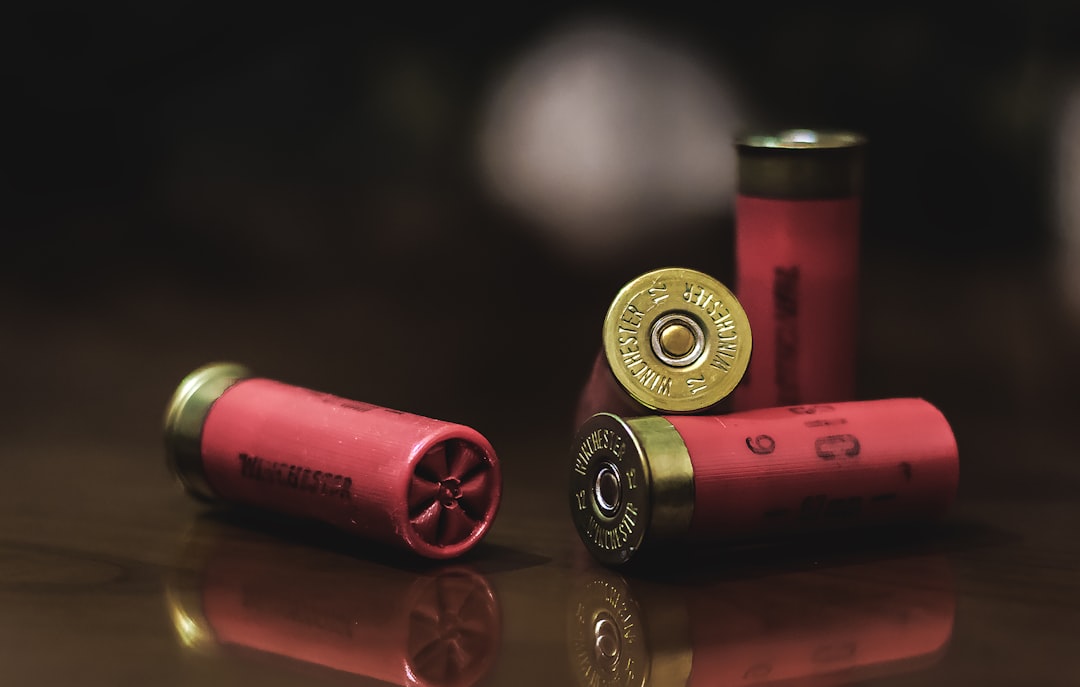
Christensen Arms Rifles for Western Hunting: Worth the Price?
Christensen Arms builds some of the lightest production rifles available, but their premium price point raises questions for serious western hunters. Here's what you need to know about their carbon-fiber rifles, real-world performance, and whether the investment makes sense for backcountry hunting.
Next
Best Hunting Rifles Under $2,000 for Western Big Game 2026
From Colorado elk to Wyoming pronghorn, these six rifles deliver accuracy and reliability without breaking the bank. We break down what to look for and which models consistently perform in the field.