Wyoming Leftover Draw Guide 2027: How to Score Tags After the Initial Draw
Wyoming's leftover draw gives hunters a second chance at tags that went unfilled in the initial spring draw. For elk, deer, pronghorn, and other species, leftover licenses can offer opportunity when your first-choice hunt didn't work out or when you're looking to add a hunt late in the planning cycle. The leftover system operates on a first-come, first-served basis with multiple application periods, and knowing how it works can help you secure quality hunting opportunities that many hunters overlook.
How Wyoming's Leftover Draw Works
After Wyoming Game and Fish completes the initial preference-point draw in the spring, any remaining licenses enter the leftover system. Unlike the preference-point draw where points determine selection order, the leftover draw awards tags on a random basis during designated application periods. Applications submitted during each leftover draw period have equal odds regardless of how many preference points you hold. If licenses remain after all leftover draw periods close, they become available for purchase on a true first-come, first-served basis online and at Game and Fish offices.
The leftover system applies to limited-quota licenses for elk, deer, pronghorn, black bear, and wild bison. Most leftover opportunities are Type 6 (doe/fawn) and Type 7 (any antelope) pronghorn tags, though limited elk and deer licenses occasionally appear. General elk and deer licenses are not part of the leftover draw because they are sold over the counter until quotas fill.
Key Dates for the 2027 Leftover Draw
Wyoming typically runs three leftover draw periods between late May and early August. The exact 2027 dates will be published after the initial draw results are released, but recent years follow a consistent pattern. The first leftover draw usually opens in late May or early June, with applications accepted for approximately one week. Results post within a few days of the deadline. The second period typically runs in mid to late June, and the third period occurs in late July or early August.
After the third leftover draw closes and results are released, any remaining licenses become available for immediate purchase online. This first-come, first-served phase continues until licenses sell out or the season opens. Checking the Game and Fish website the morning leftover licenses go on sale gives you the best chance at limited remaining inventory.
What Tags Show Up in Wyoming's Leftover Draw
Pronghorn doe and fawn tags dominate Wyoming's leftover inventory. Many popular units offer Type 6 or Type 7 licenses because landowner issues, private-land access, and harvest management create surplus quota beyond what the initial draw absorbs. These tags provide excellent meat-hunting opportunities and often come with reasonable success rates on public land.
Limited-quota elk and deer tags appear less frequently in the leftover draw. When they do show up, they are typically either doe/fawn/cow tags, hunt areas with limited public access, short seasons, or hunts during less desirable weather windows. Occasionally a buck or bull tag becomes available when a nonresident quota goes unfilled, but these tags usually get snatched up in the first leftover period or within minutes of going on sale first-come, first-served.
Bear and bison tags rarely enter the leftover system. Most hunters who draw these opportunities hold onto them. If a bison tag does appear, expect it to vanish almost instantly during the online sale.
Leftover Draw Strategy: Multiple Periods and Multiple Species
Because Wyoming allows separate applications for each species during each leftover draw period, you can apply for elk, deer, pronghorn, and bear simultaneously in the same period. Each species application is treated independently. You can also apply in all three leftover periods without penalty, giving you multiple chances to draw.
Many hunters focus only on the first leftover period, assuming the best tags will be gone immediately. While that is often true for the handful of quality buck and bull tags that appear, pronghorn doe hunts and some limited elk cow hunts remain available through all three periods. Applying in the second or third period can be just as effective for these tags, and occasionally new cancellations or returned licenses appear in later periods.
If you are planning a combo hunt or looking to fill the freezer, consider applying for tags in multiple hunt areas during each period. The random draw means your odds are the same whether you apply for the most popular leftover tag or a less competitive option. Diversifying your choices across areas can increase the chance you draw something.
Free to join
Download mobile app
- Detailed draw odds
- Point tracking
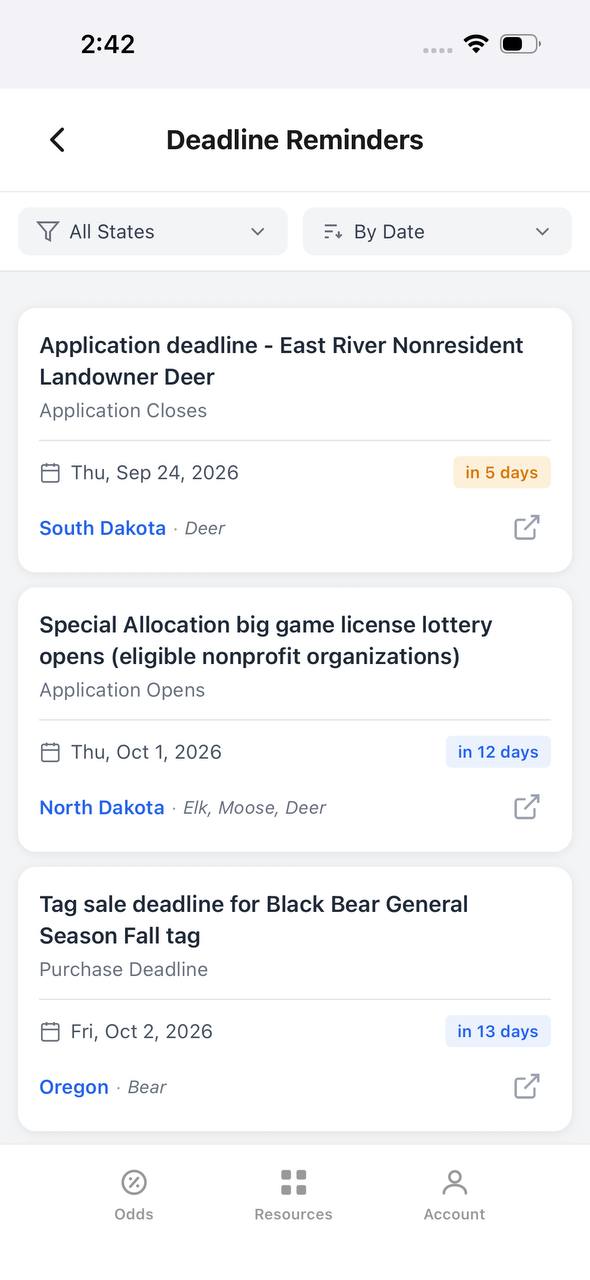
- Deadline reminders
- 19 states covered

Free to join
Download mobile app
- Detailed draw odds
- Point tracking
- Deadline reminders
- 19 states covered
Free to join
Download mobile app
- Detailed draw odds
- Point tracking
- Deadline reminders
- 19 states covered
First-Come, First-Served Leftover Sales
Once the final leftover draw results post, any remaining licenses go on sale online immediately. This is a true race. Licenses appear on the licensing portal at a specified time, and whoever completes the purchase transaction first gets the tag. Popular units and any remaining antlered/bull tags often sell out within minutes.
To compete effectively in the first-come, first-served sale, log into the Wyoming Game and Fish licensing system before the sale opens. Have your hunt choices prioritized in advance. Know your hunt area numbers and license types. When the clock hits the opening time, search for your target license and complete the purchase as quickly as possible. Mobile apps and slower internet connections can put you at a disadvantage during high-demand releases.
If your top choices sell out, keep checking. Hunters sometimes purchase licenses and later cancel, causing tags to reappear sporadically throughout the summer. Setting a calendar reminder to check weekly can occasionally result in finding a returned tag.
Nonresident vs. Resident Leftover Access
Both residents and nonresidents can participate in Wyoming's leftover draw and first-come, first-served sales. However, nonresidents must purchase the required license before applying or buying a leftover tag. For elk and deer, that means buying a conservation stamp. For pronghorn, nonresidents need a small-game license or the conservation stamp. These requirements apply during the leftover draw periods and the first-come, first-served sale, so have the appropriate license in your account before the leftover period opens.
Preference points are not consumed when you draw a leftover license. If you apply in the initial draw and do not draw, your points carry forward. Applying in the leftover draw does not reset your point total. This makes the leftover draw a risk-free way to hunt Wyoming without sacrificing the points you are building for a future premium tag.
Common Mistakes to Avoid
One frequent mistake is assuming the leftover draw is only for leftover doe tags. While doe and cow tags make up the majority of available inventory, limited buck and bull tags do appear. Hunters who skip the leftover draw entirely because they only want a quality tag miss the occasional opportunity that surfaces.
Another mistake is waiting until the first-come, first-served sale and skipping the random draw periods. You have better odds in the random draw than in an online purchasing race. If a tag you want appears in a leftover draw period, apply. If you don't draw, you can still try to buy it during the first-come, first-served sale.
Failing to check the regulations for the specific hunt area is also common. Some leftover tags come with unique weapon restrictions, season dates, or access limitations that make them less desirable than they initially appear. Read the hunt area description and season structure carefully before applying or purchasing.
Using Leftover Tags to Scout or Fill the Freezer
Even if you drew your dream bull tag in another state, a Wyoming leftover pronghorn doe tag can give you an excuse to scout the area in late summer or early fall. Pronghorn seasons often open in early to mid-August, allowing you to hunt, fill the freezer, and spend additional time learning the landscape before your fall elk hunt in the same region. Doe pronghorn hunts on public land can also serve as an excellent introduction to Western hunting for new hunters without the pressure and expense of chasing a trophy buck.
Leftover cow elk tags can provide a similar dual benefit. Many cow hunts occur in areas that also hold general or limited bull opportunities. Hunting a cow tag gives you in-the-field experience in a unit you might target with points in the future, and success rates on cow hunts tend to be higher than bull hunts, making them a reliable meat option.
FAQ — Wyoming Leftover Draw
Do I lose my preference points if I draw a leftover tag?
No. Drawing a leftover license does not consume your preference points. Your points remain intact and continue to build if you apply in future initial draws.
Can I apply for multiple species in the same leftover period?
Yes. Wyoming allows separate applications for elk, deer, pronghorn, and bear during the same leftover draw period. Each species is drawn independently.
What happens if I apply in all three leftover periods and draw in the first one?
If you draw a tag in an earlier period, your applications in later periods for the same species are voided. You cannot hold two tags for the same species in the same year unless regulations specifically allow it.
Are leftover tags only doe and cow hunts?
Mostly, but not exclusively. The majority of leftover inventory consists of Type 6 and Type 7 pronghorn doe tags and cow elk tags. Limited buck, bull, and any-antelope tags occasionally appear, especially in hunt areas with restricted access or less desirable season dates.
When do leftover tags go on sale first-come, first-served?
Immediately after the third leftover draw results are posted, typically in early August. The exact date and time are announced by Wyoming Game and Fish and posted on their licensing portal.
Do nonresidents need a hunting license before applying in the leftover draw?
Yes. Nonresidents must purchase the required conservation stamp or small-game license before applying in a leftover period or buying a leftover tag during the first-come, first-served sale.
Was this article helpful?
Previous
Oregon Mule Deer Draw Odds With Five Points: What 2027 Applicants Need to Know
Five preference points unlock moderate to high draw odds for Oregon's premium mule deer controlled hunts, including Steens Mountain, Silvies, and select Cascade units, but competition continues to rise as point creep narrows opportunity.
Related
Nevada Mule Deer Draw Odds and Tag Guide 2027
Nevada's 2027 mule deer draw is split between resident-only controlled hunts and nonresident-eligible archery and rifle tags, with bonus points improving odds in both systems. Most resident rifle hunts require 8-15 points, while nonresident archery tags often draw with zero points.

Next
Oregon Guided Mule Deer Hunts 2027: Points, Tags & Costs
Oregon's controlled mule deer hunts offer premium rifle opportunities in eastern units, but nonresidents face tough odds and mandatory guide requirements in wilderness areas. Understanding the preference point system and tag costs is essential for planning a successful 2027 application.