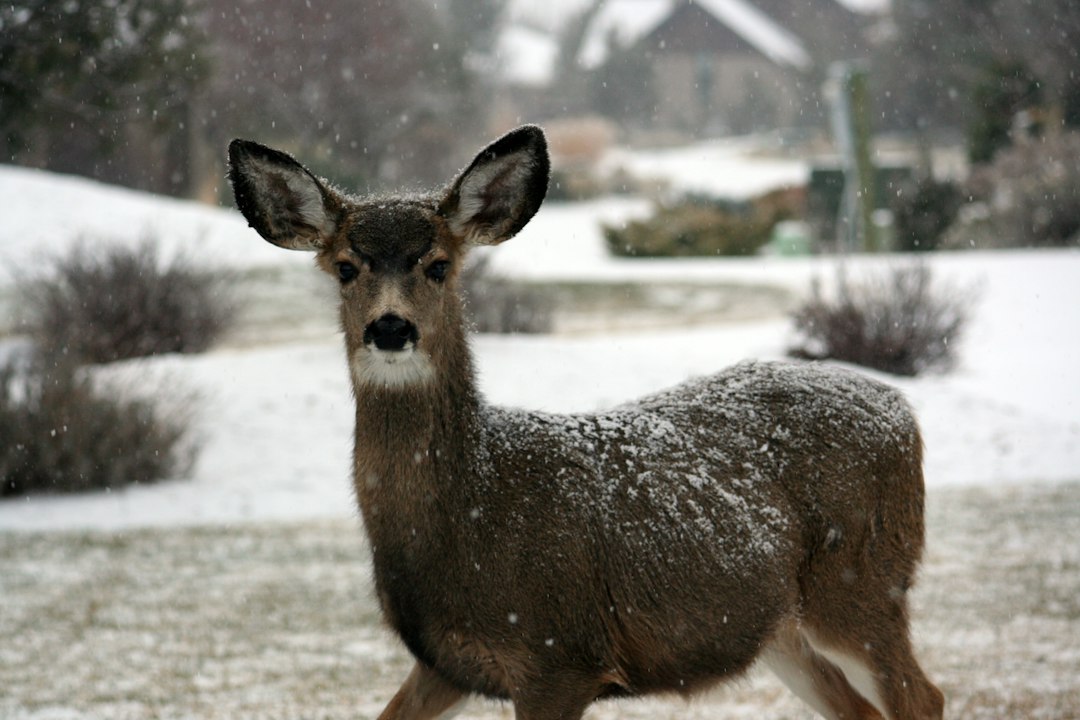
Nevada Mule Deer Draw Odds and Tag Guide 2027

Nevada runs two parallel mule deer draw systems in 2027. Residents compete for controlled hunts across the state, while nonresidents can apply only for designated archery and rifle hunts — mostly in late-season management units. Both systems use bonus points to improve draw odds, but the pools and odds differ dramatically. Resident rifle hunts in premier units like the Ruby Mountains routinely require double-digit bonus points, while nonresident archery hunts in units 241-242 often draw with zero or one point. Understanding which system you're entering, how bonus points work, and where to focus applications determines whether you draw a Nevada mule deer tag or wait another year.
Nevada's Dual Mule Deer Draw Systems
Nevada separates resident and nonresident mule deer hunts into distinct application pools. Residents apply for controlled hunts — early rifle, late rifle, muzzleloader, and archery tags in hunt units statewide. Nonresidents apply for a limited subset of archery and rifle hunts, most of which are late-season doe/fawn or antlerless management hunts, though a handful of antlered tags exist. The two systems do not compete against each other. A Nevada resident cannot apply for nonresident-designated hunts, and a nonresident cannot apply for resident-controlled hunts. Both systems use bonus points accumulated through annual applications, but the odds, quotas, and competition levels are unrelated.
How Bonus Points Work in Nevada Mule Deer Draws
Nevada uses a bonus-point system, not preference points. Each applicant receives one random number between zero and 100. The state then adds bonus points to that random number — one point equals one additional number. An applicant with five bonus points receives a random number plus five, creating a range of 5-105. The highest adjusted number in each hunt pool wins the tag. Bonus points improve odds but never guarantee a draw. You can draw with zero points if your random number beats all other applicants, and you can fail to draw with 15 points if your random number is low. Bonus points are squared in the draw — five points count as 25 entries. Nevada deer, elk, and antelope points are separate; building points in one species does not affect others. Points accumulate automatically when you apply and do not draw.
Resident Controlled Hunt Odds and Point Creep
Resident rifle hunts in Nevada's best mule deer units require significant point investments in 2027. Hunt 10-122 (Ruby Mountains early rifle) required 15 bonus points to draw with 100 percent certainty in recent years, though applicants with 8-10 points occasionally draw when lucky numbers align. Unit 6 and Unit 7 early rifle hunts in the Pequop Mountains similarly demand 10-14 points. Late-season rifle hunts in these same units draw slightly faster because fewer applicants chase December tags in cold, snowy conditions. Archery hunts in premier units require fewer points — typically 4-8 — but still represent multi-year waits for new applicants. Hunt codes with shorter seasons or doe tags often draw with zero to two points. Point creep advances roughly one point per year in high-demand hunts, meaning an applicant entering the pool in 2027 should expect a 10-12 year wait for top-tier rifle tags.
Nonresident Archery and Rifle Hunt Opportunities
Nonresident mule deer hunts in Nevada focus heavily on late-season management hunts designed to control populations in agricultural or urban interface zones. Units 241-242 (Winnemucca/Battle Mountain region) offer archery hunts that regularly draw with zero or one bonus point. Hunt 231-01 (Elko County archery) similarly draws with zero to two points in most years. These hunts occur in October and early November, overlapping the rut, and target any legal buck. Rifle hunts for nonresidents are predominantly doe/fawn or antlerless tags in December and January, with a few antlered late rifle tags available. Antlered late rifle tags in units like 222 or 232 typically require 3-6 bonus points, while doe hunts draw with zero points. Nonresident quotas are small — often 5-15 tags per hunt — so drawing odds fluctuate year to year based on applicant numbers.


Free to join
Download mobile app
- Detailed draw odds
- Point tracking
- Deadline reminders
- 19 states covered





Free to join
Download mobile app
- Detailed draw odds
- Point tracking
- Deadline reminders
- 19 states covered






Free to join
Download mobile app
- Detailed draw odds
- Point tracking
- Deadline reminders
- 19 states covered

Application Deadlines and Fees for 2027
Nevada's 2027 mule deer application period opens in early March and closes in mid-March. Exact dates are published on the Nevada Department of Wildlife website in January. Residents pay a $142 hunting license fee (if not already holding a current license) and a $10 application fee. The deer tag cost is $85 for residents if drawn. Nonresidents pay a $142 hunting license, a $10 application fee, and $330 for the deer tag if successful. License and application fees are nonrefundable. Tag fees are charged only upon drawing. Applicants may select up to five hunt choices in order of preference. The draw considers your first choice first; if you do not draw, the system moves to your second choice with the same bonus points. You cannot lose bonus points by listing multiple choices — you lose points only when you draw a tag or fail to apply for two consecutive years.
Unit Strategy for Residents and Nonresidents
Resident applicants building points should focus applications on units with stable or declining point requirements. Units 10, 12, and 14 (Ruby and East Humboldt ranges) remain elite, but Units 6-7 and 20-25 offer similar-quality deer with slightly lower point costs. Archery hunts in these units provide the fastest path to a tag for newer applicants willing to bowhunt. Late-season rifle hunts after Thanksgiving draw faster than early-season rifle hunts but require hunters to accept snow, cold, and lower deer visibility. Nonresident applicants maximize odds by applying for archery hunts in units 231, 241, and 242, which offer legitimate rut hunting with minimal bonus-point investment. Nonresidents willing to hunt does can draw late rifle tags almost guaranteed with zero points, providing meat-focused hunting in good mule deer country. Antlered late rifle hunts like 222-82 or 232-84 offer better trophy potential but cost 4-6 points and target post-rut bucks in harsh conditions.
Draw Results and Leftover Tags
Nevada publishes draw results in late April. Successful applicants receive notification via email and mail, and results appear in the online licensing system. Hunters must purchase the tag by the deadline specified in the draw notice or forfeit the tag and lose bonus points. Leftover tags — hunts that did not fill during the draw — go on sale in early May on a first-come, first-served basis. Leftover resident mule deer tags are rare and typically limited to doe hunts or difficult-access units. Nonresident leftover tags occasionally appear for late-season doe hunts but sell quickly. Applicants who do not draw and do not purchase a leftover tag retain their bonus points and gain one additional point for the following year. Nevada does not offer a separate second draw like some states.
FAQ — Nevada Mule Deer Draw
How do Nevada bonus points differ from preference points?
Bonus points add to a random number, improving odds but not guaranteeing a draw. Preference points create a strict waiting list where the most points always win. Nevada uses bonus points, so luck still matters.
Can nonresidents draw good Nevada mule deer tags?
Yes, but options are limited. Nonresident archery hunts in units 231, 241, and 242 draw with zero to two points and offer rut hunting for any legal buck. Rifle tags are mostly late-season doe hunts, though a few antlered late rifle tags exist.
How many bonus points do I need for a Nevada resident rifle tag?
Top units like the Rubies require 10-15 points for early rifle tags. Mid-tier units draw with 6-10 points, and late-season rifle hunts typically need 5-8 points. Archery hunts in the same units draw 3-5 points faster.
What happens if I apply for five hunt choices and don't draw any?
You keep your bonus points and gain one more. You lose points only if you draw a tag or fail to apply for two consecutive years. Listing multiple choices does not hurt you.
Are leftover mule deer tags available after the draw?
Rarely for residents, and mostly doe tags. Nonresident leftover tags occasionally appear for late-season doe hunts but sell out fast. Most serious applicants enter the draw rather than relying on leftovers.
Do Nevada's bonus points square in the draw?
Yes. Five bonus points count as 25 entries. This exponentially improves odds for long-term applicants and accelerates point creep in high-demand hunts.
Was this article helpful?
Previous
Wyoming Leftover Draw Guide 2027: How to Score Tags After the Initial Draw
Wyoming's leftover draw offers a second chance at big-game tags after the regular draw closes. This guide explains how the system works, what tags typically remain, and how to maximize your odds in the 2027 leftover draws.
Related
Alaska Moose Draw Odds 2027: Unit-by-Unit Breakdown & Application Strategy
Alaska's moose draws are competitive, especially for nonresidents in high-demand units like 13B and 20A. Understanding tier systems, point structures, and resident-priority rules is key to planning a successful 2027 application.
Next
Oregon Mule Deer Draw Odds With Five Points: What 2027 Applicants Need to Know
Five preference points unlock moderate to high draw odds for Oregon's premium mule deer controlled hunts, including Steens Mountain, Silvies, and select Cascade units, but competition continues to rise as point creep narrows opportunity.