Washington Moose Draw Odds 2027: What Hunters Need to Know
Washington's moose hunt is among the most coveted and difficult tags to draw in the western United States. With only a handful of permits issued each year across a few select hunt areas, success requires patience, strategy, and realistic expectations. For 2027, understanding the draw structure, unit-specific odds, and the role of preference points is essential for any serious applicant.
Washington's Moose Draw Structure
Washington manages moose hunting through a controlled permit system. The state issues roughly 60 to 70 moose permits annually, split between archery and rifle seasons. These permits are distributed across a small number of hunt areas in northeastern Washington, primarily in Ferry, Pend Oreille, and Stevens counties. The draw is conducted once per year, typically in late spring, with application deadlines falling in May.
Washington uses a preference point system for moose. Each unsuccessful applicant earns one preference point per year. When tags are allocated, applicants are grouped by point totals, and tags are drawn randomly within each point tier, starting with the highest point holders. This system rewards long-term commitment but does not guarantee a tag even after many years of applying. Nonresidents are eligible but face significantly reduced odds due to a 10% cap on nonresident permits in most special permit hunts.
Resident Draw Odds by Unit
Resident hunters make up the vast majority of successful applicants. In recent years, drawing a Washington moose tag as a resident has required anywhere from 10 to 20-plus preference points, depending on the hunt area and weapon choice. The most accessible hunts are typically the rifle permits in units with higher moose populations and more tags available. Archery permits, while sometimes slightly easier to draw due to fewer applicants, still demand a decade or more of points in most cases.
For 2027, residents should expect similar point requirements. The top point holders with 15 to 20 points will have the best odds, but even these applicants face competition. Mid-tier applicants with 8 to 12 points will likely need several more years of building points before drawing becomes realistic. First-time applicants or those with fewer than five points have virtually zero chance of drawing a moose tag in 2027. The scarcity of permits and the pool of long-tenured applicants create a multi-decade timeline for most hunters.
Unit-specific data from recent years shows that some hunt areas draw slightly faster than others, often due to access challenges, lower bull-to-cow ratios, or less desirable terrain. However, these differences are marginal. Even the "easier" units still require double-digit preference points, and hunters should not bank on a shortcut. Washington's moose draw is a commitment regardless of which area you choose.
Nonresident Draw Odds and Limitations
Nonresidents face steep odds in Washington's moose draw. With only 10% of permits reserved for out-of-state hunters, the number of available tags shrinks to roughly six to eight permits statewide in a typical year. Nonresident applicants compete in the same preference point system as residents, but the smaller allocation means even fewer tags are distributed to each point tier.
In recent draw cycles, nonresident applicants with 15 or more points have had the best chance of success, but even then, drawing is far from guaranteed. Many nonresidents accumulate 20-plus points without ever drawing. The decision to apply as a nonresident should be made with the understanding that a Washington moose tag may never materialize, even after a decade or more of annual applications.
For hunters weighing whether to invest in Washington's moose draw as a nonresident, consider alternative states with better odds or more available permits. Alaska, Montana, and Wyoming offer moose hunts with varying draw structures and higher tag quotas. Washington's moose draw is a long-term speculative investment, not a near-term hunting opportunity.
Point Creep and What It Means for 2027
Point creep is the gradual increase in the number of preference points required to draw a tag, and it is a persistent issue in Washington's moose draw. As more applicants enter the pool each year and existing applicants continue building points, the threshold for drawing climbs. A hunt that required 12 points to draw five years ago may now require 15 or 16 points, and that trend shows no signs of reversing.
For 2027, point creep means that hunters who were close to drawing in previous years may find themselves pushed back another year or two. The best strategy is to apply every year without fail, building points consistently, and to avoid skipping years. Missing a single application year sets you back relative to other applicants who maintained their streak. Point creep also underscores the importance of applying even if you are not yet competitive. Waiting to start applying only widens the gap between you and the applicants who are currently in the mix.
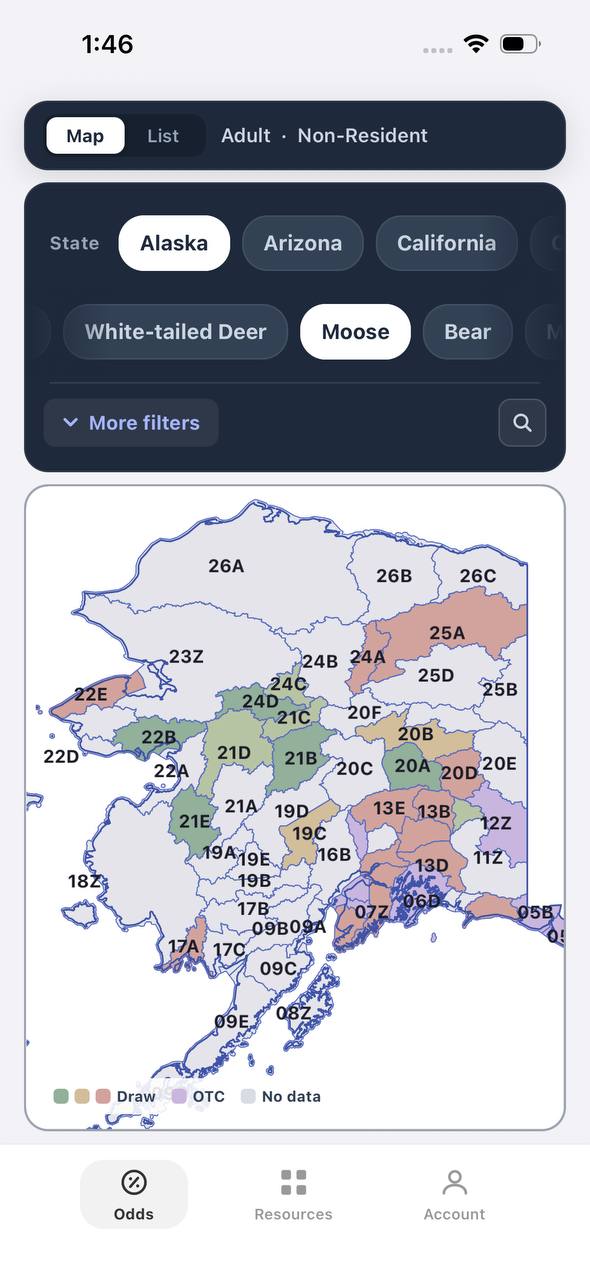
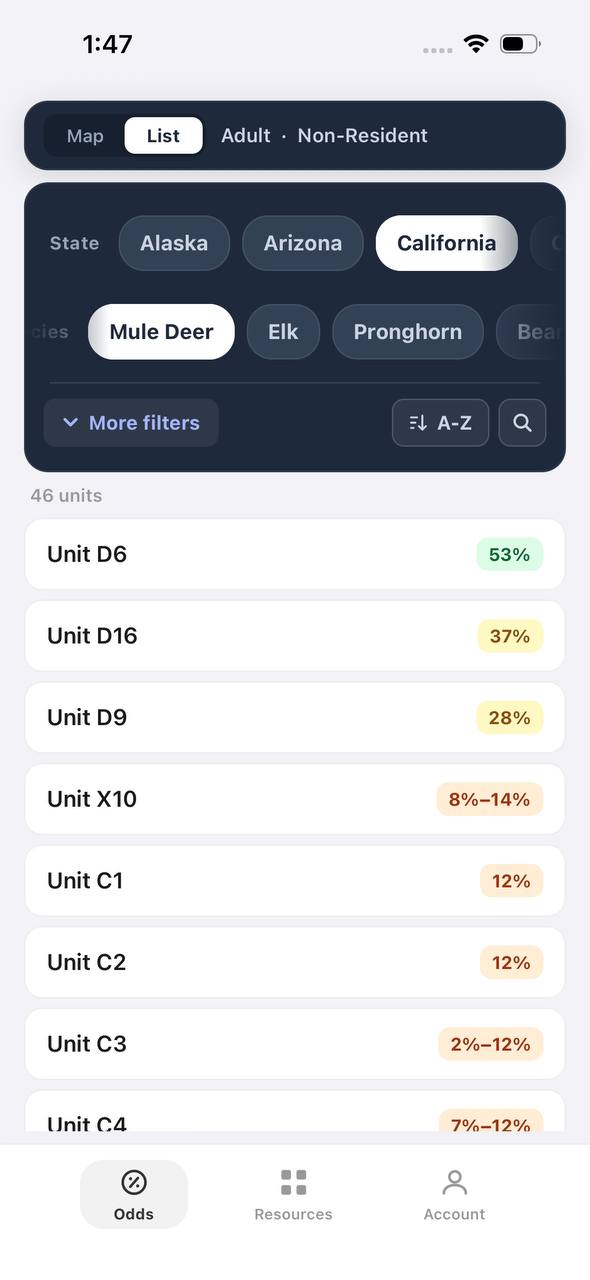
Free to join
Download mobile app
- Detailed draw odds
- Point tracking
- Deadline reminders
- 19 states covered

Free to join
Download mobile app
- Detailed draw odds
- Point tracking
- Deadline reminders
- 19 states covered
Free to join
Download mobile app
- Detailed draw odds
- Point tracking
- Deadline reminders
- 19 states covered
Application Strategy and Timing
Washington's moose application period typically opens in early April and closes in mid-May. Applicants must hold a valid Washington hunting license and pay a non-refundable application fee. Residents pay a lower fee than nonresidents, but both must commit to the application cost annually to build points. Missing the deadline for any reason forfeits that year's point and sets your timeline back.
When applying, hunters can select specific hunt areas and weapon types. Your choice should balance personal hunting preferences with draw odds. Some applicants choose rifle hunts for higher success rates in the field, while others prefer archery for the experience or slightly reduced competition in the draw. Review recent draw statistics from the Washington Department of Fish and Wildlife to identify trends in each hunt area. While odds are universally low, small differences in applicant pools can inform your decision.
Do not waste points on a second-choice or third-choice selection in the moose draw. Washington's system draws first-choice applicants first, and second- or third-choice entries only come into play after first-choice applicants are satisfied. Given the scarcity of moose tags, it is extremely rare for second- or third-choice hunters to draw. Focus your application on your top-choice hunt and accept that drawing any moose tag is a long shot.
Preparing for the Hunt Before You Draw
Because drawing a Washington moose tag can take 15 to 20 years or more, many hunters use the waiting period to prepare. Scouting potential hunt areas, even without a tag, builds familiarity with the terrain, access points, and moose behavior. Washington's moose habitat is dense, heavily forested, and often requires extensive off-trail navigation. Hunters who invest time learning the country before they draw will have a significant advantage when the tag finally comes through.
Physical conditioning is another key area of preparation. Moose hunting in northeastern Washington often involves steep terrain, creek crossings, and the challenge of packing out an animal that can weigh 800 to 1,200 pounds. Cardiovascular fitness, strength training, and backcountry skills should be developed over the years leading up to a successful draw. Many hunters also use the interim to practice calling techniques, sharpen rifle or archery skills, and build a gear list tailored to moose hunting.
Networking with other Washington moose hunters, either through online forums or local hunting clubs, can provide insights into hunt strategies, unit characteristics, and lessons learned from past hunts. The moose hunting community in Washington is small and relatively tight-knit, and experienced hunters are often willing to share advice with those who are respectful and genuinely interested.
FAQ — Washington Moose Draw
How many moose tags does Washington issue each year? Washington typically issues 60 to 70 moose permits annually, split between archery and rifle seasons across northeastern hunt areas.
Do I need preference points to draw a Washington moose tag? Yes. Washington uses a preference point system for moose. Drawing a tag currently requires 10 to 20-plus points depending on the hunt area and whether you are a resident or nonresident.
Can nonresidents draw a Washington moose tag? Yes, but odds are extremely low. Nonresidents are limited to roughly 10% of available permits, typically six to eight tags statewide, and face the same multi-decade point requirements as residents.
What is point creep and how does it affect my chances? Point creep is the gradual increase in points required to draw as more hunters build points each year. It means that even if you are close to drawing, the threshold may rise before you reach it, extending your wait.
Should I apply for a second-choice moose hunt in Washington? No. Second-choice entries are almost never drawn for moose due to the scarcity of tags. Focus your application on your first-choice hunt area and weapon type.
How should I prepare if I am still building points? Use the years before drawing to scout hunt areas, improve physical fitness, practice calling and shooting skills, and connect with experienced Washington moose hunters for advice and strategy.
Was this article helpful?
Previous
Washington Big Game Draw Guide 2027: Deadlines, Species & How to Apply
Washington's 2027 big game draw runs April 1–May 15 for deer, elk, moose, sheep, and goat. Learn how the system works, what tags are controlled hunt vs. general season, and how to maximize your odds.
Related
Guided Grizzly Bear Hunts 2027: Outfitters, Hunt Options & Costs
Grizzly bear hunting is currently legal only in Alaska, with spring and fall hunts ranging from $12,000 to $25,000 depending on location and method. Understanding draw requirements, outfitter selection, and hunt logistics is critical for first-time grizzly hunters.
Next
Washington Deer Point Strategy 2027: How to Build Points and Draw Quality Mule Deer Tags
Washington uses preference points for controlled deer hunts, but most quality mule deer tags require 10-20+ points. Here's how to build points strategically and what to expect in 2027.