Washington Deer Point Strategy 2027: How to Build Points and Draw Quality Mule Deer Tags
Washington's deer point system rewards patience. The state uses true preference points for controlled hunts, meaning hunters with the most points draw first. Quality mule deer tags in the best units now require 10 to 20-plus points, and competition continues to tighten as more hunters enter the system. If you're planning to hunt Washington mule deer in 2027 or beyond, understanding how to build points strategically while still hunting is critical.
How Washington Deer Preference Points Work
Washington awards one preference point per species per year to unsuccessful applicants. Points accumulate until you draw a controlled hunt tag for that species. When you draw, your points reset to zero for that species.
The system is simple: highest point holders draw first. If more hunters hold the same point total than tags available, those applicants enter a random draw. This means that once you reach the minimum point threshold for a unit, you're not guaranteed a tag — you may still compete with others at the same point level.
Points are species-specific. Building deer points does not affect your elk, bear, or other species point totals. You can hunt general-season deer while building points for controlled hunts, but drawing a controlled deer tag resets your deer points to zero.
Quality Mule Deer Units and Point Creep
Washington's best mule deer hunting occurs in eastern units where public land is limited but quality is high. Units like 101 (Blue Mountains), 105 (Tucannon), and 172 (Methow) consistently produce mature bucks, but point requirements have climbed steadily.
As of the 2026 draw, top-tier mule deer tags required 12 to 18 points depending on weapon and season. Point creep — the annual increase in points needed to draw — adds roughly one point per year in high-demand units. If a tag required 15 points in 2026, expect 16 in 2027.
Archery tags in quality units generally require fewer points than rifle tags, but the gap is narrowing. Hunters willing to take an earlier archery season can sometimes draw 3 to 5 points sooner than they would for rifle.
Building Points While Hunting
You don't need to sit out to build points in Washington. The state offers general-season deer tags that allow you to hunt while accumulating points for controlled hunts.
Apply for a controlled hunt as your first choice. If you don't draw, you receive a point and can still buy a general-season deer tag later. This lets you hunt every year while building toward a premium tag.
General-season deer hunting in Washington focuses largely on whitetail in eastern agricultural areas and blacktail in western forests. Mule deer opportunities exist on general tags in select eastern units, but pressure is high and access is limited. Most serious mule deer hunters view general tags as a way to stay active while waiting for controlled-hunt points to mature.
When to Cash In Your Points
Deciding when to apply for a controlled hunt depends on your goals. If you're chasing a true trophy mule deer experience, waiting for 15-plus points to hunt premier units makes sense. If you want a quality hunt without the decade-long wait, mid-tier units drawing at 6 to 10 points offer solid opportunities.
Consider weapon choice carefully. Archery hunts during the rut offer high activity but require close-range shooting skills. Rifle hunts provide longer shots and higher success rates but occur later in the season when deer behavior changes. Muzzleloader hunts fall somewhere in between.
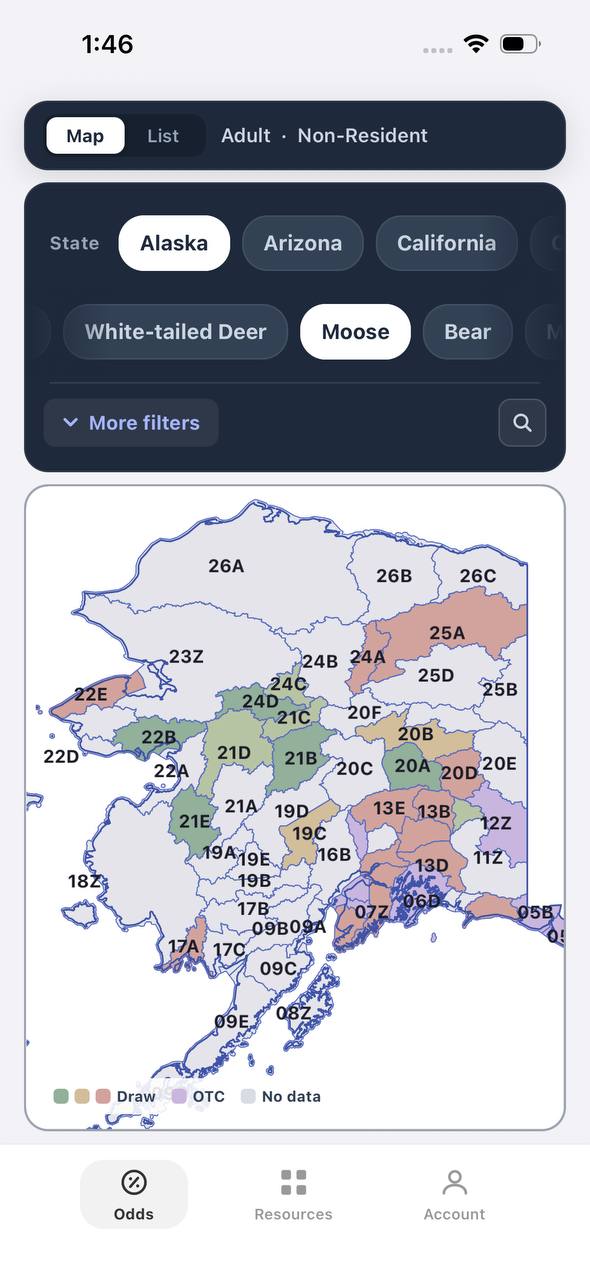
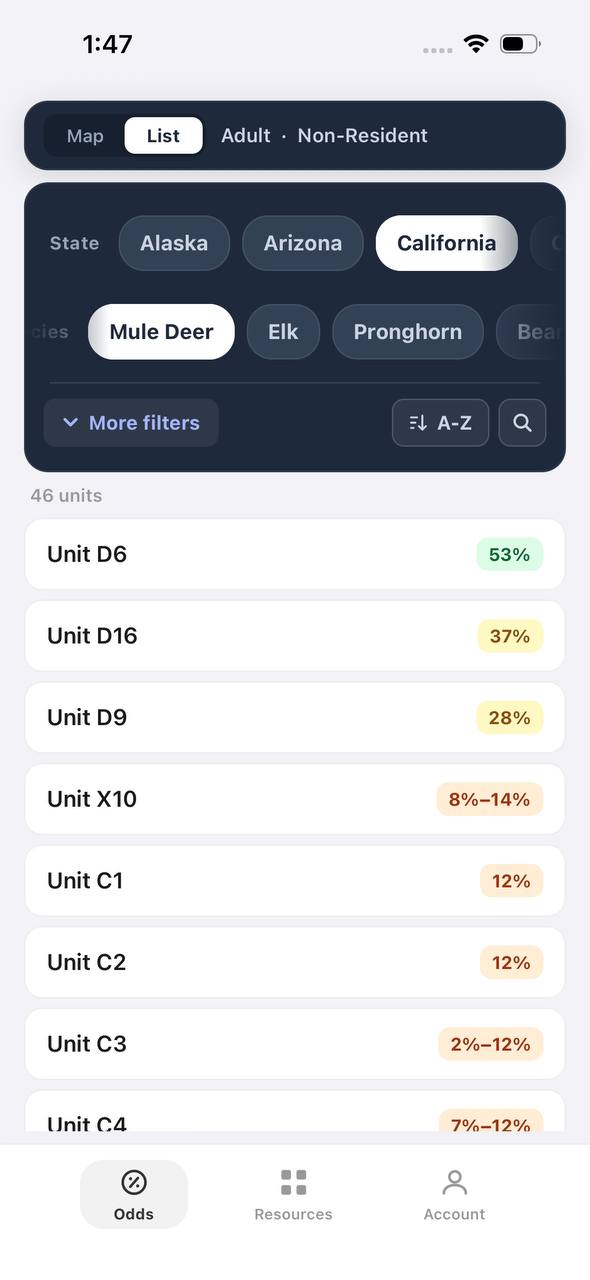
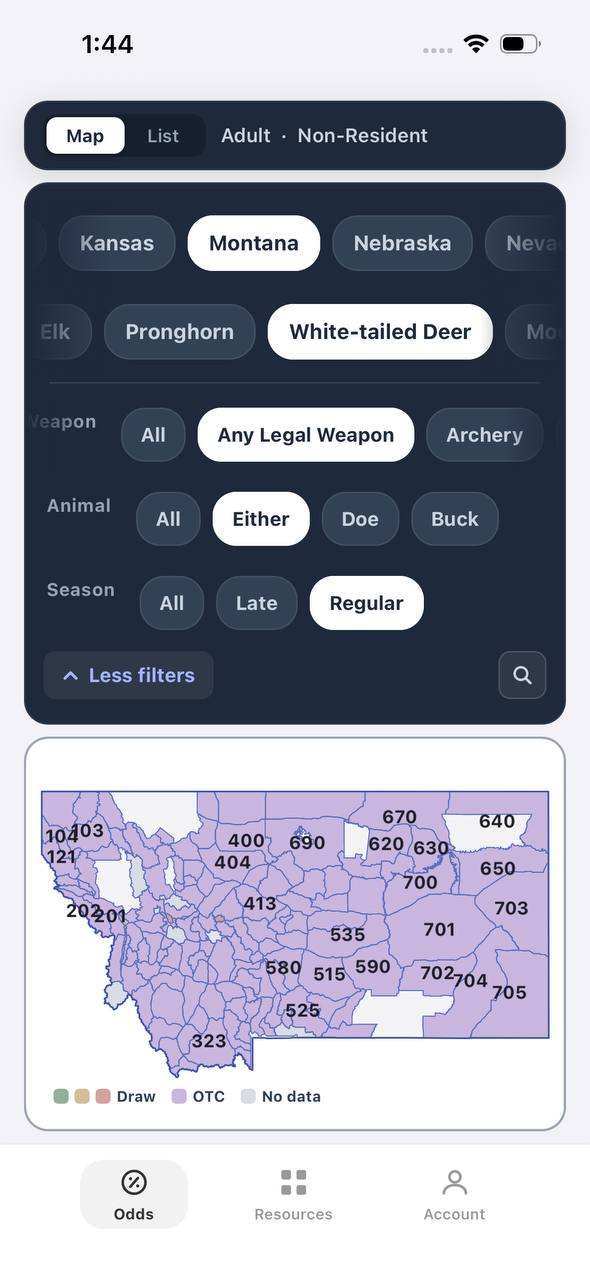
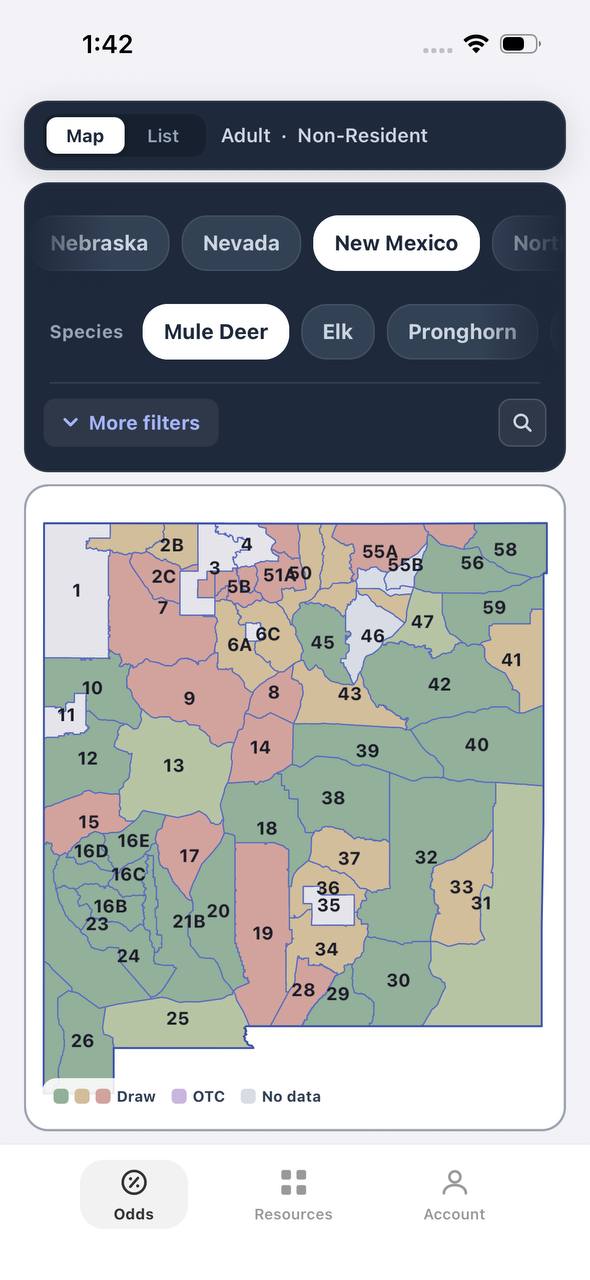
Watch draw odds trends on TAGZ to see where point creep is accelerating. Some units gain a point per year; others hold steady for several years before jumping. Applying for a unit the year before a predicted jump can save you one to two years of waiting.
Free to join
Download mobile app
- Detailed draw odds
- Point tracking
- Deadline reminders
- 19 states covered

Free to join
Download mobile app
- Detailed draw odds
- Point tracking
- Deadline reminders
- 19 states covered
Free to join
Download mobile app
- Detailed draw odds
- Point tracking
- Deadline reminders
- 19 states covered
First-Choice Versus Second-Choice Strategy
Washington allows you to list a second-choice controlled hunt on your application. If you don't draw your first choice, your application enters the second-choice draw with your current point total.
Use your second choice strategically. If you're building points for a long-term goal, list a unit you know you won't draw as your second choice — this ensures you gain a point without accidentally drawing and resetting your total. If you're willing to hunt, list a unit with lower point requirements that still offers quality.
Second-choice draws happen after first-choice draws. Leftover tags from the first round move to the second round, so your odds can be better or worse depending on how many first-choice applicants applied for that unit.
Youth and Mentored Youth Hunts
Washington offers youth-only controlled hunts with lower point requirements and higher draw odds. If you're hunting with a young family member, these hunts provide an earlier path to quality mule deer units.
Youth hunters compete only against other youth applicants, and point totals needed to draw are typically half or less than adult tags in the same unit. A youth might draw a quality tag at 4 to 6 points where an adult needs 12.
Points earned as a youth carry over when the hunter turns 18, giving them a head start in the adult draw pool.
FAQ — Washington Deer Point Strategy
How many points do I need to draw a quality mule deer tag in Washington?
Top-tier mule deer units require 12 to 18 points depending on weapon and season. Mid-tier units with good hunting draw at 6 to 10 points. Point requirements increase roughly one point per year in high-demand units.
Can I hunt deer while building points in Washington?
Yes. Apply for a controlled hunt as your first choice, and if you don't draw, you earn a point and can still purchase a general-season deer tag. This lets you hunt every year while accumulating points for premium controlled hunts.
Do Washington deer points expire?
No. Preference points remain valid indefinitely until you draw a controlled deer tag, at which point your deer points reset to zero. Points are species-specific and do not affect your standing for elk, bear, or other species.
Does Washington use preference points or bonus points for deer?
Washington uses true preference points. Applicants with the most points draw first. If more hunters hold the same point total than tags available, those applicants enter a random draw.
Should I apply for a second-choice controlled hunt?
If you're building points for a long-term goal, list a high-point unit you won't draw as your second choice to ensure you gain a point without resetting. If you're willing to hunt, list a lower-point unit that still offers quality.
Are youth hunts in Washington easier to draw?
Yes. Youth-only controlled hunts have significantly lower point requirements — often half or less than adult tags in the same unit. Points earned as a youth carry over into adulthood, giving young hunters a head start in the adult draw pool.
Was this article helpful?
Previous
Washington Guided Blacktail Deer Hunts 2027: Tags & Outfitters
Washington's Columbian blacktail hunts combine dense coastal timber with challenging spot-and-stalk tactics. Here's how tags work for guided 2027 hunts and what to expect from Western Washington outfitters.

Related
Washington Big Game Draw Guide 2027: Deadlines, Species & How to Apply
Washington's 2027 big game draw runs April 1–May 15 for deer, elk, moose, sheep, and goat. Learn how the system works, what tags are controlled hunt vs. general season, and how to maximize your odds.
Next
DIY vs Guided Whitetail Deer Hunting: How to Choose Your Hunt
Deciding between a DIY whitetail hunt and a guided experience comes down to your budget, skill level, available time, and what you want from the hunt. Both approaches can produce great bucks if you choose the path that matches your resources and hunting goals.