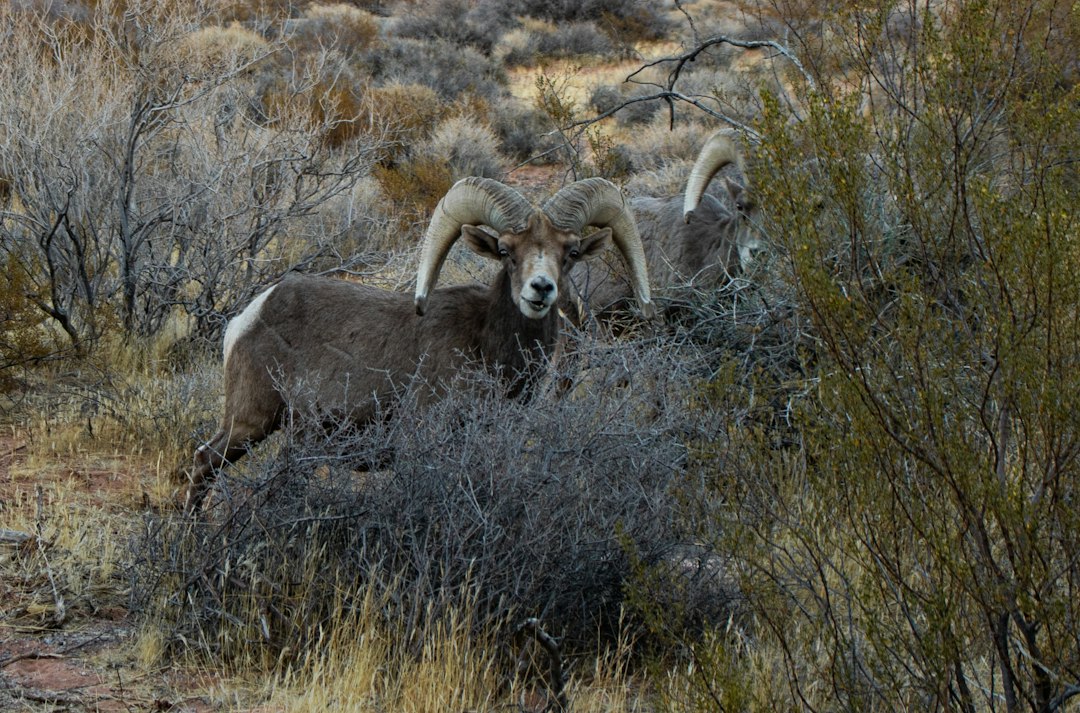
Utah Mule Deer Draw Odds and Tag Guide 2027
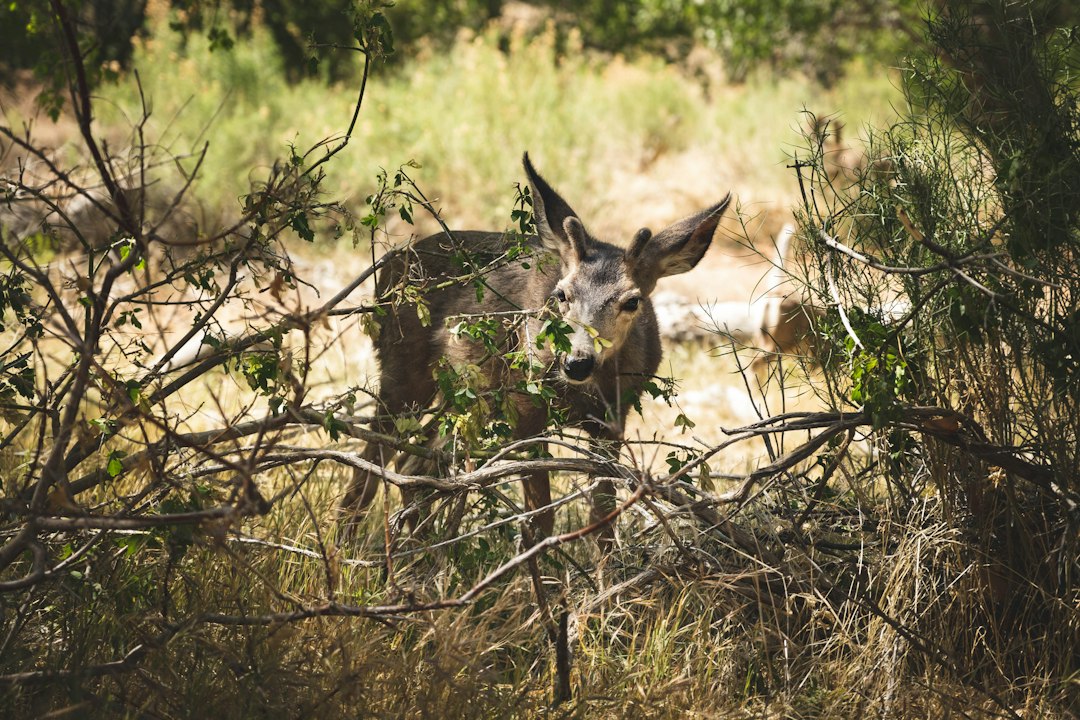
Utah issues more than 38,000 mule deer permits annually, split between guaranteed general-season tags and trophy-caliber limited-entry hunts that can take two decades to draw. The 2027 application opens in late January with a March deadline, and choosing the right unit and weapon makes the difference between hunting this fall and waiting another year. General archery and general any-legal-weapon hunts remain accessible to hunters with zero to three preference points, while limited-entry rifle tags for the Book Cliffs, Henry Mountains, Paunsaugunt, and other premier units demand 15 to 25 points.
How Utah's Mule Deer Draw System Works
Utah uses a preference-point system with bonus-point mechanics for mule deer. Each unsuccessful year earns one preference point, which squares your odds in future draws. A hunter with five points has 25 entries (5²) compared to one entry for a zero-point applicant. Points accumulate separately for deer, elk, pronghorn, and other species. The application period runs late January through early March, with results posted in mid-May. Nonresidents can draw any mule deer tag, but Utah caps nonresident allocation at 10 percent of available permits statewide. Preference points cost $10 per species per year if you apply, and points are forfeited only when you draw.
General-Season Mule Deer Tags
Utah's general mule deer season covers most of the state and offers archery, muzzleloader, and any-legal-weapon hunts. General any-legal-weapon tags are the most popular and account for the bulk of annual deer permits. In 2026, the statewide general any-legal-weapon hunt required zero to three points depending on region, with northern and central units drawing at zero to one point and southern units occasionally requiring two to three. General archery is even easier — most units draw with zero points every year, making it the best option for first-time applicants or hunters building points elsewhere. General muzzleloader hunts fall between archery and rifle in competitiveness, typically requiring one to two points.
General-season hunts occur on public and accessible private land across roughly 25 management units. Success rates average 15 to 25 percent depending on unit and weapon, with higher success in less-pressured southern units like the Fillmore or Beaver. General tags are valid for bucks only, and hunters select a specific unit and weapon when applying. You can list up to five choices in order of preference, and the draw evaluates your first choice before moving to your second. If you draw your third or fourth choice, your points are still consumed.
Limited-Entry Mule Deer Units
Limited-entry units produce the state's largest bucks and operate under strict tag quotas to maintain trophy quality. The most competitive units — Book Cliffs, Henry Mountains, Paunsaugunt, and La Sal Mountains — require 15 to 25 preference points for rifle tags and 10 to 18 points for archery. These hunts offer controlled access, lower hunter density, and significantly higher success rates (often 60 to 85 percent) compared to general seasons. Weapon choice matters: archery tags on the same unit draw five to eight years faster than rifle tags because fewer hunters pursue them and success rates are lower.
Mid-tier limited-entry units like Nine Mile, San Juan, and Cache offer quality hunting with shorter wait times. These units typically require five to 12 points for rifle tags and three to eight points for archery. Success rates run 40 to 60 percent, and the bucks are larger than general-season averages but not quite Book Cliffs caliber. For hunters in the 8-to-12-point range, these units represent the sweet spot between accessibility and trophy potential.
Lower-demand limited-entry units such as Southwest Desert and West Desert draw at two to six points, depending on weapon. These hunts occur in more remote, arid terrain with sparser deer populations, but they still produce mature bucks and offer solitude. Nonresidents face longer odds on all limited-entry units due to the 10 percent cap — expect to add three to five years to resident point requirements.
Application Strategy for 2027
Building points strategically is essential in Utah's squared-bonus system. Hunters with fewer than five points should apply for general-season tags to hunt immediately rather than gambling on limited-entry units they cannot realistically draw. Focus on general archery if you want guaranteed tags every year, or general any-legal-weapon if you have one to three points and prefer rifle hunting. Once you cross five points, you can start targeting mid-tier limited-entry units, but only if you are willing to risk burning points on a unit you may not draw.
Use all five application choices. List your dream unit first if you have competitive points, then fill choices two through five with units requiring fewer points as insurance. This ensures you draw something rather than going home empty-handed. If you draw your second or third choice, you still burn all your points, so choose carefully. Hunters who want to accumulate points without drawing can apply for a premium unit they know they will not draw (like the Book Cliffs with five points), ensuring their application fails and they gain another point for next year.
Nonresidents should expect longer waits and focus on general-season hunts unless they have 20+ points. The 10 percent nonresident cap makes limited-entry tags extremely difficult to draw, and even mid-tier units become long-term commitments. General archery remains the most accessible path for out-of-state hunters who want to hunt Utah mule deer without a decade-long wait.
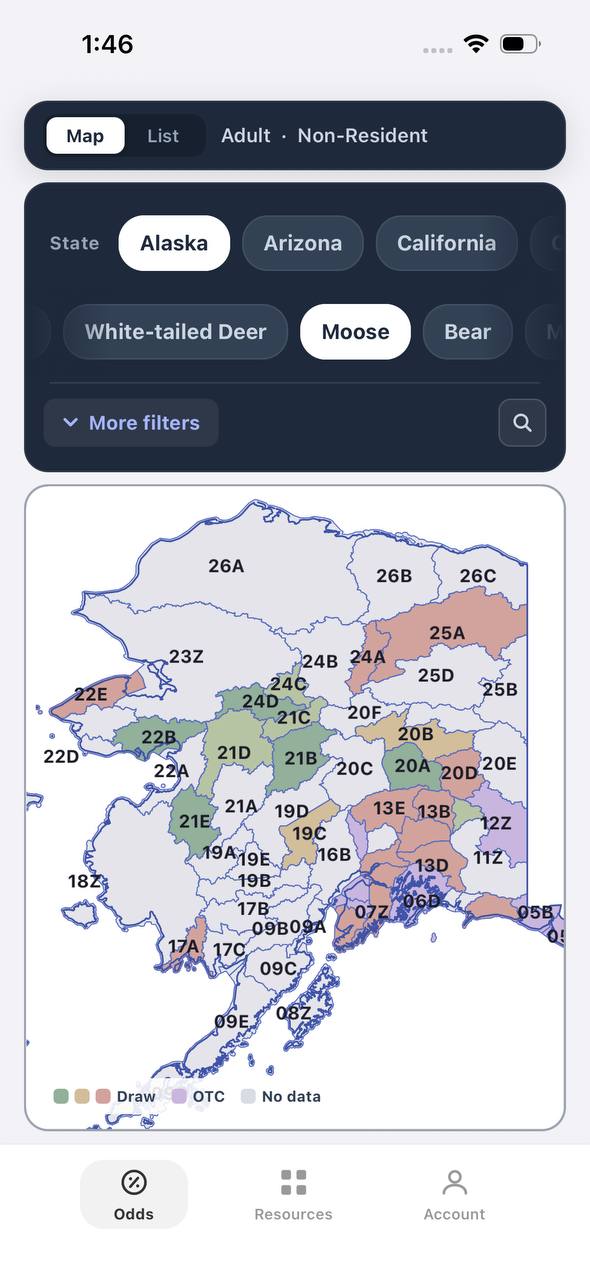
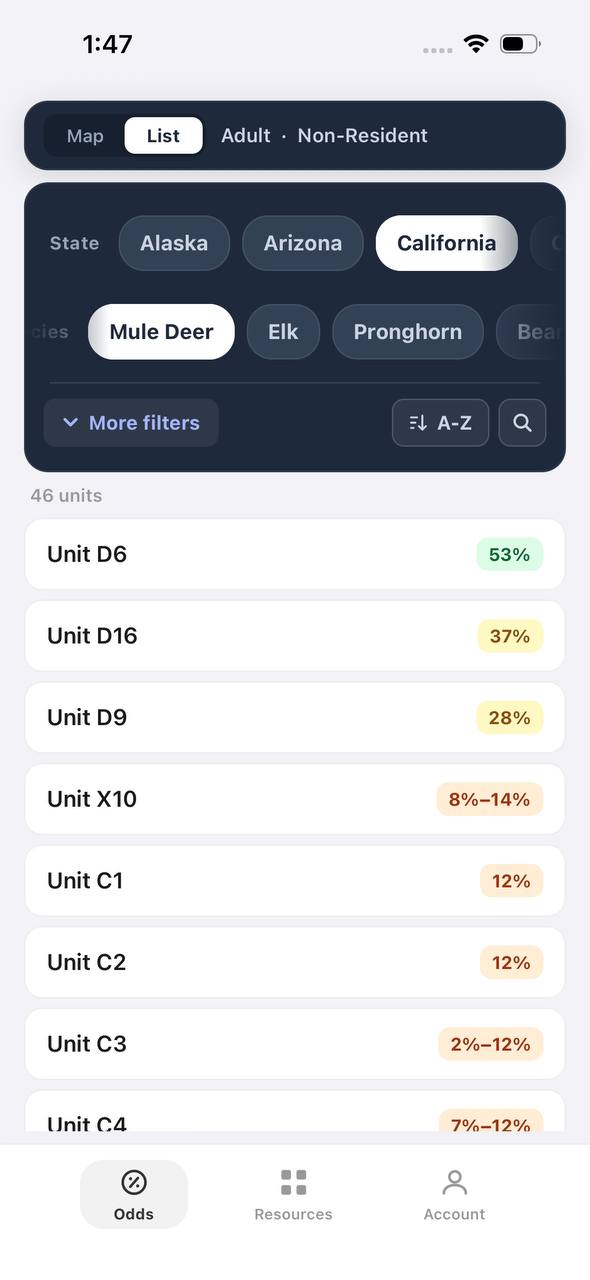
Free to join
Download mobile app
- Detailed draw odds
- Point tracking
- Deadline reminders
- 19 states covered

Free to join
Download mobile app
- Detailed draw odds
- Point tracking
- Deadline reminders
- 19 states covered
Free to join
Download mobile app
- Detailed draw odds
- Point tracking
- Deadline reminders
- 19 states covered
Comparing Weapons and Seasons
Archery hunts run late August through mid-September, coinciding with the tail end of velvet and early pre-rut activity. Success rates are lower (10 to 20 percent on general units, 40 to 60 percent on limited-entry units), but tag availability is higher and point requirements are significantly lower. Archery is ideal for hunters who prioritize opportunity over trophy potential or who want to hunt Utah every year while building points for a rifle tag. Most archery hunters focus on limited-entry units where deer density and buck-to-doe ratios are higher.
Muzzleloader hunts occur in late September and early October, overlapping with the rut in some years. Success rates run 15 to 30 percent on general hunts and 50 to 70 percent on limited-entry hunts. Muzzleloader tags require slightly more points than archery but far fewer than rifle, making them a middle-ground option for hunters comfortable with shorter-range weapons. The season timing offers the chance to catch bucks during the rut, especially in higher-elevation units where the rut peaks in early October.
Any-legal-weapon hunts (primarily rifle) run mid-October through early November, covering the peak rut period. Success rates on general hunts reach 20 to 30 percent, while limited-entry rifle hunts can exceed 80 percent on top-tier units. Rifle tags are the most competitive in every unit category, requiring the longest point waits. The rut timing and weapon effectiveness make rifle hunts the preferred choice for trophy hunters, but the tradeoff is waiting 15 to 25 years for the best units.
How to Apply for Utah Mule Deer Tags
Applications open in late January on the Utah DWR website and close in early March. You must hold a valid Utah hunting or combination license to apply, which costs $65 for residents and $95 for nonresidents. The application fee is $10 for deer, and you can apply for preference points only if you do not want to hunt in 2027. If you apply for a hunt and do not draw, the $10 point fee is included and you automatically gain a point.
Select up to five hunt choices in order of preference. The system evaluates your first choice against all other applicants for that hunt, then moves to your second choice if you fail to draw. You can mix general and limited-entry units in your five choices, but most hunters list limited-entry units first (if they have points) and general units as backups. Once you draw any tag, all your deer preference points are consumed and you start over at zero the following year. Draw results are posted in mid-May, with unsuccessful applicants gaining a point for the 2028 season.
Hunters who draw must purchase their permit by early July or forfeit the tag. Leftover tags from the main draw are sold first-come, first-served starting in late July, though leftovers are rare for general-season hunts and almost nonexistent for limited-entry units. If you miss the main application deadline, you will not be able to apply for mule deer in 2027.
Where First-Time Applicants Should Apply
First-time applicants with zero points should focus on general archery hunts, which draw with zero points statewide. Units like Fillmore, Beaver, and Southwest Desert offer good access, lower hunting pressure than northern units, and a legitimate chance at a mature buck. Success rates run 15 to 25 percent, but the experience and scouting knowledge gained are worth more than waiting years for a limited-entry tag. Archery hunting also allows you to hunt annually while building points for future rifle or limited-entry applications.
If you prefer rifle hunting, apply for general any-legal-weapon tags in southern or central Utah. Units like Fillmore, Beaver, Plateau (Fishlake), and Nebo draw at zero to one point most years and offer huntable deer populations. Success rates are lower than limited-entry hunts, but public-land access is good and the units are large enough to escape pressure if you are willing to hike. Northern units like Cache and North Slope are more competitive and often require two to three points even for general tags.
Nonresident first-timers should apply for general archery with Fillmore, Southwest Desert, or Beaver as their top three choices. These units draw nonresidents reliably and offer solid hunting without the point investment required for limited-entry units. General any-legal-weapon tags are possible for nonresidents but slightly harder to draw due to the 10 percent cap, so have a backup plan or be prepared to wait one year.
For more insights on hunting tactics and unit selection, see Utah Elk Draw Odds and Application Strategy, Western Draw Systems Explained, and Mule Deer Rut Timing and Tactics.
FAQ — Utah Mule Deer Draw
Can you draw a Utah mule deer tag with zero points?
Yes. General archery hunts draw with zero points statewide, and some general any-legal-weapon units in southern Utah draw at zero to one point depending on the year.
How many points do you need for limited-entry mule deer in Utah?
Mid-tier units require 5 to 12 points for rifle and 3 to 8 points for archery. Premium units like Book Cliffs and Henry Mountains require 15 to 25 points for rifle and 10 to 18 points for archery.
Do nonresidents have a chance at Utah limited-entry mule deer tags?
Yes, but nonresident allocation is capped at 10 percent statewide. Expect to need three to five more points than resident averages, and focus on general-season hunts unless you have 20+ points.
What is the difference between general and limited-entry mule deer hunts?
General hunts issue thousands of tags and occur across most of the state with lower success rates (15 to 25 percent). Limited-entry hunts issue fewer tags on managed units with controlled hunter density and higher success rates (40 to 85 percent).
When is the Utah mule deer application deadline for 2027?
Applications open in late January and close in early March. Draw results are posted in mid-May. Missing the deadline means you cannot apply for mule deer in 2027.
Should you apply for general or limited-entry hunts if you have five points?
It depends on your goals. Five points are enough for mid-tier limited-entry units like Nine Mile or San Juan, but you will burn all your points. If you want to hunt every year, stick with general tags and save your points for a premium unit later.
Was this article helpful?
Previous
Nevada Squared Bonus Points Explained: How the 2027 Draw Really Works
Nevada squares your bonus points in its big game draw, dramatically improving odds for hunters with multiple years invested. Here's how the system works and what it means for your 2027 application strategy.

Related
New Mexico Mule Deer Draw Odds and Tag Guide 2027
New Mexico's 2027 mule deer draw offers both quality limited-entry hunts and accessible general-season opportunities across varied terrain. Understanding the two-tier system and unit-specific draw odds is essential for building a strategic application.
Next
Nevada Guided Bighorn Sheep Hunts 2027: Bonus Points & Costs
Nevada's bighorn sheep draw uses bonus points and costs $3,000+ for nonresidents. Here's how the system works, what guided hunts cost, and your realistic odds of drawing.