Utah Elk Draw Odds With Five Points: 2027 Application Strategy
Five preference points positions Utah elk applicants at a strategic threshold. You're past the first-timer disadvantage but not yet competing for the state's most coveted tags. Several quality rifle hunts become realistic draws at this point level, particularly in units where resident and nonresident odds converge around the five-point mark. The 2027 application period runs February 8 through March 6, with results posted in late May. Understanding which hunts match your point total—and which require a year or two more—determines whether you hunt this fall or bank another season.
General-Season Any-Bull Hunts at Five Points
Utah's general-season any-bull rifle hunts operate on a 50/50 split-season structure. Applicants choose either an early hunt (typically late September through early October) or a late hunt (mid-October through late November). These hunts require preference points to draw, unlike spike hunts which often go to applicants with zero points.
With five points, nonresidents have drawn recent general any-bull hunts on the Wasatch Mountains (West, East, and Central units), Nebo, Manti, and Fillmore units. Resident odds at five points are typically stronger, with draws occurring across most general units. The Cache unit consistently requires more points—often seven to nine for nonresidents—due to higher demand and proximity to population centers. San Juan and Book Cliffs units similarly trend toward six to eight points for reliable draws.
General-season hunts produce mature branch-antlered bulls but require significantly more effort than limited-entry units. Success rates range from 15% to 30% depending on unit and hunter skill. These hunts reward physical fitness, scouting, and willingness to hunt pressure.
Limited-Entry Rifle Hunts Within Reach
Several limited-entry units enter realistic territory at five points, particularly for hunters willing to apply as second or third choice or target specific season dates. The Monroe/South and Paunsaugunt units have seen nonresident draws at five points for mid-season rifle hunts in recent years, though odds remain under 10%. Fishlake, Nebo, and Manti limited-entry hunts occasionally draw at this level when applicant pools shift.
Resident applicants with five points show stronger odds on these same units, particularly for early or late rifle seasons where competition thins. The Wasatch Mountains (West) limited-entry hunts, Boulder/Kaiparowits, and Plateau/Thousand Lakes units become viable options. Draw odds fluctuate year to year based on point creep, quota changes, and hunter preference shifts, but five points generally places you in the middle tier of applicants for many limited-entry opportunities.
Limited-entry hunts offer significantly higher success rates—often 50% to 80%—and the chance at mature 320+ class bulls. These hunts justify the wait for many applicants, though Utah's point system does not guarantee a draw at any threshold.
Archery and Muzzleloader Options
Five points opens additional doors for weapon-restricted seasons. General-season archery any-bull hunts across most units draw with fewer points than rifle hunts, often requiring three to five points for nonresidents and one to three for residents. Archery hunts run from mid-August through mid-September, coinciding with the rut and bugling activity.
Muzzleloader hunts fall between archery and rifle in competitiveness. General-season muzzleloader any-bull tags on units like the Wasatch, Manti, and Fillmore typically require four to six points for nonresidents. Limited-entry muzzleloader hunts become marginally more accessible than their rifle counterparts, though premium units still demand eight to twelve points.
Archery hunters willing to target limited-entry units may find five points sufficient for mid-tier hunts. The Monroe, Fillmore, and Plateau units have shown draws at this level in recent seasons, particularly when applied for as a second or third choice. Success rates for archery limited-entry hunts range from 20% to 50%, significantly lower than rifle but higher than general archery.
Point Costs and Application Strategy
Utah operates a preference-point system where applicants with more points draw before those with fewer. Points cost $10 for residents and $10 for nonresidents as part of the application process. You receive a point automatically if you apply and do not draw, or you can purchase a point without applying for $10 during a point-only period.
The application fee is $15 for residents and $75 for nonresidents. If you draw, you pay the license cost: $50 resident general elk, $55 resident limited-entry elk, $465 nonresident general elk, and $565 nonresident limited-entry elk. Unsuccessful applicants forfeit the application fee but retain their points plus one additional point for the current year.
Utah allows up to five choices on your application, ranked in order of preference. The system evaluates your first choice first, then proceeds to subsequent choices only if you fail to draw your top options. Strategic applicants often place a high-demand unit as their first choice (accepting they likely will not draw), a realistic five-point unit as their second choice, and a near-guarantee unit as their third choice.
Free to join
Download mobile app
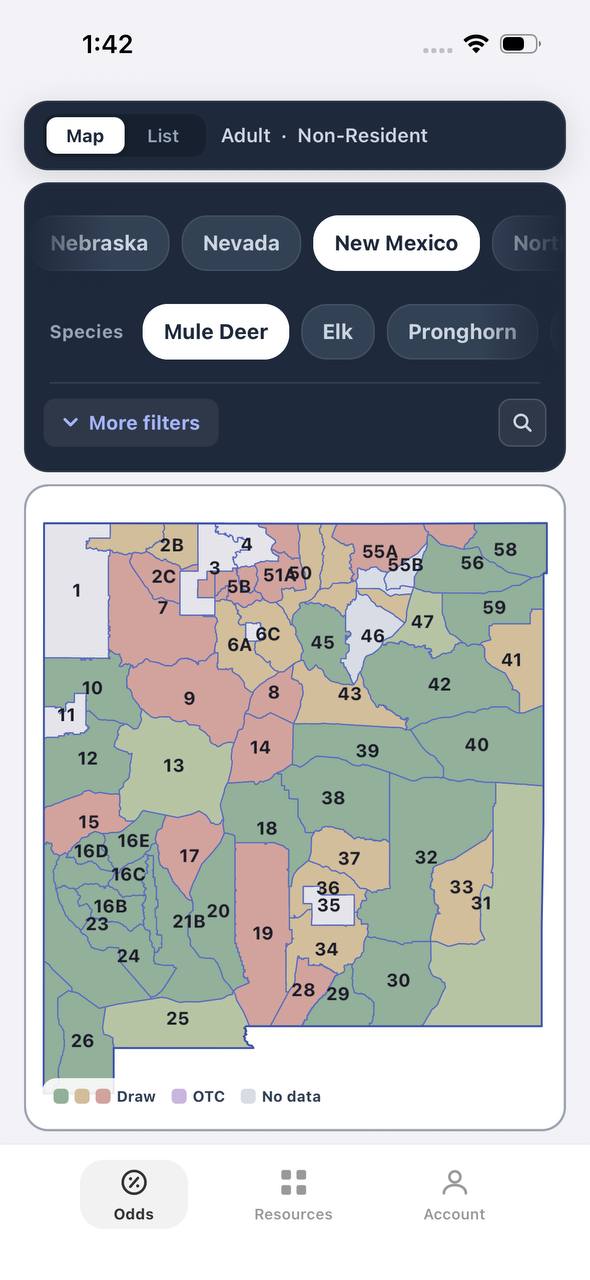
- Detailed draw odds
- Point tracking
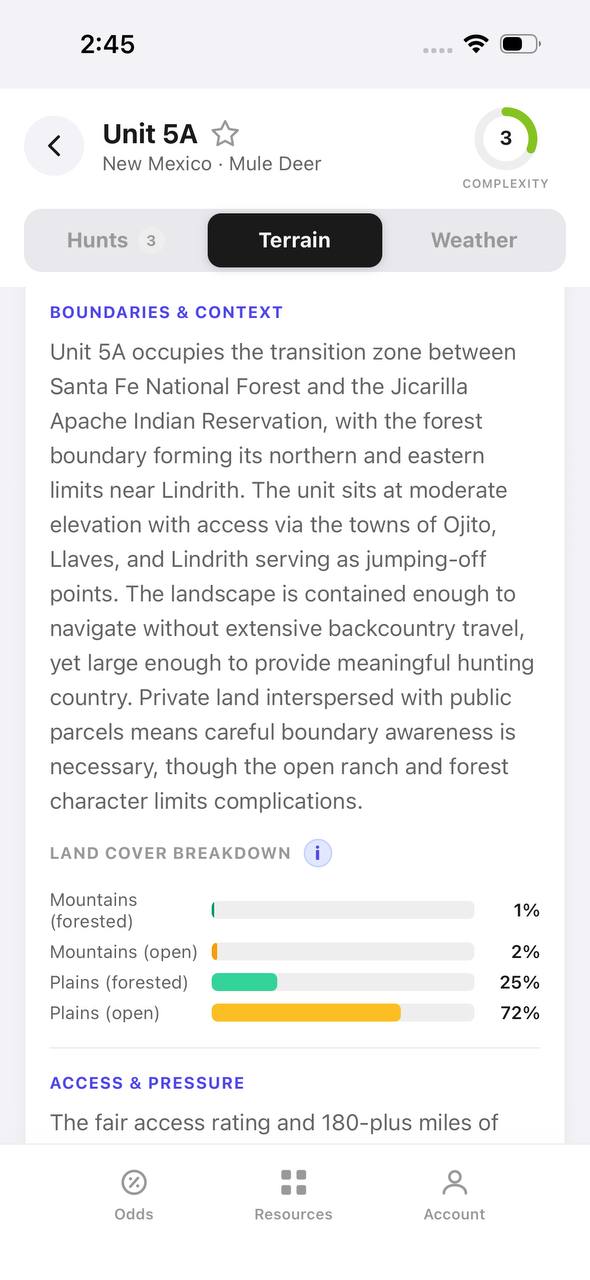
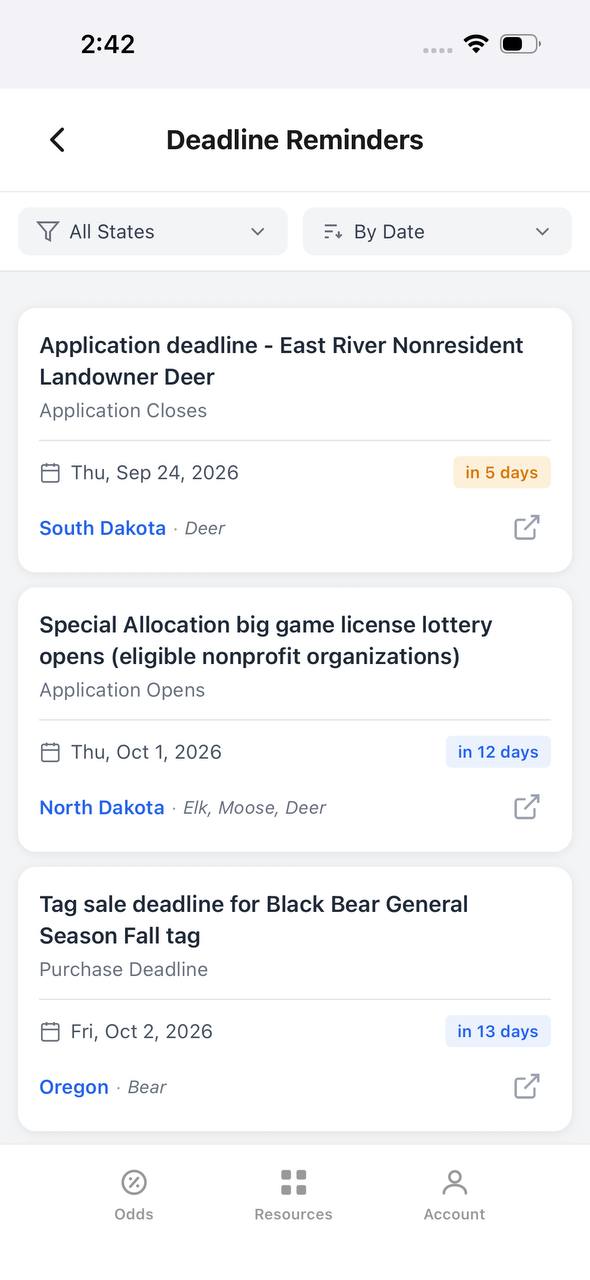
- Deadline reminders
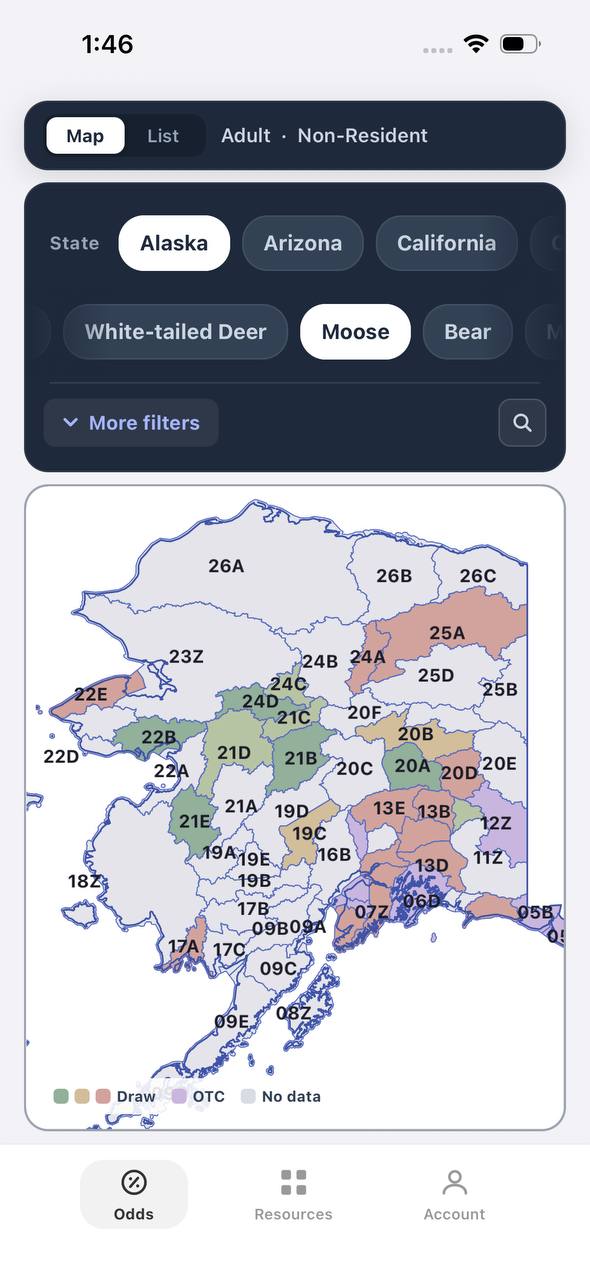
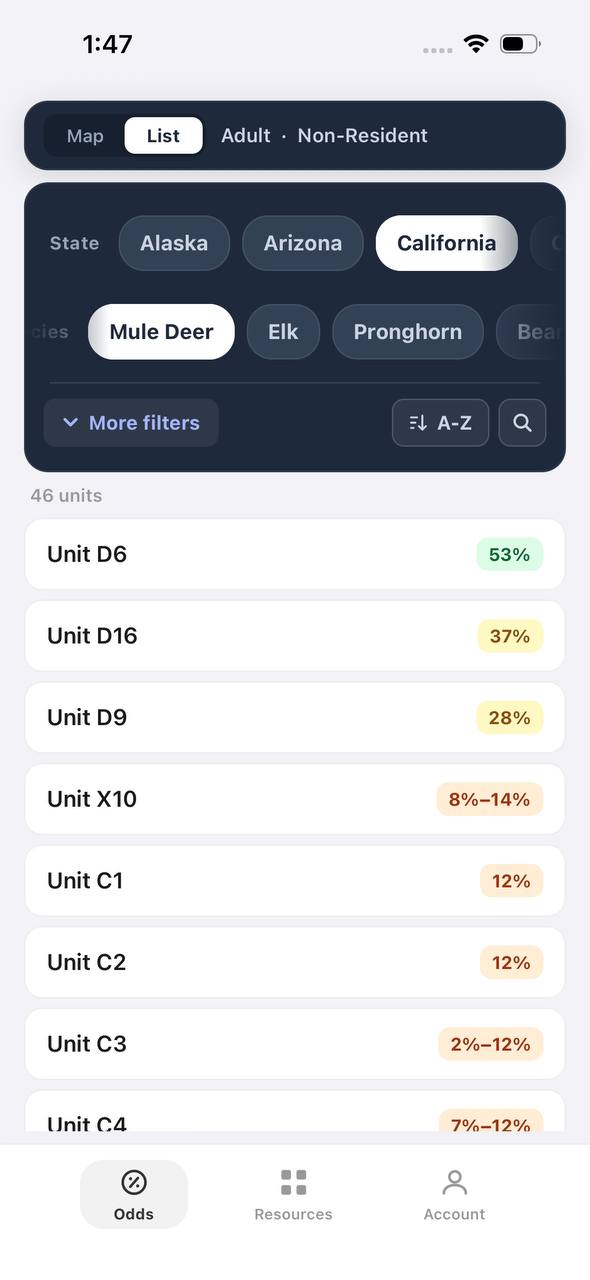
- 19 states covered

Free to join
Download mobile app
- Detailed draw odds
- Point tracking
- Deadline reminders
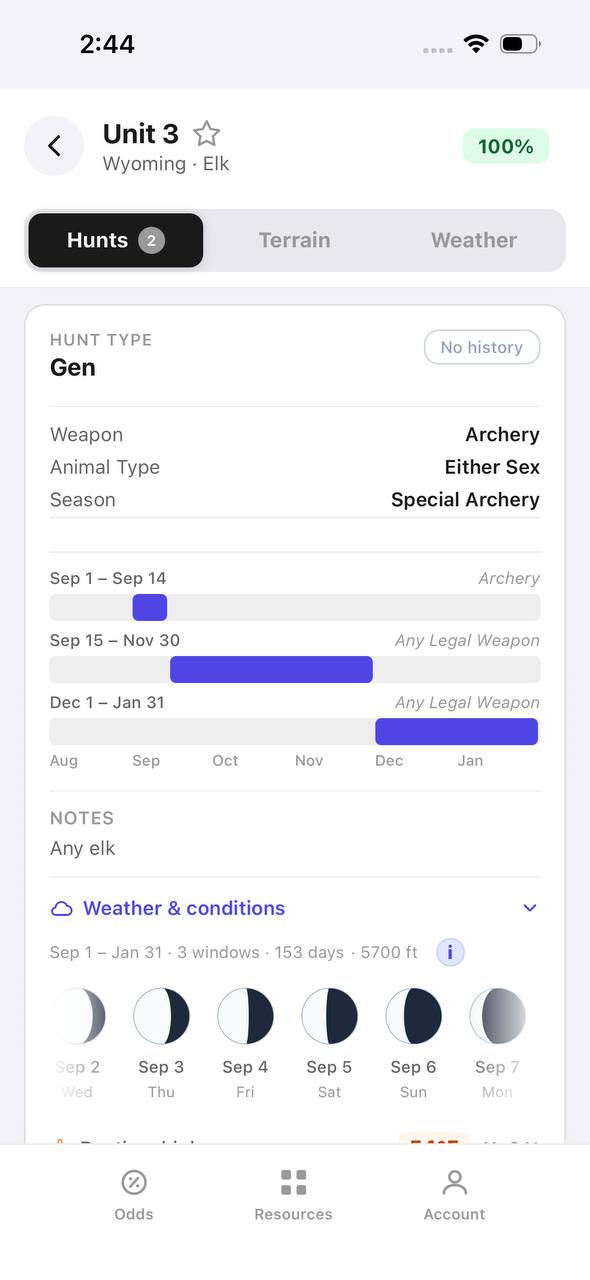
- 19 states covered
Free to join
Download mobile app
- Detailed draw odds
- Point tracking
- Deadline reminders
- 19 states covered
Multi-Season and Unit Combinations
Utah's choice structure rewards research and flexibility. You can mix weapon types and seasons across your five choices—archery for choice one, rifle for choice two, muzzleloader for choice three. Many applicants use this flexibility to maximize draw probability while still reaching for premium tags.
A common five-point strategy for nonresidents: first choice on a limited-entry rifle hunt requiring eight to ten points (low odds but possible in a good year), second choice on a general any-bull rifle hunt on the Manti or Wasatch (moderate odds), third choice on a spike hunt (near-guarantee). This approach balances ambition with the desire to hunt in 2027 rather than waiting another year.
Resident applicants with five points might structure choices differently: limited-entry muzzleloader as first choice, general any-bull rifle on a moderate-demand unit as second choice, archery any-bull as third choice. Residents draw spike hunts with zero to two points, making spike tags a less strategic use of a choice slot at five points.
When to Wait vs. When to Apply
Point creep affects Utah elk draws like most Western states. Units that drew at five points three years ago may now require six or seven, particularly for nonresidents on high-profile units. The Division of Wildlife Resources publishes draw odds after each season, showing the points required for 100% draw probability, 50% draw probability, and the minimum points drawn in the random portion.
If your target unit shows six or seven points for a 50% draw and you hold five, you face a decision: apply with low odds and risk burning a year, or bank another point and apply with stronger odds next season. There is no universal answer. Applicants focused solely on odds optimization often wait. Applicants who value hunting this year over statistical optimization apply with moderate odds and accept the uncertainty.
One consideration: Utah's random draw component. A portion of tags (generally less than 10% for most hunts) goes to a random draw among all applicants, regardless of points. This means zero-point applicants occasionally draw tags that typically require eight points, and five-point applicants occasionally draw tags that typically require ten. The random element is small but real.
Resident vs. Nonresident Draw Dynamics
Utah allocates up to 10% of limited-entry tags to nonresidents, though the actual percentage varies by unit and often falls below this cap. General-season tags face no nonresident quota but still show resident preference due to higher resident applicant volume and lower point requirements.
Nonresident five-point holders face stiffer competition than resident five-point holders on nearly every hunt. A resident with five points may have 60% to 80% odds on a general rifle any-bull hunt, while a nonresident with five points may have 30% to 50% odds on the same hunt. Limited-entry disparities widen further.
Nonresidents should account for this gap when planning. A hunt listed as "five points to draw" in the odds report may refer to resident draws. Always check both resident and nonresident columns in the official draw odds publication. Nonresident applicants benefit from choosing units with higher tag quotas, where the 10% allocation yields more actual tags and slightly better odds.
Internal Links to Related TAGZ Content
For a broader view of Utah's elk hunting landscape, see our complete guide to Utah elk units comparing trophy potential, public land access, and draw requirements across the state. Applicants new to preference-point systems should review how preference points work in Western states to understand the mechanics and common pitfalls. If you're weighing whether to burn points this year or bank them, our analysis of Utah point creep trends shows which units gain points faster and where point inflation has slowed. Nonresident hunters juggling applications across multiple states benefit from our Western draw calendar and deadline tracker. Finally, if five points feels frustrating and you want to hunt elk in 2027 regardless of draw outcomes, consider OTC elk opportunities in neighboring states like Colorado and Idaho.
FAQ — Utah Elk Draw Odds With Five Points
Can you draw a Utah general any-bull rifle tag with five points?
Yes. Five points typically draws general any-bull rifle tags on most Utah units for residents, with odds ranging from 50% to near-100% depending on the unit. Nonresidents have moderate odds (30% to 70%) on mid-demand units like Manti, Nebo, and Wasatch, but may need six to eight points for Cache or San Juan.
What are the best limited-entry elk units to apply for with five points?
Monroe/South, Paunsaugunt, Fishlake, Nebo, and Manti limited-entry hunts occasionally draw at five points, particularly for residents or when applied as a second or third choice. Odds remain low (under 10% for most hunts), but these units offer realistic chances compared to premium units requiring ten or more points.
Does Utah use preference points or bonus points for elk?
Utah uses preference points. Applicants with the most points draw first. After all tags are allocated in the preference portion, any remaining tags (typically a small percentage) go to a random draw where all applicants have equal odds regardless of points.
Should nonresidents with five points apply for Utah elk or wait another year?
If your goal is a general any-bull rifle tag on a mid-tier unit, five points gives you a realistic chance (30% to 50% odds on many hunts). If your goal is a specific limited-entry unit requiring seven or more points, waiting improves your odds. The answer depends on whether you prioritize hunting in 2027 or optimizing for a specific tag in future years.
How much does it cost to apply for Utah elk as a nonresident?
The application fee is $75 for nonresidents, charged whether you draw or not. If you draw, you pay an additional license fee: $465 for general elk or $565 for limited-entry elk. Preference points cost $10 and are added automatically if you apply and do not draw.
Can you apply for both rifle and archery elk in the same year?
Yes. Utah allows up to five hunt choices on a single application, and you can mix weapon types and seasons. A common approach is to list a rifle hunt as your first choice, an archery hunt as your second choice, and a spike or general hunt as your third choice to maximize your chance of drawing something.
Was this article helpful?
Previous
Oregon Nonresident Elk Draw Odds 2027: What You Need to Know
Oregon's nonresident elk draw remains challenging but accessible for hunters willing to target the right units and weapon types. Understanding preference points and tier-based allocation gives you a strategic edge.

Related
Wyoming Nonresident Elk Draw Odds 2027: Complete Application Guide
Wyoming's 2027 nonresident elk draw combines regular-priced and special-fee options across 140+ hunt areas. Understanding the preference point system and regional demand patterns is essential for first-time and experienced applicants alike.
Next
Oregon Guided Roosevelt Elk Hunts 2027: Tags & Outfitters
Oregon offers Roosevelt elk hunts through both controlled and general-season tags, with guided options available on private land and public units across the Coast Range and Cascades.