Oregon Guided Roosevelt Elk Hunts 2027: Tags & Outfitters

Oregon's Roosevelt elk hunts combine trophy potential with logistical accessibility, making guided hunts an attractive option for nonresidents and first-timers. Roosevelt elk — the largest-bodied elk subspecies — thrive in Oregon's dense coastal forests and western Cascade slopes. Hunters can pursue them through controlled hunts requiring a draw application or general-season tags available over the counter, with guided outfitters operating across prime units.
Oregon Roosevelt Elk Tag Options
Oregon offers two pathways to Roosevelt elk tags. Controlled hunts cover premium units with limited tags distributed by lottery, typically offering better bull-to-cow ratios and less hunting pressure. General-season hunts require no draw and are available to all license holders, though they often mean shared public land and shorter seasons. Both residents and nonresidents can apply for controlled hunts or purchase general tags, though nonresident controlled-hunt tag allocations are capped.
Controlled Roosevelt elk hunts generally open for application in late spring, with deadlines falling in early June for the main draw. Bonus points accumulate for Oregon residents and nonresidents who apply unsuccessfully, improving odds in subsequent years. General-season tags go on sale midsummer and remain available until sold out or the season opens, usually in late August or September depending on weapon type.
Roosevelt Elk Hunt Types and Seasons
Oregon structures Roosevelt elk seasons by weapon: archery, rifle, and muzzleloader. Archery seasons typically run late August through September, rifle seasons span October and November, and muzzleloader seasons often overlap or follow rifle periods. Controlled hunts may offer early-season rifle opportunities or late-season rut hunts, while general seasons tend toward longer, more flexible dates with either-sex or spike-only restrictions depending on the unit.
Guided hunts most commonly target rifle and archery seasons. Archery hunters pursuing Roosevelt elk in September encounter bugling bulls in dense timber and clearcuts, requiring close-range calling skills. Rifle hunts in October and November provide better weather windows and longer shooting lanes as foliage thins, though bulls become more nocturnal after opening-day pressure.
Where to Hunt Roosevelt Elk in Oregon
Roosevelt elk occupy western Oregon from the Coast Range to the Cascade foothills. Prime units include the Saddle Mountain, Trask, Alsea, and Siuslaw units along the coast, and Santiam, McKenzie, and Willamette units in the Cascades. These areas feature a mix of public land managed by Oregon Department of Forestry, Bureau of Land Management, and U.S. Forest Service, alongside private timber company holdings.
Guided hunts often secure access to private timberlands where elk densities remain high and hunting pressure stays manageable. Public-land DIY hunters face steeper terrain, limited road access, and competition, particularly on general-season hunts. Coastal units receive heavy rainfall during fall seasons, turning logging roads to mud and limiting vehicle access deep into units.
Choosing a Roosevelt Elk Outfitter
Oregon outfitters typically offer fully guided hunts lasting five to seven days, including lodging, meals, and in-field guiding. Pricing ranges from $4,000 to $8,000 depending on season, accommodations, and private-land access. Reputable outfitters hold Roosevelt elk as a specialty and operate in consistent units year after year, building relationships with landowners and scouting year-round.
When evaluating outfitters, ask about success rates, average bull size, hunt structure (spot-and-stalk vs. stand hunting), physical demands, and whether the outfitter holds landowner preference tags that bypass the controlled-hunt draw. Some outfitters offer semi-guided or drop-camp options at lower price points, suitable for experienced hunters who want access but prefer hunting independently.
Key questions for prospective clients: Does the outfitter operate on private land, public land, or both? What percentage of clients harvest bulls versus seeing opportunity? How many hunters share a guide? What happens if weather closes roads? Are trophy fees separate from the base hunt cost? Verify the outfitter's Oregon Guide License and request references from recent clients.
Free to join
Download mobile app
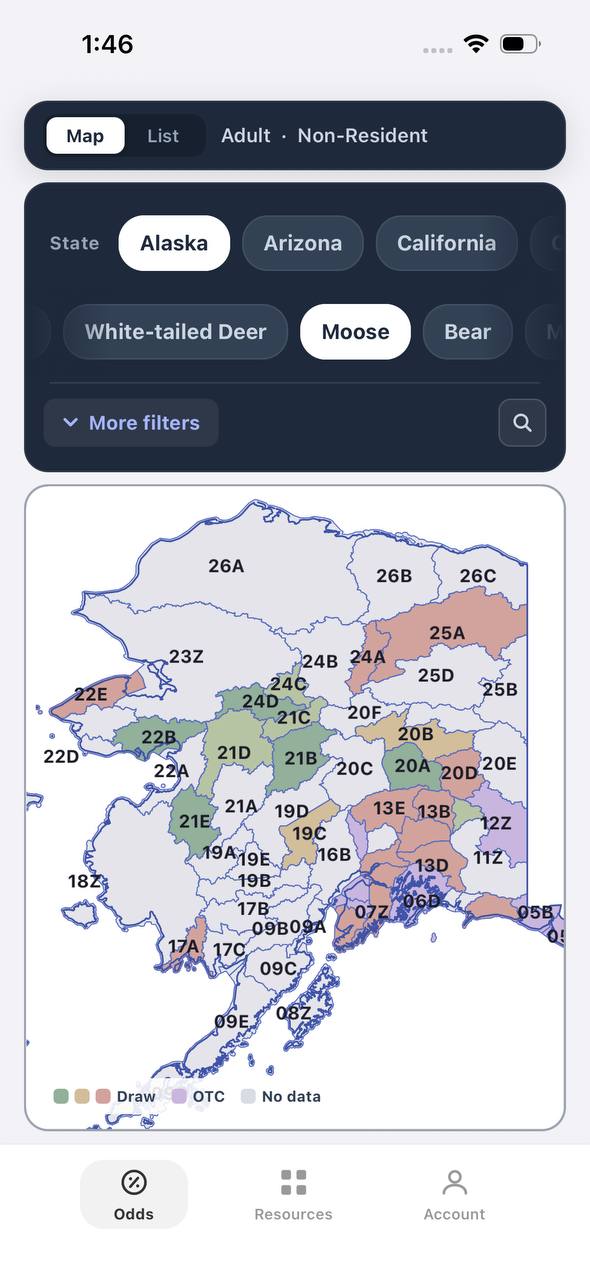
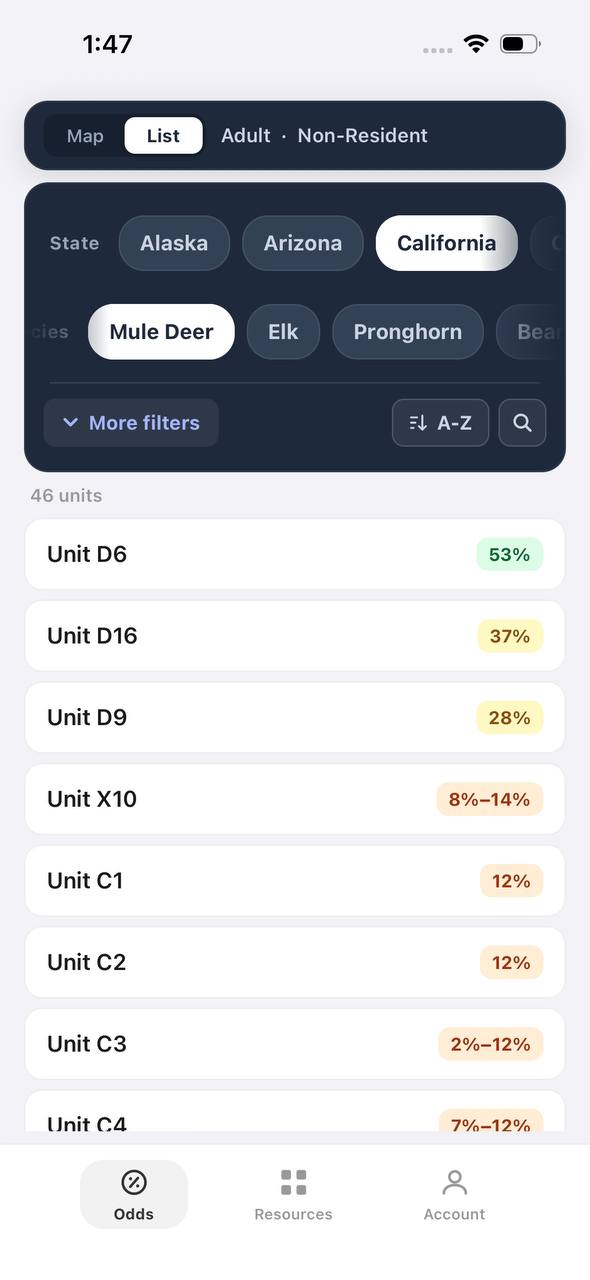
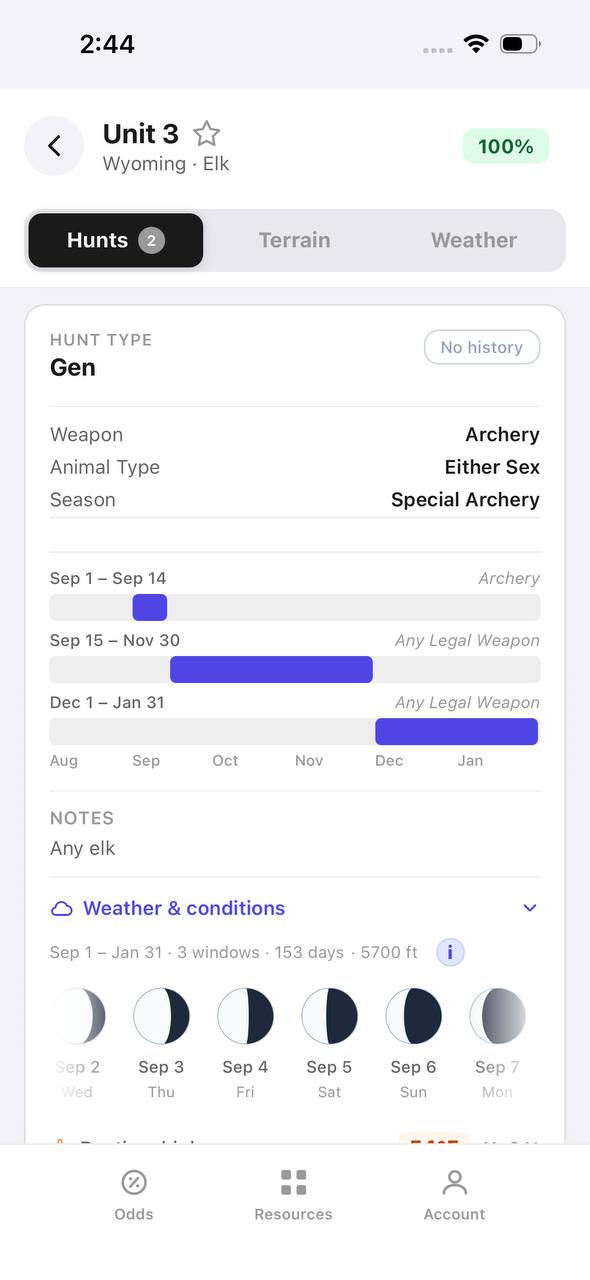
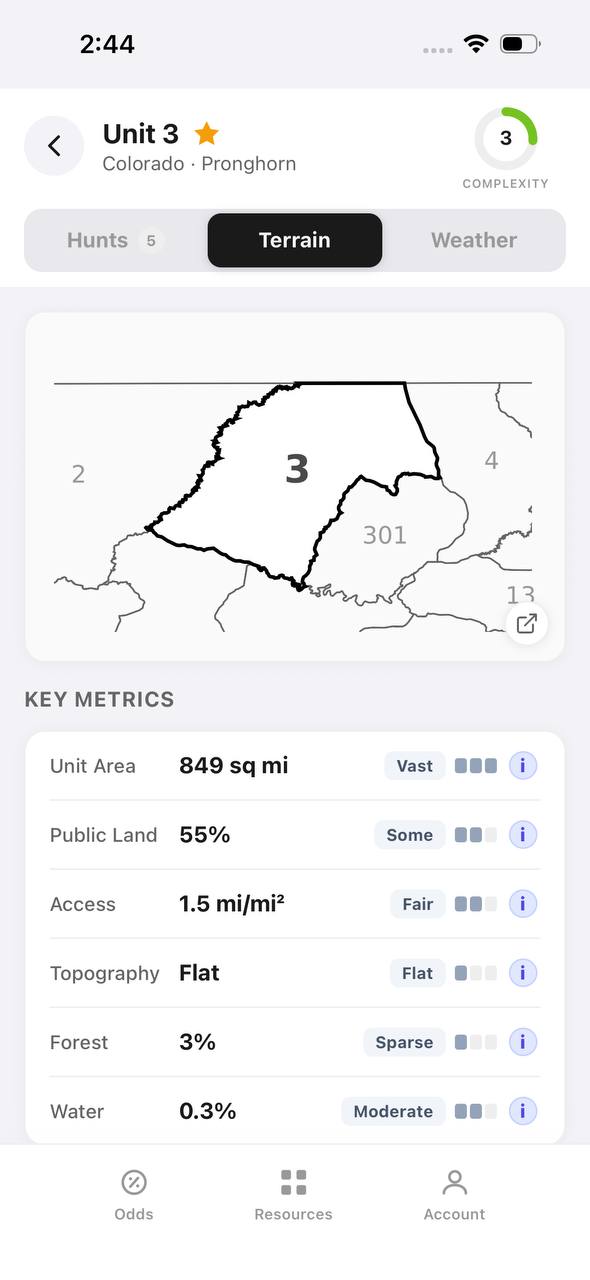
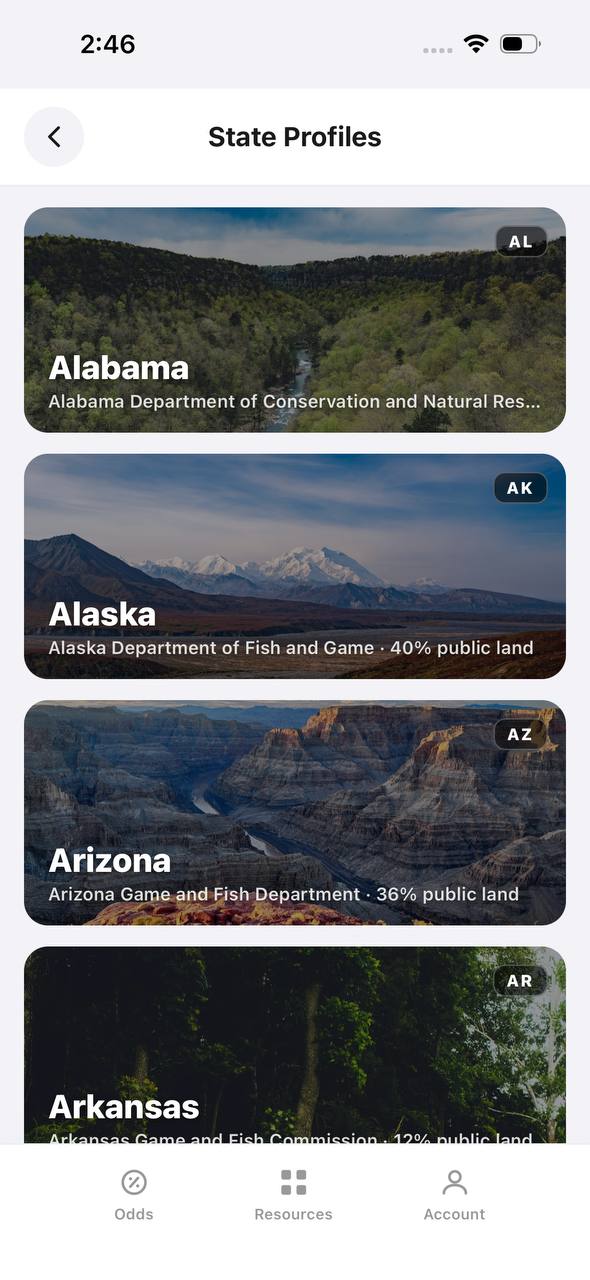
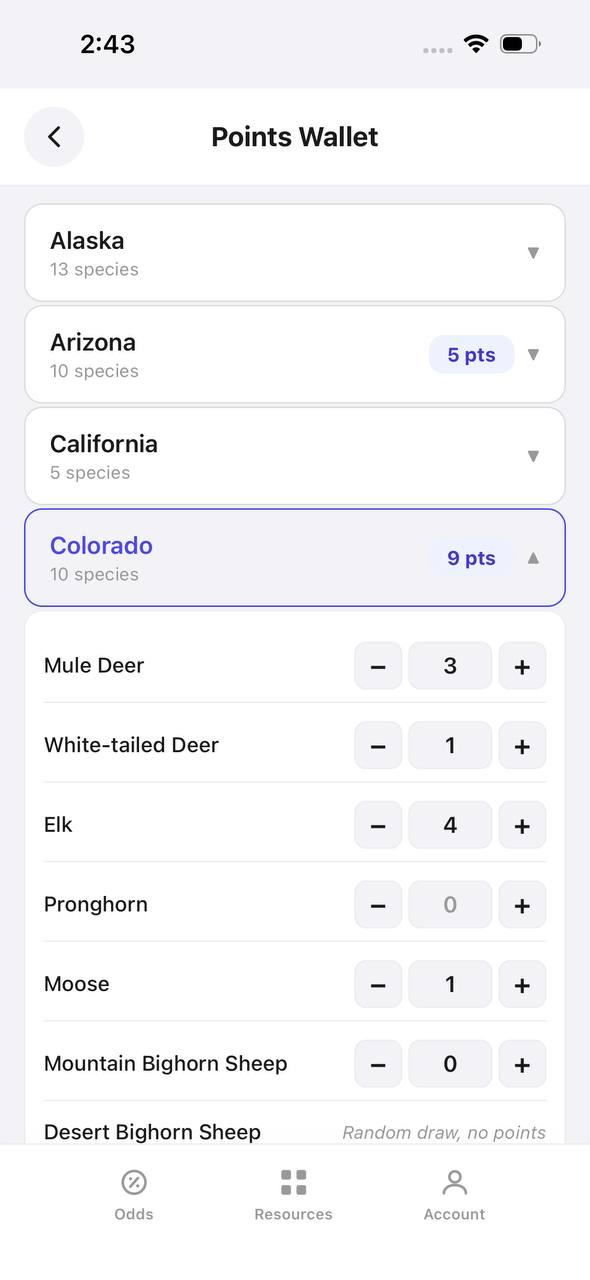
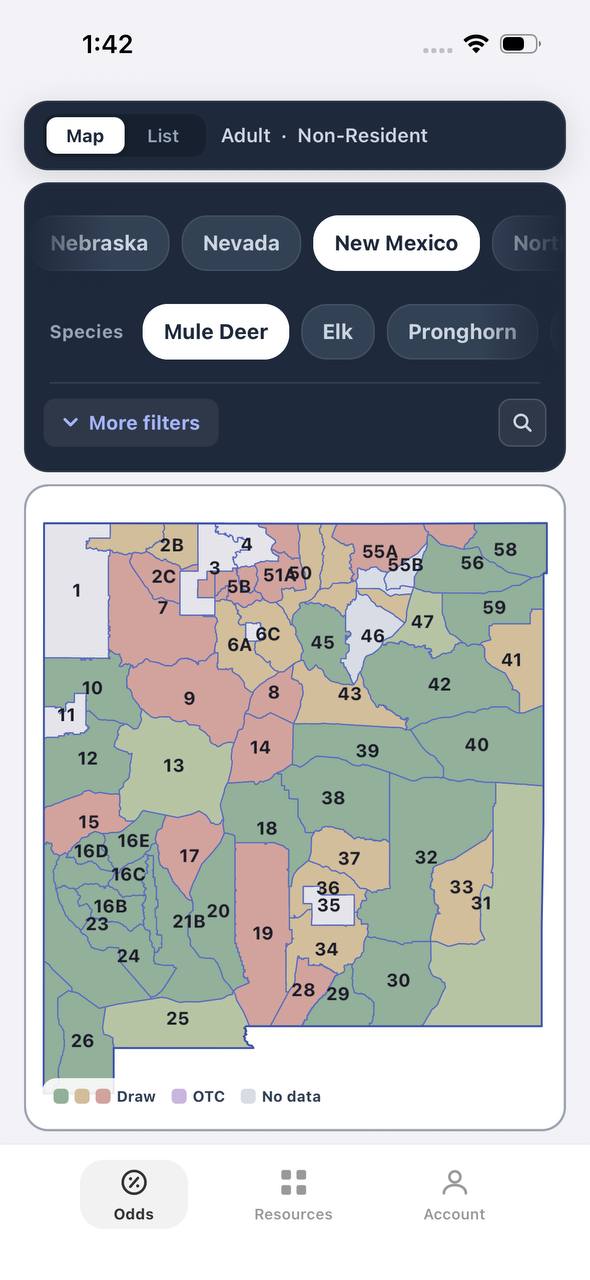
- Detailed draw odds
- Point tracking
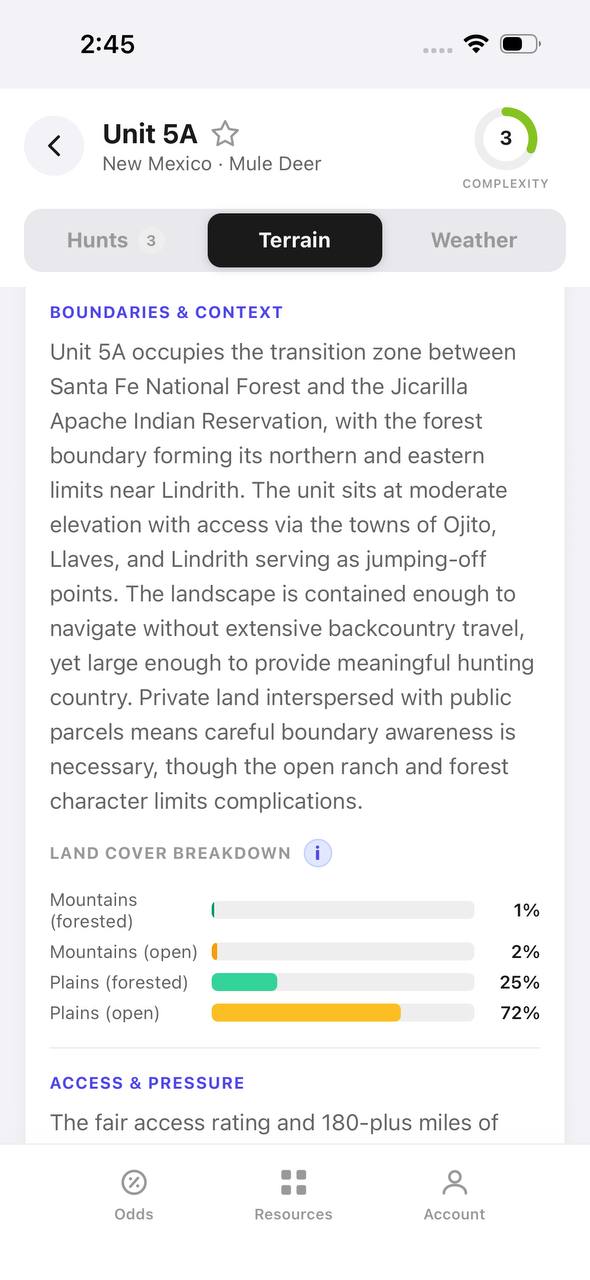
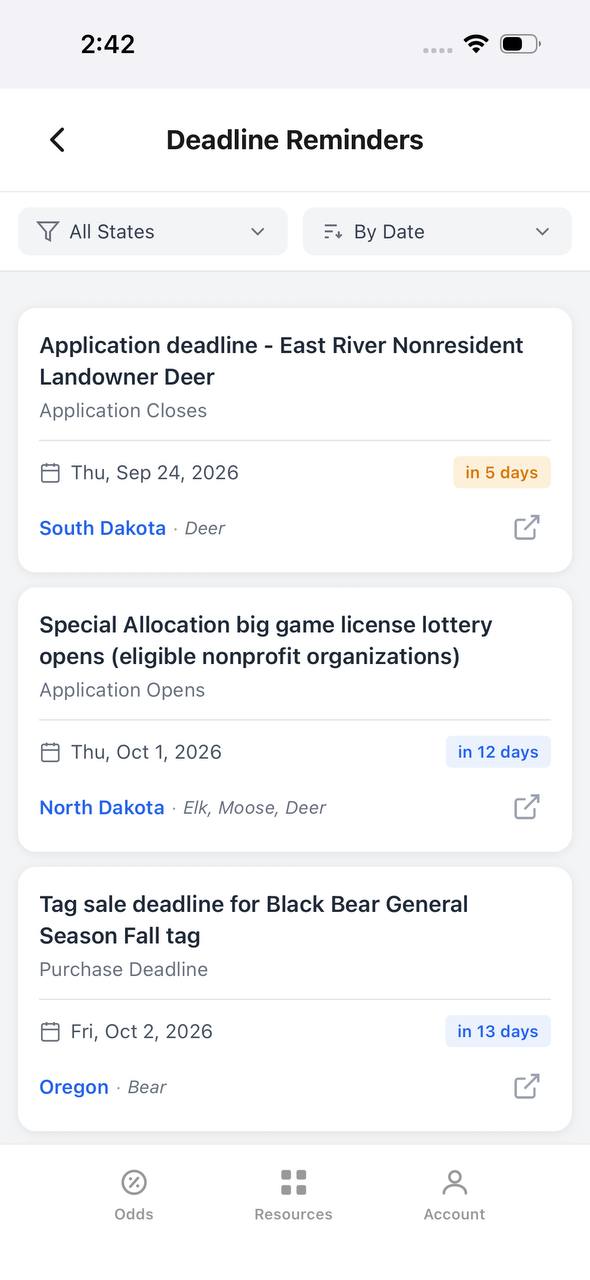
- Deadline reminders
- 19 states covered

Free to join
Download mobile app
- Detailed draw odds
- Point tracking
- Deadline reminders
- 19 states covered
Free to join
Download mobile app
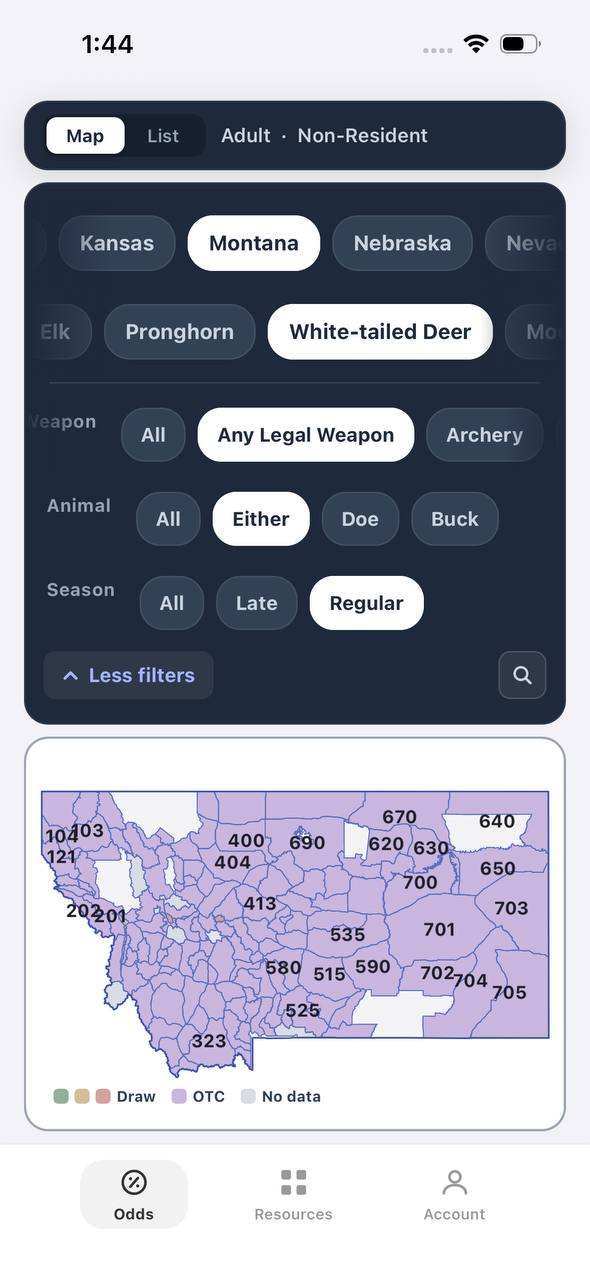
- Detailed draw odds
- Point tracking
- Deadline reminders
- 19 states covered
Applying for Controlled Roosevelt Elk Tags
Controlled-hunt tags require an application through the Oregon Department of Fish and Wildlife (ODFW) online licensing system. Applicants select up to five hunt choices in order of preference, and the draw assigns tags based on random selection weighted by bonus points. Each unsuccessful application earns one bonus point, which squares your number of entries in future draws (two points = four entries, three points = nine entries, and so on).
Nonresidents face a 10% cap on most controlled Roosevelt elk tags, meaning high-demand rifle hunts may require several years of point accumulation. Archery-season controlled hunts and muzzleloader hunts generally draw with fewer points. First-time applicants can draw Roosevelt elk tags in less-pressured units or during general seasons, but premium rifle hunts in Saddle Mountain or Trask often demand five or more points for nonresidents.
Purchase an Oregon hunting license before applying. The license and application fees are nonrefundable, but unsuccessful applicants do not pay tag fees. If drawn, tag fees are charged automatically, and the tag must be used during the specified season or forfeited. Tags are not transferable and cannot be returned for refunds.
General-Season Roosevelt Elk Hunts
General-season tags provide guaranteed opportunity without the wait. These tags are valid in designated general-season elk units, which overlap heavily with Roosevelt elk range in western Oregon. Tags are sold over the counter or online beginning in summer, and hunters can purchase them until the quota is met or the season opens. General rifle and archery tags often remain available through the season, though popular units may sell out early.
General-season hunts allow flexibility — hunters can scout multiple units, adjust to weather, and hunt various terrain types within the season dates. However, general units see higher hunter densities, particularly near roads and trailheads. Success rates run lower than controlled hunts, and mature bulls are harder to find due to sustained pressure. Guided hunts on general tags typically focus on private-land access to escape crowding.
Roosevelt Elk Hunting Strategy
Roosevelt elk inhabit thick second-growth forests, logged clearcuts, and riparian corridors choked with alder and vine maple. Unlike Rocky Mountain elk, Roosevelt bulls rarely bugle in open meadows; instead, they call from dense cover and prefer travel routes hidden by canopy. Hunting them demands patience, close-range shooting, and tolerance for wet conditions.
Successful Roosevelt elk hunters prioritize early-morning and late-evening activity windows, when elk move between bedding areas in heavy timber and feeding areas in clearcuts or brushy drainages. Spot-and-stalk hunting requires glassing clearcuts from opposing ridges, then closing distance through thick forest. Calling works during the rut but must be subtle, with setups positioned near known travel corridors rather than exposed ridgelines.
Guided hunters benefit from outfitters' knowledge of private-land feeding patterns, recent logging activity that concentrates elk, and road access that cuts hours off foot travel. On public land, expect steep climbs, frequent rain, and limited visibility. Quality rain gear, waterproof optics, and lightweight packs are essential.
Tag Costs and Nonresident Considerations
Oregon hunting licenses and tag fees differ for residents and nonresidents. As of the most recent published fee schedule, nonresident general-season elk tags cost approximately $170, while controlled-hunt bull tags run around $580. Residents pay significantly less — roughly $50 for general tags and $160 for controlled-hunt tags. Application fees and hunting license fees are additional and nonrefundable.
Nonresidents must purchase an annual Oregon hunting license before applying for controlled hunts or buying general tags. The license is valid for the calendar year and required even if you draw or purchase a tag for a season that spans into the following year. Bonus-point fees are minimal, typically under $10 per species, and accumulate automatically with unsuccessful applications.
For nonresidents booking guided hunts, verify whether the outfitter's package includes tag costs or if you must secure your own tag. Some outfitters holding landowner preference tags can provide a tag as part of the package, bypassing the draw entirely and guaranteeing a hunt even for first-time Oregon applicants.
Physical Demands and Preparation
Roosevelt elk hunts in Oregon vary widely in physical demand. Private-land guided hunts with road access and glassing points may involve minimal hiking, while public-land spot-and-stalk hunts in the Coast Range or Cascades require steep climbs, off-trail navigation, and packouts over rough terrain. Coastal units feature dense undergrowth and frequent elevation changes, often within a single drainage.
Hunters should prepare for wet conditions regardless of season. Rain is common in western Oregon from September through November, and temperatures range from the 40s to 60s Fahrenheit. Trails and logging roads turn muddy quickly, and visibility can drop to yards in thick fog. Physical conditioning should emphasize leg strength, endurance, and balance on uneven ground.
Guided hunts typically accommodate hunters of moderate fitness, with outfitters offering ATV or vehicle-assisted access when possible. However, shot opportunities may require quick response over steep or brushy ground, and packouts can be strenuous. Discuss physical expectations with your outfitter during booking to ensure the hunt matches your capabilities.
Roosevelt vs. Rocky Mountain Elk Hunts
Oregon also offers Rocky Mountain elk hunting east of the Cascades, where terrain, tactics, and tag availability differ sharply from Roosevelt elk hunts. Roosevelt elk are larger-bodied but often carry smaller or less symmetrical antlers, with mature bulls scoring 260 to 320 Boone and Crockett points. Rocky Mountain bulls in eastern Oregon can exceed 350 inches but are harder to draw tags for and require hunting in more arid, open country.
For nonresidents prioritizing a guaranteed hunt or timber-based elk experience, Roosevelt elk tags — especially general-season or low-point controlled hunts — offer better odds than premium Rocky Mountain units. Guided Roosevelt hunts also tend to cost less than comparable Rocky Mountain hunts due to shorter travel distances from population centers and lower tag demand.
Hunters seeking both subspecies can apply for controlled hunts in both regions, as bonus points are tracked separately by species and hunt type. However, Oregon limits hunters to one elk tag per year, so drawing or purchasing a Roosevelt tag eliminates the option to hunt Rocky Mountain elk the same season.
FAQ — Oregon Roosevelt Elk Hunts
Do I need to apply for a Roosevelt elk tag or can I buy one over the counter? Both options exist. Controlled hunts require a draw application, while general-season tags are available over the counter. Controlled hunts offer better trophy quality and lower hunter density, but general tags guarantee a hunt without waiting for the draw.
What are the odds of drawing a Roosevelt elk tag as a nonresident? It depends on the unit and weapon. Some archery and muzzleloader hunts draw with zero or one bonus point for nonresidents. Premium rifle hunts in units like Saddle Mountain or Trask often take five or more points due to the 10% nonresident cap.
Can I hunt Roosevelt elk on public land without a guide? Yes. Oregon's public lands in the Coast Range and Cascades are open to all license holders, and DIY Roosevelt elk hunting is common. Success rates are lower than guided hunts on private land, and access can be challenging during wet weather, but it's a viable option.
When should I book a guided Roosevelt elk hunt? Book 12 to 18 months in advance, especially for rifle seasons. Outfitters holding landowner preference tags may accept bookings closer to the season, but private-land access and premium dates fill early.
Are Roosevelt elk bigger than Rocky Mountain elk? Roosevelt elk are heavier-bodied, with mature bulls weighing 700 to 1,000 pounds compared to 600 to 800 for Rocky Mountain bulls. However, Rocky Mountain elk typically carry larger, more symmetrical antlers. Roosevelt bulls average smaller scores but offer a unique hunting experience in dense timber.
What's the best season for a first-time Roosevelt elk hunter? Rifle season in October or November provides longer shooting windows and cooler temperatures, making it easier to recover and care for meat. Archery hunters in September encounter bugling bulls but face thick cover and limited visibility, requiring close-range skills.
Was this article helpful?
Previous
Florida Bear Hunting Application Guide 2027: How to Apply for the FWC Bear Draw
Florida's bear hunt uses a quota-based lottery system with two drawing periods. Applications open in early June for both resident and nonresident hunters with no preference points.
Related
Oregon Nonresident Elk Draw Odds 2027: What You Need to Know
Oregon's nonresident elk draw remains challenging but accessible for hunters willing to target the right units and weapon types. Understanding preference points and tier-based allocation gives you a strategic edge.

Next
DIY vs Guided Grizzly Bear Hunting: How to Choose Your Hunt
Grizzly hunts demand either extensive backcountry experience and local knowledge or a qualified guide who can manage logistics, navigate bear behavior, and ensure legal compliance. Most hunters opt for guided hunts due to regulatory requirements and the complexity of bear country.