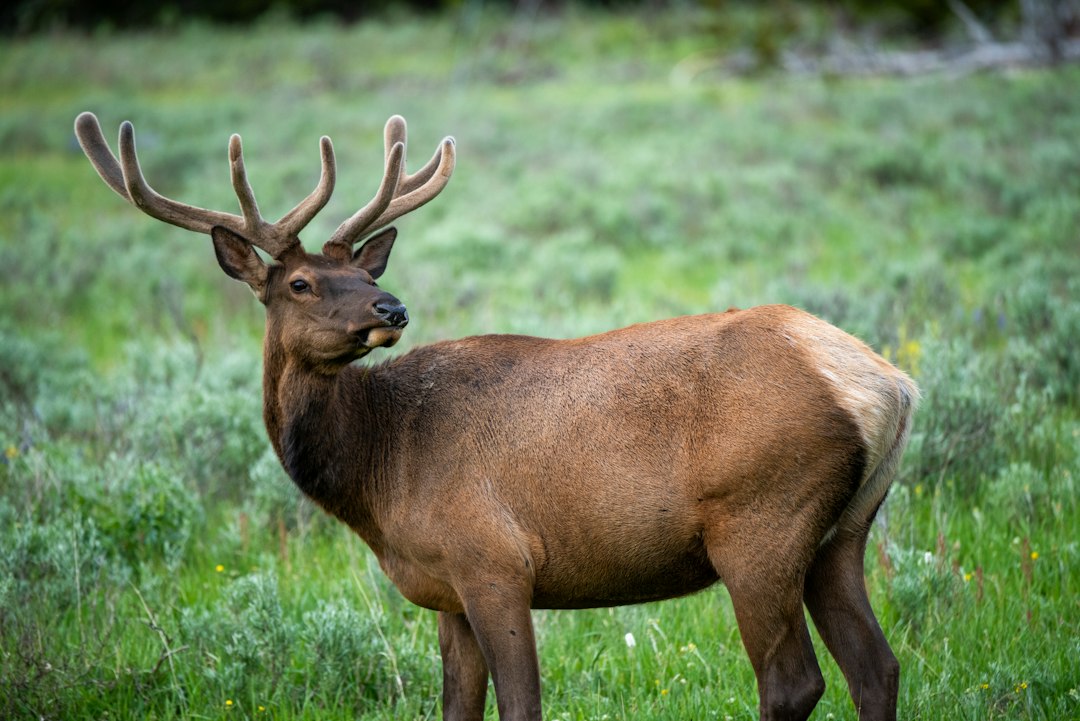
Roosevelt Elk Hunting in Washington: 2027 Guide to Units, Draws, and Strategies

Washington's Roosevelt elk hunting in 2027 centers on two distinct landscapes: the temperate rainforests of the Olympic Peninsula and the dense Cascade foothills west of Interstate 5. Roosevelt elk are North America's largest elk subspecies, adapted to thick cover and unpredictable weather. Most hunters pursue them during general seasons that require only a basic big-game license, but limited special permits unlock premium opportunities in specific Game Management Units (GMUs). Success hinges on understanding where elk concentrate, how Washington's draw system works, and what tactics suit the terrain.
General Season vs. Special Permit Hunts
Washington offers general Roosevelt elk seasons in many western GMUs, meaning any hunter with a valid big-game license and elk tag can participate. These seasons typically run during archery (September), muzzleloader (late September), and modern firearm (October through November) periods, though exact dates vary by GMU. General hunts provide accessible entry points but can see moderate to heavy pressure in roadside areas. Special permit hunts, administered through Washington's drawing system, limit participation to a fixed number of hunters and often coincide with the rut or less crowded time frames. Special permits may also open units closed to general hunting or extend weapon-specific opportunities. Because Roosevelt elk thrive in habitat that's hard to access and harder to glass, even general-season hunters who push beyond trailheads often encounter bulls away from crowds.
How Washington's Elk Draw System Works
Washington uses a preference-point system for most special permit hunts, including Roosevelt elk. Each unsuccessful application earns one preference point, and future draws award permits first to applicants with the most points. Resident and nonresident pools are separate. Applications open in early May and close in late May each year, with results announced in June. Hunters may apply for up to three hunt choices in order of preference. If you draw any choice, you forfeit all accumulated points. If you draw nothing, you retain your points and gain one more. Bonus points, a separate category used for certain species, do not apply to elk. Because Roosevelt elk permits are less competitive than some Rocky Mountain elk hunts, modest point totals—often zero to three—can draw quality tags, especially for archery or less popular units. First-time applicants have realistic chances in many areas.
Top Roosevelt Elk Units in Washington
The Olympic Peninsula holds the densest Roosevelt elk populations and the most storied hunting. GMUs 638 (Hoh), 648 (Clearwater), 652 (Goodman), and 654 (Quinault) consistently produce mature bulls and attract both general-season and special-permit hunters. These units feature steep ridges, logged patchworks that create edge habitat, and river valleys where elk feed at dawn and dusk. Access is a mix of Olympic National Forest roads and private timber company lands open under industrial forest agreements. Hunters willing to hike several miles from roads encounter less pressure and find elk in transition zones between clear-cuts and old growth. On the Cascade side, GMUs 530 (Mashel), 568 (Green River), and 574 (Elochoman) offer solid Roosevelt elk hunting in similar terrain—second-growth Douglas fir, alder thickets, and steep drainages. These units lie closer to Seattle and Tacoma, so weekend traffic is higher, but midweek hunts and deep backcountry pockets still yield results. Special permits in units like 638 or 652 often require only one or two preference points, making them attainable for most applicants.
Archery and Rifle Season Strategies
Archery season for Roosevelt elk typically opens in early September, before the rut peaks. Bulls are still in bachelor groups or beginning to separate, and calling can be effective but inconsistent. The real advantage is access—archery-only units or early-season dates let you hunt areas that will be crowded later. Focus on feeding zones near clear-cuts at first and last light, and be ready for quick shots through tight timber. Modern firearm seasons open in late October or early November, coinciding with the tail end of the rut and the onset of heavy rainfall. Bulls are more vocal and responsive to bugles than in September, but thick fog and constant drizzle limit visibility. Still-hunting through alder slides, glassing recent clear-cuts from ridge tops, and setting up near wallows or rubs all produce encounters. Muzzleloader seasons, usually a week in late September, bridge the gap and offer a quieter alternative to rifle hunts. Regardless of weapon, waterproof gear and extra clothing layers are non-negotiable—Olympic Peninsula weather can shift from sun to downpour in minutes.


Free to join
Download mobile app
- Detailed draw odds
- Point tracking
- Deadline reminders
- 19 states covered





Free to join
Download mobile app
- Detailed draw odds
- Point tracking
- Deadline reminders
- 19 states covered






Free to join
Download mobile app
- Detailed draw odds
- Point tracking
- Deadline reminders
- 19 states covered

Scouting and E-Scouting for Roosevelt Elk
Roosevelt elk favor a mosaic of habitat types: regenerating clear-cuts for feeding, mature timber for bedding, and riparian corridors for water and thermal cover. E-scouting begins with identifying recent timber harvests on Washington Department of Natural Resources (DNR) maps and private timber company lands. Elk concentrate in cuts aged five to fifteen years, where shrubs and forbs provide high-quality forage. Overlay these areas with topographic maps to find benches, saddles, and north-facing slopes where elk bed during midday. OnX Hunt and similar apps show land ownership and Forest Service road networks, critical for planning access. Physical scouting in late summer confirms elk presence through fresh tracks, droppings, rubs, and wallows. Roosevelt elk trails are often deeply worn and easy to identify in muddy terrain. Because these elk rarely bugle outside the rut and prefer heavy cover, trail cameras near water sources or wallow complexes can reveal movement patterns. Unlike Rocky Mountain elk, Roosevelt elk rarely occupy alpine basins or wide-open parks, so plan to hunt inside the timber.
Public Land Access and Regulations
Most Roosevelt elk hunting occurs on Olympic National Forest, Gifford Pinchot National Forest, and Washington DNR land, all open to public hunting. National Forest lands require no additional access permit, but DNR land sometimes requires a Discover Pass for vehicle access to trailheads. Private timber companies own large blocks of western Washington and manage them under sustainable forestry programs. Many allow public access through gate keys or online permit systems—check the company's hunting access page before your trip. Roads on timber land change frequently due to logging and decommissioning, so a current map is essential. Olympic National Park prohibits all hunting and covers much of the central Olympic Peninsula, creating a reservoir of elk that spill into surrounding hunt units. Hunters must also be aware of weapon restrictions, GMU boundaries, and any emergency closures related to wildfire or road damage. Washington's Big Game Hunting Seasons and Rules pamphlet, published annually in the spring, is the authoritative source for all regulations.
Gear and Preparation for Wet-Weather Elk
Roosevelt elk hunting demands wet-weather gear and physical conditioning. Rain is likely on most days, so waterproof outerwear, gaiters, and pack covers are mandatory. Merino wool or synthetic layers dry faster than cotton and retain warmth when damp. Lightweight, insulated jackets pack small and provide critical warmth during stationary glassing or calling setups. Boots should be fully waterproof with aggressive tread for muddy, steep terrain—many hunters prefer eight-inch or taller models for ankle support and debris protection. Bring extra socks and store them in a dry bag inside your pack. Roosevelt elk inhabit some of the steepest, most physically demanding country in the West, so pre-season cardio and leg strength training pay dividends. Practice shooting from awkward positions and in low light, since most Roosevelt elk encounters happen fast in thick cover. A reliable rangefinder, waterproof binoculars, and a compact grunt tube or cow call round out the essentials.
Tag and License Requirements for 2027
All Roosevelt elk hunters in Washington must hold a valid big-game hunting license and an elk tag. Residents pay approximately $66 for a big-game license and $67.70 for an elk tag. Nonresidents pay around $252 for a big-game license and $497.50 for an elk tag. These prices are subject to change, so verify current fees on the Washington Department of Fish and Wildlife (WDFW) website before purchasing. Special permit holders still need the base license and elk tag in addition to the permit. Hunters born after January 1, 1972, must complete a hunter education course and carry proof. Nonresidents may purchase tags and apply for special permits without restrictions, but the separate nonresident draw pool often requires more points for high-demand hunts. Tags are available online, by phone, or at licensed dealers statewide. Leftover special permits, if any remain after the draw, are issued on a first-come, first-served basis starting in late summer.
Washington's Roosevelt Elk Herd and Conservation Status
Roosevelt elk populations in Washington are stable to increasing, supported by abundant habitat and active management. WDFW conducts aerial surveys and harvest monitoring to set sustainable permit numbers each year. Logging creates early-successional habitat that benefits elk, and forest regeneration cycles ensure a steady supply of forage. The Olympic Peninsula herd is the most genetically distinct and historically significant, while Cascade foothills herds are smaller but expanding as logged areas regrow. Hunters contribute directly to conservation through license and tag revenue, which funds habitat restoration, access improvements, and research. Elk populations are not threatened, but maintaining habitat connectivity and managing road density remain priorities as development pressure increases in western Washington. Harvest success rates for general-season Roosevelt elk hunts typically range from 10 to 20 percent, while special permit hunts may exceed 30 percent depending on timing and unit.
FAQ — Roosevelt Elk Hunting in Washington
Can nonresidents hunt Roosevelt elk in Washington? Yes. Nonresidents may purchase general elk tags and apply for special permits through a separate draw pool. Tag prices are higher than resident rates, and competitive permits may require more preference points.
How many preference points do I need for a Roosevelt elk permit? Most Roosevelt elk special permits require zero to three preference points, depending on the unit and weapon type. High-demand archery or rifle permits in Olympic Peninsula units may take two or three points, while less popular hunts draw with zero points.
What is the best time to hunt Roosevelt elk in Washington? Late October and early November rifle seasons coincide with the rut and increased bull activity. Archery hunters in September face less pressure, and muzzleloader seasons in late September offer a middle option with moderate crowds.
Do I need a preference point to hunt general season Roosevelt elk? No. General seasons require only a valid big-game license and elk tag. Preference points apply only to special permit draws.
Where are the best public land areas for Roosevelt elk? Olympic Peninsula GMUs like 638, 648, and 652 hold the highest elk densities. Cascade units such as 530 and 568 also offer quality hunting with easier access from Puget Sound.
Is Roosevelt elk hunting physically demanding? Yes. Steep terrain, thick brush, and frequent rain make Roosevelt elk hunts among the most challenging in the West. Physical conditioning and waterproof gear are essential.
Was this article helpful?
Previous
California Guided Roosevelt Elk Hunts 2027: Tags & Outfitters
California offers Roosevelt elk hunting through a lottery draw system with tags valid statewide on public and private land. Guided hunts provide access to prime coastal habitat where these massive elk thrive.

Related
DIY Elk Hunting in Montana: Your Complete 2027 Guide
Montana offers some of the best DIY elk hunting in the West, with vast public land and a unique combination license system. Here's how to plan your 2027 hunt, from draw strategy to unit selection.
Next
Public Land Elk Hunting in Montana: 2027 Guide to Units, Access, and Strategies
Montana offers over 90,000 square miles of public land for elk hunting, with general licenses available for nonresidents and residents. This guide covers top units, access strategies, and what to expect in 2027.