Best States for First-Time Nonresident Elk Hunters in 2025
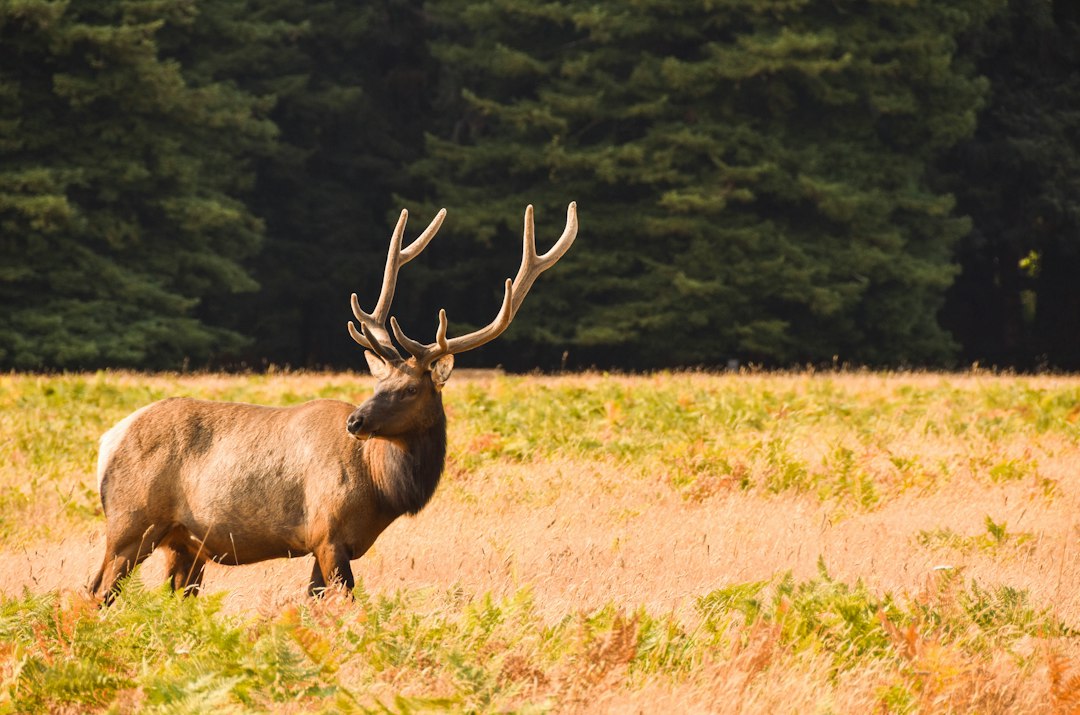
First-time nonresident elk hunters face a confusing landscape of draw systems, preference points, and sticker shock. The good news: three states still offer realistic opportunities without years of waiting. Colorado provides true over-the-counter archery and second-rifle tags. Idaho sells general-season tags through a simple controlled hunt that rarely requires points. Montana's combination license unlocks general elk units for nonresidents willing to apply early and accept moderate point requirements.
Colorado — True OTC Access Without the Wait
Colorado remains the most accessible state for first-time nonresident elk hunters because it still sells legitimate over-the-counter tags for archery and second rifle season. No draw. No points. Just purchase a tag and hunt. The Colorado Parks and Wildlife elk hunting page confirms that nonresidents can buy OTC archery tags for most units and second-rifle tags for select units without entering any lottery.
OTC archery tags work in around 85 units statewide, covering millions of acres of national forest. Second rifle OTC units are more limited but still span productive areas in the Gunnison Basin, Flat Tops, and northwest Colorado. Success rates for OTC archery hover around 10 percent, while second rifle pushes closer to 15-20 percent depending on unit and effort level. These aren't trophy hunts, but they're real elk hunting on public land without the application anxiety.
The trade-off is hunting pressure. OTC units see heavy traffic during archery season, especially near trailheads and easily accessed drainages. Hunters willing to hike past the first basin and hunt midweek find far less competition. Second rifle timing coincides with the rut's tail end, so bugles are sparse but elk are still grouped up and vocal enough to locate.
Colorado's true advantage is immediacy. A hunter can decide in July to chase elk in September and have a valid tag in hand within days. For someone testing whether elk hunting fits their skills and budget before committing to a point-building strategy elsewhere, Colorado delivers a low-risk entry point.
Idaho — General Tags Through a Manageable Draw
Idaho operates a controlled-hunt system for nonresident elk tags, but the application process is far less intimidating than it sounds. Most general-season zones issue to first-time applicants regularly. The Idaho Department of Fish and Game controlled hunt information shows that many general elk zones maintain nonresident draw odds above 50 percent even for applicants with zero points.
Idaho divides the state into general elk zones and controlled units. General zones span vast stretches of national forest and require only a general tag, which is what nonresidents apply for in the controlled hunt. Some zones like the Lolo, Selway, and Frank Church wilderness areas consistently draw out for nonresidents with just one or two points. Other zones in central and eastern Idaho offer even better odds.
Success rates vary dramatically by zone. The heavily forested northern zones produce lower success but hold good bull-to-cow ratios. Central Idaho zones balance access and elk density. Eastern Idaho zones near Yellowstone offer better road access and higher harvest rates but face more hunting pressure during rifle season.
The application deadline falls in early June, with results posted by late June. Nonresident general elk tags cost around $586 for 2025. Leftover tags sometimes appear for undersubscribed zones, giving late applicants a second chance. Idaho also offers true OTC archery tags in many zones, though rifle hunters must go through the controlled draw.
Idaho's public-land access is exceptional. National forest dominates elk habitat, and corner-hopping disputes are less common than in Wyoming or Montana. The terrain is steep and the timber thick, but that's what keeps pressure manageable even in general zones that issue thousands of tags.
Montana — Combo Licenses for General Hunting
Montana's nonresident elk opportunity centers on the Big Game Combination license, which bundles general elk and deer tags into one package. The combo license unlocks hunting across Montana's general units, which cover roughly 60 percent of the state. Nonresidents must apply for the combo through Montana's draw, and demand exceeds supply. According to Montana Fish, Wildlife & Parks licensing information, the state issues 17,000 nonresident Big Game Combos annually, and applications have climbed steadily in recent years.
Draw odds for the combo license currently sit around 50-60 percent for first-time applicants. Montana uses a preference-point system for nonresidents seeking the combo, so odds improve with each unsuccessful application. Most hunters draw within two or three years of applying. The application period runs from late March through May 1, with results announced in mid-May.
Once drawn, the combo license allows hunting in any general elk unit during general season, which typically runs from late October through November. This timing overlaps with the rut in some areas and post-rut grouping behavior in others. Success rates for nonresident combo holders average 15-20 percent statewide, with higher rates in regions with better elk-to-hunter ratios like Region 3 (southwest) and Region 4 (north-central).
Montana also offers a limited number of nonresident elk B licenses for antlerless harvest in specific units. These are easier to draw and can extend a hunting trip or provide meat-hunting opportunities. Some units even sell leftover B licenses over the counter after the draw.
Public-land access in Montana is good but requires more research than Colorado or Idaho. Block Management Areas provide walk-in access to private land enrolled in the state program, supplementing national forest hunting. The combo license works for archery or rifle season, so hunters can choose their weapon and timing.
Wyoming — Potential for Region-Specific Success
Wyoming does not make the top three for first-time nonresidents, but it deserves mention for hunters willing to research specific hunt areas. Wyoming divides elk hunting into limited-quota areas that require draw applications. Most units demand multiple preference points, but a handful of Type 6 or Type 7 (cow-calf) tags and certain less-desirable general areas occasionally draw with zero or one point.
The Wyoming Game and Fish Department draw odds and statistics reveal which areas remain accessible to new applicants. Region G and certain Region H areas sometimes issue Type 1 (any elk) tags to nonresidents with one or two points. Type 6 cow-calf tags in several regions draw more reliably for first-timers.
Wyoming's challenge is that even when you draw, public-land access is more restricted than in Colorado, Idaho, or Montana. Much of Wyoming's best elk habitat is private, and landlocked public parcels require permission or creative route planning. Wilderness areas require a licensed guide for nonresident hunting, adding cost and logistical complexity.
For a first-time nonresident, Wyoming makes more sense as a point-building state while hunting Colorado, Idaho, or Montana in the meantime.
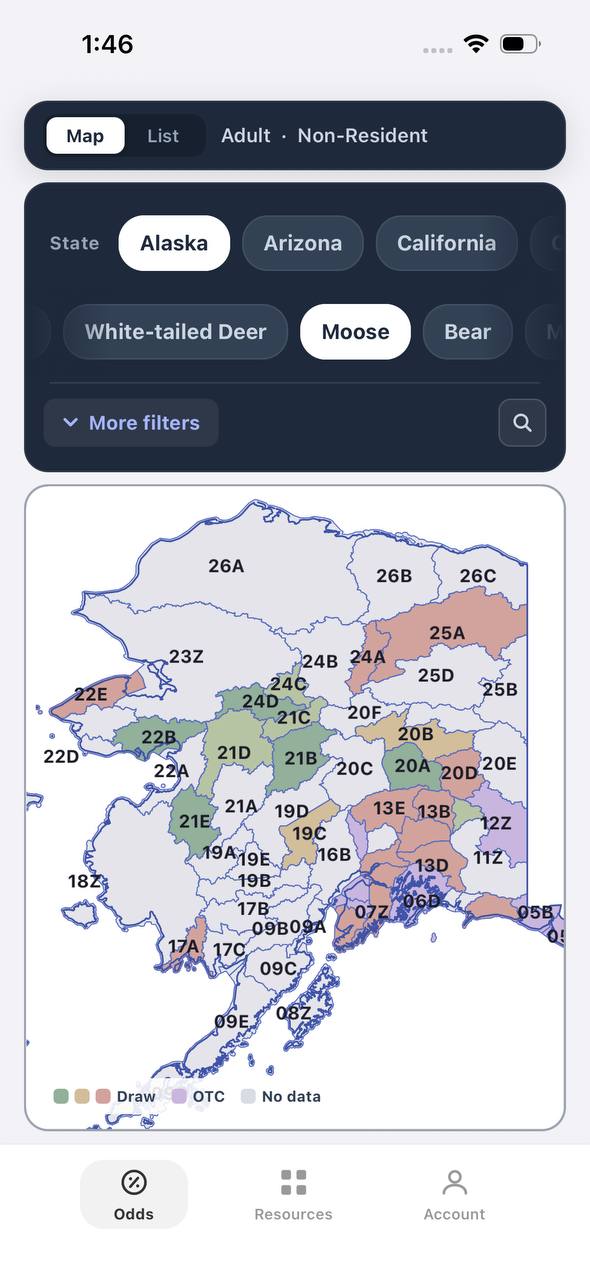
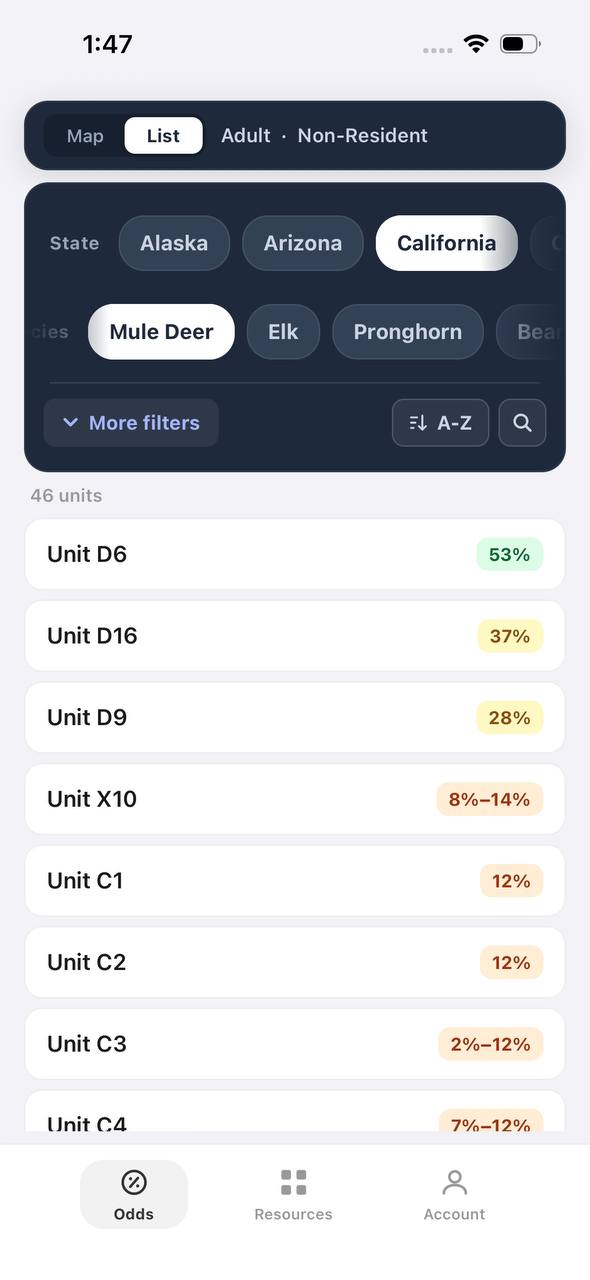
Free to join
Download mobile app
- Detailed draw odds
- Point tracking
- Deadline reminders
- 19 states covered

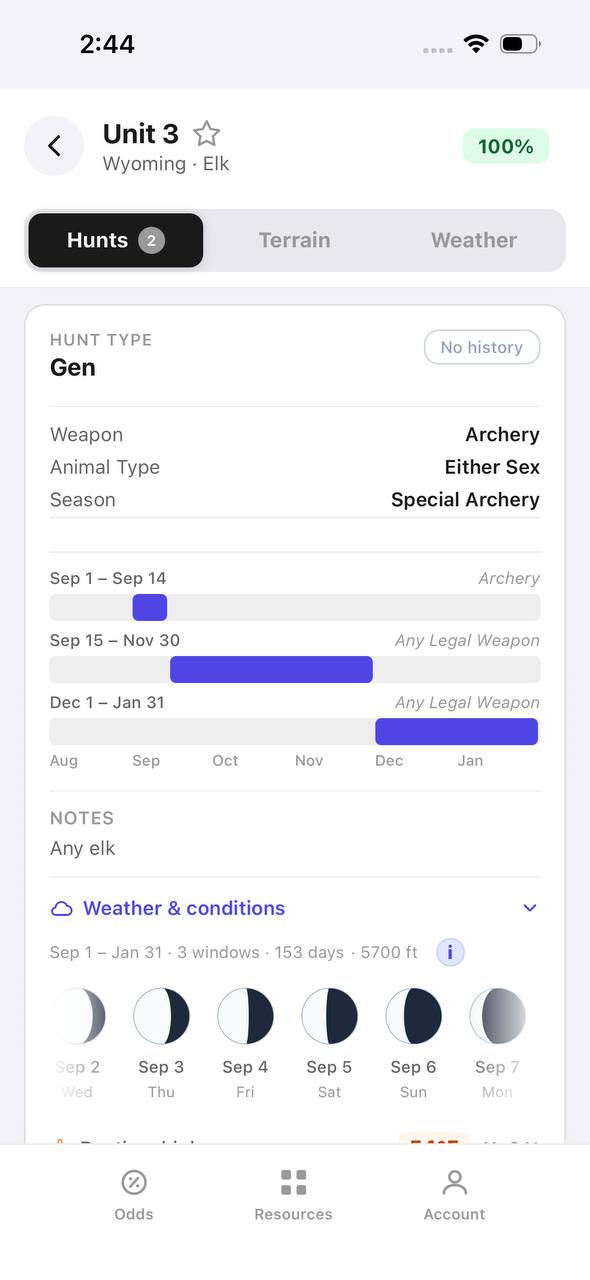
Free to join
Download mobile app
- Detailed draw odds
- Point tracking
- Deadline reminders
- 19 states covered
Free to join
Download mobile app
- Detailed draw odds
- Point tracking
- Deadline reminders
- 19 states covered
New Mexico — Lottery System Without Points
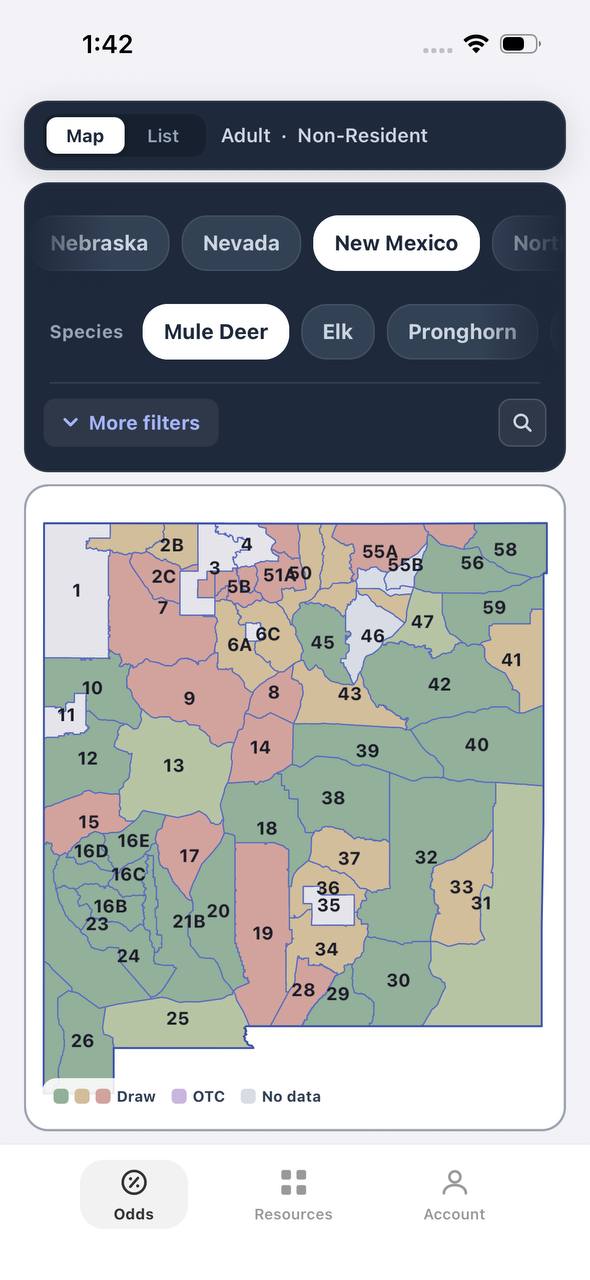
New Mexico operates a pure lottery for elk tags with no preference-point advantage. Every applicant has equal odds regardless of past applications. This sounds appealing, but draw odds for quality units remain low even for residents. Nonresidents face a 10 percent tag allocation cap in most units, which translates to single-digit draw percentages for decent elk areas.
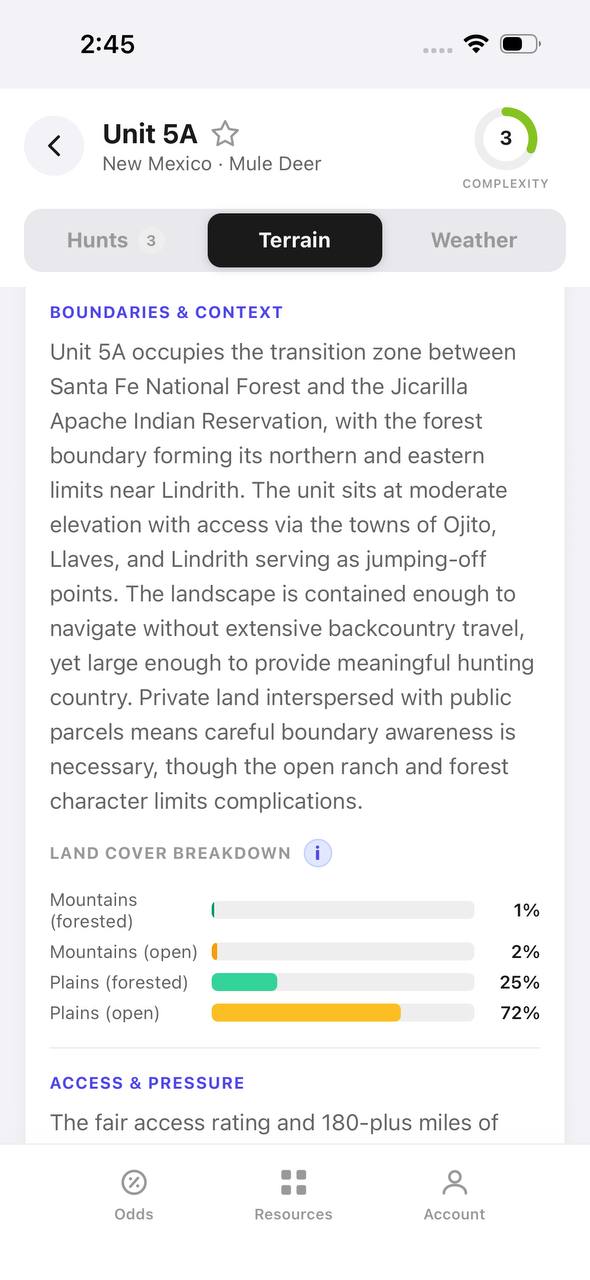
The New Mexico Department of Game and Fish draw information shows that some lower-demand units or antlerless hunts occasionally exceed 10 percent draw odds for nonresidents. These hunts often involve private-land-only access, limited public ground, or less-than-ideal timing.
New Mexico's lottery system means a first-timer could draw a coveted tag on their first try, but it's far from reliable. Most hunters treat New Mexico as a bonus application while prioritizing states with better first-time odds.
Arizona and Nevada — Build Points Elsewhere First
Arizona and Nevada both produce exceptional bull quality, but their systems are built for long-term point accumulation. Arizona uses a bonus-point system where each point increases odds slightly, but top units require 10-20+ bonus points for nonresidents. Nevada operates similarly, with most quality rifle elk tags requiring a decade or more of point building.
Both states offer leftover and over-the-counter archery options in limited units, but these hunts typically involve sparse elk populations on difficult terrain. For a first-time nonresident, the return on investment doesn't justify the tag cost and travel expense compared to hunting Montana, Colorado, or Idaho.
Comparing Tag Costs and Application Timing
Tag costs vary significantly across states and directly affect first-time hunter budgets. Colorado OTC elk tags run around $704 for nonresidents in 2025, with no application fees since you simply purchase the tag. Idaho's controlled-hunt application requires a $163.75 nonrefundable license fee plus the $586 elk tag cost if drawn, totaling around $750. Montana's Big Game Combination license costs approximately $1,153 and includes both elk and deer tags, but requires a $15 bonus point application fee if unsuccessful.
Application timing matters for planning trips and securing outfitter services or lodging. Colorado OTC tags go on sale in early July for archery and late June for second rifle. Idaho's controlled hunt application deadline lands in early June with results by late June. Montana's combo draw closes May 1 with results in mid-May. These timelines mean Idaho and Montana require earlier commitment, while Colorado allows last-minute trip decisions.
Public Land Access and DIY Feasibility
Public-land availability is the difference between a theoretical tag and an actual hunt. Colorado's OTC units contain massive blocks of contiguous national forest. Units like 61, 76, 2, and 52 offer hundreds of thousands of accessible acres. The Flat Tops Wilderness, Weminuche Wilderness, and San Juan National Forest provide roadless country that holds elk and limits pressure for hunters willing to backpack.
Idaho's national forest coverage exceeds 60 percent of elk habitat. Zones like the Sawtooth, Salmon-Challis, and Boise national forests stretch across millions of acres. The Frank Church River of No Return Wilderness alone spans 2.3 million acres. These areas require serious backcountry skills but offer legitimate wilderness elk hunting without guide requirements.
Montana's public-land situation is more complex. National forest and BLM land provide solid DIY access in Regions 2, 3, and 4, but private inholdings and landlocked parcels complicate access in Regions 6 and 7. Block Management Areas help, but require checking boundaries and understanding enrolled-land rules. Nonresidents should invest time in OnX maps or similar tools to identify legal access routes before arriving.
Free to join
Download mobile app
- Detailed draw odds
- Point tracking
- Deadline reminders
- 19 states covered
Free to join
Download mobile app
- Detailed draw odds
- Point tracking
- Deadline reminders
- 19 states covered
Free to join
Download mobile app
- Detailed draw odds
- Point tracking
- Deadline reminders
- 19 states covered
Hunt Timing and Season Structures
Colorado's OTC archery season runs from late August through September, covering the September rut peak. This timing allows bugling bulls and aggressive calling setups. Second rifle season lands in mid-October, missing the rut but catching elk transitioning to winter ranges and forming larger groups. OTC second rifle units typically sit at higher elevations where late-season movement concentrates elk.
Idaho's general rifle seasons vary by zone but generally span late September through November. Archery hunters can purchase OTC tags and hunt from late August through September in most zones. The timing overlaps the rut in higher-elevation zones and post-rut feeding patterns in lower zones.
Montana's general season runs from late October through November, depending on weapon type and region. This timing misses the peak rut but catches elk in transitional behavior and sometimes early-winter grouping. Archery hunters using the combo license can hunt from early September through mid-October, allowing rut coverage if hunting higher elevations.
Realistic Success Rate Expectations
First-time nonresident elk hunters should expect single-digit to low-double-digit success rates on DIY public-land hunts. Colorado OTC archery success hovers around 10 percent statewide. Second rifle OTC units see 15-20 percent success for rifle hunters, with variation depending on effort and unit selection. These rates include all elk, not just mature bulls.
Idaho general tag success rates range from 8-12 percent in heavily forested northern zones to 15-20 percent in more open central and eastern zones. Rifle hunters achieve higher success than archery hunters, but dense timber and steep terrain challenge shot opportunities even during rifle season.
Montana combo license holders see statewide success rates of 15-20 percent during general season. Region 3 (southwest) and Region 4 (north-central) offer better odds, while Region 7 (eastern) sees lower success despite higher elk populations due to access challenges.
These success rates don't reflect futility — they reflect the reality of hunting wild elk on public land without prior scouting. Hunters who scout, hunt hard, and adapt tactics during the hunt significantly outperform statewide averages.
Physical Demands and First-Timer Preparation
Elk hunting in the Rockies demands cardiovascular fitness and mental resilience. Colorado OTC units sit at 8,000-11,000 feet elevation. Idaho's general zones span similarly high terrain with the added challenge of steep timbered ridges. Montana's general units range from 5,000 to 9,000 feet with rolling foothills in some regions and alpine basins in others.
First-time nonresidents should train for three months minimum before the hunt. Cardiovascular conditioning through trail running, hiking with a weighted pack, and stair climbing prepares lungs and legs for altitude and terrain. Core and leg strength training prevents injury when packing meat or navigating deadfall.
Altitude affects lowland hunters immediately. Plan extra acclimatization time, hunt at a sustainable pace, and expect reduced stamina the first few days. Dehydration and altitude sickness derail more first-time elk hunts than lack of shooting skill.
Free to join
Download mobile app
- Detailed draw odds
- Point tracking
- Deadline reminders
- 19 states covered
Free to join
Download mobile app
- Detailed draw odds
- Point tracking
- Deadline reminders
- 19 states covered
Free to join
Download mobile app
- Detailed draw odds
- Point tracking
- Deadline reminders
- 19 states covered
Hiring Guides Versus DIY Approaches
First-time nonresidents often weigh hiring an outfitter against going DIY. Guided hunts in Colorado, Idaho, and Montana run $4,000-$8,000 for five-day rifle hunts and $3,000-$6,000 for archery hunts. Guides provide horses, camps, local knowledge, and significantly higher success rates, often 50-80 percent for rifle hunters.
DIY hunts require self-sufficiency but cost a fraction of guided trips. Lodging, groceries, and tag fees might total $1,500-$2,500 for a week-long hunt. The trade-off is lower success rates and steeper learning curves. First-time DIY hunters benefit from hunting with experienced partners or joining online communities that share unit-specific advice.
Colorado's OTC system makes DIY particularly viable because a failed hunt doesn't waste a once-in-five-years draw tag. Idaho and Montana tags carry more pressure since they require applications and sometimes points, but the general nature of the tags still allows hunters to learn without burning a premium limited-entry opportunity.
Building a Multi-State Strategy
Smart first-time nonresidents build a multi-state approach. Apply for Montana's combo license every year to accumulate points. Apply for Idaho's controlled hunt as a primary option if seeking a specific zone. Buy a Colorado OTC tag as a guaranteed backup or primary hunt if scheduling is flexible.
This strategy ensures hunting opportunities while building equity in Montana's point system. Within three years, most hunters draw a Montana combo. Meanwhile, Colorado or Idaho provide annual hunting options without waiting.
Some hunters add Wyoming, New Mexico, or Arizona as bonus applications. These states require separate strategies but don't interfere with hunting Colorado, Idaho, or Montana in the same year.
Recommended Units and Zones for Beginners
Colorado OTC units worth researching include Unit 76 for second rifle, Units 61 and 2 for archery, and Unit 52 for backcountry archery. These units balance access, elk populations, and public-land availability. They're not secret honey holes, but they hold elk and offer legitimate opportunities for persistent hunters.
Idaho zones like Zone 29 (Sawtooth), Zone 36 (Hells Canyon), and Zone 66 (Island Park) provide different terrain and access profiles. Zone 29 offers wilderness character and steep terrain. Zone 36 provides canyon hunting with road access on ridges. Zone 66 sits near Yellowstone with more open parks and meadows.
Montana's Region 3 around Big Sky, Ennis, and the Madison Range offers excellent public-land elk hunting for combo holders. Region 4 near Helena and the Blackfoot drainage provides less hunting pressure and good bull-to-cow ratios. Region 2 around Missoula sees heavier pressure but holds strong elk numbers.
Final Considerations Before Committing
First-time nonresident elk hunters should evaluate their physical readiness, budget, and time availability before committing to any state. A Colorado OTC archery hunt demands five to seven days minimum for a realistic chance, plus travel time. Idaho and Montana hunts require similar timeframes.
Budget beyond the tag cost. Fuel, lodging, food, and gear add up. Plan $1,000-$1,500 for a DIY week-long hunt after tag costs. Unexpected expenses like tire repairs on forest roads or additional lodging nights due to weather happen regularly.
Set realistic expectations. Elk hunting is hard. First-time nonresidents often return home without filling a tag. The experience, the country, and the lessons learned still make the trip worthwhile. Hunters who approach their first elk hunt as a learning experience rather than a guaranteed harvest set themselves up for long-term success in future seasons.
FAQ — First-Time Nonresident Elk Hunting
Which state offers the easiest elk tag for nonresident first-timers?
Colorado offers the easiest access through over-the-counter archery and second-rifle tags that require no draw or points. You can purchase a tag and hunt the same season without waiting.
Can I draw a Montana elk tag my first year applying?
Yes, but odds are around 50-60 percent for the Big Game Combination license. Most hunters draw within two to three years, and unsuccessful applicants earn preference points that improve odds in future years.
Are Idaho general elk tags really available to first-time nonresidents?
Yes. Many Idaho general elk zones maintain 50 percent or higher draw odds for nonresidents with zero points. Some zones require one or two points, but odds remain far better than limited-entry premium units in other states.
How much does a DIY first elk hunt cost including tag and travel?
Expect $1,500-$2,500 total for a week-long DIY hunt including tag, fuel, lodging, and food. Colorado OTC tags run around $704, Idaho tags about $750, and Montana combos approximately $1,153. Travel and lodging add another $800-$1,300 depending on distance and camping versus motels.
Do I need to hire a guide for my first nonresident elk hunt?
No, except in Wyoming wilderness areas where nonresidents must use licensed guides. Colorado, Idaho, and Montana allow DIY hunting on public land. Guides increase success rates and reduce learning curves but aren't required.
What physical fitness level do I need for a first elk hunt?
You should handle steep hiking at 8,000-10,000 feet elevation with a 30-40 pound pack for several miles daily. Train for three months with cardio, weighted pack hikes, and leg strength work. Altitude affects lowland hunters immediately, so build in acclimatization time.
Was this article helpful?
Previous
Youth Hunting Applications: Best States for Building Preference Points
Smart parents start their kids in preference point programs early. Colorado, Wyoming, Utah, Nevada, and Arizona offer youth applicants the best opportunities to bank points while young, setting them up for premium tags as adults.
Related
Hunting Party Applications: Which States Allow Group Applications?
Nine Western states allow party applications for big-game draws, but each sets different rules for group size, point averaging, and species. Here's how party apps work and where to use them strategically.
Next
Nonresident Hunting License Requirements in Every Western State (2025 Guide)
A complete breakdown of nonresident hunting license requirements across all eleven Western states, including application deadlines, point systems, and costs for elk, deer, and other big game species.