New Mexico Outfitter Draw Odds 2027: Complete Guide to the 10% Guided Draw, 6% Nonresident Pool & Application Strategy
New Mexico is one of the most attractive Western states for hunters pursuing elk, mule deer, pronghorn, bighorn sheep, and other limited-entry big game species. Unlike states that use preference or bonus points, New Mexico operates a randomized drawing system that gives eligible first-time applicants an opportunity to draw highly sought-after licenses.
For nonresident hunters, one of the most important decisions is whether to apply through New Mexico's 10% registered-outfitter allocation or the 6% unguided nonresident allocation.
Applying through a registered outfitter can improve drawing opportunities for certain hunts. However, it does not automatically produce better odds, and hiring an outfitter does not guarantee a license.
The difference depends on the exact hunt code, available licenses, applicant demand, and the allocation under which the hunter applies.
This guide explains New Mexico's 84/10/6 drawing system, registered-outfitter requirements, historical draw odds, hunt-code strategy, application deadlines, and how to decide whether the outfitter allocation makes sense for your 2027 hunt.
New Mexico Outfitter Draw Odds 2027: Summary
New Mexico allocates applicable big-game drawing licenses among three principal categories: 84% for residents, 10% for qualifying applicants using registered outfitters, and 6% for unguided nonresidents.
Both eligible residents and nonresidents can compete in the 10% outfitter allocation. This pool is not exclusively reserved for nonresident hunters.
New Mexico does not use preference points or bonus points for its standard big-game drawing. Applications receive random sequence numbers, and hunt choices are processed according to drawing rules and available quotas.
To qualify for the 10% outfitter allocation, hunters must have a valid written contract with a registered New Mexico outfitter before submitting their application. Hunters who draw through this allocation must also satisfy the state's guided-hunt requirements, including at least two qualifying days of field accompaniment under current rules.
The 10% outfitter pool does not automatically provide better draw odds than the 6% unguided nonresident pool. Hunters should compare historical application demand and licenses awarded for the exact hunt code before deciding.
Final 2027 hunt quotas, application deadlines, and regulations should be verified through the New Mexico Department of Wildlife.
New Mexico Outfitter Draw 2027: Quick Facts
QuestionAnswerDoes New Mexico offer an outfitter draw?YesResident allocation84%Registered-outfitter allocation10%Unguided nonresident allocation6%Can residents use the outfitter allocation?YesCan nonresidents use the outfitter allocation?YesDoes New Mexico use preference points?NoDoes New Mexico use bonus points?NoIs the drawing randomized?YesIs a registered outfitter required for the 10% pool?YesIs a written contract required?YesMinimum qualifying field accompanimentTwo days under current rulesCan a 6% nonresident hire a guide after drawing?YesHistorical 2026 application deadlineMarch 18, 2026Final 2027 deadlineNot yet confirmed in the supplied research
What Is the New Mexico Outfitter Draw?
The New Mexico outfitter draw is a special license allocation within the state's overall randomized big-game drawing system.
Hunters who apply under a qualifying contract with a registered New Mexico outfitter may compete for licenses allocated to the registered-outfitter pool.
This allocation is commonly called the guided draw, outfitter draw, or 10% pool.
It is not a completely separate lottery that awards licenses outside the state's normal drawing process.
Applications still receive random sequence numbers and are processed according to the state's drawing rules.
The main difference is which license allocation applies to the hunter.
Is the 10% Outfitter Pool Only for Nonresidents?
No.
Both eligible New Mexico residents and nonresidents can participate in the registered-outfitter allocation.
This distinction is especially important when evaluating historical drawing results.
The 10% pool should not be described as an additional 10% of licenses exclusively reserved for nonresident hunters.
Hunters can review the state's drawing procedures through the New Mexico Department of Wildlife's draw information.
How New Mexico's 84/10/6 Drawing System Works
New Mexico's current big-game drawing system uses three principal license allocations for applicable hunts.
AllocationPercentageEligible ApplicantsResident84%Eligible New Mexico residentsRegistered outfitter10%Qualifying residents and nonresidentsUnguided nonresident6%Eligible nonresidents applying outside the outfitter pool
These allocations are subject to the state's actual quota and drawing procedures.
The 84% Resident Allocation
New Mexico reserves the majority of applicable drawing opportunities for residents.
The resident allocation is designed to provide at least 84% of applicable licenses to eligible resident hunters.
The 10% Registered-Outfitter Allocation
The registered-outfitter allocation provides drawing opportunities to qualifying hunters who have properly contracted with registered New Mexico outfitters.
Both eligible residents and nonresidents may participate.
Hunters must satisfy the applicable outfitter-contract and guided-hunt requirements.
The 6% Unguided Nonresident Allocation
Nonresidents who do not apply through the registered-outfitter allocation generally compete for the 6% unguided nonresident allocation.
Competition can be substantial for highly sought-after hunts.
However, the smaller allocation does not necessarily mean worse odds.
The number of competing applicants is equally important.
Does Using an Outfitter Improve New Mexico Draw Odds?
Sometimes, but not automatically.
An outfitter application changes the license allocation under which a hunter competes.
It does not improve the application's random sequence number.
The actual drawing opportunity depends on the number of licenses and competing applicants in each allocation for the exact hunt code.
Example: When the 6% Nonresident Pool Could Be Better
Consider a hypothetical hunt with the following applicant demand.
AllocationLicensesApplicantsSimple License-to-Applicant RatioRegistered outfitter105002.0%Unguided nonresident61504.0%
In this example, the unguided nonresident allocation has fewer applicants relative to available licenses.
Despite receiving a smaller share of the overall quota, the 6% pool could provide a more favorable drawing opportunity.
Example: When the 10% Outfitter Pool Could Be Better
AllocationLicensesApplicantsSimple License-to-Applicant RatioRegistered outfitter203006.7%Unguided nonresident127001.7%
Here, the outfitter allocation has more favorable applicant-to-license competition.
These examples are simplified illustrations, not actual New Mexico draw probabilities. The state's choice-processing and quota rules can affect drawing outcomes.
The important lesson is that 10% does not automatically mean better odds than 6%.


Free to join
Download mobile app
- Detailed draw odds
- Point tracking
- Deadline reminders
- 18 states covered





Free to join
Download mobile app
- Detailed draw odds
- Point tracking
- Deadline reminders
- 18 states covered






Free to join
Download mobile app
- Detailed draw odds
- Point tracking
- Deadline reminders
- 18 states covered

New Mexico Does Not Use Preference or Bonus Points
New Mexico's standard big-game drawing does not use preference points or bonus points.
A hunter who has applied unsuccessfully for 20 years does not automatically receive priority over a first-time applicant.
Each drawing begins with a new randomized application sequence.
This creates opportunities for hunters who do not have years of accumulated points.
However, drawing difficulty can still change.
Increasing applicant demand or decreasing license quotas may make certain hunts more competitive over time.
How New Mexico's Random Big-Game Drawing Works
New Mexico assigns valid applications random sequence numbers.
Applications are processed according to that sequence and the applicable license allocations.
When an application is reached, the system attempts to fill the hunter's choices in order.
For the standard first three choices, the process considers:
First-choice hunt
Second-choice hunt
Third-choice hunt
If the first choice is unavailable, the system considers the second. If the second is unavailable, it considers the third.
The system then moves to the next application.
Why Hunt Choice Order Matters
Imagine two hunters applying for the same elk hunt.
Hunter A lists that hunt as a second choice.
Hunter B lists it as a first choice.
Hunter A receives an earlier random sequence number.
If Hunter A's first choice is unavailable and a license remains for the second-choice hunt, Hunter A may receive that license before Hunter B's application is processed.
This is why first-choice demand alone does not completely describe New Mexico drawing probabilities.
Does an Outfitter Improve Your Random Number?
No.
Applying through a registered outfitter does not give a hunter a better random sequence number.
The outfitter allocation changes which pool the hunter competes in, not the randomized ordering of applications.
A reputable outfitter may provide valuable hunt selection advice, scouting, access knowledge, and professional guiding services.
However, the outfitter cannot control the state's random-number assignment.
New Mexico Registered Outfitter Requirements for 2027
Hunters cannot simply indicate that they intend to hire an outfitter after drawing and receive access to the 10% allocation.
Qualifying applicants must satisfy New Mexico's outfitter requirements before submitting the application.
Use a Registered New Mexico Outfitter
The outfitter must meet the state's registration requirements.
New Mexico distinguishes between registered outfitters and registered guides.
A guide working for an outfitter is not automatically equivalent to a registered outfitter for special-pool application purposes.
Before paying a deposit, verify the outfitter's current registration.
A Written Outfitter Contract Is Required
Hunters applying through the special outfitter allocation must have a qualifying written contract with a registered outfitter.
The contract must be properly executed before the application is submitted.
A hunter cannot apply through the 6% unguided allocation, draw a license, hire an outfitter afterward, and retroactively claim the license came from the 10% pool.
Can You Hire a Guide After Drawing Through the 6% Pool?
Yes.
A nonresident who draws through the unguided nonresident allocation may still hire an outfitter afterward.
The difference is the allocation through which the license was obtained.
For official requirements, review New Mexico's guide and outfitter information.
What Happens if You Draw Through the 10% Outfitter Pool?
Drawing a license through the registered-outfitter allocation creates actual hunting obligations.
It is not simply a way to purchase access to another drawing pool.
Under current rules described in the source, a hunter who draws through the special allocation must be accompanied by the contracted outfitter or an eligible registered guide for at least two days during the contracted hunt dates in the area where the license is valid.
The accompaniment requirement involves physical escort in the field.
Do You Have to Be Guided Every Day?
The current special-pool requirement establishes a minimum of two qualifying days of accompaniment.
However, the hunter's contract may provide for additional guided days.
A fully guided hunt may involve considerably more guide participation than the regulatory minimum.
Hunters should understand the exact services included in their contract.
Can You Change Outfitters After Drawing?
New Mexico provides a process through which an original registered outfitter may release a contracted hunter-client to another registered outfitter when applicable requirements are satisfied.
Hunters should not assume they can freely change outfitters after drawing.
Any changes should follow the current state procedure.
Free to join
Download mobile app
- Detailed draw odds
- Point tracking
- Deadline reminders
- 18 states covered
Free to join
Download mobile app
- Detailed draw odds
- Point tracking
- Deadline reminders
- 18 states covered
Free to join
Download mobile app
- Detailed draw odds
- Point tracking
- Deadline reminders
- 18 states covered
Why Exact New Mexico Hunt Codes Matter
A single New Mexico Game Management Unit can contain multiple hunts with different drawing histories.
Different hunts within the same unit may have different weapons, seasons, quotas, bag limits, and applicant demand.
For example, an archery elk hunt and a rifle elk hunt in the same unit may have substantially different drawing probabilities.
Instead of researching a broad unit-level drawing percentage, hunters should identify the exact hunt code.
For nonresidents, the most useful comparison is the historical outfitter-pool result versus the unguided nonresident result for that same hunt code.
New Mexico Outfitter Draw Odds by Species
The registered-outfitter allocation can be relevant to several big-game species.
However, eligibility and drawing opportunities vary by hunt code.
New Mexico Elk Outfitter Draw Odds 2027
Elk is one of the primary reasons nonresident hunters consider New Mexico's registered-outfitter allocation.
The state offers archery, muzzleloader, and rifle elk hunts.
However, the 10% allocation does not make highly sought-after elk hunts easy to draw.
Hunters should compare total quotas, historical outfitter applications, nonresident applications, and choice-level drawing results.
Important Nonresident Elk Restrictions
Under current New Mexico rules described in the supplied research, nonresidents are not eligible for antlerless elk draw licenses.
Hunts occurring exclusively on State Game Commission-owned Wildlife Management Areas are also identified as resident-only.
Nonresidents should verify the eligibility requirements for each either-sex or mature-bull elk hunt before applying.
New Mexico Mule Deer Outfitter Draw Odds 2027
Mule deer hunters should evaluate exact hunt codes rather than broad unit averages.
Northern New Mexico's Unit 2 complex is a useful example.
Units 2A, 2B, and 2C should not be treated as a single drawing opportunity.
Season dates, weapon types, quotas, and applicant demand can differ.
New Mexico Pronghorn Outfitter Draw Odds 2027
Pronghorn applicants should compare historical quotas and applicant demand within the applicable allocation.
A 10% outfitter allocation does not automatically create favorable odds.
New Mexico Bighorn Sheep Outfitter Draw Odds
Bighorn sheep hunts may have extremely limited license quotas.
Small quotas can make the outfitter allocation particularly difficult to draw.
Hunters should not assume every hunt code produces an outfitter license.
New Mexico Oryx Outfitter Draw Odds
Oryx is another important New Mexico drawing opportunity.
Hunters should evaluate exact hunt codes, eligibility, license quotas, allocation rules, and historical demand.
Statewide averages may be misleading because individual hunts can differ substantially.
Small-Quota Hunts and New Mexico Outfitter Draw Odds
Total hunt quota is especially important when evaluating the registered-outfitter allocation.
The supplied research notes that New Mexico warns outfitted applicants that drawing a hunt with six or fewer total licenses is extremely unlikely.
The agency similarly warns that unguided nonresidents are extremely unlikely to draw hunt codes with 12 or fewer total licenses.
Example: A Six-License Hunt
Suppose a hunt offers six total licenses.
Ten percent of six equals 0.6.
That does not mean the outfitter allocation automatically receives one license.
The state's actual allocation procedures determine whether licenses become available within each category.
Hunters should examine total quota before comparing applicant demand.
First, Second and Third Choice Application Strategy
New Mexico's drawing process considers the hunter's first three choices according to random sequence and available quotas.
A possible strategy is to organize choices according to preference and drawing difficulty.
ChoiceExample ApproachFirstHighly desired, difficult-to-draw huntSecondStrong alternativeThirdMore attainable hunt
This is not a universal formula.
Every selected hunt should be one the hunter genuinely wants and is prepared to hunt.
Are the First Three Choices Separate Lottery Tickets?
No.
They are considered as part of one application.
The drawing process attempts to fill the available choices in order when the application is processed.
Fourth and Fifth Hunt Choices
New Mexico also provides additional choice mechanisms for applicable deer and elk applications.
Fourth-choice opportunities may involve eligible remaining hunts rather than one specific hunt code.
Fifth-choice opportunities are associated with population-management programs.
Hunters should understand the applicable conditions before selecting these options.
Free to join
Download mobile app
- Detailed draw odds
- Point tracking
- Deadline reminders
- 18 states covered
Free to join
Download mobile app
- Detailed draw odds
- Point tracking
- Deadline reminders
- 18 states covered
Free to join
Download mobile app
- Detailed draw odds
- Point tracking
- Deadline reminders
- 18 states covered
Questions to Ask a New Mexico Outfitter Before Applying
Before signing an outfitter contract, hunters should request clear answers about drawing strategy, costs, and guiding services.
Important questions include:
Which exact hunt codes do you recommend?
What are the historical outfitter-pool drawing results?
How do those results compare with the unguided nonresident pool?
Is your outfitter registration current?
What happens to my deposit if I do not draw?
What services are included in the contract?
What is the total cost if I draw?
How many guided days are included?
What is the guide-to-hunter ratio?
What happens if I need to cancel?
Understand the Deposit and Refund Policy
Outfitter contracts can vary significantly.
Hunters should confirm application deposits, refundability, hunt deposits, remaining balances, cancellation terms, no-draw policies, and future-year credits.
The time to understand the total cost is before submitting the application.
Does a More Expensive Outfitter Improve Draw Odds?
No.
New Mexico does not assign better random sequence numbers because a hunter books a more expensive or better-known outfitter.
An experienced outfitter may provide valuable local knowledge, scouting, access information, transportation, and guiding services.
Those services can improve the hunting experience.
They do not guarantee a license or successful harvest.
Be Careful With Guaranteed-Tag Claims
Hunters should be skeptical of claims that a license awarded through New Mexico's randomized drawing is guaranteed.
New Mexico also has other license and private-land authorization pathways that operate differently from the draw.
Before booking, ask the outfitter exactly where the license comes from.
A private-land license or authorization is not the same as the registered-outfitter drawing allocation.
New Mexico Outfitter Draw Deadline 2027
The final 2027 application deadline should be verified when New Mexico publishes the applicable hunting regulations.
For historical reference, the 2026 big-game application deadline for species including deer, elk, pronghorn, and Barbary sheep was March 18, 2026, at 5:00 p.m. Mountain Daylight Time.
This is a historical reference, not a confirmed 2027 deadline.
Hunters considering the registered-outfitter allocation should research outfitters and hunt codes well before the application deadline.
Review New Mexico's official application and draw information.
New Mexico Outfitter Draw Application Costs
New Mexico's draw application process can require hunters to pay the applicable draw license fee when applying.
If unsuccessful, the refundable portion of the payment is returned under current state rules.
Certain application and licensing fees remain nonrefundable.
Hunters applying through the registered-outfitter allocation may also face separate deposits, application-service charges, and contractual costs.
The total expense depends on the species, license type, and outfitter agreement.
Hunters should review both the state's fee schedule and the outfitter's written contract.
Free to join
Download mobile app
- Detailed draw odds
- Point tracking
- Deadline reminders
- 18 states covered
Free to join
Download mobile app
- Detailed draw odds
- Point tracking
- Deadline reminders
- 18 states covered
Free to join
Download mobile app
- Detailed draw odds
- Point tracking
- Deadline reminders
- 18 states covered
How to Compare Historical New Mexico Draw Odds
One year of drawing results may not accurately represent future opportunity.
Hunters should compare several completed years whenever possible.
Important factors include changes in application demand, hunt quotas, allocation-specific results, and choice-level outcomes.
Example: Increasing Applicant Demand
Suppose outfitter-pool applications rise from 400 to 550 to 800 over three years while license availability remains relatively constant.
The hunt may become increasingly competitive.
Example: Declining License Quotas
Suppose a hunt's total quota decreases from 100 to 80 to 60 licenses.
The number of licenses potentially available through the outfitter allocation may decline.
Historical drawing results are most useful when evaluated as trends rather than guaranteed future probabilities.
New Mexico Outfitter Draw 2027: Frequently Asked Questions
What is the New Mexico outfitter draw?
It is a special allocation of applicable big-game licenses for qualifying hunters applying under contract with registered New Mexico outfitters.
What percentage of licenses goes to the outfitter pool?
Under the current system, 10% of applicable drawing licenses are allocated to the registered-outfitter category, subject to quota rules.
Is the 10% outfitter allocation only for nonresidents?
No. Eligible residents and nonresidents can participate.
What percentage of licenses goes to unguided nonresidents?
The current allocation structure provides 6% for eligible unguided nonresident applicants, subject to applicable quota procedures.
Does hiring an outfitter improve New Mexico draw odds?
It can for certain hunt codes, but not automatically. Actual opportunity depends on available licenses and applicant competition within each allocation.
Does New Mexico use preference points?
No. New Mexico's standard big-game drawing does not use preference or bonus points.
Can a first-time hunter draw through the outfitter pool?
Yes. New Mexico uses a randomized drawing without preference points.
Is the New Mexico draw random?
Yes. Valid applications receive random sequence numbers and are processed according to applicable drawing rules.
Do you need an outfitter contract before applying?
Yes. A qualifying written contract with a registered outfitter is required for the special outfitter allocation.
Can you hire a guide after drawing through the 6% pool?
Yes. Hunters who draw through the unguided nonresident allocation may hire professional guiding services afterward.
Do you have to hunt with the outfitter if you draw through the 10% pool?
Yes. Current rules require at least two qualifying days of field accompaniment by the contracted outfitter or eligible registered guide.
Does every hunt have a 10% outfitter license?
No. Very small quotas may not produce a license for the outfitter allocation.
Can an outfitter improve your random sequence number?
No. The outfitter allocation changes the license pool, not the random-number assignment.
Can you change outfitters after drawing?
A release process may be available under current rules, but hunters must follow the state's requirements.
Can you apply for multiple species through an outfitter?
Potentially, subject to eligibility and application requirements for each species and hunt.
Does an outfitter guarantee hunting success?
No. An outfitter cannot guarantee a drawing permit or successful harvest.
Should you research the unit or the hunt code?
The exact hunt code. Different hunts within the same unit can have substantially different drawing histories.
Is there preference-point creep in New Mexico?
Not in the traditional sense, because New Mexico does not use preference points. However, increasing demand or declining quotas can make hunts more competitive.
Are final 2027 New Mexico outfitter draw odds available?
No. Actual 2027 drawing results will not be known until the drawing is completed.
Plan Your New Mexico Draw With TAGZ
New Mexico's randomized drawing system provides opportunities for hunters without accumulated preference points.
However, understanding the difference between the 10% registered-outfitter allocation and the 6% unguided nonresident allocation is essential.
For nonresidents, the most useful comparison is the historical drawing opportunity for the exact hunt code under each allocation.
TAGZ was created by hunters, guides, and outfitters with firsthand experience navigating complicated Western hunting application systems.
The platform helps hunters research supported draw opportunities, understand hunting regulations, and organize multi-state application strategies.
Explore:
Compare the right hunt codes. Understand the drawing pools. Build your 2027 hunting strategy with TAGZ.
Official New Mexico Hunting Resources
New Mexico Department of Wildlife — How the Draw Works
Official information about randomized applications, hunt choices, drawing allocations, and drawing procedures.
New Mexico Department of Wildlife — Guide and Outfitter Information
Registered-outfitter requirements and information relevant to the special drawing allocation.
New Mexico Department of Wildlife — Applications and Draw Information
Application resources, hunt codes, and drawing information.
TAGZ Editorial Standards
TAGZ is a hunting draw-odds and hunt-planning platform built by hunters, guides, and outfitters with firsthand experience in the hunting industry.
Our content helps hunters understand hunting regulations, drawing systems, license allocations, and hunting opportunities across North America.
TAGZ prioritizes official wildlife agency information, published hunting regulations, historical drawing data, and transparent explanations of application requirements.
Drawing odds, application deadlines, license quotas, and outfitter requirements can change. Hunters should verify all requirements with the appropriate wildlife agency before applying.
Learn more: About TAGZ
Editorial note: Last updated October 7, 2026. This article was rewritten from supplied New Mexico outfitter drawing research. The 2026 application deadline is historical. Final 2027–2028 regulations, hunt codes, fees, quotas, and deadlines should be verified through the New Mexico Department of Wildlife before applying.
Was this article helpful?
Previous
Alaska Guided Mountain Goat Hunts 2027: Costs, Tags, Draw Odds & Outfitters
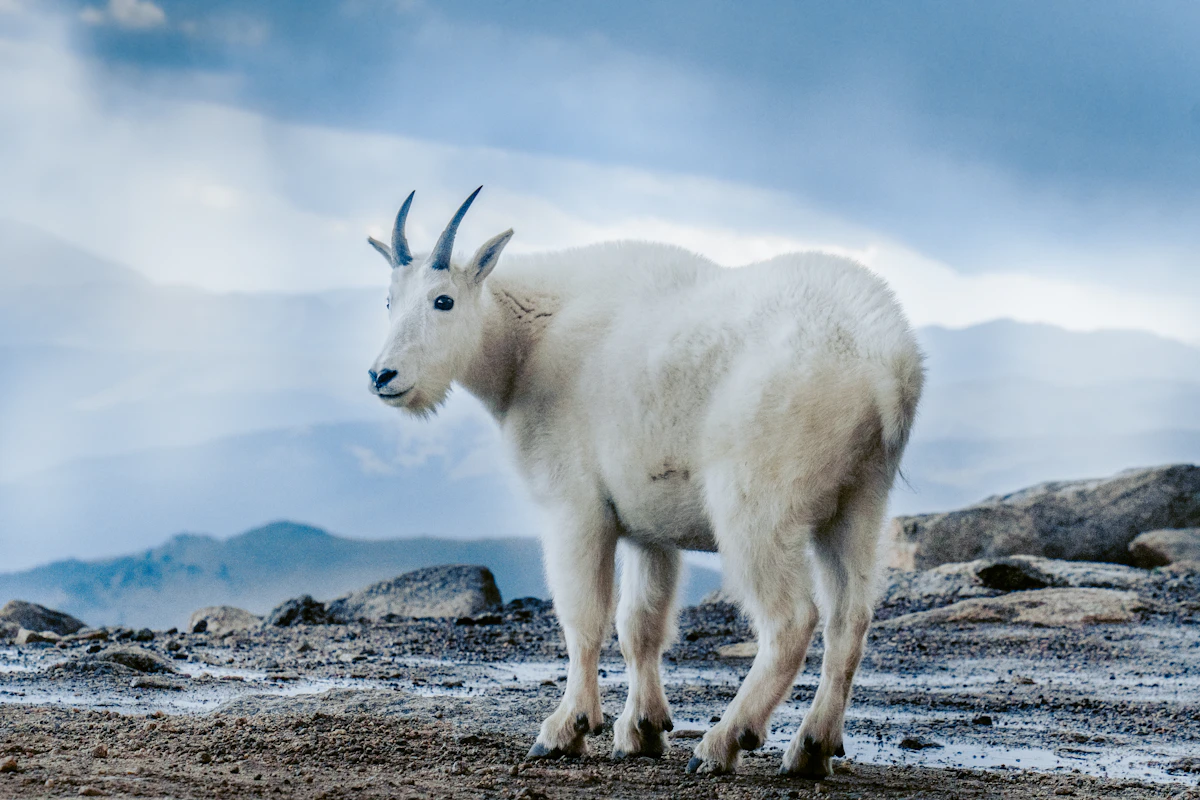
For a U.S. nonresident planning an: Alaska Mountain Goat Hunt In 2027, the most important rule is: You Generally Cannot Hunt Mountain Goat Alone. ## Alaska Guided Mountain Goat Hunts 2027: Summary Alaska offers guided mountain goat hunting opportunities on Kodiak Island, the Kenai Peninsula, Southeast Alaska, and Southcentral Alaska. U.S. nonresident hunters generally must hire a licensed guide or hunt with a qualifying Alaska resident relative. Guided mountain goat hunts currently start around **$12,500**, with total trip costs commonly reaching **$15,000–$20,000+** after transportation, licenses, locking tags, and travel expenses. Alaska does not use preference points or bonus points for mountain goat drawings. Hunters may currently submit up to six drawing applications, while certain areas offer registration hunts that do not require winning a drawing. Some drawing hunts require a guide-client contract before applying. Hunters should compare historical draw odds, hunt numbers, outfitter availability, and total costs before booking. Final 2027 regulations, application deadlines, and permit requirements should be verified through the [Alaska Department of Fish and Game](https://www.adfg.alaska.gov/index.cfm?adfg=goathunting.main). Use [TAGZ](https://www.getmytagz.com/) to research hunting opportunities and plan your 2027 applications.
Related
Alaska Mountain Goat Draw Odds 2027: Tags, Hunts & Strategy
Alaska mountain goat drawing permits are awarded through a random lottery without preference points or bonus points. First-time applicants can compete for the same permits as longtime applicants. Under current rules, hunters may submit up to six drawing applications per species, including repeat entries for an eligible hunt. The standard drawing application period runs from November 1 through December 15, and the current individual mountain goat drawing application fee is $5 per hunt. For U.S. nonresidents, mountain goat hunting generally requires accompaniment by an Alaska-licensed guide or an eligible Alaska resident relative who meets the state's second-degree-of-kindred requirements. The supplied current state fees are $160 for a nonresident hunting license and $600 for a nonresident mountain goat locking tag, excluding drawing applications, guiding, and travel. Final 2027 draw odds are not yet known. Hunters should use completed historical drawing results and the applicable ADF&G drawing supplement when comparing hunts.
Next
Arizona Elk Draw Odds With 5 Points 2027: Best Strategy
If you have: 5 Arizona Elk Bonus Points going into the: 2027 Arizona Elk Draw, you have more drawing weight than an applicant with: Zero Points. But five points do not mean: You Have Preference Over Everyone With Fewer Points. Arizona uses: Bonus Points —not: Preference Points. Each bonus point gives your application: An Additional Random Number during applicable phases of the draw. With: 5 Bonus Points, your application receives: One Base Random Number + Five Bonus-Point Random Numbers before accounting for any applicable: Loyalty Bonus Point or: Hunter Education Bonus Point. The lowest number generated for your application is used. Five points can therefore: Improve Your Probability without: Guaranteeing A Tag. For many of Arizona's most sought-after: Early Bull Elk Hunts, five points will generally not place an applicant near the point level needed to receive a tag through: The 20% Bonus Pass. But that does not mean: You Have No Chance. You can still draw through: Arizona's Randomized First/Second Choice Pass. That distinction is the key to understanding: Arizona Elk Draw Odds With Five Points 2027.