New Mexico Guided Elk Hunts 2027: Outfitter Draw
New Mexico Guided Elk Hunts 2027
New Mexico consistently attracts elk hunters because its system is fundamentally different from many other Western states.
There is no point creep.
There isn't a preference-point cutoff you need to chase for twenty years.
And someone applying for the first time can potentially draw an elk license.
That doesn't mean the odds are necessarily good.
Some New Mexico elk hunts receive far more applications than available licenses.
But every applicant enters a random drawing each year.
For guided hunters, there's another major consideration:
New Mexico has a dedicated outfitter drawing pool.
Understanding exactly how that pool works is essential before paying an outfitter or submitting your 2027 application.
How the New Mexico Elk Draw Works
New Mexico's public big-game drawing randomly assigns each application a sequence number.
The computer then processes applications according to that sequence.
When an application is reached, the system attempts to award the applicant's first hunt choice.
If that choice can't be awarded, it proceeds through the applicant's subsequent choices according to the state's draw rules.
The drawing is also subject to New Mexico's statutory quota system.
For applicable draw hunts, the state currently attempts to distribute at least:
84% — New Mexico residents
10% — residents or nonresidents contracted with a qualifying outfitter
6% — nonresidents who aren't applying in the outfitter pool
This is one of the most important pieces of New Mexico elk strategy.
How the New Mexico Outfitter Draw Actually Works
The original version of this article incorrectly stated that outfitters submit applications and are awarded elk permits.
That's not how the standard public-draw outfitter pool works.
The hunter applies for the elk license.
A qualifying hunter who has contracted with a registered New Mexico Outfitter can participate in the 10% special drawing pool.
The outfitter isn't simply handed a block of public-draw elk tags to distribute.
Instead, the contracted hunter's application is considered within the applicable outfitter allocation.
That's a major distinction.
Who Can Apply in the 10% Outfitter Pool?
Both residents and nonresidents can potentially participate in the outfitter pool when the applicable requirements are satisfied.
The New Mexico Department of Wildlife defines a "New Mexico Outfitter" as an outfitter who has met specific qualifications required to participate in the 10% special drawing pool.
Simply hiring someone who calls themselves a guide isn't enough.
Hunters should verify that the outfitter is properly registered and eligible through the official New Mexico Guide & Outfitter Information page.
New Mexico Guides and Outfitters Are Not the Same Thing
This is another important distinction.
New Mexico specifically states that:
Guides are not outfitters.
Guides must work under the supervision of their outfitter.
New Mexico also states that guides can't independently book hunts or contract directly with hunters as outfitters.
Before entering into an outfitted application, verify exactly who you're contracting with.
Requirements After Drawing Through the Outfitter Pool
Drawing through the 10% pool comes with obligations.
Under current New Mexico rules, a hunter who receives a license through the 10% special drawing pool must be accompanied by the contracted New Mexico outfitter or one of that outfitter's registered guides for at least:
Two days during the contracted hunt dates in the area where the license is valid.
This means you shouldn't use the outfitter pool simply as a way to enter another drawing allocation and then plan to hunt entirely DIY.
The outfitter relationship has actual legal requirements attached to it.
Does the New Mexico Outfitter Pool Guarantee an Elk Tag?
No.
This is still a random drawing.
The 10% pool is a separate allocation of licenses, but it doesn't mean every outfitted hunter receives one.
Historical odds depend on:
Hunt code
Weapon
Season
Number of applicants
Number of available licenses
Applicant pool
Annual demand
Some outfitter-pool opportunities can still be extremely competitive.
Is the 10% Outfitter Pool Always Better Than the 6% Nonresident Pool?
Not necessarily.
This is one of the most important strategy questions for nonresident hunters.
At first glance:
10% sounds better than 6%.
But that's not enough information to determine your actual draw probability.
What matters is the relationship between:
number of licenses available
and
number of applicants competing for them.
If a particular hunt has heavy outfitter-pool demand, the 10% pool can still be extremely difficult.
Meanwhile, another hunt could have a different applicant distribution.
Compare actual historical applicant numbers rather than assuming that the larger allocation automatically means better odds.
Can You Hire an Outfitter After Drawing in the 6% Pool?
Yes.
A nonresident doesn't have to apply through the 10% outfitter pool to hunt with an outfitter.
New Mexico specifically notes that a nonresident who draws through the 6% pool isn't prohibited from contracting with an outfitter afterward.
That's an important distinction.
You can:
Apply as a regular nonresident and hire a guide after drawing
or
Contract with an eligible New Mexico outfitter before applying and compete in the 10% pool.
Those are different strategies.
Does New Mexico Have Preference Points for Elk?
No.
New Mexico doesn't use preference points for its public elk drawing.
It also doesn't use a bonus-point system.
Your unsuccessful applications don't build points that improve your future position.
Someone applying for the first time can potentially draw ahead of someone who has applied unsuccessfully for many years.
That's why New Mexico is frequently included in multi-state strategies for hunters with zero points.
New Mexico Elk Draw Odds
Because New Mexico doesn't have points, draw-odds analysis is different from states such as Colorado or Wyoming.
Research should focus on the exact hunt code and applicant pool.
For a nonresident considering a guided hunt, compare:
10% outfitter-pool applicants
10% licenses available
6% nonresident applicants
6% licenses available
Total hunt quota
First-choice demand
Historical changes in applications
A statewide "New Mexico elk draw odds" percentage isn't enough.
How New Mexico Hunt Choices Work
New Mexico's draw processes applications in sequence and evaluates the hunt choices on each application before moving to the next application.
That makes choice strategy particularly important.
A hunter shouldn't simply fill choices with random hunts.
Each choice should fit an overall strategy based on:
Hunt quality
Draw probability
Weapon
Season dates
Terrain
Access
Hunt objectives
The exact ordering can matter.
New Mexico Elk Application Deadline for 2027
The final 2027 deadline should be verified once New Mexico publishes the applicable regulations.
For reference, the current 2026–2027 regulations set the main draw deadline for elk and several other big-game species at:
March 18, 2026, before 5 p.m. Mountain Time.
Don't assume that means the 2027 deadline will fall on exactly the same calendar date.
Use the official New Mexico Big-Game and Draw Hunts page for the final 2027 deadline.
New Mexico Elk License Costs
Under the current 2026–2027 fee schedule, draw elk licenses are priced differently depending on residency and hunt classification.
Resident Standard Elk
$100 for mature-bull or either-sex licenses.
Nonresident Standard Elk
$773 for mature-bull or either-sex licenses.
Nonresident Quality or High-Demand Elk
$998 for mature-bull or either-sex licenses.
Current draw-license fees include a nonrefundable application fee of:
Resident: $7
Nonresident: $13
Additional licensing requirements and fees can apply.
These are current 2026–2027 fees, not guaranteed 2027–2028 prices.
Always verify final fees before applying.
New Mexico EPLUS Elk Tags
The public drawing isn't the only way to hunt elk in New Mexico.
The state also operates the:
Elk Private Lands Use System — EPLUS.
EPLUS recognizes the role private land plays in supporting New Mexico's elk herds and hunting opportunities.
This system creates private-land elk authorizations that operate separately from the standard public elk drawing.
That's a critical distinction for anyone researching guided New Mexico elk hunts.
EPLUS Authorization vs Elk License
An EPLUS authorization isn't itself the elk license.
In applicable areas, the hunter obtains an authorization number from a participating landowner, guide or outfitter.
That authorization allows the hunter to purchase the appropriate private-land elk license.
The authorization can have its own market price.
New Mexico Wildlife isn't setting the price the hunter pays a landowner or outfitter for that authorization.
Those transactions are private arrangements.
Can New Mexico EPLUS Authorizations Be Sold?
Yes.
Under current New Mexico rules, applicable private-land elk authorizations may be:
Sold
Bartered
Traded
The price is determined privately by the landowner, guide or outfitter.
That cost is separate from the state elk license fee.
This is why some private-land New Mexico elk hunts can cost substantially more than the state license price alone would suggest.
New Mexico Primary Management Zone
Within the Primary Management Zone, elk license numbers are established by the state and public/private opportunity is managed through the applicable system.
EPLUS authorizations can include:
Unit-wide
or
Ranch-only
authorizations.
Understanding which one you're buying is extremely important.
Unit-Wide EPLUS Elk Authorizations
A unit-wide authorization can allow a hunter to purchase an elk license valid on legally accessible:
Public land
Participating unit-wide ranches
Other private land where the hunter has written permission
within the applicable GMU.
Unit-wide authorizations are available only within the Primary Management Zone.
This can create a very different hunting opportunity from a ranch-only authorization.
Ranch-Only Elk Authorizations
A ranch-only authorization generally results in a license restricted to the designated private ranch's deeded acreage, subject to applicable exceptions.
A hunter shouldn't buy an EPLUS authorization without understanding whether it's:
Unit-wide
or
Ranch-only.
That distinction can dramatically affect where you can legally hunt.
Secondary Management Zone Elk Licenses
New Mexico also has a Secondary Management Zone.
Under the current system, private-land elk licenses in the Secondary Management Zone are:
Unlimited and available over the counter with an appropriate ranch code from a registered landowner.
These licenses are generally valid only on applicable private property and require the appropriate landowner permission.
This is another pathway that shouldn't be confused with the public elk drawing or the 10% outfitter pool.
Special Management Zone
New Mexico also maintains a Special Management Zone.
Private-land elk authorizations within that zone are issued through EPLUS on a ranch-by-ranch basis.
Again, these private-land pathways operate differently from the standard public draw.
Can You Have Both a New Mexico Draw Elk License and Private-Land Elk License?
Under current regulations, a hunter may not hold both a Private-Land Elk License and a Draw Elk License during the same license year.
A hunter also can't simply exchange a draw elk license for a private-land elk license.
That's important if you're considering EPLUS as a backup strategy.
Understand the rules before committing money to an authorization.
Are There "Guided Hunt Tags" in New Mexico?
The phrase can be misleading.
For public draw hunts, New Mexico doesn't simply issue a special category of elk tag to an outfitter who then sells it to a hunter.
Instead, there's a 10% special drawing pool for qualifying outfitted applicants.
Separately, EPLUS provides private-land elk authorizations.
Those are two fundamentally different mechanisms.
A good New Mexico elk article should keep them separate:
Public draw + outfitter pool
versus
Private-land EPLUS authorization.
Does a Guided New Mexico Elk Hunt Cost More?
Usually, the outfitter service creates an additional cost beyond the state license.
But the state doesn't charge a more expensive elk license simply because a guide is helping you.
Your total hunt price may include:
Outfitter fee
State license
Application costs
Lodging
Meals
Transportation
Private-land access
EPLUS authorization, if applicable
Guide gratuity
Meat processing
Trophy care
Ask for a written breakdown.
Choosing a New Mexico Elk Outfitter
New Mexico provides an official list of registered outfitters.
Use it.
Before paying a deposit, confirm that the outfitter you're dealing with appears on the state's current registered-outfitter list.
Then ask:
Are you qualified for the 10% special drawing pool?
What hunt code are we applying for?
What historical draw data applies to that hunt?
What happens if I don't draw?
Is my deposit refundable?
Is this public land or private land?
Is this an EPLUS hunt?
If EPLUS, is the authorization unit-wide or ranch-only?
Is the authorization included in the hunt price?
What's included in the outfitter fee?
How many days will I hunt with the outfitter or guide?
These questions can prevent expensive misunderstandings.
Don't Rely Only on Outfitter Success Rates
An outfitter's historical success rate can be useful context.
But ask how it's calculated.
For example:
How many hunters?
What years?
Which units?
Archery or rifle?
Public or private?
Opportunity rate or harvest rate?
Bulls only?
Were wounded animals counted?
A percentage without context isn't particularly useful.
Does Hiring a Guide Guarantee Better Elk Hunting Success?
No.
A knowledgeable guide can provide significant advantages through:
Local knowledge
Scouting
Access knowledge
Calling
Glassing
Logistics
Meat recovery
But weather, elk movement, hunting pressure, hunter ability and many other factors affect success.
Don't treat a guided hunt as a guaranteed harvest.
Best New Mexico Units for Guided Elk Hunts
The original article specifically named Units 16, 17 and 13 as some of the "best" units.
That's too broad.
New Mexico has many different elk opportunities, and what makes a hunt attractive depends on the hunter.
Instead of relying on a universal unit ranking, compare:
Historical draw demand
Hunt dates
Weapon
Public access
Terrain
Elk distribution
Private-land considerations
Outfitter availability
Your physical ability
A unit that's a strong fit for one hunter may be a poor choice for another.
Using TAGZ for New Mexico Elk Draw Research
TAGZ helps hunters research Western draw opportunities using historical draw information and unit-level data.
New Mexico is particularly well suited to hunt-by-hunt analysis because it doesn't have preference or bonus points.
Hunters can compare opportunities based on factors such as:
State
Species
Residency
Weapon
Season
License type
Historical draw information
Unit characteristics
For New Mexico, pay particular attention to the applicant pool associated with historical odds.
Explore how the platform works through TAGZ Product.
Built by Hunters, Guides and Outfitters
TAGZ was started by hunters, guides and outfitters with firsthand Western hunting experience, including outfitting and guiding roots in Idaho.
That experience is particularly relevant when discussing New Mexico.
The word "outfitter" isn't just marketing language in New Mexico.
It has a specific legal meaning within the state's hunting system.
Understanding the difference between:
Guide
Outfitter
10% outfitter pool
Public draw license
EPLUS authorization
and
Private-land elk license
can prevent hunters from making costly application mistakes.
Learn more about the people and experience behind TAGZ through About TAGZ.
Building a 2027 New Mexico Guided Elk Strategy
Step 1: Decide Public Draw or Private Land
Determine whether you're targeting a public-draw elk license, an EPLUS opportunity or potentially researching both pathways.
Step 2: Decide Whether to Use the Outfitter Pool
If you're a nonresident, compare the historical 10% outfitter pool against the 6% nonresident pool for the specific hunts you're considering.
Step 3: Choose the Actual Hunt Codes
Don't stop at choosing a unit.
Research the exact hunt.
Step 4: Choose Your Hunt Choices Carefully
New Mexico processes applications in sequence and considers the choices on each application.
Step 5: Verify Your Outfitter
Use the official state list.
Step 6: Understand the Contract
If you're applying in the 10% pool, understand the legal outfitter requirements before submitting your application.
Step 7: Research EPLUS Separately
Don't mix EPLUS statistics or costs with public-draw statistics.
Step 8: Apply Before the Deadline
New Mexico's current main big-game deadline is in March.
Verify the final 2027 deadline once published.
Step 9: Prepare for the Hunt
If successful, coordinate with your outfitter on scouting, travel, equipment and hunt logistics.
FAQ — New Mexico Guided Elk Hunts 2027
How does the New Mexico outfitter draw work?
Hunters who meet the requirements and contract with a qualifying New Mexico outfitter can compete in the 10% special drawing pool. The hunter submits the application; the outfitter isn't simply awarded public-draw permits to distribute to clients.
What is New Mexico's 84/10/6 rule?
New Mexico currently attempts to allocate at least 84% of applicable draw licenses to residents, 10% to resident or nonresident applicants contracted with qualifying outfitters, and 6% to nonresidents who aren't applying in the outfitter pool.
Can nonresidents apply in New Mexico's outfitter pool?
Yes, qualifying nonresident applicants can compete in the 10% outfitter pool when they satisfy the applicable outfitter-contract requirements.
Can residents use the 10% outfitter pool?
Yes. New Mexico describes the 10% allocation as available to residents or nonresidents who have contracted with a qualifying outfitter.
Does New Mexico have preference points for elk?
No. New Mexico doesn't use preference or bonus points for its public elk drawing.
Can a first-time applicant draw a New Mexico elk tag?
Yes. Because New Mexico doesn't use points, a first-time applicant can potentially draw.
Is the 10% outfitter pool always easier to draw than the 6% nonresident pool?
No. Actual odds depend on both the number of licenses and the number of applicants competing in each pool.
Can I draw through the 6% pool and hire an outfitter afterward?
Yes. New Mexico specifically notes that nonresidents who draw through the 6% pool aren't prohibited from hiring an outfitter afterward.
Do I have to hunt with my outfitter if I draw through the 10% pool?
Yes. Under current requirements, a hunter-client who draws through the 10% pool must be accompanied in the field by the contracted outfitter or registered guide for at least two days during the contracted hunt dates.
What is EPLUS?
EPLUS is New Mexico's Elk Private Lands Use System. It provides private-land elk authorizations and operates separately from the standard public elk drawing.
Can EPLUS elk authorizations be purchased?
Applicable EPLUS authorizations may be sold, bartered or traded. The price is privately determined and is separate from the state elk license fee.
What's the difference between unit-wide and ranch-only EPLUS?
A unit-wide authorization can provide broader access within the applicable GMU, including legally accessible public land and participating properties. Ranch-only licenses are generally restricted to the designated private ranch, subject to applicable rules.
Are there OTC private-land elk opportunities in New Mexico?
Yes. Under the current system, private-land elk licenses in the Secondary Management Zone are unlimited and available over the counter when the hunter has the appropriate ranch code and permission.
Can I have a public draw elk license and an EPLUS private-land elk license in the same year?
No. Under current rules, a hunter can't hold both a Draw Elk License and Private-Land Elk License during the same license year.
How much is a New Mexico nonresident elk license?
Under the current 2026–2027 fee schedule, a standard nonresident mature-bull or either-sex elk license is $773. A quality or high-demand nonresident elk license is $998. Verify final 2027–2028 fees before applying.
When is the New Mexico elk application deadline?
For the current 2026–2027 cycle, the main draw deadline was March 18, 2026, before 5 p.m. Mountain Time. Verify the final 2027 deadline when New Mexico publishes it.
Does applying with an outfitter guarantee an elk license?
No. The outfitter pool is still part of New Mexico's random drawing.
Does TAGZ cover New Mexico elk draw information?
Yes. TAGZ helps hunters research Western draw opportunities using historical draw and unit-level information.
Continue Planning Your New Mexico Elk Hunt
New Mexico offers several very different paths to an elk hunt.
For a guided hunter, the most important distinction is:
10% outfitter pool = public draw
while
EPLUS = private-land elk authorization system.
Don't mix the two together.
And remember that New Mexico doesn't have preference points.
Every year's public drawing starts fresh.
Use TAGZ to research New Mexico and other Western draw opportunities.
Explore more application strategy through TAGZ Insights.
See how the platform works through TAGZ Product.
Learn more about the hunters, guides and outfitters behind the platform through About TAGZ.
For official information, verify everything through the New Mexico Department of Wildlife Draw Information, Guide & Outfitter Information and EPLUS pages.
TAGZ uses historical draw information as a planning tool. Historical results don't guarantee future drawing success. Always verify final 2027 application dates, hunt codes, quotas, license fees and regulations with the New Mexico Department of Wildlife before applying or hunting.
Was this article helpful?
Previous
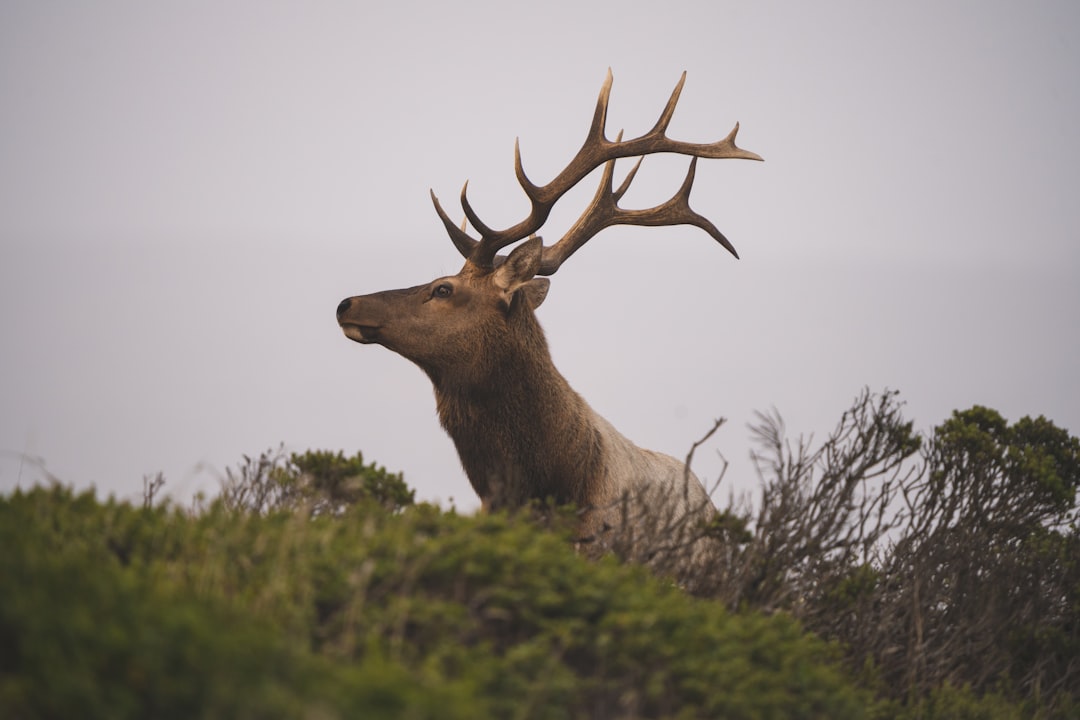
California Guided Tule Elk Hunts 2027: Tags & Odds
California is home to one of North America's most distinctive elk subspecies: the Tule elk. For hunters hoping to pursue Tule elk in 2027, the biggest challenge may be obtaining the tag. California's standard elk tags are distributed through the state's Big Game Drawing using a modified preference-point system. These are limited opportunities, and historical demand can greatly exceed available tags. Under the current system: Hunters must have a valid California annual hunting license to apply. Each hunter may submit only one elk drawing application per license year. California uses preference points for elk. Elk quotas are divided between preference-point and Draw-By-Choice portions according to the size of the hunt quota. Applicants who apply for elk and aren't drawn earn an elk preference point. A preference-point-only application is also available. California currently allows only one nonresident per license year to be drawn for elk statewide. The current Big Game Drawing deadline is June 2 at midnight. California also offers separate elk opportunities through the SHARE program on participating private properties. The final 2027 hunt quotas, dates, fees and regulations should be verified through the California Department of Fish and Wildlife when they're published. Historical draw information can also be researched through TAGZ when building a multi-state elk application strategy.
Next
DIY vs Guided Elk Hunting: Which Hunt Makes Sense?
Choosing between a DIY and guided elk hunt comes down to more than money. A DIY hunt gives you maximum independence and can dramatically reduce the cost of the hunt, but you're responsible for everything from finding elk to navigating access and packing out the animal. A guided hunt can provide: Local knowledge Preseason scouting Hunt planning Calling and glassing experience Camp logistics Access knowledge Meat recovery assistance But hiring a guide doesn't guarantee you'll harvest an elk. It also doesn't automatically improve your odds of drawing a public elk tag. For many hunters, there's a third option: Semi-guided or drop-camp hunts. These can provide some logistical support while allowing the hunter to make many of the hunting decisions independently. The right choice depends on your experience, available time, budget, physical ability and the specific elk hunt you're planning.