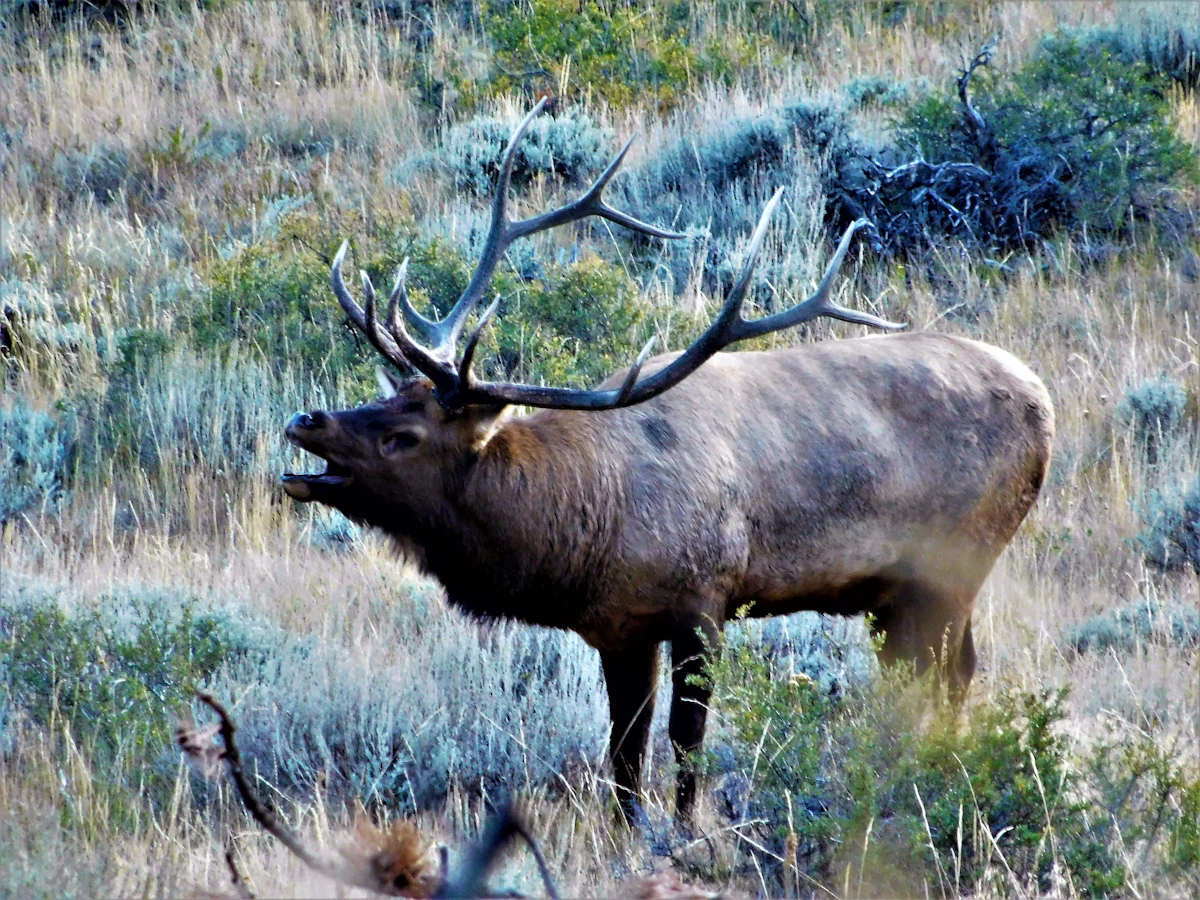
Nevada's nonresident elk draw operates on a squared bonus point system where your points are squared, plus one random number, giving you multiple entries in a lottery where the lowest number wins. In the 2025 draw for antlered elk, nonresident tags went to hunters with anywhere from one point to 30 points depending on the unit and season, with no hunt showing a guaranteed max-point cutoff. The most competitive units saw quotas of seven to nine tags drawing thousands of entries, while some late-season and less-pressured units offered slightly better odds for mid-point holders.
How Does Nevada's Nonresident Elk Draw Work?
Nevada runs a bonus point system where each point is squared before the draw. If you have five points, you get 26 random numbers (5² = 25, plus one) between one and 100 million. The system then analyzes the lowest number from your pool. Lower number wins. This means points help significantly, but they don't guarantee anything. Every applicant, even with zero points, gets one random number and technically has a shot, though 2025 data shows no zero-point winners in the hunts reviewed.
You earn one point per elk category (Antlered, Antlerless, Spike) each license year by applying unsuccessfully or buying a point-only application. Points are residency-agnostic and carry over year to year, but you lose them if you miss two consecutive years of applying in that category. When you draw a tag, your points reset to zero, and you enter a seven-year waiting period before you can hunt elk again in Nevada.
Nevada's Commission targets roughly 10% of antlered elk tags for nonresidents across the main draw, though this is a policy goal, not a hard cap. The actual split varies by hunt. In 2025, 97 nonresident antlered elk tags were allocated statewide for any-legal-weapon hunts, spread across 23 different unit-season combinations.
You can list up to five unit/season choices on one antlered elk application per draw period. The draw evaluates your first choice first; if you don't draw, it moves to your second, and so on. This means choice order matters. Putting a high-demand unit first uses your best draw odds on the toughest hunt.
What Were the 2025 Nonresident Elk Draw Odds?
The 2025 draw results (for the 2025 hunting season) show wide variance in point requirements and competition across Nevada's elk units. Data is from the Nevada Department of Wildlife's published bonus point trend report, covering nonresident antlered elk hunts with any legal weapon. Keep in mind these are 2025 numbers; 2026 draw data was not available at the time of this research, and 2027 quotas and odds are unverified.
Highest-Demand Hunts
Units 111-115, November 6-20: seven tags drew 7,229 entries (counting all five choices). Winners held seven, nine, nine, 15, 18, 25, and 25 points. This was the single most competitive nonresident antlered elk hunt in 2025.
Units 221-223, November 6-20: seven tags, 5,920 entries. Winners ranged from nine to 30 points.
Unit 231, November 6-20: three tags, 2,699 entries. Winners at 20, 22, and 23 points.
Mid-Competition Hunts
Units 076, 077, 079, 081, November 21-December 4: nine tags, 1,786 entries. Winners from one point up to 19 points, showing that even relatively low-point holders drew in this late-season hunt.
Units 111-115, November 21-December 4: seven tags, 5,403 entries. Winners from four points to 22 points.
Units 221-223, November 21-December 4: eight tags, 3,963 entries. Winners from five to 24 points.
Lower-Competition and Low-Quota Hunts
Units 062, 064, 066-068, October 22-November 5: three tags, 862 entries. Winners at two, 12, and 17 points.
Units 072-074, October 22-November 5: three tags, 1,200 entries. Winners at five, 17, and 21 points.
Units 061, 071, October 5-21: one tag, 1,176 entries. Winner held 23 points.
Units 075 (two separate hunts): one tag each, with winners at 17 and 19 points.
Key takeaway: Even in the most competitive hunts, tags went to mid-point holders alongside max-point applicants. The squared-point system weights odds heavily toward higher points, but no hunt showed a guaranteed cutoff where every applicant above a certain point level drew. This is a lottery with weighted entries, not a preference-point race.
For a detailed breakdown of how Nevada's bonus points stack up against preference-point states, see our guide to Nevada elk draw odds with zero points.
What Do Nonresident Elk Tags Cost in Nevada?
Application costs for the 2026 draw were $19 total: $15 elk application fee (includes a $5 elk damage surcharge), $3 game application fee, and $1 processing fee. A point-only application costs $10 and is exempt from the elk damage and game fees.
Tag fees are set by statute (NRS 502.250):
- Antlered elk tag: $1,200 for nonresidents, $120 for residents.
- Antlerless elk tag: $500 for nonresidents, $120 for residents.
You also need a nonresident combination hunting license, which was $155 in recent years (verify current pricing on ndow.org). If you apply without buying the license upfront, you won't earn a bonus point even if you're unsuccessful.
2027 fees are unverified as of this research. Nevada's tag fees are statutory, and no legislative change was found during the October 2026 check, but confirm the final numbers on the NDOW website before applying.
Which Nevada Elk Units Offer the Best Odds for Nonresidents?
"Best odds" depends on your point total and what you're willing to compromise. If you have fewer than 10 points, focus on late-season hunts in units with slightly lower entry numbers. The November 21-December 4 hunts in Units 076, 077, 079, 081 (nine tags) and Units 111-115 (seven tags) both showed winners in the one-to-nine-point range in 2025, though you're competing against thousands of other applicants.
If you're sitting on 10 to 15 points, you're in the range where some tags were awarded in mid-tier hunts like Units 221-223 (November 6-20) and Units 111-115 (both seasons). You're not guaranteed, but your squared points give you a fighting chance.
Above 20 points, you have competitive odds in nearly every hunt, but even max-point holders lost in several units in 2025. The system doesn't guarantee tags at any point level.
Quota-one and quota-two hunts (like Units 061, 071 and Units 075) are statistical long shots regardless of points. One or two tags spread across hundreds or thousands of entries means even 20+ point holders face lottery odds.
Unit 111-115 saw the highest demand (7,229 entries for seven tags in the early hunt), making it statistically the toughest draw. Units 221-223 and Unit 231 also showed high competition. If you're chasing lower entry numbers, look at Units 062, 064, 066-068 or Units 072-074 in the October season, though even these had 862 and 1,200 entries for three tags.
If you're building points with five already banked, compare these odds to Nevada elk draw odds with five points for unit-specific strategy.


Free to join
Download mobile app
- Detailed draw odds
- Point tracking
- Deadline reminders
- 19 states covered





Free to join
Download mobile app
- Detailed draw odds
- Point tracking
- Deadline reminders
- 19 states covered






Free to join
Download mobile app
- Detailed draw odds
- Point tracking
- Deadline reminders
- 19 states covered

How Should Nonresidents Build Elk Points in Nevada?
If you're not applying for a tag this year, buy the point-only application. It costs $10 and gets you one point for the category you select (Antlered, Antlerless, or Spike). You can buy one point per category per license year. If you apply for a tag and don't draw, you automatically earn a point, but only if you purchased a hunting or combination license at the time of the draw.
Don't skip years. Missing two consecutive years of applying for a category wipes your points. If you're building points for antlered elk, you need to either apply or buy a point every year or every other year.
Consider starting early. The squared-point system means the gap between five points and 10 points is significant (26 entries versus larger multipliers), and the gap between 10 and 20 is even larger. Time works in your favor, but only if you're patient.
Should You Apply Every Year or Wait?
Some hunters apply every year to maximize their chances over time, even knowing odds are low early on. Others prefer to bank points until they hit a competitive threshold (10+ points) and then start applying seriously. There's no right answer. It depends on how much you value the chance at an early tag versus building long-term odds.
Don't burn points on a backup choice. If you list a low-odds unit as your first choice and a slightly easier hunt as your second, the system evaluates your first choice with your full point pool. If you don't draw, it moves to your second choice and evaluates it with the same points. You don't get penalized for listing multiple choices, but you also don't get extra entries. Your best odds are always on your first choice.
Plan Your Nevada Elk 2027 Hunt With TAGZ
Nevada's elk draw is a long game. Squared bonus points mean your odds improve exponentially over time, but the system is still a lottery. TAGZ helps you track your bonus points, compare unit-level quotas and competition, and plan your application strategy across multiple states. You can map out which hunts make sense at your current point level, decide whether to apply or wait, and monitor changes in quotas and draw trends year to year. Stop guessing. Start planning with TAGZ.
Official Nevada Hunting Sources
- NDOW Big Game Application FAQ (2026)
- NDOW Bonus Point Data (2025)
- NDOW Apply & Buy Hunting (2026 calendar)
- Nevada Revised Statutes 502.250 (tag fees)
- NDOW 2026-2027 Application Deadlines and Draw Dates
- NDOW Elk Antlered ALW NR Bonus Point Trend (2025)
Last verified: October 22, 2026. Data is from the 2025 draw for the 2025 hunting season. 2026 draw odds, 2027 quotas, and 2027 application deadlines are not yet published and should be confirmed on ndow.org before applying. Final fees, season dates, and unit allocations must be verified with the Nevada Department of Wildlife.
FAQ — Nevada Nonresident Elk Draw Odds
How many bonus points do I need to draw a Nevada elk tag as a nonresident? In the 2025 draw, tags went to hunters with anywhere from one to 30 points depending on the unit. The most competitive hunts (like Units 111-115 and 221-223) saw winners in the 10 to 25 point range, but even these hunts awarded tags to mid-point holders. There is no guaranteed point threshold.
Does Nevada use preference points or bonus points for elk? Nevada uses a bonus point system where your points are squared before the draw. If you have 10 points, you get multiple random numbers based on your squared points, plus one. The lowest number from your pool is compared against all other applicants, and the lowest numbers win tags. This gives higher-point holders better odds but does not guarantee a tag.
Can I draw a Nevada elk tag with zero points? Technically, yes. Every applicant gets at least one random number, so zero-point holders are eligible. However, the 2025 data showed no zero-point winners in the nonresident antlered elk hunts reviewed. Your odds with zero points are extremely low, especially in high-demand units.
What happens to my points if I draw a Nevada elk tag? Your points reset to zero, and you enter a seven-year waiting period before you can hunt elk again in Nevada. This waiting period applies to all elk hunts, not just the category or unit you drew.
When will 2027 Nevada elk draw results be available? Nevada typically publishes draw results by late May or early June. The 2026 draw results were released by May 29, 2026. For 2027, expect a similar timeline, but check the official NDOW calendar for confirmed dates.
How much does it cost to apply for a Nevada nonresident elk tag? The application fee in 2026 was $19 total ($15 elk application, $3 game fee, $1 processing). If you draw, the tag costs $1,200 for antlered elk or $500 for antlerless elk. You also need a nonresident combination license, which was $155 in recent years. Verify 2027 fees on ndow.org before applying.
Was this article helpful?
Previous
Nevada Elk Draw Odds With Ten Points 2027
Nevada's 2025 elk draw gave ten-point nonresidents 101 entries per application, but only four of 97 tags went to that level; most winners had higher points or drew in less competitive hunts.
Related
Arizona Elk Draw Odds and Tag Guide 2027
Arizona elk draw uses a bonus-point system with three passes and a 10% nonresident cap. February 2027 deadline applies for fall hunts, with early-season bull tags highly competitive and late-season hunts drawing faster with 7-13 points.
Next
Alaska Nonresident Sheep Draw Odds 2027
Alaska nonresident sheep hunts are lottery draws with no points system. Applications open November 1-December 15, 2026, for the 2027 season (RY2027). Nonresidents must hunt with a licensed guide or qualifying relative.