Montana's 2027 elk draw operates on two parallel tracks: the nonresident combination license draw that unlocks access to general elk units, and the limited-entry permit draw for premium units across both resident and nonresident hunters. Most nonresidents applying with 1-2 preference points have strong odds for the combination license, while limited-entry permits like the Breaks units and high-profile districts near Yellowstone remain long-shot draws with single-digit success rates.
How Montana's Preference Point System Works
Montana uses preference points exclusively for the nonresident Big Game Combination license, which serves as the foundation for hunting general elk and deer units. Each unsuccessful application adds one preference point to your total. The draw is preference-based with a random component: applicants are grouped into point pools, and higher-point holders are drawn first until quotas fill. Within each point level, selection is random.
This system means that accumulating 1-2 points gives most applicants realistic odds, while zero-point applicants face significantly lower chances as combination license quotas remain capped. Preference points do NOT apply to limited-entry elk permits — those draws are entirely random, with bonus points awarded after unsuccessful applications to increase future odds slightly.
Combination License Draw Odds for 2027
The Big Game Combination license is the gateway to Montana's general elk hunting. For 2027, Montana Fish, Wildlife & Parks maintains separate quotas for the B-10 (deer and elk) and B-11 (elk only) combination licenses. Historical data shows that applicants with 2 preference points typically draw at rates above 90%, while 1-point applicants see odds in the 60-80% range depending on the specific license type and year.
Zero-point applicants face tougher odds, often below 40%, as the point structure prioritizes accumulated applicants. Because combination licenses unlock access to general units statewide — including productive districts in Region 3 (south-central) and Region 4 (north-central) — securing the combination license is the critical first step for nonresident elk hunters. Once drawn, hunters select their hunting district from available general units.
Limited-Entry Elk Permit Odds
Limited-entry elk permits cover specific units where Montana restricts hunter numbers to manage herd health and pressure. These permits are entirely random draws with no preference points. High-demand units like HD 270 (Custer National Forest), HD 380 (Gardiner Late Hunt), and the Missouri Breaks districts consistently show nonresident odds below 5%.
Resident odds are higher due to favorable allocations, but even residents face competitive draws in trophy units. Units near Yellowstone National Park and wilderness areas attract the heaviest application pressure. Conversely, some limited-entry units in eastern Montana and less-publicized districts see odds above 20% for nonresidents, offering realistic opportunities for hunters willing to explore beyond the marquee zones.
Bonus points accumulate after each unsuccessful limited-entry application and are squared in the draw — an applicant with 3 bonus points receives 9 chances in the random draw, while a first-time applicant receives 1 chance. This advantage compounds over time but does not guarantee success in ultra-competitive units.
Best Units for Nonresident Draw Success
Nonresidents seeking realistic draw odds should focus on general units accessible through the combination license rather than banking on limited-entry permits. Units in Region 3, including districts around the Big Belt Mountains and portions of the Crazy Mountains, offer solid elk populations and general-season access. Region 4 districts near the Rocky Mountain Front also provide quality hunting without permit requirements once the combination license is secured.
For limited-entry applicants willing to play the odds game, units in eastern Montana — particularly those requiring significant access planning or offering less dramatic scenery — draw fewer applications. HD 530 and surrounding districts have historically shown nonresident odds above 15%, though terrain and access differ sharply from mountain hunting. Hunters should cross-reference Montana FWP's official draw odds reports and harvest statistics to identify units balancing opportunity with realistic success.
Free to join
Download mobile app
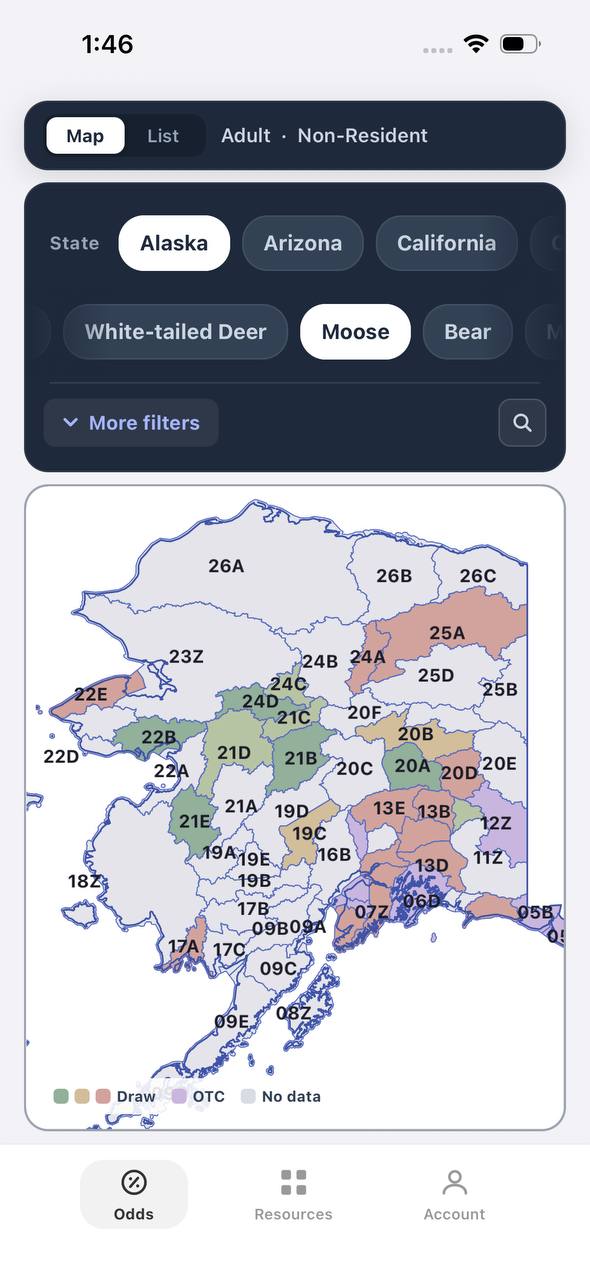
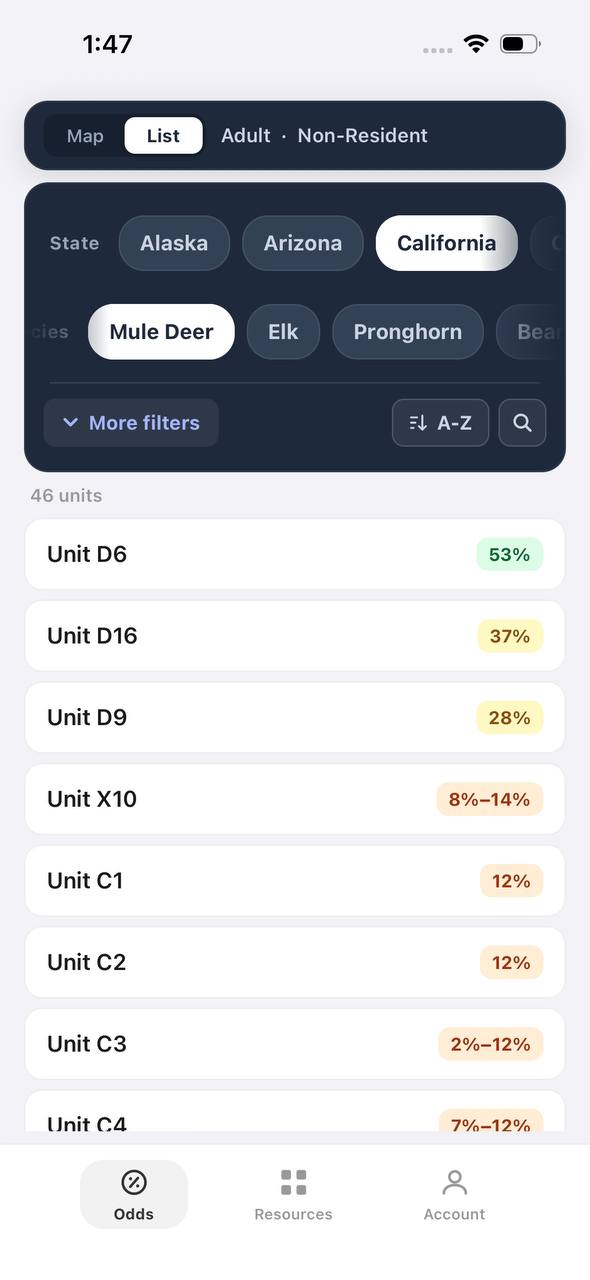
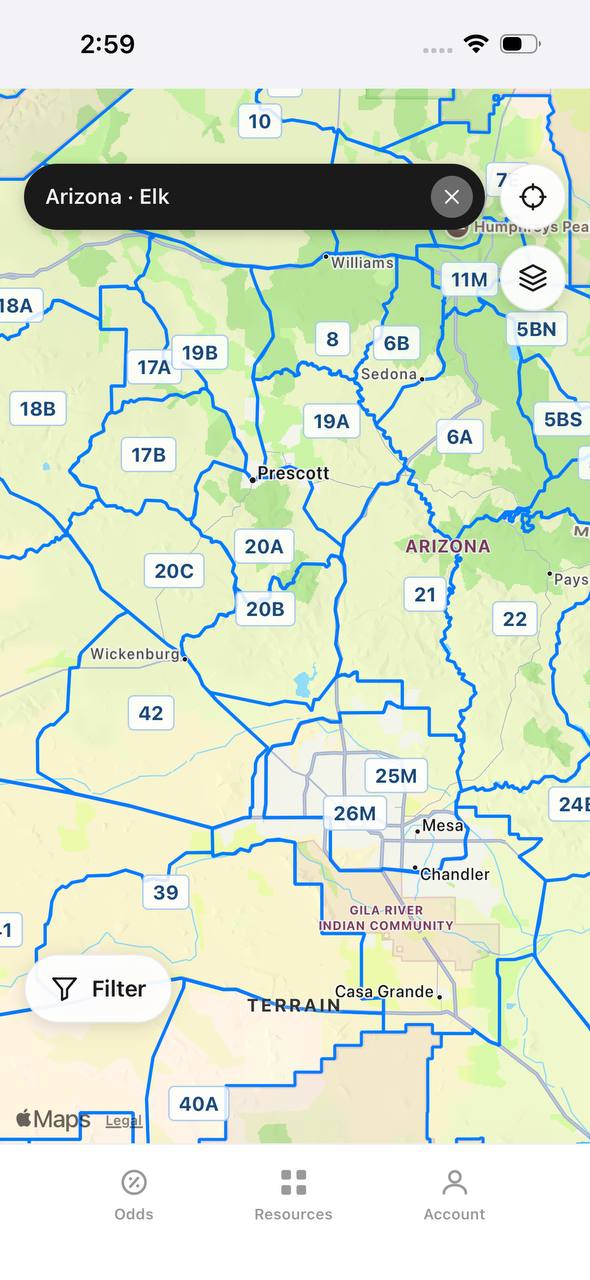
- Detailed draw odds
- Point tracking
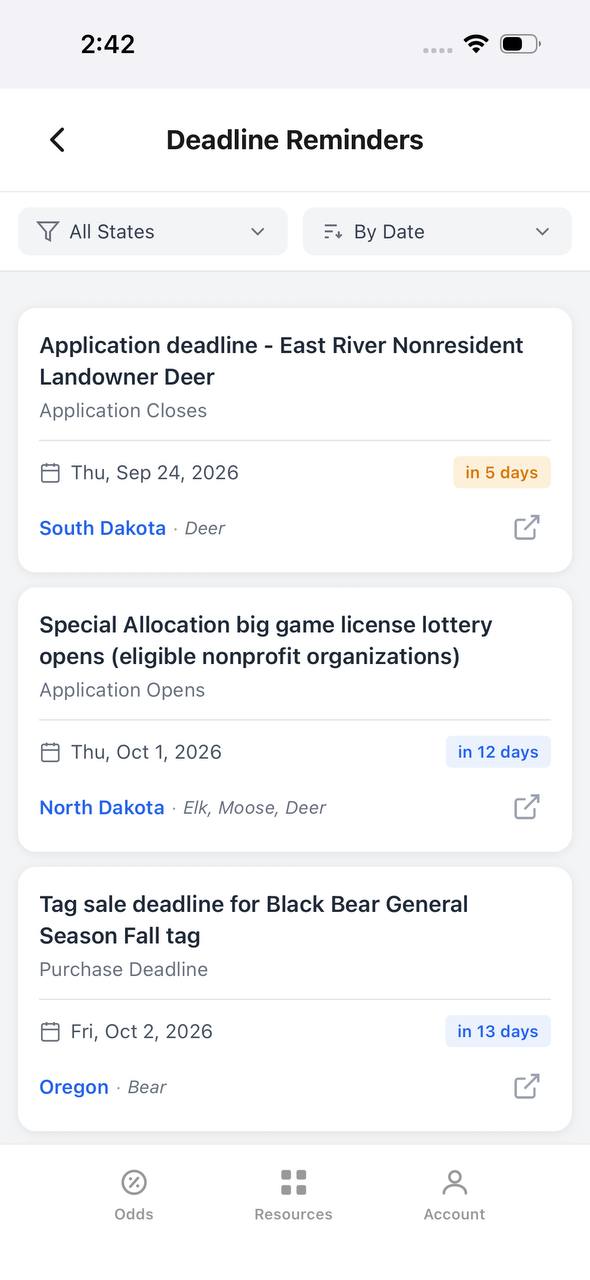
- Deadline reminders
- 19 states covered

Free to join
Download mobile app
- Detailed draw odds
- Point tracking
- Deadline reminders
- 19 states covered
Free to join
Download mobile app
- Detailed draw odds
- Point tracking
- Deadline reminders
- 19 states covered
Application Strategy for 2027
Apply for the combination license first if you are a nonresident hunter with fewer than 3 preference points. This remains the highest-value draw in Montana's system. The application deadline falls in mid-March, and the draw occurs in late April. Preference points are awarded automatically after unsuccessful applications, so even a non-draw builds equity for future years.
For limited-entry permits, research units thoroughly before applying. First-choice applications carry the most weight in Montana's draw structure — second and third choices receive consideration only after first-choice applicants are processed. This means that listing a trophy unit as your first choice and a backup unit as your second is a strategic approach, but odds remain longest on the first choice. Bonus points accumulate regardless of choice order, rewarding long-term participants.
Consider the general hunting opportunity already available through the combination license. Many nonresidents overlook solid general units in pursuit of limited-entry tags, but Montana's general elk hunting offers legitimate trophy potential in districts with lower pressure and strong public-land access. Pairing a combination license draw with over-the-counter archery opportunities extends hunting time and flexibility.
Resident vs. Nonresident Allocation
Montana allocates limited-entry elk permits with a resident preference: typically 90% resident, 10% nonresident, though exact splits vary by unit. Combination licenses are capped separately, with Montana law limiting nonresident Big Game Combination licenses to 17,000 total annually. This cap includes both B-10 and B-11 licenses, and demand routinely exceeds supply, creating the preference-point draw.
Residents hold a significant advantage in limited-entry draws due to allocation ratios and draw separately from nonresidents. A resident applying for a high-demand unit faces tough odds but still encounters better percentages than nonresident counterparts. For general units, residents purchase licenses over the counter without a draw, giving them unrestricted access to general districts.
This structure means nonresidents must plan around the combination license draw timeline and recognize that limited-entry permits represent bonus opportunities rather than reliable strategies. Banking on a limited-entry tag without securing a combination license first leaves hunters without any Montana elk access if the permit draw fails.
Draw Timeline and Deadlines for 2027
Montana's 2027 elk draw follows the established calendar. The nonresident combination license application period opens in early January and closes in mid-March. Results are published in late April. Limited-entry elk permit applications open simultaneously and close in mid-March, with results released in late April alongside combination license results.
Preference points and bonus points are tallied after the draw, so unsuccessful 2027 applicants will carry those points into the 2028 season. Hunters drawn for combination licenses must then purchase the license by the specified deadline to retain their draw. Failure to purchase forfeits the draw and does not return the preference point.
Hunters should verify all dates and requirements on the Montana FWP official website, as deadlines and fees are subject to change. Late applications are not accepted, and technical issues are the applicant's responsibility to resolve before the deadline.
FAQ — Montana Elk Draw Odds
How many preference points do I need for a Montana combination license in 2027?
Most nonresidents with 2 preference points draw successfully, while 1-point applicants have decent odds depending on competition levels. Zero-point applicants face lower success rates but still have a chance.
Are Montana limited-entry elk permits worth applying for as a nonresident?
Yes, but treat them as bonus opportunities. Odds are low in premier units, but the draw is random and costs only the application fee. Securing a combination license should be the priority.
Does Montana use preference points for elk permits?
No. Preference points apply only to the nonresident combination license draw. Limited-entry elk permits use a random draw with bonus points that increase your number of entries after unsuccessful applications.
Can I hunt elk in Montana without drawing a tag?
Nonresidents must draw a combination license to access general elk units. Residents buy general licenses over the counter. Some archery opportunities and private-land access exist outside the draw, but general public-land elk hunting requires the combination license for nonresidents.
What are the best Montana elk units for nonresidents with limited points?
Focus on general units in Regions 3 and 4 accessible through the combination license. For limited-entry permits, eastern Montana units and less-publicized districts offer higher draw odds than Yellowstone-adjacent units.
When do Montana elk draw results come out?
Combination license and limited-entry permit results are released in late April, following the mid-March application deadline. Hunters can check results online through the Montana FWP website.
Was this article helpful?
Previous
Montana Big Game Combination Draw Odds 2027: Point Requirements & Success Rates by Region
Montana's 2027 big game combination licenses require 0-3 preference points for most nonresidents, with the best draw odds in Regions 2, 3, and 4. Elk-deer combos draw easier than deer-only licenses in high-demand districts.
Related
DIY vs Guided Whitetail Deer Hunting: How to Choose Your Hunt
Deciding between a DIY whitetail hunt and a guided experience comes down to your budget, skill level, available time, and what you want from the hunt. Both approaches can produce great bucks if you choose the path that matches your resources and hunting goals.
Next
Utah Mule Deer Draw Odds With Five Points: What 2027 Applicants Need to Know
Five preference points open doors to quality Utah mule deer units, but competition varies dramatically by region. Understanding which premium and general-season units match your point level helps you hunt sooner rather than banking points indefinitely.