Gunnison Colorado Hunting 2027: Elk & Mule Deer
Gunnison Colorado Hunting 2027
The Gunnison Basin has long been one of Colorado's best-known big-game hunting regions.
Hunters travel to the area for opportunities including:
Mule deer
Elk
Moose
Black bear
Mountain lion
But when planning a hunt a year ahead, there's an important distinction between:
Confirmed multi-year regulations
and
annual regulations that haven't been finalized yet.
That's especially important for 2027.
Colorado is currently operating under its 2025–2029 Big Game Season Structure, which establishes the broader framework for hunting seasons and license distribution.
Annual license recommendations and quotas are still established through Colorado Parks and Wildlife's annual regulatory process.
That means hunters shouldn't assume a 2027 quota increase, unit-boundary change or draw change is official unless CPW has actually published it.
Has Colorado Changed the Gunnison Units for 2027?
As of September 2026, hunters should not claim that Gunnison-area GMU boundaries have been broadly reconfigured for 2027 without a specific CPW regulation or map supporting that claim.
The original version of this article stated that several units had:
Expanded into adjacent public land
Been reduced in size
Been reconfigured based on wildlife distribution
Those statements shouldn't be published as established 2027 facts without official CPW documentation.
Instead, hunters should verify the current boundary of every unit they're considering using the official Colorado Hunting Atlas and current Big Game Brochure.
This is especially important near unit boundaries.
Gunnison-Area Game Management Units
Hunters researching the Gunnison region frequently encounter units such as:
54 — Colorado Big Game | TAGZ55 — Colorado Big Game | TAGZ551 — Colorado Big Game | TAGZ65 — Colorado Big Game | TAGZ67 — Colorado Big Game | TAGZ
But these units shouldn't all be treated as one interchangeable hunting area.
Terrain, access, season structure, license demand, herd conditions and historical draw requirements can differ considerably.
Research the exact hunt code rather than relying only on the GMU number.
Colorado Mule Deer Hunting Around Gunnison
Mule deer are one of the biggest reasons hunters research the Gunnison Basin.
Colorado mule deer licenses are limited.
That means hunters generally need to obtain their deer license through the applicable draw or later limited-license pathways rather than simply purchasing an unlimited OTC deer tag.
For the primary draw, preference points can play an important role.
How Colorado Deer Preference Points Work
Colorado uses preference points, not bonus points, for deer.
A hunter can earn a deer preference point when they:
- Correctly apply and fail to draw their first-choice limited deer license
or
- Use the preference-point-only hunt code as their first choice.
Preference points give priority in the primary draw.
Hunters with more points generally have priority over applicants with fewer points, subject to applicable quota and nonresident allocation rules.
Once you successfully draw your first-choice license, your accumulated preference points for that species are used.
Colorado Does Not Have Deer Bonus Points
The original article stated that some Gunnison units were receiving "bonus point opportunities."
That's incorrect for Colorado deer and elk.
Colorado currently uses preference points for:
Deer
Elk
Pronghorn
Bear
Colorado's weighted-point system applies to:
Rocky Mountain bighorn sheep
Mountain goat
Moose
Those systems shouldn't be mixed together.
Gunnison Elk Hunting in 2027
Elk hunting in the Gunnison region also requires hunters to pay close attention to license type.
Colorado has both limited and OTC elk opportunities, but availability depends on:
Residency
Unit
Season
Method of take
Sex
A major statewide change began with the current 2025–2029 Big Game Season Structure.
Nonresident Archery Elk Is Limited West of I-25
Under Colorado's 2025–2029 Big Game Season Structure, nonresident archery elk licenses west of I-25 and in GMU 140 are limited.
This is a major consideration for nonresident hunters planning Gunnison-area archery elk hunts.
Historically, a nonresident hunter could rely much more heavily on Colorado's OTC archery structure.
That is no longer the case across western Colorado.
Nonresident archery hunters need to research the applicable limited license.
What About Rifle Elk?
Don't assume every Gunnison-area rifle elk season operates the same way.
Colorado's elk system includes both:
Limited licenses
OTC licenses where offered
Availability depends on the specific GMU and season.
Always verify the hunt code and current brochure before building a 2027 plan.
Colorado's 2027 Preference Point System
For deer and elk, 2027 remains a preference-point year under the existing system.
Hunters shouldn't publish claims that Colorado is introducing a brand-new deer or elk preference-point system for 2027.
It isn't.
Preference points have been part of Colorado's system for years.
Major Colorado Draw Changes Begin in 2028
This is one of the biggest distinctions hunters need to understand.
Colorado has approved substantial changes to its draw system.
But those changes are scheduled to begin with the:
2028 draw.
Not 2027.
According to Colorado Parks and Wildlife, the approved draw changes were intentionally delayed until 2028 to allow time for programming and implementation.
So hunters planning Gunnison in 2027 should follow the system applicable to the 2027 draw, not rules they've read about for 2028.
Does Applying Early Improve Colorado Draw Odds?
No.
Submitting your application on the first day doesn't give you better draw odds than submitting a valid application later in the application period.
The important thing is:
Submit a complete and accurate application before the deadline.
Applying early can still be smart because it reduces the risk of:
Forgetting
Website problems
Payment issues
Last-minute mistakes
But it doesn't give your application additional draw priority.
2027 Colorado Big Game Application Deadline
Don't publish an exact 2027 deadline until CPW officially establishes it.
For reference, the 2026 primary draw deadline was April 7 at 8 p.m. Mountain Time.
That does not automatically mean the 2027 deadline will be identical.
Once CPW publishes the 2027 Big Game Brochure and application calendar, update this article with the official date.
Gunnison Mule Deer Draw Odds
There isn't one "Gunnison mule deer draw odd."
Draw results vary by:
Hunt code
Residency
Preference points
Season
Sex
License quota
Applicant demand
A third-rifle buck license in one GMU may have completely different historical draw requirements from a second-rifle license in another.
That's why hunters should research exact hunt codes.
Using Historical Draw Data Correctly
Historical draw data can help answer questions such as:
How many people applied?
How many licenses were available?
How many points did successful applicants have?
How did resident and nonresident demand differ?
Colorado Parks and Wildlife publishes annual draw recap reports containing this information.
But historical results aren't a guarantee.
Applicant behavior changes.
Quotas change.
Nonresident allocation rules matter.
A hunt that required a certain number of points previously can require more or fewer in the future.
Colorado Nonresident License Allocation
Colorado currently caps the percentage of licenses that can go to nonresidents for applicable limited deer and elk hunts.
For primary-draw deer and elk hunt codes that required fewer than six resident preference points to draw in the prior applicable year, up to 25% of licenses may go to nonresidents.
For applicable hunt codes that required six or more resident preference points, up to 20% may go to nonresidents.
This can have a major impact on Gunnison draw results.
A nonresident shouldn't look at the total hunt quota and assume every license is available equally to residents and nonresidents.
Did GMU 66 or 67 Receive More Nonresident Tags for 2027?
Don't make that claim yet.
The original article stated that GMUs 66 and 67 had received a slight increase in nonresident licenses for 2027.
That should be removed unless CPW publishes a 2027 license recommendation confirming it.
Annual quotas can change.
When the final 2027 quotas become available, compare them directly against 2026 before claiming an increase or decrease.
Don't Use GMU 61 and 62 as Gunnison Examples
The original article also used GMUs 61 and 62 as examples of Gunnison-area units receiving improved draw odds.
That doesn't fit this article.
If the search intent is:
Gunnison Colorado hunting
keep the article focused on the Gunnison Basin and directly relevant surrounding units.
Bringing unrelated Western Colorado units into the discussion weakens the page's topical focus.
Colorado Secondary Draw
Hunters who don't receive their desired license in the primary draw may have another opportunity through Colorado's secondary draw.
Most qualifying remaining deer, elk, pronghorn and bear licenses can enter the secondary draw.
Preference points:
aren't used
and
aren't earned
in the secondary draw.
Nonresident allocation caps also don't apply to the secondary draw.
But don't build a Gunnison strategy around assuming a desirable license will reach the secondary draw.
Many high-demand licenses won't.
Colorado Leftover and Reissued Licenses
Colorado also has leftover and reissued limited licenses.
Leftover licenses are licenses remaining after the draws.
Reissued licenses can include licenses that were:
Returned
Not paid for
Otherwise returned to the available license pool
Preference points aren't used when purchasing leftover licenses.
These opportunities can be worth monitoring, but availability changes.
How TAGZ Helps With Gunnison Hunt Planning
TAGZ helps hunters research Western draw opportunities using historical draw and unit-level information.
For Gunnison hunters, that means looking beyond a generic statement such as:
"GMU 55 is hard to draw."
Instead, research:
Species
Residency
Hunt code
Season
Weapon
Point level
Historical applicant demand
Historical license availability
Unit characteristics
That provides a much stronger foundation for application planning.
Explore the platform through TAGZ Product.
Historical Draw Odds Are Not Predictions
TAGZ historical draw information should be used as a planning tool.
It can't guarantee that a hunt will take the same number of points next year.
For example, a hunt can change because of:
Fewer licenses
More applicants
Changing nonresident demand
Regulation changes
Herd-management decisions
Think in terms of trends and probabilities rather than guarantees.
Gunnison Mule Deer Strategy for 2027
A good Gunnison mule deer strategy should start with your actual preference-point total.
Then evaluate multiple hunts.
Instead of asking:
"What's the best Gunnison unit?"
ask:
"Which Gunnison-area hunts fit my point level, season preference and hunting goals?"
That leads to much better planning.
Gunnison Elk Strategy for 2027
Elk hunters should first decide:
Resident or nonresident
Archery, muzzleloader or rifle
Limited or applicable OTC opportunity
Bull or antlerless
Point strategy
Season preference
For nonresident archery hunters especially, don't rely on outdated information describing western Colorado archery elk as broadly OTC.
The rules changed beginning with the 2025–2029 structure.
Don't Ignore Winter Conditions
The Gunnison Basin is heavily influenced by winter.
Severe winters can affect:
Mule deer survival
Fawn recruitment
Herd distribution
Future license recommendations
That's one reason annual quota recommendations matter.
A multi-year season structure doesn't mean every hunt receives the same number of licenses every year.
CPW can adjust annual license numbers based on biological and management information.
Scouting Gunnison
Once you've identified realistic hunting opportunities, start looking at:
Elevation
Public/private boundaries
Road access
Trailheads
Wilderness
Water
Migration routes
Hunting pressure
Seasonal habitat
But remember:
Drawing the tag comes before executing the hunt.
A perfect scouting plan doesn't matter if you're researching a license that's unrealistic for your point level.
Built From Western Hunting Experience
TAGZ was started by hunters, guides and outfitters with firsthand Western hunting experience.
The platform was born from the same problem many Western hunters face:
There are thousands of hunt codes, units, point requirements and regulations, but hunters ultimately need to answer a simple question:
Where should I apply?
That's particularly relevant in a place like Gunnison, where the difference between units, seasons and point requirements can be substantial.
Learn more about TAGZ through About TAGZ.
What Gunnison Hunters Should Watch Before the 2027 Draw
As the 2027 application period approaches, monitor CPW for:
Final 2027 Big Game Brochure
Primary draw deadline
Hunt codes
License quotas
Unit-specific regulation changes
Season dates
Nonresident allocations
Qualifying-license requirements
License fees
Don't publish rumored changes as finalized regulations.
FAQ — Gunnison Colorado Hunting 2027
Are Colorado's 2027 big-game regulations finalized?
Not all annual 2027 hunt details and license quotas are final as of September 2026. Colorado's broader 2025–2029 Big Game Season Structure is established, but annual license recommendations and regulations still matter.
Did Gunnison GMU boundaries change for 2027?
Don't assume so. Verify any claimed boundary change through current CPW maps and regulations before publishing or hunting.
Does Colorado use bonus points for elk?
No. Colorado uses preference points for elk.
Does Colorado use bonus points for mule deer?
No. Colorado uses preference points for deer.
Is Colorado introducing a new preference-point system in 2027?
No. Colorado already uses preference points for deer and elk. Major approved statewide draw-process changes are scheduled to begin in 2028.
Does applying early improve Colorado draw odds?
No. A correctly submitted application has the same draw treatment regardless of whether it was submitted early or near the deadline.
What was Colorado's 2026 primary draw deadline?
The 2026 primary draw deadline was April 7 at 8 p.m. Mountain Time. Verify the official 2027 deadline once CPW publishes it.
Are Gunnison mule deer tags limited?
Yes. Colorado deer licenses are limited.
Are nonresident archery elk licenses OTC around Gunnison?
Under Colorado's 2025–2029 structure, nonresident archery elk licenses west of I-25 are limited rather than unlimited OTC licenses.
How does Colorado's nonresident allocation work?
For applicable primary-draw deer and elk hunts, up to 25% of licenses can go to nonresidents when the hunt required fewer than six resident preference points in the applicable prior year. Hunts requiring six or more resident points can have up to 20% allocated to nonresidents.
Did GMU 66 and 67 get more nonresident licenses for 2027?
Don't claim that until CPW publishes final 2027 license numbers confirming it.
How do I find Gunnison mule deer draw odds?
Use the exact hunt code, residency and point level. CPW publishes annual draw recap reports showing applications, licenses and historical preference-point results.
Does the secondary draw use preference points?
No. Preference points aren't used or earned in Colorado's secondary draw.
Do leftover licenses use preference points?
No.
Can historical draw odds predict exactly what I'll need in 2027?
No. Historical results are useful planning information, but quotas and applicant demand can change.
Can TAGZ help research Gunnison draw opportunities?
Yes. TAGZ helps hunters research Western draw opportunities using historical draw and unit-level information.
Continue Planning Your 2027 Gunnison Hunt
Gunnison is exactly the type of place where hunters should avoid broad statements about "good draw odds" or "the best unit."
Research the actual opportunity.
Start with:
Species
Residency
Preference points
Weapon
Season
Hunt code
Then compare historical results and determine which hunts fit your strategy.
Use TAGZ to research Colorado draw opportunities and historical information.
Explore additional hunting and application strategy through TAGZ Insights.
See how the platform works through TAGZ Product.
Learn more about the hunters, guides and outfitters behind TAGZ through About TAGZ.
For official regulations, use Colorado Parks and Wildlife.
CPW also publishes official Deer Draw Statistics and Elk Draw Statistics.
TAGZ uses historical draw information as a planning tool. Historical results don't guarantee future drawing success. Always verify final 2027 hunt codes, quotas, deadlines, season dates, unit boundaries and regulations directly with Colorado Parks and Wildlife before applying or hunting.
Was this article helpful?
Previous
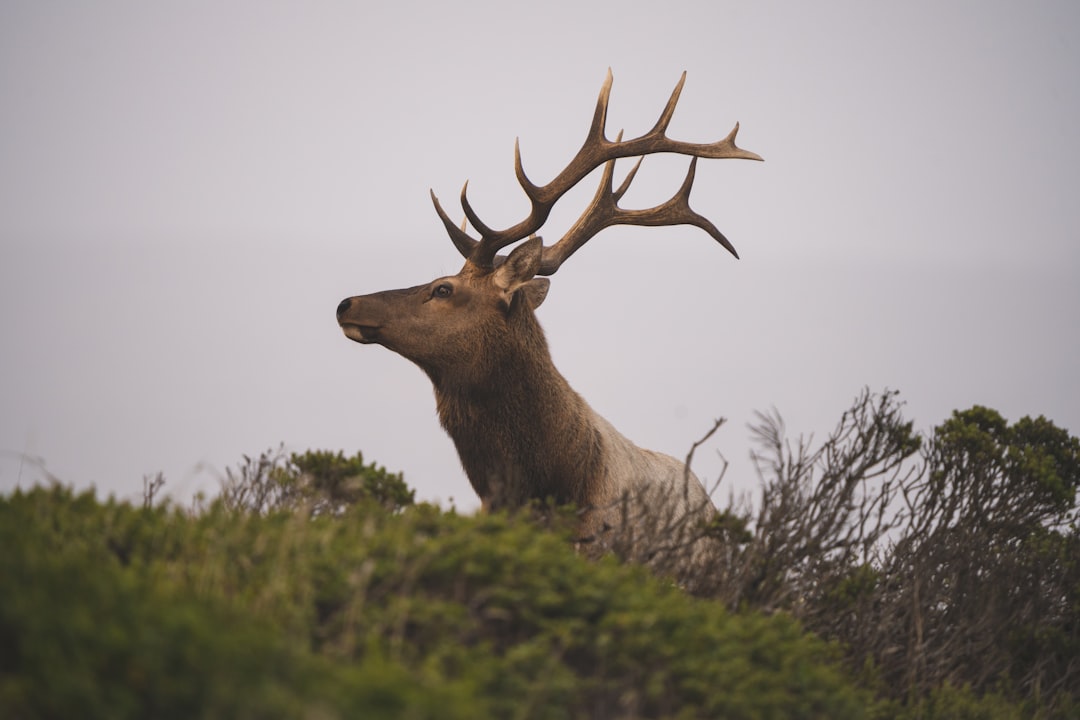
California Guided Tule Elk Hunts 2027: Tags & Odds
California is home to one of North America's most distinctive elk subspecies: the Tule elk. For hunters hoping to pursue Tule elk in 2027, the biggest challenge may be obtaining the tag. California's standard elk tags are distributed through the state's Big Game Drawing using a modified preference-point system. These are limited opportunities, and historical demand can greatly exceed available tags. Under the current system: Hunters must have a valid California annual hunting license to apply. Each hunter may submit only one elk drawing application per license year. California uses preference points for elk. Elk quotas are divided between preference-point and Draw-By-Choice portions according to the size of the hunt quota. Applicants who apply for elk and aren't drawn earn an elk preference point. A preference-point-only application is also available. California currently allows only one nonresident per license year to be drawn for elk statewide. The current Big Game Drawing deadline is June 2 at midnight. California also offers separate elk opportunities through the SHARE program on participating private properties. The final 2027 hunt quotas, dates, fees and regulations should be verified through the California Department of Fish and Wildlife when they're published. Historical draw information can also be researched through TAGZ when building a multi-state elk application strategy.
Next
DIY vs Guided Elk Hunting: Which Hunt Makes Sense?
Choosing between a DIY and guided elk hunt comes down to more than money. A DIY hunt gives you maximum independence and can dramatically reduce the cost of the hunt, but you're responsible for everything from finding elk to navigating access and packing out the animal. A guided hunt can provide: Local knowledge Preseason scouting Hunt planning Calling and glassing experience Camp logistics Access knowledge Meat recovery assistance But hiring a guide doesn't guarantee you'll harvest an elk. It also doesn't automatically improve your odds of drawing a public elk tag. For many hunters, there's a third option: Semi-guided or drop-camp hunts. These can provide some logistical support while allowing the hunter to make many of the hunting decisions independently. The right choice depends on your experience, available time, budget, physical ability and the specific elk hunt you're planning.