How to Hunt Pressure: Real-World Tactics for Western Big Game
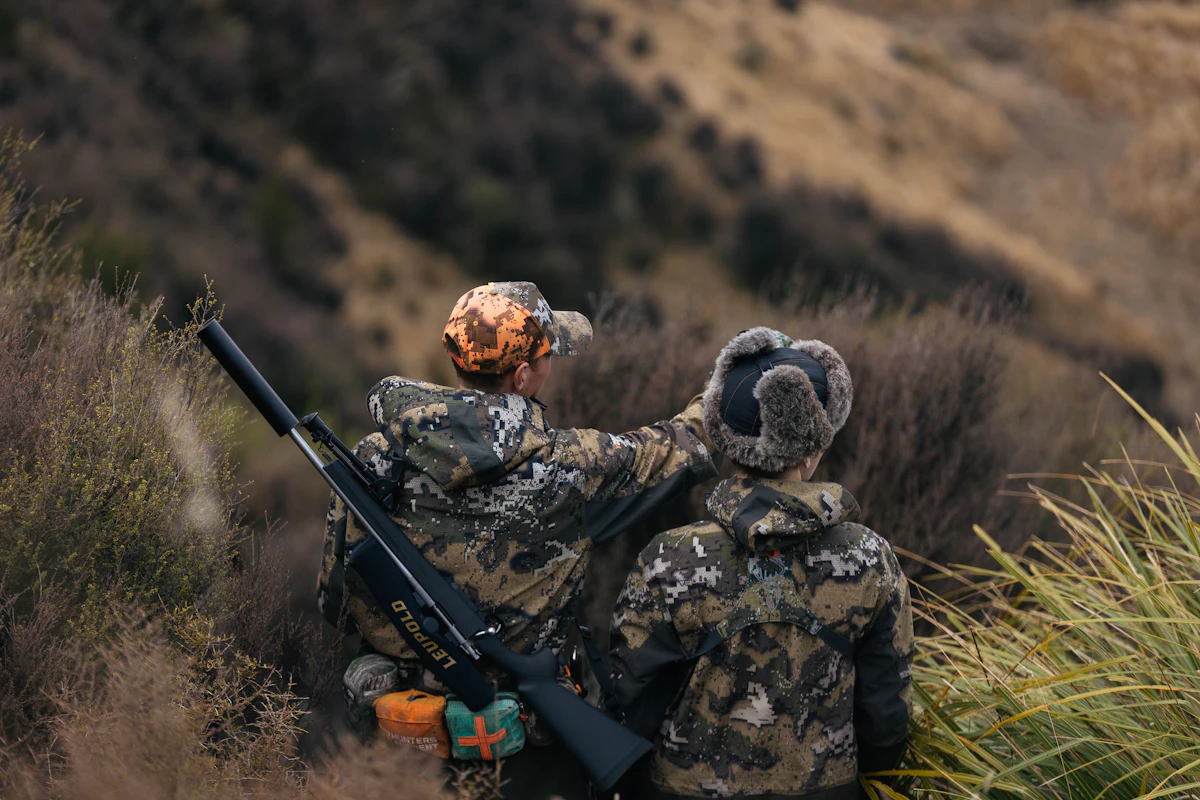
There’s no magic bullet for hunting pressure in the West. Whether you’re chasing elk in Colorado, mule deer in Utah, or antelope on the Wyoming plains, pressure is part of the landscape now. But that doesn’t mean you’re out of luck. If you understand how other hunters move, how animals react, and how to use terrain to your advantage, you can still find success.
Why Pressure Matters More Than Ever in Western Units
For most public-land hunters, pressure is the real game-changer. It’s not just about tag numbers or unit boundaries—it's about how hunting traffic shapes animal behavior. Mule deer and elk get smart fast when the orange army shows up.
- Animals shift patterns quickly, often bedding deeper, moving earlier or later, or relocating entirely.
- Hunters often concentrate near easy access points—trailheads, obvious glassing knobs, or ATV trails.
- The more limited the season or tag, the more savvy the crowd—expect more pressure on quality units, not less.
If you ignore these realities, your hunt becomes a coin flip. But if you read the pressure, you can still get into animals others overlook.
Terrain, Access, and the Smart Hunter’s Advantage
Find Overlooked Corners
Most hunters won’t go far from their rig. A couple miles off the road, especially with some steep terrain or deadfall, can peel off 80% of the crowd. But overlooked doesn’t always mean deep—sometimes it’s just a nasty little pocket close to a trail or a brushy bench nobody wants to crawl through.
Watch the Wind, Not the Trailhead
Animals adapt to pressure by using wind and cover. A pressured elk will often bed where it can see or smell any approach. If you’re following the crowd, you’re behind. Instead, circle ahead, use topo and satellite maps to find micro-escape routes, and hunt into the wind.
Time Your Moves
Pressure spikes at daylight and right before dark. Midday, a lot of hunters nap or head back for lunch—but that’s when pressured animals sometimes move. Glass shady timber pockets or still-hunt through bedding areas when others are gone.
Scouting and Realistic Expectations
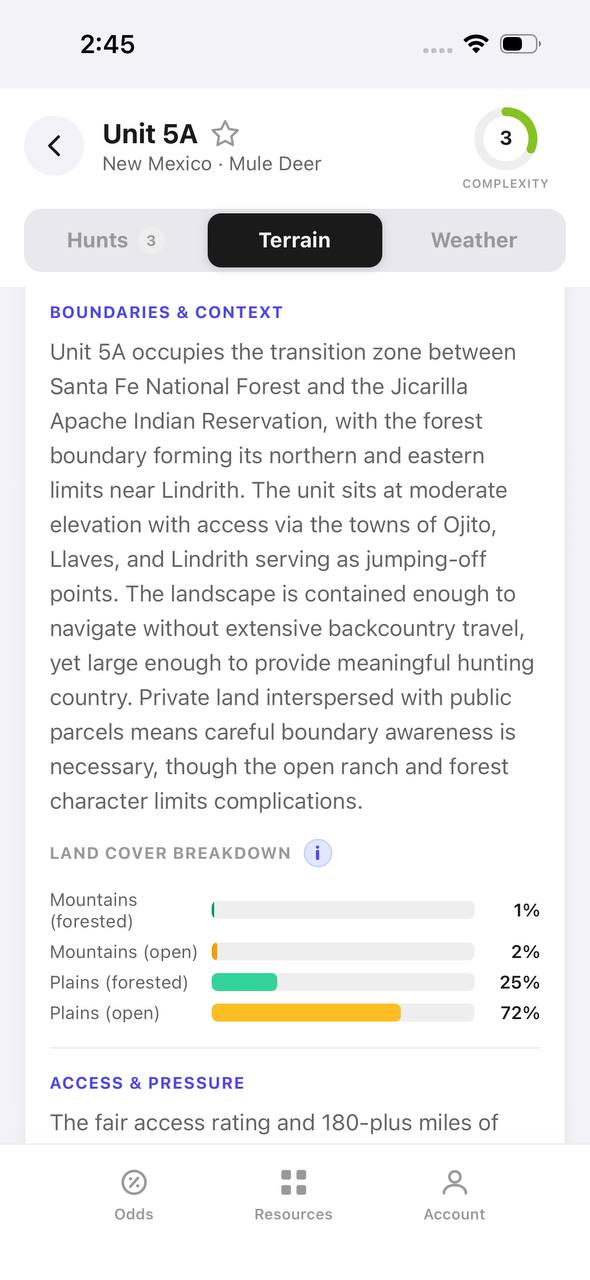
Pre-season boots-on-the-ground scouting is huge, but don’t expect animals to be in the same places during season. Digital scouting with TAGZ helps you identify pressure points—look for trailheads, road densities, and terrain bottlenecks. Mark backup spots, and have a plan B or C. Set realistic goals: on pressured hunts, seeing animals and avoiding crowds can be a win.
How TAGZ Simplifies Pressure Planning
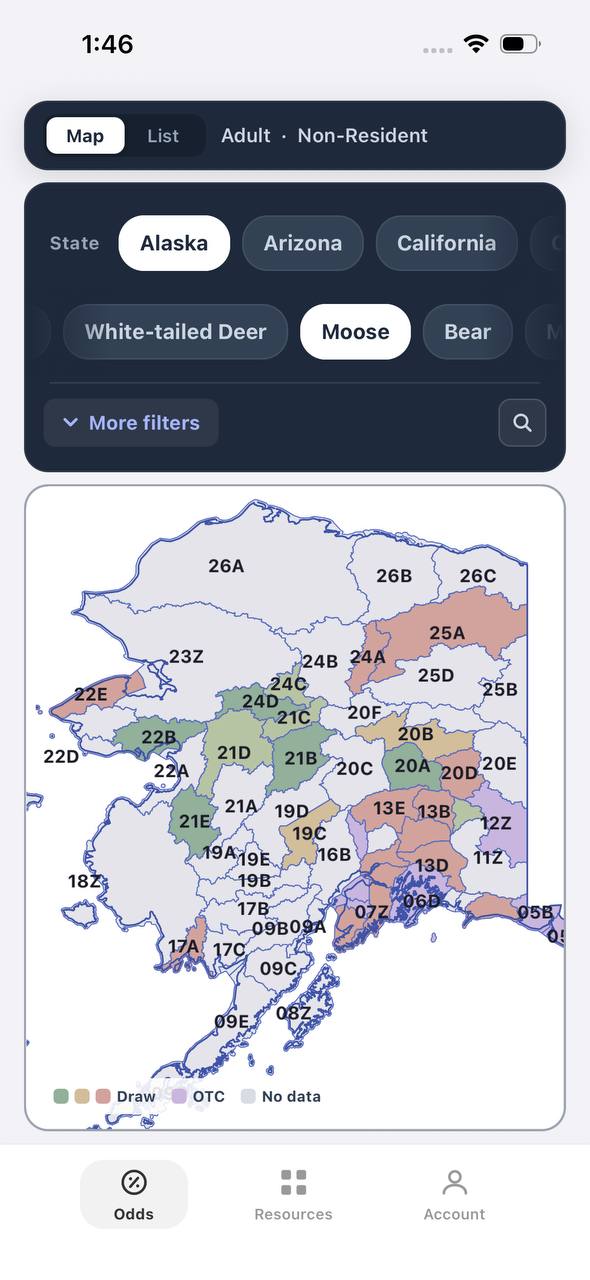
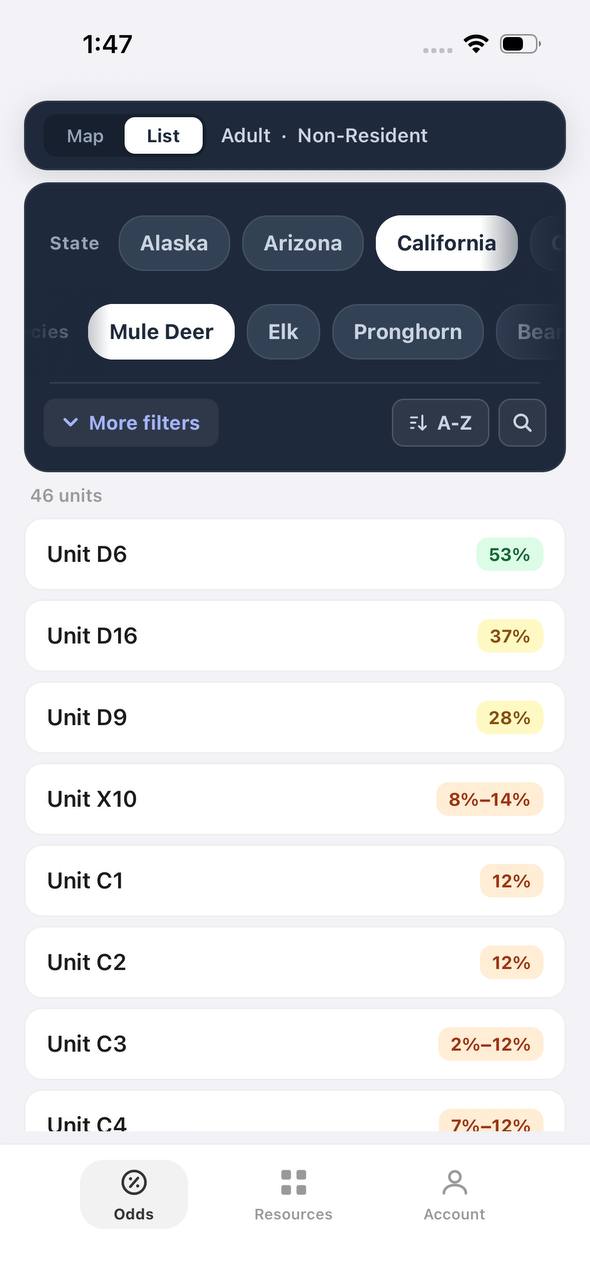
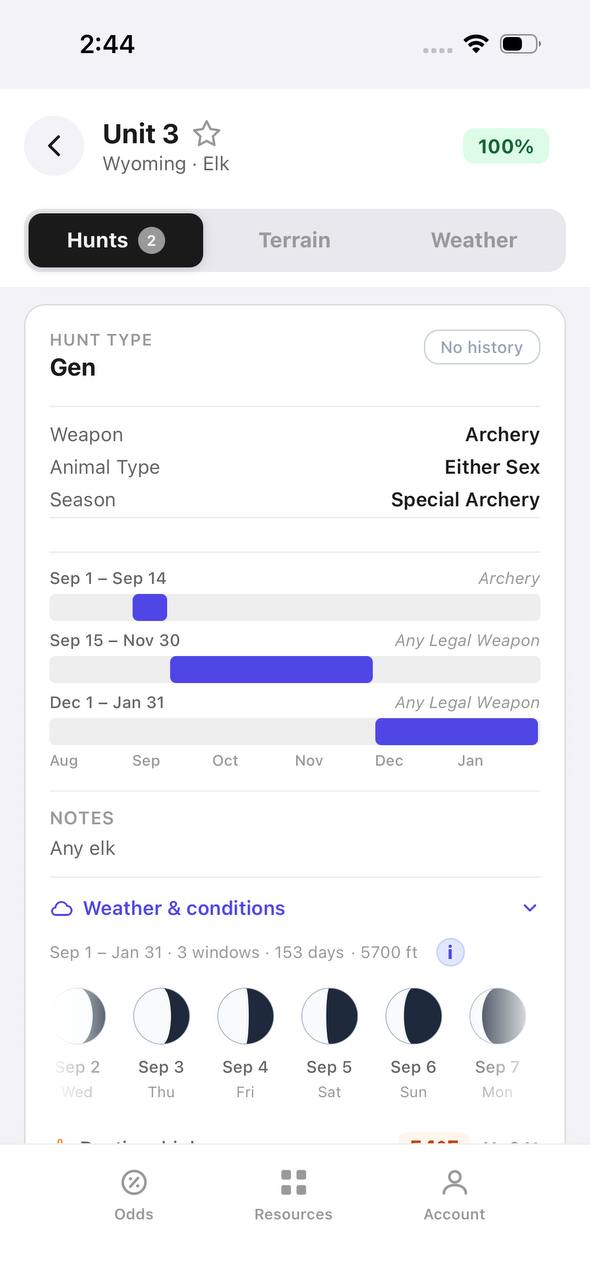
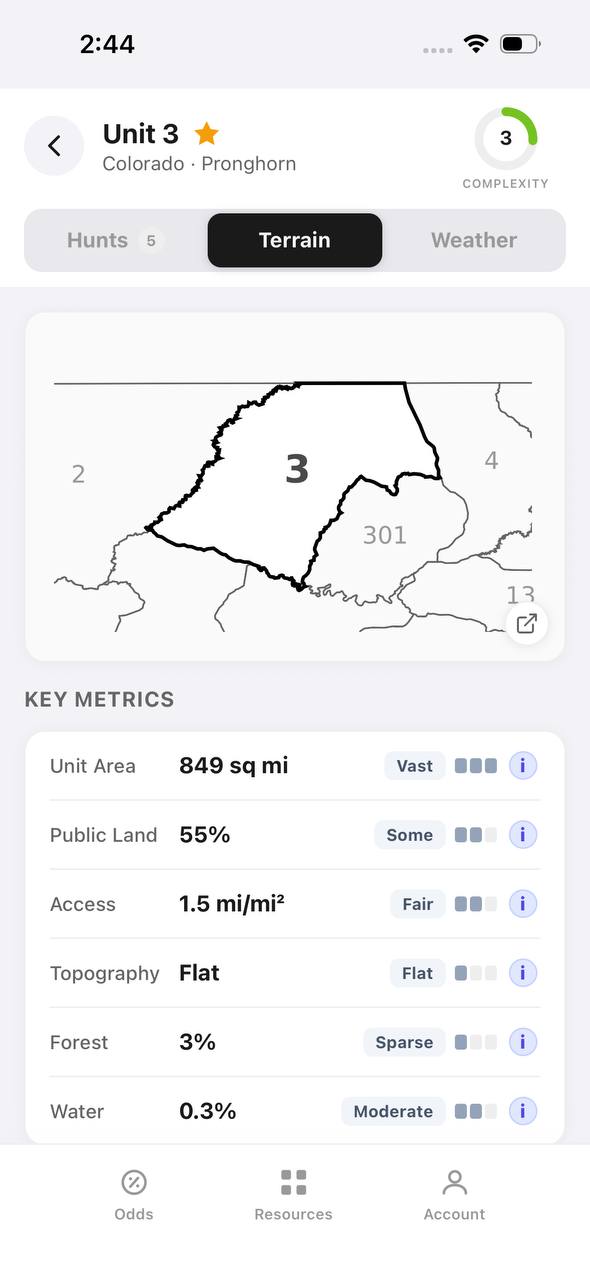
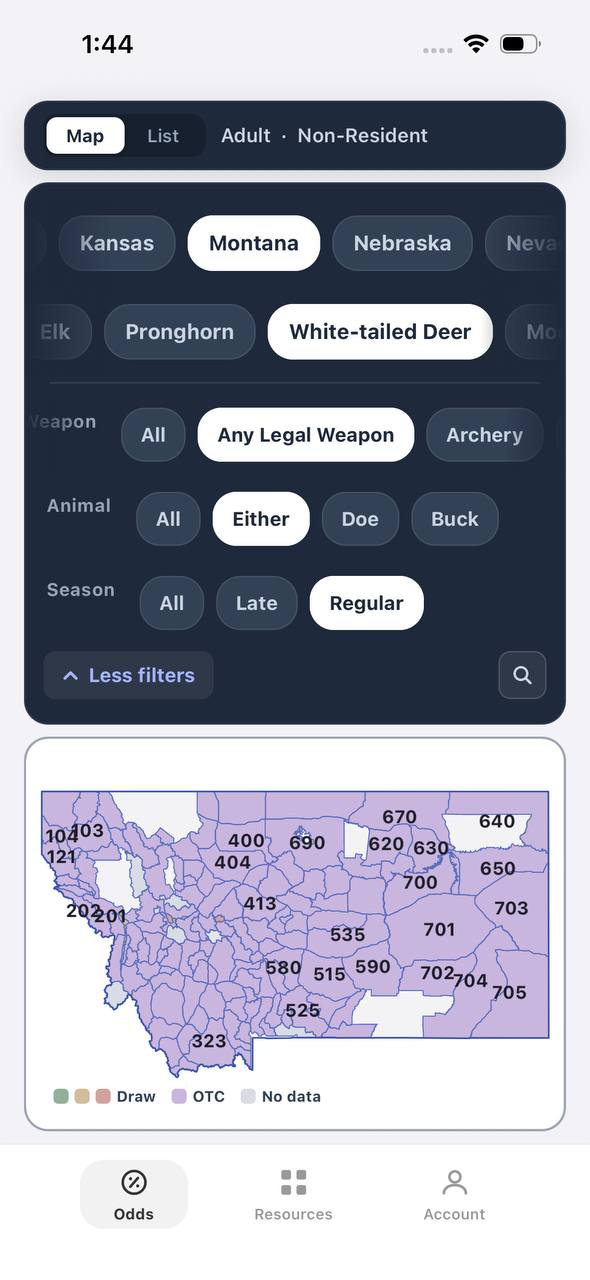
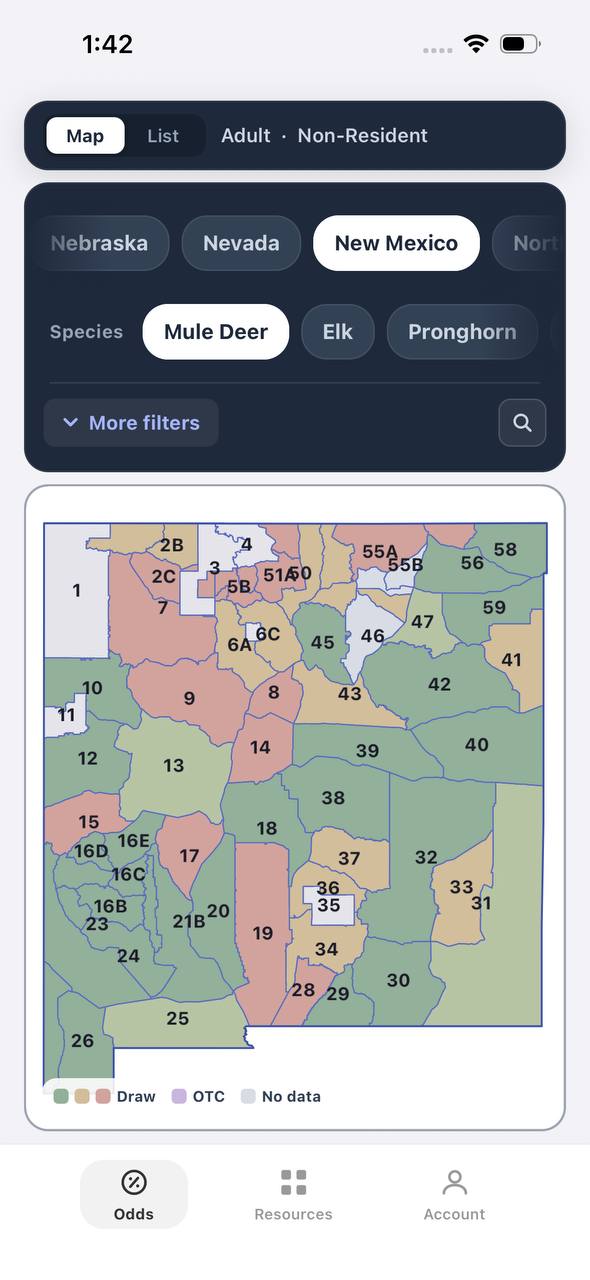
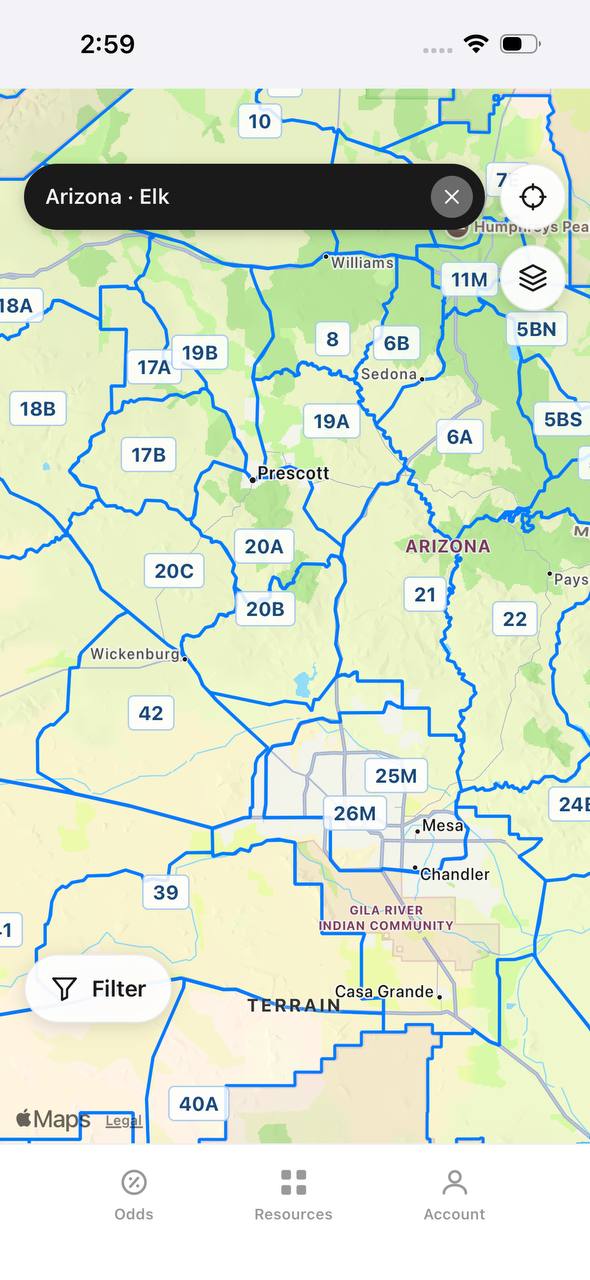
TAGZ lets you overlay public access, draw odds, and terrain features, so you can see where pressure will stack up before you ever hit the road. Find less obvious access points, compare unit stats, and build a hunt plan that dodges the crowd. Explore more about digital scouting tools here.
Free to join
Download mobile app
- Detailed draw odds
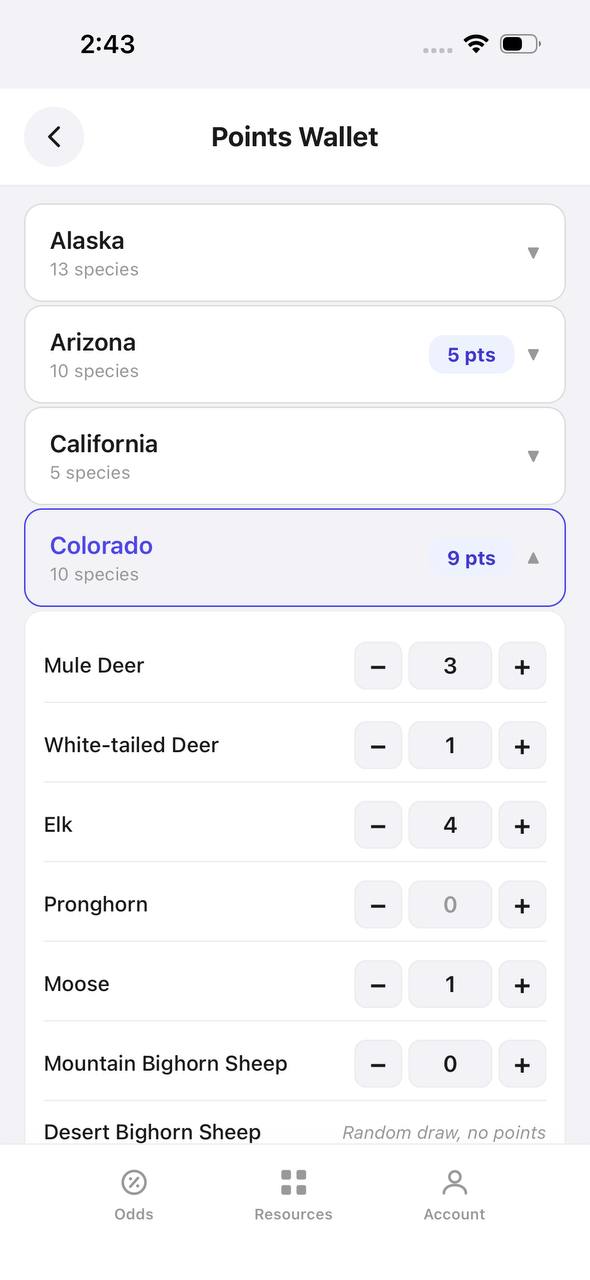
- Point tracking
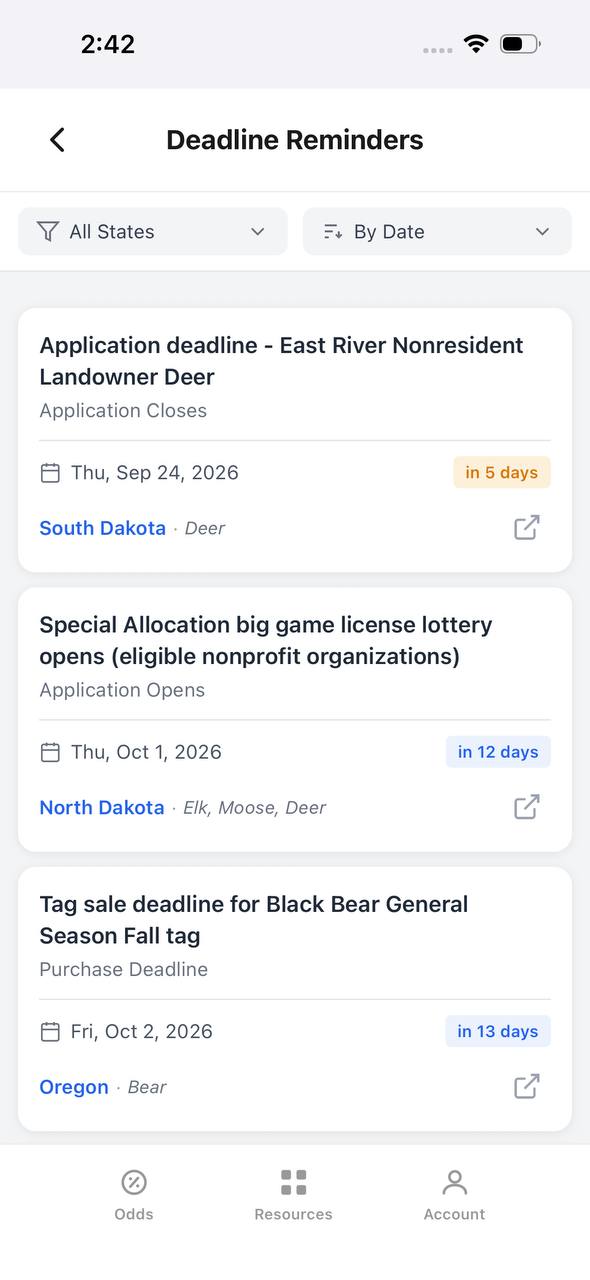
- Deadline reminders
- 18 states covered

Free to join
Download mobile app
- Detailed draw odds
- Point tracking
- Deadline reminders
- 18 states covered
Free to join
Download mobile app
- Detailed draw odds
- Point tracking
- Deadline reminders
- 18 states covered
FAQ: Hunting Pressure
How do I tell if an area is pressured?
- Fresh boot tracks, tire ruts, empty shell casings, or animals acting spooky are all signs.
Does hiking farther always mean less pressure?
- Not always. Sometimes the best spots are close but tough to reach or overlooked by most.
Can pressured animals be patterned?
- Yes, but expect them to use thicker cover, steeper terrain, and move at odd hours.
Is hunting weekdays better?
- Generally, yes. Weekends see more hunters, so midweek often offers a quieter experience.
No matter where you hunt, pressure is part of the equation. If you’re honest about it, adapt your strategy, and use tools like TAGZ to plan smarter, you’ll keep finding bucks and bulls long after the crowds roll in.
Was this article helpful?
Previous
Early Season vs Late Season Elk Hunting: Real-World Pros, Cons, and Tactics
Breaking down how early and late season elk hunts really differ—pressure, tactics, access, and expectations, with honest advice for western hunters.
Related
Colorado GMU 10 Elk Hunting Guide
Colorado GMU 10 is a quality limited-entry hunt where elk numbers, access, and trophy expectations need to be treated realistically. This guide breaks down terrain, access, pressure, scouting, and practical elk strategy so hunters can build a realistic plan before committing time or points.
Next
Heavy FOC Arrow Setups for Elk Hunting — Do Heavy Arrows Work Better?
Many experienced elk hunters are moving toward heavier arrows and higher FOC setups because penetration matters more than speed. A well-tuned 450–550 grain arrow with a quality fixed blade broadhead remains one of the most effective elk hunting setups available.