How to Field Judge Whitetail Deer — Complete Buck Scoring Guide
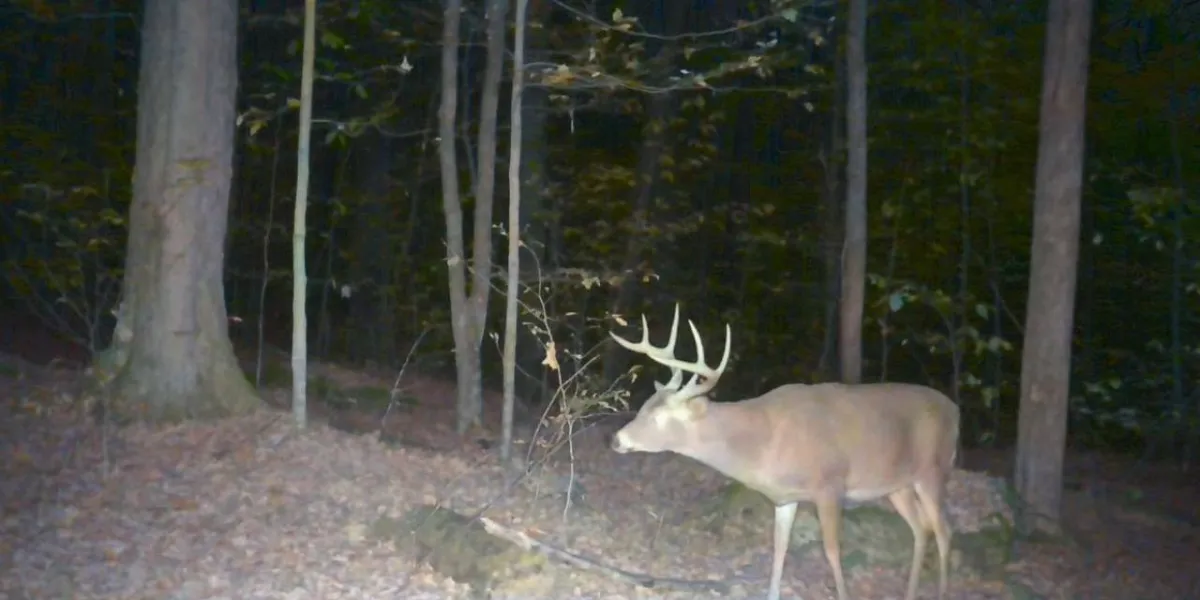
Every deer hunter knows the feeling. A buck steps out, your heart pounds, he looks huge, and then the tape says otherwise. Or worse, you pass a buck you thought was average and learn later he was a giant. Whitetails are notoriously hard to judge in the field. Unlike mule deer, where deep forks dominate the conversation, whitetail scoring revolves around main beams, tine length, mass, spread, and symmetry. The goal isn't deciding whether he tapes 163 or 167, it's recognizing whether you're looking at a young buck, a mature buck, or the buck of a lifetime.
What creates a whitetail score
Whitetails are scored on main beam length, tine length, mass, and inside spread. Most hunters lock onto one feature and ignore the rest, but the biggest bucks excel across all of them. When a buck appears, run through five things fast: frame, tine length, beam length, mass, and spread. Frame is the foundation, because a large-framed buck has room to grow score while a small-framed buck is capped no matter his age. Tall tines, long beams, and overall antler height are what experienced hunters notice first.
Beams and tines
Main beams anchor the rack: mature bucks run 18 to 21 inches, good ones 22 to 24, and exceptional bucks past 25. From there, work the tines. Brow tines (G1s) go from a modest 2 to 4 inches up to 8-plus on a buck with excellent genetics. The G2 is usually the longest tine and the biggest score-maker, climbing from 6 to 8 inches on an average buck to 12-plus on a giant. G3s often decide whether a buck is truly impressive, running 5 to 8 inches average and 11-plus exceptional, and when a buck carries G4s, long fourth points separate mature trophies from the rest.
Mass and spread
Mass scores everywhere and gets ignored constantly. Heavy antler adds inches at every circumference measurement, and massive mature bucks routinely score better than they look. A simple gut check is the baseball-bat test: thin bases mean a young buck, moderate bases a mature one, and bat-thick bases an exceptional, older animal. Spread is what most hunters notice first and overvalue, since it contributes less than people think. Mature bucks run 14 to 18 inches, good ones 18 to 21, and exceptional bucks past 22, but mass and tine length matter more. The easiest reference is the ears, which span roughly 15 to 17 inches tip to tip, so antlers reaching outside the ears carry above-average width.
The benchmarks
Typical bucks are balanced and symmetrical, while non-typical bucks carry extra points, stickers, drop tines, and abnormal growth, and both can score huge. On the hoof, a 120-inch buck is a solid mature deer in much of the country. At 140, considered a trophy by many hunters, you'll see good beams, strong G2s, decent mass, and a balanced frame. A true 160 is serious trophy territory with excellent tine length, long beams, and heavy mass, and it stands out instantly. A 180 is a genuine giant most hunters never take, and a 200 is world-class, looking different from nearly every deer around him.
Age, references, and patience
Score and age aren't always linked. Mature bucks show a deep chest, thick neck, pot belly, roman nose, and heavy shoulders, and many experienced hunters prize age over inches, treating a mature buck as the real achievement. Use the buck's own body to estimate, an ear is about 6 to 7 inches long, ear span 15 to 17 inches, and eye to nose roughly 7 to 8 inches. Be wary of trail-camera photos, which distort width, height, and mass; judge from multiple angles whenever you can. The biggest mistake of all is buck fever, which adds inches faster than genetics. If you're applying for western deer tags or planning a DIY hunt, TAGZ helps you research units, draw odds, and opportunities before the season starts.
Was this article helpful?
Previous
Satellite Maps for Hunting: How to Scout Smarter in 2026
Satellite maps are a modern hunter's best friend. Here’s how to use them to find elk, avoid pressure, and plan your next 2026 hunt like a pro.
Next
Arizona Elk Travel Planning
Arizona Elk Travel Planning breaks down realistic elk planning around terrain, access, pressure, scouting, and hunter behavior so TAGZ readers can build a practical western hunt plan instead of chasing hype.