How to Field Judge Muskox — Complete Muskox Hunting Guide
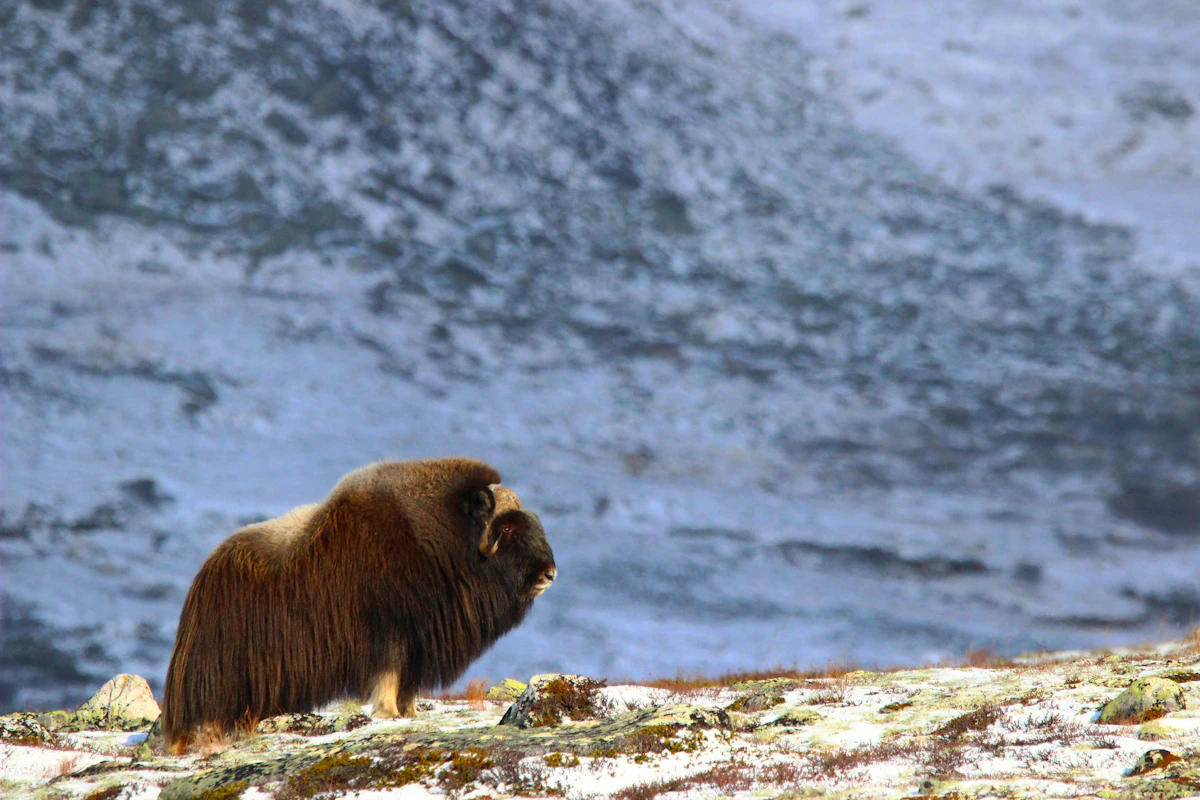
A mature bull muskox looks like it walked straight out of the Ice Age, and judging one in the field has almost nothing to do with the score sheet you'd reach for on an elk or a deer. Trophy quality on muskox is really about maturity: how developed the boss is, how much mass the horns carry, how far they drop, and how hard they sweep at the tips. Most muskox hunts are once-in-a-lifetime, often expensive and a long way from anywhere, so learning to recognize an old bull before you commit is time well spent.
Start with the boss
The boss is the heavy plate of horn that joins the two bases across the top of the skull, and it's the single best indicator of age. On young bulls the boss is narrow, and you'll usually see a strip of hair running down the middle between the horns. As a bull matures, the boss widens, the bases thicken, and that gap closes until horn covers most of the skull. When you glass a bull whose boss looks broad and solid with little or no hair showing through the center, you're looking at an older animal, and on muskox, age is what makes the trophy.
Why age beats inches
Unlike deer or elk, where a few inches of antler can separate animals, muskox quality is tied almost entirely to how old a bull is. A mature bull is often eight, ten, or twelve-plus years old, and those extra years show up as a bigger boss, more horn mass, and deeper drop. A younger bull might carry horns that look long at a glance but lack the heaviness and structure of an old one. If you find yourself trying to estimate length, step back and ask the simpler question instead: does this animal look old?
Read the horn drop
Horn drop is how far the horns sweep down the sides of the face before they curl back up, and it's one of the easiest maturity tells at distance. Young bulls show very little drop. Mature bulls show a clear, heavy descent, and the truly exceptional ones carry horns that drop well below the level of the eyes. If a bull's horns hang low and frame the face, that's a strong sign you're looking at the kind of animal worth closing the distance on.
The sweep and the tips
After they drop, mature muskox horns flare back outward and hook upward, and the best bulls combine all three traits at once: deep drop, strong outward sweep, and heavy tips. That combination is what creates the classic muskox silhouette. A bull that drops hard but stays thin through the sweep is usually younger than one carrying mass all the way to the tips, so pay attention to how thick the horn stays out toward the ends, not just how far it travels.
Don't let the hair fool you
Muskox wear an enormous coat, and that long hair can hide the boss and make almost any animal look massive on the tundra. Wind, snow, and posture all change how a bull reads. Train yourself to look past the coat and judge the horn structure underneath, because a heavy hide on a young bull can be convincing right up until you have him on the ground. When in doubt, the boss and the drop will tell you the truth that the hair tries to hide.
Putting it together
Work through a bull in order: boss width and how much hair shows in the middle, then the depth of the drop, then the sweep and the mass at the tips. When all of those point to an old animal, it doesn't much matter what number he'd tape out to, he's the bull you came north for. On a hunt this remote and this hard to draw, the hunters who tag the right animal are almost always the ones who slowed down and judged him honestly before they ever raised the rifle.
Was this article helpful?
Previous
Colorado GMU 201 Elk Hunting Guide
Colorado GMU 201 is one of Colorado's classic premium elk units, but still a hunt that demands discipline instead of sightseeing. This guide breaks down terrain, access, pressure, scouting, and practical elk strategy so hunters can build a realistic plan before committing time or points.
Next
Best Broadheads for Elk Hunting — Fixed Blade vs Mechanical Guide
Both fixed blade and mechanical broadheads can kill elk effectively, but many experienced elk hunters continue to trust fixed blades like G5 Montecs and Iron Will for their reliability, penetration, and durability.