How to Field Judge Moose — Complete Moose Scoring Guide
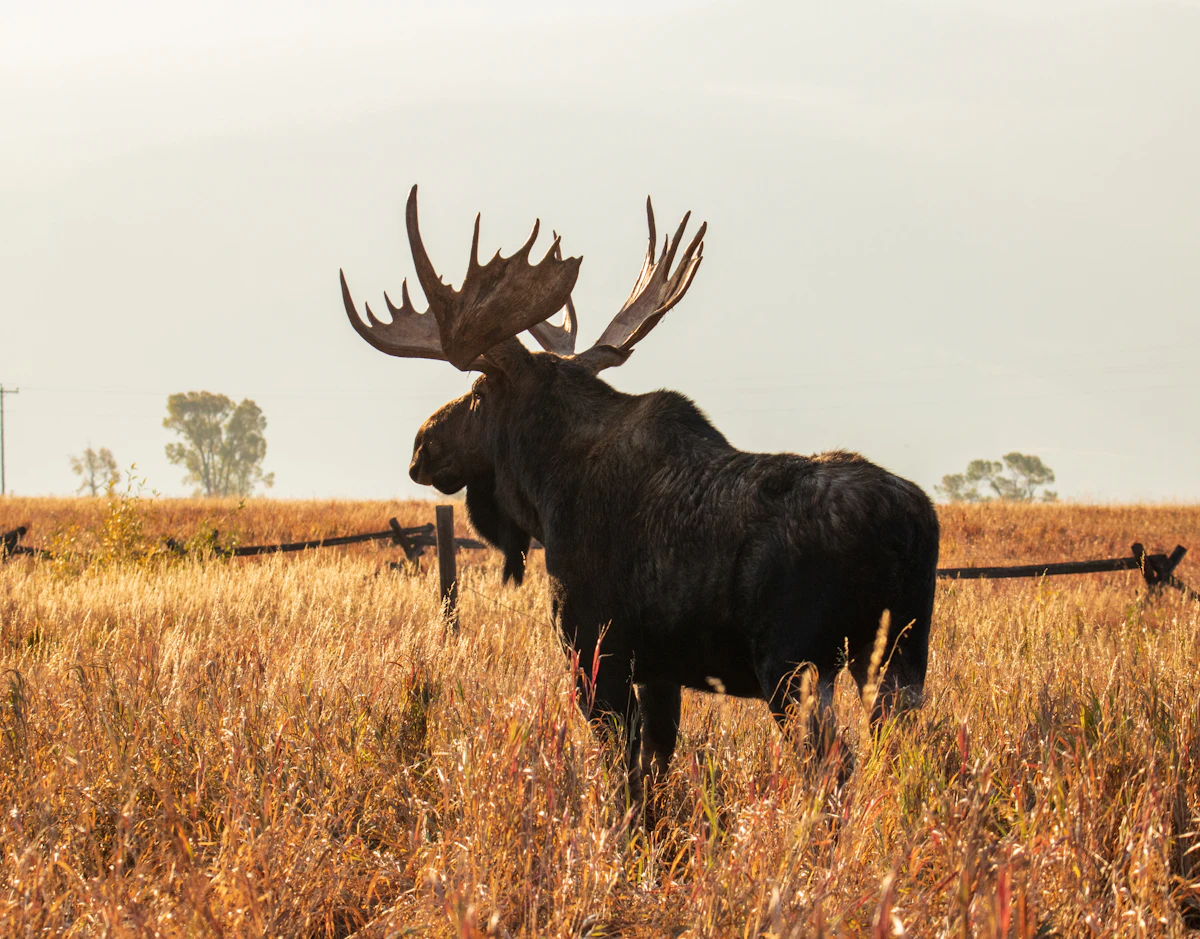
Few animals fool hunters more than moose. A mature bull can weigh over 1,200 pounds and stand more than six feet at the shoulder, and that enormous body makes even exceptional antlers look average from a distance. Every year hunters underestimate trophy bulls because they judge the antlers without accounting for the scale of the animal carrying them. The good news is that moose are actually one of the easier species to judge once you learn a few reference points. The goal isn't deciding whether a bull scores 197 or 201, it's telling a young bull from a mature one from the bull of a lifetime.
What creates a moose score
Unlike elk and deer, moose aren't scored primarily on point length. The big contributors are spread, palm width, palm length, point count, and mass, and palm size drives the score more than almost anything else. A bull with huge palms will usually outscore a narrow bull carrying lots of points. The palm is the flattened, shovel-like section of the antler, and the larger it is, the more scoring potential the bull has.
Spread, and the ear trick
Spread is the first thing most hunters notice. Mature bulls run 40 to 50 inches, good bulls 50 to 60, trophy bulls 60 to 70, and the exceptional ones stretch past 70. The famous 60-inch benchmark exists because many areas use it as a legal minimum. The fastest way to estimate spread at distance is the ears: a mature bull's ears span roughly 20 inches tip to tip, so antlers reaching about three ear widths are near 60 inches, and three and a half ear widths put you around 70.
Palms beat width
As much as hunters fixate on width, it doesn't build giants on its own. Big palms create score, and a bull with massive palms and only moderate width often beats a wider bull with smaller ones. Experienced hunters read both the front palms near the face and the wider rear palms, and strong development in both usually means a mature, high-scoring bull. Point count matters, but less than people think, since plenty of average bulls carry impressive numbers of points. The biggest bulls combine width, palm size, mass, and points rather than leaning on any one of them, and strong brow tines, common on big Alaska-Yukon bulls, often signal age and add real score.
Reading age and the benchmarks
Body characteristics tell you more than antlers do. Look for a roman nose, a heavy dewlap or bell, a thick neck, big shoulders, and an overall massive frame, where young bulls look narrow and athletic and old bulls look heavy and blocky. On the hoof, a 40-inch bull is usually a young animal with narrow antlers and small palms, a 50-inch bull is mature and respectable with better palm development, the 60-inch bull is the classic benchmark with wide, heavy antlers and strong brow tines, and a 70-inch bull is an immediately recognizable giant with massive palms and tremendous mass.
Regions, mistakes, and patience
Region matters: Alaska-Yukon bulls tend to carry larger palms, greater spread, and more mass, while Canada moose generally score smaller but still produce outstanding trophies. The common mistakes are all the same, fixating on spread, ignoring palms, overrating point count, judging from bad angles, and underestimating mature bulls, when palm size is the better predictor of trophy quality. Mature moose also keep adding mass, palm, and character well into their later years, so a truly old bull looks dramatically different from a younger one, which rewards the patience to judge him properly. If you're planning an Alaska or Canada hunt or building a Lower 48 application strategy, TAGZ helps you research opportunities, track applications, and plan long before opening day.
Was this article helpful?
Previous
Colorado GMU 23 Elk Hunting Guide
Colorado GMU 23 is a classic western Colorado elk unit where habitat is strong but hunter pressure and access choices decide a lot. This guide breaks down terrain, access, pressure, scouting, and practical elk strategy so hunters can build a realistic plan before committing time or points.

Next
7 PRC vs 7mm Rem Mag for Elk Hunting — Which Cartridge Is Better?
The 7mm Remington Magnum remains one of the most proven elk cartridges ever made, while the 7 PRC offers modern design advantages and exceptional long-range performance. Both are excellent choices for western hunters.