How to Field Judge Grizzly Bears — Complete Grizzly Hunting Guide
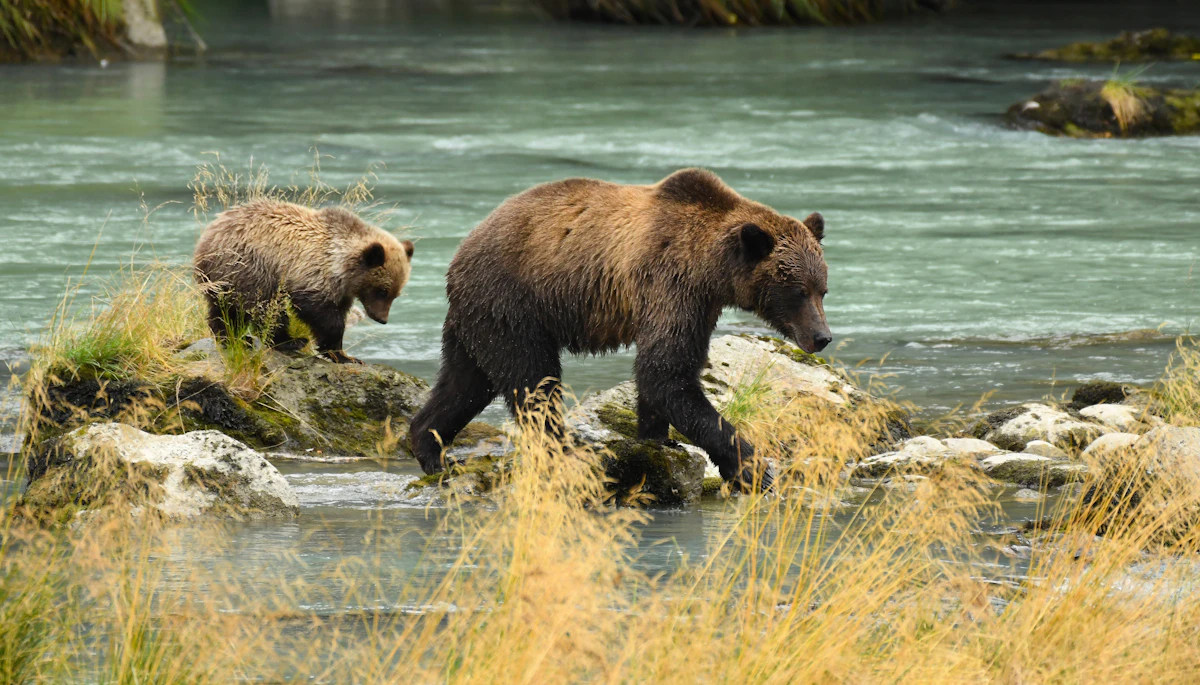
Few animals command respect like a mature grizzly, and few are harder to judge in the field. Grizzlies carry no antlers or horns, so everything comes down to reading body size, shoulder hump, head shape, ears, legs, and overall maturity. Fur, terrain, and deceptive distances all conspire to fool you, which is why so many hunters misjudge these bears. The goal isn't guessing whether a bear weighs 600 or 700 pounds, it's identifying an old boar.
What sets grizzlies apart
Grizzlies differ from black bears in ways that show at a glance: bigger shoulder humps, broader skulls, more muscular frames, longer claws, and different proportions overall. A mature grizzly looks powerful from every angle, and once you've spent time watching them, the look becomes unmistakable. That muscle-built frame is exactly what you're reading when you size one up.
The shoulder hump and the head
The shoulder hump is the most recognizable feature on a grizzly, built from the heavy muscle the bear uses for digging. On a big mature boar it rises high over the shoulders, often above the head and back line, and it's one of the first things experienced hunters evaluate. The head tells the rest of the story: mature bears show wide heads, broad foreheads, short-looking snouts, and massive skulls, while young bears have narrow faces, longer snouts, and smaller skulls.
The ear trick and sex
Just like black bears, ears are a giveaway. Young grizzlies look big-eared, tall-eared, and prominent, while mature boars appear to have tiny, short, wide-set ears, not because the ears shrank but because the head grew around them. Sex matters for trophy potential too. Mature boars carry blocky heads, thick necks, heavy shoulders, broad chests, and a massive front end, and they look incredibly powerful. Sows have narrower heads, smaller shoulders, longer faces, and larger-appearing ears, and generally look more athletic and refined.
Read the body
A few body cues stack up fast. The leg illusion is reliable: young bears look tall, long-legged, and lean, while mature grizzlies look short-legged and low to the ground because the body has grown so large. Older bears develop deep chests and hanging, thick midsections, where young bears stay tight and athletic. The classic guide test says a mature grizzly looks like a Volkswagen Beetle, a small horse, or a big barrel, everything oversized, so if a bear looks huge against the surrounding terrain, pay attention.
What season and skull do
Fur fools people in both directions, with long fur making average bears look bigger and wet fur making giants look smaller, so judge structure, not coat. Season matters too: spring bears just out of the den look lean and long, while fall bears packing on weight before winter look massive and round. You can't measure it in the field, but grizzlies are scored on skull length and width, so head width, forehead size, and jaw structure are your best clues, and a big square skull viewed head-on usually means a mature, high-scoring bear.
Putting it together
A young grizzly looks athletic and sleek, with big ears, long legs, a smaller hump, and a narrow head. A mature one shows a massive hump, broad head, thick neck, heavy shoulders, and small-looking ears, and commands attention immediately. A true trophy combines a huge body, large skull, massive hump, and obvious maturity. Distance is deceptive, so use quality glass, watch the ears, hump, head width, and proportions, and give it time, because patience reveals what a quick look misses. The common mistakes are judging by color, guessing weight, ignoring ear size, overrating young bears, and underrating old boars. A mature grizzly has survived hard winters, competition, and pressure for years, and age matters more than weight. If you're applying for grizzly hunts or researching remote opportunities, TAGZ helps you compare options and build a plan before the adventure begins.
Was this article helpful?
Previous
How to Field Judge Bull Elk — Complete Elk Scoring Guide
Field judging elk involves estimating beam length, tine length, mass, and spread to determine whether a bull scores 280, 300, 320, 340, or larger. Understanding G1-G6 measurements, whale tails, swords, and age characteristics can dramatically improve your ability to evaluate bulls in the field.
Next
Best Boots for Elk Hunting — Complete Western Hunting Boot Guide
Quality hunting boots are one of the most important pieces of western hunting gear. Proper fit, support, break-in, and upgrades like Sheep Feet custom orthotics can help hunters stay comfortable and effective throughout demanding elk hunts.