How New Mexico's Draw Works | Complete Hunting Draw Guide
New Mexico uses no preference points and no bonus points — full stop. Every applicant starts each year with exactly the same odds, which makes it one of the few western states where you can draw a quality tag without waiting a decade first. And because nobody earns an advantage for applying longer, smart hunt selection matters more here than almost anywhere else.
If one western state consistently surprises hunters, it's New Mexico. People show up expecting the usual point grind and find something completely different: a clean slate every single year. There are no preference points, no bonus points, and no loyalty points to buy. Whether this is your first application or your twentieth, you're on equal footing with everyone else in the drum. For hunters who are tired of watching 10, 15, or 20 years tick by in other states before a premium tag is realistic, that reset is a genuine breath of fresh air — and it's why New Mexico has become a cornerstone state in so many western application plans.
New Mexico has no point system
This is the whole foundation, so it's worth being blunt about it. New Mexico does not reward you for applying year after year. No preference points, no bonus points, nothing accumulates. One year of applications or twenty — your odds are identical to the next hunter's.
That cuts both ways, and honest hunters should sit with both sides. You never fall behind, which is fantastic. But you also never build an advantage, so a premium tag can take patience even when you apply every year. It's a true lottery, not a waiting line.
Why hunters love it anyway
The appeal comes down to one thing: you're never "behind." You don't spend years and hundreds of dollars buying points just to earn a realistic shot. You apply, you draw or you don't, and you go again next year. For a hunter who wants to keep chances live in several states without a long-term point investment in each one, that simplicity is hard to beat.
How the New Mexico draw works
New Mexico runs a computerized random drawing each year. Every eligible application goes into the pool, and the system pulls applications at random until all the permits are gone. Because no points tip the scale, some hunters draw premium tags on their very first try while others apply for years without luck. That's not a flaw in the system — that's simply how a real random draw behaves.
The three draw pools
Licenses are split across three applicant pools, and knowing which one you're in matters:
- Resident draw — the majority of licenses are reserved for New Mexico residents.
- Nonresident draw — a set percentage of licenses goes to out-of-state hunters applying on their own. This is where most nonresidents compete.
- Outfitter draw — applicants who contract with a registered New Mexico outfitter compete in a separate allocation, which can open up additional license opportunities.
The outfitter pool tempts a lot of nonresidents, but weigh it carefully. It can improve access to certain tags, but it comes with real cost, so run the numbers against the standard nonresident odds before you commit.
Free to join
Download mobile app
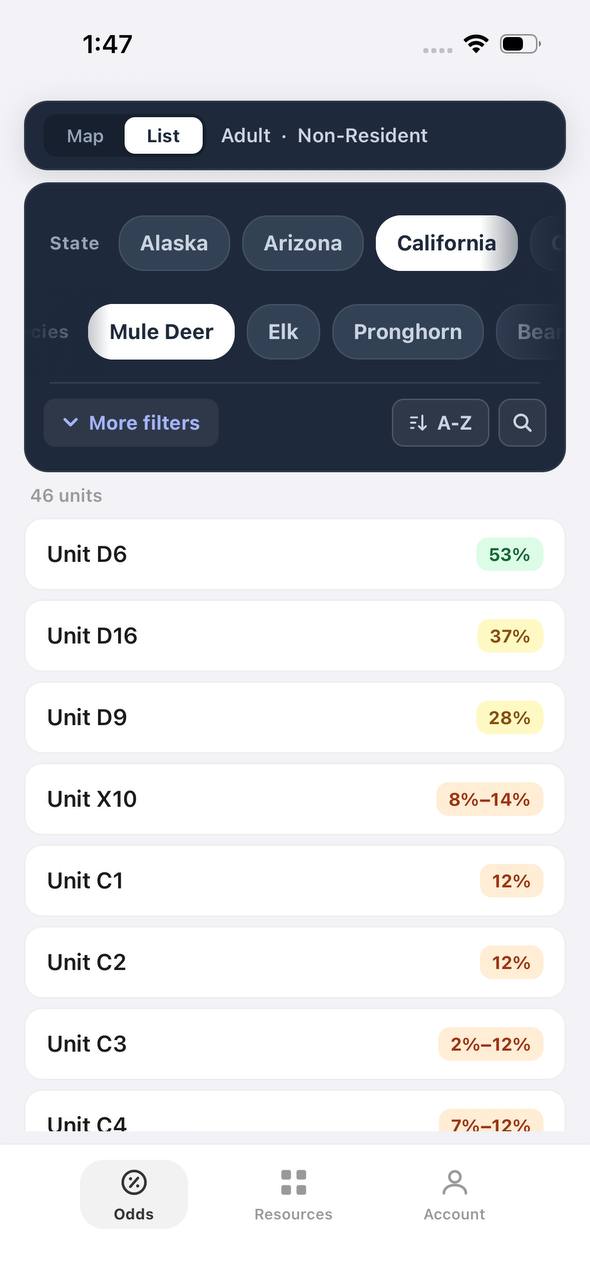
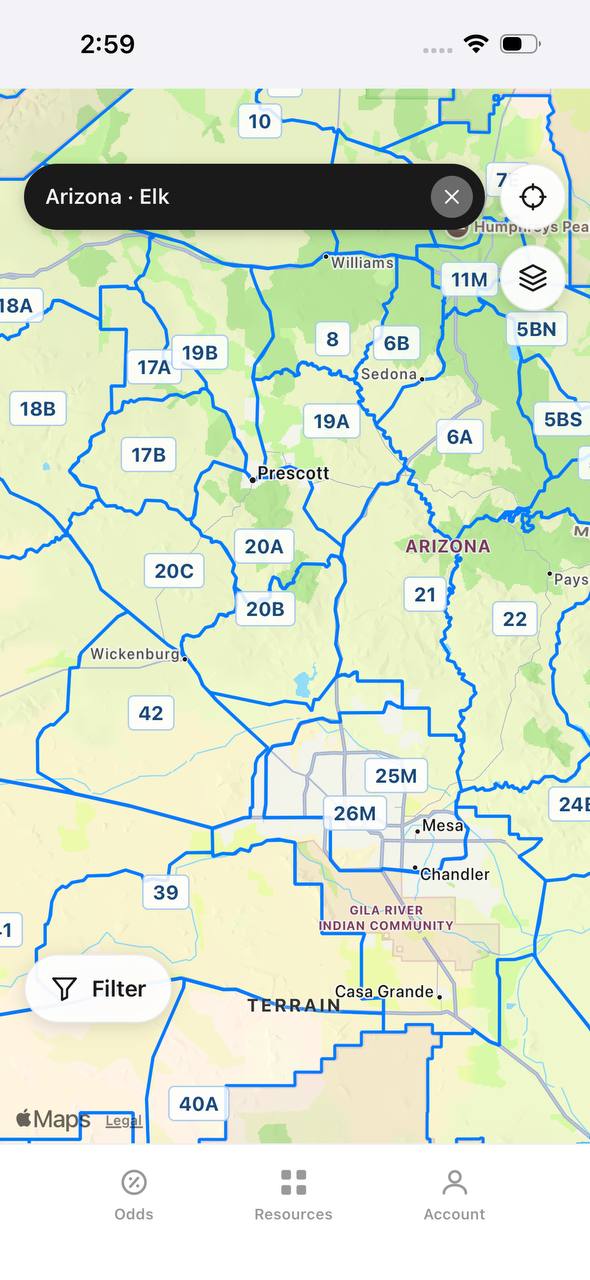
- Detailed draw odds
- Point tracking
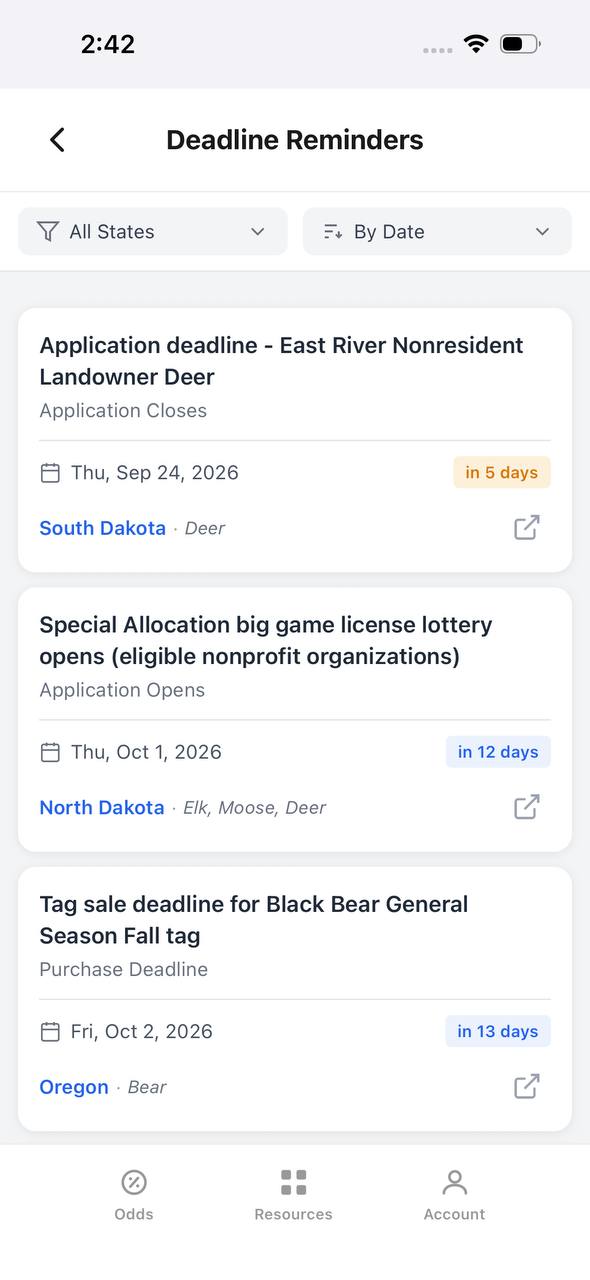
- Deadline reminders
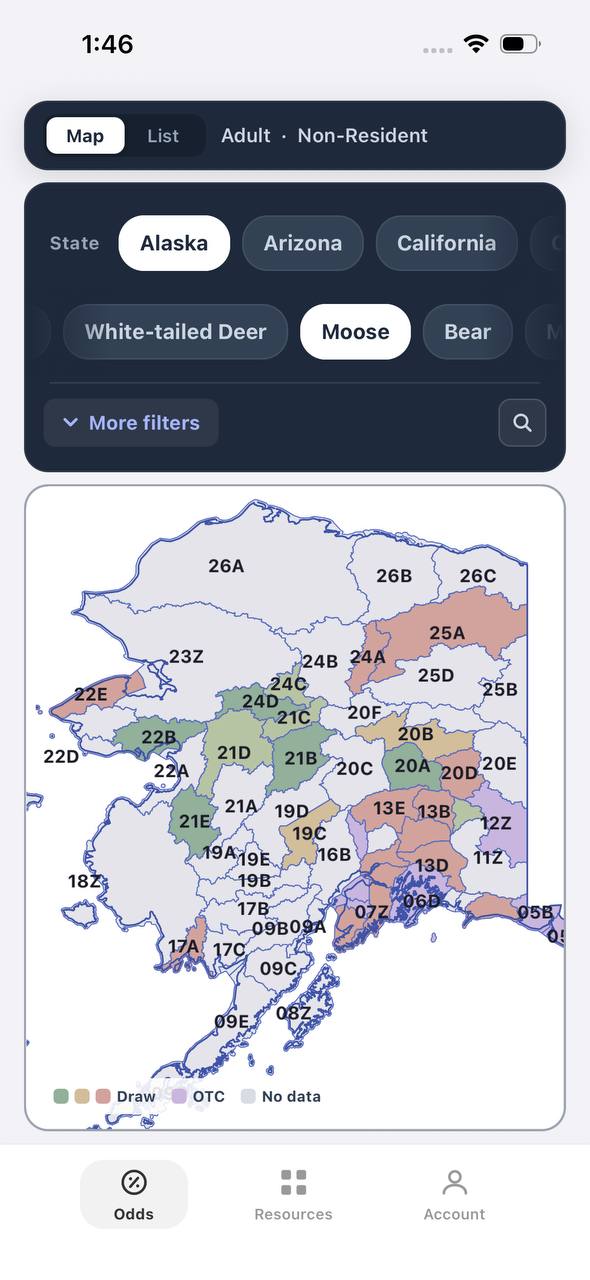
- 18 states covered

Free to join
Download mobile app
- Detailed draw odds
- Point tracking
- Deadline reminders
- 18 states covered
Free to join
Download mobile app
- Detailed draw odds
- Point tracking
- Deadline reminders
- 18 states covered
Can nonresidents draw good tags? Yes.
Every year nonresidents pull excellent tags across the board — trophy elk, mule deer, pronghorn, oryx, Barbary sheep, and ibex — and plenty of those winners had zero prior applications. In a points state, a first-timer has almost no shot at the marquee units. In New Mexico, a first-timer has the same shot as everyone else.
What you can hunt
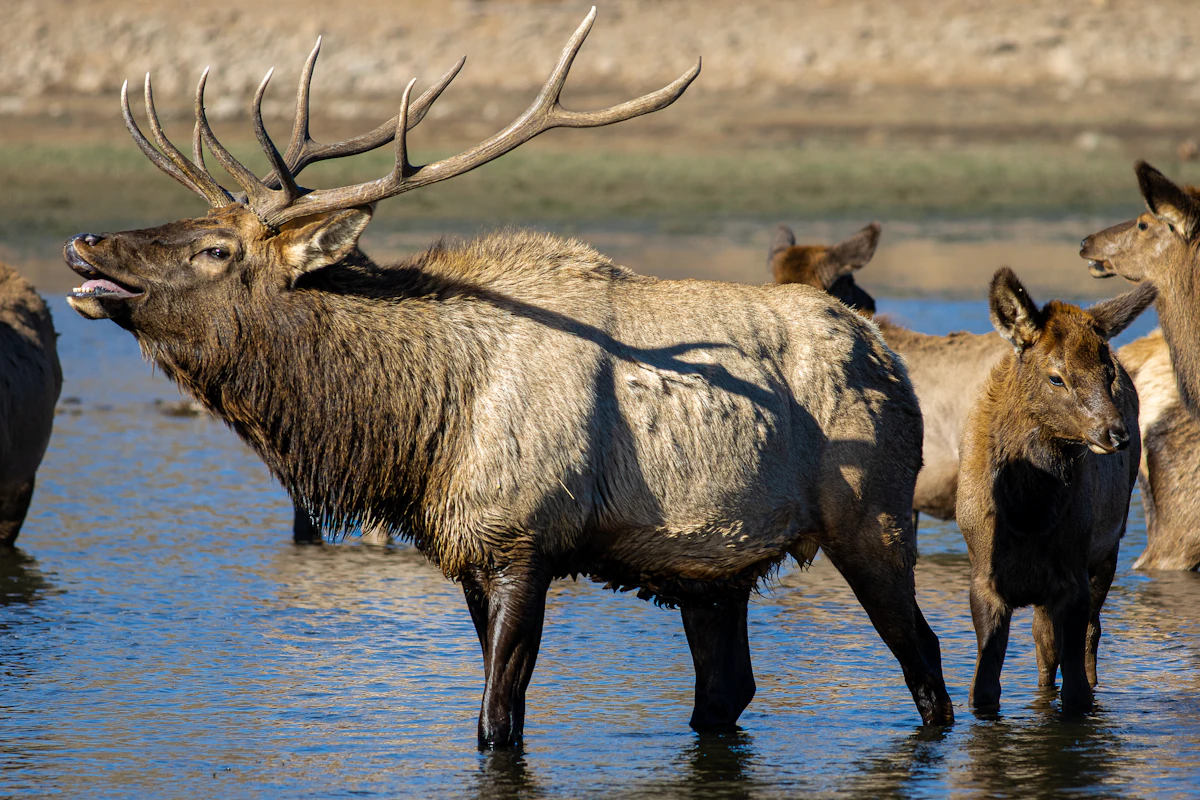
Elk are the flagship. New Mexico is famous for mature bulls, long rut hunts, and quality public land that ranges from northern mountains to southern desert. The premium units can produce outstanding bulls year after year, and the archery seasons in particular line up beautifully with peak bugling. Rifle hunters get multiple season dates and strong public-land opportunity, though many rifle hunts fall after the rut and call for a different approach.
Mule deer are quietly underrated here. The state turns out mature bucks with good genetics across diverse habitat, and hunters willing to scout are often rewarded well beyond the state's reputation.
Pronghorn hunting is solid, with healthy populations and unique desert hunts. It stays competitive, but again — everyone has an equal shot.
Then there's the exotic tier that almost no other state can match. Oryx hunts are among the most unique big-game opportunities in North America, and demand is sky-high. Ibex in the rugged southern mountains are widely considered some of the toughest hunts on the continent. Barbary sheep (aoudad) deliver rough country, long glassing, and hard stalks, and many hunters call them the most underrated western species going. And both Rocky Mountain and desert bighorn are on the table — brutally hard to draw, but with no points involved, your odds reset to equal every year.
Research matters more than anywhere else
Here's the strategic heart of New Mexico: because points can't do your work for you, hunt selection is everything. The unit, the season, the weapon, and the specific hunt code you choose can swing your odds dramatically. Most applicants pile into the same famous units every year. The hunters who do their homework find overlooked hunts with far better odds — same random draw, much friendlier math.
Access is part of that homework. New Mexico has millions of acres of public land across National Forests, BLM, and state trust land, but state-land access has rules worth understanding before you apply. The state also runs landowner authorization programs that operate outside the public draw; those can be a route to a tag, but understand the cost, availability, and unit restrictions before buying in.
The biggest mistake hunters make
The most common New Mexico error is skipping it entirely because "the odds are too low." But someone draws those tags every year, and if you don't apply, your odds aren't low — they're exactly zero. Since there are no points to buy, there's almost no reason to sit out a year if New Mexico is part of your long-term plan. Every application is a fresh, live chance.
How TAGZ fits into your New Mexico plan
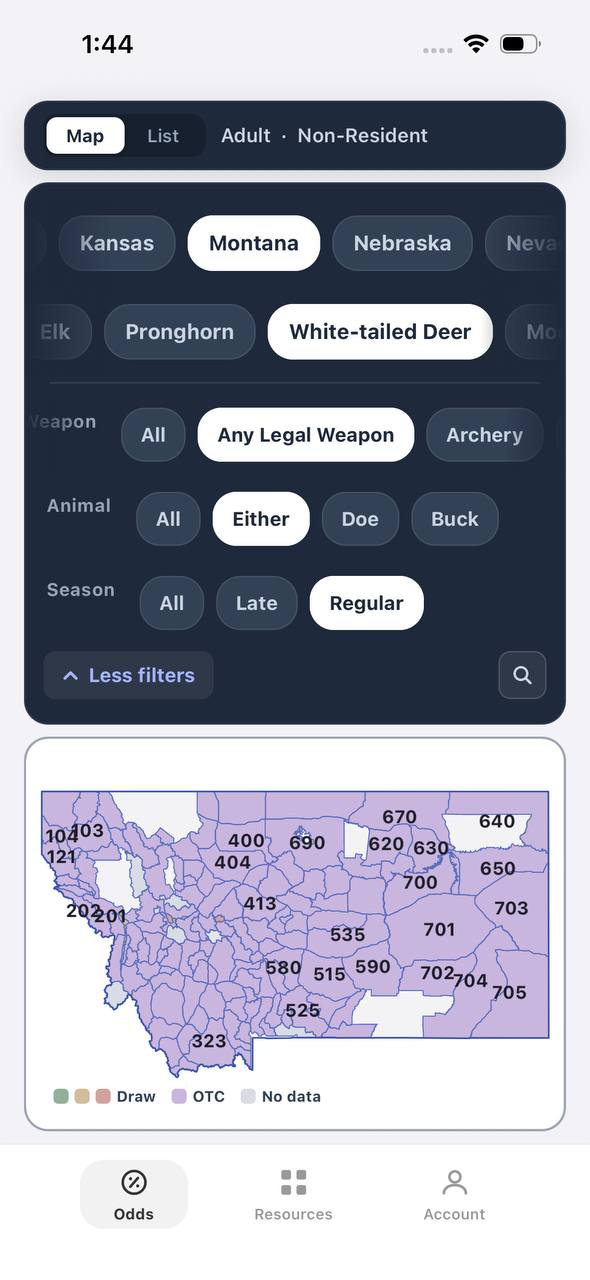
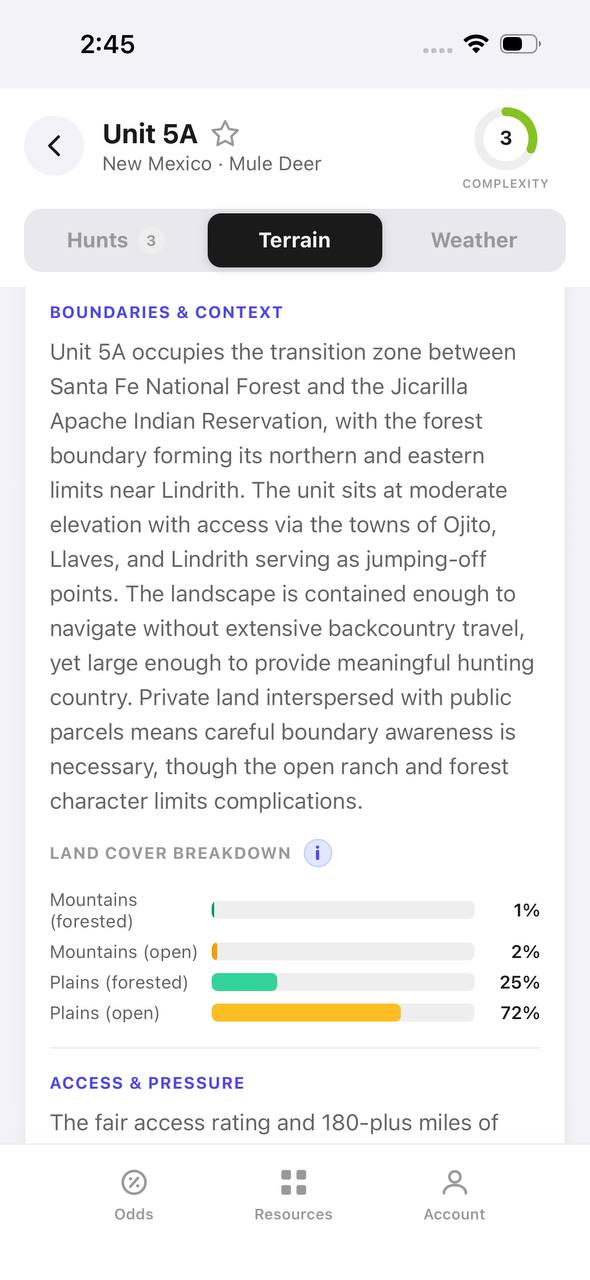
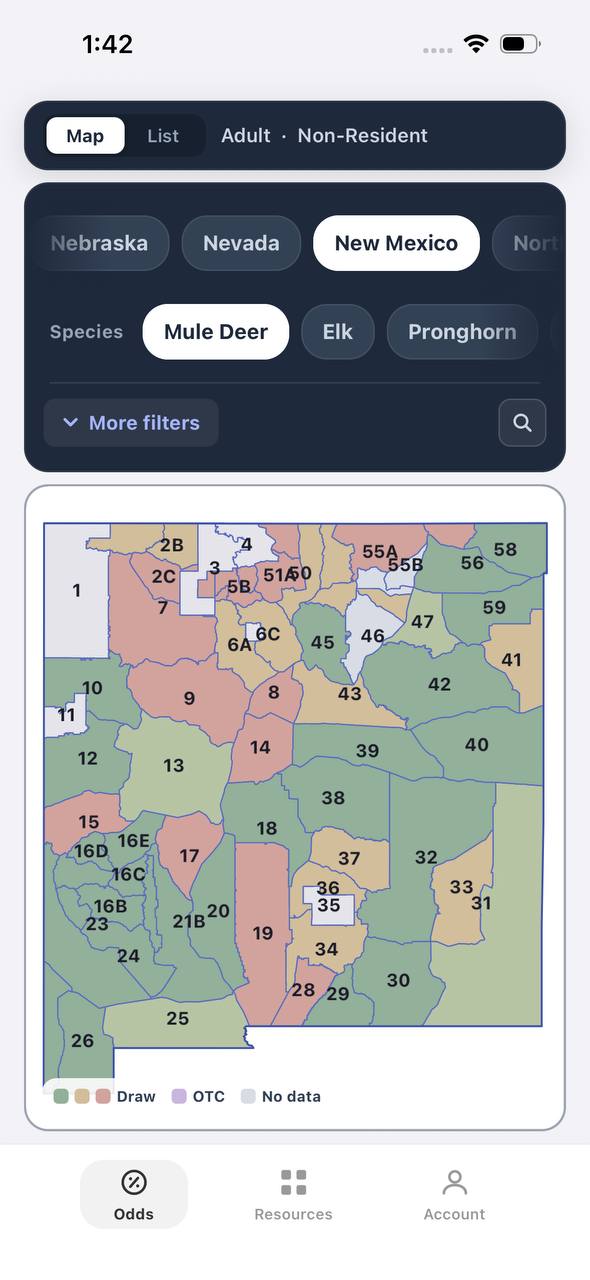
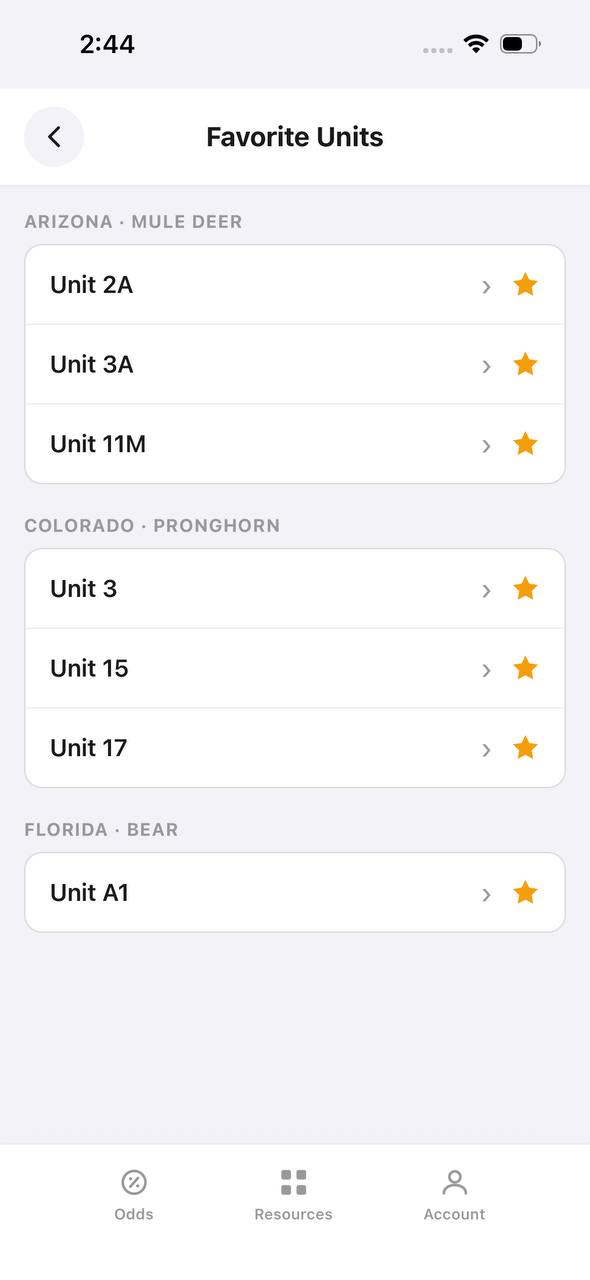
Because there's no point system to lean on, choosing the right hunt is where New Mexico applications are won or lost — and that's exactly what TAGZ is built for. It helps you analyze draw odds, compare hunt codes, evaluate units, research seasons, and build a multi-state strategy before the deadlines hit, so you're applying for the smartest hunt on the board instead of just the most famous one.
For a wider view of how to sequence states, see How TAGZ Is Changing Western Hunt Planning and, if you're newer to elk, Best Beginner Elk Units. Official rules and deadlines live with the New Mexico Department of Game & Fish.
FAQ — New Mexico Draw System
Does New Mexico have preference points?
No. Every applicant starts with the same odds each year.
Does New Mexico have bonus points?
No. There are no bonus points or loyalty points of any kind.
Can nonresidents draw elk tags?
Yes. Nonresidents draw excellent elk tags every year, often with zero prior applications.
Is New Mexico worth applying for?
Absolutely. It's one of the best western states precisely because every hunter has an equal opportunity every season.
What makes New Mexico unique?
Its fully random draw. No hunter gains an edge from years of applying, so a first-time applicant and a 20-year applicant have the same shot.
Was this article helpful?
Previous
How Idaho's Hunting Draw Works | Complete Draw Guide
Idaho is one of the last true opportunity states in the West. With no preference or bonus points, controlled hunts are a straight random draw and many general tags sell first-come, first-served — ideal for hunters who want to hunt often instead of waiting years.
Related
How Montana's Preference & Bonus Point Systems Work | Complete Draw Guide
Montana is unusual because it runs two point systems at once — preference points for nonresident combination licenses and squared bonus points for limited-entry permits. Here's how to use both without wasting years.
Next
Understanding Elk Vocalizations: A Complete Guide to Cow Calls, Bugles & Bull Communication
Elk vocalizations vary by season, social status, and threat level. Learning to identify bugles, cow calls, barks, and chuckles gives bowhunters and rifle hunters a major advantage in locating, calling, and closing distance on bulls during September through November.