Guided Archery Elk Hunts 2027: States, Tags & Draws
Guided Archery Elk Hunts 2027: States, Tags & Draw Strategy
Few Western hunts generate more excitement than chasing bugling bulls with a bow in September.
But booking the outfitter is only part of planning a guided archery elk hunt.
First, you need to understand:
How do I get the elk tag?
That answer can be completely different depending on the state.
Some states use preference points.
Some use bonus points.
Some use random drawings.
Some have general licenses.
Some have outfitter allocations.
Some maintain limited OTC opportunities.
Understanding those differences is critical before sending an outfitter a deposit.
Five Major States for Guided Archery Elk Hunts
Rather than ranking states as universally "best," compare them based on:
Tag availability
Draw system
Point system
Archery opportunity
Public/private access
Outfitter availability
Hunting style
Five states that deserve consideration are Colorado, Idaho, Montana, Wyoming and New Mexico.
Colorado Guided Archery Elk Hunts 2027
Colorado remains an important state for archery elk hunters, but nonresidents need to be careful with outdated information.
Colorado Nonresident Archery Elk Changed
Nonresident hunters can no longer simply purchase OTC archery elk licenses throughout western Colorado.
Under Colorado's current system, nonresident archery elk licenses for GMUs west of I-25 and GMU 140 are limited.
That means nonresident hunters planning a guided archery elk hunt in much of western Colorado need to research the applicable limited hunt code and draw.
Some OTC nonresident archery elk opportunities remain in certain GMUs east of I-25.
Always verify the exact 2027 hunt code with Colorado Parks and Wildlife.
Colorado Preference Points
Colorado uses preference points for elk.
Preference points matter primarily for first-choice limited licenses in the primary draw.
Historical draw results can help hunters estimate how much demand a particular archery hunt has experienced.
But historical results don't guarantee what will happen in 2027.
Does a Colorado Outfitter Improve Your Draw Odds?
Generally, hiring an outfitter doesn't give you additional priority in Colorado's standard public elk draw.
A guide can help after you obtain the license through:
Scouting
Calling
Local knowledge
Access knowledge
Camp
Meat recovery
But don't assume booking an outfitter makes the public tag easier to draw.
Idaho Guided Archery Elk Hunts 2027
Idaho is especially important to understand because its nonresident tag system has changed.
Idaho Does Not Have Elk Preference Points
This corrects one of the biggest errors in the original article.
Idaho does not use preference or bonus points for its standard controlled elk drawings.
Having applied unsuccessfully for ten years doesn't give you more draw priority than an eligible hunter entering the same drawing for the first time.
That's very different from Colorado or Wyoming.
Idaho Nonresident General Elk Draw
Beginning with the 2026 season, Idaho changed the way nonresident general deer and elk tags are distributed.
Nonresident general tags now use an application and random-draw process.
For the 2027 season, Idaho Fish and Game currently lists:
First application period: December 5–15, 2026
First results: Early January 2027
First-period tag claim deadline: January 20, 2027, for most awarded tags
Second application period: February 5–15, 2027
Second results: Early March 2027
Second-period tag claim deadline: March 20, 2027
Always verify current information with Idaho Fish and Game before applying.
Idaho Elk Zones Matter
Idaho general elk tags are tied to elk zones and tag types.
Don't assume every Idaho general elk tag provides the same archery opportunity.
Research:
Elk zone
Tag type
Season
Weapon
Unit
Nonresident limit
before applying.
Idaho Outfitter Tags
Idaho also maintains tags allocated to outfitters within its nonresident system.
That's different from simply hiring an outfitter after drawing a regular nonresident tag.
If an outfitter advertises an outfitter-allocated tag, ask:
What exact tag?
What zone?
What season?
What weapon?
Is the tag included in the hunt price?
What happens if the hunt is canceled?
TAGZ's Idaho Roots
Idaho is also closely connected to the origins of TAGZ.
TAGZ was started by hunters, guides and outfitters with firsthand Western hunting experience, including guiding and outfitting roots in Idaho.
That experience helped shape the platform around a problem Western hunters constantly encounter:
Finding the right tag can be just as complicated as planning the hunt itself.
Learn more through About TAGZ.
Montana Guided Archery Elk Hunts 2027
Montana's system requires understanding the difference between:
General Elk License
and
Limited Elk Permit.
They're not the same thing.
Montana Nonresident General Elk
Most nonresident hunters seeking a Montana General Elk License need to obtain it through the drawing for a:
- General Elk Combination
or
- General Big Game Combination
The combination license drawing and limited elk permit system shouldn't be confused.
Montana Preference Points
Preference points are used for the nonresident Combination License drawing.
They don't function as the point system for limited elk permits.
Montana Bonus Points
Montana uses bonus points for applicable limited elk permit drawings.
Those points are separate from the preference points used for nonresident Combination Licenses.
That's an important distinction when planning a guided hunt.
Montana Outfitter Preference Point
Under the current system, qualifying nonresident hunters contracted to hunt with a properly licensed Montana outfitter may purchase an additional outfitter preference point when applying for a Combination License.
A license obtained using that point carries outfitter-related restrictions.
Hunters should verify the 2027 rules with Montana Fish, Wildlife & Parks before applying.
Montana Archery Season
Montana offers substantial archery elk opportunity under its general and permit structures.
But the exact license, hunting district and permit requirements matter.
Don't book based solely on an outfitter saying:
"It's a general archery hunt."
Ask exactly which licenses and permits you need.
Wyoming Guided Archery Elk Hunts 2027
Wyoming offers both general and limited-quota elk opportunities.
For nonresidents, even the word "general" doesn't mean OTC.
Wyoming Nonresident General Elk Is Drawn
Wyoming residents can generally purchase a General Elk License according to state rules.
Nonresidents must apply for their General Elk License through the drawing.
That's an important distinction.
Wyoming Elk Preference Points
Wyoming uses preference points for nonresident full-price elk licenses.
Under the current system, at least:
75%
of applicable nonresident licenses are allocated through the preference-point portion of the draw.
Up to:
25%
are allocated through the random portion.
That random component gives hunters without maximum points a potential path to drawing.
But historical odds can vary dramatically among hunt areas.
Wyoming Preference Point Cost Changes in 2027
Wyoming Game and Fish approved an increase in the nonresident elk preference-point price beginning January 1, 2027.
The adult nonresident elk preference point increases from:
$52 to $75.
Factor that into a multi-year Wyoming strategy.
Wyoming General vs Limited-Quota Elk
Don't assume a limited-quota hunt is automatically better than a General License hunt.
Evaluate:
Public access
Season
Archery opportunity
Hunting pressure
Elk numbers
Terrain
Draw difficulty
The license category alone doesn't determine hunt quality.
New Mexico Guided Archery Elk Hunts 2027
New Mexico operates very differently from the other states in this comparison.
New Mexico Has No Preference Points
New Mexico doesn't reward applicants for accumulating elk points.
There are no elk preference or bonus points in its public draw.
Applications are randomly assigned sequence numbers and processed under the state's draw rules.
That means a first-time applicant can potentially draw a highly sought-after archery elk license.
New Mexico's 84/10/6 Draw System
Under current New Mexico law, applicable public draw licenses are allocated with a minimum of:
84% — New Mexico residents
10% — residents or nonresidents applying with a qualifying New Mexico outfitter
6% — nonresidents applying without a qualifying New Mexico outfitter
This is commonly called the:
84/10/6 system.
The 10% Outfitter Pool Is Still a Draw
This is important.
Hiring a qualifying New Mexico outfitter doesn't guarantee an elk tag.
Eligible hunters contracted with a qualifying outfitter compete within the applicable 10% allocation.
The drawing is still random.
And don't automatically assume the 10% pool always provides better odds than the 6% nonresident pool.
Compare the actual:
Applicants
Licenses
Hunt code
Drawing pool
for the hunt you're considering.
You Can Draw Through the 6% Pool and Hire a Guide
A nonresident doesn't necessarily have to apply through the outfitter pool to hunt with a guide.
A hunter can potentially draw through the regular nonresident allocation and hire an outfitter afterward.
That can be an important strategic distinction.
Which State Is Best for a Guided Archery Elk Hunt?
There isn't one answer.
Instead, match the state to your situation.
Consider Colorado If...
You want a large selection of Western elk opportunities and are willing to navigate limited licenses and preference points.
Nonresidents should pay particular attention to the changes to western Colorado archery elk licensing.
Consider Idaho If...
You like a system without preference points and are comfortable with Idaho's new nonresident general tag drawing.
Idaho also deserves consideration for hunters researching outfitter-allocated opportunities.
Consider Montana If...
You want to explore General Elk opportunities while understanding the separate Combination License, preference-point and limited-permit bonus-point systems.
Consider Wyoming If...
You want to build nonresident preference points while retaining some potential opportunity through the random portion of the draw.
Consider New Mexico If...
You don't want to wait years to accumulate points.
New Mexico's random system means a first-time applicant can potentially draw, although high-demand archery hunts can still be extremely difficult.
What About OTC Archery Elk Tags?
"OTC elk" is increasingly something hunters need to research carefully.
Don't assume the West is full of unrestricted OTC archery elk opportunities.
Rules continue to change.
For example, Colorado eliminated broad nonresident OTC archery elk opportunity west of I-25 beginning under its current season structure.
Other states may have:
Limited general tags
Drawn general tags
Capped tags
Zone-specific licenses
Private-land opportunities
Always verify the current rules.
General Tags Don't Always Mean OTC
Another common mistake is treating:
General
and
OTC
as synonyms.
They're not.
A general license describes the type of hunting opportunity.
It can still be limited or distributed through a drawing.
Wyoming nonresident General Elk Licenses are a good example.
Montana's nonresident General Elk License is another.
Limited-Entry Doesn't Automatically Mean Bigger Bulls
The original article implied hunters should focus on limited-entry permits for higher trophy potential.
That's too broad.
Limited-entry management can reduce hunter numbers and, in some areas, contribute to older age structures.
But a limited tag doesn't guarantee:
Bigger bulls
Better hunting
Higher success
Easier access
Evaluate the individual hunt.
Does Hiring an Archery Elk Guide Improve Draw Odds?
Usually not simply because you've hired a guide.
But there are important state-specific exceptions and outfitter mechanisms.
For example:
New Mexico: Qualifying outfitted applicants can compete in the 10% outfitter pool.
Idaho: Outfitter-allocated tags exist within portions of the nonresident system.
Montana: Qualifying outfitted nonresident clients can currently purchase an additional outfitter preference point for the Combination License drawing.
That's why guided-hunt planning needs to start with the state licensing system.
Research the Tag Before Booking the Hunt
Before paying an outfitter deposit, ask:
What exact elk tag do I need?
What hunt code, unit or zone is it?
Is it archery-specific?
Is it drawn?
Does it use preference or bonus points?
Does the outfitter have an allocated tag?
Does hiring the outfitter change my application pathway?
What happens to my deposit if I don't draw?
Can the deposit roll to another year?
Is the tag included in the advertised hunt price?
Get the answers in writing.
Don't Confuse Draw Odds With Harvest Success
These are two completely different numbers.
Draw odds estimate or describe your chances of obtaining a license based on the applicable drawing.
Harvest success describes hunters who harvested an animal.
A hunt can have:
Terrible draw odds + strong harvest statistics
or:
Good draw odds + low harvest statistics.
Don't mix the two when selecting a hunt.
Historical Draw Odds Aren't Future Guarantees
Historical odds are valuable.
But applicant behavior changes.
License quotas change.
Regulations change.
A hunt that was relatively easy to draw one year can become substantially more difficult the next.
Use historical information to understand trends rather than treating last year's percentage as your guaranteed 2027 probability.
Using TAGZ for Archery Elk Draw Research
TAGZ helps hunters research Western draw opportunities before they book a guided hunt.
Hunters can evaluate opportunities using factors such as:
State
Species
Residency
Season
Weapon
License type
Point level where applicable
Historical draw information
Unit characteristics
This is especially useful for archery elk because licensing systems differ so dramatically between states.
Explore how the platform works through TAGZ Product.
Archery Elk Outfitter Questions
Once you've identified realistic tag opportunities, start evaluating outfitters.
Ask:
Are you licensed where required?
What exact units do you guide?
Public or private land?
What's the guide ratio?
How much preseason scouting do you conduct?
Who will actually guide me?
What's your archery-specific experience?
Who handles calling?
What does your success rate represent?
How many archery hunters produced that number?
How is meat recovery handled?
What's included?
What's excluded?
What's your wounded-animal policy?
What happens if I don't draw?
The last question is especially important when you're booking before application results.
Archery Elk Hunting During the Rut
Many archery elk hunters are looking for the classic September experience:
Bugling bulls.
But don't assume every archery season perfectly overlaps peak rut activity.
Rut timing can vary with:
Latitude
Elevation
Weather
Herd dynamics
Hunting pressure
Calendar dates
Research the actual season dates for the hunt you're considering.
Calling Experience Matters
Archery elk hunting can put a premium on understanding:
Cow calls
Bugles
Bull behavior
Setup position
Thermals
Wind
Calling pressure
A skilled guide can provide tremendous value here.
But ask whether your actual guide—not simply the outfitter owner—has extensive archery elk experience.
Physical Preparation Matters Too
The tag and outfitter can only do so much.
Archery elk hunting can require:
Significant elevation gain
Long days
Steep terrain
Fast repositioning
Heavy packs
Multiple days of hunting
Ask the outfitter what a normal day looks like.
"Moderate difficulty" isn't enough information.
Ask for mileage and elevation.
Public vs Private Guided Archery Elk Hunts
Both can provide excellent hunting.
Public land may offer:
Huge areas
Backcountry opportunities
Traditional Western hunting
Ability to move across large landscapes
Private land may provide:
Controlled access
Potentially reduced hunting pressure
Property-specific scouting
Different tag pathways in certain states
Neither automatically produces a better hunt.
Research the actual opportunity.
Fully Guided vs Semi-Guided Archery Elk Hunts
You also need to decide how much assistance you want.
A fully guided hunt may include direct daily help with:
Calling
Locating elk
Stalk planning
Navigation
Recovery
A semi-guided hunt may provide:
Camp
Access
Scouting information
Maps
Meat packing
while leaving you responsible for much of the hunting.
Packages aren't standardized, so ask exactly what's included.
FAQ — Guided Archery Elk Hunts 2027
What states should I consider for a guided archery elk hunt in 2027?
Colorado, Idaho, Montana, Wyoming and New Mexico all offer substantial archery elk opportunities and established outfitting industries. The right state depends on your points, residency, budget and desired hunt.
Does Idaho use preference points for elk?
No. Idaho doesn't use preference or bonus points for its standard elk controlled hunt drawing.
How do nonresidents get Idaho general elk tags in 2027?
Idaho's first 2027 nonresident general deer and elk application period is scheduled for December 5–15, 2026, with a second application period February 5–15, 2027.
Can nonresidents still buy OTC archery elk tags in Colorado?
Colorado no longer offers broad nonresident OTC archery elk licenses west of I-25. Those opportunities became limited licenses. Certain OTC nonresident archery opportunities remain east of I-25.
Does Montana use preference points for elk?
Montana preference points apply to the nonresident Combination License drawing. Bonus points are used for applicable limited elk permits. The two systems are different.
Does Wyoming use elk preference points?
Yes, for nonresident full-price elk applicants. At least 75% of applicable licenses are allocated through the preference-point portion, with up to 25% available through the random portion.
Does New Mexico have elk preference points?
No. New Mexico uses a random draw without preference points.
What is New Mexico's outfitter draw?
Under current law, 10% of applicable public-draw licenses are allocated to residents and nonresidents applying with qualifying New Mexico outfitters. It's still a random drawing and doesn't guarantee a tag.
Does hiring an outfitter guarantee an archery elk tag?
No. Some states have outfitter-specific pathways or allocations, but hiring an outfitter doesn't universally guarantee a license.
Are OTC elk tags better for guided hunts?
Not necessarily. OTC, general and limited licenses describe different licensing pathways. Hunt quality depends on the actual area, season, elk population, pressure and outfitter.
Do limited-entry hunts always have bigger elk?
No. Limited entry can reduce hunting pressure, but it doesn't guarantee trophy-quality bulls.
Does applying early improve draw odds?
Generally, submitting earlier within a valid random or point-based application window doesn't improve your odds merely because you applied first. Submit early enough to avoid mistakes or missed deadlines, but follow each state's actual draw rules.
Should I book an outfitter before drawing?
Only after understanding the deposit terms. Get written clarification about what happens if you don't draw the required license.
Are guided archery elk hunts easier?
Not necessarily. A guide can provide local knowledge, calling experience and logistical support, but terrain, weather, elk movement and the hunter's physical ability still matter.
Can TAGZ help plan an archery elk application?
Yes. TAGZ helps hunters research Western draw opportunities, historical draw information and unit-level data.
Continue Planning Your 2027 Archery Elk Hunt
Don't begin your planning with:
"Which outfitter should I book?"
Start with:
"Which tags can I realistically obtain?"
Then compare:
Colorado
Idaho
Montana
Wyoming
New Mexico
based on your residency, point total, hunt style and desired archery experience.
Use TAGZ to research Western elk draw opportunities and historical information.
Explore additional elk application and hunting strategy through TAGZ Insights.
See how the platform works through TAGZ Product.
Learn more about the hunters, guides and outfitters behind TAGZ through About TAGZ.
For final regulations, always verify your hunt directly with the applicable state wildlife agency:
TAGZ uses historical draw information as a planning tool. Historical results don't guarantee future drawing success. Regulations, quotas, season dates and outfitter requirements can change. Always verify final 2027 rules with the applicable wildlife agency before applying, booking or hunting.
Was this article helpful?
Previous
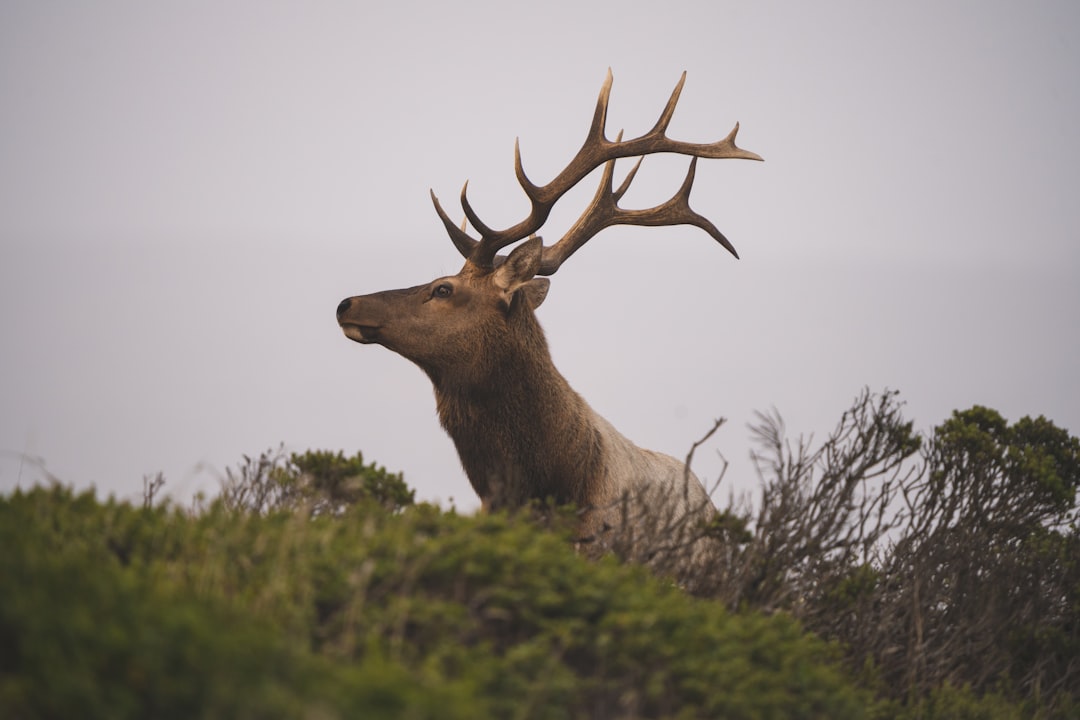
California Guided Tule Elk Hunts 2027: Tags & Odds
California is home to one of North America's most distinctive elk subspecies: the Tule elk. For hunters hoping to pursue Tule elk in 2027, the biggest challenge may be obtaining the tag. California's standard elk tags are distributed through the state's Big Game Drawing using a modified preference-point system. These are limited opportunities, and historical demand can greatly exceed available tags. Under the current system: Hunters must have a valid California annual hunting license to apply. Each hunter may submit only one elk drawing application per license year. California uses preference points for elk. Elk quotas are divided between preference-point and Draw-By-Choice portions according to the size of the hunt quota. Applicants who apply for elk and aren't drawn earn an elk preference point. A preference-point-only application is also available. California currently allows only one nonresident per license year to be drawn for elk statewide. The current Big Game Drawing deadline is June 2 at midnight. California also offers separate elk opportunities through the SHARE program on participating private properties. The final 2027 hunt quotas, dates, fees and regulations should be verified through the California Department of Fish and Wildlife when they're published. Historical draw information can also be researched through TAGZ when building a multi-state elk application strategy.
Next
DIY vs Guided Elk Hunting: Which Hunt Makes Sense?
Choosing between a DIY and guided elk hunt comes down to more than money. A DIY hunt gives you maximum independence and can dramatically reduce the cost of the hunt, but you're responsible for everything from finding elk to navigating access and packing out the animal. A guided hunt can provide: Local knowledge Preseason scouting Hunt planning Calling and glassing experience Camp logistics Access knowledge Meat recovery assistance But hiring a guide doesn't guarantee you'll harvest an elk. It also doesn't automatically improve your odds of drawing a public elk tag. For many hunters, there's a third option: Semi-guided or drop-camp hunts. These can provide some logistical support while allowing the hunter to make many of the hunting decisions independently. The right choice depends on your experience, available time, budget, physical ability and the specific elk hunt you're planning.