DIY Elk Hunting in Oregon: 2027 Complete Guide
ElkOregonPublic LandRifleArchery
10 min read·Nov 17, 2026·TAGZ
DIY Elk Hunting in Oregon: 2027 Complete Guide

Oregon provides some of the West's most accessible DIY elk hunting opportunities for both residents and nonresidents. The state offers general season tags available over the counter alongside controlled hunt draws for premium units. With millions of acres of public land spanning coastal rainforests to high desert, Oregon accommodates hunters of all experience levels willing to put in the work.

Oregon's Elk Tag System

Oregon divides elk hunting into general seasons and controlled hunts. General season tags are available over the counter and allow hunting in designated general season units during set dates. These tags do not require entering a draw. Controlled hunts use a preference point system for specific units, seasons, and weapon types that offer better bull-to-cow ratios or less hunting pressure. Residents and nonresidents both accumulate preference points when unsuccessful in controlled hunt draws. Each species operates on a separate point system.

Nonresidents can purchase one general season elk tag and apply for controlled hunts. Nonresident controlled hunt tags are capped at ten percent of available tags per hunt. Oregon does not sell nonresident general season deer tags, but elk tags remain available. The application deadline typically falls in late May, with results announced in June. Leftover controlled hunt tags sometimes become available in August through a second draw.

General Season vs. Controlled Hunts

General season tags work well for first-time Oregon hunters or those without preference points. These tags grant access to large geographic areas during rifle, archery, or muzzleloader seasons. Success rates run lower than controlled hunts, but the guaranteed tag and abundant public land make general seasons viable for DIY hunters. Rifle general seasons usually open in late October and run through early November. Archery general seasons typically span late August through September.

Controlled hunts offer shorter seasons in specific units with limited tag numbers. These hunts produce higher success rates and better bull quality. Many controlled hunts occur during the rut when bulls are more vocal and responsive to calling. Nonresidents often need three to five preference points for mid-tier controlled archery hunts and five to eight points for premium rifle hunts. Spike-only controlled hunts sometimes draw with zero or one point and provide excellent meat hunting opportunities.

Top DIY Public Land Units

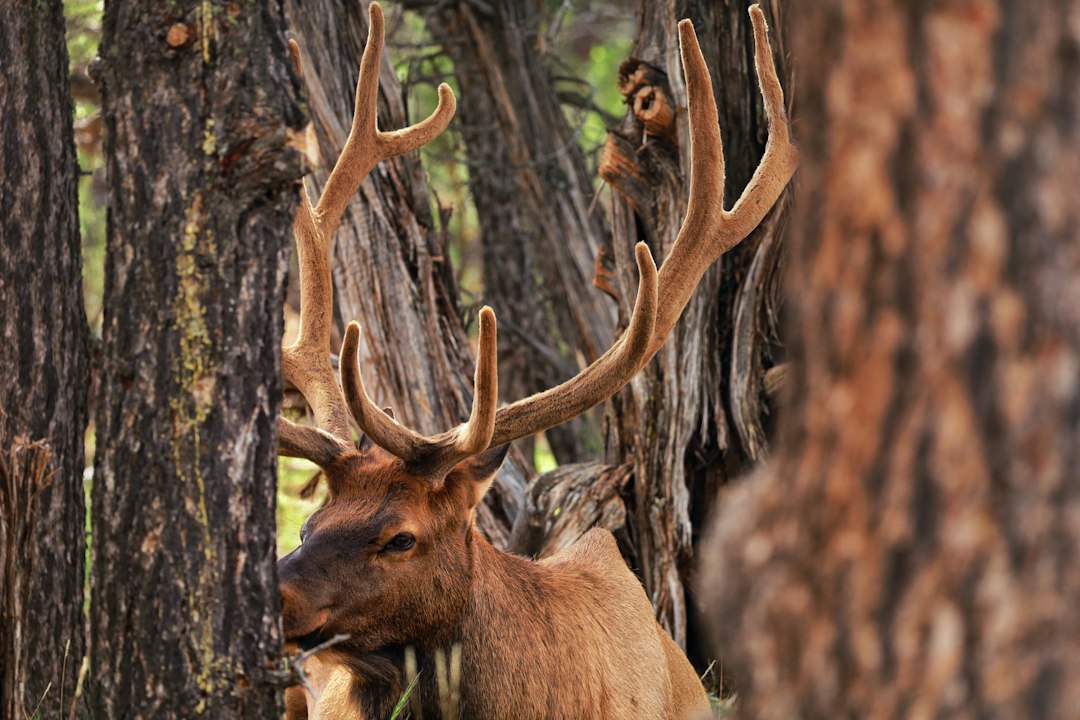
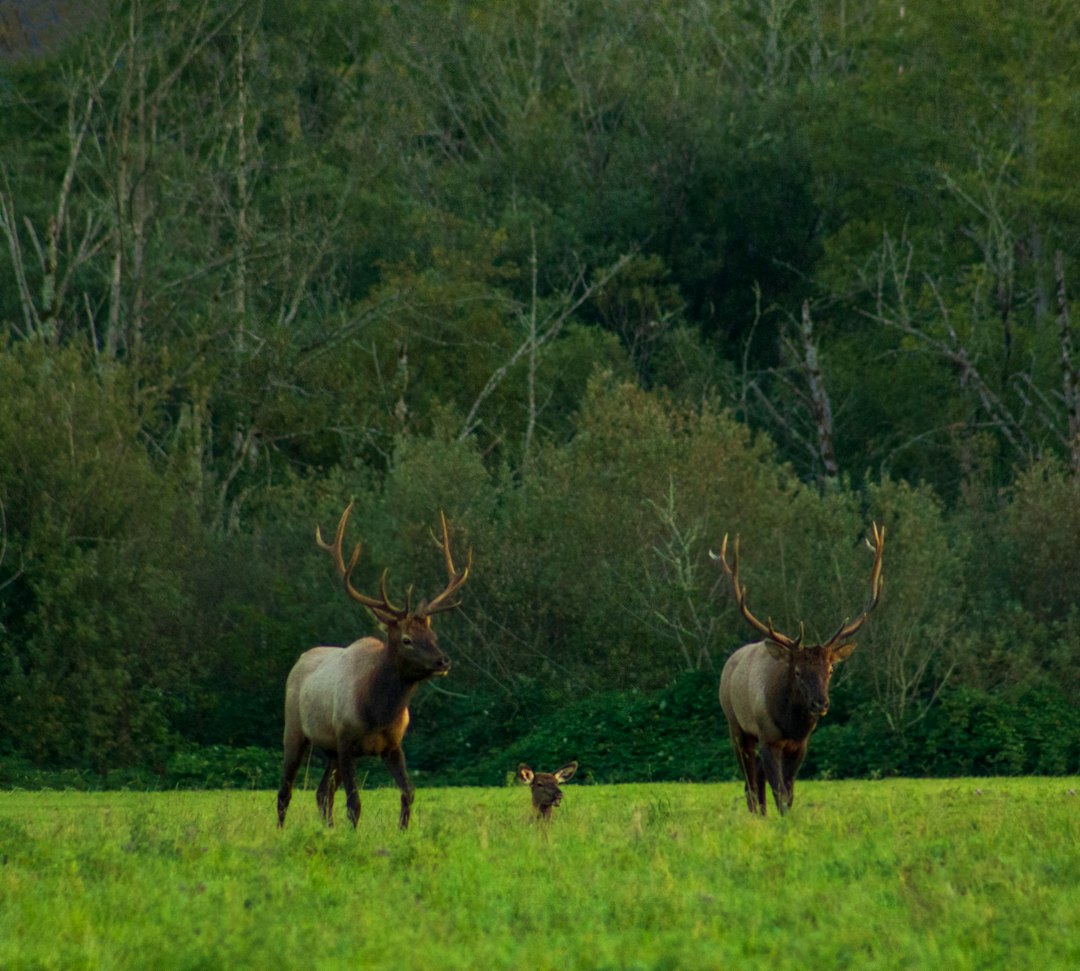
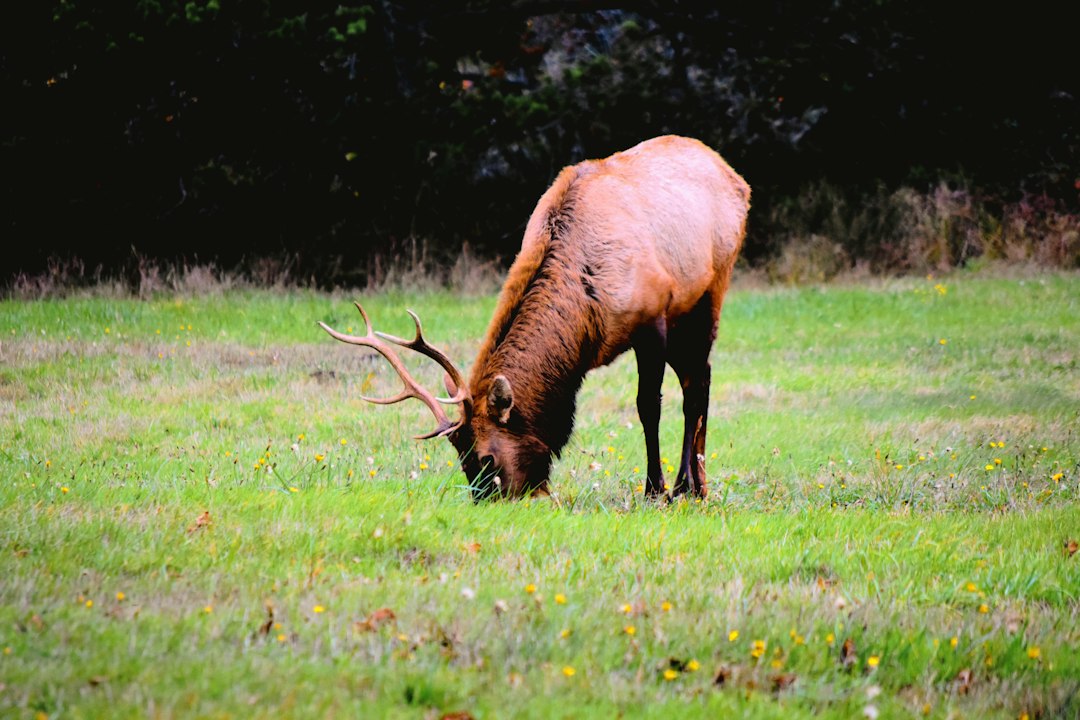
The Cascade Range holds Oregon's highest elk densities. Units like Santiam, McKenzie, and Willamette offer extensive national forest access with good road networks for vehicle-based camps. These units experience moderate to heavy pressure during general seasons but contain elk throughout. Focus on steep timbered ridges away from main roads. Elk concentrate in clearcuts during early morning and evening. The coastal units from Saddle Mountain to Tioga provide thick rainforest habitat with Roosevelt elk. These hunts demand close-range shooting skills and tolerance for wet conditions. Roosevelt bulls grow heavy-bodied with shorter tines than Rocky Mountain elk.

Eastern Oregon units like Desolation, Murderers Creek, and Sled Springs contain Rocky Mountain elk across mixed conifer and juniper terrain. These units receive less pressure than the Cascades and offer better spot-and-stalk opportunities. Water sources become critical during early seasons. Glass basins at dawn and dusk to locate feeding elk, then plan stalks through broken country. The Wenaha unit consistently produces quality bulls but requires physical conditioning for steep canyon hunting. Many hunters access Wenaha through the Umatilla National Forest.

Scouting and E-Scouting Strategies

Successful Oregon DIY hunts begin with thorough e-scouting. Use onX Hunt or similar platforms to identify public land blocks with minimal road access. Look for large timber patches adjacent to clearcuts or natural meadows. Elk feed in openings and bed in timber. North-facing slopes hold moisture and vegetation later into fall. Identify multiple backup areas since pressure pushes elk between drainages.

Physical scouting in August reveals current elk patterns. Listen for bugles at dawn and dusk to confirm elk presence. Fresh rubs and wallows indicate rutting activity. Elk trails connecting bedding and feeding areas become highways during season. Trail cameras placed on water sources or trails provide movement data. Download Oregon's Hunt Planner maps from ODFW to understand unit boundaries and legal access points. Some units contain checkerboard ownership requiring careful navigation.


Draw odds
Alaska moose draw odds by unit, colored by draw, OTC, or no data
AdultNonresident

Alaska · Moose

Draw, OTC, and no-data units across the whole state.

Adult, Nonresident, Moose, no additional filters. Every unit is colored by its best matching draw odds; if nothing draws, it shows OTC; if neither, no data.

  • Alaska mixes draw and OTC moose hunts within the same region.
  • Green units are worth an application; purple units are OTC.
  • Filters stay applied when a unit is opened for hunt detail.
Draw odds
California mule deer draw odds ranked by unit in a list
AdultNonresident

California · Mule deer

Nonresident odds ranked unit by unit.

Adult, Nonresident, Mule deer, no weapon or season chip, so every matching hunt in a zone is combined into one badge and sorted by best projected odds.

  • D6 leads the list; a range like 8%–14% means more than one hunt code exists in that zone.
  • The list and the map read the same filtered hunt set.
  • 46 units are shown for this species and state alone.

Free to join

Download mobile app

  • Detailed draw odds
  • Point tracking
  • Deadline reminders
  • 19 states covered
Download on the App StoreGet it on Google Play
Unit detail
Wyoming elk unit detail, hunts tab, showing hunt windows on a timeline

Wyoming · Elk, Unit 3

Every hunt window inside one unit, laid out on a timeline.

Unit 3 has two hunt codes for elk. Each one shows its weapon, animal type, and season as a bar on a shared Aug–Jan timeline, plus a day-by-day moon phase strip.

  • Archery, then a long Any Legal Weapon window, then a late season — three opportunities in one unit.
  • The 100% badge at top means no real draw competition for the selected filters right now.
  • Weather & conditions expands below the hunt list without leaving the unit.
Terrain data
Colorado pronghorn unit detail, terrain tab, showing unit outline and key metrics

Colorado · Pronghorn, Unit 3

Unit boundaries and a complexity score at a glance.

The Terrain tab draws the unit outline against its neighbors and scores it for complexity, then breaks out area, public land, access, topography, forest, and water.

  • 849 sq mi, 55% public land, and flat topography make this a fairly approachable unit.
  • Each metric carries a short rating word — Vast, Some, Fair, Flat, Sparse, Moderate — with a tooltip.
  • The outline map shows adjacent units 2, 4, 13, and 301 for context.
State profiles
State Profiles screen listing states with wildlife agency and public land percentage

State Profiles

Each state's wildlife agency and public land share, at a glance.

State Profiles lists every covered state as a photo card naming its wildlife agency and, where available, its public land percentage.

  • Public land percentage shows right in the list, before opening the state.
  • Each card names the exact agency the regulations come from.
  • States without a public land figure yet, like Alabama here, are still listed.
Points wallet
Points Wallet screen with Colorado expanded, showing a point stepper per species

Points Wallet · Colorado

Every state and species point balance in one wallet.

Points Wallet lists each state with a species count; expanding a state, like Colorado here, shows a stepper for every species so a balance can be entered or adjusted directly.

  • Colorado alone tracks points across 10 species independently.
  • Species with no points, like Pronghorn here, still show a zero to stay visible.
  • Desert Bighorn Sheep is flagged as a random draw with no points system.

Free to join

Download mobile app

  • Detailed draw odds
  • Point tracking
  • Deadline reminders
  • 19 states covered
Download on the App StoreGet it on Google Play
Draw odds
Montana white-tailed deer draw odds filtered to any legal weapon, either sex, regular season
AdultNonresidentAny Legal WeaponEitherRegular

Montana · White-tailed deer

Nearly the whole state is OTC for this filter combination.

Adult, Nonresident, White-tailed deer, filtered to Any Legal Weapon, Either, Regular. Under this combination almost every unit turns purple — over the counter.

  • Switching weapon, sex, or season changes the picture completely.
  • Purple means the tag can be bought directly, no draw.
  • This is the tag-and-go read of Montana whitetail, not the point-based one.
Terrain data
New Mexico mule deer unit 5A terrain tab with boundary description and land cover breakdown

New Mexico · Mule deer, Unit 5A

A written boundary description, not just a shape.

Unit 5A's terrain tab opens with a plain-language paragraph about surrounding land, access towns, and ownership mix, then a land cover breakdown by percentage.

  • 72% open plains and 25% forested plains describe the terrain at a glance.
  • The boundary text calls out the exact reservation and forest lines that define the unit.
  • Access & pressure continues below the fold with mileage detail.
Draw odds
New Mexico mule deer draw odds by unit
AdultNonresident

New Mexico · Mule deer

Mule deer draw odds for every unit in the state.

Adult, Nonresident, Mule deer, all weapons and seasons. Each unit is colored by the same odds calculation used in the dashboard.

  • Green and tan together separate units worth applying to from units that are not.
  • Numbered units follow New Mexico's own game management unit boundaries.
  • Opening a unit shows the exact hunt behind the color.
Favorites
Favorite Units screen grouped by state and species

Favorite Units

Starred units from any state, grouped by species.

Favorite Units collects every starred unit across states and species into one list, grouped by state and species pair, so a saved unit is one tap away.

  • Arizona mule deer and Colorado pronghorn favorites sit side by side here.
  • Each row opens straight into that unit's detail view.
  • Unstarring from this screen removes it from the group instantly.
Deadlines
Deadline Reminders screen listing application and purchase deadlines by date

Deadline Reminders

Every application and purchase deadline, sorted by date.

Deadline Reminders filters by state and sorts by date, showing the deadline type, a countdown, and the state and species it applies to, with a link out to the source.

  • Countdown badges shift as a deadline gets close — "in 5 days" here, for example.
  • Application opens and closes are tracked as separate reminder types.
  • Each card links out to confirm the rule at the source.
Interactive map
Arizona elk unit boundaries overlaid on an interactive street map

Arizona · Elk

Unit boundaries laid directly over a real map.

This view overlays Arizona elk unit boundaries and labels on top of a street map, with a search bar pinned to state and species and a layer toggle in the corner.

  • Real towns like Prescott and Sedona sit inside their unit boundaries for context.
  • A location button and layer switch float over the map, clear of the unit labels.
  • A Filter button at the bottom opens the same filters used elsewhere in the app.

Free to join

Download mobile app

  • Detailed draw odds
  • Point tracking
  • Deadline reminders
  • 19 states covered
Download on the App StoreGet it on Google Play
Insights
Insights screen with a featured article and a latest articles list

Insights

Hunting articles, built into the app itself.

Insights opens to a featured article with a hero image, then a Latest list of recent posts, each with a thumbnail, read time, and publish date.

  • The featured slot rotates to the newest deep-dive article.
  • Read time and publish date show on every card, not just the featured one.
  • This mirrors the blog content already published on the marketing site.
Download on the App StoreGet it on Google Play

Weapon and Season Selection

Archery seasons provide the longest hunting windows and overlap the rut. Bulls respond to cow calls and bugles from late August through mid-September. Thick timber demands close shooting proficiency. Shots often occur inside forty yards. Archery general season tags grant flexibility to hunt multiple units and move based on elk behavior. Controlled archery hunts concentrate hunters in smaller areas but occur during peak rut when bulls are most vulnerable.

Rifle seasons open after archery pressure subsides. Bulls become less vocal but remain catchable on feeding patterns. Western Oregon rifle hunts occur in November when weather deteriorates. Rain and wind mask movement noise but reduce visibility. Eastern Oregon rifle hunts may encounter snow at higher elevations. Muzzleloader seasons fall between archery and rifle, offering a middle ground. Oregon allows scoped muzzleloaders, increasing effective range compared to traditional iron sights.

Access and Logistics

Oregon's national forests provide free dispersed camping on most forest roads. Popular areas fill quickly during opening weekends. Arrive midweek to claim prime campsites near hunting areas. Dispersed camping requires self-sufficiency including water, sanitation, and food storage. Black bears inhabit all Oregon elk units. Some wilderness areas require stock for deep access, but most productive elk habitat lies within day-hiking range of roads.

Coastal units remain accessible year-round via paved highways. Cascade units close periodically for snow. Eastern Oregon units require high-clearance vehicles for rough forest roads. Chain requirements activate during storms. Check road status through national forest websites before departure. Cell service is limited across most elk habitat. Download offline maps and communicate trip plans to emergency contacts. The nearest towns to major elk units stock limited hunting supplies, so pack everything needed from home.

Common Mistakes and How to Avoid Them

New Oregon hunters often underestimate coastal rainforest difficulty. Visibility drops to fifty yards or less in mature timber. Elk detect movement easily. Still-hunt slowly and use calls to bring bulls into range rather than pursuing them through brush. Western Oregon hunters must prepare for rain. Waterproof clothing, dry bags, and backup fire-starting materials prevent misery. Wet gear loses insulation value rapidly.

Eastern Oregon hunters sometimes overcommit to single drainages. If pressure bumps elk out, move to backup areas quickly. Elk relocate miles overnight when disturbed. Another common error is hunting too close to roads. Hike at least a mile from vehicle access to escape the crowd. Elk pushed off easy terrain concentrate in steeper, less accessible country. Physical conditioning separates successful hunters from those who run out of energy after day two.

Draw odds
Alaska moose draw odds by unit, colored by draw, OTC, or no data
AdultNonresident

Alaska · Moose

Draw, OTC, and no-data units across the whole state.

Adult, Nonresident, Moose, no additional filters. Every unit is colored by its best matching draw odds; if nothing draws, it shows OTC; if neither, no data.

  • Alaska mixes draw and OTC moose hunts within the same region.
  • Green units are worth an application; purple units are OTC.
  • Filters stay applied when a unit is opened for hunt detail.
Draw odds
California mule deer draw odds ranked by unit in a list
AdultNonresident

California · Mule deer

Nonresident odds ranked unit by unit.

Adult, Nonresident, Mule deer, no weapon or season chip, so every matching hunt in a zone is combined into one badge and sorted by best projected odds.

  • D6 leads the list; a range like 8%–14% means more than one hunt code exists in that zone.
  • The list and the map read the same filtered hunt set.
  • 46 units are shown for this species and state alone.

Free to join

Download mobile app

  • Detailed draw odds
  • Point tracking
  • Deadline reminders
  • 19 states covered
Download on the App StoreGet it on Google Play
Unit detail
Wyoming elk unit detail, hunts tab, showing hunt windows on a timeline

Wyoming · Elk, Unit 3

Every hunt window inside one unit, laid out on a timeline.

Unit 3 has two hunt codes for elk. Each one shows its weapon, animal type, and season as a bar on a shared Aug–Jan timeline, plus a day-by-day moon phase strip.

  • Archery, then a long Any Legal Weapon window, then a late season — three opportunities in one unit.
  • The 100% badge at top means no real draw competition for the selected filters right now.
  • Weather & conditions expands below the hunt list without leaving the unit.
Terrain data
Colorado pronghorn unit detail, terrain tab, showing unit outline and key metrics

Colorado · Pronghorn, Unit 3

Unit boundaries and a complexity score at a glance.

The Terrain tab draws the unit outline against its neighbors and scores it for complexity, then breaks out area, public land, access, topography, forest, and water.

  • 849 sq mi, 55% public land, and flat topography make this a fairly approachable unit.
  • Each metric carries a short rating word — Vast, Some, Fair, Flat, Sparse, Moderate — with a tooltip.
  • The outline map shows adjacent units 2, 4, 13, and 301 for context.
State profiles
State Profiles screen listing states with wildlife agency and public land percentage

State Profiles

Each state's wildlife agency and public land share, at a glance.

State Profiles lists every covered state as a photo card naming its wildlife agency and, where available, its public land percentage.

  • Public land percentage shows right in the list, before opening the state.
  • Each card names the exact agency the regulations come from.
  • States without a public land figure yet, like Alabama here, are still listed.
Points wallet
Points Wallet screen with Colorado expanded, showing a point stepper per species

Points Wallet · Colorado

Every state and species point balance in one wallet.

Points Wallet lists each state with a species count; expanding a state, like Colorado here, shows a stepper for every species so a balance can be entered or adjusted directly.

  • Colorado alone tracks points across 10 species independently.
  • Species with no points, like Pronghorn here, still show a zero to stay visible.
  • Desert Bighorn Sheep is flagged as a random draw with no points system.

Free to join

Download mobile app

  • Detailed draw odds
  • Point tracking
  • Deadline reminders
  • 19 states covered
Download on the App StoreGet it on Google Play
Draw odds
Montana white-tailed deer draw odds filtered to any legal weapon, either sex, regular season
AdultNonresidentAny Legal WeaponEitherRegular

Montana · White-tailed deer

Nearly the whole state is OTC for this filter combination.

Adult, Nonresident, White-tailed deer, filtered to Any Legal Weapon, Either, Regular. Under this combination almost every unit turns purple — over the counter.

  • Switching weapon, sex, or season changes the picture completely.
  • Purple means the tag can be bought directly, no draw.
  • This is the tag-and-go read of Montana whitetail, not the point-based one.
Terrain data
New Mexico mule deer unit 5A terrain tab with boundary description and land cover breakdown

New Mexico · Mule deer, Unit 5A

A written boundary description, not just a shape.

Unit 5A's terrain tab opens with a plain-language paragraph about surrounding land, access towns, and ownership mix, then a land cover breakdown by percentage.

  • 72% open plains and 25% forested plains describe the terrain at a glance.
  • The boundary text calls out the exact reservation and forest lines that define the unit.
  • Access & pressure continues below the fold with mileage detail.
Draw odds
New Mexico mule deer draw odds by unit
AdultNonresident

New Mexico · Mule deer

Mule deer draw odds for every unit in the state.

Adult, Nonresident, Mule deer, all weapons and seasons. Each unit is colored by the same odds calculation used in the dashboard.

  • Green and tan together separate units worth applying to from units that are not.
  • Numbered units follow New Mexico's own game management unit boundaries.
  • Opening a unit shows the exact hunt behind the color.
Favorites
Favorite Units screen grouped by state and species

Favorite Units

Starred units from any state, grouped by species.

Favorite Units collects every starred unit across states and species into one list, grouped by state and species pair, so a saved unit is one tap away.

  • Arizona mule deer and Colorado pronghorn favorites sit side by side here.
  • Each row opens straight into that unit's detail view.
  • Unstarring from this screen removes it from the group instantly.
Deadlines
Deadline Reminders screen listing application and purchase deadlines by date

Deadline Reminders

Every application and purchase deadline, sorted by date.

Deadline Reminders filters by state and sorts by date, showing the deadline type, a countdown, and the state and species it applies to, with a link out to the source.

  • Countdown badges shift as a deadline gets close — "in 5 days" here, for example.
  • Application opens and closes are tracked as separate reminder types.
  • Each card links out to confirm the rule at the source.
Interactive map
Arizona elk unit boundaries overlaid on an interactive street map

Arizona · Elk

Unit boundaries laid directly over a real map.

This view overlays Arizona elk unit boundaries and labels on top of a street map, with a search bar pinned to state and species and a layer toggle in the corner.

  • Real towns like Prescott and Sedona sit inside their unit boundaries for context.
  • A location button and layer switch float over the map, clear of the unit labels.
  • A Filter button at the bottom opens the same filters used elsewhere in the app.

Free to join

Download mobile app

  • Detailed draw odds
  • Point tracking
  • Deadline reminders
  • 19 states covered
Download on the App StoreGet it on Google Play
Insights
Insights screen with a featured article and a latest articles list

Insights

Hunting articles, built into the app itself.

Insights opens to a featured article with a hero image, then a Latest list of recent posts, each with a thumbnail, read time, and publish date.

  • The featured slot rotates to the newest deep-dive article.
  • Read time and publish date show on every card, not just the featured one.
  • This mirrors the blog content already published on the marketing site.
Download on the App StoreGet it on Google Play

Shot Placement and Recovery

Oregon's thick vegetation complicates blood trailing. Quartering-away shots provide the best penetration angle through the vitals into the offside shoulder. Avoid straight-on or hard-quartering shots that risk gut hits. After the shot, mark the location immediately using flagging or GPS. Wait thirty minutes minimum before trailing unless the elk drops in sight. Push wounded elk too soon and they travel farther before expiring.

Blood trails disappear quickly in rain or heavy dew. Use multiple people to grid-search when blood sign ends. Elk often travel downhill after the shot, then circle back uphill to bed. Check thick cover above the last blood. Bring game bags, knives, and a bone saw for field processing. Elk quarters are heavy. Plan multiple trips or use a game cart where terrain allows. Some hunters quarter elk and hang meat overnight, returning with pack frames the next morning. Cool meat quickly to prevent spoilage, especially during early-season heat.

Hunting Alone vs. With Partners

Solo hunting offers flexibility and silence. You move on your own schedule and make decisions instantly. However, solo hunters face greater risk if injured and must handle entire elk recoveries alone. Cellular communication is unreliable in most Oregon elk habitat. Carry a satellite communicator for emergencies. Pack lighter than partnered hunters since you cannot split gear weight.

Hunting with a partner improves safety and allows coordinated elk drives. One hunter calls while another positions downwind. Recovery becomes manageable when splitting pack loads. Partners provide motivation during long, hard days. The tradeoff is coordination overhead and noise when moving through timber. Groups larger than three create too much disturbance. Keep partners limited to two or three total hunters maximum.

Connecting the Hunt to Draw Odds Analysis

Understanding controlled hunt draw odds helps Oregon hunters maximize point strategy. The TAGZ draw odds tool shows historical point requirements for each controlled hunt code. Nonresidents accumulating points should target hunts requiring their current point total rather than waiting indefinitely for top-tier tags. Apply for spike-only or cow hunts in premium units to burn points while experiencing the terrain. Those hunts build familiarity for future premium tag applications.

General season tags guarantee hunting opportunity while controlled hunt points accumulate. Many nonresidents hunt Oregon general seasons annually and apply for controlled hunts in multiple Western states. This strategy maximizes time in elk country. Oregon's ten percent nonresident cap means controlled hunt odds improve slower than states with higher nonresident allocations. Plan for a five-to-seven-year point-building timeline for archery rut hunts in top units. Residents draw mid-tier hunts with two to four points. For more on evaluating draw odds across states, TAGZ provides side-by-side comparisons.

Post-Hunt Logistics

Oregon requires hunters to report harvest within seventy-two hours online or by phone. Retain license and tag until meat processing completes. Some processors near popular units book months ahead. Secure processing reservations before the hunt or plan to process meat yourself. Coolers packed with ice keep meat fresh during the drive home. Dry ice works well for multi-day returns. Quarter bags should breathe rather than sealing meat in plastic immediately after field dressing.

Nonresidents transporting meat across state lines face no specific restrictions for personal consumption quantities. Keep the tag attached to a meat quarter until reaching your home state. Antlers and capes travel separately but should remain associated with harvest documentation. Taxidermists near Oregon units can cape and freeze bulls for later shipment. This reduces transport weight and prevents spoilage during long drives.

Draw odds
Alaska moose draw odds by unit, colored by draw, OTC, or no data
AdultNonresident

Alaska · Moose

Draw, OTC, and no-data units across the whole state.

Adult, Nonresident, Moose, no additional filters. Every unit is colored by its best matching draw odds; if nothing draws, it shows OTC; if neither, no data.

  • Alaska mixes draw and OTC moose hunts within the same region.
  • Green units are worth an application; purple units are OTC.
  • Filters stay applied when a unit is opened for hunt detail.
Draw odds
California mule deer draw odds ranked by unit in a list
AdultNonresident

California · Mule deer

Nonresident odds ranked unit by unit.

Adult, Nonresident, Mule deer, no weapon or season chip, so every matching hunt in a zone is combined into one badge and sorted by best projected odds.

  • D6 leads the list; a range like 8%–14% means more than one hunt code exists in that zone.
  • The list and the map read the same filtered hunt set.
  • 46 units are shown for this species and state alone.

Free to join

Download mobile app

  • Detailed draw odds
  • Point tracking
  • Deadline reminders
  • 19 states covered
Download on the App StoreGet it on Google Play
Unit detail
Wyoming elk unit detail, hunts tab, showing hunt windows on a timeline

Wyoming · Elk, Unit 3

Every hunt window inside one unit, laid out on a timeline.

Unit 3 has two hunt codes for elk. Each one shows its weapon, animal type, and season as a bar on a shared Aug–Jan timeline, plus a day-by-day moon phase strip.

  • Archery, then a long Any Legal Weapon window, then a late season — three opportunities in one unit.
  • The 100% badge at top means no real draw competition for the selected filters right now.
  • Weather & conditions expands below the hunt list without leaving the unit.
Terrain data
Colorado pronghorn unit detail, terrain tab, showing unit outline and key metrics

Colorado · Pronghorn, Unit 3

Unit boundaries and a complexity score at a glance.

The Terrain tab draws the unit outline against its neighbors and scores it for complexity, then breaks out area, public land, access, topography, forest, and water.

  • 849 sq mi, 55% public land, and flat topography make this a fairly approachable unit.
  • Each metric carries a short rating word — Vast, Some, Fair, Flat, Sparse, Moderate — with a tooltip.
  • The outline map shows adjacent units 2, 4, 13, and 301 for context.
State profiles
State Profiles screen listing states with wildlife agency and public land percentage

State Profiles

Each state's wildlife agency and public land share, at a glance.

State Profiles lists every covered state as a photo card naming its wildlife agency and, where available, its public land percentage.

  • Public land percentage shows right in the list, before opening the state.
  • Each card names the exact agency the regulations come from.
  • States without a public land figure yet, like Alabama here, are still listed.
Points wallet
Points Wallet screen with Colorado expanded, showing a point stepper per species

Points Wallet · Colorado

Every state and species point balance in one wallet.

Points Wallet lists each state with a species count; expanding a state, like Colorado here, shows a stepper for every species so a balance can be entered or adjusted directly.

  • Colorado alone tracks points across 10 species independently.
  • Species with no points, like Pronghorn here, still show a zero to stay visible.
  • Desert Bighorn Sheep is flagged as a random draw with no points system.

Free to join

Download mobile app

  • Detailed draw odds
  • Point tracking
  • Deadline reminders
  • 19 states covered
Download on the App StoreGet it on Google Play
Draw odds
Montana white-tailed deer draw odds filtered to any legal weapon, either sex, regular season
AdultNonresidentAny Legal WeaponEitherRegular

Montana · White-tailed deer

Nearly the whole state is OTC for this filter combination.

Adult, Nonresident, White-tailed deer, filtered to Any Legal Weapon, Either, Regular. Under this combination almost every unit turns purple — over the counter.

  • Switching weapon, sex, or season changes the picture completely.
  • Purple means the tag can be bought directly, no draw.
  • This is the tag-and-go read of Montana whitetail, not the point-based one.
Terrain data
New Mexico mule deer unit 5A terrain tab with boundary description and land cover breakdown

New Mexico · Mule deer, Unit 5A

A written boundary description, not just a shape.

Unit 5A's terrain tab opens with a plain-language paragraph about surrounding land, access towns, and ownership mix, then a land cover breakdown by percentage.

  • 72% open plains and 25% forested plains describe the terrain at a glance.
  • The boundary text calls out the exact reservation and forest lines that define the unit.
  • Access & pressure continues below the fold with mileage detail.
Draw odds
New Mexico mule deer draw odds by unit
AdultNonresident

New Mexico · Mule deer

Mule deer draw odds for every unit in the state.

Adult, Nonresident, Mule deer, all weapons and seasons. Each unit is colored by the same odds calculation used in the dashboard.

  • Green and tan together separate units worth applying to from units that are not.
  • Numbered units follow New Mexico's own game management unit boundaries.
  • Opening a unit shows the exact hunt behind the color.
Favorites
Favorite Units screen grouped by state and species

Favorite Units

Starred units from any state, grouped by species.

Favorite Units collects every starred unit across states and species into one list, grouped by state and species pair, so a saved unit is one tap away.

  • Arizona mule deer and Colorado pronghorn favorites sit side by side here.
  • Each row opens straight into that unit's detail view.
  • Unstarring from this screen removes it from the group instantly.
Deadlines
Deadline Reminders screen listing application and purchase deadlines by date

Deadline Reminders

Every application and purchase deadline, sorted by date.

Deadline Reminders filters by state and sorts by date, showing the deadline type, a countdown, and the state and species it applies to, with a link out to the source.

  • Countdown badges shift as a deadline gets close — "in 5 days" here, for example.
  • Application opens and closes are tracked as separate reminder types.
  • Each card links out to confirm the rule at the source.
Interactive map
Arizona elk unit boundaries overlaid on an interactive street map

Arizona · Elk

Unit boundaries laid directly over a real map.

This view overlays Arizona elk unit boundaries and labels on top of a street map, with a search bar pinned to state and species and a layer toggle in the corner.

  • Real towns like Prescott and Sedona sit inside their unit boundaries for context.
  • A location button and layer switch float over the map, clear of the unit labels.
  • A Filter button at the bottom opens the same filters used elsewhere in the app.

Free to join

Download mobile app

  • Detailed draw odds
  • Point tracking
  • Deadline reminders
  • 19 states covered
Download on the App StoreGet it on Google Play
Insights
Insights screen with a featured article and a latest articles list

Insights

Hunting articles, built into the app itself.

Insights opens to a featured article with a hero image, then a Latest list of recent posts, each with a thumbnail, read time, and publish date.

  • The featured slot rotates to the newest deep-dive article.
  • Read time and publish date show on every card, not just the featured one.
  • This mirrors the blog content already published on the marketing site.
Download on the App StoreGet it on Google Play

Planning Your First Oregon Elk Hunt

Beginners should consider purchasing a general season rifle tag for a November hunt in the Cascades. Units like Santiam or McKenzie offer extensive public access and consistent elk presence. Partner with an experienced hunter if possible, or join online forums to connect with others planning Oregon hunts. Book campsites or dispersed camping locations by mid-September. Test all gear before departure, especially rain gear and boots.

Physical preparation matters more than gear. Train with a weighted pack on steep terrain. Oregon elk hunting involves daily elevation gains of one thousand to three thousand feet. Cardiovascular conditioning prevents exhaustion after day one. Practice shooting from awkward positions including uphill, downhill, and sitting. Timber shots rarely offer prone shooting positions. For more on preparing for Western elk hunts, TAGZ offers comprehensive planning guides.

Weather and Timing Considerations

Western Oregon rifle seasons coincide with November rain. Pack waterproof outer layers and insulated mid-layers that retain warmth when wet. Elk move during rain since wind and precipitation mask sound. Some of the best hunting occurs in miserable weather when other hunters retreat to camp. Eastern Oregon weather varies from warm early-season days to sudden snowstorms in November. Layering systems work better than single heavy coats. Mornings start cold but afternoons warm quickly during archery seasons.

Moon phase affects elk behavior during the rut. Bulls bugle most actively during dark mornings when moonlight is minimal. Full moon periods see increased nighttime activity and quieter mornings. Plan calling strategies around moon phases. Dark mornings from new moon periods produce peak bugling. Elk feeding patterns shift later into mornings during cold snaps. Glass feeding areas past traditional dawn hours when temperatures drop.

Respecting Private Land and Elk Behavior

Oregon contains significant private timber company land interspersed with public forests. Some companies allow free public access through permits obtained online before hunting. Others prohibit access entirely. The onX Hunt app clearly displays ownership boundaries. Trespassing damages landowner relationships and jeopardizes future access. Always verify land status before entering questionable areas.

Elk habitually cross ownership boundaries. Never push elk from public toward private land hoping to intercept them. This practice is unethical and often illegal depending on circumstances. If elk move onto private land, relocate to another drainage rather than waiting at the boundary. Oregon elk populations remain healthy due to conservative harvest management. Take only ethical shots within your skill range. Pass questionable opportunities rather than risking wounded animals. DIY hunting succeeds through persistence and respect for the resource.

FAQ — Oregon DIY Elk Hunting

Can nonresidents buy Oregon general season elk tags over the counter?

Yes. Nonresidents can purchase general season elk tags directly from ODFW without entering a draw. These tags are available online, by phone, or through licensed vendors.

How many preference points do nonresidents need for a good Oregon controlled elk hunt?

Mid-tier archery rut hunts typically require three to five points. Premium rifle hunts in top units often demand five to eight points. Spike-only hunts sometimes draw with zero or one point.

What is the main difference between Roosevelt and Rocky Mountain elk in Oregon?

Roosevelt elk inhabit coastal rainforests, grow heavier bodies with shorter antler tines, and require close-range shooting in thick cover. Rocky Mountain elk occupy eastern Oregon's more open terrain with longer-range shooting opportunities.

Is it realistic for a nonresident to hunt Oregon elk solo without hiring a guide?

Yes. Oregon's abundant public land, general season tag availability, and developed forest road access make solo DIY hunts practical. Physical conditioning and thorough e-scouting are more important than guided experience.

What is the best weapon choice for a first-time Oregon elk hunter?

Rifle general season tags provide the most forgiving learning curve with longer effective range. Archery tags offer longer seasons and rut timing but demand close-range shooting skills and calling proficiency.

Do I need a wilderness permit or lottery entry to access Oregon national forest land for elk hunting?

No. Oregon national forests do not require permits for day hunting access. Wilderness areas have no lottery system. Dispersed camping is free on most forest roads without reservation requirements.