Complete Guide to Whitetail Hunting: Strategies, Tactics & Year-Round Planning
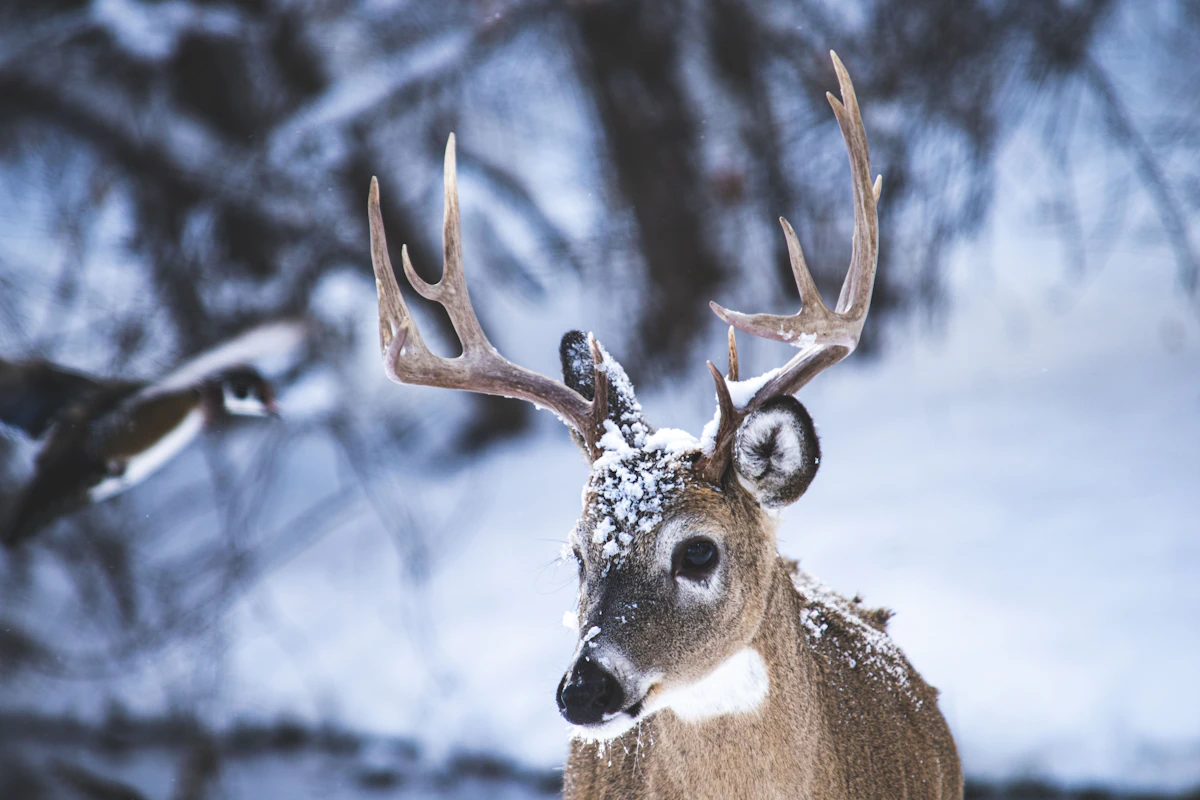
Whitetail deer are North America's most pursued big-game animal, and for good reason. They inhabit nearly every state, offer challenging hunts, and provide excellent table fare. Success on whitetail requires understanding their behavior, mastering woodsmanship, and adapting tactics to shifting conditions throughout the season.
This guide covers the complete whitetail hunting process from summer scouting through post-season evaluation. Whether you hunt public land in the Midwest, private ground in the South, or mountain ridges in the West, these principles will help you consistently find and harvest deer.
Understanding Whitetail Behavior
Whitetail deer are creatures of habit that adapt their patterns based on food availability, hunting pressure, and breeding cycles. Mature bucks are especially cautious, often moving only during low-light periods and using terrain and cover to avoid detection.
Deer activity revolves around three primary needs: food, water, and security cover. During early season, deer focus on high-calorie foods like agricultural crops, acorns, and browse. As the rut approaches, bucks shift their attention to does, abandoning predictable feeding patterns in favor of constant movement. Post-rut and late-season deer return to food sources to rebuild depleted energy reserves.
Understanding these seasonal shifts is critical. A stand location that produces encounters in September may be worthless in November. Successful whitetail hunters constantly adapt their approach based on current deer behavior rather than relying on past patterns.
Pre-Season Scouting
Effective whitetail hunting begins months before opening day. Summer and early fall scouting allow you to identify core areas, travel routes, and bedding locations without pressuring deer during the season.
Start with digital scouting using satellite imagery and topographic maps. Look for terrain features that funnel deer movement: saddles, ridges, creek crossings, field edges, and transitions between cover types. Identify likely bedding areas in thick cover on hillsides, swamps, or Security cover with good visibility and escape routes.
Once you have identified promising areas digitally, visit them in person during July and August. Look for fresh sign including trails, rubs, scrapes, tracks, and droppings. Trail cameras placed on trails between bedding and feeding areas provide invaluable intelligence about deer numbers, buck quality, and movement patterns.
Pay special attention to edge habitat where timber meets open ground. Whitetail use these transition zones heavily, especially during low-light periods. Locate multiple stand sites along these edges to account for varying wind directions.
Stand Placement Strategy
Stand placement determines hunting success more than any other factor. Even perfect calling or scent control cannot overcome a poorly positioned stand.
Primary stand locations should be between bedding areas and food sources, ideally along funnels or pinch points that concentrate deer movement. Position stands 15 to 20 yards off main trails to allow shooting opportunities without being directly in the deer's path of travel.
Wind direction is non-negotiable. Always hunt with wind blowing from the area you expect deer to approach toward you and away from bedding areas. Establish multiple stand locations for the same area so you can hunt it regardless of wind direction.
Consider entry and exit routes carefully. Avoid walking through bedding areas or across open areas where deer can see you. Use terrain features like ridges and creek bottoms to approach stands undetected. Cut shooting lanes during the off-season, not during hunting season when noise and scent pressure alert deer.
Hang stands 15 to 20 feet high for bow hunting, slightly higher for rifle hunting. Height provides better visibility and helps dissipate scent, but extremely high stands reduce shooting angles and make blood-trailing more difficult.
Early Season Tactics
Early season whitetail hunting from September through mid-October offers predictable patterns and low hunting pressure. Deer move freely between bedding and feeding areas, often entering fields and food plots while daylight remains.
Focus on food sources during early season. Agricultural fields with standing corn, soybeans, or alfalfa draw deer consistently. Oak ridges producing acorns become magnets when hard mast drops. Identify which food sources deer prefer by checking trails leading to them and observing feeding activity at dawn and dusk.
Hunt mornings and evenings during early season. Set up along trails 100 to 200 yards from food sources to intercept deer moving to and from bedding. Hunting directly over food plots or field edges works, but deer often enter after shooting light ends.
Minimize pressure during early season. Bucks establish fall ranges during this period, and excessive intrusion pushes them nocturnal or off the property entirely. Limit hunts to stands with perfect wind and avoid checking trail cameras during daylight.
Rut Hunting Strategies
The rut transforms whitetail hunting from a waiting game to an active pursuit. Bucks abandon caution to search for estrous does, creating opportunities throughout the day.
The rut unfolds in phases. The pre-rut in late October features increased buck movement, rubbing, scraping, and sparring. The seeking phase in early November has bucks covering ground searching for receptive does. Peak breeding occurs in mid-November when most does enter estrus. The post-rut in late November sees exhausted bucks resting between short feeding sessions.
During the seeking phase, hunt all day. Mature bucks cruise through doe bedding areas and along habitat edges searching for hot does. Stand locations near doe bedding or connecting bedding areas produce encounters throughout daylight hours.
Rattling and calling work best during the pre-rut and seeking phases when bucks are competitive and searching. Use aggressive rattling sequences on cold, calm mornings when sound carries. Follow with soft grunts to mimic a trailing buck. Estrous doe bleats work when bucks are actively seeking but not yet locked down with does.
During peak breeding, shift focus to doe concentrations. Bucks move between doe family groups checking for receptive females. Locate does and you will find bucks. Hunting pressure often moves deer into thick cover during the rut. Do not overlook swamps, cedar thickets, and overgrown clear-cuts where pressured deer seek refuge.
Late Season Tactics
Late season from December through January finds deer focused on food and survival. Cold temperatures, snow cover, and depleted fat reserves drive deer to high-calorie food sources.
Concentrate efforts on food during late season. Standing corn, winter wheat, brassica plots, and areas with abundant browse draw deer consistently. Unlike early season when deer trickle to food over hours, late-season deer often arrive in groups during the last 30 minutes of light.
Bedding areas shift during late season as deer seek thermal cover and solar bedding sites. South-facing slopes that catch afternoon sun and thick conifer stands that block wind become primary bedding locations. Position stands between these bedding areas and preferred food sources.
Temperature influences late-season movement significantly. Cold fronts trigger increased daytime activity as deer feed to maintain body heat. Hunt all day during extreme cold, focusing on sunny exposure and wind-protected areas where deer bed during midday.
Late season demands precise stand placement since deer use fewer trails and concentrate in specific areas. Scout fresh snow to identify current travel routes. Do not assume deer use the same trails as earlier in the season.
Shot Selection and Ethics
Ethical shot selection separates responsible hunters from careless ones. Only take shots you have practiced extensively and know you can make consistently.
For rifle hunters, broadside and quartering-away shots provide the largest vital area with the least margin for error. Place the crosshairs tight behind the shoulder for a double-lung shot. Avoid neck shots, head shots, and steep-angle shots that offer small targets and often result in wounded animals.
Bowhunters should limit shots to 40 yards or less for most hunters, 30 yards or less for those without extensive practice. Broadside shots that place the arrow through both lungs provide quick, humane kills and excellent blood trails. Quartering-away shots work if you aim for the far-side shoulder, ensuring the arrow passes through both lungs.
Never shoot at running deer unless you have extensive experience and the animal is wounded. Wait for the deer to stop and present a standing broadside shot. Patience prevents wounded animals and lost deer.
After the shot, note exactly where the deer stood and the direction it traveled. Wait 30 minutes for lung shots, 4 to 6 hours for liver shots, and 12 hours for gut shots before trailing. Pushing a wounded deer too soon often results in never recovering it.
Public Land Strategies
Public land whitetail hunting requires different tactics than private ground. Competition for spots and hunting pressure push deer into defensive patterns.
Scout deeper than other hunters. Most public land hunters set up within 300 yards of parking areas. Hike a mile or more into property to find unpressured deer. Look for thick cover, water sources, and terrain features that provide security.
Hunt during the week rather than weekends when possible. Public land pressure spikes on Saturdays and Sundays. Midweek hunts encounter fewer hunters and more daylight deer activity.
Adapt quickly to pressure. Public land deer shift to nocturnal behavior and thick cover rapidly. Hunt closer to bedding areas than you would on private land. Focus on mid-day hunts when other hunters hike out for lunch.
Mobile hunting tactics work well on public land. Use climbing stands or lightweight hang-on stands with climbing sticks to hunt different locations based on current conditions and pressure. Avoid leaving stands in the woods overnight where they attract attention and competition.
Scent Control and Wind Management
Whitetail deer possess extraordinary olfactory abilities. Mature bucks rarely offer second chances after catching human scent. Scent control and wind management are non-negotiable for consistent success.
Wind management is the foundation of scent control. Never hunt a stand with wind blowing toward areas you expect deer to approach from. Check wind direction constantly during hunts using powder bottles or milkweed seeds. Be willing to abort hunts when wind shifts unfavorably.
Scent control begins at home. Wash hunting clothes in scent-free detergent and store them in sealed bags or containers with earth or pine scent. Shower with scent-free soap before hunts and avoid strong-smelling foods, tobacco, and cologne.
ScentBlocker and activated carbon clothing help contain human odor but are not foolproof. Use them as part of a comprehensive scent-control strategy, not as a replacement for hunting the wind. Spray clothing, boots, and gear with scent-eliminating spray before and during hunts.
Approach stands from downwind and avoid contaminating the area around them. Create scent-free entry routes using creek beds, field edges, or logging roads where wind disperses scent rapidly.
Gear Essentials
Quality gear improves comfort, safety, and success. Invest in items you will use repeatedly rather than filling a closet with gadgets.
For clothing, prioritize layering and weather protection. Merino wool base layers regulate temperature and resist odor. Insulated bibs and jackets keep you warm during cold sits. Rain gear should be quiet, breathable, and fully waterproof. Pack extra layers for temperature drops.
Safety equipment is mandatory. Use a full-body harness whenever hunting from an elevated position and stay connected from the ground to the stand and back. Carry a signaling device and first-aid kit. Let someone know your hunting location and expected return time.
Optics matter significantly for whitetail hunting. Quality binoculars allow you to identify deer and assess situations without moving. A rangefinder removes guesswork from shot distances. These tools pay for themselves through better decisions and fewer mistakes.
For bowhunters, practice with broadheads identical to what you will use hunting. Sight in from the stand or ground blind you will hunt from to match actual shooting positions. Mechanical broadheads offer larger cutting diameters but require faster arrow speeds for reliable deployment. Fixed-blade broadheads penetrate reliably regardless of impact velocity.
Rifle hunters should practice from field positions including sitting, kneeling, and using improvised rests. Benchtop accuracy means little if you cannot replicate it in the field. Verify zero before the season and after any impact or temperature change.
Food Plots and Habitat Management
Food plots and habitat improvements hold deer on properties and concentrate them in huntable locations. Even small plots on limited acreage influence deer behavior.
Food plots serve two purposes: nutrition and attraction. Nutritional plots like clover, chicory, and brassicas provide high-protein forage that improves herd health and antler growth. Attraction plots like corn, soybeans, and turnips draw deer during hunting season for observation and harvest opportunities.
Plot size depends on deer density and property size. Plots from a quarter-acre to two acres work for most properties. Larger plots hold deer longer and withstand browsing pressure better, but even small kill plots along travel corridors provide hunting opportunities.
Placement matters as much as plot size. Install plots near bedding areas to encourage daylight use. Create irregular shapes with varying widths that provide multiple stand locations for different wind directions. Edge feathering around plots extends usable hunting area.
Habitat work beyond food plots improves deer holding capacity significantly. Hinge-cutting creates thick bedding cover and browse. Leaving crop strips standing through winter provides late-season food sources. Water sources from small ponds or seasonal creeks become focal points during dry periods.
Technology and Trail Cameras
Technology has revolutionized whitetail hunting, providing insights into deer movement and behavior that were impossible a generation ago. Trail cameras are the most valuable tool in a hunter's arsenal.
Cell cameras that send images to your phone eliminate the need for physical checks that pressure deer. Monitor deer activity from home and identify patterns without entering the property. Standard trail cameras cost less but require in-person checks that alert deer to your presence.
Place cameras on trails between bedding and feeding areas, over scrapes, and along field edges where deer enter open areas. Set cameras to capture photos rather than video to extend battery life and reduce file sizes. Position cameras facing north to avoid sun flare and backlit images.
Mapping apps like onXmaps provide satellite imagery, property boundaries, topography, and land ownership information. Use them for pre-season scouting and in-field navigation. Mark stand locations, trails, rubs, scrapes, and entry routes digitally for future reference.
Weather apps help predict deer activity. Sudden cold fronts, rising barometers, and calm winds typically increase deer movement. Unseasonably warm weather and high winds suppress activity. Plan hunts around weather conditions rather than calendar dates.
TAGZ helps western hunters with draw odds and unit research, but similar strategic planning applies to whitetail hunting. Track your stand encounters, shot opportunities, and harvest locations year over year. Identify patterns in your success and adjust strategies accordingly. Data-driven decisions consistently outperform gut instincts.
Processing and Meat Care
Proper meat care begins the moment a deer hits the ground. Field dressing, cooling, and processing determine meat quality and yield.
Field dress deer immediately after confirming they are dead. Remove internal organs to begin the cooling process. In warm weather, pack the body cavity with ice if available. Avoid contaminating meat with stomach or intestinal contents.
Age deer in cool conditions between 34 and 40 degrees for 7 to 14 days if possible. Aging tenderizes meat significantly. Skin the deer before aging to accelerate cooling and prevent spoilage. If temperatures exceed 40 degrees, process immediately rather than aging.
Break deer down into primals: backstraps, tenderloins, front shoulders, hindquarters, and neck. Remove silverskin and connective tissue from backstraps and hindquarters before packaging. Grind trim meat with pork fat or beef fat for burgers and sausage.
Vacuum sealing extends freezer life to 2 to 3 years compared to 6 to 12 months with butcher paper. Label packages with cut type and date. Organize the freezer with most-used cuts accessible at the front.
Learning to process your own deer saves money, provides quality control, and creates a deeper connection to the harvest. Initial equipment costs pay for themselves within a few deer. Numerous online resources and videos demonstrate proper techniques.
Hunting Pressure Management
Managing hunting pressure on a property determines long-term success. Overhunting an area pushes deer nocturnal or off the property entirely.
Limit hunts to stands with favorable wind and high probability of encounters. Avoid hunting marginal conditions just to be in the woods. Each entry and exit educates deer to your patterns and pressure.
Rotate stand locations throughout the season to avoid burning out specific areas. Hunt a stand once or twice, then leave it idle for a week or more. Deer relax and resume normal patterns when pressure dissipates.
Avoid hunting during midday unless conditions are ideal. Entry and exit during daylight hours alerts deer to your presence. Time hunts so you enter stands in darkness and exit after dark when deer are less likely to encounter you.
On small properties, hunting less often produces better results than hunting daily. Two well-planned hunts per week outperform seven random sits. Quality over quantity applies to hunting time as much as deer selection.
Post-Season Evaluation
The season does not end when you tag out or licenses expire. Post-season evaluation identifies what worked, what failed, and how to improve next year.
Review trail camera photos to identify deer you never encountered during the season. Where were they? When were they active? Use this information to adjust stand locations and timing for next season.
Walk the property looking for late-season sign. Identify heavily used trails, bedding areas, and food sources you missed during the season. Note these locations for future reference. Post-season scouting is less intrusive since deer are not yet establishing next year's patterns.
Evaluate your harvest decisions honestly. Did you pass opportunities you should have taken? Did you take marginal shots that resulted in lost deer? Identify areas for improvement in shooting, stalking, calling, or patience.
Assess habitat work and food plots. Which plots received heavy use? Which were ignored? Where should you add bedding cover or create new plots? Late winter is the ideal time for habitat improvement projects like hinge-cutting, prescribed burning, and plot prep.
Maintain stands and equipment during the off-season. Replace worn straps and cables. Repair or relocate stands damaged by wind or falling branches. Service trail cameras and replace batteries. Entering next season with maintained gear prevents equipment failures during critical moments.
FAQ — Whitetail Hunting
What is the best time of day to hunt whitetail deer?
Early morning and late afternoon are most productive, especially during early and late season when deer follow predictable feeding patterns. During the rut, hunt all day since mature bucks move throughout daylight searching for does.
How far can a whitetail deer smell a human?
Whitetail deer can detect human scent from 300 yards or more depending on wind conditions. This is why hunting with favorable wind direction is critical and scent control alone cannot overcome poor wind management.
What is the most effective caliber for whitetail deer?
The .308 Winchester, .30-06 Springfield, and 6.5 Creedmoor are excellent all-around choices offering adequate power with manageable recoil. Shot placement matters far more than caliber, and any centerfire rifle from .243 Winchester and up is adequate with proper bullets.
How long should you wait before trailing a shot deer?
Wait at least 30 minutes for double-lung shots, 4 to 6 hours for liver hits, and 12 hours for gut shots. Pushing deer too soon often results in never recovering them, while patience allows deer to expire and stiffen, creating better blood trails.
Do grunt calls and rattling really work on whitetail bucks?
Yes, especially during the pre-rut and seeking phase when bucks are competitive and searching for does. Use aggressive rattling on cold, calm mornings when sound carries, and avoid overcalling which alerts deer without attracting them.
What is the best moon phase for whitetail hunting?
Moon phase influence on deer activity is debated, but many hunters report better daytime movement during new moons when nights are darker. Temperature, weather fronts, and hunting pressure impact deer movement more significantly than moon phase alone.
How high should you hang a tree stand?
Fifteen to twenty feet provides a good balance of concealment, scent dispersal, and shooting angles for most situations. Higher stands reduce shooting angles and complicate blood-trailing while lower stands increase the risk of deer spotting you.
Can you hunt whitetail deer successfully on public land?
Absolutely. Hunt deeper than other hunters, focus on midweek rather than weekends, and use mobile tactics to adapt to pressure. Public land deer become more cautious but still must feed, requiring hunters to hunt closer to bedding areas and thick cover.
Continue Planning Your Hunt
Whitetail hunting rewards preparation, patience, and adaptability. The hunters who consistently succeed are those who scout thoroughly, hunt strategically, and learn from every encounter whether successful or not.
For hunters pursuing western big game in addition to whitetail deer, TAGZ simplifies the entire draw process. Compare draw odds across states, track your preference points and bonus points, research units with detailed maps and terrain data, and plan multi-state application strategies. Whether you are chasing elk in Colorado, mule deer in Wyoming, or antelope in Montana, TAGZ provides the decision-making tools to maximize your draw opportunities and hunt planning confidence.
Explore more hunting strategies, unit breakdowns, and application tips on the TAGZ Insights blog. From comparing units side by side to tracking draw deadlines across multiple states, TAGZ helps you make smarter decisions before you ever step into the field.
Ready to take your hunting to the next level? Check out TAGZ pricing and discover how the platform streamlines research, applications, and hunt planning. Learn more about specific features on the product page and start building your western hunting strategy today.
Was this article helpful?
Previous
Best Budget Elk Calls — Proven Options for Under $40
You do not need expensive gear to call in a bull. These budget elk calls under $40 deliver proven performance for bugle tubes, diaphragms, and cow calls without breaking the bank.
Next
Escape Cover: Where Mature Bull Elk Hide When Pressure Hits
Mature bulls vanish into specific types of escape cover when hunters enter their territory. Understanding terrain features like dark timber pockets, north-facing slopes, and blowdown tangles helps you intercept bulls where other hunters won't go.