Best Whitetail Ammunition: Proven Loads for Clean, Ethical Kills
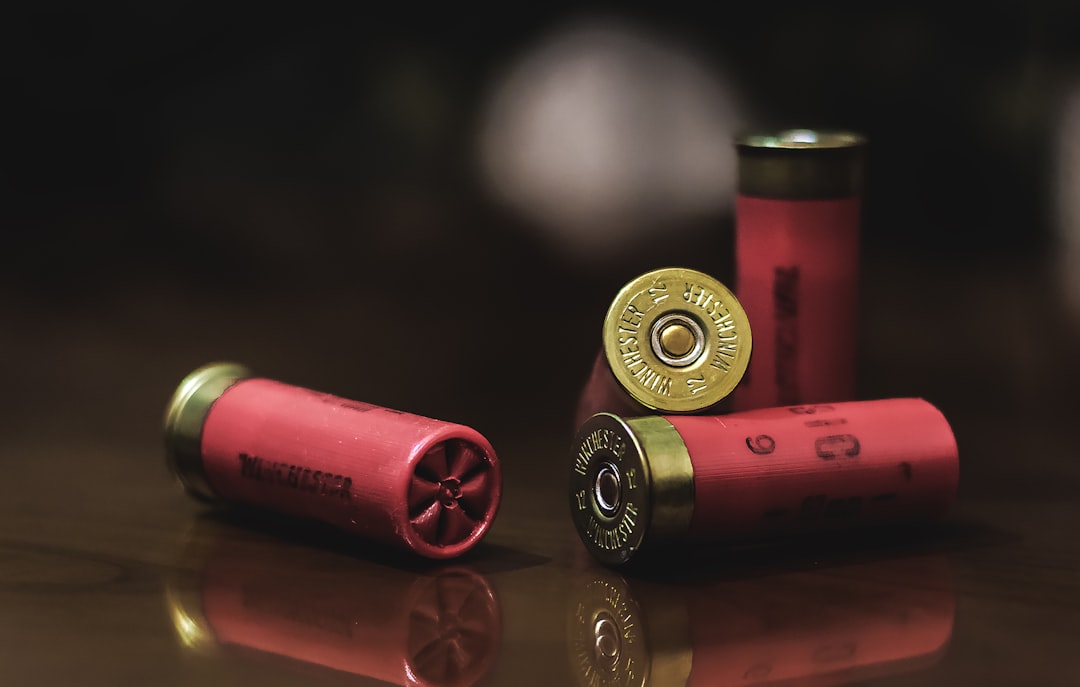
You can own the finest rifle money can buy, practice religiously at the range, and still wound a deer if your ammunition is not up to the task. Whitetail deer are deceptively tough animals. A mature buck carries dense shoulder muscle, heavy bone structure, and a will to survive that demands precision terminal performance from every shot. The ammunition you chamber is not just a component — it is the final link between preparation and execution.
The best whitetail ammunition balances controlled expansion with deep penetration, delivering massive wound channels without fragmenting or over-penetrating. Whether you are shooting through thick brush at 40 yards or across a bean field at 250, your bullet must perform predictably on impact. This guide covers what matters in whitetail ammunition, from bullet construction to real-world ballistics, and recommends proven factory loads across the most popular calibers.
What Makes Whitetail Ammunition Effective
Whitetail deer anatomy requires bullets that expand rapidly to create wide wound channels while holding together enough to reach vital organs. A bullet that fragments on impact wastes energy on surface tissue and fails to penetrate the chest cavity. One that pencils through without expanding leaves minimal wound channels and long tracking jobs.
Controlled expansion is the gold standard. Premium hunting bullets use bonded cores, polymer tips, or mechanical locking mechanisms to mushroom predictably while retaining 70-90% of their original weight. This construction ensures the bullet opens quickly on lighter shoulder hits but still punches through heavy bone when angled shots demand it.
Bullet weight matters less than construction, but heavier projectiles generally penetrate deeper and resist deflection better in thick cover. A 150-grain .308 bullet with premium construction will outperform a 180-grain budget soft point every time. Match your bullet weight to your expected shot distance — lighter, faster bullets for open country where rapid expansion matters, heavier bullets for close-range timber hunting where penetration through brush and bone is critical.
Top Calibers for Whitetail Hunting
.308 Winchester
The .308 remains the benchmark whitetail cartridge. It delivers moderate recoil, excellent accuracy, and terminal performance that has dropped millions of deer across North America. For whitetails, 150-grain to 165-grain bullets offer the best balance of velocity and penetration. The .308 excels inside 300 yards, which covers 95% of real-world whitetail shots.
Recommended loads: Federal Fusion 150-grain, Hornady American Whitetail 165-grain InterLock, Winchester Deer Season XP 150-grain Extreme Point.
.30-06 Springfield
The .30-06 delivers slightly more velocity and energy than the .308 while maintaining manageable recoil in standard-weight rifles. It handles 150-grain to 180-grain bullets with ease, making it versatile enough for both whitetails and larger game. The extra case capacity shines when pushing heavier bullets for deep-woods hunting where angled shots through heavy cover are common.
Recommended loads: Federal Premium Trophy Copper 165-grain, Remington Core-Lokt 180-grain, Hornady Precision Hunter 178-grain ELD-X.
6.5 Creedmoor
The 6.5 Creedmoor has earned its reputation through performance, not hype. Its high ballistic coefficient bullets retain velocity and energy downrange better than traditional .30-caliber rounds, and its mild recoil makes it easy to shoot accurately under pressure. The 140-grain to 143-grain bullets common in 6.5 Creedmoor loads penetrate deeply despite their smaller diameter, thanks to high sectional density and controlled expansion designs.
Recommended loads: Hornady Precision Hunter 143-grain ELD-X, Federal Fusion 140-grain, Winchester Deer Season XP 125-grain Extreme Point.
.270 Winchester
The .270 Winchester shoots flatter and faster than .30-caliber rounds, making it ideal for open-country whitetail hunting where longer shots are common. Its 130-grain to 150-grain bullets deliver explosive expansion on broadside shots while still penetrating adequately on quartering angles. Recoil is noticeably lighter than .30-06, which helps shooters stay on target through the shot.
Recommended loads: Federal Premium Nosler Partition 130-grain, Hornady American Whitetail 130-grain InterLock, Winchester Power-Point 150-grain.
.243 Winchester
The .243 Winchester is a legitimate whitetail cartridge when loaded with premium bullets designed for deer-sized game. It produces minimal recoil, making it an excellent choice for youth hunters, recoil-sensitive shooters, and anyone who values accuracy over raw power. Stick with 95-grain to 100-grain bullets built for controlled expansion — lighter varmint bullets lack the penetration needed for clean kills on mature deer.
Recommended loads: Federal Fusion 95-grain, Hornady American Whitetail 100-grain InterLock, Winchester Deer Season XP 95-grain Extreme Point.
Bullet Construction Types That Perform
Bonded bullets use a chemical or mechanical process to permanently attach the lead core to the copper jacket. This prevents core-jacket separation on impact, ensuring the bullet holds together even when striking heavy bone at close range. Bonded bullets like Federal Fusion and Hornady InterBond are ideal for timber hunting where shot angles are unpredictable and penetration is non-negotiable.
Polymer-tipped bullets like the Hornady ELD-X and Nosler Ballistic Tip use a plastic tip to initiate expansion while maintaining aerodynamic efficiency in flight. These bullets expand rapidly and create massive wound channels, making them deadly on broadside shots at any distance. They work best when bone contact is minimal — a shoulder shot with a polymer-tipped bullet often results in spectacular expansion but limited penetration compared to bonded designs.
Monolithic copper bullets like Barnes TTSX and Federal Trophy Copper eliminate the lead core entirely, using a solid copper projectile with a hollow point cavity. These bullets retain nearly 100% of their weight, penetrate deeper than any other design, and expand reliably across a wide velocity range. They are the best choice when hunting larger-bodied whitetails, taking quartering shots through heavy muscle, or shooting through barriers like brush and bone.
Matching Ammunition to Hunting Conditions
Open country hunting rewards flat-shooting cartridges and bullets that expand rapidly. A .270 Winchester loaded with 130-grain Nosler Ballistic Tips or a 6.5 Creedmoor with 143-grain ELD-X bullets delivers the long-range accuracy and explosive terminal performance needed when whitetails are visible at 200-300 yards across agricultural fields or prairie edges. These loads prioritize velocity and expansion over deep penetration because the majority of shots are broadside or quartering-away presentations where bone contact is minimal.
Thick brush and timber demand bullets that hold together and penetrate deeply. A .308 Winchester loaded with 165-grain Federal Fusion or .30-06 with 180-grain Core-Lokt excels in these conditions. Heavier bullets resist deflection when clipping twigs or branches, and bonded construction ensures the projectile reaches vitals even on steep quartering angles through heavy shoulder muscle. In dense cover, most shots occur inside 100 yards where bullet expansion is violent and reliable — your priority is making sure the bullet exits the far side or stops just under the hide after complete penetration.
Balanced setups work everywhere. If you hunt a mix of environments or prefer one rifle for all scenarios, choose a mid-weight bullet with bonded or monolithic construction. A .30-06 loaded with 165-grain Trophy Copper, .308 with 150-grain Fusion, or 6.5 Creedmoor with 140-grain Fusion handles field edges and forest shots equally well. These loads sacrifice a bit of specialized performance in exchange for confidence in any situation.
How TAGZ Helps You Plan Whitetail Hunts
While whitetail hunting does not involve draw systems or preference points like western big game, serious whitetail hunters still benefit from tools that track hunting deadlines, regulations, and public land access. TAGZ helps you compare hunting regulations across multiple states, filter whitetail opportunities by weapon type and season structure, and identify public land parcels with huntable whitetail populations. Whether you are planning a local season or exploring new states for whitetail opportunities, TAGZ gives you the information you need to hunt smarter and maximize time in the field.
Shot Placement Matters More Than Caliber
The best ammunition in the world cannot compensate for poor shot placement. A .243 Winchester through both lungs kills faster than a .300 Winchester Magnum through the guts. Before obsessing over bullet selection, practice until you can reliably hit a six-inch circle from field positions at your maximum ethical range. That range is determined by your ability, not your cartridge — if you cannot consistently hit vitals from the positions you will actually shoot from in the field, get closer or let the deer walk.
When the shot presents, aim for the center of the chest cavity behind the shoulder. This targets the heart and lungs while avoiding heavy shoulder bone that slows penetration and destroys meat. A bullet placed here results in rapid blood loss, quick death, and short tracking distances. Shoulder shots work but waste meat and require tougher bullet construction. Neck and head shots are only ethical if you have a perfectly stable rest and the deer is stationary — the margin for error is too small for real-world hunting conditions.
Factory Ammunition Recommendations by Use Case
Best all-around whitetail load: Federal Fusion 150-grain in .308 Winchester or .30-06 Springfield. Affordable, accurate, and deadly on everything from does at 50 yards to bucks at 250.
Best long-range whitetail load: Hornady Precision Hunter 143-grain ELD-X in 6.5 Creedmoor. Retains velocity and energy beyond 300 yards while expanding reliably at lower impact velocities.
Best brush-busting whitetail load: Remington Core-Lokt 180-grain in .30-06 Springfield. Deep penetration, consistent expansion, and enough mass to punch through branches and bone without deflecting.
Best monolithic whitetail load: Federal Trophy Copper 165-grain in .308 Winchester or .30-06 Springfield. Near-perfect weight retention and penetration that reaches vitals from any angle.
Best budget whitetail load: Hornady American Whitetail 165-grain InterLock in .308 Winchester. Proven performance at half the cost of premium ammunition.
Zeroing and Field Validation
Your rifle must be zeroed with the exact ammunition you plan to hunt with. A rifle zeroed with budget practice ammo will not shoot to the same point of impact as premium hunting loads. Zero at 100 yards, which keeps you within three inches high or low out to 250 yards with most cartridges — close enough for clean kills without holdover math in the field.
After zeroing, shoot from field positions to confirm accuracy. Practice from sitting, kneeling, and improvised rests that mimic real hunting scenarios. A rifle that groups half an inch from a bench might shoot three inches from a sitting position if you have not practiced. Verify your zero before every season and after any rifle maintenance or optic adjustment.
Confirm your ammunition performs reliably by cycling several rounds through your rifle's action. Some rifles are finicky with certain bullet shapes or overall cartridge lengths. The last thing you want to discover is that your rifle will not chamber the premium ammo you just bought when a mature buck is standing at 150 yards.
Common Ammunition Mistakes That Cost Deer
Shooting varmint or match bullets at whitetails is a mistake that leads to wounded animals. These bullets are designed for small game or target shooting and either fragment violently on impact or fail to expand at all. A .243 Winchester loaded with 55-grain Ballistic Tips meant for prairie dogs will blow apart on a whitetail's shoulder without reaching vitals. Match bullets like ELD-Match or Sierra MatchKings are built for accuracy, not terminal performance — they may expand inconsistently or pencil through without creating adequate wound channels.
Using ammunition that is too light for the game is another common error. A 110-grain bullet in .30-06 might work on small deer at short range, but it lacks the sectional density and momentum to reliably penetrate a mature buck's shoulder. Stick with mid-weight to heavy bullets designed specifically for deer-sized game.
Shooting beyond your effective range kills more deer than caliber selection ever will. Just because your cartridge has enough energy at 400 yards does not mean you can hit a vital zone from field positions at that distance. Most hunters should limit themselves to 250 yards or less — the distance where a mild wind gust or slight range estimation error will not result in a miss or marginal hit.
FAQ — Whitetail Ammunition
What is the best caliber for whitetail deer?
The .308 Winchester, .30-06 Springfield, and 6.5 Creedmoor are the three best all-around calibers for whitetails. They balance effective terminal performance, manageable recoil, and wide ammunition availability. The .270 Winchester and .243 Winchester are also excellent when matched with proper bullet weights.
What bullet weight should I use for whitetail deer?
For most calibers, mid-weight bullets perform best. Use 150-165 grains in .308 Winchester, 150-180 grains in .30-06 Springfield, 130-150 grains in .270 Winchester, 140-143 grains in 6.5 Creedmoor, and 95-100 grains in .243 Winchester. Bullet construction matters more than weight.
Is Federal Fusion good for whitetail deer?
Yes. Federal Fusion is one of the best values in whitetail ammunition. Its bonded-core design ensures reliable expansion and deep penetration across a wide range of impact velocities. It performs consistently from 50 to 300 yards and costs significantly less than premium lines like Barnes or Nosler.
Do I need premium ammunition for whitetail deer?
Not always. Premium ammunition like Barnes TTSX or Nosler AccuBond delivers superior terminal performance, but quality mid-priced options like Federal Fusion, Hornady American Whitetail, and Remington Core-Lokt kill whitetails just as dead when shot placement is good. Premium ammo earns its cost on tougher shots through heavy bone or at extreme angles.
What is the difference between bonded and non-bonded bullets?
Bonded bullets permanently attach the lead core to the copper jacket, preventing separation on impact. This results in deeper penetration and higher weight retention. Non-bonded bullets may separate at high impact velocities, especially when striking heavy bone, leading to reduced penetration. For whitetails, bonded bullets are ideal for close-range shots or steep angles.
Can you use the same ammunition for practice and hunting?
No. Your rifle must be zeroed with the exact ammunition you plan to hunt with because different loads shoot to different points of impact. Use budget ammo for practice if you want, but always fire at least three rounds of your hunting load to confirm zero before season opens.
How far is too far to shoot a whitetail deer?
Your maximum ethical range is determined by your ability to hit a six-inch circle from field positions, not your cartridge's ballistic capability. For most hunters, this is 200-250 yards. Beyond that distance, wind drift, range estimation errors, and shooting position instability increase the chances of wounding rather than killing cleanly.
Will a .243 Winchester kill a mature whitetail buck?
Yes, when loaded with 95-100 grain bullets designed for deer. The .243 Winchester has cleanly killed countless mature bucks, but it requires good shot placement and premium bullet construction. Avoid varmint bullets and stick with controlled-expansion designs like Federal Fusion, Hornady InterLock, or Winchester Deer Season XP.
Continue Planning Your Hunt
Whitetail ammunition selection is just one piece of a successful hunt. Beyond the loads you chamber, success depends on understanding deer behavior, identifying quality habitat, and executing under pressure. Whether you are hunting your home state or exploring new whitetail opportunities across the country, having the right tools makes every decision easier.
TAGZ helps you compare whitetail regulations across multiple states, track season dates and deadlines, and identify public land opportunities where whitetail hunting pressure is manageable. Use the platform to filter whitetail hunts by weapon type, research unit boundaries and terrain, and build a hunt plan that puts you in position for success. When you are ready to take your whitetail hunting to the next level, explore TAGZ Insights for in-depth articles on unit selection, gear, and strategies that work. Learn more about how TAGZ helps hunters make smarter decisions at getmytagz.com/product, or check pricing options that fit your hunting style.
Was this article helpful?
Previous
Afternoon Elk Bedding Patterns: Where Bulls and Cows Rest During Midday
Elk retreat to predictable bedding areas during afternoon hours to ruminate and escape midday heat. Understanding these patterns helps hunters position for evening movements and increases success during midday stalks.

Next
Best Draw Weight for Elk Hunting: What You Really Need
Choosing the right draw weight for elk hunting balances arrow energy, accuracy, and shooter comfort. Most adult hunters succeed with 60-70 pounds, but your ideal weight depends on draw length, shooting form, and practice commitment.