Best Spotting Scopes for Western Hunting — Complete Buyer's Guide
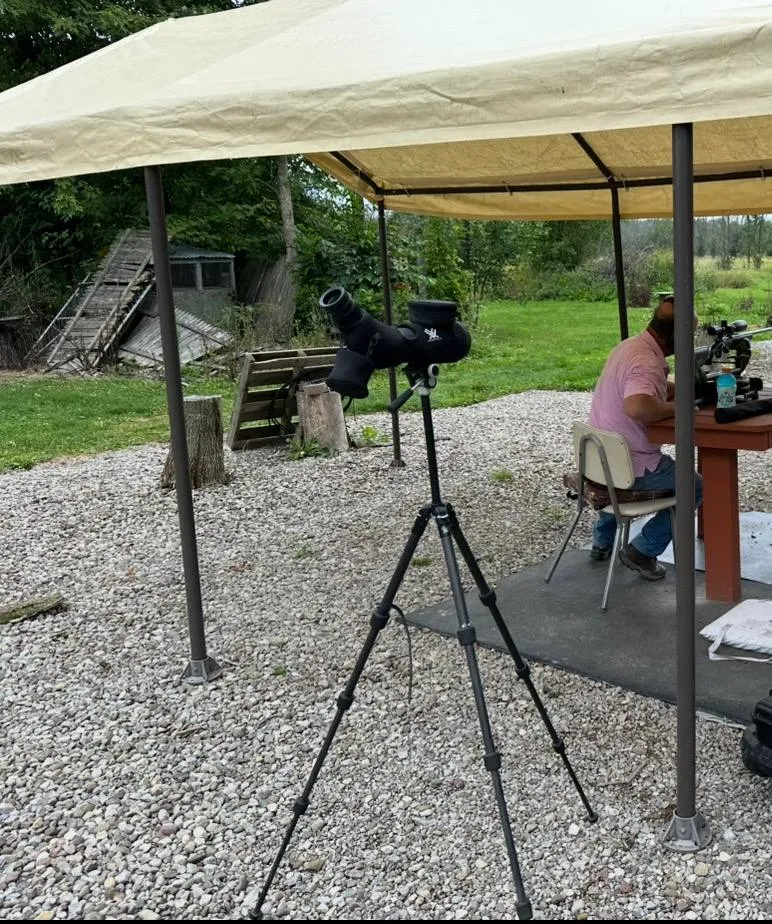
If binoculars help you find animals, a spotting scope helps you decide whether they're worth chasing. Every western hunter has had the same moment: you spot something a few miles off, it looks good through binoculars, and the real question becomes whether it's worth hiking three miles and 2,000 vertical feet to find out. That's where a spotter earns its place, letting you judge antlers, evaluate horn curl, count points, and estimate age before you commit. For mule deer, sheep, goat, antelope, and trophy elk hunters, it can be one of the most important pieces of gear in camp, and most settle into either a versatile 65mm or a powerful 85mm.
Binoculars first, then a spotter
The most common optics question is whether to upgrade binoculars or buy a spotting scope, and for most hunters the answer is binoculars first. Binoculars find animals; spotting scopes judge them. If you're starting out, a good 10x42 binocular should be the priority, and the spotter becomes the next major upgrade once that's covered. A great spotting scope is defined less by raw power than by sharp glass, good low-light performance, durability, and a weight you'll actually carry, because the best scope is the one that stays in your pack and gets used.
Picking the objective size
Hunting spotters fall into three rough groups. Compact 50 to 56mm scopes are light and backpack-friendly but gather less light, making them favorites for sheep, mountain, and backpack hunters watching weight. The 65mm class is the sweet spot for most western hunting, balancing brightness, weight, and versatility, and if you'll own only one spotter, a quality 65mm is hard to beat. The 85mm scopes are the kings of trophy evaluation, with exceptional clarity and low-light detail at the cost of size and weight, and many serious mule deer, sheep, and antelope hunters eventually move into them.
Straight or angled, and how much power
Hunters debate straight versus angled bodies. Straight scopes acquire targets faster and feel intuitive, which suits newer hunters, while angled scopes are more comfortable over long glassing sessions, easier to share, and simpler to set on a tripod, which is why most experienced western hunters land there. On magnification, common ranges run 15-45x, 20-60x, and 25-75x, but atmospheric conditions usually cap usable power, and most real judging happens between 25x and 45x. Chase image quality over magnification, since a crystal-clear 40x view reveals more than a blurry 60x one.
Matching the scope to the hunt
Elk hunters generally use spotters less, since much of the hunting happens in timber and mixed terrain, so a 65mm spotter paired with 10x42 binoculars balances weight and judging nicely. Mule deer hunters live behind glass and benefit from an 85mm spotter with 12x50 binoculars for long-range open-country evaluation. Sheep hunting demands the most, where a premium 85mm is worth it for judging curl, mass, and brooming at extreme distance, and pronghorn country, visible for miles, rewards a spotter for sizing up horn height and prongs before a stalk. Across brands, Swarovski's ATX/STX is the benchmark, with Leica's APO Televid and Zeiss's Victory Harpia close behind, while Maven, Vortex Razor HD, and Leupold's SX line deliver strong performance at better prices.
Don't forget the tripod
A spotting scope is only as good as the tripod under it, because a cheap, shaky setup creates vibration, eye fatigue, and frustration, while a solid one lets you glass longer and find more animals. The common mistakes are buying too much magnification, skimping on the tripod, ignoring glass quality, and carrying a scope you never use. Whether you truly need one comes down to your hunting: probably yes for mule deer, sheep, antelope, and goats, maybe not for timber elk or eastern whitetails. And the best spotter can't help if you're in the wrong country, which is where TAGZ comes in, helping you research units, draw odds, and scouting before you ever hit the mountain.
Was this article helpful?
Previous
Best Rangefinders for Elk Hunting — Complete Buyer's Guide
A quality rangefinder removes guesswork and improves shot placement in western hunting. Fast ranging, angle compensation, durability, and reliable performance matter far more than maximum advertised range, making rangefinders one of the most valuable tools hunters can carry into elk country.
Next
Best Arrow Weight for Elk Hunting — Complete Arrow Setup Guide
Most elk hunters achieve the best results with arrows weighing 475–550 grains. This range balances speed, penetration, momentum, and broadhead performance while providing the forgiveness needed for real-world elk hunting situations.