Best Rangefinders for Elk Hunting — Complete Buyer's Guide
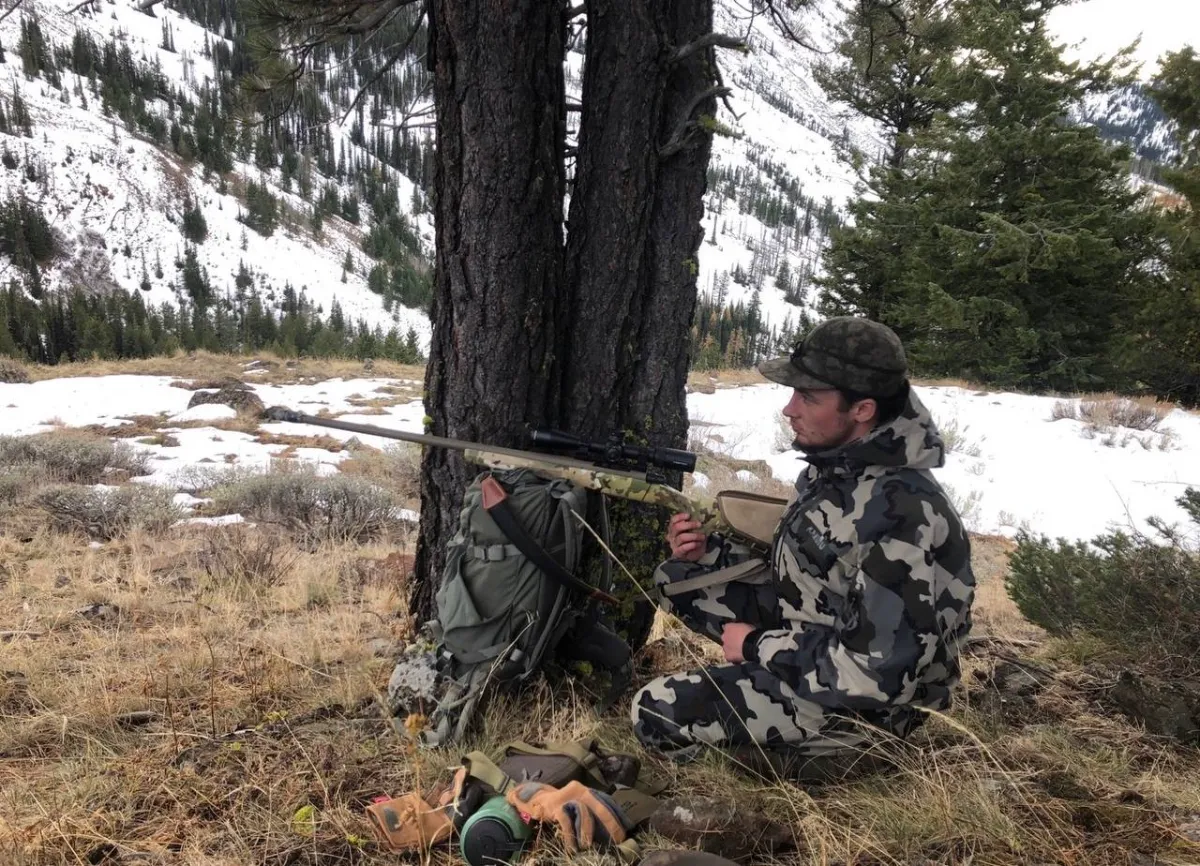
Every western hunter knows the moment. A bull steps out, you're sure he's in range, but is he at 320 yards, 380, or 450? A guess can be the difference between a clean kill and a wounded animal, and that's why a modern rangefinder has become one of the most important tools in the pack. In a lot of situations it matters more than your rifle, bow, or scope, because none of those help if you don't know the true distance. The best rangefinder for elk hunting isn't the one with the longest advertised range, it's the one that ranges fast and accurately, compensates for angle, and holds up in real conditions.
Why distance fools you
Estimating range by eye is genuinely hard, especially in western terrain where open country, steep slopes, big-bodied animals, and wide basins all distort scale. A bull standing at 450 can easily read as 300 to the untrained eye. A rangefinder simply removes the guess. The biggest buying mistake is chasing maximum advertised range: a unit rated to 4,000 yards is useless if it struggles to grab an elk at 400. What you actually need is fast, reliable readings, angle compensation, good low-light performance, and durable construction. Everything else is secondary.
Angle compensation and modes
Western shots are rarely flat. A bull 400 yards out and 500 feet below you presents a true horizontal distance that's shorter than the line-of-sight reading, and angle compensation does that math automatically so your hold is correct. It matters even more for bowhunters, where uphill and downhill angles meaningfully change arrow drop, which is why most archery rangefinders include a dedicated bow mode that returns angle-corrected distance. Rifle mode, by contrast, gives you true ballistic range and shooting solutions, so it's worth always knowing which mode you're in.
Handhelds, rangefinding binos, and magnification
Handheld units are the lightweight, affordable, compact standard and the right call for most hunters. Rangefinding binoculars are the fastest-growing category, combining glass and ranging in one device for fewer tools, faster readings, and less movement, and many western hunters now prefer them. Either way, 6x or 7x magnification is plenty, and clarity matters more than power.
Brands worth knowing
A handful of names dominate elk camps. The Leica Geovid is the rangefinding-binocular gold standard, while the Leica Rangemaster is one of the best compact handhelds. Sig Sauer's KILO series has been the big value disruptor, with fast ranging and strong ballistic integration. Revic, built by the team behind Gunwerks, makes the compact BR4 and the advanced Acura RS25b, which packs an onboard ballistic solver, environmental and wind corrections, and rifle profiles for serious long-range work. Vortex Razor HD wins on warranty and value, Leupold's RX series is a lightweight, dependable budget pick, Swarovski's EL Range fuses premium binoculars with rangefinding, and Maven's RF line offers excellent glass at competitive prices.
What you actually need
Most elk are killed inside 400 yards and most bow elk inside 50, so you don't need two-mile capability, you need reliable ranging on animals in low light, since elk move most at dawn and dusk. Build for the harsh stuff too, rain, snow, dust, and cold, because reliability beats features. A simple ladder works for most hunters: the Leupold RX as a budget option, the Sig KILO in the mid range, the Leica Rangemaster or Revic BR4 as a premium pick, and the Geovid, EL Range, or Acura RS25b as the ultimate setup. Whichever you choose, practice on trees, rocks, and hillsides until ranging is second nature. A rangefinder helps you make the shot; TAGZ helps you find the opportunity, with unit research, draw odds, and scouting plans before the season.
Was this article helpful?
Previous
Best Tripods for Hunting — Complete Hunting Tripod Guide
A quality tripod can dramatically improve optics performance, animal detection, and shooting stability. Whether hunting elk, mule deer, sheep, or antelope, a tripod is one of the most valuable gear investments a hunter can make.
Next
Best Spotting Scopes for Western Hunting — Complete Buyer's Guide
A spotting scope helps hunters evaluate animals, save miles of hiking, and make better decisions in the field. Most western hunters benefit from either a versatile 65mm spotter or a powerful 85mm model depending on the species they pursue and the terrain they hunt.