Best Custom Hunting Rifles for 2026 Season — Top Builds for Western Big Game
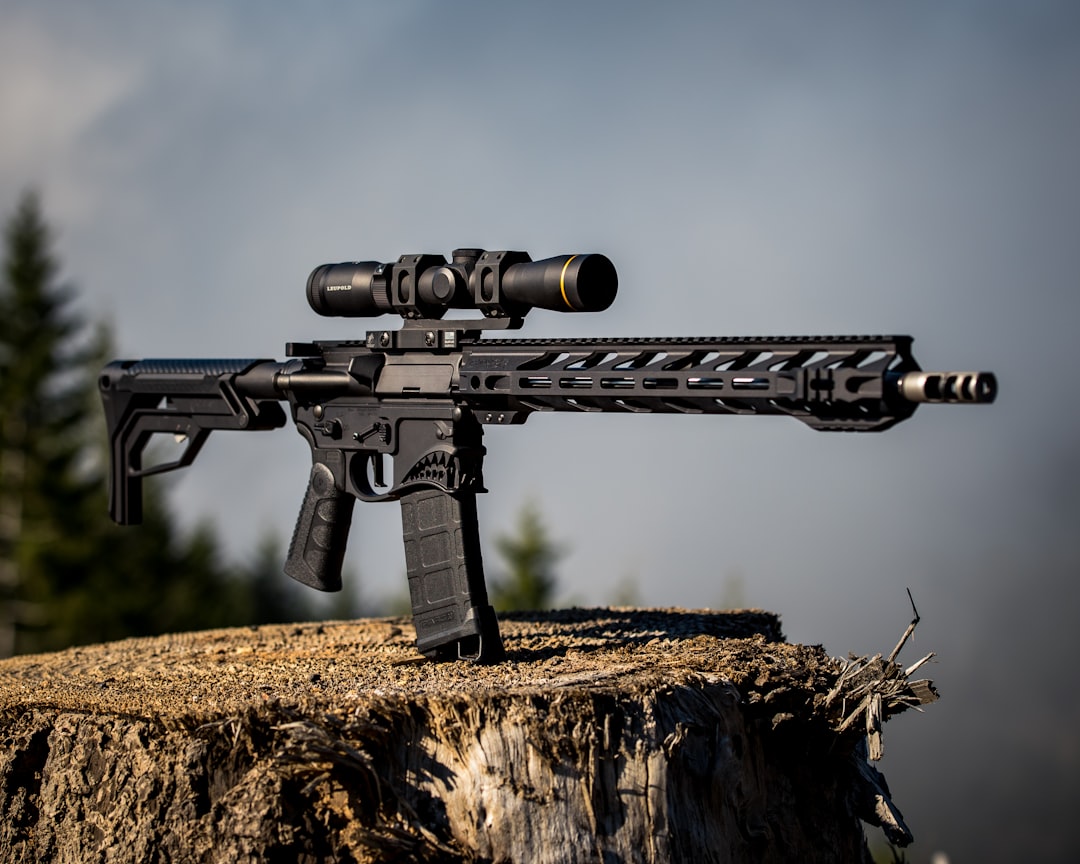
Custom hunting rifles represent the pinnacle of field performance, combining precision craftsmanship with purpose-built configurations that off-the-shelf rifles cannot match. For serious western hunters pursuing elk across Colorado's high country or glassing mule deer in Wyoming's sagebrush, a properly built custom rifle delivers shot-to-shot consistency and field reliability that can mean the difference between a filled tag and a missed opportunity.
The 2026 hunting season brings renewed focus on lightweight mountain builds, long-range precision platforms, and hybrid rifles that balance weight savings with shootability. Whether you are planning an alpine backpack hunt or a spot-and-stalk pursuit across open terrain, understanding which custom rifle builders and configurations best match your hunting style helps you make a smart investment before you draw that limited-entry tag.
Why Custom Rifles Matter for Western Hunting
Factory rifles have improved dramatically in recent years, but custom builds offer advantages that matter in the field. A custom rifle is built around your exact specifications — stock dimensions that fit your body, barrel length and contour optimized for your hunting style, and trigger pull weight dialed to your preference. You are not compromising on any component.
Precision is the primary benefit. Custom barrels from builders like Proof Research, Bartlein, and Krieger deliver sub-MOA accuracy as a baseline, with many rifles printing half-MOA groups or better with quality ammunition. That level of consistency extends effective range and increases confidence when you have seconds to decide on a shot.
Weight savings matter on mountain hunts. A custom lightweight build might weigh 6 to 7 pounds scoped, compared to 8 to 9 pounds for a comparable factory rifle. That 2-pound difference compounds over miles of steep terrain. Custom builders achieve this through carbon fiber barrels, skeletonized bolt bodies, and precision-fitted lightweight stocks without sacrificing structural integrity.
Reliability in harsh conditions separates custom rifles from budget builds. Quality actions from Defiance, Stiller, and Surgeon cycle smoothly in freezing temperatures. Hand-lapped bolts and custom chamber work eliminate feeding issues. Cerakote and other advanced finishes protect against moisture and abrasion during backcountry hunts where your rifle takes a beating.
Top Custom Rifle Builders for 2026
Several custom rifle builders have earned reputations for delivering consistent quality and excellent customer service. These shops understand western hunting demands and build rifles that perform when it counts.
Proof Research leads the lightweight category with their carbon fiber-wrapped barrels that reduce weight by up to 64% compared to steel barrels of similar contour. Their complete rifle builds run $4,000 to $7,000 depending on action and stock choices. Proof rifles are popular among backcountry elk hunters who log serious vertical miles.
Gunwerks specializes in long-range precision builds designed for western hunting. Their rifles come with ballistic software integration and field-tested accuracy guarantees. Expect to invest $7,000 to $12,000 for a complete Gunwerks system including custom turrets and range-verified data. Hunters pursuing pronghorn and mule deer in open country appreciate the extended effective range.
Fierce Firearms offers semi-custom builds with fast turnaround times and competitive pricing. Their rifles start around $3,500 and feature carbon fiber barrels, lightweight actions, and guaranteed sub-MOA accuracy. Fierce delivers solid performance without the 12-month wait times common with full custom builders.
Hill Country Rifles builds precision hunting rifles tailored to individual specifications. They offer extensive customization options for stock design, barrel length, and action types. Pricing runs $5,000 to $9,000 depending on component selections. Hunters who want complete control over every detail appreciate Hill Country's approach.
Cooper Firearms bridges the gap between factory and full custom with hand-fitted rifles built in Montana. Their Classic and Backcountry models deliver custom-level accuracy at $2,500 to $4,000 price points. Cooper rifles are excellent choices for hunters wanting custom performance without full custom pricing.
Lightweight Mountain Builds vs. Long-Range Platforms
Choosing between a lightweight mountain rifle and a heavier long-range platform depends on your hunting style and the terrain you hunt most often. Each configuration involves trade-offs that affect field performance.
Lightweight mountain rifles prioritize mobility and all-day carry comfort. Target weight is typically 6 to 7.5 pounds scoped. Carbon fiber barrels, titanium actions, and lightweight stocks like those from AG Composites or McMillan keep weight down. These rifles excel on backpack hunts where you cover 5 to 10 miles daily in steep terrain. The trade-off is increased recoil and slightly reduced shootability from unstable positions compared to heavier rifles.
Long-range precision platforms sacrifice portability for shootability. These rifles weigh 9 to 12 pounds scoped and feature heavier barrel contours, adjustable stocks with cheek risers, and larger objective scopes. The added weight reduces recoil and makes the rifle steadier from prone or tripod-supported positions. Hunters glassing open country for mule deer or pronghorn benefit from the extended effective range and increased hit probability at 400 to 600 yards.
Hybrid builds attempt to balance both priorities. A medium-weight rifle at 7.5 to 8.5 pounds with a carbon fiber barrel and adjustable stock provides reasonable portability without giving up too much shootability. Caliber choice affects the balance — a 6.5 PRC hybrid build shoots flatter and kicks less than a .300 Win Mag in the same configuration.
Consider where you hunt most often. Colorado high-country elk hunters benefit from lightweight builds. Wyoming mule deer hunters glassing from ridges may prefer long-range platforms. Montana combination license holders who hunt diverse terrain often choose hybrid configurations.
Best Calibers for Custom Western Hunting Rifles
Calibber selection for custom builds has shifted toward efficient, low-recoil cartridges that deliver excellent ballistics without punishing the shooter. The 2026 hunting season sees continued growth in popularity for several standout calibers.
6.5 PRC dominates the lightweight mountain rifle category. It delivers excellent long-range performance with manageable recoil in lightweight builds. Factory ammunition is widely available and quality brass is plentiful for handloaders. Effective range on elk extends to 500 yards with proper bullet selection. The 6.5 PRC balances shootability and terminal performance better than any current option for mountain hunting.
6.5 Creedmoor remains popular for mule deer and pronghorn hunters. Low recoil allows you to spot your impacts through the scope, critical for second-shot opportunities on open-country animals. Some hunters consider it marginal for elk, but with premium bullets and good shot placement it performs adequately at reasonable ranges. Ammunition is inexpensive and available everywhere.
.280 Ackley Improved appeals to hunters wanting more energy than 6.5mm cartridges without the recoil of magnums. It pushes 160- to 175-grain bullets to excellent velocities and handles elk confidently at any reasonable hunting range. The Ackley chambering requires custom work, making it ideal for custom rifle builds. It offers classic performance with modern efficiency.
7mm PRC fills the gap between 6.5 PRC and .300 magnums. Hornady designed it specifically for long-range hunting, and it delivers impressive ballistics with moderate recoil. Factory ammunition options are expanding for 2026. Hunters wanting a do-it-all western cartridge in a medium-weight rifle should seriously consider the 7mm PRC.
.300 PRC serves hunters who prioritize energy and wind-bucking performance for long-range elk hunting. It outperforms the .300 Win Mag with better brass and more efficient case design. Recoil is substantial in lightweight rifles but manageable in 9- to 10-pound builds. Serious long-range hunters appreciate the ballistic advantages.
6mm Creedmoor is gaining traction among spot-and-stalk mule deer hunters. It shoots extremely flat, recoil is negligible, and wind deflection is minimal with high-BC bullets. Some states prohibit 6mm cartridges for elk, so check regulations before building a 6mm rifle for combination license use.
Free to join
Download mobile app
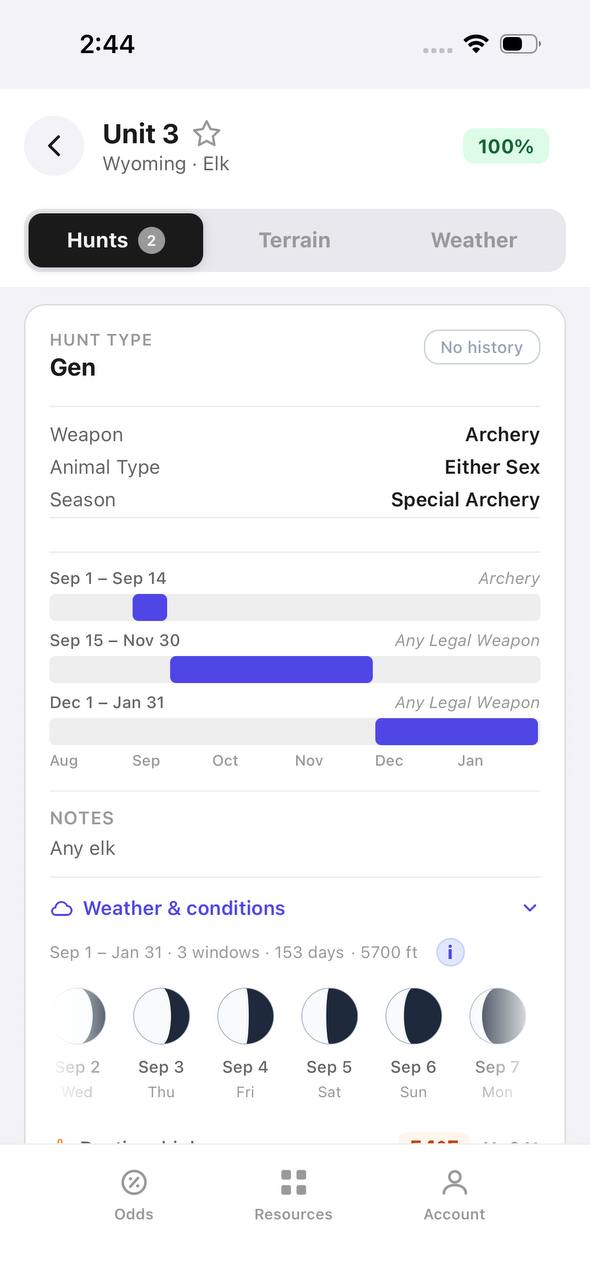
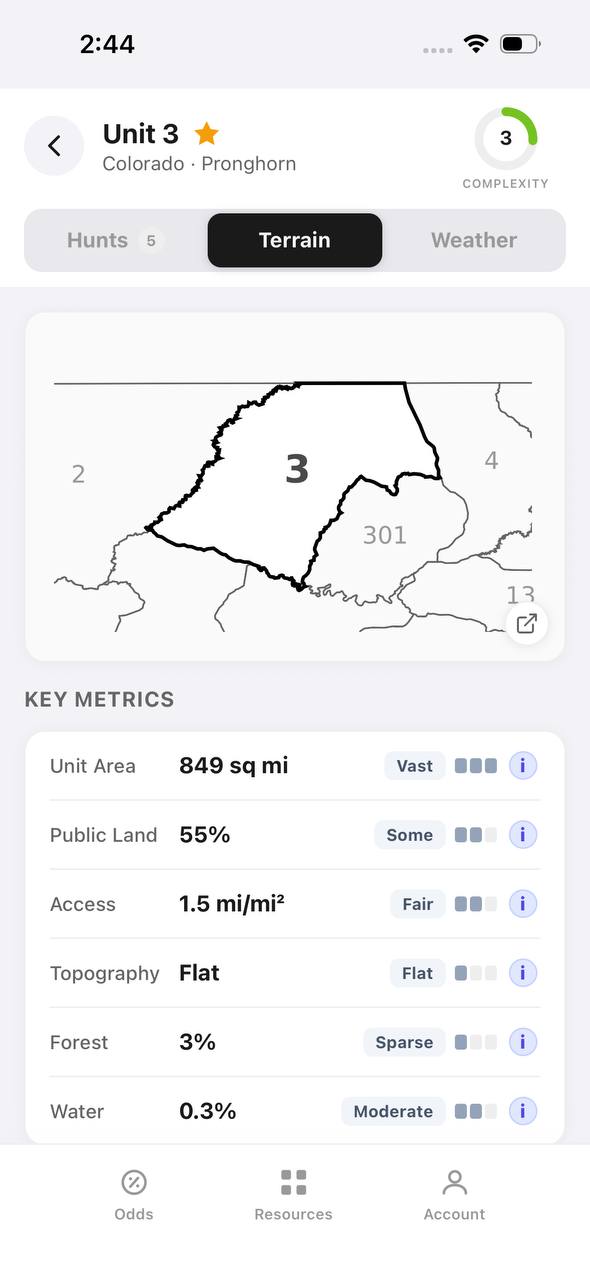
- Detailed draw odds
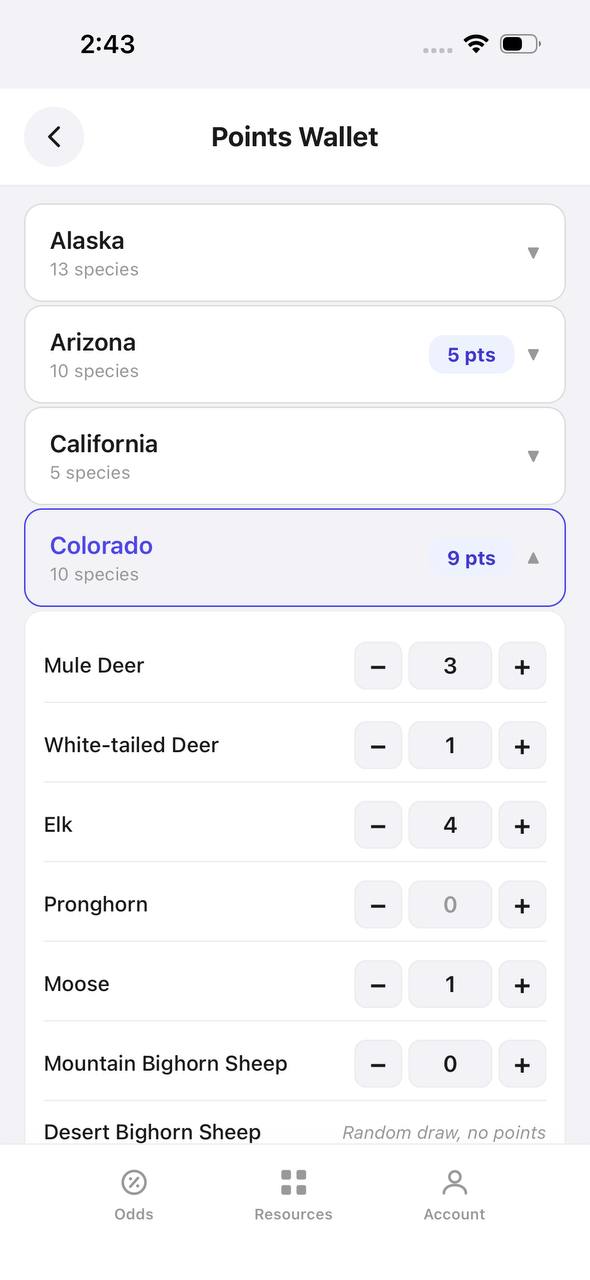
- Point tracking
- Deadline reminders
- 18 states covered

Free to join
Download mobile app
- Detailed draw odds
- Point tracking
- Deadline reminders
- 18 states covered
Free to join
Download mobile app
- Detailed draw odds
- Point tracking
- Deadline reminders
- 18 states covered
Custom Stock Options and Fit Considerations
Stock selection dramatically affects rifle handling and field performance. Custom rifle builds allow you to specify exact length of pull, comb height, and grip angle to fit your body and shooting style.
AG Composites manufactures lightweight carbon fiber stocks popular on mountain rifles. Their Alpine Hunter model weighs around 24 ounces and accepts most short-action footprints. Adjustability is limited, so proper measurement before ordering is critical. These stocks are ideal for hunters prioritizing weight savings.
McMillan offers extensive customization for stock dimensions and finish options. Their Hunter and Game Scout models are proven designs for western hunting. Fiberglass construction provides durability at reasonable weight. Expect to add 4 to 6 weeks to build time for custom stock work. McMillan stocks balance weight, durability, and shootability better than most alternatives.
Manners Composites builds precision stocks with options for adjustable combs and length of pull. Their T-series stocks are popular for long-range hunting platforms where adjustability matters. Carbon fiber construction keeps weight reasonable despite added features. Hunters who shoot from varied positions benefit from the adjustability.
Foundation stocks are gaining popularity among western hunters. Their modular design accepts different grip panels and spacers for length-of-pull adjustment. The enclosed action design protects internals from debris during backcountry hunts. These stocks work especially well for hybrid builds.
Proper length of pull matters more than most hunters realize. Measure from the crook of your elbow to the first joint of your trigger finger and add 1 to 1.5 inches for hunting rifles worn with layers. Too-short stocks cause scope eye during recoil. Too-long stocks make it difficult to achieve consistent cheek weld quickly.
Comb height affects scope alignment and recoil management. The comb should position your eye at proper scope height without tilting your head. Many custom stock makers offer adjustable combs that allow fine-tuning in the field. If you plan to use different scopes on the same rifle, adjustable combs provide flexibility.
Optics and Accessories for Custom Builds
A custom rifle deserves quality glass and accessories that match its performance potential. Skimping on optics after investing in a custom build wastes the rifle's capabilities.
Scope Selection depends on your hunting style and typical engagement ranges. Lightweight mountain rifles pair well with compact 2-10x or 3-15x scopes that keep overall weight down. Popular choices include Leupold VX-5HD, Trijicon Tenmile, and Maven RS.1 models. Long-range platforms benefit from 4-20x or 5-25x scopes with exposed turrets for dialing elevation. Nightforce ATACR, Vortex Razor LHT, and Zeiss LRP S3 models are field-proven options.
First focal plane reticles help with holdovers and wind calls at varying magnifications. Second focal plane keeps the reticle subtensions constant, which some hunters prefer for low-light shooting. Test both systems before committing to a $2,000+ optic.
Mounting Systems should be as robust as the rifle and scope. Quality rings and bases from Talley, Seekins Precision, or Nightforce prevent zero shifts during rough handling. Spend the extra $150 for proper mounting hardware. Custom rifles deserve better than cheap rings.
Bipods extend effective range from field positions. Lightweight carbon fiber models from RRS or Spartan Precision weigh under 12 ounces and attach via Arca rails or magnetic mounts. Hunters glassing open country should invest in a quality bipod and practice shooting from it before the season.
Slings are critical for mountain hunting. Accuracy International and Tab Gear make excellent adjustable slings that work for both carrying and hasty-sling shooting positions. Proper sling use dramatically improves field accuracy compared to unsupported shooting.
Suppressors are legal for hunting in most western states and reduce recoil and muzzle blast significantly. They add weight and length but improve shootability and reduce hearing damage. Plan for the additional 5 to 9 inches of length when building a custom rifle if you intend to run suppressed. Popular hunting suppressors include the TBAC Ultra 7, SilencerCo Harvester, and Dead Air Nomad.
Budgeting for a Custom Rifle Build
Custom rifle builds require realistic budget planning beyond the base rifle cost. A complete hunting system includes the rifle, optics, mounting hardware, and accessories.
Base Rifle Cost ranges from $3,000 to $12,000 depending on builder reputation, component choices, and turnaround time. Entry-level semi-custom builds from Fierce or Cooper start around $3,000. Mid-tier custom builds from Proof Research or Hill Country run $5,000 to $7,000. Premium builds from Gunwerks or high-end custom smiths reach $10,000 to $12,000.
Optics add another $1,000 to $3,500 for quality hunting scopes. Budget $1,200 minimum for reliable glass suitable for a custom rifle. Premium optics from Swarovski, Zeiss, or Schmidt & Bender run $2,500 to $3,500.
Mounting and Accessories cost $300 to $800 for rings, bases, bipod, sling, and case. Do not skimp here. Quality mounting systems prevent costly zero shifts in the field.
Ammunition Development requires budget for factory ammunition testing or handloading components. Plan on $500 to $1,000 to find your rifle's preferred load and verify zero at multiple ranges. Custom rifles deserve quality ammunition development.
Total system cost for a turnkey custom hunting rifle setup runs $5,000 to $16,000. That sounds expensive, but consider the cost of a single western big-game hunt — between tags, travel, lodging, and time off work, a serious elk hunt easily costs $3,000 to $5,000. Investing in a rifle that increases your success rate and extends your effective range pays dividends over years of use.
Financing options exist through some custom builders. Spreading payments over 12 to 24 months makes high-end builds more accessible. If budget is tight, consider buying a quality action and barrel now, then upgrading stock and trigger components later as funds allow.
Free to join
Download mobile app
- Detailed draw odds
- Point tracking
- Deadline reminders
- 18 states covered
Free to join
Download mobile app
- Detailed draw odds
- Point tracking
- Deadline reminders
- 18 states covered
Free to join
Download mobile app
- Detailed draw odds
- Point tracking
- Deadline reminders
- 18 states covered
Lead Times and Planning Your Build
Custom rifle builds require patience. Understanding realistic lead times helps you plan around application deadlines and hunting seasons.
Full Custom Builds from high-demand smiths take 12 to 24 months from deposit to delivery. Popular builders like GAP, LRI, and Travis Stevens have year-plus wait lists. Place your order immediately after drawing a once-in-a-lifetime tag if you want the rifle delivered in time for your hunt.
Semi-Custom Builders deliver faster, typically 3 to 6 months. Fierce Firearms, Cooper, and Proof Research maintain inventory of common action and barrel combinations that speeds production. You sacrifice some customization but gain faster delivery.
Component Availability affects lead times. Actions from Defiance and Curtis are usually available within weeks. Some boutique action makers have 6- to 12-month waits. Carbon fiber barrels from Proof Research ship within 4 to 8 weeks. Bartlein and Krieger steel barrels take 8 to 16 weeks. Stock makers like McMillan and Manners add 6 to 12 weeks for custom work.
Plan your build timeline backward from when you need the rifle. If you draw a late-season Colorado rifle elk tag for November 2026, order your rifle no later than spring 2025 to ensure delivery with adequate time for load development and practice.
Rush orders exist but cost extra. Some builders offer expedited service for 25% to 50% premium pricing. Consider whether faster delivery justifies the added cost or if buying quality factory rifle makes more sense for time-sensitive hunts.
Breaking In and Load Development
A custom rifle requires proper break-in and load development to achieve its accuracy potential. Skipping these steps wastes the precision you paid for.
Barrel Break-In procedures vary by barrel maker. Most recommend shooting one round, cleaning thoroughly, repeating for 5 to 10 rounds, then shooting 3-round groups with cleaning between groups for another 15 rounds. This process removes tooling marks and copper fouling from initial rounds. Some barrel makers argue modern manufacturing eliminates break-in needs, but most custom smiths still recommend it.
Clean with quality copper solvent and bronze brushes. Avoid aggressive scrubbing that damages barrel throats. The goal is removing copper fouling without creating unnecessary wear.
Factory Ammunition Testing helps you find your rifle's preferences quickly. Buy 2 to 3 boxes each of 4 to 5 different premium loads. Shoot 3-shot groups at 100 yards, allowing the barrel to cool between groups. Record velocities with a chronometer and note group sizes. Most custom rifles show clear preferences for specific bullet weights and manufacturers.
For elk and mule deer, test premium bonded or monolithic bullets. Federal Terminal Ascent, Hornady ELD-X, Barnes TTSX, and Nosler AccuBond are proven performers. Avoid cheap cup-and-core bullets in custom rifles.
Handloading extracts maximum accuracy if you are willing to invest time and equipment. Start with quality brass from Lapua, Peterson, or ADG. Use published load data from bullet manufacturers. Work up carefully in 0.5-grain increments, watching for pressure signs. Find the accuracy node where your rifle consistently shoots sub-MOA groups, then verify at longer ranges.
Seating depth affects accuracy significantly in custom chambers. Start at magazine length and work deeper in 0.010-inch increments. Some bullets shoot best jumped 0.020 to 0.060 inches from the lands. Test methodically and record results.
Zero Verification at multiple ranges ensures your ballistic data is accurate. Zero at 100 yards, then verify drops at 300, 400, and 500 yards. Wind drift matters more at distance than most hunters expect. Practice wind calls in varying conditions before hunting season.
A properly developed custom rifle should consistently shoot 0.5 to 0.75 MOA groups at 100 yards with quality ammunition. Groups under 0.5 MOA are achievable with many builds. Anything over 1 MOA indicates a problem with the rifle, ammunition, or shooting technique that needs diagnosis.
Free to join
Download mobile app
- Detailed draw odds
- Point tracking
- Deadline reminders
- 18 states covered
Free to join
Download mobile app
- Detailed draw odds
- Point tracking
- Deadline reminders
- 18 states covered
Free to join
Download mobile app
- Detailed draw odds
- Point tracking
- Deadline reminders
- 18 states covered
Maintenance and Care for Custom Rifles
Custom rifles require proper care to maintain accuracy and reliability across years of hard use. Neglect damages expensive components and degrades performance.
Cleaning Frequency depends on your barrel and ammunition choices. Carbon fiber barrels often shoot well with minimal fouling for 40 to 60 rounds. Traditional steel barrels may need cleaning every 20 to 30 rounds as accuracy degrades. Monolithic copper bullets like Barnes TTSX foul less than traditional cup-and-core designs.
Clean from the chamber end when possible to avoid crown damage. Use bore guides to protect the chamber and prevent solvent from entering the action. Quality cleaning rods like Dewey or Bore Tech prevent barrel damage during cleaning. Avoid cheap aluminum or steel rods that can scratch barrel surfaces.
Storage matters during off-season. Store rifles in climate-controlled environments to prevent rust and stock warping. Avoid foam cases for long-term storage as they trap moisture. Use gun safes with dehumidifiers or silica gel packs.
Remove scopes and store them separately if rifles will sit unused for months. This prevents scope mounting screws from bonding to bases, which can cause zero shifts when reinstalling optics.
Action Maintenance includes periodic cleaning and lubrication. Bolt bodies and raceways should be cleaned with solvent and lightly oiled. Most custom actions are nitrided or coated and need minimal lubrication — excess oil attracts dirt and debris. Run actions dry or with minimal high-quality grease on locking lugs.
Check torque on action screws annually. Proper torque specs range from 45 to 65 inch-pounds depending on stock manufacturer. Under-torqued screws allow action movement that degrades accuracy. Over-torqued screws can crack stocks.
Barrel Life in custom hunting rifles exceeds most shooters' needs. A quality stainless or carbon-wrapped barrel should deliver 2,000 to 4,000 rounds before accuracy degrades noticeably. Magnum cartridges with high powder charges shorten barrel life. Non-magnum calibers like 6.5 Creedmoor or .280 AI can exceed 4,000 rounds.
Shoot carefully during practice and load development to extend barrel life. Rapid fire heats barrels excessively and accelerates throat erosion. Allow barrels to cool between strings during range sessions.
Rebarreling is straightforward with custom rifles using common action footprints. When accuracy degrades, a new barrel costs $600 to $1,200 installed. The action, stock, and trigger remain viable for decades with proper care. Many western hunters rebarrel once or twice over 20 years of serious use.
Making the Decision — Is a Custom Rifle Worth It?
Custom rifles represent significant investment, and honest evaluation of your hunting priorities helps determine if the cost makes sense.
Consider a custom rifle if you hunt regularly and demand maximum performance. Hunters with serious plans to pursue limited-entry tags and difficult backcountry hunts benefit from the reliability and accuracy custom builds deliver. If you hunt multiple western states annually and tags cost $500 to $2,000 each, a $6,000 rifle that increases success rates pays for itself over several seasons.
Serious long-range hunters glassing open country absolutely benefit from custom precision. The difference between 1.5 MOA factory accuracy and 0.5 MOA custom accuracy matters significantly at 500 yards. That translates to 7.5-inch groups versus 2.5-inch groups. On a mule deer vitals, that is the difference between confident shot placement and wounding.
Backpack hunters covering serious vertical with heavy loads appreciate lightweight custom builds. Shaving 2 pounds from rifle weight reduces fatigue over 8- to 10-mile days. That is measurable physical advantage when you finally locate the bull you drew a premium tag for.
Stick with quality factory rifles if you hunt occasionally or shorter-range situations where factory accuracy suffices. A $1,500 Tikka or Browning X-Bolt shoots well enough for most hunting situations inside 300 yards. The $4,500 cost difference buys a lot of hunts, optics, or guided days.
New hunters should gain experience with factory rifles before committing to custom builds. Learn what stock dimensions, trigger preferences, and rifle weight work for your body and hunting style. Then build a custom rifle around those proven preferences rather than guessing.
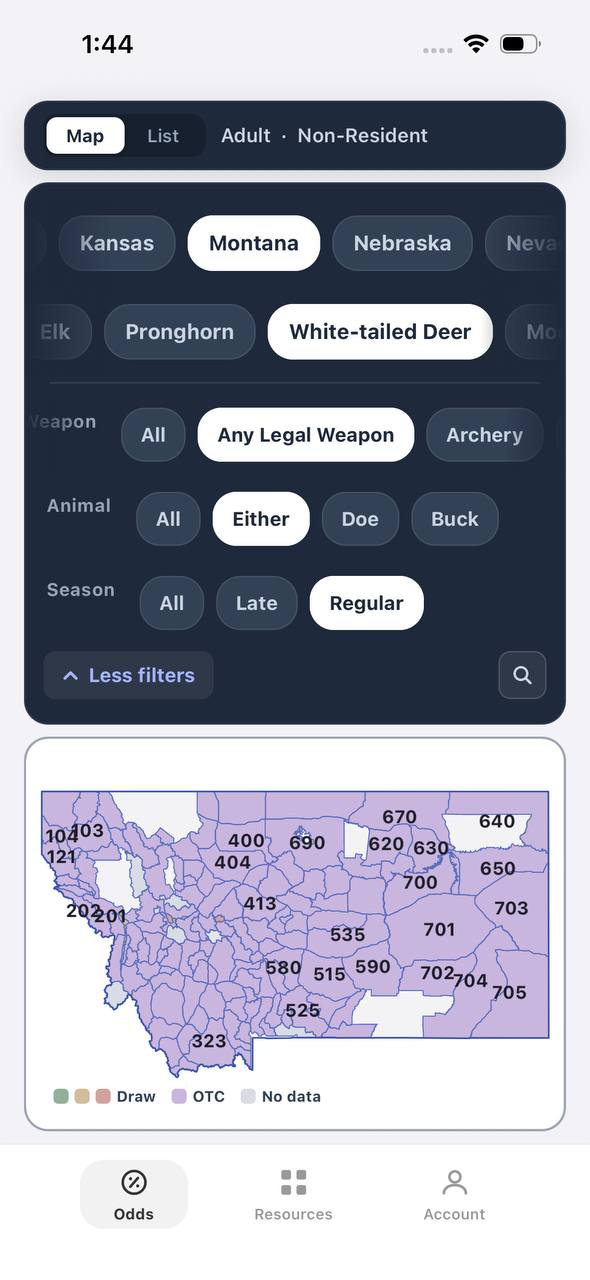
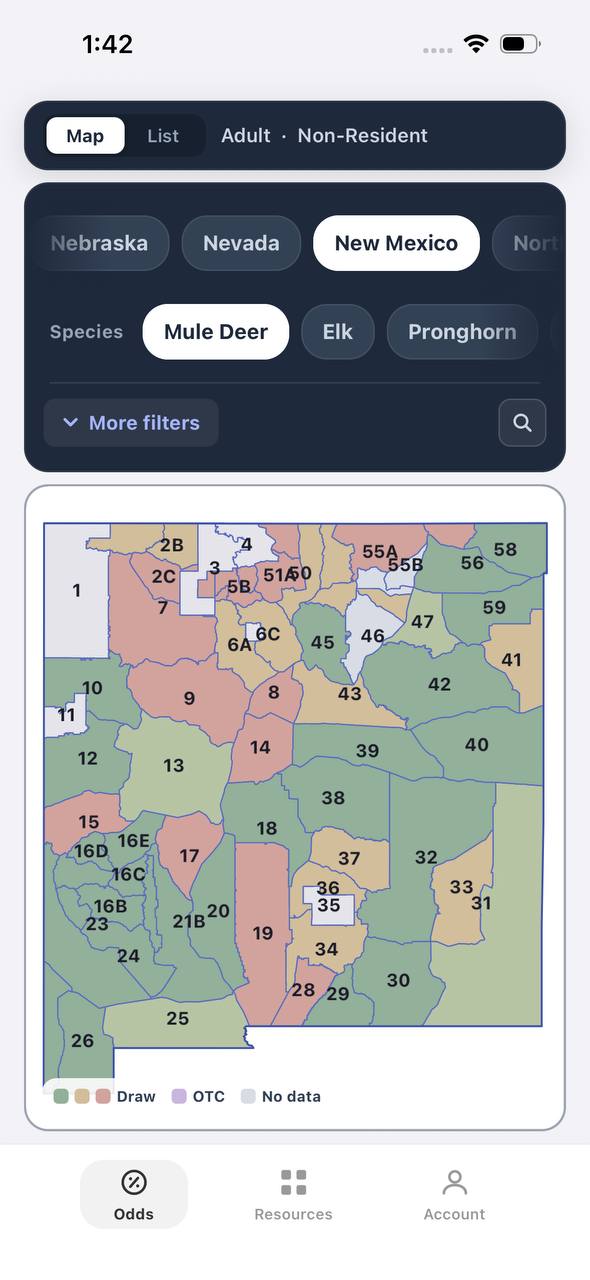
Budget hunters maximizing tag opportunities across multiple states benefit more from spending money on applications, scouting trips, and expanding draw strategies than expensive rifles. TAGZ helps you identify which units offer the best draw odds for your point totals and preferences. Applying strategically in multiple states with a quality factory rifle produces more hunting opportunities than a single custom rifle and limited applications.
The middle ground involves semi-custom rifles from builders like Fierce, Cooper, or Christensen Arms. These rifles deliver 90% of full custom performance at 60% of the cost with faster delivery. They are excellent choices for serious hunters who want custom-level accuracy without full custom pricing or wait times.
Ultimately, custom rifles are tools that increase field effectiveness and hunting enjoyment. If you value precision equipment and plan to hunt seriously for years, a well-built custom rifle delivers tangible performance advantages and long-term satisfaction that justifies the investment.
Continue Planning Your Hunt with TAGZ
Choosing the right rifle matters, but successful western hunting starts with drawing the right tag. TAGZ gives you the tools to compare unit draw odds across multiple states, track your preference and bonus points, and identify which hunts match your experience level and goals. Whether you are chasing your first OTC Colorado elk tag or planning a limited-entry Wyoming mule deer hunt, TAGZ simplifies the application process and helps you make data-driven decisions.
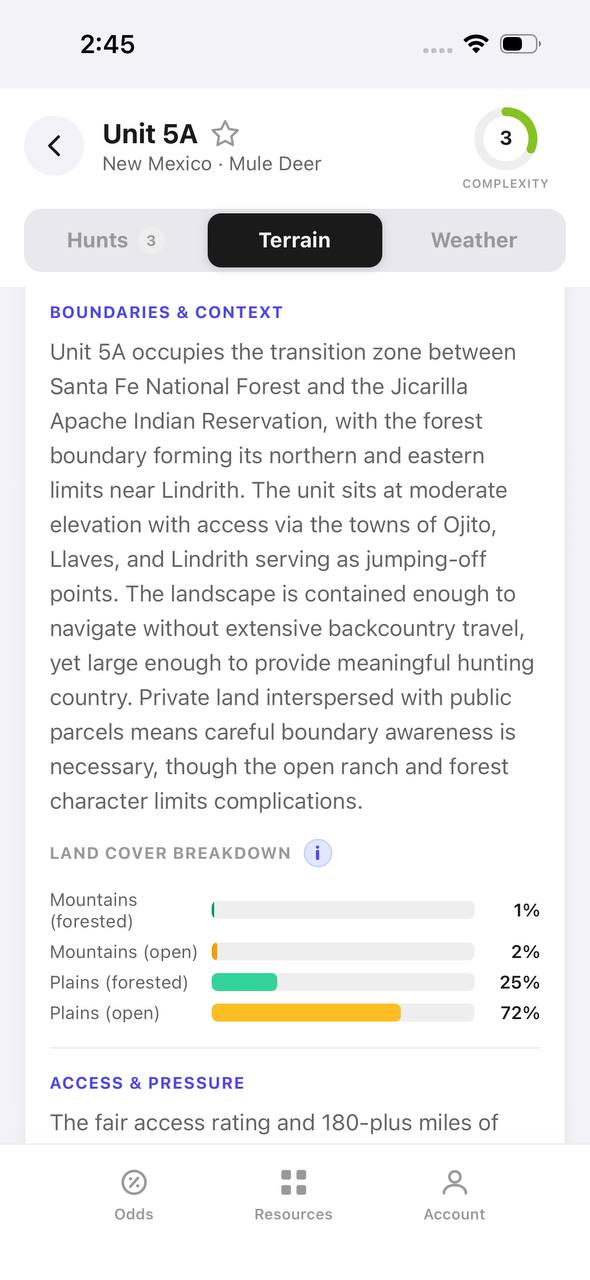
Explore unit-by-unit terrain maps, public land boundaries, and historical draw statistics to find hunts that fit your rifle's capabilities. Filter by weapon type, season dates, and trophy potential to narrow your options. TAGZ tracks application deadlines across all western states so you never miss a draw window. Start planning your 2026 and 2027 hunts now at the TAGZ homepage.
For more hunting insights, rifle reviews, and unit breakdowns, visit the TAGZ Insights blog. Learn how TAGZ helps hunters maximize draw opportunities and confidently plan western hunts from application season through the hunt itself on our product page.
FAQ — Custom Hunting Rifles
What is the best caliber for a custom elk rifle?
6.5 PRC and 7mm PRC are the most popular choices for custom elk rifles in 2026. The 6.5 PRC delivers excellent long-range performance with manageable recoil in lightweight builds, while the 7mm PRC offers more energy for larger bulls and longer shots. Both chamberings provide flatter trajectories and less recoil than traditional magnums like the .300 Win Mag.
How much should I expect to spend on a quality custom hunting rifle?
A complete custom hunting rifle system costs $5,000 to $16,000 including the rifle, quality optics, mounting hardware, and accessories. Base rifle builds range from $3,000 for semi-custom options to $12,000 for premium full-custom builds. Budget at least $1,200 for optics and another $500 to $1,000 for ammunition development and accessories.
How long does it take to get a custom rifle built?
Full custom rifle builds take 12 to 24 months from deposit to delivery for high-demand custom smiths. Semi-custom builders like Fierce Firearms or Cooper deliver in 3 to 6 months. Component availability affects timelines — popular actions and barrels may be in stock, while boutique items can add 6 to 12 months. Order at least one year ahead of important hunts to ensure delivery with time for load development.
Is a lightweight mountain rifle accurate enough for long-range shots?
Yes, properly built lightweight rifles deliver excellent accuracy despite reduced weight. Carbon fiber barrels from Proof Research or AG Composites maintain accuracy while cutting weight by up to 64% compared to steel barrels. The trade-off is increased recoil and slightly reduced stability from unsupported positions, but quality lightweight builds routinely shoot 0.5 to 0.75 MOA groups. Practice from field positions to master lightweight rifle handling.
Do I need a custom rifle for western big-game hunting?
No, quality factory rifles from Tikka, Browning, and Bergara shoot accurately enough for most western hunting situations inside 300 yards. Custom rifles deliver advantages for long-range precision, extreme lightweight backpack builds, and shooters who demand maximum accuracy and reliability. If you hunt multiple western states annually and pursue difficult backcountry tags, a custom rifle increases effectiveness and long-term satisfaction.
What is the best stock material for a custom hunting rifle?
Carbon fiber stocks from AG Composites offer the best weight-to-strength ratio for mountain rifles, weighing around 24 ounces. Fiberglass stocks from McMillan balance durability, weight, and cost for general hunting use. Carbon fiber composite stocks from Manners or Foundation provide adjustability for long-range platforms. Choose based on whether you prioritize ultimate weight savings or adjustability and durability.
How often do custom rifle barrels need replacing?
Custom hunting rifle barrels last 2,000 to 4,000 rounds before accuracy noticeably degrades, depending on caliber and shooting practices. Magnum cartridges with high powder charges wear barrels faster than standard calibers. Most western hunters shoot fewer than 200 rounds annually, meaning a quality barrel lasts 10 to 20 years. When accuracy degrades, rebarreling costs $600 to $1,200 and the action, stock, and trigger remain viable.
Should I choose a first focal plane or second focal plane scope for my custom rifle?
First focal plane (FFP) reticles maintain subtension accuracy at all magnifications, making them ideal for holdovers and wind calls at varying distances. Second focal plane (SFP) keeps the reticle size constant, which many hunters prefer for low-light shooting and simpler aiming. FFP works best for long-range precision platforms where you dial magnification frequently. SFP suits mountain rifles used primarily at lower magnifications.
Was this article helpful?
Previous
Elite vs Prime: Which Hunting Bow Is More Forgiving in 2026?
Elite and Prime both build premium hunting bows, but they take opposite approaches to forgiveness. Elite's wider limb stance and longer axle-to-axle models stabilize your shot window, while Prime's parallel cam system delivers back-wall consistency that keeps your anchor point repeatable.
Related
Best Gun and Bow Mounts for UTVs: Secure Your Weapons for the Hunt
The right UTV weapon mount keeps your rifle or bow protected, accessible, and legal while navigating rough terrain to your hunting spot. This guide compares the top mounts for different hunting scenarios and vehicle setups.
Next
Bear vs Diamond: Best Compound Bow for Beginners in 2026
Choosing your first compound bow comes down to adjustability, forgiveness, and value. Bear and Diamond dominate the entry-level market with proven platforms that grow with new archers—here's how they compare.