Species You Can Hunt
- White-tailed Deer
- Mule Deer
- Elk
- Pronghorn
- Moose
- Mountain Bighorn Sheep
State Overview
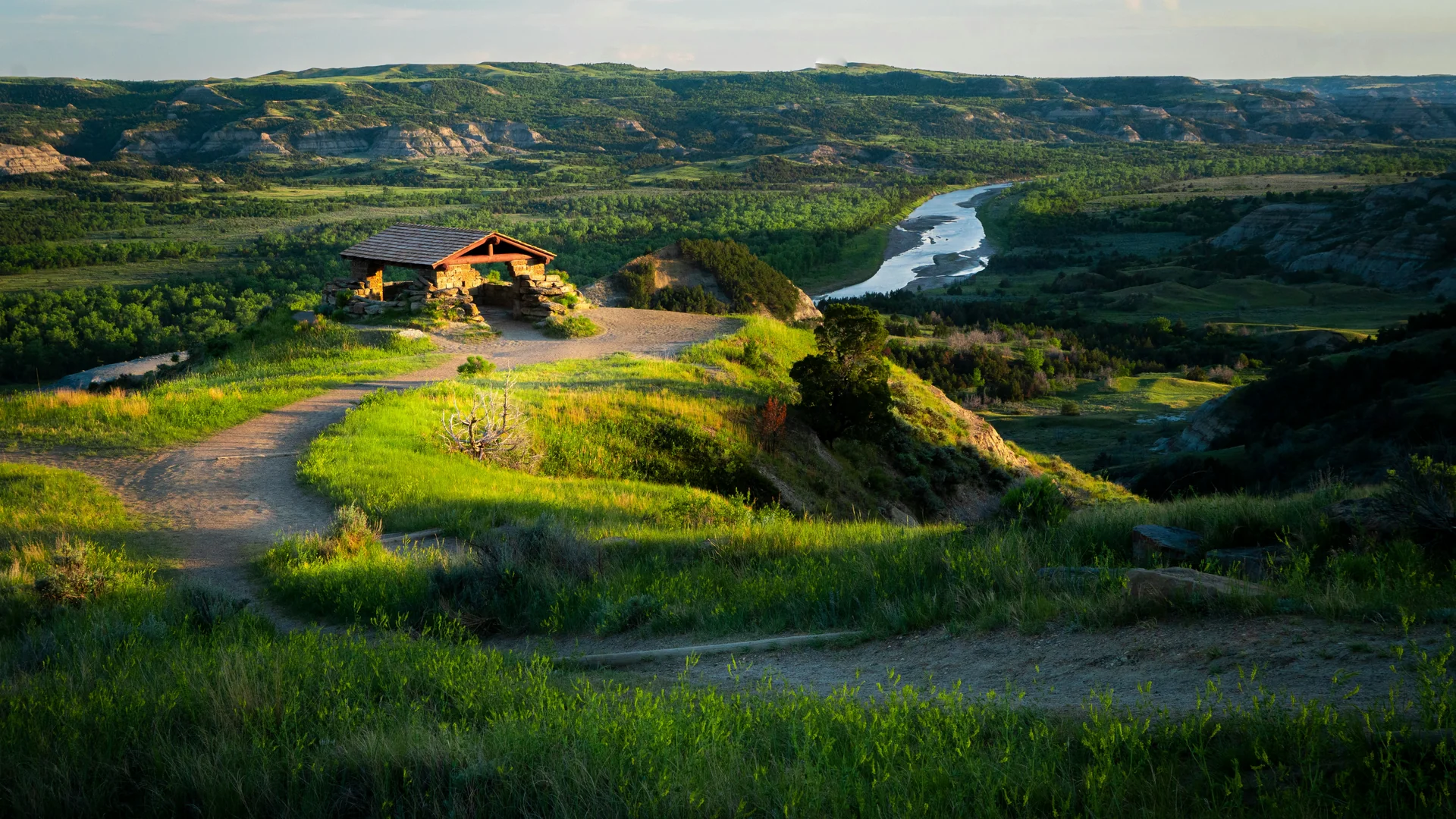
North Dakota sits on the northern Great Plains, defined by prairie pothole wetlands, the Missouri River and Lake Sakakawea, rolling grassland, and the strikingly rugged Badlands in the west.
Big game includes white-tailed and mule deer, pronghorn, a small elk population, and limited bighorn sheep, while the state is nationally famous for waterfowl and upland birds. Land is largely private, and big game tags are generally allocated through lottery or limited licenses by unit.
Licensing & Draw
How it works
The North Dakota Game and Fish Department (NDGF) manages big-game hunting through lotteries. Deer gun, muzzleloader deer, and pronghorn use a weighted lottery that rewards persistence with bonus points, while moose, elk, and bighorn sheep are awarded through separate random drawings.
Residents are the clear priority: elk and moose licenses are resident-only, and those premier species draw only a small number of tags each year. A limited (and expensive) nonresident bighorn license exists, and nonresidents can draw deer gun and archery licenses, but out-of-state opportunity is capped. Always confirm details in the current NDGF proclamations before applying.
Beyond the species license, big-game hunters generally need two prerequisites: a Fishing, Hunting, Furbearer Certificate and a General Game and Habitat License. You buy only one of each per year.
Bonus points apply to the weighted-lottery species (including deer gun and pronghorn). Miss your first-choice license in the first lottery and you earn a bonus point toward next year. Points add extra chances: for the first few points your entries roughly double per point, and at four or more points the chances grow sharply (points are effectively cubed). Points apply only to your first choice in the first lottery, and you keep them as long as you apply in the first drawing at least once every two years. Residents may also purchase a bonus point instead of a license. Moose, elk, and bighorn draws use no bonus points.
Applying & deadlines
Applications are submitted online through NDGF Online Services (linked from the department's Buy and Apply page). You choose your species, license type (for deer, the deer type — species plus antlered or antlerless), and hunting unit(s).
The deer lottery runs as a sequence of choices, working through your first and second unit/deer-type preferences in order. You submit a payment method with the application, but the license fee is charged only if you draw. State law requires a Social Security number on the application.
These approximate windows are for the 2026 cycle; exact dates change each year, so always check the current proclamation and lottery schedule. Moose, elk, and bighorn: applications open around early March with a late-March deadline (the 2026 deadline was March 25) and results about mid-April — though the bighorn drawing is held later, in the fall, after population surveys.
Deer: applications open around early May, deadline in early June, results in late June. Pronghorn: applications mid-July, deadline early August, results mid-August. Spring turkey runs in late January/February and fall turkey in August/September. See the current proclamation for exact dates.
Draw mechanics
In plain terms: for deer gun and other weighted-lottery species, every eligible application goes into a random drawing, but bonus points add entries so persistent applicants have better odds — with no hard guarantee. Even hunters with many points can face heavy competition for scarce tags such as antlered mule deer. Moose, elk, and bighorn are straight random draws.
This is only a general description; TAGZ calculates its own draw-odds estimates using a separate methodology and historical data.
Fees at a glance
Figures below are approximate; see the official fee schedule for current amounts. For residents, most big-game licenses (deer gun, pronghorn, moose, elk, bighorn) run about $35 for adults ($10 for youth), plus the roughly $2 certificate and $20 General Game and Habitat License. Moose, elk, and bighorn also carry a small nonrefundable application fee (about $5).
Nonresidents pay considerably more: a deer gun license is roughly $355 (including a $5 application fee) and a nonresident white-tailed deer bow license about $350, each on top of the ~$5 certificate and ~$20 habitat license. Nonresident bighorn sheep is far higher — around $600 including a $100 nonrefundable application fee, with an added $500 due if drawn.
Good to Know
Moose, elk, and bighorn are the marquee, hard-to-draw species and are typically managed as once-in-a-lifetime opportunities; elk and moose are resident-only, and nonresident bighorn tags are very limited and costly. Check the current proclamation for exact eligibility.
Deer archery is more accessible than deer gun: residents buy a bow license over the counter (no lottery), while deer gun is lottery-only. Nonresident archery is not unlimited — nonresident any-deer bow licenses are capped and drawn by lottery (240 licenses, tied to 15% of mule deer licenses). North Dakota also issues gratis licenses to qualifying landowners and nonresident landowner preferential licenses, which come out of a unit's tag allotment. Certain military deer gun licenses can be issued outside the lottery, and nonresidents cannot hunt department or PLOTS lands during the first week of pheasant season.
Free to join
Access the full draw odds database for North Dakota
View up to date season schedule and projected odds across all units.
Regulations
Hunting Regulation Brochures for North Dakota
Official season brochures published by the state wildlife agency.


All Game Units
78 units — Unit details, topography, landcover, and access are open to everyone. Draw odds projections are available with a TAGZ account.