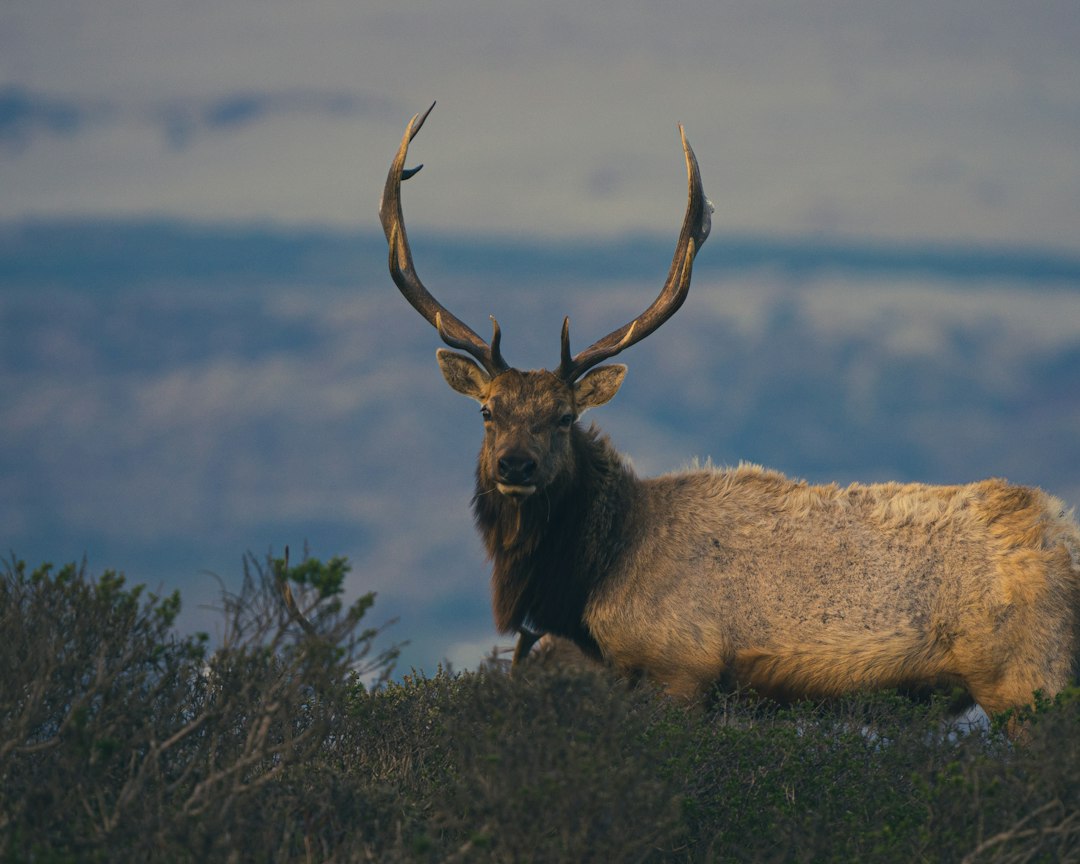
Wyoming Pronghorn Draw Odds With 0 Points: 2027 Guide
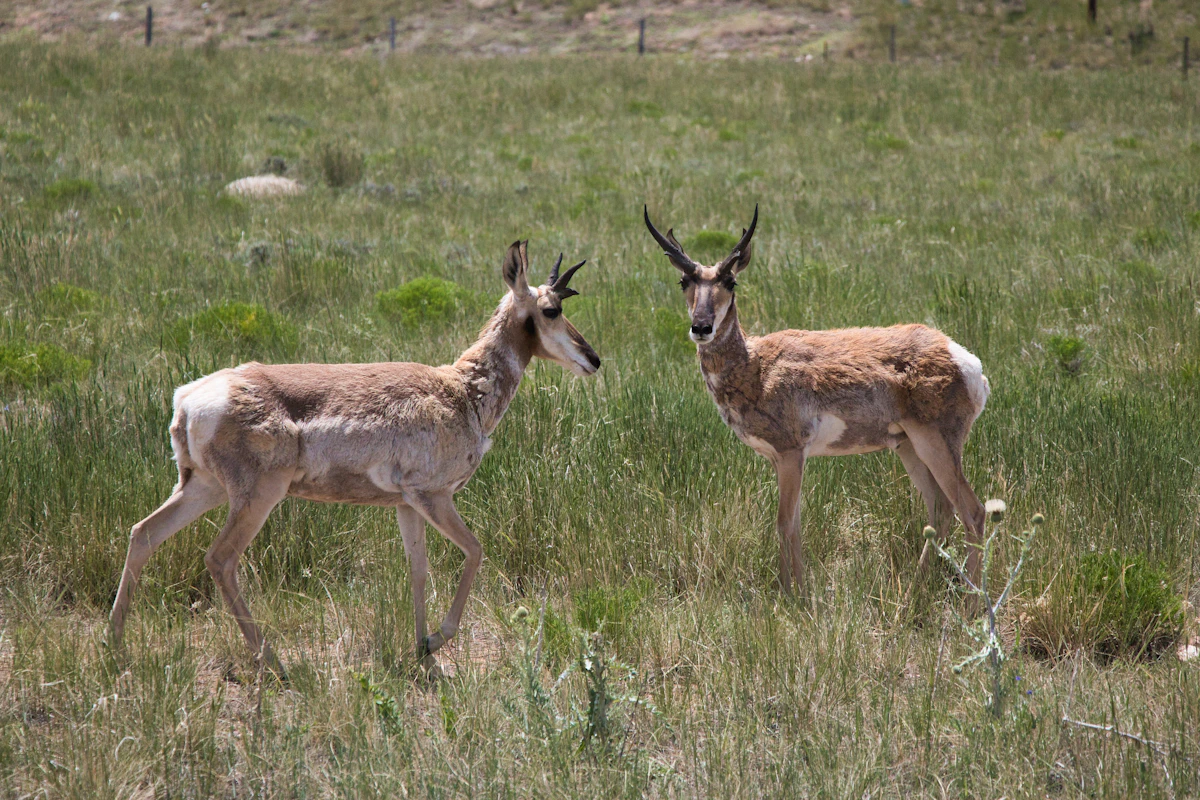
Can You Draw Wyoming Pronghorn With Zero Points?
Yes.
Wyoming's nonresident pronghorn drawing isn't a pure preference system where zero-point applicants are completely locked out.
The state combines:
Preference
with:
Random Opportunity.
This distinction makes Wyoming particularly interesting for new applicants.
How Wyoming's Nonresident Pronghorn Draw Works
For applicable nonresident antelope licenses, Wyoming currently allocates:
At Least 75%
through the:
Preference-Point Draw
and:
Up To 25%
through the:
Random Draw.
Preference licenses are allocated first.
Applicants are ranked according to their preference-point totals.
Higher-point applicants receive priority over lower-point applicants in this portion of the drawing.
Then unsuccessful applicants can participate in the applicable random portion.
What Happens With Zero Points?
Suppose you're applying with:
0 Preference Points.
You'll participate in the preference-point portion.
But every applicant with:
1+ Points
ranks ahead of you in that preference pool.
If enough licenses remain after higher-point applicants are processed, a zero-point applicant could potentially receive a license there.
If you're unsuccessful, you can still move into the applicable:
Random Draw.
That's the primary pathway that keeps difficult Wyoming pronghorn hunts technically possible for new applicants.
Zero Points Doesn't Mean Zero Chance
This is one of the most important concepts in Wyoming.
For applicable nonresident hunts:
0 Points ≠ 0% Chance.
But it also doesn't mean every hunt provides a meaningful random opportunity.
The exact random quota can be very small.
In some situations, the number of licenses available in a particular draw pool can make random opportunity extremely limited.
Always research the exact hunt.
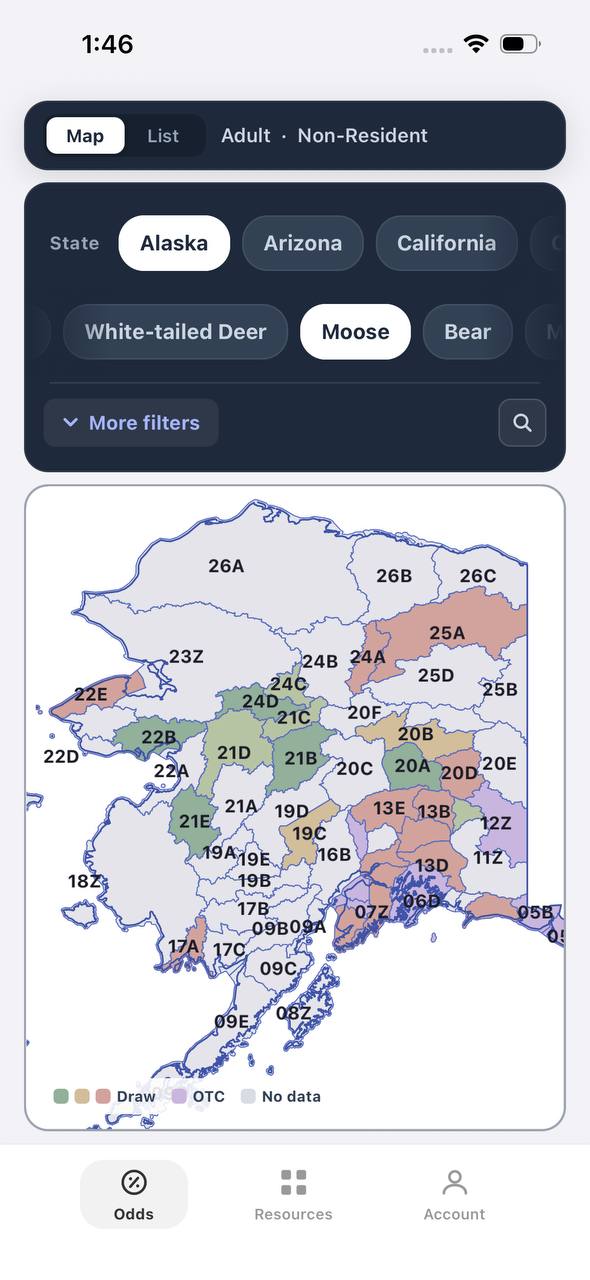
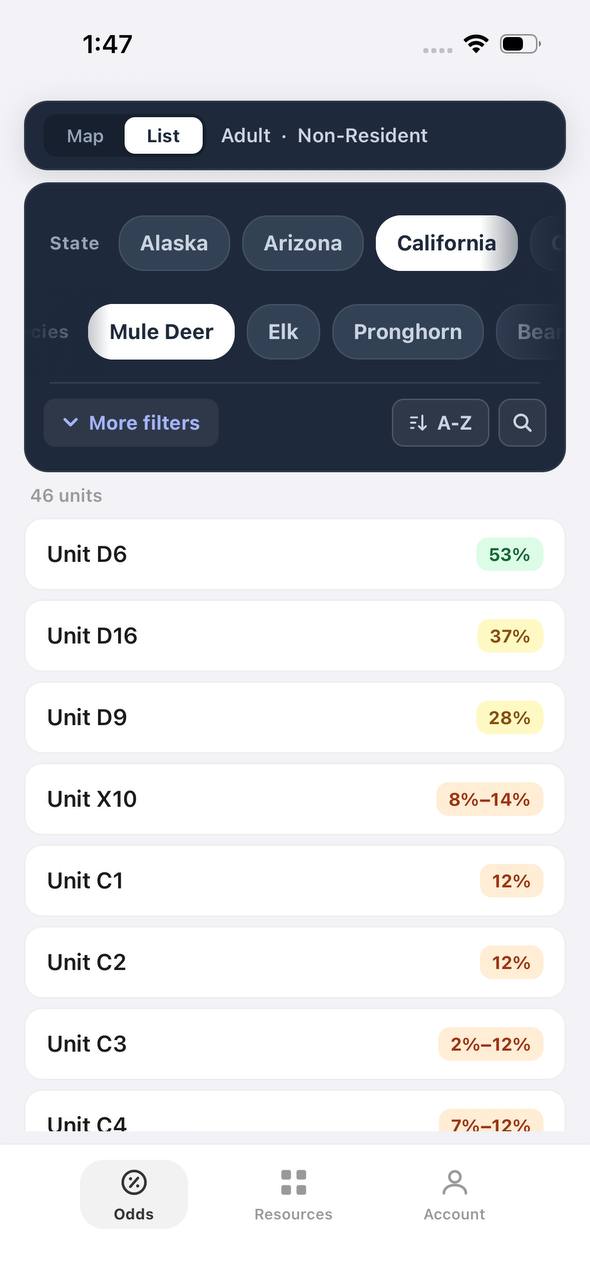
Free to join
Download mobile app
- Detailed draw odds
- Point tracking
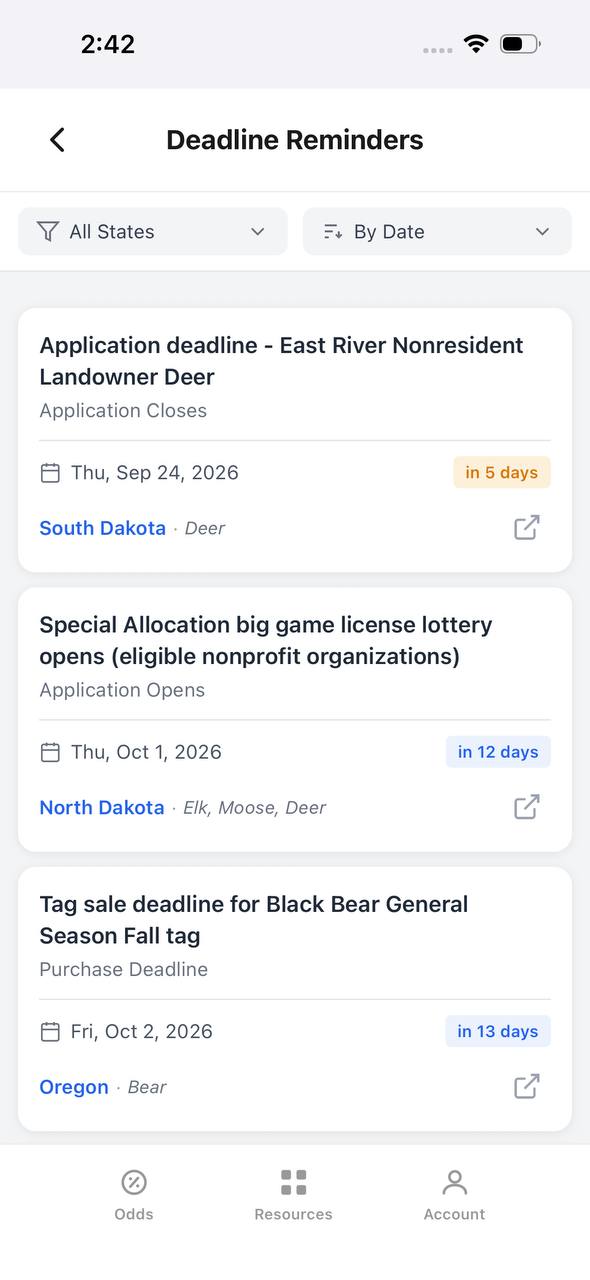
- Deadline reminders
- 18 states covered

Free to join
Download mobile app
- Detailed draw odds
- Point tracking
- Deadline reminders
- 18 states covered
Free to join
Download mobile app
- Detailed draw odds
- Point tracking
- Deadline reminders
- 18 states covered
Wyoming Uses Preference Points, Not Bonus Points
Don't call Wyoming's nonresident antelope points:
Bonus Points.
They're:
Preference Points.
That's an important distinction.
In the preference portion of the drawing, applicants with more points receive priority over applicants with fewer points.
That's different from a bonus-point lottery where points simply add or weight random chances.
Preference Points Apply to Nonresidents
For antelope, Wyoming's preference-point system applies to:
Nonresident Applicants.
Wyoming residents don't use antelope preference points in the same way.
That means:
Resident Draw Odds
and:
Nonresident Draw Odds
should never be combined when researching a hunt.
Wyoming Pronghorn vs Antelope Terminology
Wyoming Game and Fish generally uses:
Antelope
in its licensing and drawing materials.
Hunters commonly search for:
Pronghorn.
For application research:
Wyoming Antelope = Pronghorn
but use the official:
Antelope Hunt Area + License Type
when looking up drawing statistics.
There Is No Single Wyoming Pronghorn Tag
Wyoming manages antelope through:
Limited-Quota Hunt Areas and License Types.
That's why searching:
"Wyoming Unit 20 Pronghorn Odds"
isn't precise enough.
You need:
Area + License Type.
Different license types within the same hunt area can have completely different:
Season dates
Geographic restrictions
Legal animals
Quotas
Applicant demand
Drawing odds
Hunt Area Isn't Enough
When using historical data, research something like:
Antelope Area X — Type 1 — Nonresident Regular — 0 Points
rather than simply:
Area X.
That distinction is critical.
What Do Wyoming Antelope License Types Mean?
Wyoming uses license types to identify different opportunities within hunt areas.
Depending on the area, these can distinguish factors such as:
Season
Portion of hunt area
Private-land restrictions
Legal animal
Other hunt-specific conditions
Never choose a hunt solely because one license type has better odds.
Read the actual license limitations first.
Better Draw Odds Can Come With Restrictions
This is especially important for zero-point applicants.
A license may appear easy to draw because it has:
Less Demand.
But there may be a reason.
Possibilities include:
Difficult public access
Large amounts of private land
Restricted geographic boundaries
Different season dates
Limited public-land opportunity
Other hunt-specific restrictions
Don't sort a spreadsheet by:
Highest Odds
and automatically apply for the first result.
Regular vs Special Draw
Nonresident Wyoming antelope applicants also need to understand:
Regular
versus:
Special.
These are separate nonresident drawing pools.
The Special Draw requires a more expensive license application.
It doesn't mean:
Better Hunt.
It doesn't mean:
Bigger Bucks.
And it doesn't automatically mean:
Better Draw Odds.
Does the Special Draw Have Better Odds?
Sometimes.
Not always.
Applicant behavior changes between:
Regular
and:
Special.
A hunt can have better Special odds one year and a different relationship another year.
Always compare both pools.
Don't pay the higher Special price simply because someone tells you:
"Special always has better odds."
How Nonresident Quota Is Split
Under the current Wyoming structure, after applicable landowner allocations, the remaining nonresident quota is divided between:
Special Draw
and:
Regular Draw.
Current Wyoming regulations allocate:
40% to Special
and:
60% to Regular
from the applicable remaining nonresident quota.
Within those pools, the preference/random structure is applied.
That means you need to research the exact:
Regular Preference
Regular Random
Special Preference
and:
Special Random
results.
First Choice Is Critical
Wyoming preference points apply to:
First-Choice Selections.
That means your first choice deserves the most strategic attention.
Don't treat all hunt choices as mathematically identical.
Second and Third Choices Work Differently
If licenses remain after first-choice demand is processed, they can potentially become available through later-choice consideration.
Preference points don't give the same advantage on later choices.
This creates a potentially useful strategy:
First Choice = Hunt You Want to Use Points/Random Chance On
with:
Later Choices = Opportunities That Historically Survive First-Choice Demand
when such hunts exist.
Free to join
Download mobile app
- Detailed draw odds
- Point tracking
- Deadline reminders
- 18 states covered
Free to join
Download mobile app
- Detailed draw odds
- Point tracking
- Deadline reminders
- 18 states covered
Free to join
Download mobile app
- Detailed draw odds
- Point tracking
- Deadline reminders
- 18 states covered
You Don't Apply to Multiple Areas Independently
The original article suggested:
"Apply Broadly."
That needs clarification.
You don't submit several separate full-price buck antelope applications to independently enter multiple area drawings.
Instead, Wyoming allows ranked:
Hunt Choices
on the applicable application.
Those choices are processed according to Wyoming's drawing rules.
So:
Three Choices ≠ Three Independent First-Choice Draws.
Don't Waste Your Second Choice
If a hunt historically fills during:
First Choice
putting it second isn't likely to provide meaningful backup opportunity.
When building a second- or third-choice strategy, research whether licenses historically remained after first-choice applicants were processed.
What Happens to Your Preference Points if You Draw?
For nonresident antelope:
Drawing your first-choice full-price license uses your preference points.
This applies even if you receive that first-choice license through the:
Random Portion.
That's an important rule.
If your first choice is successful:
Your points are no longer available for future antelope draws.
What If You Draw Your Second Choice?
Because preference points apply to the first-choice portion, drawing an applicable later-choice license doesn't use points in the same way.
This is why some hunters look for:
Second-Choice Opportunity
while continuing to preserve preference points.
But those opportunities depend entirely on licenses surviving first-choice demand.
How Do You Get a Wyoming Antelope Preference Point?
Wyoming allows eligible nonresidents to purchase:
One Antelope Preference Point Per Year
during the designated point-purchase period.
Under the current 2026 schedule, that period is:
July 1 through November 2.
Verify the final 2027 dates before purchasing.
Do You Automatically Receive a Point if You Don't Draw?
Don't assume:
Unsuccessful Application = Automatic Preference Point.
Wyoming preference points are purchased separately during the applicable preference-point period.
If you want a point:
Buy the point.
Follow the current Wyoming Game and Fish requirements and deadline.
Zero-Point Strategy #1: Study the Random Draw
If you're starting with zero points, one of the most important reports is:
Nonresident Random Draw Odds.
Wyoming Game and Fish publishes separate antelope drawing reports for:
Nonresident Random
Nonresident Preference
Nonresident Special Random
Nonresident Special Preference
Use the report matching the pool you're considering.
Zero-Point Strategy #2: Compare Regular and Special
For every hunt you're seriously considering, compare:
Regular Draw
versus:
Special Draw.
Look at:
Applicants
Licenses
Preference-point requirements
Random licenses
Random applicants
Then compare the additional Special license cost against any historical improvement in probability.
Zero-Point Strategy #3: Research License Types
Don't research only:
Area Number.
Look for:
Area + Type.
A hunt with excellent historical draw odds may have restrictions that make it unsuitable for your goals.
Zero-Point Strategy #4: Research Access Before Odds
This is huge for Wyoming pronghorn.
Some antelope country contains significant:
Private Land.
A license can be easy to draw while legal access is difficult.
Before applying, research:
Public land
Public roads
Private boundaries
Landlocked parcels
Walk-In Hunting Areas
Hunter Management Areas
Permission requirements
Private-land access
State land
Federal land
Don't burn your first Wyoming antelope opportunity on a license you can't realistically use.
Easier Draw Can Mean Harder Access
This is one of the most important lessons for zero-point applicants.
Sometimes:
Better Draw Odds
exist because:
Access Is More Difficult.
Applicant demand can be lower when a hunt requires:
Private permission
More scouting
Complicated access
Longer travel
Restrictive license conditions
Odds alone don't measure hunt quality.
Zero-Point Strategy #5: Use Later Choices Carefully
Look for licenses that historically:
Didn't Fill During First Choice.
Those can potentially create opportunities without using your first choice in the same way.
But historical availability isn't a guarantee.
Applicant behavior and quotas can change.
Zero-Point Strategy #6: Consider Leftover Licenses
After Wyoming's initial drawing, some antelope licenses may remain.
Applicable licenses can move into the:
Leftover Drawing
and potentially later become:
Issue-After Licenses
if still available.
Don't assume a license will remain leftover just because it did last year.
Free to join
Download mobile app
- Detailed draw odds
- Point tracking
- Deadline reminders
- 18 states covered
Free to join
Download mobile app
- Detailed draw odds
- Point tracking
- Deadline reminders
- 18 states covered
Free to join
Download mobile app
- Detailed draw odds
- Point tracking
- Deadline reminders
- 18 states covered
Doe/Fawn Licenses Are Different
Wyoming also offers:
Reduced-Price Doe/Fawn Antelope Licenses.
These should be researched separately from:
Full-Price Buck/Any-Antelope Licenses.
Don't use doe/fawn drawing statistics to estimate the probability of drawing the buck hunt you're targeting.
Do Preference Points Apply to Doe/Fawn Antelope?
Reduced-price doe/fawn antelope licenses aren't part of the full-price preference-point system in the same way.
Treat those opportunities separately.
Can You Buy a Preference Point and Hunt the Same Year?
Potentially, depending on how you obtain the license and current rules.
The important distinction is:
First-Choice Full-Price Draw Success
versus other pathways.
If you're planning to hunt while building points, verify how the exact license affects your point status before applying.
What Are Good Wyoming Pronghorn Areas for Zero Points?
There isn't a permanent list.
That's the problem with articles claiming:
"Areas 19, 22 and 23 are the best zero-point areas."
The answer can change as:
Quotas change
Applications change
Access changes
Special Draw demand changes
Hunting conditions change
Winter mortality changes
License types change
Instead of permanently naming three areas, update the analysis annually using the newest Wyoming Game and Fish drawing reports.
Don't Invent 2027 Draw Odds
Actual:
2027 Wyoming Antelope Draw Odds
don't exist before the 2027 drawing.
Until then, use:
2026 and Earlier Historical Draw Data
to build a 2027 strategy.
Label those numbers clearly as:
Historical Odds.
How to Calculate Historical Random Odds
For a basic historical comparison, examine:
Random Licenses Available
versus:
Applicants Entering the Random Portion.
But use Wyoming's official published reports whenever possible rather than trying to recreate the drawing from incomplete numbers.
Remember:
Historical probability doesn't guarantee next year's result.
Why 2026 Data Matters Most for 2027
The most recent completed draw gives you the closest picture of:
Applicant demand
Quotas
Preference-point pressure
Regular vs Special behavior
Random demand
But don't analyze only one year.
Compare several years to identify whether a hunt is:
Stable
or:
Volatile.
Point Creep Matters
In the preference portion, the number of points historically required to guarantee a license can move.
Hunters often call this:
Point Creep.
But it doesn't automatically move:
Exactly One Point Per Year.
Changes can be caused by:
Applicant demand
Quota
Hunt changes
Access
Season structure
Population
Hunter behavior
Random Odds Can Change Dramatically
A hunt's random probability can change substantially even if the preference threshold stays similar.
Why?
Because the number of:
Random Applicants
can change.
That's why a zero-point hunter should pay particular attention to the random report.
Application Deadline
Wyoming's current application calendar lists antelope applications as opening:
January 2
and closing:
June 1.
Current draw results are scheduled for:
June 18.
Those are the current published dates.
Verify Wyoming Game and Fish's final 2027 calendar before applying.
The Deadline Is Not "Early April"
The original article said Wyoming antelope applications typically close in:
Early April.
That's incorrect under the current schedule.
Wyoming's antelope deadline is currently around:
Late May / June 1
depending on how the calendar falls and the applicable year's published rules.
Always use the official deadline.
Does Applying Early Improve Your Odds?
No.
Submitting on January 2 doesn't provide better draw priority than submitting correctly before the deadline.
Apply early because it gives you time to:
Check hunt codes
Review license types
Compare Regular/Special
Confirm your application
Fix mistakes
Avoid deadline problems
But:
Application Timing ≠ Draw Advantage.
Free to join
Download mobile app
- Detailed draw odds
- Point tracking
- Deadline reminders
- 18 states covered
Free to join
Download mobile app
- Detailed draw odds
- Point tracking
- Deadline reminders
- 18 states covered
Free to join
Download mobile app
- Detailed draw odds
- Point tracking
- Deadline reminders
- 18 states covered
Group Applications With Zero Points
Wyoming allows applicable:
Party Applications.
When party members have different preference-point totals, Wyoming averages their points.
The resulting party preference-point total is calculated according to current Wyoming rules.
A Group Doesn't Automatically Improve Your Odds
Applying as a party is primarily useful when:
You Want to Hunt Together.
It isn't a magic way to improve draw probability.
If a zero-point hunter joins hunters with more points, the group's average changes.
That can affect where the party falls in the preference drawing.
Regular vs Special With Zero Points
A zero-point hunter shouldn't automatically choose:
Special.
Instead ask:
How many random licenses were available?
How many applicants competed for them?
What did the Regular pool look like?
How much more does Special cost?
Then decide whether the historical probability difference justifies the cost.
Draw Odds vs Harvest Success
Don't confuse:
Drawing Success
with:
Harvest Success.
Drawing odds tell you:
How difficult was obtaining the license?
Harvest statistics tell you:
How frequently licensed hunters reported harvesting?
Those are completely different measurements.
High Draw Odds Don't Mean High Harvest Success
An easy-to-draw hunt may have:
Difficult access
Significant private land
Lower pronghorn density
Restrictive conditions
Likewise, a difficult-to-draw hunt isn't automatically:
A Trophy Hunt.
Research the actual hunting opportunity.
Public Land Percentage Can Be Misleading
Wyoming has substantial public land.
But statewide public-land acreage doesn't tell you whether:
Your Antelope Hunt Area
has good accessible public ground.
Research the exact area.
A hunt area could contain public land that is:
Landlocked
Difficult to reach
Away from pronghorn concentrations
Surrounded by private property
Access research should happen before the application.
Walk-In and Hunter Management Areas
Wyoming Game and Fish provides public-access programs including:
Walk-In Hunting Areas
and:
Hunter Management Areas.
These can provide additional access opportunities.
But participation, acreage, species and permission procedures can change.
Verify the current year's access information before relying on one of these programs.
How TAGZ Helps Zero-Point Wyoming Pronghorn Hunters
TAGZ helps hunters organize Wyoming draw research around the variables that actually determine the opportunity.
For Wyoming pronghorn, compare:
Hunt area
License type
Preference points
Regular Draw
Special Draw
Historical applicants
Historical quota
Random opportunity
Season
Public/private land
Access
Historical harvest where available
The goal isn't to find:
"The easiest Wyoming antelope unit."
It's to identify:
The best application options that fit your point level, access expectations, budget and hunting goals.
Zero-Point Hunt Planning Framework
For every hunt you're considering, research:
1. Hunt Area
2. License Type
3. Nonresident Regular Preference Odds
4. Nonresident Regular Random Odds
5. Nonresident Special Preference Odds
6. Nonresident Special Random Odds
7. First-Choice Demand
8. Later-Choice Availability
9. Public-Land Access
10. Season Dates
11. Historical Harvest
12. License Cost
Then decide:
Apply Now
Build Points
or:
Long-Shot Random Chance.
Historical Odds Are Planning Tools
TAGZ can help hunters analyze historical Wyoming draw information.
But historical odds don't guarantee:
2027 applicant totals
2027 quotas
2027 preference thresholds
2027 random odds
2027 access
Harvest success
Use historical data to make a better decision—not to promise a future result.
Built by Hunters, Guides and Outfitters
TAGZ was started by hunters, guides and outfitters with firsthand Western hunting experience.
Wyoming is a perfect example of why hunters need more than a generic:
"Best Units With Zero Points"
list.
The real questions are:
Which Area?
Which License Type?
Regular or Special?
How many points?
What did the random pool look like?
Can I access the hunt?
Would I actually want the license if I drew it?
That's how a zero-point strategy should be built.
Learn more through About TAGZ.
Can you draw Wyoming pronghorn with zero points?
Yes. Applicable nonresident antelope licenses include a random portion, allowing zero-point applicants a chance to draw.
Does Wyoming use preference points or bonus points for pronghorn?
Wyoming uses preference points for nonresident full-price antelope licenses.
What percentage of Wyoming nonresident antelope tags go random?
Under the current system, at least 75% of applicable licenses are allocated through the preference-point portion and up to 25% through the random portion.
Can zero-point applicants participate in the preference draw?
Yes, but applicants with more preference points rank ahead of them in the preference portion.
Does a zero-point hunter have a random chance?
Yes. Unsuccessful applicable applicants can participate in the random portion regardless of preference-point total.
Does Wyoming automatically give you a preference point when you're unsuccessful?
No. Eligible nonresidents purchase preference points separately during the applicable point-purchase period.
Does the Special Draw guarantee better odds?
No. Compare historical Regular and Special drawing reports before deciding whether the additional cost is worthwhile.
Can I apply for multiple Wyoming pronghorn areas?
Wyoming applications allow ranked hunt choices, but those choices aren't separate independent first-choice applications.
Do preference points apply to my second choice?
Preference-point advantage applies to the first choice. Later choices are considered differently if licenses remain.
If I draw my first choice in the random draw, do I lose my points?
Yes. A successful first-choice full-price license uses the applicant's preference points even if the license came through the random portion.
When is the Wyoming antelope application deadline?
The current Wyoming Game and Fish calendar lists antelope applications from January 2 through June 1, with results scheduled for June 18. Verify the final 2027 dates before applying.
Does applying early improve my odds?
No.
What are the best Wyoming pronghorn areas with zero points?
There isn't a permanent list. Compare the latest official Regular and Special random-draw reports, license types and access conditions rather than relying on old generic area rankings.
FAQ — Wyoming Pronghorn Draw Odds With Zero Points
Can a first-time applicant draw Wyoming pronghorn?
Yes. A first-time nonresident with zero points can potentially draw through the random portion and, for undersubscribed opportunities, may have other pathways depending on first-choice demand.
Are Wyoming antelope points squared?
No. Wyoming uses a preference-point system for applicable nonresident antelope licenses, not a squared bonus-point system.
Is one preference point significantly better than zero?
It depends entirely on the hunt area, license type and applicant pool. One point can make a major difference in some preference draws and almost none in others.
Should I buy a point before applying?
Preference points are purchased during Wyoming's designated point-purchase period rather than simply added to an application immediately before the draw. Check your current point total and Wyoming's rules before planning your application.
Should I use the Regular or Special Draw?
Compare both. Special costs more and can have different applicant pressure, but it doesn't universally produce better odds.
Can I hunt Wyoming pronghorn while building points?
Potentially, depending on how the license is obtained. Later-choice, leftover and other opportunities can interact differently with preference points than first-choice full-price success. Verify the exact rules before applying.
Should I apply for the easiest-to-draw hunt?
Not necessarily. Research access, private land, license restrictions, season dates and pronghorn habitat before choosing an area.
Are leftover Wyoming antelope tags available?
Some licenses can remain after the initial drawing and move into the leftover process. Availability changes annually.
Do Wyoming residents need antelope preference points?
Wyoming's antelope preference-point system applies to nonresident applicants. Resident antelope drawings operate differently.
Are 2027 Wyoming pronghorn draw odds available?
Not before the 2027 drawing. Use completed historical draws to plan, then update the article after 2027 results become available.
Continue Planning Your 2027 Wyoming Pronghorn Application
If you have:
0 Wyoming Antelope Preference Points
don't assume you're locked out.
Instead, research:
Hunt Area + License Type + Regular/Special + Preference Results + Random Results + Access + Season.
Your three broad strategies are:
Apply Now
Target opportunities where historical results show realistic zero-point or random opportunity.
Build Points
Purchase your annual preference point and work toward hunts that historically require more preference points.
Take a Long-Shot Random Chance
Apply for a difficult first-choice hunt knowing the random portion can still provide a chance.
Then research later-choice and other available opportunities separately.
Use TAGZ to compare Wyoming pronghorn hunt areas, historical draw information and hunt-planning data.
Explore additional hunting research through TAGZ Insights.
See how TAGZ works through TAGZ Product.
Learn about the hunters, guides and outfitters behind TAGZ through About TAGZ.
For official drawing statistics, use Wyoming Game and Fish Draw Results & Odds.
For current application dates, use Wyoming Game and Fish Application Dates & Deadlines.
For official preference-point information, use Wyoming Game and Fish Preference Points.
Historical drawing odds and preference-point thresholds are planning tools—not guarantees. Applicant demand, quotas, license types, access and drawing probabilities can change every year.
Was this article helpful?
Previous
Alaska Dall Sheep Draw Odds 2027: Permits & Strategy
Alaska does not use preference points or bonus points for Dall sheep drawing permits. Drawing permits are awarded through a: Random Lottery That means an applicant who has been unsuccessful for 15 years doesn't receive additional point-based priority over a first-time applicant. For applicable drawing hunts, Alaska currently allows hunters to submit: Up to six applications per species across individual and party applications combined, subject to hunt-specific restrictions. Hunters can generally apply for: Multiple different Dall sheep drawing hunts or: The same hunt more than once provided they stay within the six-application limit and follow the current hunt-specific rules. For nonresidents, another rule is critical: A nonresident hunting Dall sheep must be accompanied by an Alaska-licensed guide or a qualifying Alaska resident relative within second degree of kindred. Some nonresident drawing hunts also require a guide-client contract when applying. For 2027 planning, research: Hunt Number + Residency + Permits Available + Historical Applications + Hunt Restrictions + Guide Requirements rather than looking for a nonexistent preference-point threshold.
Related
New Mexico Elk Draw Odds 2027: Units & Strategy
New Mexico is one of the most important Western states for hunters to understand because: New Mexico does not use preference points or bonus points for its public elk draw. You don't need to build points for years before having a chance at an elk tag. Instead, eligible applications are randomly assigned sequence numbers. When an application is processed, New Mexico attempts to award the applicant's: First Choice → Second Choice → Third Choice based on available licenses and the applicable quota pool. Under current law, New Mexico's draw attempts to allocate at least: 84% — New Mexico Residents 10% — Residents or Nonresidents Applying With a Registered New Mexico Outfitter 6% — Nonresidents Applying Without a Registered Outfitter That makes residency and outfitter status critical to understanding historical odds. For 2027 planning, research: Hunt Code + Residency/Draw Pool + Weapon + Season + Applicants + Licenses rather than simply searching for the "best New Mexico elk unit."
Next
California Guided Elk Hunts 2027: Tags, Draw & Costs
California offers guided hunting opportunities for Tule elk, Roosevelt elk and Rocky Mountain elk, but hunters need to understand the tag pathway before booking an outfitter. California does not have a broad general over-the-counter elk season. Depending on the hunt, your elk opportunity may come through: California's Big Game Drawing A Private Lands Management (PLM) property A SHARE Access Permit Another authorized special elk opportunity These pathways work differently. For the standard Big Game Drawing, California uses a modified preference-point system, and a guide doesn't automatically improve your drawing probability. For private-land opportunities, especially PLM properties, the tag structure can be substantially different. Before sending an outfitter a deposit, ask: "Exactly how will I legally obtain the elk tag for this hunt?" That should be the starting point for every California guided elk hunt. California Guided Elk Hunting in 2027