Understanding G1-G6 Measurements — Elk & Deer Scoring Guide
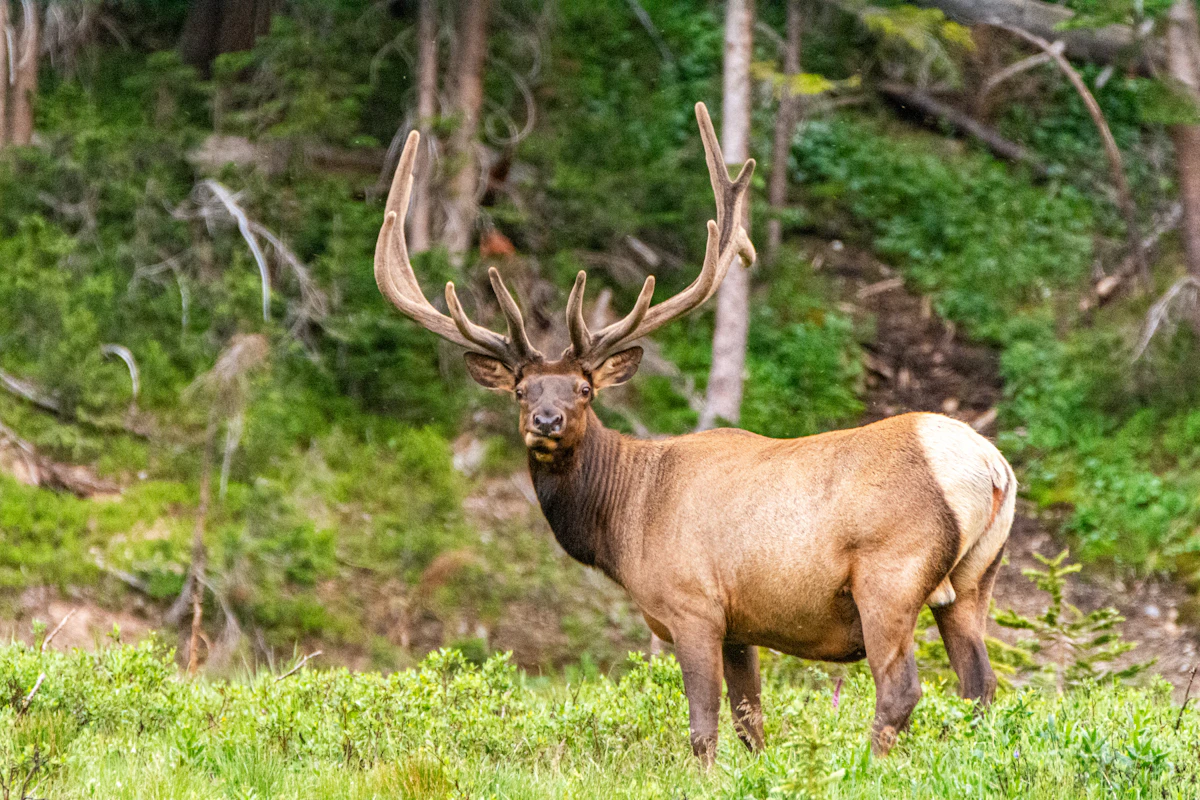
Every hunter has heard someone say a bull has "great thirds" or "huge G2s." To a newcomer that sounds like code, but to an experienced hunter it instantly paints a picture of the animal's trophy potential. Learning the G1 through G6 system is one of the fastest ways to become a better field judge, because those points feed directly into Boone and Crockett and Pope and Young scores and into the snap decisions you make when an animal steps out. The "G" simply stands for growth point, and the tines are numbered from the base of the antler outward so scorers and hunters can describe a rack the same way.
The elk layout, point by point
On a typical bull the points run G1 through G6 from the burr toward the tip, and each one contributes differently. The G1 is the brow tine, sitting closest to the skull above the eye, running 8 to 12 inches on an average bull, 13 to 15 on a good one, and past 16 on something special. Long brows add score, add character, and signal maturity. The G2 is usually the longest point on the antler and the biggest score-maker, climbing from 12 to 15 inches up to the 20-plus "swords" hunters rave about, where a single pair of long seconds can put a bull several inches ahead of his peers.
The G3 sits above the G2 and carries a lot of the load, going from 10 to 14 inches on an average bull to 18-plus on an exceptional one, and strong thirds are often the first sign of a mature animal, which is why many veterans evaluate them first. The G4 frequently separates average bulls from mature ones, and when the G4 and G5 sweep outward dramatically you get the famous "whale tail" look. The G5 is one of the most important measurements on trophy elk, running 6 to 10 inches average and 14-plus exceptional, and strong fifths are a big reason bulls jump from 320 to 340. The G6 caps most six-point bulls, and a heavy sixth past 12 inches points to advanced age. Occasionally a bull grows G7s or abnormal points, which score as non-typical or abnormal depending on the category.
Why point length matters so much
Picture two bulls. Bull A carries average G2s, G3s, and G5s. Bull B carries 20-inch G2s, 18-inch G3s, and 14-inch G5s. Bull B can score 20 to 30 inches higher purely on point length, even before you account for beams and mass. That's the whole lesson: tine length builds score fast, and learning to estimate it is the difference between guessing and judging.
The same system on deer
Whitetails use the identical numbering, most commonly G1 through G4 with bigger bucks adding a G5 and extra points. Mule deer work a little differently because of their forked antlers, so scorers identify typical points, forks, and growth points rather than a clean G1-through-G6 progression, but the underlying idea carries over. Once you know the layout, you can read any antlered animal in the same language.
Building the skill
The fastest way to improve is to study antlers through quality optics, watching tine length, tine position, and symmetry on every animal you glass. The more bulls and bucks you evaluate, the quicker the G measurements click. Experienced hunters lean on G2, G3, and G5 length plus beam length and mass to decide in seconds whether an animal is average, mature, or trophy class. The common mistakes are the usual ones, fixating on spread, ignoring thirds and fifths, and forgetting mass, when point length and mass are what actually build score, not width alone. Learning this terminology lets you communicate clearly, judge faster, and evaluate trophies accurately, and TAGZ helps you find the units and draw odds that put a mature bull in front of you in the first place.
Was this article helpful?
Previous
How to Glass for Elk Effectively: Real-World Tactics and Hard Truths
If you want to spot more elk in tough country, glassing is your most important skill. Here’s how to do it right, from setup to strategy.
Next
Best OTC Rifle Hunts
Best OTC Rifle Hunts breaks down realistic big game planning around terrain, access, pressure, scouting, and hunter behavior so TAGZ readers can build a practical western hunt plan instead of chasing hype.