Rubs vs Scrapes Explained: How to Read Whitetail Buck Sign
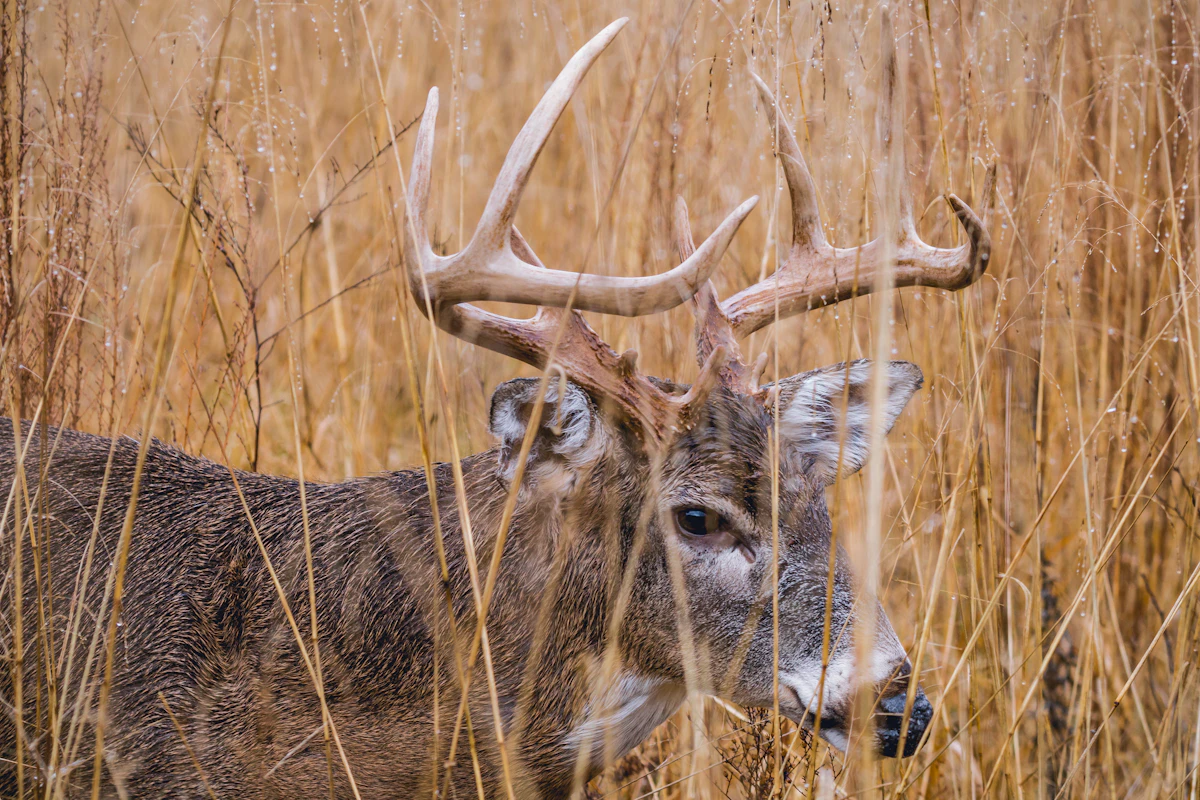
Walk any deer woods in September and you will find fresh rubs on saplings. By October, scrapes appear under overhanging branches along field edges and ridge saddles. Both are whitetail buck sign, but they serve completely different purposes in the breeding cycle and require different hunting strategies.
Rubs mark territory and signal dominance. Scrapes are active communication hubs where does and bucks exchange scent information. Knowing which sign to hunt and when puts you in front of mature bucks instead of behind them.
What Rubs Tell You About Buck Behavior
Bucks make rubs by rubbing their antlers and forehead glands against trees. This behavior starts in early September when velvet sheds and continues through the rut as bucks mark their core area and travel routes.
Rub size matters. A pencil-thick sapling rubbed clean suggests any buck. A six-inch diameter tree with bark shredded four feet up the trunk signals a mature deer with heavy antlers and the aggression to use them. Look for multiple large rubs clustered within 100 yards — this marks a high-use area where a dominant buck feels secure.
Rub lines reveal travel patterns. When you find a series of rubs spaced 30 to 100 yards apart along a creek bottom, ridge, or fence line, you have located a buck highway. These lines typically connect bedding areas to feeding areas or doe concentrations. Set up downwind along the line during peak movement hours.
Fresh rubs show recent activity. Bright cambium and sticky sap mean the rub is hours or days old, not weeks. Check rub lines every few days during October to identify which routes are active.
What Scrapes Reveal About Breeding Activity
Scrapes are circular patches of pawed ground beneath an overhanging branch. Bucks urinate in the scrape while rubbing their tarsal glands together, then chew and scent-mark the branch above. Does visit scrapes to leave scent signals of their own, creating a chemical communication network across the landscape.
Scrapes activate in mid-October as testosterone rises and bucks begin monitoring doe readiness. Activity peaks during the two weeks leading into peak breeding, when bucks check scrapes frequently hoping to intercept an estrous doe. Once does are locked down with bucks during peak rut, scrape activity drops sharply.
Community scrapes are primary hunting locations. These are large scrapes — often three feet across — located at high-traffic intersections like field corners, ridge saddles, or creek crossings. Multiple bucks and does visit these scrapes repeatedly. A trail camera over a primary scrape reveals which bucks are using the area and when they show up.
Random scrapes along trails are less valuable. Bucks make these quickly while cruising and rarely return to check them. Hunt community scrapes, not every scrape you find.
How to Hunt Rubs Effectively
Rub lines are most productive during early October through the pre-rut. Bucks are still following predictable patterns, moving between bedding and feeding areas along the same routes they established in September.
Set up 50 to 75 yards downwind of a rub line. Bucks rarely walk directly on the line but parallel it within scent-checking distance. Position yourself where you can cover the travel corridor without being skylined or exposed. Morning setups should be closer to bedding areas. Evening setups should target the transition zone between bedding and feeding.
Don't hunt directly over rubs. Bucks make rubs while moving through an area, not as a destination. The rub shows you where he has been, not where he will stop.
Rubs near bedding areas are high-risk, high-reward setups. A cluster of large rubs within 200 yards of thick cover often marks a mature buck's staging area where he pauses before entering his bed at daylight or leaving it in the afternoon. Hunt these locations only with perfect wind and a silent entry route, and save them for late October when the reward justifies the risk.
How to Hunt Scrapes Effectively
Community scrapes are most effective from October 20 through November 10 in most whitetail regions. Bucks check these scrapes during low-light movement periods, often within an hour of dark.
Set up 20 to 40 yards downwind of the scrape with your shooting lane covering both the scrape and the downwind approach. Mature bucks scent-check scrapes from 10 to 30 yards downwind before stepping into the open. If you only watch the scrape itself, you will miss most mature bucks.
Morning sits near scrapes require precise timing. Bucks often check scrapes on their way back to bedding areas just after first light. Be in your stand 45 minutes before shooting light and stay until mid-morning. Movement can continue later than you expect when a buck is locked into scrape-checking mode.
Mock scrapes can pull bucks into range. Create a scrape by clearing a two-foot circle of leaves beneath a low-hanging branch 30 yards from your stand. Use a drag-rag soaked in buck urine to lay scent leading toward your mock scrape. Bucks investigate new scrapes aggressively during the pre-rut.
Combining Rubs and Scrapes for Complete Intel
The best hunting setups incorporate both sign types. A rub line that leads to a community scrape reveals exactly where a buck is traveling and what he is checking. Hunt the intersection point — typically 50 to 100 yards upwind of the scrape along the rub line.
Aerial imagery helps connect the dots. Use TAGZ unit maps or satellite imagery to identify terrain funnels, thick cover, and food sources within 300 yards of your sign cluster. Bucks do not move randomly — they use terrain that offers cover and efficient travel between resources. When you find rubs and scrapes in a terrain funnel, you have identified a high-probability ambush point.
Trail cameras confirm timing and identity. Set cameras on primary scrapes to see which bucks are active and when they show up. If your target buck only appears at 11 PM, adjust your strategy instead of wasting sits. If he shows up at 6:15 PM three times in a week, you know exactly when to be there.
Rubs vs Scrapes During the Rut
Once peak breeding begins, both rubs and scrapes lose value. Bucks abandon their core areas and range widely searching for estrous does. The scrapes they checked religiously in late October go cold. Rub lines see little traffic as bucks cut cross-country after does instead of following predictable routes.
Shift your strategy to doe bedding areas and funnels between doe concentrations during peak rut. After the rut winds down in late November, bucks return to core areas and resume checking scrapes briefly before post-rut exhaustion sets in.
Late-season rubs indicate a buck has survived and is feeding heavily to recover body weight. These rubs often appear near agricultural fields or food plots in December and January. The same mature bucks that vanished during peak rut reappear in predictable late-season patterns — often within 200 yards of where you found their early-season rubs.
Common Mistakes Hunting Buck Sign
Hunting old sign wastes time. A rub line that was active in early October may be abandoned by the end of the month as buck patterns shift. Check sign weekly and focus only on fresh activity. If the scrapes are filled with leaves and the rubs are weathered gray, move to a different location.
Ignoring wind direction over scrapes costs opportunities. Mature bucks circle downwind of scrapes before approaching. If your wind blows from your stand toward the scrape, the buck will smell you before you ever see him. Set up so your wind blows from the scrape toward you, with your shooting lane covering the downwind approach.
Hunting scrapes too late in the season is a common mistake. By mid-November in most regions, bucks have bred most does and scrape activity drops sharply. If you are just starting to hunt scrapes on November 15, you are two weeks late. Focus on scrapes from October 20 through November 5 for best results.
Over-hunting a good setup burns it out. If you have a primary scrape with multiple mature bucks on camera, resist the urge to sit it every day. Hunt it only when wind and timing are perfect. Two or three perfectly executed sits are worth more than ten sits with bad wind or poor timing.
TAGZ Helps You Pattern Bucks Before the Season
Understanding rubs and scrapes is one piece of the puzzle. TAGZ gives you the complete picture by overlaying terrain, public land boundaries, and unit maps so you can identify the funnels and pinch points where bucks leave the most sign.
Use TAGZ to scout aerial imagery before you ever step into the woods. Locate thick bedding cover, identify creek crossings and ridge saddles, and mark terrain features that concentrate deer movement. When you find rubs and scrapes in these locations during your boots-on-the-ground scouting, you know you are hunting a high-probability area.
Track your sign locations by dropping pins on TAGZ unit maps. Over multiple seasons, patterns emerge. The same ridge saddle that held a rub line three years ago often produces again because the terrain forces deer to move through that spot. Building a database of productive sign locations makes you more effective every season.
FAQ — Rubs vs Scrapes
What is the difference between a rub and a scrape?
A rub is a tree with bark rubbed off by a buck's antlers and forehead glands. A scrape is a cleared patch of ground beneath an overhanging branch where bucks and does leave scent signals. Rubs mark territory; scrapes are communication hubs.
Which is better to hunt, rubs or scrapes?
Scrapes are better during the two weeks before peak rut when bucks check them frequently. Rubs are better in early October when bucks follow predictable travel routes between bedding and feeding areas. Both lose effectiveness during peak rut.
How often do bucks check scrapes?
Mature bucks check primary scrapes every 24 to 48 hours during the pre-rut phase from late October through early November. Activity peaks at dawn and dusk. Once peak breeding begins, bucks largely abandon scrapes.
Do small rubs mean small bucks?
Not always. A mature buck will rub a small tree if it is convenient, but he is also capable of rubbing large trees. A six-inch tree shredded four feet up the trunk is a clear sign of a heavy-antlered, mature deer. Pencil-thin saplings could be any buck.
Should I hunt directly over a scrape?
No. Set up 20 to 40 yards downwind of the scrape with your shooting lane covering the downwind approach. Mature bucks scent-check scrapes from downwind before stepping into the open. If you only watch the scrape, you will miss most shooter bucks.
When do bucks stop making rubs and scrapes?
Bucks continue making rubs throughout the fall, but intensity peaks in September and October. Scraping peaks during the two weeks before peak breeding and drops sharply once does enter estrus and bucks lock down with them in mid-November.
Continue Planning Your Hunt
Understanding how to read and hunt rubs and scrapes gives you an edge, but knowing where to hunt in the first place makes the difference between filling a tag and eating tag soup.
TAGZ helps you find the best public land hunting units across the West by comparing draw odds, unit boundaries, terrain features, and historical harvest data side by side. Whether you are planning a whitetail hunt close to home or building a multi-state western application strategy, TAGZ gives you the research tools to make smarter decisions before you ever apply.
Explore more hunting strategies and unit breakdowns on the TAGZ Insights blog, or see how the platform works on the product page. Ready to start planning your next hunt? Check out pricing options and get access to the tools that help you hunt smarter.
Was this article helpful?
Previous
7 Elk Calling Mistakes That Cost Beginners Bulls Every Season
New elk callers make predictable mistakes that educate bulls and ruin setups. Learn the seven most common errors — from overcalling to poor positioning — and how to fix them before your next hunt.
Next
Best Whitetail Rifles: Top Picks for Eastern and Western Hunts
Choosing the right whitetail rifle means balancing accuracy, handling, and cartridge performance for your hunting environment. From timber stands to open sage, these proven rifles deliver consistent results across every whitetail scenario.