Oregon Elk Draw Odds With Zero Points 2027: Best Hunts, Random Draw & Nonresident Strategy
Oregon Elk Draw Odds With Zero Points in 2027: Can You Really Draw a Good Elk Tag?
You don't need ten years of preference points to draw an Oregon elk tag.
In fact, Oregon remains one of the western states where a hunter with zero preference points can compete for certain highly sought-after controlled elk hunts.
That's because Oregon uses a modified preference-point system that reserves part of its controlled-hunt quota for a random drawing.
For hunters planning the 2027 season, this creates opportunities that don't exist in some states where nearly every tag is awarded to applicants with the highest point totals.
But there's an important distinction between having a chance to draw and having realistic drawing odds.
A hunter with zero points might have a legitimate opportunity at a controlled elk hunt with relatively low application demand. That same hunter could have extremely low odds of drawing one of Oregon's most competitive trophy hunts.
Understanding the difference can help you build a better application strategy.
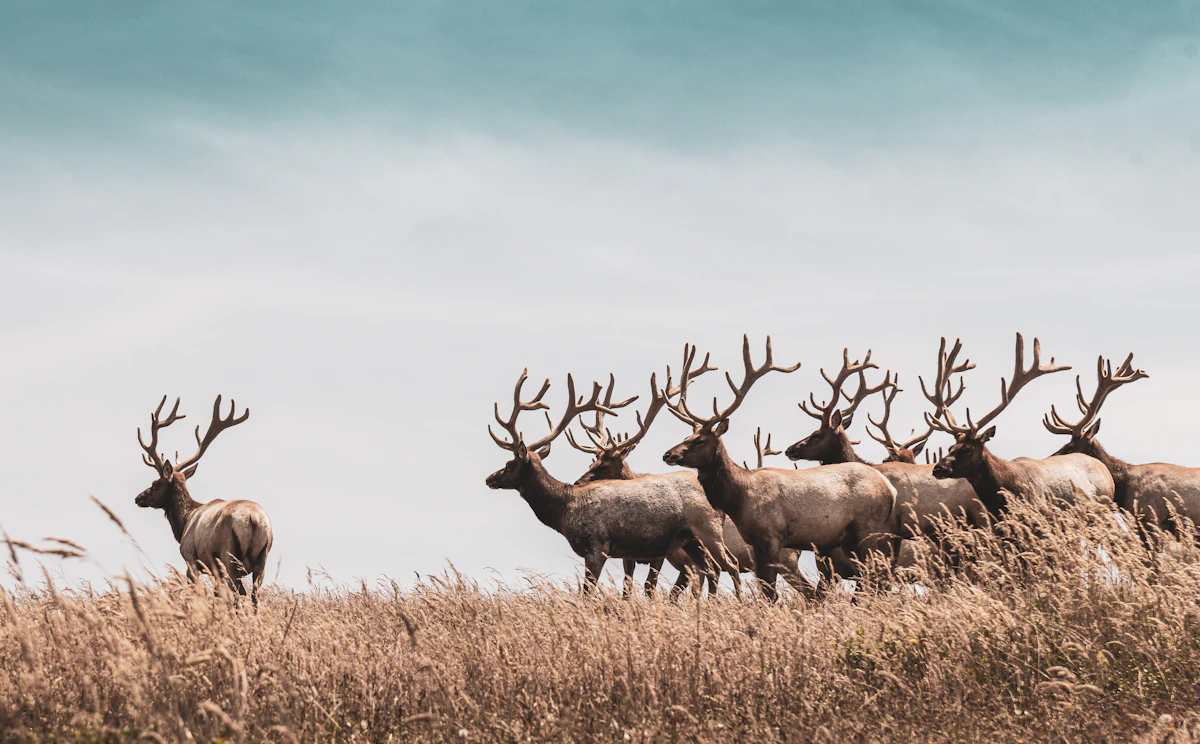
Whether you're interested in Roosevelt elk along Oregon's coastal forests, Rocky Mountain elk in eastern Oregon, or simply want an opportunity to hunt elk without waiting years, this guide explains how the system works.
Can You Draw an Oregon Elk Tag With Zero Points?
Yes.
Oregon allows zero-point applicants to compete for controlled elk permits through the random portion of its modified preference-point drawing.
This applies to eligible first-choice controlled elk applications.
Even if a hunter has no accumulated preference points, they may still receive a permit when their application is selected during the random phase.
However, drawing probability depends on the hunt.
A controlled elk hunt with substantial applicant demand and very few permits may offer only a small chance of success.
Another hunt with less competition may be substantially more accessible.
Why Zero-Point Hunters Still Have a Chance
Oregon's drawing system divides the controlled-hunt allocation into two phases.
Preference phase: Approximately 75% of permits are awarded according to preference-point priority.
Random phase: Approximately 25% of permits are awarded randomly among remaining eligible first-choice applicants.
The random phase provides an opportunity for hunters who have not accumulated enough points to receive a tag through the preference phase.
This system is especially relevant for nonresident hunters who are just beginning to apply in Oregon.
However, the 25% random allocation does not mean every zero-point applicant has a 25% chance of drawing.
The actual probability can be far lower.
How Does Oregon's 75/25 Elk Drawing Work?
Oregon uses what is known as a modified preference-point system.
The system combines point-based priority with a random allocation.
Phase One: Preference-Point Drawing
Approximately 75% of the available controlled elk tags are awarded through the preference-point portion.
Hunters with more preference points receive priority.
Important characteristics include:
Applicants are grouped according to their preference-point totals.
Higher-point applicants receive priority for the preference portion.
Applicants with the same point total are selected using the drawing's random-number process.
Drawing a first-choice controlled elk hunt generally resets the applicant's elk preference points.
Applicants who do not draw their first choice generally receive another point.
For highly competitive hunts, most or all of the preference-phase tags may go to hunters with substantial point totals.
Phase Two: Random Drawing
The remaining approximately 25% of permits are allocated through a random drawing among eligible first-choice applicants who were not selected in the preference phase.
Important characteristics include:
Remaining first-choice applicants compete in the random phase.
Preference points do not provide priority in this phase.
Zero-point applicants can receive permits.
Hunters with higher point totals who were unsuccessful in the preference phase also compete.
Nonresident allocation limits still apply.
Actual drawing odds depend on the number of available permits and applicants.
This second phase is what makes Oregon attractive to hunters who want an opportunity without waiting to accumulate a large point balance.
Example: How a Zero-Point Hunter Could Draw
Consider a hypothetical controlled elk hunt offering 100 permits.
Under a simplified 75/25 allocation:
Approximately 75 permits would be awarded through preference-point priority.
Approximately 25 permits would be allocated randomly.
A zero-point hunter could compete for those random permits.
If hundreds or thousands of applicants remained, the individual probability could still be low.
Nonresident quotas could further limit available opportunities.
This example illustrates the drawing structure, not the actual odds of any Oregon hunt.
For official rules, visit ODFW's Controlled Hunt Navigation Guide.
How Do Oregon Nonresident Elk Draw Odds Work With Zero Points?
Nonresident hunters participate in Oregon's controlled elk drawing, but nonresident permit restrictions make their opportunities different from those available to residents.
Oregon generally limits nonresident controlled elk permits to a portion of the applicable hunt quota.
For most controlled elk hunts, nonresident participation is subject to a 5% allocation limit, with statutory and regulatory exceptions.
That makes it essential to examine actual nonresident drawing results rather than relying on overall hunt odds.
Why Nonresident Odds Can Be Much Lower
Suppose a controlled hunt offers 40 permits.
A nonresident limit may leave only a very small number of permits potentially available to nonresidents.
If hundreds of nonresident hunters apply, drawing becomes difficult even though Oregon has a random phase.
Important factors include:
Total hunt quota.
Applicable nonresident allocation.
Number of nonresident first-choice applicants.
Historical nonresident permits awarded.
Applicant preference-point distribution.
Whether a random-phase nonresident permit was actually awarded.
A hunt with favorable resident odds may be highly competitive for nonresidents.
Can a Nonresident Draw a Premium Oregon Elk Hunt With Zero Points?
Yes, it is possible under the applicable random-draw rules.
However, a theoretical chance should not be confused with a realistic expectation.
For hunts with very small nonresident allocations, the probability may be extremely low.
A zero-point nonresident hunter should evaluate whether to pursue a difficult trophy hunt or prioritize a more accessible opportunity.
Neither strategy is automatically correct.
The choice depends on the hunter's goals and willingness to accept drawing uncertainty.
Best Oregon Elk Hunts to Research With Zero Points in 2027
The best zero-point Oregon elk hunts are not necessarily the units with the largest bulls or the most recognizable names.
For hunters starting without preference points, the most useful opportunities are those where historical drawing results show that zero-point applicants actually received permits.
Oregon's latest official point summary reports include 2026 controlled elk drawing information, providing a starting point for 2027 research.
Rather than assigning unsupported odds to individual hunts, hunters should evaluate the following regions and hunt categories.
1. Western Oregon Roosevelt Elk Hunts
<AsyncImageGroup query={["Roosevelt bull elk Oregon coastal rainforest","Roosevelt elk Oregon coast range mature bull forest"]} aspectRatio="5:3" layout="carousel"/>
Western Oregon offers Roosevelt elk hunting in dense coastal forests and mountainous terrain.
Roosevelt elk are generally larger-bodied than Rocky Mountain elk and are closely associated with the wet forests of the Pacific Northwest.
For hunters with zero preference points, western Oregon deserves consideration because some general-season opportunities do not require a controlled-hunt drawing.
Controlled hunts may also provide opportunities, depending on the individual hunt and available permits.
What to research:
Coast Range and other western Oregon elk units.
General-season versus controlled-hunt opportunities.
Roosevelt elk habitat and population trends.
Public-land access and private timberland restrictions.
Weapon-specific seasons.
Historical zero-point drawing results.
Nonresident permit allocations.
Important 2027 change: Oregon adopted changes to western Oregon elk regulations, including shifting spike-only restrictions among certain coast elk hunt periods and modifying some West Cascades antlerless opportunities. Hunters must verify the 2027 rules for their selected unit.
2. Eastern Oregon Rocky Mountain Elk Hunts
<AsyncImageGroup query={["Rocky Mountain bull elk eastern Oregon Blue Mountains","Bull elk Wallowa Mountains Oregon alpine forest"]} aspectRatio="5:3" layout="carousel"/>
Eastern Oregon is home to Rocky Mountain elk, with hunting opportunities across the Blue Mountains, northeastern Oregon, and other eastern regions.
Some controlled hunts are highly competitive, while others may offer more accessible opportunities depending on weapon, season, and hunt restrictions.
What to research:
Historical first-choice applicant demand.
Nonresident permits awarded.
Zero-point applicants drawn.
Available public land.
Elk population and bull ratios.
Season dates and weapon restrictions.
Access limitations.
Hunters should avoid assuming that every eastern Oregon elk hunt requires years of points.
However, many desirable rifle hunts are competitive, and a zero-point application may depend heavily on the random allocation.
3. Archery Elk Hunts
Archery elk hunting can provide an alternative to highly competitive rifle seasons.
Oregon offers both general-season and controlled archery opportunities, depending on the region and current regulations.
Hunters should compare:
General archery season availability.
Controlled archery hunt numbers.
Public-land access.
Season timing relative to the elk rut.
Hunter density.
Historical drawing results.
Physical demands and terrain.
A controlled archery hunt is not automatically easier to draw than a rifle hunt.
Some archery opportunities attract significant demand.
4. Antlerless and Special-Management Elk Hunts
Hunters focused on obtaining an elk hunting opportunity rather than harvesting a mature bull should also investigate antlerless and special-management hunts.
These opportunities may have different applicant demand from popular antlered elk hunts.
However, they often have additional restrictions.
Check for:
Antlerless-only bag limits.
Private-land access requirements.
Landowner permission.
Short or specialized seasons.
Weapon restrictions.
Small permit quotas.
Nonresident allocation limits.
A hunt with relatively favorable drawing odds may still be difficult to use if access is limited.
5. General-Season Elk Opportunities
For zero-point hunters who primarily want to hunt elk, general-season tags may be more practical than applying exclusively for highly competitive controlled hunts.
Oregon offers general elk opportunities under specific regional, weapon, and season regulations.
These opportunities do not require the same controlled-hunt drawing process.
However, hunters must still purchase the appropriate license and tag, comply with applicable deadlines, and follow the exact regulations for the hunt.
General-season access should never be confused with unrestricted statewide elk hunting.
How to Find Actual Oregon Elk Draw Odds at Zero Points
Oregon publishes detailed controlled-hunt drawing information that allows hunters to examine the outcomes of previous applications.
For 2027 planning, the 2026 elk preference-point reports are the most recent completed drawing records.
Step 1: Open the Official Point Summary Reports
Visit the Oregon ODFW Point Summary Reports.
Find the 200-series elk reports.
Relevant documents include:
2026 Elk Applicants by Hunt Choice.
2026 Elk Preference Point Draw Report.
2025 Elk Applicants by Hunt Choice.
2025 Elk Preference Point Draw Report.
Earlier reports for longer-term comparisons.
Step 2: Identify the Exact Hunt Number
Oregon controlled elk hunts have specific hunt numbers.
Research the precise hunt rather than using only the name of the wildlife management unit.
Different hunts within the same unit may have substantially different drawing odds.
Step 3: Find the Zero-Point Applicant Class
Within the preference-point report, identify applicants holding zero points.
Look for:
Total zero-point applicants.
Resident zero-point applicants.
Nonresident zero-point applicants.
Zero-point applicants who received tags.
Nonresident applicants who drew.
Total permits available.
The report separates the preference and random drawing information.
Step 4: Calculate Historical Zero-Point Drawing Success
A simplified historical success calculation is:
Zero-point drawing success rate = Zero-point applicants drawn ÷ Total zero-point applicants × 100
For example, if 10 zero-point applicants received tags from a group of 200 zero-point applicants:
Zero-point applicants: 200.
Zero-point applicants drawn: 10.
Historical success rate: 5%.
This is a hypothetical example, not an actual Oregon hunt result.
For nonresident analysis, use nonresident applicants and nonresident permits awarded rather than mixing resident and nonresident totals.
Step 5: Compare Multiple Years
A single year of drawing results can be misleading.
Drawing odds may change because of:
Increased applicant demand.
Changes in permit quotas.
Changes in hunting regulations.
Unit boundary adjustments.
Shifts in hunter interest.
Changes in nonresident participation.
Comparing several years provides better context than relying on one drawing result.
Oregon Elk Preference Points: Should You Build Points or Apply Now?
Oregon's modified preference-point system creates two different strategies.
One is to build points for future access to competitive hunts.
The other is to apply for opportunities that can be drawn immediately.
Hunters can also pursue a long-term strategy while maintaining access to general-season opportunities.
Strategy One: Apply for a Premium Hunt With Zero Points
This approach may appeal to hunters whose primary goal is a particular high-demand elk hunt.
Advantages include:
An opportunity to draw without years of point accumulation.
Access to the random drawing.
A chance at a hunt that might otherwise require substantial points.
An additional preference point if the first choice is unsuccessful, under applicable rules.
Disadvantages include:
Potentially very low drawing odds.
Significant uncertainty.
The possibility of applying unsuccessfully for many years.
This strategy is best understood as pursuing a low-probability opportunity rather than planning a guaranteed elk hunt.
Strategy Two: Apply for More Accessible Controlled Hunts
Some controlled elk hunts attract fewer applicants relative to available permits.
Hunters willing to consider different units, weapons, seasons, and bag limits may identify more accessible options.
Important considerations include:
Historical drawing success.
Hunt accessibility.
Public-land availability.
Actual elk hunting conditions.
Permit restrictions.
Travel and logistical costs.
A hunt with better odds is only valuable if it fits the hunter's goals.
Strategy Three: Build Points While Hunting General Seasons
Oregon allows hunters to accumulate elk preference points while planning general-season hunting opportunities.
Hunters who are not applying for a controlled hunt may be able to purchase an elk Point Saver instead.
This can help preserve a long-term controlled-hunt strategy while allowing hunters to pursue eligible general-season hunts.
Strategy Four: Use the Random Draw Every Year
Some hunters prefer to apply annually for a difficult first-choice controlled elk hunt.
Under Oregon's system, an unsuccessful first-choice application generally earns a preference point.
This creates an opportunity to participate in the random drawing while gradually increasing preference-point priority for future years.
However, accumulating points does not guarantee a permit in a highly competitive hunt.
How Do Oregon Elk Preference Points Work?
Oregon awards preference points by hunt series.
Elk is the 200 series.
Hunters generally receive a preference point when they apply for a controlled elk hunt and do not draw their first choice.
Important rules include:
Points are associated with the elk hunt series, not one specific unit.
Hunters do not have to apply for the same hunt every year.
An unsuccessful first-choice application generally earns one point.
Drawing a first-choice controlled elk hunt generally resets elk points to zero.
Drawing a second- through fifth-choice hunt generally allows the applicant to retain and earn preference points, subject to applicable exceptions.
Point Savers are available for hunters who want to build points without entering a controlled hunt drawing.
Existing points generally remain on the hunter's account even if they skip an application year.
Group applications use the applicable averaged preference-point calculation.
These rules make the order of hunt choices especially important.
Does Your Second Choice Affect Your Preference Points?
Under Oregon's regular controlled-hunt system, hunters who do not draw their first choice generally receive a preference point even if they draw a lower-ranked choice.
However, many desirable hunts exhaust their permits during the first-choice drawing.
Hunters should not assume that a highly competitive elk hunt will remain available as a second choice.
Oregon Elk Application Deadline for 2027
Oregon's standard controlled big-game application deadline is May 15.
Hunters planning 2027 controlled elk hunts should use that date as their primary planning deadline unless ODFW publishes a change.
Important dates and periods include:
May 15, 2027: Standard controlled-hunt application deadline.
June 2027: Controlled-hunt drawing process.
By June 12, 2027: Drawing results generally announced under the published ODFW schedule.
July 1, 2027: Standard opening date for available leftover big-game controlled tags.
November 30, 2027: Standard final Point Saver purchase deadline, subject to current rules.
Hunters should verify the exact 2027 calendar before applying.
For official instructions, visit ODFW Controlled Hunt Navigation.
How Much Does It Cost to Apply for Oregon Elk in 2027?
Nonresident hunters should account for the cost of a qualifying hunting license, application fees, and the elk tag if successful.
Additional expenses may include:
Nonresident hunting license.
Controlled-hunt application fee.
Elk tag purchase.
Applicable transaction fees.
Transportation and lodging.
Fuel and scouting expenses.
Meat processing.
Equipment and pack-out costs.
A hunting license is required to apply for Oregon controlled hunts.
Application fees and license purchases are generally separate from the cost of the elk tag.
Final 2027 fees should be checked through the ODFW Licensing Information.
Can You Buy Leftover Oregon Elk Tags Without Points?
Yes, when qualifying leftover controlled elk tags are available.
Oregon offers certain leftover controlled-hunt tags after the regular drawing.
However, not every unclaimed tag becomes a leftover tag.
Under ODFW's published procedures, qualifying leftover hunts are generally those with more available tags than total applicants across the drawing choices.
Important rules include:
Leftover elk tags may be offered beginning July 1.
Sales are generally first-come, first-served.
Only qualifying hunts are included.
Availability is not guaranteed.
A hunter may purchase only the permitted number of leftover tags within the applicable series.
Purchasing a leftover tag does not use or award preference points.
Tags must be purchased before the applicable season deadline.
Leftover opportunities may be worth considering for hunters who are flexible about location, season, or bag limit.
However, hunters should investigate land access before purchasing.
A leftover tag may be available because the hunt has limited public access or restrictive conditions.
What Changed for Oregon Elk Hunting in 2027?
The Oregon Fish and Wildlife Commission adopted the 2027 big-game regulations on September 18, 2026.
The regulations include changes affecting western Oregon elk hunting.
Notable developments include:
Shifting the spike-only bag limit between periods for certain coast elk hunts.
Changing three wildlife management units from two any-bull periods to a structure with one any-bull period and one spike-only period.
Reducing cow harvest opportunities in parts of the West Cascades.
Removing antlerless elk from certain general archery, traditional bow, muzzleloader, and disability-permit opportunities.
Maintaining a broad range of general-season and controlled-hunt opportunities across the state.
These changes were adopted partly in response to elk population and bull-ratio management objectives.
Hunters should review the final 2027 regulations rather than assuming 2026 season structures remain unchanged.
Is Oregon Worth Applying for With Zero Elk Points?
Oregon can be worth considering for hunters with zero preference points because its drawing system preserves a random opportunity for eligible first-choice applicants.
However, whether an application makes sense depends on the hunter's priorities.
For someone interested in a premium controlled hunt, the random allocation creates a chance that would not exist in a fully point-based system.
For someone whose main goal is to hunt elk in 2027, general-season opportunities or controlled hunts with historically more favorable drawing results may be more practical.
Hunters should weigh:
Actual nonresident drawing odds.
Available general-season alternatives.
License and application costs.
Travel distance.
Public-land access.
Physical difficulty.
Elk population trends.
Long-term preference-point goals.
A low-probability controlled hunt can be a reasonable application choice, but it should not be confused with a dependable hunting plan.
Frequently Asked Questions About Oregon Elk Draw Odds With Zero Points
Can you draw an Oregon elk tag with zero points in 2027?
Yes. Oregon's modified preference-point system reserves approximately 25% of applicable controlled-hunt permits for a random drawing among remaining eligible first-choice applicants.
What percentage of Oregon elk tags go to zero-point hunters?
There is no fixed percentage specifically reserved for zero-point hunters. Approximately 25% of controlled-hunt tags are allocated through the random phase, but those permits are not exclusively for zero-point applicants.
Does Oregon use preference points for elk?
Yes. Oregon uses a modified preference-point system, with approximately 75% of applicable controlled-hunt permits awarded through point priority and 25% through a random drawing.
Can nonresidents draw Oregon elk tags with zero points?
Yes. Nonresidents can draw eligible controlled elk permits without preference points, subject to applicable nonresident allocation limits.
What are the best Oregon elk hunts with zero points?
The best opportunities depend on historical drawing results, available permits, nonresident allocations, access, and the hunter's goals. Review the official 2026 elk point summary reports before selecting a 2027 hunt.
Can you hunt Oregon elk without entering the controlled draw?
Yes. Oregon offers general-season elk opportunities that do not require drawing a controlled-hunt permit, subject to the applicable license, tag, and season requirements.
When is Oregon's 2027 elk application deadline?
The standard controlled big-game application deadline is May 15, 2027, unless ODFW announces a change.
Can you build Oregon elk points without applying for a hunt?
Yes. Oregon offers Point Savers that allow eligible hunters to accumulate a preference point without entering the controlled-hunt drawing for that series.
Do Oregon elk preference points expire?
ODFW states that existing preference points remain in the system even when hunters skip consecutive application years. Hunters should maintain their account information and review current rules.
Can you draw a second-choice Oregon elk hunt and still earn a point?
Generally, yes. Under Oregon's system, hunters who do not draw their first choice generally earn a preference point even if they receive a lower-ranked hunt choice, subject to applicable exceptions.
Are Oregon Roosevelt elk hunts easier to draw than Rocky Mountain elk hunts?
Not necessarily. Drawing competition depends on the specific hunt, available permits, applicant demand, and residency. The elk subspecies alone does not determine drawing odds.
Can you buy leftover Oregon elk tags without points?
Yes, when qualifying leftover tags are available. Those tags are subject to ODFW's remaining-tag procedures and availability.
Are Oregon elk draw odds guaranteed to remain the same in 2027?
No. Drawing odds can change with applicant demand, hunt quotas, regulations, and nonresident participation.
Plan Your 2027 Oregon Elk Hunt With TAGZ
Oregon offers an important advantage for hunters entering the western draw system without accumulated preference points: the opportunity to compete for controlled elk permits through a random drawing.
But choosing the right hunt requires more than knowing that a random allocation exists.
Hunters should compare historical results, understand nonresident limitations, and evaluate whether the hunt fits their goals and budget.
TAGZ was founded by hunters, guides, and outfitters who understand the challenges of planning western hunts.
The platform helps hunters research supported hunting opportunities, compare available draw information, track applications, and organize their hunting plans.
Whether you're pursuing a Roosevelt elk hunt in western Oregon or a Rocky Mountain elk hunt in the eastern part of the state, a well-researched application strategy can help you make more informed decisions.
Explore TAGZ, read additional western hunting guides through TAGZ Insights, and learn more about the team behind the platform on the About TAGZ page.
Official Oregon Elk Hunting Sources
Oregon Department of Fish and Wildlife — Official hunting regulations and wildlife management information.
ODFW Controlled Hunt Navigation — Application procedures, drawing rules, and deadlines.
ODFW Point Summary Reports — Historical elk drawing results and preference-point data.
ODFW How to Read a Point Summary Report — Instructions for interpreting drawing statistics.
ODFW Preference Points and Point Savers — Point accumulation, Point Savers, and leftover tags.
ODFW 2027 Big Game Regulation Announcement — Adopted 2027 season changes.
ODFW Hunting Regulations — Current hunting rules and opportunities.
Editorial Note — October 16, 2026: Oregon's 2027 big-game regulations have been adopted, but the 2027 controlled elk drawing has not occurred. Historical 2026 drawing results can help guide applications but do not guarantee future odds. The 75/25 allocation is a drawing mechanism, not a 25% individual chance of drawing. Nonresident limits and individual hunt quotas must be considered separately. All hunters should verify current regulations with ODFW before applying.
Was this article helpful?
Previous
Nevada Nonresident Mule Deer Draw Odds 2027: Best Units, Bonus Points & Application Strategy
Nevada uses a random drawing with squared bonus points to allocate nonresident mule deer tags. Unlike a pure preference-point system, Nevada allows first-time applicants to compete for permits. Important information for 2027 includes: Drawing system: Squared bonus-point random draw. Zero-point eligibility: Hunters can draw with zero bonus points. Bonus points: Increase drawing entries but do not guarantee a tag. Application choices: Hunters can list up to five hunt choices. Main application period: Typically runs from March into May. 2027 main draw deadline: Not yet confirmed. Guided nonresident mule deer draw: Separate application process, generally held earlier in the year. Second draw: Typically occurs in June. Remaining tags: May become available through Nevada's First-Come, First-Served program. Nonresident quotas: Limited and vary by hunt. Draw odds: Depend on unit group, weapon, season, bonus points, and applicant demand. 2027 hunt quotas: Must be verified when Nevada publishes its final allocations. Nevada's official Bonus Point Data provides historical applicant and drawing information for individual mule deer hunts.
Related
Oregon Guided Elk Hunts 2027: Tags, Draw Odds, Outfitters & Costs
Oregon offers guided elk hunting opportunities for both Roosevelt elk and Rocky Mountain elk during the 2027 hunting season. Key information includes: Elk subspecies: Roosevelt elk in western Oregon and Rocky Mountain elk primarily in eastern Oregon. Guided hunt prices: Published packages commonly range from approximately $6,950 to $15,500 or more per hunter. General-season opportunities: Some Oregon elk hunts do not require preference points or a controlled-hunt drawing. Controlled hunts: Many desirable rifle and limited-entry hunts require a controlled elk tag. Outfitter tags: Qualifying Oregon guides and outfitters may obtain designated nonresident tags through a separate allocation program. Preference points: Oregon uses a modified preference-point system for regular controlled elk hunts. Random drawing: Approximately 25% of applicable controlled elk tags are awarded through a random drawing. Nonresident restrictions: Controlled elk permits are generally subject to nonresident allocation limits. Application deadline: May 15, 2027, under Oregon's standard controlled-hunt application schedule. 2027 regulations: Adopted by the Oregon Fish and Wildlife Commission in September 2026. Hunters should verify whether their outfitter provides a tag, requires a controlled-hunt application, or offers a general-season hunt before paying a deposit.
Next
Will Wisconsin Have a Wolf Hunting Season in 2027? Delisting, Laws, Dates & Latest Updates
Wisconsin does not currently have an authorized public wolf hunting or trapping season for 2027. Key facts include: Current legal status: Gray wolves remain federally endangered in Wisconsin. Wolf hunting in 2027: Not currently authorized. Federal protections: Reinstated following a February 10, 2022, federal court ruling. State wolf hunting law: Wisconsin Statute 29.185 directs the DNR to allow regulated wolf hunting and trapping when wolves are not protected under applicable federal or state endangered species laws. Statutory season window: First Saturday in November through the last day of February, if a legal season is established. 2027 harvest quota: Not established. 2027 wolf hunting applications: Not being accepted. Wolf preference points: Cannot currently be purchased. Latest published wolf estimate: Approximately 1,226 pack-associated wolves during winter 2024–2025. Management framework: Wisconsin's 2023 Wolf Management Plan. The Wisconsin Department of Natural Resources continues to monitor wolf populations and coordinate conflict response while federal protections remain in effect. Hunters should monitor the official Wisconsin DNR wolf hunting and trapping page for legal updates.