How to Hunt Dark Timber Successfully — Tactics for Finding Elk in Dense Cover
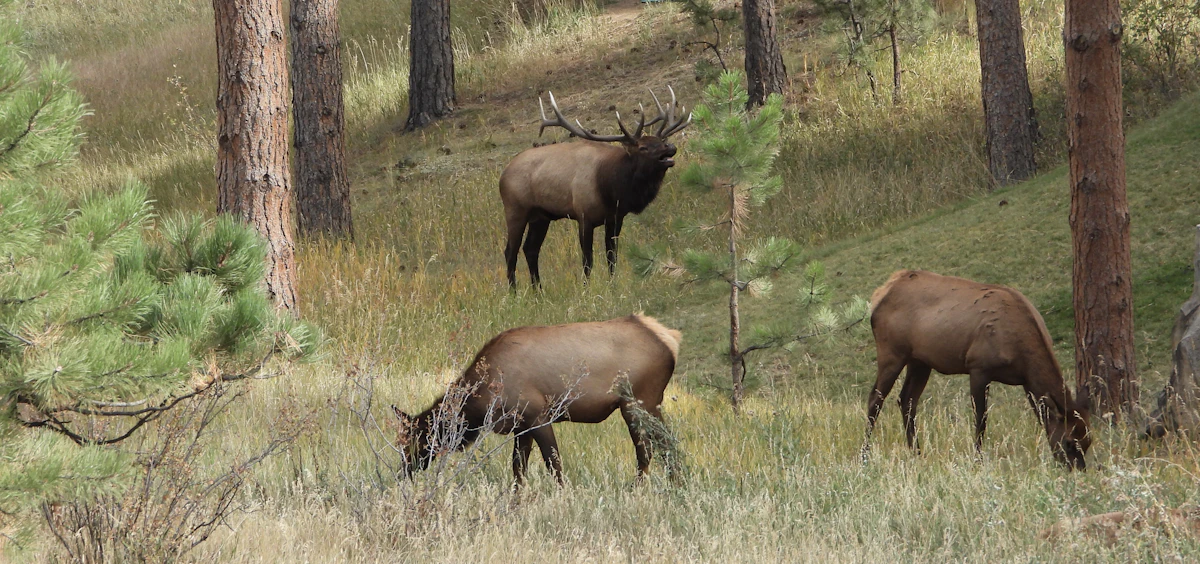
Dark timber hunting is where most elk actually live, yet it intimidates hunters raised on long-range rifles and wide-open glassing country. When you step into dense lodgepole pine, Douglas fir, or spruce stands where visibility drops to 30 yards and every snapped twig sounds like a gunshot, you are playing a different game entirely. Success in dark timber requires abandoning open-country habits and embracing close-range woodsmanship.
This guide breaks down the tactics, gear choices, and mental adjustments that separate frustrated timber hunters from those who consistently punch tags in the thick stuff. Whether you drew a heavily timbered Colorado unit or your Idaho OTC hunt puts you in endless lodgepole, these strategies work.
Why Dark Timber Holds More Elk Than Open Country
Elk prefer dark timber for the same reason deer bed in thick brush — security. Mature timber provides thermal cover in summer heat, blocks wind in September storms, and offers escape routes invisible to predators scanning from ridges. In heavily hunted units, elk learn that open parks and meadows mean danger. They feed at night and spend daylight hours deep in the shadows where human scent, not optics, is the primary detection method.
Pressured bulls move into timber by day two of rifle season and stay there. Find the right patch of dark timber and you have found where elk go when the shooting starts. The challenge is not locating elk — GPS collaring studies confirm they are in there — but getting close enough for a shot before they ghost away.
Understanding Elk Movement Patterns in Thick Cover
Elk do not wander randomly through timber. They follow terrain features that offer the least resistance and best security. Look for gentle benches 200 to 400 yards below ridgelines where thermal currents are predictable and escape routes are uphill and lateral. Elk bed in small pockets of blowdown or rock outcrops that provide both visibility downslope and quick access to thick cover.
Morning movement flows from feeding areas (parks, meadows, burns) back into timber along natural funnels — saddles, creek drainages, timbered ridges. Elk string out single file when moving through dense stands, creating narrow travel corridors you can ambush. Afternoon movement reverses the pattern as elk stage near timber edges before evening feeding.
Rut activity changes the equation. Bulls bugle from timber to locate cows without exposing themselves in openings. A bull that bugles from the same timbered basin three mornings in a row has a harem bedded nearby. He is huntable if you plan your approach using terrain and wind.
Moving Quietly and Slowly Through Dense Timber
Speed kills opportunities in dark timber. Elk survive by detecting threats before threats detect them, and in timber, their ears matter more than their eyes. A hunter crashing through deadfall at normal walking pace sounds like danger. A hunter moving two steps, pausing 30 seconds, glassing ahead, then moving two more steps sounds like another elk or deer.
Commit to covering 100 yards in 20 minutes. Stop behind trees, not in the open. Let your eyes adjust to shadows and scan for horizontal lines, antler tips, and ear flicks before advancing. When you step, place your heel down first and roll forward onto your toe to detect branches before committing weight. Wear soft-soled boots, not stiff mountaineering boots that snap twigs like firecrackers.
Hunt into the wind or across it, never with wind at your back. In timber, swirling thermals and micro-drafts make scent control difficult. Plan your route so that even if wind shifts, you are not pushing scent directly toward bedding areas. If you bump elk, note the direction they ran and circle wide to get ahead of them. Pushed elk often stop in the next thick patch and settle down if not pursued.
Shot Preparation and Rifle Setup for Close Encounters
Most timber shots happen inside 100 yards, often inside 50. A bull steps into a six-foot shooting lane, stands for four seconds, then vanishes. You have no time to fiddle with scope magnification or find a rest. Practice offhand shooting until you can hit a pie-plate at 75 yards standing unsupported. Practice shooting from kneeling and sitting positions where branches block standing shots.
Set your variable scope to its lowest magnification when moving through timber. A 3-9x scope should stay at 3x or 4x. Higher magnification turns your field of view into a soda straw and costs you the shot when a bull appears at 40 yards. Adjust magnification only when glassing from stationary positions.
Know your holds at 25, 50, and 75 yards. A rifle zeroed at 200 yards shoots 1.5 inches high at 100 yards and 3 inches high at 50 yards. That matters when the vitals are an eight-inch circle and the only opening is between two lodgepole trunks. Confirm your close-range trajectory and practice shooting through narrow lanes.
Using Calls and Cow Talk in Timber Settings
Calling works differently in timber than in open basins. Sound does not carry as far, but elk respond more aggressively because they assume the caller is close. A bugle from 200 yards in timber sounds like it came from 80 yards. Bulls commit harder because they believe another elk is in their core area.
Cow calls and chirps are more effective than bugles in thick cover. A bull that hears a cow call from nearby timber assumes a cow wandered away from his harem and will often trot over to retrieve her. Use soft mews and chirps when still-hunting through bedding areas. If a bull bugles in response, stop moving and set up in the thickest available cover. He may come silently.
Avoid overcalling. In timber, less is more. One subtle cow call every 10 minutes while moving keeps you sounding like a real elk. Constant calling sounds like a hunter. If you get a response, shut up and let the bull close distance. Set up with shooting lanes in multiple directions because bulls circle downwind before committing.
Reading Sign and Identifying Bedding Areas
Fresh sign tells you where elk were in the last 24 hours. Steaming dung piles, wet tracks in soft dirt, and broken branches still oozing sap mean elk are close. Concentrations of beds in thick pockets indicate core bedding zones. Mature bulls bed in small groups or alone in nasty blowdown tangles where they can hear and smell approaching danger.
Look for rubs on lodgepole and aspen saplings along travel corridors between bedding and feeding areas. Fresh rubs with white wood and sap still wet were made that morning. Wallows in timbered drainages see use in early September when bulls are still establishing dominance. A muddy wallow with fresh tracks is worth sitting over during midday hours.
Elk trails in timber are obvious — deep ruts worn into soft forest duff by generations of hooves. Follow trails uphill from feeding areas to locate bedding zones. Set up ambush positions on trails 200 yards below bedding areas where elk feel secure but have not yet bedded down. Hunt these spots in the first two hours after sunrise when elk are filtering back from night feeding.
Weather and Timing Strategies for Timber Hunts
Rain and wind are your friends in dark timber. Rain masks sound and smell, letting you move closer before detection. Elk stay active longer in rain because they feel more secure. Wind covers the noise of snapping twigs and rustling gear. Hunt aggressively in wet, windy conditions when elk let their guard down.
Barometric pressure changes trigger movement. Elk feed heavily before storms and again immediately after fronts pass. The calm window after a storm clears is prime time to find bulls on their feet in timber. They are hungry, confident, and vocal.
Midday hunting matters in timber. Unlike open country where elk bed at first light, timbered elk may feed until 9 AM and start moving again at 3 PM. The window between 10 AM and 2 PM is slower, but bulls still respond to calls because they can move under cover without exposing themselves. Do not hike back to camp at noon — some of the best timber bulls are killed between 11 AM and 1 PM.
Gear and Clothing Choices for Timber Environments
Quiet clothing matters more than camouflage pattern in timber. Avoid waterproof shells that sound like potato chip bags when you move. Merino wool and fleece move silently through brush. Choose earth tones that break up your outline without relying on digital camo patterns designed for open country.
A lightweight rifle with a short barrel (20 to 22 inches) maneuvers better in thick cover than a long-range rig. Choose a caliber you can shoot accurately offhand — 7mm-08, .308, .270, or 30-06 all work. Avoid magnums with punishing recoil that make you flinch on quick shots.
Carry compact binoculars (8x32 or 8x42) for glassing through shooting lanes. Leave the 15x spotter in the truck. A small rangefinder confirms yardage when you have time, but learn to estimate distance by eye for snap shots. Most timber kills happen without time to range.
Common Mistakes Timber Hunters Make
Moving too fast is the number one mistake. Hunters treat timber like a highway to the next meadow instead of prime elk habitat. Slow down. If you are not seeing fresh sign, you are moving too fast to notice it. If elk are busting out ahead of you without offering shots, you are pushing too hard.
Ignoring thermals costs opportunities. Morning thermals flow downhill as cool air sinks. Evening thermals rise as warming air climbs. Hunt uphill in the morning and downhill in the afternoon to keep your scent out of bedding areas. Midday thermals are erratic — trust wind direction over assumptions.
Overestimating shooting ability leads to wounded elk. Offhand shots at 75 yards through brush are harder than you think. Pass marginal shots. Wait for the bull to step into a clear lane, or reposition for a better angle. A bull walking away will often stop if you give a soft mew on a cow call.
Using TAGZ to Find Huntable Dark Timber Units
Not all units have quality dark timber. Some are dominated by alpine basins and sagebrush parks. Others hold timber but lack sufficient elk density to justify targeting thick cover. TAGZ lets you filter units by terrain type and overlay unit boundaries with satellite imagery to identify timbered drainages, benches, and ridges.
Compare unit draw odds against terrain maps to find overlooked units with extensive lodgepole and spruce stands. Units with lower draw odds often hold more timber than popular open-country units. Use the public land layer to confirm access into timbered blocks without crossing private land.
Track preference points across states and identify when you have enough points to draw a heavily timbered unit with consistent bull harvest success. Plan your application strategy around units where dark timber tactics give you an advantage over open-country hunters.
FAQ — Hunting Dark Timber Successfully
What caliber works best for dark timber elk hunting?
Any caliber from .270 Winchester to .30-06 works well. Choose a rifle you can shoot accurately offhand at close range. Timber shots rarely exceed 100 yards, so long-range magnums offer no advantage.
How do you pattern elk in thick lodgepole stands?
Find fresh sign near parks and meadows where elk feed at night, then follow trails uphill into timber to locate bedding areas. Set up ambush positions along travel corridors 200 yards below where elk bed.
Can you call elk successfully in dark timber?
Yes. Elk respond aggressively in timber because they assume other elk are close. Use soft cow calls and mews instead of loud bugles. Bulls often approach silently, so set up with shooting lanes in multiple directions.
What time of day is best for timber hunting?
Morning and evening are prime, but midday hunting works in timber. Elk stay active longer under cover and respond to calls between 10 AM and 2 PM when they feel secure in thick stands.
Should you still-hunt or ambush timber elk?
Both work. Still-hunting lets you cover ground and locate active bulls. Ambushing trails between bedding and feeding areas works well during morning and evening movement windows. Choose based on sign and bull activity.
How close is too close when moving through timber?
If you can hear elk moving or breathing, you are close enough. In thick timber, 50 yards feels like 20. Move slowly, glass constantly, and avoid pushing scent toward bedding areas.
Was this article helpful?
Previous
7 Elk Calling Mistakes That Cost Beginners Bulls Every Season
New elk callers make predictable mistakes that educate bulls and ruin setups. Learn the seven most common errors — from overcalling to poor positioning — and how to fix them before your next hunt.
Next
Best Whitetail Rifles: Top Picks for Eastern and Western Hunts
Choosing the right whitetail rifle means balancing accuracy, handling, and cartridge performance for your hunting environment. From timber stands to open sage, these proven rifles deliver consistent results across every whitetail scenario.