How to Field Judge Mule Deer — Complete Mule Deer Scoring Guide
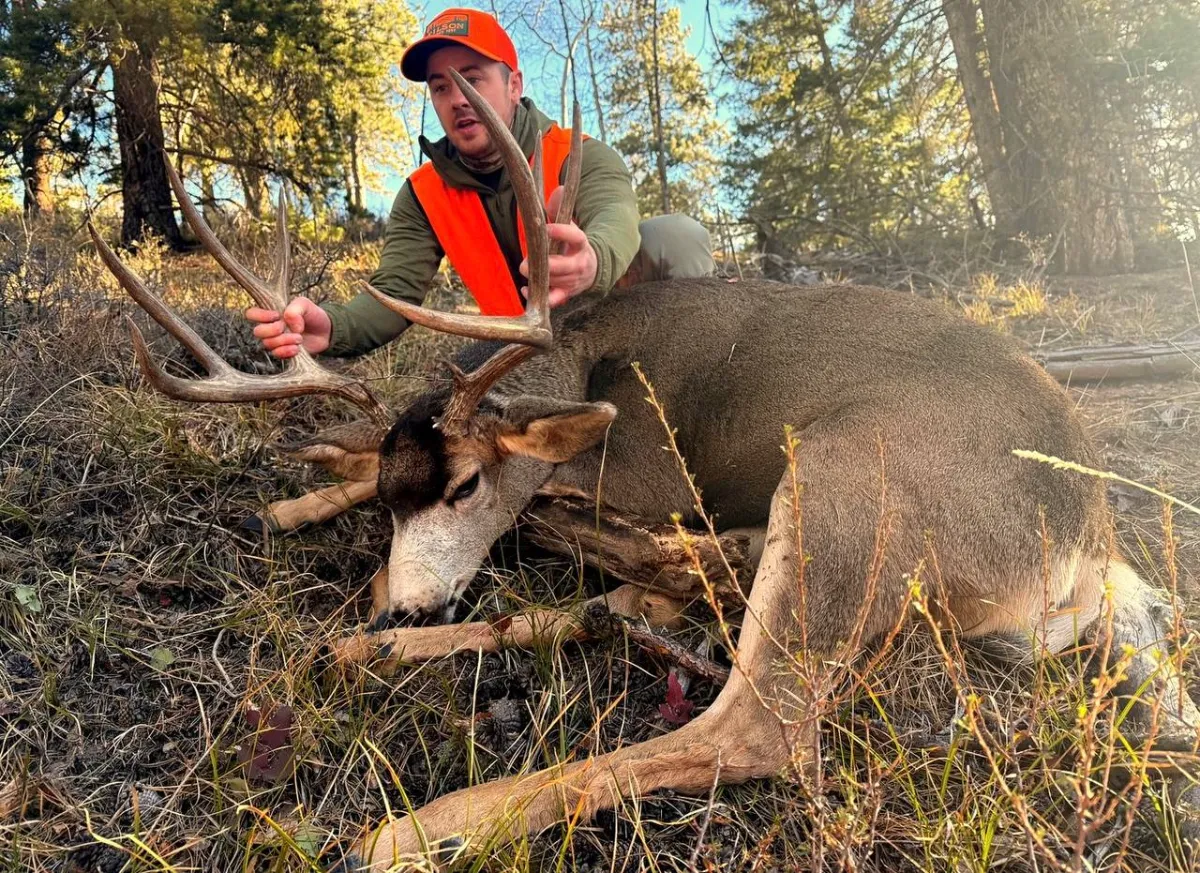
Few animals fool hunters more than mule deer. A buck can look enormous one minute and average the next, depending on distance, terrain, light, and his own body size. Every season hunters pass bucks that would score well over 180 while shooting deer they were sure were bigger. The goal in the field isn't a perfect tape score, it's recognizing a mature buck that fits your goals before he slips over the ridge. A few reliable methods get you there.
What creates a mule deer score
A Boone and Crockett score comes from main beam length, the typical points, mass, and inside spread. Where mule deer differ from whitetails is the forks: instead of single tines off a main beam, muleys grow forks that split again, and deep forks stacked with good mass add up fast. When all four categories are strong, the score climbs quickly.
Frame and forks first
Frame is everything, because it sets the ceiling on score. Big-frame bucks with long beams, tall antlers, and deep forks often look impressive before you analyze a single detail. From there, the forks are where giants separate themselves. Front forks run 8 to 10 inches on an average buck, 12 to 14 on a good one, and 15-plus on something special. Rear forks matter even more: 10 to 12 inches is average, 13 to 15 is good, and 16-plus creates tremendous scoring potential. A buck with deep forks front and back will beat a wider, shallower deer almost every time.
Width is overrated, mass is underrated
Hunters obsess over width, and it does help, but it doesn't build giants on its own. A mature buck typically runs 20 to 24 inches wide, a good one 25 to 28, and an exceptional one past 29. The easiest reference is the ears: an alert mule deer's ear span is roughly 22 inches tip to tip, so antlers that reach well outside the ears are starting to show real width. Mass, meanwhile, scores everywhere and gets ignored constantly. A heavy 170-inch buck will often look bigger, and hunt harder, than a light-framed 180.
Reading the rest
Eye guards and extra points add inches in a hurry, so don't write them off. On the other end, a "basket rack" is the term for a small-framed, narrow, shallow-forked, light-massed deer, usually scoring under 140, and almost always a younger buck. Learn to recognize that profile so you can let young deer walk.
Free to join
Download mobile app
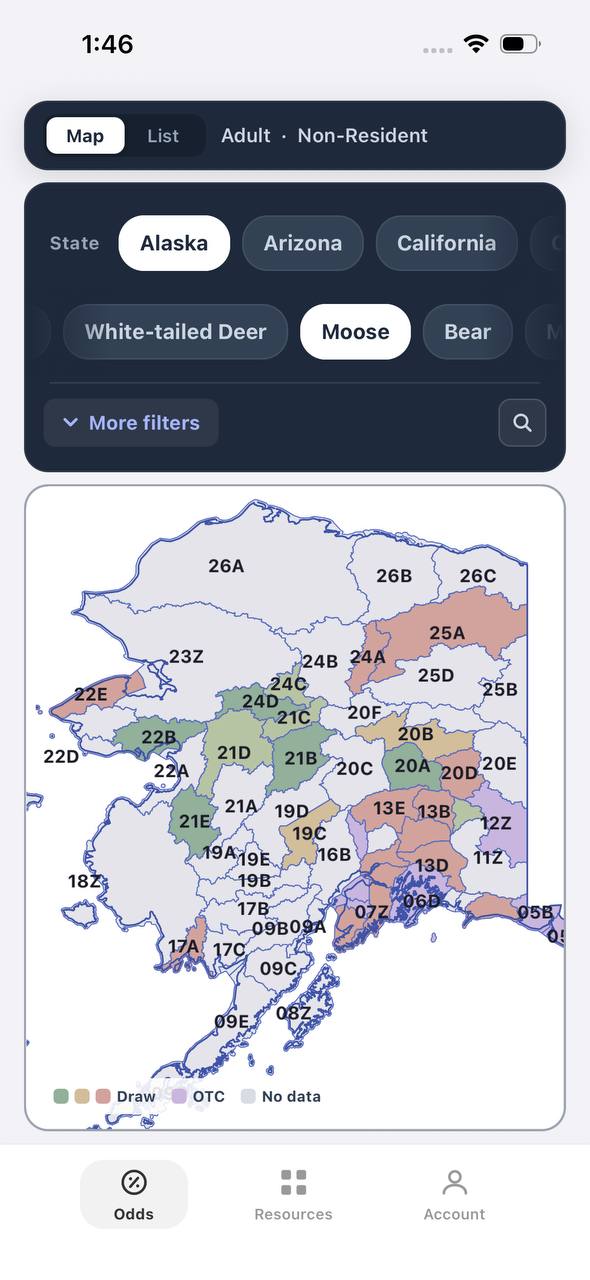
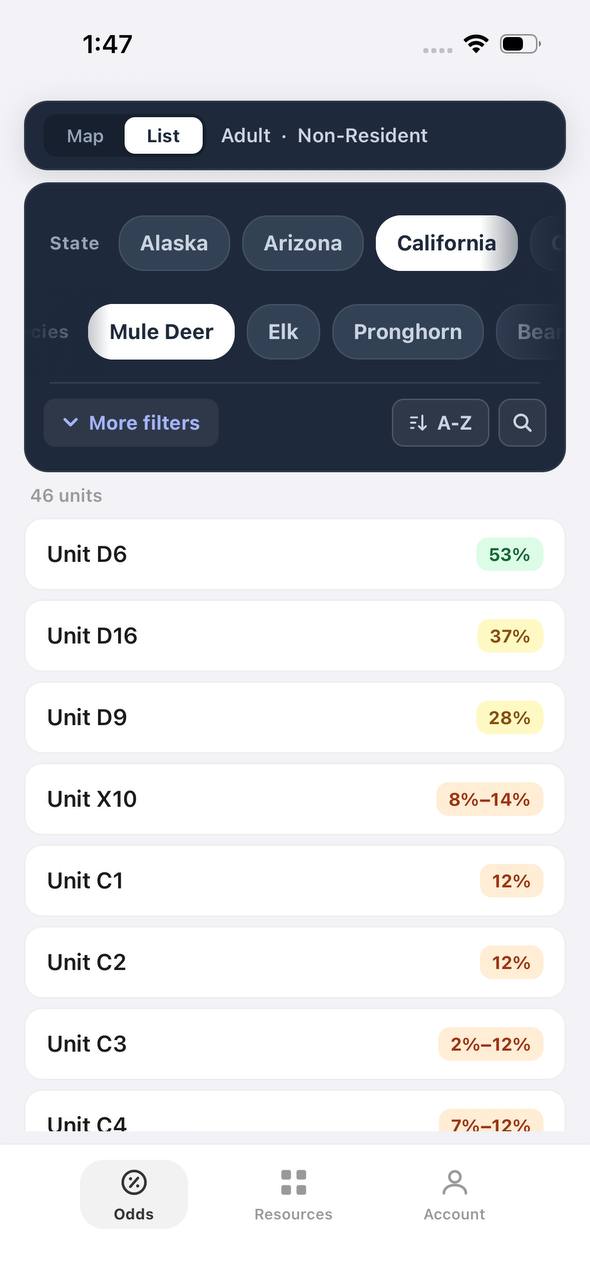
- Detailed draw odds
- Point tracking
- Deadline reminders
- 18 states covered


Free to join
Download mobile app
- Detailed draw odds
- Point tracking
- Deadline reminders
- 18 states covered

Free to join
Download mobile app
- Detailed draw odds
- Point tracking
- Deadline reminders
- 18 states covered

What the numbers look like
A 140-inch buck is respectable, mature in much of the West, and a deer plenty of hunters are happy to take. At 160, bucks start standing out from the herd with stronger frames, deeper forks, and better mass, and many hunters consider that the start of trophy class. A 180 is a legitimate giant with deep forks everywhere, heavy mass, and a wide frame, the kind of buck people chase for years. A true 200 is world-class and looks unlike every other deer on the mountain, and most hunters will never see one in the wild.
Age over inches
Score and age aren't the same. A mature buck shows a deep chest, thick neck, pot belly, swayed back, and heavy shoulders, and he often carries better mass and character than a flashier young deer. Many experienced hunters prioritize age over raw inches for exactly that reason. Habitat plays in too: agricultural bucks tend to carry more mass thanks to better nutrition, while mountain bucks can look smaller in the body but still score exceptionally, so judge the antlers, not the frame they sit on.
Slow down and use references
The biggest mistake in mule deer judging is the same as with elk: getting excited and adding inches that aren't there. Use the buck's own body to estimate, an ear is 7 to 8 inches long, ear span about 22 inches, eye to nose roughly 7 to 8 inches, and compare antler against those constantly. Work through frame, forks, width, and mass in order before you decide. Finding mature bucks starts long before opening day, and TAGZ helps you research units, draw odds, pressure, and habitat so you're set up to evaluate the right deer when he finally appears.
Was this article helpful?
Previous
Colorado GMU 61 Elk Hunting Guide
Colorado GMU 61 is a respected limited-entry elk unit where hunters need to manage expectations, pressure, and terrain instead of just the draw. This guide breaks down terrain, access, pressure, scouting, and practical elk strategy so hunters can build a realistic plan before committing time or points.

Related
How to Field Judge Bull Elk — Complete Elk Scoring Guide
Field judging elk involves estimating beam length, tine length, mass, and spread to determine whether a bull scores 280, 300, 320, 340, or larger. Understanding G1-G6 measurements, whale tails, swords, and age characteristics can dramatically improve your ability to evaluate bulls in the field.
Next
Long Range Shooting for Hunters — Accuracy, Ethics & Elk Hunting
Long range shooting is a valuable hunting skill, but ethical success depends on practice, wind reading, field positions, rifle familiarity, and understanding your effective range. The best hunters focus on making high-percentage shots, not simply the longest shots possible.