How to Field Judge Big Game Out West: Elk, Mule Deer, Whitetail, Pronghorn, Sheep, Goat, Moose, Bear, Caribou, and Muskox
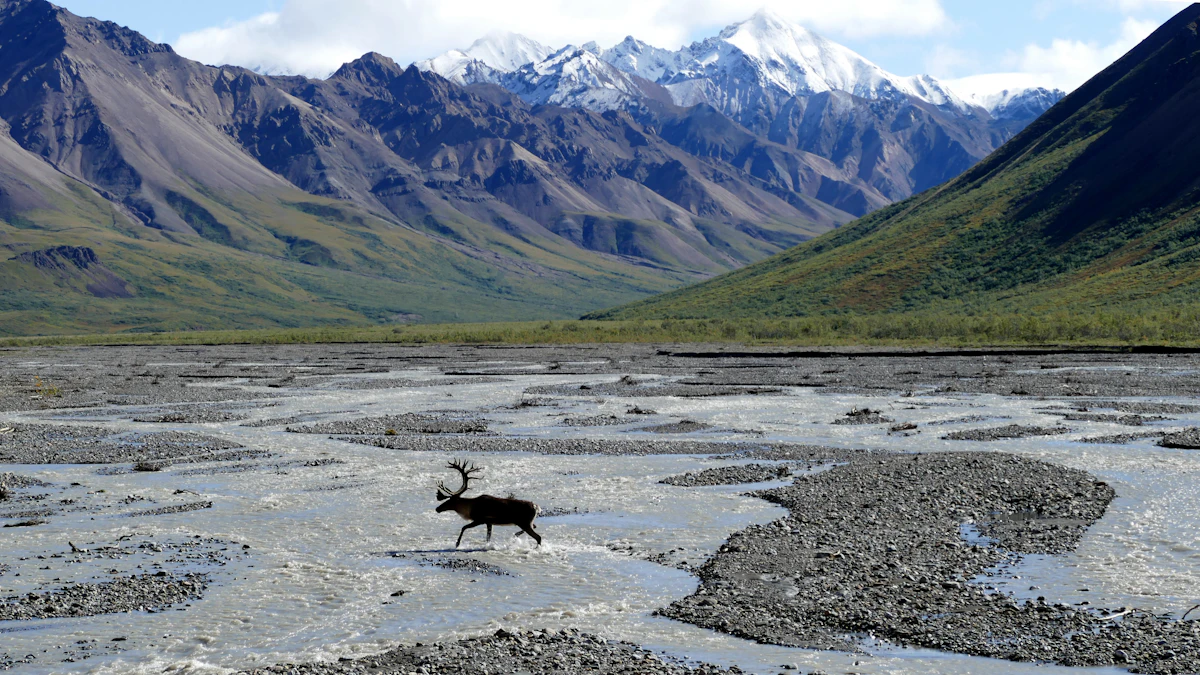
Field judging big game out West comes down to making fast, confident decisions based on what you see in real time. You won't have perfect angles or time to measure, so the goal is to use visual references to decide whether an animal meets your standard before you take the shot. This guide breaks down how to judge each major species using simple, repeatable methods, and explains the structure behind what you're actually looking at.
Reading antlers before you judge
Before judging any antlered animal, it helps to understand points. The "G" stands for growth point, and each tine coming off the main beam is numbered from the base upward: the G1 is the brow tine, the G2 is the second tine up the beam, the G3 is the third, the G4 is the fourth, and G5-plus are the additional top points. In the field, long G2s and G3s indicate a strong frame, weak or missing G4s limit overall size, and heavy G1s on elk add mass. The key thing to remember is that mass matters just as much as tine length, so don't get tunnel vision on length alone.
Antlered species
When judging a bull elk, use the ears, which run roughly 20 to 22 inches wide, as your reference, and look for long beams, strong G3s and G4s, and heavy mass. A narrow or thin bull reads as average, a wide bull with weak tops is also just average, but a bull that's wide, heavy, and carrying strong tops is a shooter. Mule deer ears span about 22 to 24 inches, and here you focus on fork depth and frame: tall but narrow is average, wide with shallow forks is average, while wide with deep forks and good mass is a shooter. Whitetails are tighter in structure with ears around 13 to 15 inches, so judge symmetry, G2 and G3 length, and mass, passing on thin beams and weak tines but taking the balanced, heavy, long-tined buck. Moose are judged on palm width and mass, where narrow palms mean a young bull, wide palms mean a mature one, and wide, heavy palms with good points make a shooter. Caribou are judged on antler shape, the front shovel or brow palm, bez points, and mass, so look for a large shovel, long top beams, symmetry, and thick beams; small shovels and thin beams or a good but uneven frame read as average, while a large shovel paired with symmetry and mass marks a high-quality bull, and because caribou can look bigger than they are, focus on structure.
Horned species
Pronghorn have small ears, around 5 to 6 inches, so judge horn height, prongs, and mass, passing the tall-but-thin or weak-pronged bucks and taking the one that's tall, heavy, and strong-pronged. Sheep introduce annuli, the horn rings that each represent about a year of growth and are counted from the base outward, so more rings mean an older, more mature ram, and a full curl with heavy mass marks a high-quality animal. For bighorn sheep specifically, look for full curl, heavy bases, and visible rings: a half curl is young, a full curl that's light is average, and a full curl that's heavy is a shooter. Mountain goats are judged on horn length and body size, where short horns are a pass, long horns on a small body usually indicate a female, and long horns on a heavy body mean a mature billy. Muskox come down to boss size and horn drop, so look for a thick boss, the center horn mass across the forehead, horns that drop low along the face, and a large, blocky body; a thin boss is younger, a moderate boss is average, and a wide, heavy boss with deep horn drop is a mature bull. With muskox, the boss is everything, so don't ignore it.
Bears
Bears are judged by body proportions rather than antlers. On a black bear, evaluate body size, head proportion, and ear size, looking for small ears relative to the head, thick legs, a wide body, a low-hanging belly, and a blocky head and snout; a tall but lanky bear is young, a big body on long legs is average, and a low-slung body with small ears and thick legs is a mature boar. Color doesn't matter, size does. Grizzlies are judged on size, shoulder hump, and head shape, so look for a prominent shoulder hump, a dish-shaped face, a massive body with thick legs, and small ears relative to the head; a smaller frame with less hump is younger, a large body with a visible hump is mature, and a massive body with dominant posture is a high-quality bear. With grizzlies, safety and legality always come first, so know your regulations.
Improving accuracy and avoiding mistakes
To judge more accurately, use your optics and study multiple angles, compare antlers and horns to ear or head size, weigh mass as heavily as length, take your time whenever possible, and set your standard before the hunt so you're not deciding in the heat of the moment. The most common mistakes are judging from a single angle, ignoring mass, overestimating tine length, misreading a bear's size because of its fur, and rushing decisions under pressure. Get those fundamentals right and your field judging will hold up across every species, and TAGZ helps you reach those animals in the first place with unit research, draw odds, and hunt planning before the season begins.
Was this article helpful?
Previous
How to Hunt Elk Pressure: Why Most Hunters Fall Behind When It Gets Tough
Glass first, move second. Cover ground with your eyes, stay mobile, and avoid getting stuck in pressured areas with no elk.
Next
How to Choose the Right Hunting Weapon for Western Hunts: Stop Guessing and Pick What You Can Actually Use
Rifles and bows both work—success comes down to using a setup you can control, trust, and execute with when it matters most.