DIY vs Guided Rocky Mountain Bighorn Sheep Hunts
Rocky Mountain bighorn sheep hunting is one of the most limited big-game opportunities in the West.
For many hunters, the hardest part isn't choosing:
DIY vs Guided.
It's obtaining the tag.
Some hunters can spend many years applying without ever drawing the sheep license they're pursuing.
That makes the decision unusually important.
If you finally draw a sheep tag, you may be holding an opportunity you can't easily reproduce.
Before deciding how to hunt it, understand exactly what you've drawn.
Step One: Understand Your Sheep Tag
Don't hire an outfitter—or commit to DIY—until you understand:
State
Hunt area
Hunt code
Season dates
Legal ram requirements
Public/private access
Wilderness rules
Guide requirements
Transportation
Terrain
Previous harvest
Sheep distribution
Applicable once-in-a-lifetime restrictions
A sheep tag isn't simply:
"A bighorn tag."
The specific license determines your actual opportunity.
Rocky Mountain Bighorn Draw Systems Vary by State
There is no universal Western sheep drawing system.
Different states use completely different approaches.
That matters because the amount of time, money and planning invested before drawing can vary dramatically.
Colorado Rocky Mountain Bighorn Sheep
Colorado currently uses:
Preference Points + Weighted Preference
for applicable Rocky Mountain bighorn sheep licenses.
Hunters can accumulate up to:
Three regular preference points.
After reaching three and remaining unsuccessful, eligible applicants can begin accumulating:
Weighted preference points.
Weighted points improve drawing probability but don't create a guaranteed sheep tag.
Colorado also publishes hunt-code-specific draw information that hunters can use when researching an application.
Free to join
Download mobile app
- Detailed draw odds
- Point tracking
- Deadline reminders
- 18 states covered

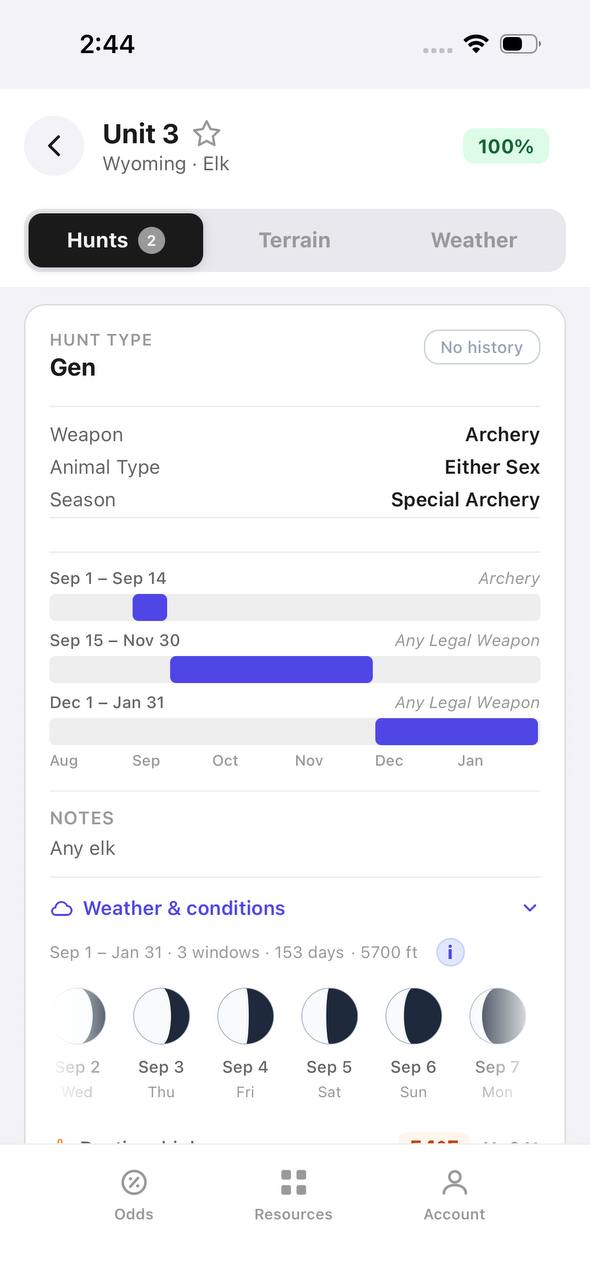
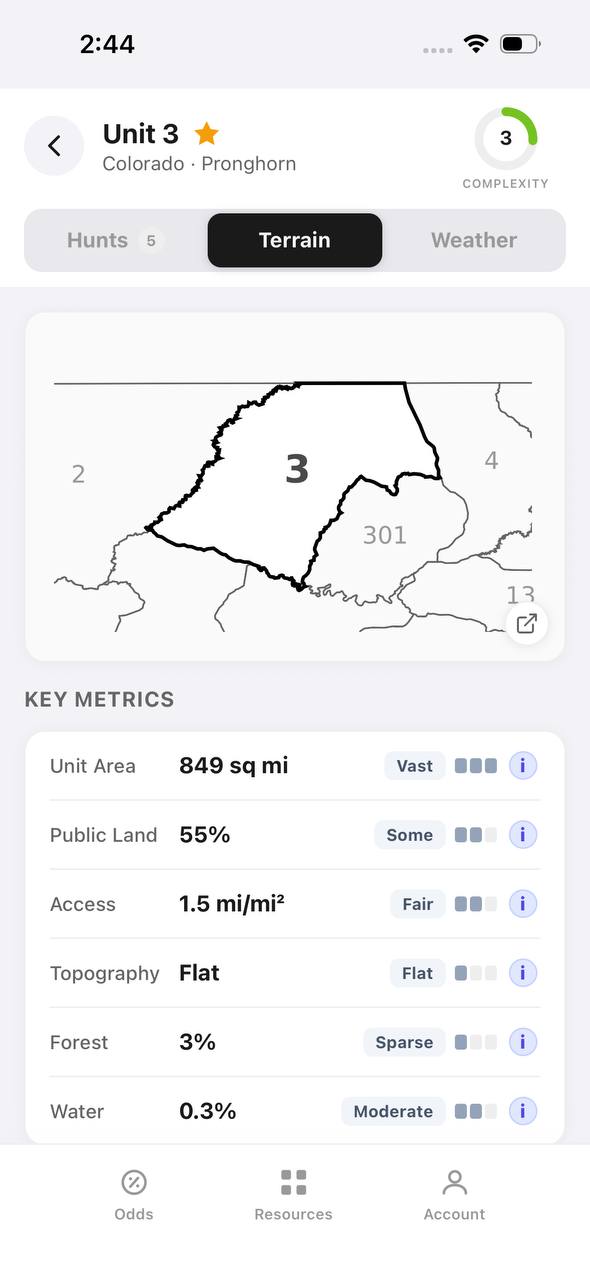
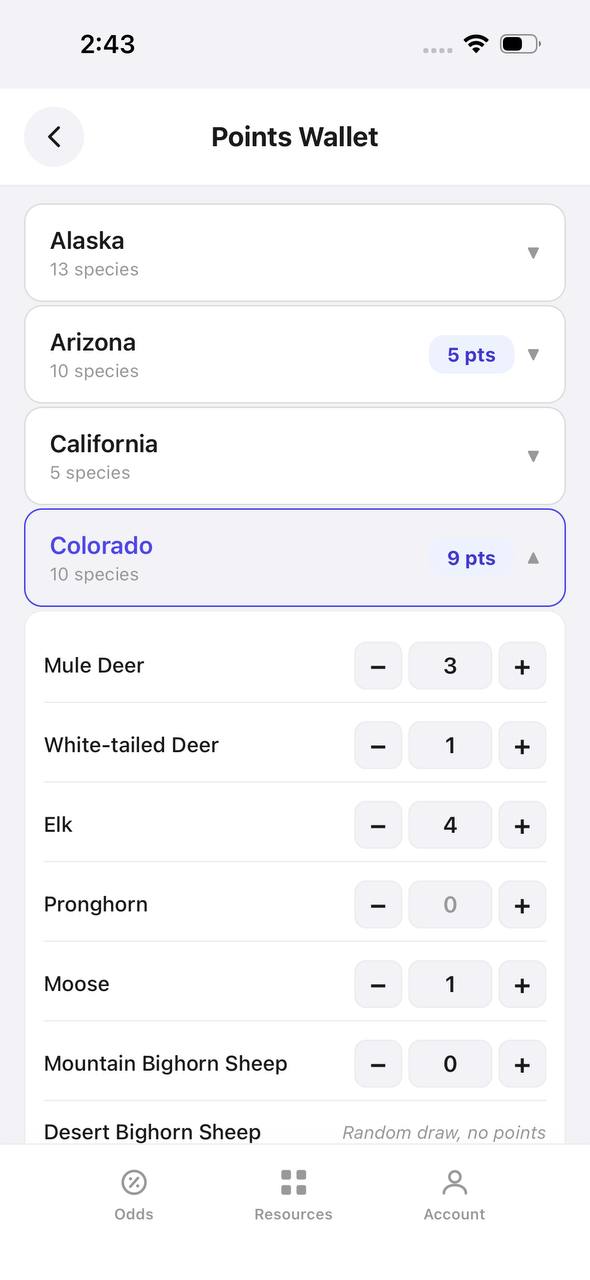
Free to join
Download mobile app
- Detailed draw odds
- Point tracking
- Deadline reminders
- 18 states covered
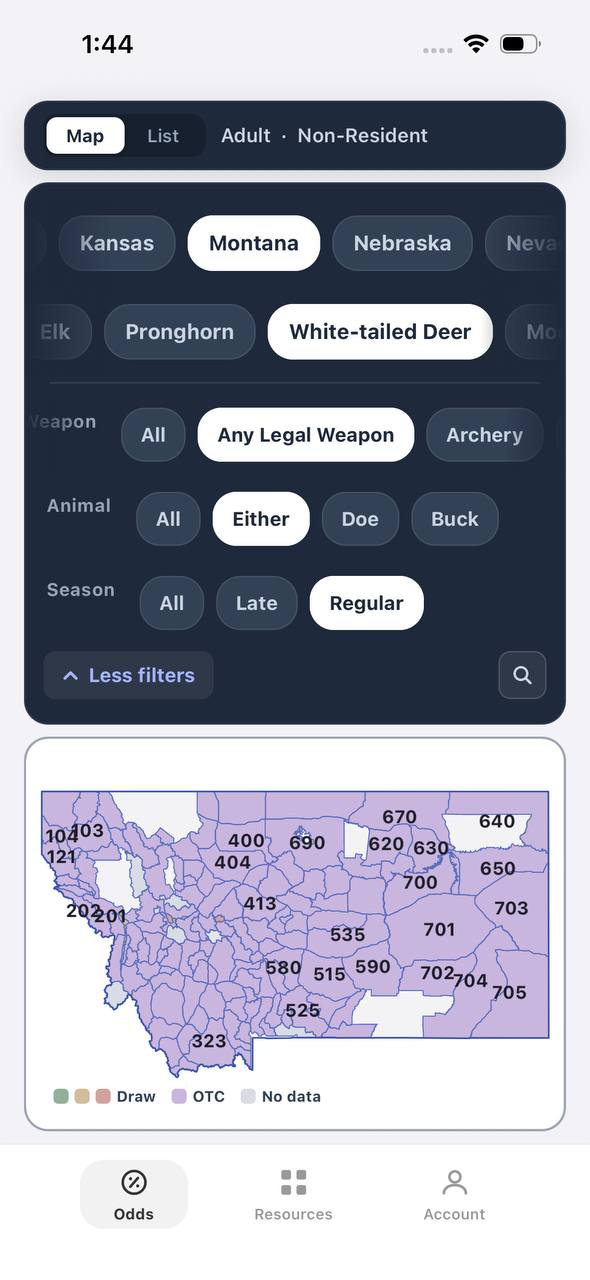
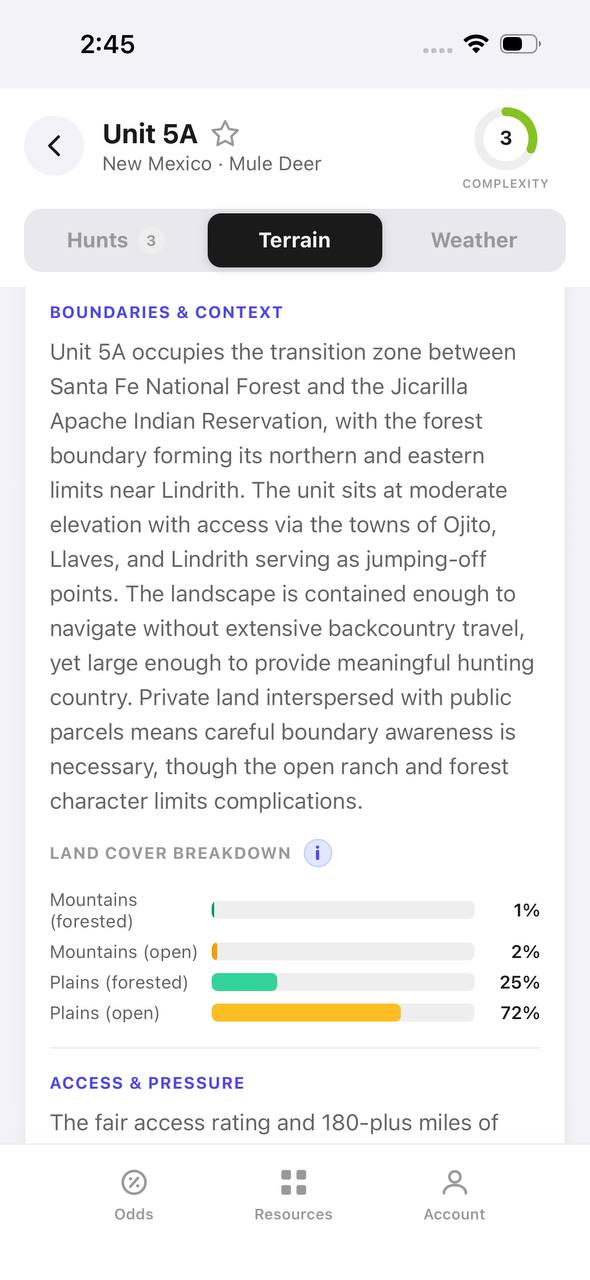
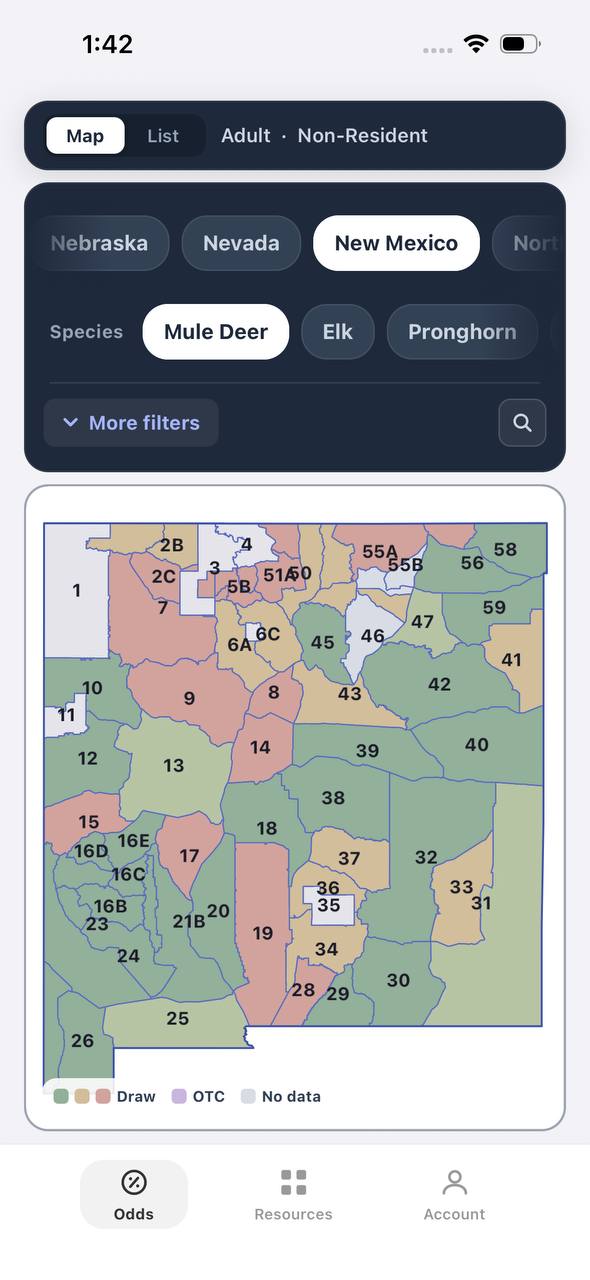
Free to join
Download mobile app
- Detailed draw odds
- Point tracking
- Deadline reminders
- 18 states covered
Wyoming Rocky Mountain Bighorn Sheep
Wyoming also uses preference-point mechanics for applicable bighorn sheep licenses and publishes separate:
Preference Draw
and:
Random Draw
statistics.
Research the exact:
Hunt Area + Residency + Point Level + Quota
rather than treating Wyoming as one sheep lottery.
Idaho Rocky Mountain Bighorn Sheep
Idaho requires hunters pursuing bighorn sheep through the standard system to apply for:
Controlled Hunt Tags.
That means Idaho sheep strategy is fundamentally different from Colorado or Wyoming point-based planning.
Again:
State matters.
Other Western States
Montana, Utah and other jurisdictions offering Rocky Mountain bighorn sheep have their own:
Drawing systems
Bonus or preference mechanics where applicable
Residency rules
Permit quotas
Once-in-a-lifetime restrictions
Guide/outfitter regulations
Always verify the current regulations through the applicable state wildlife agency.
DIY vs Guided Starts After the Tag Question
A hunter shouldn't begin with:
"Should I book a sheep outfitter?"
Start with:
"What legal sheep opportunities can I realistically obtain?"
Once you know the hunt you're pursuing—or you've actually drawn it—you can evaluate whether professional help makes sense.
What Is a DIY Bighorn Sheep Hunt?
A DIY sheep hunt means the hunter takes primary responsibility for:
Research
Scouting
Access
Transportation
Camp
Food
Gear
Sheep locating
Field judging
Stalking
Recovery
Meat care
Trophy care
Pack-out logistics
Depending on the hunt, that can range from a relatively accessible road-based hunt to a demanding backcountry expedition.
Advantages of a DIY Sheep Hunt
Independence
You control:
Schedule
Scouting
Camp
Daily strategy
Hunting pace
Trophy expectations
For hunters who enjoy planning every component themselves, that's a major part of the experience.
Lower Outfitter Expense
A DIY hunt eliminates the professional guide/outfitter fee.
But:
DIY doesn't mean cheap.
You may still have significant costs.
More Scouting Freedom
If you live close enough to the hunt area, you may be able to spend substantial time scouting before the season.
That can reduce one of the largest advantages a local outfitter may otherwise have.
Personal Accomplishment
Some hunters specifically want to:
Find, judge, stalk and recover their own ram.
For those hunters, independence may be more important than convenience.
Challenges of DIY Sheep Hunting
Scouting Responsibility
Nobody is locating sheep for you.
You need to determine:
Where rams summer
Seasonal movements
Water
Escape terrain
Glassable basins
Access
Sheep concentrations
Hunting pressure
That can require significant time.
Field Judging
Depending on the hunt, legal ram requirements can require careful field evaluation.
You need to understand the applicable legal-animal definition before hunting.
Never rely solely on:
"That looks like a legal ram."
Know the regulation.
Logistics
Sheep country can create complicated logistical problems involving:
Trailheads
Remote roads
Horses
Backpack access
Weather
Water
Camping
Meat care
Horn/skull requirements
A mistake that would be inconvenient on an elk hunt can become much more serious in steep sheep country.
Limited Local Knowledge
A hunter can understand sheep behavior generally while knowing very little about:
This specific sheep herd.
That's where extensive scouting becomes important.
What Is a Guided Bighorn Sheep Hunt?
A guided hunt places much of the hunt planning and field execution in the hands of a licensed guide or outfitter.
Services vary dramatically.
Depending on the outfitter, a package may include:
Preseason scouting
Camp
Meals
Transportation
Horses
Pack animals
Guide
Spotting equipment
Field judging
Trophy care
Meat care
Pack-out assistance
Never assume those services are included.
Get them in writing.
Advantages of a Guided Sheep Hunt
Local Knowledge
A guide familiar with the exact hunt area may already understand:
Seasonal ram locations
Access routes
Glassing points
Water
Escape terrain
Private boundaries
Trail conditions
Sheep movement
Historical ram use
That can reduce the learning curve after drawing.
Preseason Scouting
This can be one of the most valuable guide services.
Ask:
"How much scouting will you personally do before my hunt?"
A guide who has already located multiple mature rams before opening day provides a different service than someone who starts looking when you arrive.
Field Judging
Experienced sheep guides may help evaluate:
Legal status
Horn configuration
Age characteristics
Ram maturity
Trophy expectations
But the hunter still needs to understand the applicable law.
Logistics
Depending on the package, an outfitter may handle:
Camp
Horses
Transportation
Food
Water
Meat recovery
Trophy care
That can be particularly valuable in remote sheep country.
What a Guide Cannot Guarantee
A guide cannot guarantee:
A Harvest.
A guide cannot control:
Weather
Sheep movement
Wildfire
Hunter physical ability
Shot opportunities
Animal behavior
Access closures
Injury
Other hunters
Be cautious with anyone promising a guaranteed successful wild sheep hunt.
Do Guided Bighorn Sheep Hunts Have Higher Success Rates?
Don't assume they do without data.
A guide can provide:
Knowledge + Scouting + Logistics + Experience.
Those factors can be valuable.
But saying:
"Guided hunters have higher success"
requires evidence for the applicable hunt.
Instead, ask the outfitter:
"What were your results on this exact sheep hunt?"
Then request context.
Ask for Exact-Hunt Results
Don't settle for:
"We're 90% on sheep."
Ask:
"How many hunters have you guided on my exact hunt code or hunt area?"
Then:
How many harvested?
How many legal rams did they see?
How many opportunities did they have?
How many days did they hunt?
Was it the same guide?
Were the hunts during comparable seasons?
Those answers are much more meaningful than an overall success percentage.
Guided Does Not Mean Easier
A guide can't climb the mountain for you.
Even a fully guided hunt can require:
Long climbs
Sidehilling
Loose rock
High elevation
Heavy packs
Long glassing sessions
Early mornings
Long days
Bad weather
Don't book a guided sheep hunt assuming professional assistance removes the physical demands.
Free to join
Download mobile app
- Detailed draw odds
- Point tracking
- Deadline reminders
- 18 states covered
Free to join
Download mobile app
- Detailed draw odds
- Point tracking
- Deadline reminders
- 18 states covered
Free to join
Download mobile app
- Detailed draw odds
- Point tracking
- Deadline reminders
- 18 states covered
DIY Doesn't Automatically Mean More Difficult
Some DIY hunters have major advantages.
For example, a hunter who:
Lives near the unit
Has extensive mountain experience
Can scout repeatedly
Knows sheep behavior
Has reliable hunting partners
Has flexible vacation time
may be exceptionally well positioned to hunt independently.
Evaluate the hunter and hunt together.
How Much Does a DIY Bighorn Sheep Hunt Cost?
DIY eliminates outfitter fees.
It doesn't eliminate hunt costs.
Potential expenses include:
Application fees
Preference/bonus-point fees where applicable
Hunting license
Sheep tag
Travel
Fuel
Lodging
Food
Camping gear
Optics
Boots
Mapping
Satellite communication
Transportation
Horse or pack services
Meat processing
Taxidermy
Trophy shipping
A nonresident can face substantial license costs before outfitting is considered.
How Much Does a Guided Bighorn Sheep Hunt Cost?
There isn't one reliable nationwide price.
Avoid treating:
$10,000–$30,000
as a universal guided Rocky Mountain bighorn price.
Pricing varies dramatically based on:
State
Tag type
Hunt area
Hunt length
Guide ratio
Horses
Camp
Lodging
Meals
Preseason scouting
Private access
Transportation
Trophy care
Pack-out
Instead, research current outfitters serving:
The exact tag you've drawn.
Ask for an All-In Price
Ask:
"What will I realistically spend from the time I arrive until my ram and meat are taken care of?"
Then determine whether the quote includes:
Guide
Lodging
Meals
Horses
Airport pickup
Trailhead transportation
Preseason scouting
Trophy preparation
Meat packing
Taxidermy delivery
Additional days
Tips
This makes outfitter comparisons much more meaningful.
DIY vs Guided Cost Comparison
DIY
Typically reduces professional service expenses but shifts more responsibility and equipment/logistics costs to the hunter.
Guided
Adds professional-service expenses but may include scouting, camp, transportation and recovery services.
The cheaper option depends on:
What you already own + Where you live + How much scouting you can do + The Hunt's Logistics.
Time May Matter More Than Money
For some hunters, the biggest constraint isn't budget.
It's:
Time.
Suppose you draw a rare sheep tag 1,500 miles from home.
A DIY approach might ideally involve:
Multiple scouting trips
Map research
Trailhead checks
Sheep surveys
Camera or glassing trips where legal
A long hunt window
If your job allows only seven days away, paying an outfitter who scouts locally may provide significant value.
Local Hunters Have a Different Equation
If the hunt is three hours from home and you can scout:
10 weekends before opening day
DIY becomes much more attractive.
The question isn't simply:
"Can I hunt sheep?"
It's:
"How much meaningful preparation can I personally do before opening morning?"
First-Time Sheep Hunters
A first sheep hunt doesn't automatically require a guide.
But first-time sheep hunters should evaluate their experience with:
Mountain travel
Glassing
Field judging
Backpacking
Weather
Navigation
Long-range spotting
Pack-outs
Trophy care
If several of those are unfamiliar, professional help may be worth considering.
Experienced Western Hunters
An experienced elk, mule deer or mountain hunter may already possess many transferable skills.
But sheep hunting introduces additional considerations.
Don't assume:
Experienced Elk Hunter = Experienced Sheep Hunter.
Spend time learning the species and hunt-specific legal requirements.
Physical Ability
Be realistic about:
Elevation
Vertical gain
Distance
Pack weight
Footing
Exposure
Recovery time
Ask an outfitter:
"Describe the hardest realistic day on this hunt."
That's more useful than asking:
"Is it physically difficult?"
Use Actual Terrain Metrics
When researching a hunt, estimate:
Starting elevation
Hunting elevation
Daily vertical gain
Distance from roads
Distance from trailheads
Water availability
Pack-out distance
That gives you measurable training targets.
Start Training Before You Draw
If you're actively applying for sheep, don't wait until:
"Congratulations — Successful."
to get in shape.
Some draw results leave only months before the hunt.
Maintain a baseline level of mountain fitness throughout the application years.
Free to join
Download mobile app
- Detailed draw odds
- Point tracking
- Deadline reminders
- 18 states covered
Free to join
Download mobile app
- Detailed draw odds
- Point tracking
- Deadline reminders
- 18 states covered
Free to join
Download mobile app
- Detailed draw odds
- Point tracking
- Deadline reminders
- 18 states covered
Sheep Hunting Optics Matter
Sheep hunting often involves extensive glassing.
A typical system may involve some combination of:
Binoculars
Tripod
Spotting scope
Rangefinder
The exact equipment depends on terrain and hunting style.
More magnification isn't automatically better.
Stability and optical quality matter.
Scouting a DIY Sheep Hunt
A strong DIY scouting plan should answer:
Where are the rams?
But also:
Can I actually get to them?
Research:
Ram groups
Escape terrain
Feeding areas
Bedding areas
Water
Trail access
Road access
Private property
Campsites
Glassing locations
Pack-out routes
Seeing sheep isn't enough.
You need a realistic way to hunt them.
E-Scouting Before Boots on the Ground
Use digital mapping to identify:
High ridges
Cliff systems
Alpine basins
Open slopes
Water
Access roads
Trails
Public/private boundaries
Potential glassing locations
Then verify important assumptions in the field whenever possible.
Don't Scout Only the Most Obvious Basin
Other hunters can identify obvious sheep country too.
Develop:
Plan A
Plan B
and:
Plan C.
That becomes especially important if:
Other hunters arrive
Sheep move
Weather changes
Roads close
Wildfire affects access
How to Choose a Bighorn Sheep Outfitter
Start with:
Does this outfitter actually know my hunt?
Not:
Does the outfitter have impressive sheep photos?
A guide who's highly experienced somewhere else may have less value than someone with extensive recent experience in your exact hunt area.
20 Questions to Ask a Sheep Outfitter
How many times have you guided my exact hunt?
How many hunters did you guide there during the last three seasons?
How many harvested?
Who will actually guide me?
Will you personally scout before the season?
How many days will you scout?
How many days is my hunt?
What happens if I need additional days?
Is the hunt 1-on-1?
Are horses used?
What transportation is included?
What does camp look like?
What physical condition should I be in?
What should I expect for daily vertical gain and mileage?
What happens after I kill a ram?
Who handles meat and trophy care?
What isn't included in the quoted price?
What is your cancellation policy?
Can I speak with recent clients from this exact hunt?
What would make you tell me not to book this hunt with you?
That last question can be particularly revealing.
Verify the Outfitter
Don't rely only on:
Social Media + Website Photos + Testimonials.
Verify:
Required state licensing/registration
Insurance where applicable
Commercial-use permits where required
Public-land authorization where applicable
References
Written contract
Cancellation policy
Included services
Use the relevant state agency and land-management agency to verify applicable requirements.
Ask Recent Clients Better Questions
Don't ask only:
"Did you like the outfitter?"
Ask:
Did the guide scout beforehand?
Was the guide you were promised the person who guided you?
Were there surprise charges?
How many sheep did you see?
Was the physical difficulty represented accurately?
Was camp as advertised?
Would you book the same guide again on this exact hunt?
Those questions generate more useful information.
Should You Book an Outfitter Before Drawing?
It depends on:
State + Hunt + Outfitter + Demand.
Some hunters begin researching outfitters long before drawing.
That can be useful.
But before paying a deposit, understand:
Refund policy
Rollover policy
No-draw policy
Price changes
Contract terms
Hunt-area restrictions
Get those terms in writing.
Public Land vs Private Land
A sheep hunt shouldn't automatically be evaluated as:
Public = DIY
and:
Private = Guided.
Either can potentially involve professional guiding.
Instead, understand:
Where the sheep live + Where the tag is valid + How you'll access the country.
Wyoming Wilderness Requires Special Attention
Nonresident hunters considering Wyoming should verify the state's current rules for hunting big game in federally designated wilderness.
Wyoming has specific requirements affecting nonresident big-game hunters in wilderness areas.
That can materially change whether a hunt is realistically DIY.
Always check the current Wyoming Game and Fish regulations before planning the hunt.
DIY With Pack-Out Help
DIY and fully guided aren't the only choices.
Depending on state law and land-management rules, hunters may be able to use legal services such as:
Horse packing
Drop camps
Transportation
Meat packing
Trophy transport
This can create a middle ground.
But verify whether the service constitutes regulated guiding or outfitting in that jurisdiction.
Semi-Guided Sheep Hunts
Some outfitters may offer:
Semi-Guided
or:
Drop-Camp
services.
Before booking, define exactly what that means.
Ask whether the package includes:
Scouting
Daily guiding
Camp
Horses
Transportation
Sheep locations
Meat packing
Trophy care
"Semi-guided" isn't a universal legal or service definition.
Free to join
Download mobile app
- Detailed draw odds
- Point tracking
- Deadline reminders
- 18 states covered
Free to join
Download mobile app
- Detailed draw odds
- Point tracking
- Deadline reminders
- 18 states covered
Free to join
Download mobile app
- Detailed draw odds
- Point tracking
- Deadline reminders
- 18 states covered
What Happens After You Kill a Ram?
Plan this before the hunt.
You may need to manage:
Meat
Cape
Skull
Horns
Mandatory inspection
Plugging/sealing where applicable
Biological samples
Harvest reporting
Transportation
State requirements vary.
Know them before opening day.
Trophy Care Matters
A once-in-a-lifetime ram can be damaged through poor field care.
Before hunting, know:
How to cape the animal
How the state requires horns/skull to remain
Inspection requirements
How to cool the cape
Where the nearest taxidermist is
How you'll transport everything home
A guide may provide these services.
On a DIY hunt, they're your responsibility.
Draw Odds Should Influence the Decision
Suppose you draw a hunt with an opportunity that took decades to obtain.
That doesn't automatically mean:
Hire a Guide.
But the rarity of the opportunity should be part of your decision.
Ask:
"If I never draw this tag again, am I comfortable hunting it completely on my own?"
That's a better question than:
"Are guides worth it?"
Harvest Isn't the Only Goal
Hunters value different things.
One hunter may prioritize:
Finding and harvesting a mature ram.
Another may prioritize:
Doing the entire hunt independently.
Another may prioritize:
Sharing the hunt with family.
Another may want:
The best possible learning experience.
Your choice should reflect your goal.
Don't Confuse Draw Difficulty With Hunt Quality
A hunt requiring many points or extremely favorable lottery luck isn't automatically a better hunt.
Drawing difficulty reflects:
Applicant Demand Relative to Available Licenses.
It doesn't guarantee:
More sheep
Bigger rams
Easier access
Better weather
Higher harvest success
Evaluate the actual hunt.
How TAGZ Helps Before the Hunt
TAGZ helps hunters research the application side before they ever need to make the DIY-vs-guided decision.
Depending on available state data, hunters can research factors such as:
Draw history
Hunt units
Point systems
Residency
Season
Weapon
Historical harvest
Terrain
Public/private land
Access
The goal isn't simply:
Draw a sheep tag.
It's:
Understand what you're applying for before you draw it.
Research Before Burning Years of Points
If you're applying in a state where sheep points matter, don't wait until drawing day to learn about the hunt.
Research:
Draw System + Hunt Area + Terrain + Access + Hunt Difficulty + Potential Outfitter Cost
before applying.
That prevents the painful situation of finally drawing a tag and discovering:
The hunt isn't what you thought it was.
Built by Hunters, Guides and Outfitters
TAGZ was started by hunters, guides and outfitters with firsthand Western hunting experience.
One lesson that carries across Western hunting is:
The tag and the hunt are two different decisions.
First determine:
Can I obtain this tag?
Then:
What does this hunt actually require?
Then:
Should I hunt it DIY, guided or somewhere in between?
That's a stronger planning process than choosing an outfitter before understanding the opportunity.
Learn more through About TAGZ.
DIY vs Guided Comparison
FactorDIYGuidedOutfitter expenseLowerHigherIndependenceHighLowerScouting responsibilityHunterOften shared/outfitterLocal knowledgeDepends on hunterCan be substantialCamp logisticsHunterOften outfitterField judging supportHunterGuide assistancePack-outHunter/planned serviceOften assistedFlexibilityUsually highDepends on outfitterPreparation timeUsually substantialCan be reducedHarvest guaranteeNoneNone
Who Should Consider DIY?
DIY may fit hunters who:
Have extensive mountain experience
Can scout repeatedly
Understand sheep behavior
Can confidently judge legal animals
Have strong navigation skills
Understand access
Have reliable hunting partners
Have sufficient time
Want an independent hunt
Who Should Consider Guided?
A guided hunt may fit hunters who:
Live far from the hunt
Have limited scouting time
Lack sheep experience
Need horse or camp logistics
Want local knowledge
Need help field judging
Have limited hunt days
Prefer logistical support
Neither approach is automatically better.
Is a guided bighorn sheep hunt worth it?
It depends on the hunt, your experience, scouting time, logistics and budget. A guide can provide local knowledge, scouting and logistical support but can't guarantee a harvest.
Can you hunt Rocky Mountain bighorn sheep DIY?
Yes, where state and land-management rules allow it. Verify the exact hunt, access and any jurisdiction-specific guide requirements before planning a DIY hunt.
Is a bighorn sheep hunt difficult?
It can be physically and logistically demanding because sheep often occupy steep mountain terrain. Difficulty varies substantially by hunt area.
Do you need a guide for Rocky Mountain bighorn sheep?
Not universally. Requirements vary by state, residency, land status and hunt area.
Does hiring a guide improve draw odds?
Usually, hiring a guide after drawing doesn't change the drawing probability. However, application systems and outfitter-related rules differ by state, so verify the exact state's regulations.
Does a guide guarantee a ram?
No.
How much does a guided bighorn sheep hunt cost?
There isn't one reliable nationwide price. Costs vary by state, hunt area, hunt length, camp, horses, scouting, transportation and services.
Is a DIY sheep hunt cheap?
Not necessarily. Travel, licenses, gear, scouting trips, transportation, meat care and taxidermy can still make DIY sheep hunting expensive.
Should a first-time sheep hunter hire a guide?
Not automatically. Evaluate mountain experience, sheep knowledge, field judging, scouting time, logistics and the rarity of the tag before deciding.
Should I research outfitters before I draw?
Yes. Understanding guide availability, expected costs and logistics before applying can help you avoid drawing a hunt that doesn't fit your budget or capabilities.
FAQ — DIY vs Guided Rocky Mountain Bighorn Sheep Hunts
What's the biggest difference between DIY and guided sheep hunting?
Responsibility. On a DIY hunt, you're responsible for scouting, logistics, locating sheep, field judging and recovery. A guided hunt can shift some of those responsibilities to an experienced professional.
Are guided sheep hunts more successful?
Don't assume that without hunt-specific evidence. Ask an outfitter for recent results from your exact hunt area and compare them with official harvest statistics where available.
Can a beginner hunt sheep DIY?
Potentially, but a beginner should carefully evaluate mountain experience, field judging, navigation, physical conditioning and available scouting time before attempting a difficult DIY hunt.
How much should I budget for a guided hunt?
Build a hunt-specific budget rather than relying on a generic nationwide range. Get current quotes from licensed outfitters serving the exact tag or hunt area.
How much should I budget for DIY?
Include licenses, travel, scouting, gear, transportation, food, lodging, communication equipment, meat care, taxidermy and pack-out services where applicable.
Should I hire a guide if I draw a once-in-a-lifetime tag?
The rarity of the opportunity is one factor, but it doesn't automatically make guided hunting the correct choice. Consider your experience, scouting ability, hunt difficulty, available time and personal goals.
How do I choose a sheep outfitter?
Look for recent experience on your exact hunt, appropriate licensing, transparent pricing, clear contracts, preseason scouting and references from hunters who held comparable tags.
Should I choose the outfitter with the highest success rate?
Not based on the percentage alone. Ask how the rate was calculated, how many hunters it represents and whether those hunters had the same tag and season.
Can I hire someone only to pack out my ram?
Potentially, depending on state law, land-management regulations and the services offered. Verify whether the activity requires a guide or outfitter license.
What should I train for?
Train for sustained climbing, descending, uneven footing and carrying a pack. Build training around the actual elevation, mileage and vertical gain expected on your hunt.
What should I research before applying for sheep?
Research draw odds, point system, hunt area, access, legal animal requirements, terrain, harvest history, season dates and realistic hunt costs.
Where can I find official bighorn sheep draw information?
Use the wildlife agency for the state where you're applying. Official draw reports and current regulations should be your primary sources.
Continue Planning Your Rocky Mountain Bighorn Sheep Hunt
Don't make the decision:
DIY vs Guided
in isolation.
Start with:
State + Tag + Hunt Area + Draw System + Access + Terrain + Legal Requirements.
Then evaluate:
Experience + Scouting Time + Fitness + Logistics + Budget + Hunt Goals.
If you've already drawn, ask yourself:
How rare is this opportunity?
How well do I know this hunt area?
How much can I scout?
Can I confidently identify a legal ram?
Can I handle the logistics?
Would professional help meaningfully improve my preparation?
Then decide among:
DIY
Guided
or:
A legal hybrid approach using specific logistical services.
Use TAGZ to research sheep draw systems, hunt opportunities and historical information before applying.
Explore more hunting and application research through TAGZ Insights.
See how TAGZ works through TAGZ Product.
Learn about the hunters, guides and outfitters behind TAGZ through About TAGZ.
For state-specific regulations and draw systems, verify your information through the applicable wildlife agency before applying or hunting.
For Colorado, use Colorado Parks and Wildlife's Bighorn Sheep Hunting Resources.
For Wyoming, use Wyoming Game and Fish Draw Results and Odds.
For Idaho, use Idaho Fish and Game's Bighorn Sheep Hunting Resources.
Draw statistics, harvest history and outfitter results are planning information—not guarantees of drawing or harvesting a Rocky Mountain bighorn sheep.
Was this article helpful?
Previous
Alaska Dall Sheep Draw Odds 2027: Permits & Strategy
Alaska does not use preference points or bonus points for Dall sheep drawing permits. Drawing permits are awarded through a: Random Lottery That means an applicant who has been unsuccessful for 15 years doesn't receive additional point-based priority over a first-time applicant. For applicable drawing hunts, Alaska currently allows hunters to submit: Up to six applications per species across individual and party applications combined, subject to hunt-specific restrictions. Hunters can generally apply for: Multiple different Dall sheep drawing hunts or: The same hunt more than once provided they stay within the six-application limit and follow the current hunt-specific rules. For nonresidents, another rule is critical: A nonresident hunting Dall sheep must be accompanied by an Alaska-licensed guide or a qualifying Alaska resident relative within second degree of kindred. Some nonresident drawing hunts also require a guide-client contract when applying. For 2027 planning, research: Hunt Number + Residency + Permits Available + Historical Applications + Hunt Restrictions + Guide Requirements rather than looking for a nonexistent preference-point threshold.
Related
New Mexico Elk Draw Odds 2027: Units & Strategy
New Mexico is one of the most important Western states for hunters to understand because: New Mexico does not use preference points or bonus points for its public elk draw. You don't need to build points for years before having a chance at an elk tag. Instead, eligible applications are randomly assigned sequence numbers. When an application is processed, New Mexico attempts to award the applicant's: First Choice → Second Choice → Third Choice based on available licenses and the applicable quota pool. Under current law, New Mexico's draw attempts to allocate at least: 84% — New Mexico Residents 10% — Residents or Nonresidents Applying With a Registered New Mexico Outfitter 6% — Nonresidents Applying Without a Registered Outfitter That makes residency and outfitter status critical to understanding historical odds. For 2027 planning, research: Hunt Code + Residency/Draw Pool + Weapon + Season + Applicants + Licenses rather than simply searching for the "best New Mexico elk unit."
Next
California Guided Elk Hunts 2027: Tags, Draw & Costs
California offers guided hunting opportunities for Tule elk, Roosevelt elk and Rocky Mountain elk, but hunters need to understand the tag pathway before booking an outfitter. California does not have a broad general over-the-counter elk season. Depending on the hunt, your elk opportunity may come through: California's Big Game Drawing A Private Lands Management (PLM) property A SHARE Access Permit Another authorized special elk opportunity These pathways work differently. For the standard Big Game Drawing, California uses a modified preference-point system, and a guide doesn't automatically improve your drawing probability. For private-land opportunities, especially PLM properties, the tag structure can be substantially different. Before sending an outfitter a deposit, ask: "Exactly how will I legally obtain the elk tag for this hunt?" That should be the starting point for every California guided elk hunt. California Guided Elk Hunting in 2027