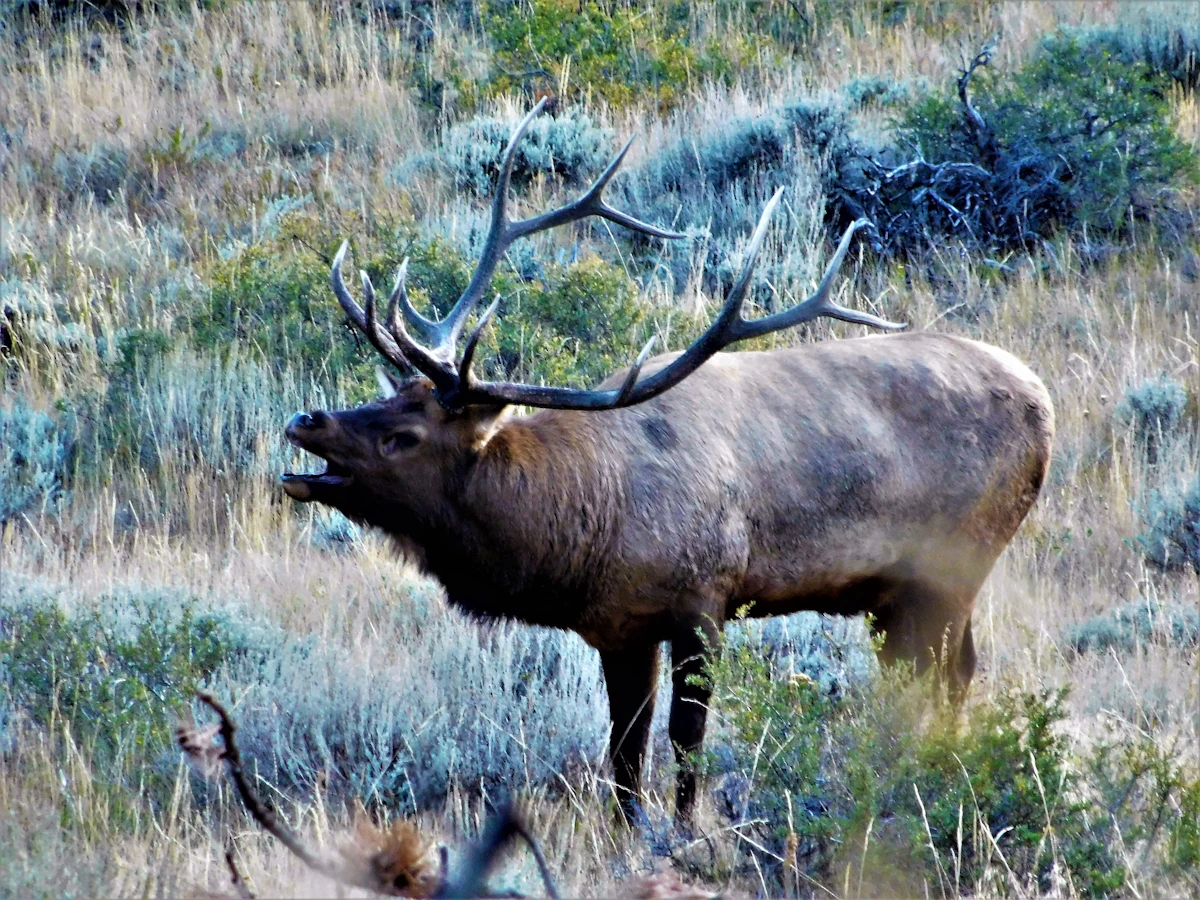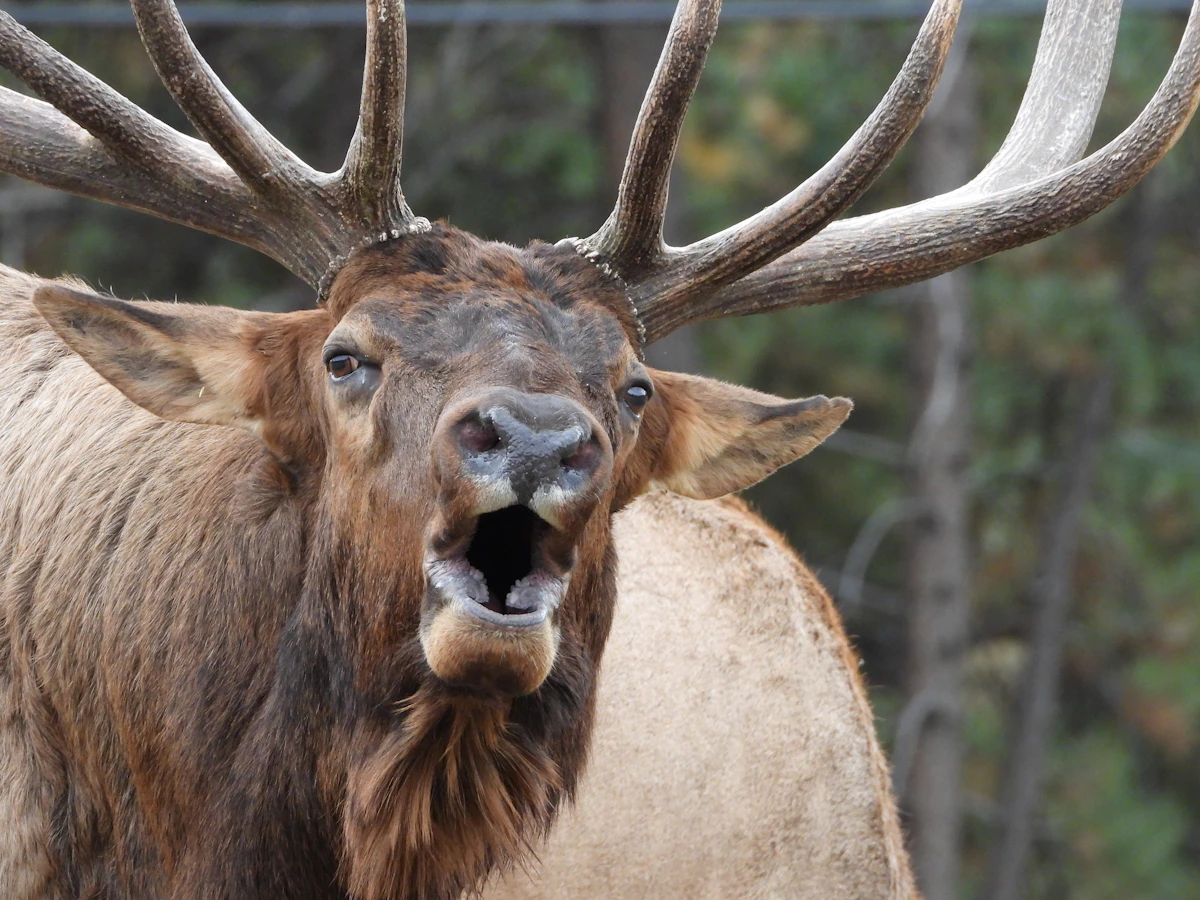
A Colorado elk hunter holding two preference points in 2027 stands in solid position for several either-sex hunts, especially archery and muzzleloader seasons, and a handful of 1st and 4th rifle codes. The 2026 draw showed nonresidents drawing out at one or two points in 17 hunt codes across multiple seasons, while residents drew at similar levels in nine either-sex codes. These results reflect the 2026 draw run on May 14, 2026, and serve as a baseline for 2027 planning, though quotas, season dates, and applicant pools will shift when CPW releases the 2027 Big Game brochure.
What does "drawn out at" mean in Colorado's elk draw?
CPW's "drawn out at" figure shows the last preference-point level at which a license was issued to a residency group in the completed draw. If a hunt code lists "drawn out at 2 points" for nonresidents, a nonresident with exactly two points was the lowest-point applicant to receive a license in that code during the 2026 primary draw. It is a historical result, not a forecast, and changes yearly based on quotas, applicant pools, and the number of licenses CPW allocates to each residency group.
How many preference points do you earn per year in Colorado?
Colorado awards one preference point per species per year if you apply in the primary draw and do not draw your first-choice license, or if you apply for the point-only code as your first choice. Drawing a first-choice license uses all your points for that species. Second through fourth choices, over-the-counter licenses, leftover licenses, and secondary-draw licenses neither use nor earn points. Elk, deer, pronghorn, and bear points carry no point fee. Moose, bighorn sheep, and mountain goat points cost $50 for residents and $100 for nonresidents.
Which hunt codes drew nonresidents at one or two points in 2026?
Hunt code E-E-028-O1-R (1st rifle, GMU 28, Oct 14-18, 2026) offered 80 licenses and drew nonresidents out at one point. Residents drew 60 of 235 first-choice applicants, also at one point. E-E-085-O1-R (1st rifle, GMU 85) offered 85 licenses and drew nonresidents at one point, with residents filling 58 of 176 first-choice applicants at one point. E-E-021-O1-R (1st rifle, GMU 21) offered 450 licenses and drew nonresidents at one point, while residents drew 287 of 399 applicants with no points. E-E-035-O1-R (1st rifle, GMU 35) offered 200 licenses, drawing nonresidents at one point and residents at zero points (129 of 189 drew). E-E-005-O4-R (4th rifle, GMU 5, Nov 18-22) offered 10 licenses and drew nonresidents at one point, with residents filling seven of nine first-choice applicants at zero points.
Muzzleloader and archery codes at one or two points
E-E-085-O1-M (muzzleloader, GMU 85) offered 120 licenses and drew nonresidents at two points, with residents drawing 84 of 103 applicants at zero points. E-E-046-O1-A (archery, GMU 46) offered 60 licenses and drew nonresidents at two points, with residents filling 42 of 106 applicants at one point. E-E-481-O1-A (archery, GMU 481) offered 110 licenses and drew nonresidents at two points, while residents drew 73 of 124 applicants at zero points. E-E-051-O1-A (archery, GMU 51) offered 120 licenses and drew nonresidents at one point, with residents drawing 77 of 168 applicants at one point.
E-E-006-O1-M (muzzleloader, GMU 6) offered 400 licenses and drew nonresidents at one point, with residents filling 281 of 286 first-choice applicants at zero points. E-E-015-O1-M (muzzleloader, GMU 15) offered 200 licenses and drew nonresidents at one point, while residents drew 141 of 147 applicants at zero points. E-E-025-O1-M (muzzleloader, GMU 25) offered 150 licenses and drew nonresidents at one point, with residents drawing 70 of 73 applicants at zero points. E-E-028-O1-M (muzzleloader, GMU 28) offered 90 licenses and drew nonresidents at one point, while residents filled 65 of 150 applicants at zero points. E-E-011-O1-M (muzzleloader, GMU 11) offered 100 licenses and drew nonresidents at one point, with residents drawing all 58 first-choice applicants at zero points.
How does the nonresident cap affect two-point applicants?
The 2026 regulation caps nonresident first-choice elk licenses at up to 25% in hunt codes that required fewer than six resident points in the prior draw, and up to 20% in codes that required six or more resident points. The cap applies only to first-choice applications through the 2027 draw. Beginning with the 2028 draw, the cap applies uniformly at 25% to first and second choices. Private-land-only and Ranching for Wildlife licenses are exempt from the cap.
A two-point nonresident applying for a code that drew residents at zero or one point in 2026 faces the 25% first-choice cap, while codes that drew residents at six or more points see the 20% cap. The exact resident point level for each code in 2026 determines which cap applies in 2027, though CPW calculates the cap using a rolling three-year average with a one-year lag.
Understanding Colorado's allocation system
For detailed analysis of Colorado's nonresident allocation system and how it affects draw strategy, see Colorado Elk Draw Odds 2027 Units Points Nonresident Strategy.
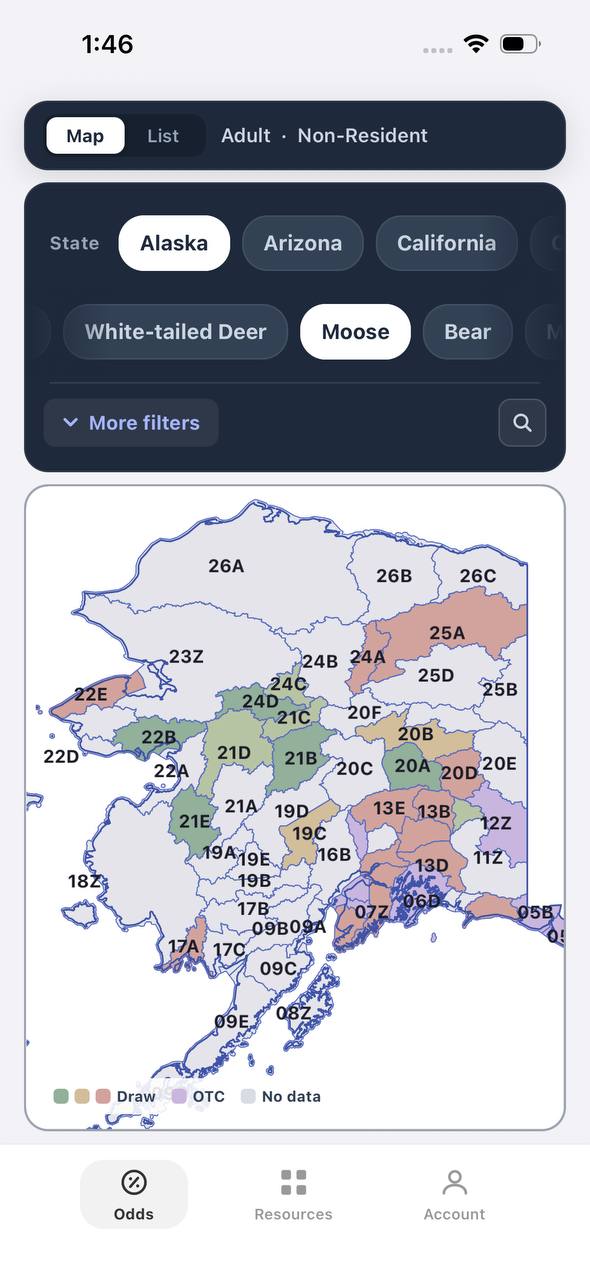
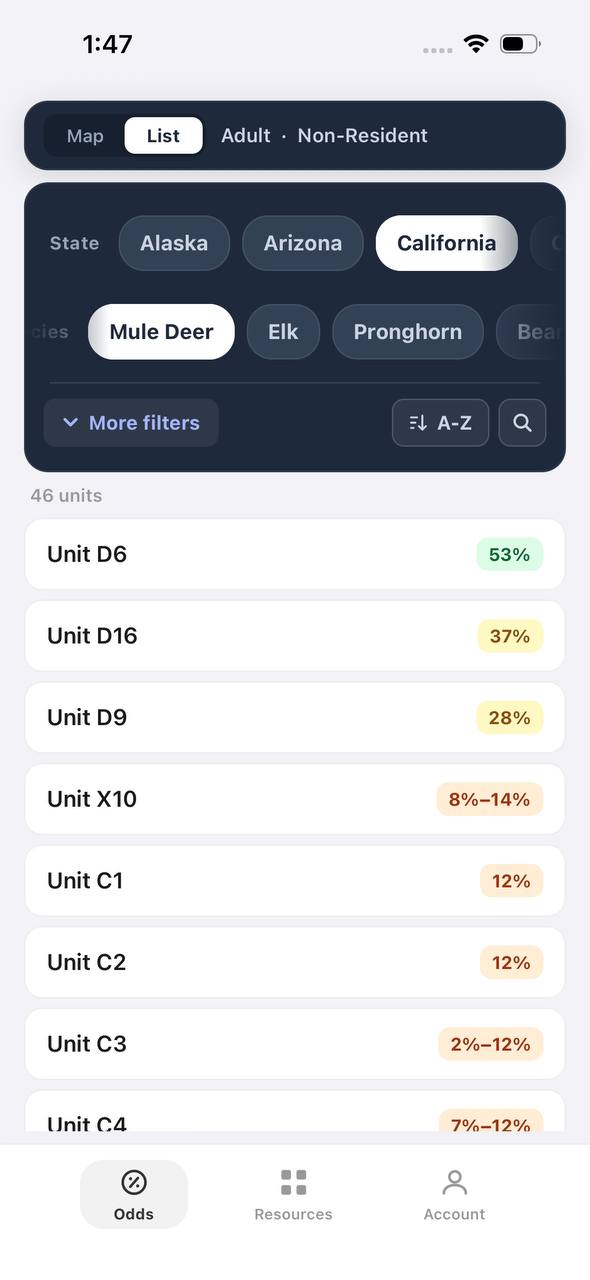
Free to join
Download mobile app
- Detailed draw odds
- Point tracking
- Deadline reminders
- 19 states covered

Free to join
Download mobile app
- Detailed draw odds
- Point tracking
- Deadline reminders
- 19 states covered
Free to join
Download mobile app
- Detailed draw odds
- Point tracking
- Deadline reminders
- 19 states covered
Can you draw Colorado elk with no points?
Many hunt codes in Colorado drew at zero points in 2026. For example, E-E-006-O1-R (1st rifle, GMU 6) offered 750 licenses and drew residents at zero points (512 of 522 first-choice applicants drew), while nonresidents also drew at zero points. E-E-018-O1-R (1st rifle, GMU 18) offered 405 licenses and drew residents at zero points (270 of 319 first-choice applicants drew), with nonresidents also drawing at zero points. E-E-064-O1-R (1st rifle, GMU 64) offered 450 licenses and drew residents at zero points (171 of 175 applicants drew). A two-point applicant is well above these levels and can confidently apply for any code that drew at zero or one point in 2026, though quotas and applicant pools may shift in 2027.
What are the odds of drawing second, third, or fourth rifle elk hunts with two points?
The 2026 draw data filtered for nonresident codes drawing at one or two points did not show any second or third rifle either-sex codes at that level. Most second and third rifle codes with strong bull ratios or easy access drew nonresidents at higher point levels or showed limited quotas that pushed the drawn-out-at number above two points. Fourth rifle codes are rare in CPW's either-sex allocation, with only E-E-005-O4-R (GMU 5, 10 licenses) drawing nonresidents at one point in 2026. Residents holding two points have more options, as several archery and muzzleloader codes drew residents at one or two points in 2026.
How do you apply for the Colorado 2027 elk draw?
The 2027 primary draw application window has not been published by CPW as of October 2026, but Colorado regulation states that applications are due at 8:00 PM Mountain Time on the first Tuesday in April. By calendar, the first Tuesday in April 2027 falls on April 6, 2027. The 2026 window ran from March 1 through April 7 at 8 PM Mountain Time.
Applicants submit through the CPW online portal, and nonresidents must hold a qualifying license (annual small game, $104.86 in 2026) and habitat stamp ($12.76 for ages 18-64) before applying. The nonresident application processing fee is $11.49 per species (2026 fee, nonrefundable), and the resident big game application fee is $8.93. The nonresident elk license fee if drawn is listed as $845.16 on the CPW elk hunting page (2026 fee schedule), though the Chapter W-0 fee appendix lists $842.41. Both figures should be verified against the 2027 Big Game brochure when CPW releases it.
Free to join
Download mobile app
- Detailed draw odds
- Point tracking
- Deadline reminders
- 19 states covered
Free to join
Download mobile app
- Detailed draw odds
- Point tracking
- Deadline reminders
- 19 states covered
Free to join
Download mobile app
- Detailed draw odds
- Point tracking
- Deadline reminders
- 19 states covered
What happens to your points if you draw a license?
Drawing your first-choice license uses all your preference points for that species. Applying for a zero-point code as your first choice and drawing it clears your points, while listing a zero-point code as your second, third, or fourth choice does not use points if you draw it. The secondary draw in June and leftover licenses do not use preference points.
Group applications draw at the lowest-point member's level, and the group application fails if the group size exceeds the remaining licenses in that code. A two-point applicant who draws a first-choice license in 2027 will start over at zero points for the 2028 draw, while an applicant who lists a one-point code as their first choice and a zero-point code as their second choice risks losing both points if they draw the one-point code, but keeps their points if they only draw the second-choice code.
Comparing Colorado's system to other western states
Understanding how Colorado's preference-point system compares to other strategies can help you plan your long-term draw approach across multiple western states; for a comparison of Colorado's system with Oregon's approach, see Oregon Elk Draw Odds With Two Points in 2027.
Which GMUs are best for two-point nonresident elk hunters?
GMU 28, GMU 85, GMU 21, and GMU 35 drew nonresidents at one point in 1st rifle codes in 2026, with quotas ranging from 80 to 450 licenses. GMU 6, GMU 15, GMU 25, GMU 28, and GMU 11 drew nonresidents at one point in muzzleloader codes, with quotas ranging from 90 to 400 licenses. GMU 46, GMU 481, and GMU 51 drew nonresidents at one or two points in archery codes, with quotas from 60 to 120 licenses.
Terrain and access considerations
These GMUs cover a range of terrain, access, and pressure levels. GMU 6 and GMU 18 are large, accessible units with significant public land and high license quotas, often drawing zero-point applicants in rifle seasons. GMU 21 and GMU 35 offer moderate quotas in 1st rifle and draw at low point levels due to private land access requirements and pressure from resident hunters. GMU 46 and GMU 51 archery hunts see less competition than premier archery units but still require scouting and local knowledge to find elk on public land.
Scouting and planning for public-land hunts
Successful public-land elk hunting in these units requires pre-season scouting, detailed map study, and physical conditioning. Elk move between private and public land throughout the season, and hunters who understand migration patterns and pressure zones gain an advantage. Early-season archery hunts find elk in high country and near water, while late-season muzzleloader hunts push elk into migration corridors and thermal cover.
Adapting to changing conditions
Pressure from other hunters, weather events, and private land access all shift elk distribution within a unit, and hunters who adapt to these changes fill tags more consistently than those who follow outdated information or assume elk will remain in one area throughout the season.
Free to join
Download mobile app
- Detailed draw odds
- Point tracking
- Deadline reminders
- 19 states covered
Free to join
Download mobile app
- Detailed draw odds
- Point tracking
- Deadline reminders
- 19 states covered
Free to join
Download mobile app
- Detailed draw odds
- Point tracking
- Deadline reminders
- 19 states covered
What changes are coming to Colorado's elk draw in 2028?
Beginning with the 2028 draw, CPW replaces the hybrid draw with a 50/50 split, allocating half of licenses through the preference-point draw and half through a weighted bonus-point draw. The nonresident cap changes to a uniform 25% for first and second choices in deer, elk, bear, and pronghorn codes, removing the separate 20% cap on codes that required six or more resident points. These changes take effect January 1, 2028, and apply to the 2028 draw only. The 2027 draw still uses the current preference-point system with the hybrid draw and the existing nonresident caps. A two-point applicant in 2027 faces the current system, but a three-point applicant in 2028 will compete under the new 50/50 split and revised caps.
Plan Your Colorado Elk 2027 Hunt With TAGZ
TAGZ helps you research draw information, compare hunts, and track applications across Colorado and nine other western states. The platform pulls unit-level draw odds, season dates, and license quotas into one view, so you can compare GMU 28 archery against GMU 6 muzzleloader without opening multiple PDFs. TAGZ does not predict 2027 results or guarantee tags, but it organizes the data CPW publishes and lets you filter by residency, weapon, and season. Stop guessing. Start planning with TAGZ.
Official Colorado Hunting Sources
- CPW elk hunting statistics and draw recaps: https://cpw.state.co.us/activities/hunting/big-game/hunting-elk/elk-statistics
- Primary draw information and deadlines: https://cpw.state.co.us/activities/hunting/big-game/primary-draw
- Nonresident elk hunting and over-the-counter information: https://cpw.state.co.us/activities/hunting/nonresidents
- Chapter W-2 regulations (2026 approved version): https://cpw.state.co.us/sites/default/files/dam/vxrojmrqgr/chw02-as-approved-may-2025.pdf
- Chapter W-0 fee schedule (2026 approved version): https://cpw.state.co.us/sites/default/files/dam/6b87it8nag/chw00-as-approved-may-2026.pdf
- 2028 draw changes (official summary): https://cpw.state.co.us/sites/default/files/dam/xpj1vx0mkp/websitefinaldrawchanges.pdf
Last verified: October 22, 2026. All statistics and hunt codes reflect the completed 2026 primary draw (May 14, 2026). 2027 quotas, season dates, fees, and hunt codes are not yet published by CPW. License fees listed ($845.16 elk/fishing combo for nonresidents, $842.41 elk license in Chapter W-0) reflect 2026 schedules and should be verified against the 2027 Big Game brochure when CPW releases it. The 2027 application deadline is derived from regulation (first Tuesday in April, 8 PM Mountain Time) and has not been confirmed by CPW for 2027. Verify all requirements, fees, and deadlines with CPW before applying.
FAQ — Colorado Elk Draw Odds With Two Points
Can I draw a Colorado rifle elk hunt with two preference points as a nonresident? Yes. The 2026 draw showed nonresidents drawing four 1st rifle either-sex codes at one point (GMU 28, 85, 21, 35) and one 4th rifle code at one point (GMU 5). A two-point applicant in 2027 is above the 2026 drawn-out-at level for these codes.
Do Colorado elk preference points carry over if I don't draw? Yes. If you apply for the primary draw and do not draw your first-choice license, you earn one preference point for elk at the end of the draw. Points carry forward until you draw a first-choice license.
What is the difference between preference points and the hybrid draw in Colorado? Preference points allocate licenses to applicants with the most points first, subject to quotas and the nonresident cap. The hybrid draw is a separate random draw that requires five or more points and applies only to codes that drew residents at 10 or more points in the prior year. The 2027 draw uses both systems.
Can I apply for a zero-point hunt code without using my two points? Only if you list the zero-point code as your second, third, or fourth choice. Drawing your first-choice license uses all your points for that species, even if the code required zero points in the prior year.
How many nonresident elk licenses does Colorado allocate each year? Nonresident elk licenses are capped at up to 25% of licenses in codes that required fewer than six resident points in the prior draw, and up to 20% in codes that required six or more resident points. The cap applies only to first-choice applications through the 2027 draw.
Which season gives the best odds for a two-point nonresident elk hunter in Colorado? Muzzleloader and archery seasons drew nonresidents at one or two points in more codes than rifle seasons in 2026. Nine muzzleloader codes drew nonresidents at one or two points, with quotas from 90 to 400 licenses. Five archery codes drew nonresidents at one or two points, with quotas from 60 to 120 licenses.
Was this article helpful?
Previous
Wyoming Elk Draw Odds With One Point 2027
Wyoming nonresident elk hunters with one preference point in 2027 face limited options-mostly antlerless hunts in the regular draw or Region E general via the Special pool.
Related
Montana Deer Combination Draw Odds 2027: Nonresident Tags, Preference Points & Costs
License required: Most nonresidents must draw a Deer Combination License, Big Game Combination License, or another qualifying license to hunt Montana general-season deer. 2027 draw odds: Actual 2027 drawing results are not available before the drawing takes place. Preference-point allocation: Under published rules, approximately 75% of nonresident combination licenses go to applicants with preference points, prioritized by point total. Zero-point allocation: Approximately 25% are reserved for a random drawing among applicants holding no preference points. Preference points: A regular nonresident preference point costs $100 under the published 2026 rules. Point limit: Hunters may hold no more than three preference points. Outfitter provision: Eligible outfitter clients may purchase a second point during an application, subject to special restrictions. 2026 Deer Combination price: $760, excluding certain additional license charges and fees. 2026 application deadline: April 1, 2026. The exact 2027 deadline must be confirmed. General license versus special permit: Drawing a Deer Combination License does not automatically award a limited-entry deer permit. Alternate opportunity: Montana maintains a Nonresident Alternates List for certain returned combination licenses. Best strategy: Compare historical Deer Combination results at your actual preference-point level before deciding whether to purchase another point.
Next
Colorado Nonresident Elk Draw Odds 2027: Tags, Points & Costs
2027 draw odds: Actual drawing results are not available yet. Use Colorado Parks and Wildlife’s 2026 Draw Recap and Drawn Out At reports as the latest historical baseline. Preference points: Colorado prioritizes applicants with more elk preference points for first-choice limited licenses under the rules applicable to 2027. Nonresident allocations: Up to 25% of eligible elk licenses may go to nonresidents for hunt codes historically requiring fewer than six resident points; up to 20% for hunt codes requiring six or more. Zero-point elk tags: Nonresidents can draw some limited elk licenses with zero points, depending on the hunt code and application demand. Archery elk: Nonresident archery elk licenses west of I-25 and in GMU 140 are generally limited under the 2025–2029 framework. OTC rifle elk: Some general-season rifle elk opportunities remain available without entering the primary drawing. Second-choice strategy: Drawing a second-, third-, or fourth-choice license does not use preference points. Hybrid drawing: Eligible applicants with at least five points may receive an additional chance at certain high-demand hunt codes. Secondary drawing: Preference points are not used or awarded, and youth applicants receive priority. Nonresident license cost: Colorado’s published 2026 adult elk/fishing combination price is $845.16. Application requirements: Hunters need a qualifying license to participate in the primary drawing and must meet applicable Habitat Stamp requirements. Best strategy: Compare exact hunt codes, nonresident quotas, historical point requirements, public-land access, and season timing.