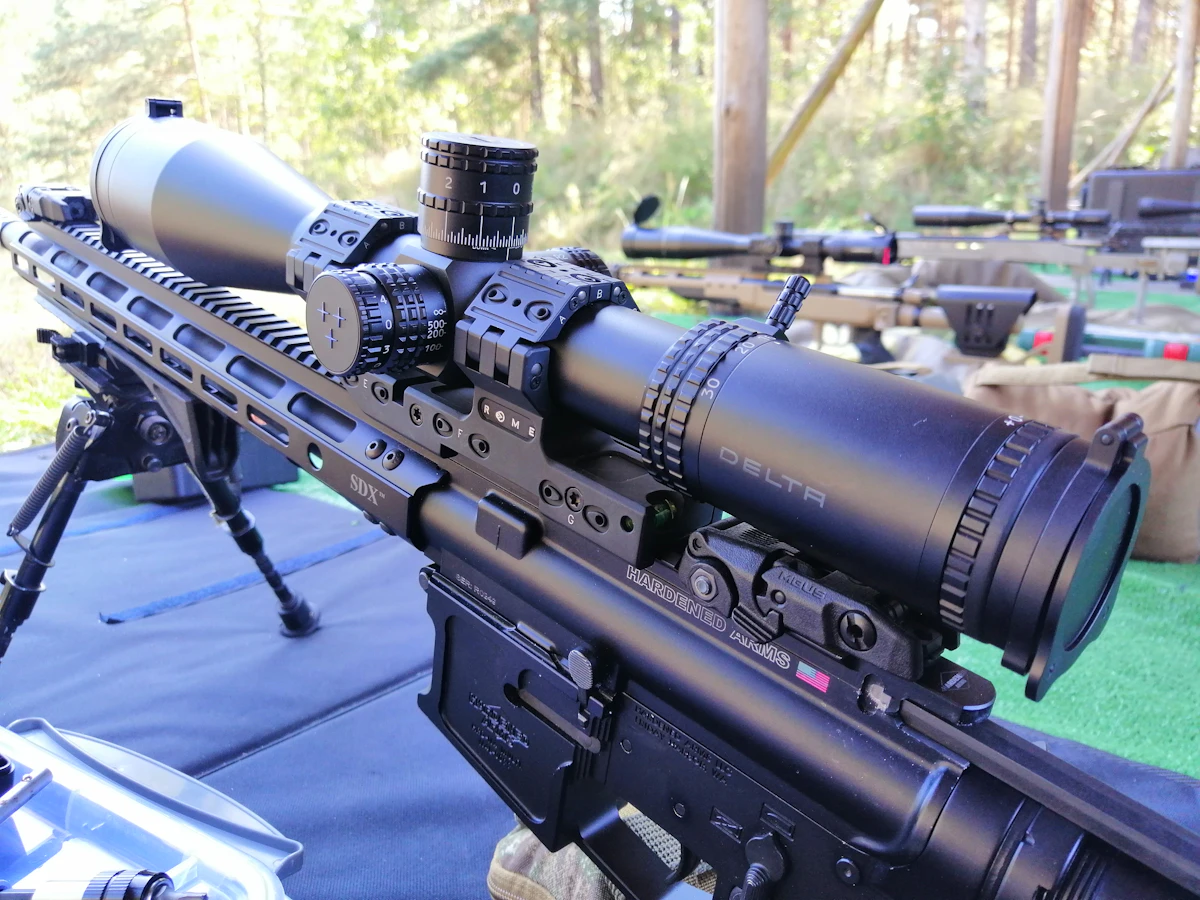
Best Budget Mule Deer Rifles: Top Affordable Picks for Western Hunters
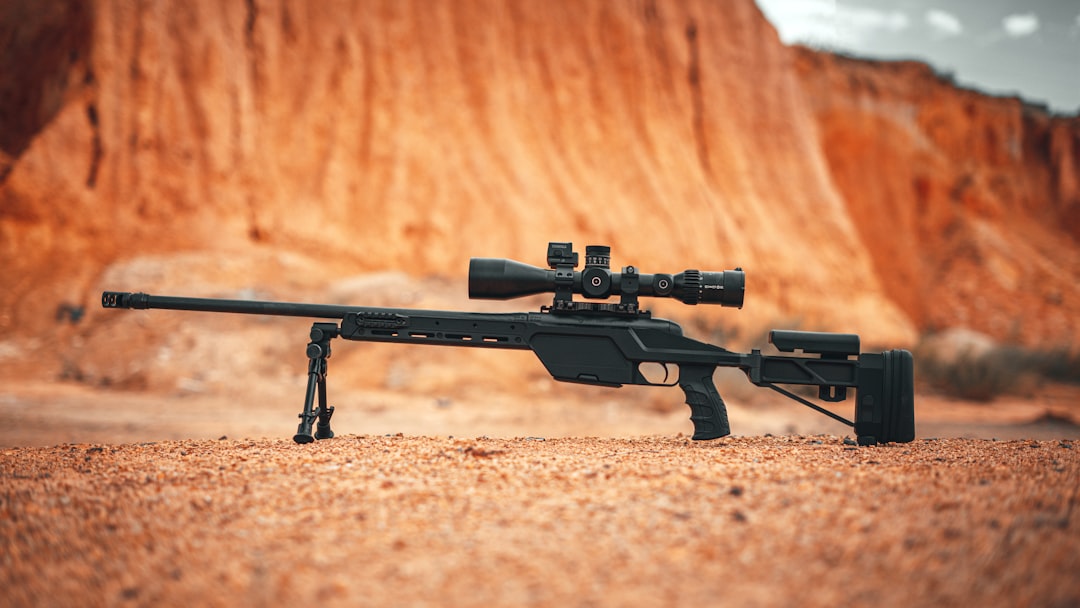
You don't need a custom rifle to punch your tag on a good mule deer buck. While premium builds have their place, most Western muleys fall to hunters carrying reliable, budget-friendly rifles that simply get the job done. The question isn't whether an affordable rifle can handle mule deer hunting, it's which one fits your hunting style and the terrain you hunt.
The best budget mule deer rifles balance three core requirements: sub-MOA accuracy at 300 yards, enough knock-down power for quartering shots, and weight you can comfortably carry on long ridge walks. Any rifle under $600 that delivers those qualities belongs in the conversation.
What Makes a Good Budget Mule Deer Rifle
Mule deer rifles need to reach out. Unlike whitetails hunted from treestands, Western muleys often present shots across canyons or over open basins where 250 to 400 yards is standard. Your budget rifle must group tight enough at 100 yards to hit vitals at extended range.
Weight matters more than most hunters realize until they're three miles in. A 9-pound scoped rifle feels fine at the truck but turns into an anchor by mid-afternoon. Budget rifles built on synthetic stocks typically weigh 7 to 8 pounds bare, which keeps total weight around 8.5 pounds once you add glass. That's the sweet spot for all-day carries without sacrificing stability on tricky field positions.
Caliber choice for mule deer is straightforward. The 6.5 Creedmoor, .270 Winchester, .308 Winchester, and 7mm-08 Remington all work. Recoil-sensitive shooters favor the 6.5 and 7mm-08. Hunters wanting more energy downrange lean toward the .270 or .308. All four will kill mule deer dead if you put the bullet where it belongs.
Top Budget Mule Deer Rifles Under $600
Ruger American Rifle
The Ruger American consistently appears in Western hunting camps because it works. Street price runs $400 to $500 depending on caliber and stock configuration. The rifle's bedding system and free-floated barrel deliver 1-MOA accuracy with factory ammo, which translates to 3-inch groups at 300 yards if you do your part.
The trigger breaks clean around 3.5 pounds out of the box. Ruger's Marksman Adjustable trigger can be dialed down to 3 pounds, which helps when you're trying to thread a bullet through timber at a standing buck. The rotary magazine holds four rounds and feeds smoothly. The synthetic stock feels cheap compared to wood but sheds moisture and handles abuse without complaint.
Available in every common mule deer caliber, the Ruger American represents the baseline for what a budget hunting rifle should deliver. It won't win beauty contests, but it will put meat in the freezer.
Savage Axis II
Savage's AccuTrigger gave budget rifles credibility when it first appeared, and the technology trickles down to the Axis II line. These rifles sell for $350 to $450 and shoot better than they have any right to at that price point. The AccuTrigger adjusts from 2.5 to 6 pounds, and most hunters leave it around 3 pounds for hunting.
The Axis II's button-rifled barrel produces tight groups with quality ammo. Federal Premium and Hornady Precision Hunter loads typically group under 1.5 inches at 100 yards. That's enough precision for any reasonable mule deer shot. The detachable box magazine holds four rounds and drops free for quick reloads.
Savage offers the Axis II in multiple configurations, including models with scopes already mounted. The factory scopes work for getting started but most serious hunters swap them for better glass within a season. The rifle itself deserves quality optics.
Tikka T3x Lite
The Tikka T3x pushes the upper end of the budget category at $550 to $650, but many hunters consider it the best value in bolt-action rifles regardless of price. Finnish engineering shows in the smooth bolt throw and crisp trigger. The factory trigger breaks at 2 to 4 pounds and feels better than triggers on rifles costing twice as much.
Accuracy from the cold-hammer-forged barrel runs between 0.5 and 1 MOA with premium ammo. That level of precision opens up ethical shot distances well beyond 400 yards if conditions allow. The rifle's single-stack magazine holds three rounds, which some hunters dislike, but the trade-off is a slim, comfortable grip.
Weight on the synthetic-stocked Lite model runs around 6.2 pounds bare, making it one of the lightest production hunting rifles available. Add a 3-9x scope and you're still under 7.5 pounds total. For high-elevation hunts where every ounce counts, the Tikka T3x Lite stands out.
Mossberg Patriot
Mossberg's Patriot deserves more attention than it gets. Street price sits between $350 and $450, putting it in Savage Axis territory, but the Patriot offers features typically found on pricier rifles. The LBA adjustable trigger breaks clean between 2 and 7 pounds. Most hunters set it around 3 pounds and forget it.
The fluted barrel shaves weight and looks sharp. Accuracy runs right around 1 MOA with good ammo. The spiral-fluted bolt adds a custom touch without increasing cost. The synthetic stock includes textured gripping surfaces that help in wet conditions.
Mossberg chambers the Patriot in every common hunting caliber plus some less common options like 6.5 PRC and .300 Winchester Magnum for hunters who want more horsepower. The detachable box magazine holds five rounds in standard calibers. For hunters wanting maximum features at minimum cost, the Patriot delivers.
Thompson/Center Compass II
The Compass II carries Thompson/Center's reputation for accuracy into the budget rifle market. These rifles sell for $400 to $500 and feature a 5R rifled, free-floated barrel that produces sub-MOA groups with quality ammunition. The adjustable trigger breaks between 3.5 and 5 pounds.
The composite stock includes textured grip panels and a raised comb that works well with modern scopes. The three-position safety allows bolt operation with the rifle on safe, which helps when quietly chambering a round on a stalk. The detachable box magazine holds five rounds.
T/C chambers the Compass II in all standard hunting calibers plus the 6.5 Creedmoor, which has become the default choice for many Western hunters. The rifle's straight-taper barrel balances well and doesn't feel front-heavy with a scope mounted.
Caliber Selection for Mule Deer
The 6.5 Creedmoor has taken over Western hunting for good reason. Factory match ammo shoots flat, bucks wind better than traditional calibers, and hits hard enough for any mule deer out to 500 yards. Recoil stays mild, which helps hunters shoot better in field positions. Premium 143-grain bullets retain energy downrange and penetrate deep on quartering shots.
The .270 Winchester remains the classic mule deer cartridge. It shoots flatter than the 6.5 Creedmoor and hits slightly harder, though recoil increases noticeably. Hunters who learned on a .270 rarely see reason to switch. Factory 130-grain and 140-grain loads work perfectly for mule deer.
The .308 Winchester offers more frontal diameter and energy than either the 6.5 or .270, making it a solid choice for timber hunting where shots come close and quick. It doesn't shoot as flat as the other two, but inside 300 yards the difference disappears. Federal's 165-grain and 168-grain loads perform well on mule deer.
The 7mm-08 Remington splits the difference between the 6.5 Creedmoor and .308 Winchester. It shoots flatter than the .308 with less recoil, and hits harder than the 6.5 Creedmoor while still staying comfortable to shoot. Smaller hunters and recoil-sensitive shooters often gravitate toward the 7mm-08. Quality 140-grain bullets handle mule deer with authority.
Budget Scope Pairing
A budget rifle deserves quality glass, but you don't need to spend $1,000 on optics. The Vortex Diamondback HP 3-9x40 runs around $200 and offers clear glass, reliable tracking, and a lifetime warranty. The duplex reticle keeps things simple. For hunters wanting more magnification for longer shots, the 4-12x40 version adds versatility without excessive weight.
Leupold's VX-Freedom line provides another solid option in the $250 to $350 range. The 3-9x40 model features Leupold's proven optical quality and bomb-proof construction. These scopes hold zero through years of abuse. The Duplex reticle or CDS system (Custom Dial System) gives you options for different hunting styles.
Bushnell's Nitro line delivers high-end features at mid-range prices. The 3-12x44 model runs around $400 and includes fully multi-coated lenses, side focus parallax adjustment, and exposed turrets for dialing elevation. For hunters planning shots beyond 400 yards, the Nitro provides the tools to reach out confidently.

Free to join
Download mobile app
- Detailed draw odds
- Point tracking
- Deadline reminders
- 18 states covered



Free to join
Download mobile app
- Detailed draw odds
- Point tracking
- Deadline reminders
- 18 states covered
Free to join
Download mobile app
- Detailed draw odds
- Point tracking
- Deadline reminders
- 18 states covered

Ammunition Selection
Budget rifles shoot best with quality ammunition. Cheap bulk ammo rarely groups tight enough for hunting, while premium loads often turn a 1.5-MOA rifle into a sub-MOA shooter. The extra $10 to $15 per box matters when you're trying to stretch effective range.
For 6.5 Creedmoor, Hornady's Precision Hunter with 143-grain ELD-X bullets delivers excellent accuracy and terminal performance. Federal Premium's 140-grain Nosler AccuBond load shoots almost as well and costs slightly less. Both loads group under 1 inch in most quality rifles.
In .270 Winchester, Federal's 130-grain Trophy Copper and Hornady's 145-grain ELD-X both shoot flat and hit hard. The copper bullet works well where lead-free ammo is required. The ELD-X provides better long-range ballistics.
For .308 Winchester hunters, Federal's 165-grain Trophy Copper and Hornady's 178-grain ELD-X represent different approaches. The lighter copper bullet reaches out faster with less drop. The heavier ELD-X carries more energy downrange and bucks wind better.
7mm-08 shooters should look at Federal's 140-grain Trophy Copper or Hornady's 150-grain ELD-X. Both loads maximize the cartridge's efficiency and deliver clean kills on mule deer.
Breaking In a Budget Rifle
New budget rifles benefit from a proper break-in process. Start by thoroughly cleaning the bore to remove factory oils and preservatives. Fire one round, then clean the bore completely. Repeat this for the first five shots. This process smooths the bore and establishes a baseline for accuracy.
After the initial break-in, fire three-shot groups to test different ammunition. Let the barrel cool between groups. Most budget rifles show clear ammunition preferences. Once you find a load that groups well, stick with it. Switching ammunition constantly prevents you from learning the rifle's true capabilities.
Check all stock screws and action screws for proper torque after the first 20 rounds. Budget rifles sometimes leave the factory with loose hardware. Tighten everything to manufacturer specifications. This simple step often tightens groups by half an inch.
Upgrades Worth Making
Most budget rifles shoot well enough for hunting straight from the box, but a few affordable upgrades improve field performance. A quality sling makes long carries easier and provides shooting support in the field. The traditional leather sling looks classic but modern nylon designs with quick-adjust buckles work better.
A good recoil pad reduces felt recoil and helps you shoot better. LimbSaver and Pachmayr both make excellent aftermarket pads that install easily. Reducing felt recoil by 30 to 40 percent makes practice more enjoyable and builds confidence for field shots.
A bipod helps when shots present themselves across canyons with no natural rest available. Harris bipods mount quickly and fold out of the way for stalking. The 9 to 13-inch model works well for prone and sitting positions. Some hunters carry a lightweight shooting stick instead, which weighs less and works from more positions.
Free to join
Download mobile app
- Detailed draw odds
- Point tracking
- Deadline reminders
- 18 states covered
Free to join
Download mobile app
- Detailed draw odds
- Point tracking
- Deadline reminders
- 18 states covered
Free to join
Download mobile app
- Detailed draw odds
- Point tracking
- Deadline reminders
- 18 states covered
Planning Your Mule Deer Hunt
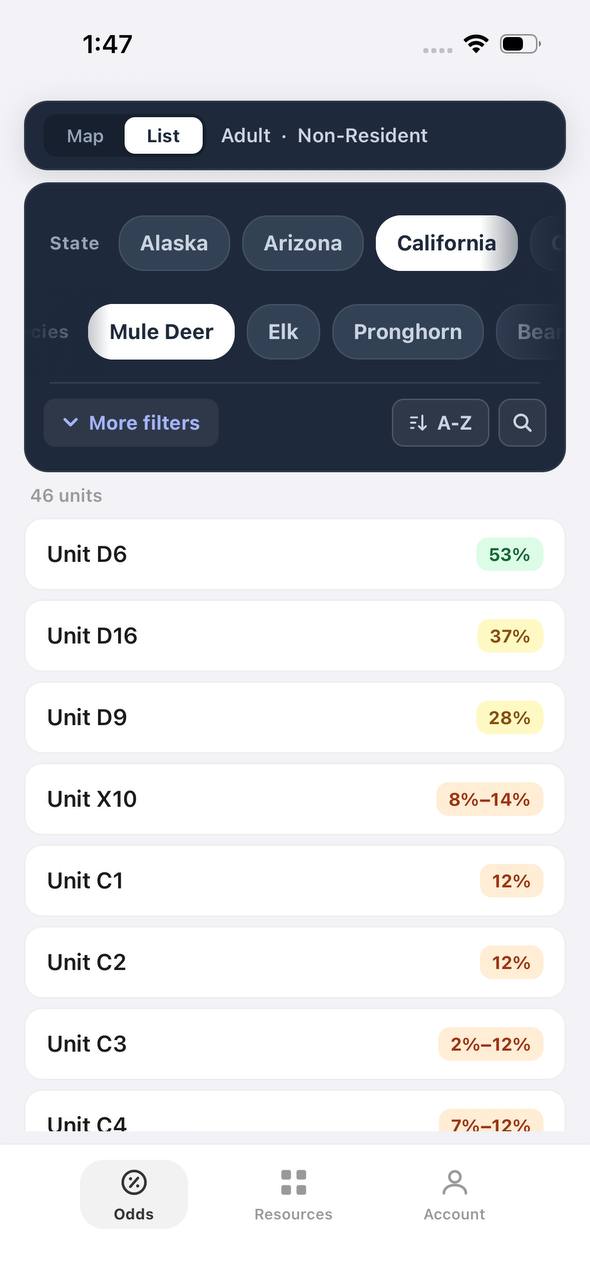
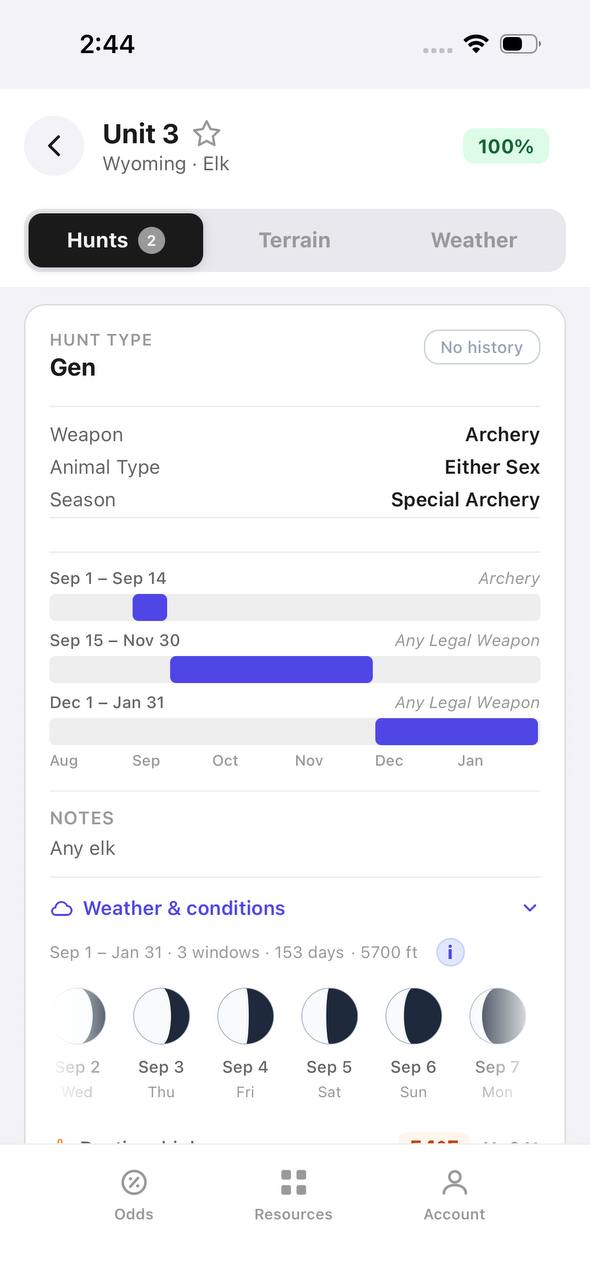
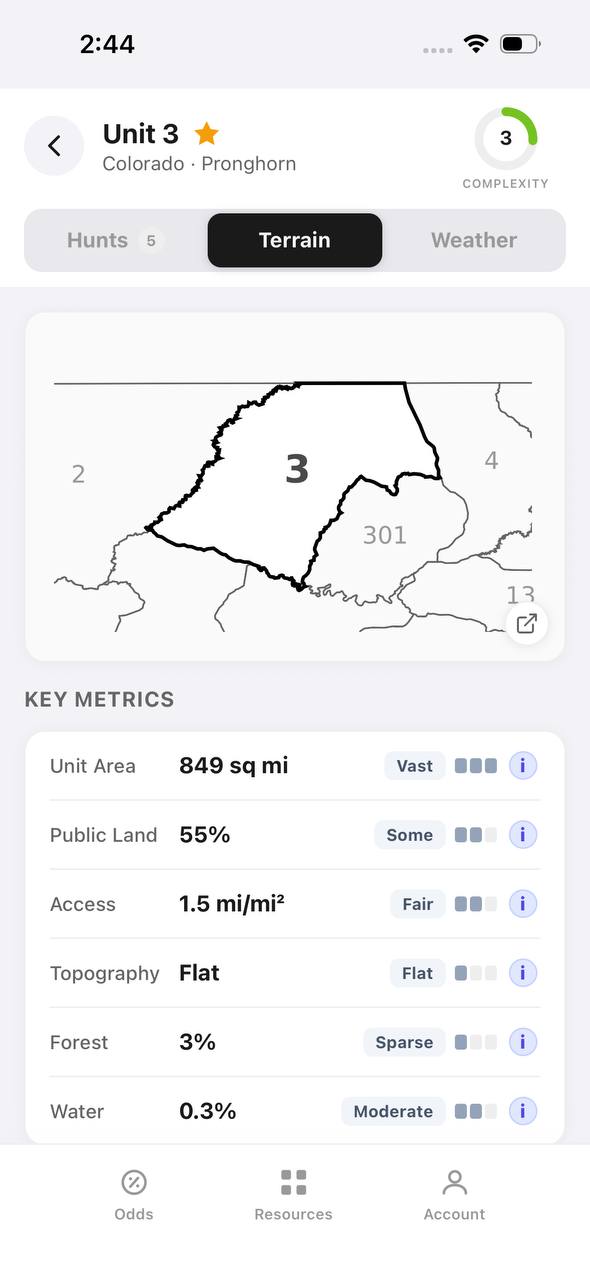
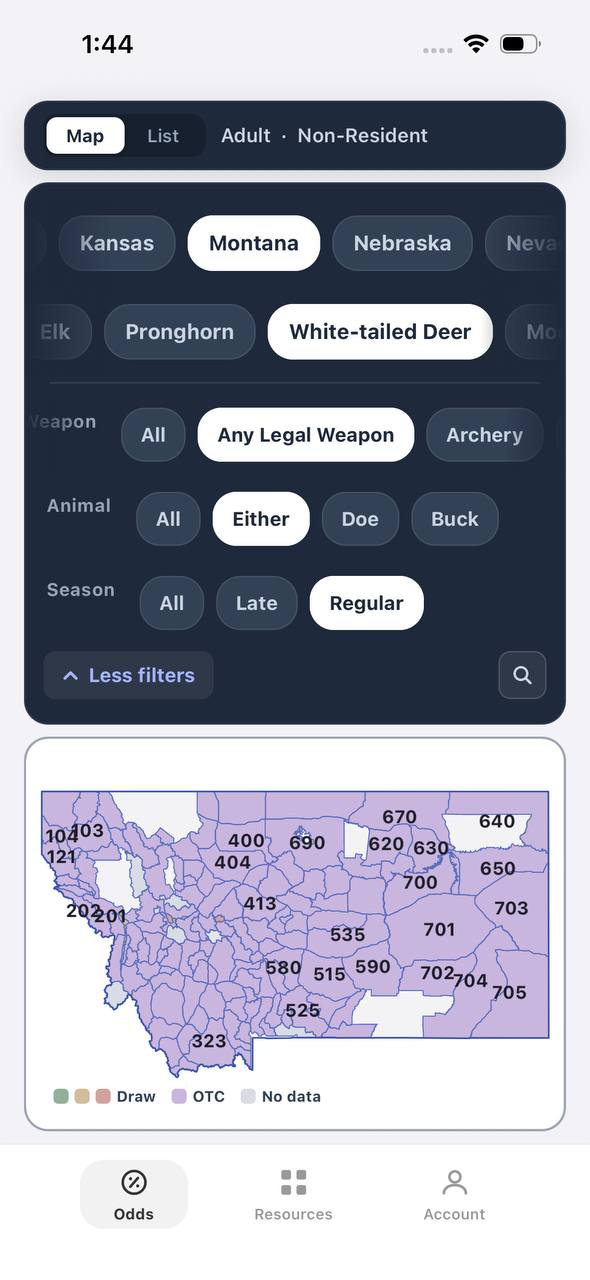
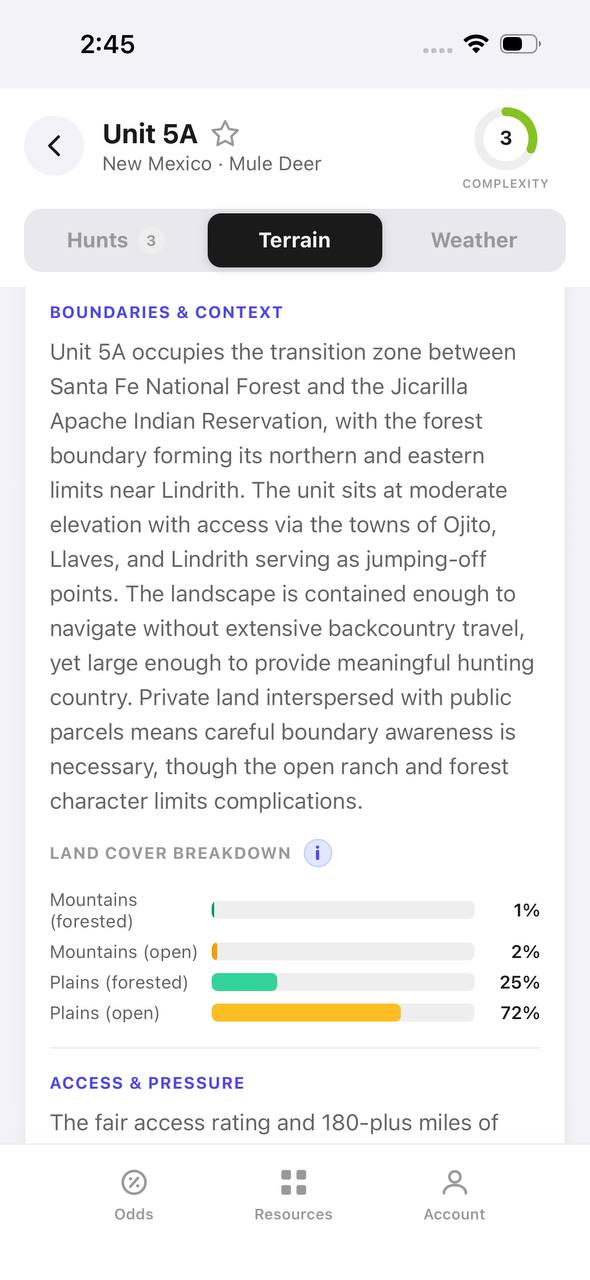
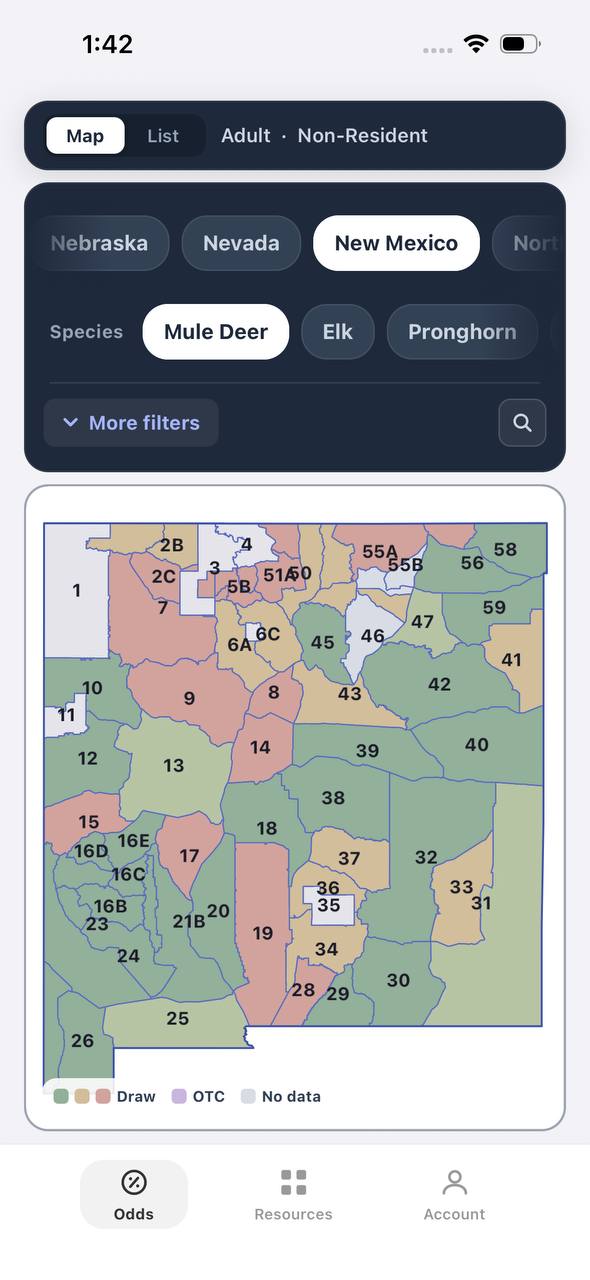
Choosing the right rifle represents just one part of successful mule deer hunting. Understanding draw odds, unit selection, and terrain makes the difference between punching a tag and eating tag soup. TAGZ helps hunters compare units side by side using terrain maps, unit boundaries, and historical draw data. Track your preference points and bonus points across multiple states so you never miss a draw deadline.
Whether you're chasing OTC tags in Colorado or planning a limited-entry hunt in Nevada, TAGZ gives you the tools to make smarter decisions before you step into the field. Compare weapon types, seasons, and species to find hunts that match your goals and schedule. Unit maps show public land access, elevation changes, and terrain features that separate productive units from crowded ones.
For hunters building preference points for future trophy hunts or trying to draw with zero points this year, TAGZ tracks draw statistics and point creep trends across Western states. See which units are getting harder to draw and which ones still offer opportunity. Filter hunts by your available points, weapon choice, and season dates to find realistic options.
Practicing for Western Shots
Owning a budget rifle that shoots 1 MOA means nothing if you can't shoot 1 MOA in field conditions. Practice from realistic positions. Forget the bench. Shoot prone with a bipod or backpack for support. Shoot sitting with trekking poles forming a rest. Shoot kneeling against a tree or rock.
Practice at distance. If you hunt country where 400-yard shots happen, practice at 400 yards. Learn your bullet's drop and wind drift. Dial or hold for elevation. Understand your maximum ethical range based on your skill and equipment.
Practice quickly getting into position and making the shot. Mule deer often appear suddenly and don't stand forever. You might have 30 seconds to get prone, find the deer in your scope, range it, dial elevation, and break a clean shot. That sequence requires practice.
Free to join
Download mobile app
- Detailed draw odds
- Point tracking
- Deadline reminders
- 18 states covered
Free to join
Download mobile app
- Detailed draw odds
- Point tracking
- Deadline reminders
- 18 states covered
Free to join
Download mobile app
- Detailed draw odds
- Point tracking
- Deadline reminders
- 18 states covered
Maintenance and Care
Budget rifles don't require extensive maintenance, but basic care extends their accuracy and reliability. Clean the bore after every hunt. Carbon and copper fouling build up quickly and degrade accuracy. A quality bore snake or cleaning rod with patches handles most cleaning tasks.
Store rifles in a dry location. Moisture causes rust, especially on budget rifles with less expensive finishes. A thin coat of oil on exposed metal parts prevents corrosion. Wipe the rifle down after hunting in rain or snow.
Check scope mounting screws before each season. Vibration during transport can loosen rings and bases. Properly torqued mounting systems rarely shift zero, but loose screws will throw your point of impact off.
Real-World Performance
Budget rifles prove themselves in Western hunting camps every season. The difference between a $500 Tikka and a $2,000 custom build matters far less than the difference between a prepared hunter and an unprepared one. Most hunters shoot better with a rifle they've practiced with extensively than with a more expensive rifle they rarely shoot due to cost concerns.
The rifles listed here will all shoot accurately enough to kill mule deer at any reasonable hunting distance. They'll hold zero through rough backcountry use. They'll function reliably in cold, wet, and dusty conditions. That's what matters when you're staring at a good buck across a canyon with a tag in your pocket.
FAQ — Budget Mule Deer Rifles
What is the best budget rifle for mule deer hunting? The Tikka T3x Lite offers the best overall combination of accuracy, reliability, and weight, though it sits at the high end of the budget category around $600. For hunters wanting to spend less, the Ruger American delivers solid performance at $400 to $500.
How accurate does a mule deer rifle need to be? A 1-MOA rifle (1-inch groups at 100 yards) will hit vitals on a mule deer out to 400 yards in good conditions. That level of accuracy handles most Western hunting situations. Sub-MOA accuracy helps but isn't required for success.
What caliber is best for mule deer on a budget? The 6.5 Creedmoor and .270 Winchester both excel for mule deer and offer widely available, affordable ammunition. The 6.5 shoots flatter and recoils less, while the .270 hits slightly harder. Either will kill mule deer cleanly.
Can you kill mule deer with a $400 rifle? Yes. The Ruger American and Savage Axis II both sell around $400 and shoot accurately enough for mule deer hunting. Spending more on the rifle often means less money for quality optics, which matters more for field performance.
How much should I spend on a scope for a budget mule deer rifle? Plan to spend $200 to $400 on a scope. The Vortex Diamondback HP ($200) and Leupold VX-Freedom ($300) both deliver reliable performance. Avoid cheap scopes under $150 as they rarely hold zero through hunting use.
Do I need a magnum caliber for mule deer? No. Standard cartridges like the 6.5 Creedmoor, .270 Winchester, .308 Winchester, and 7mm-08 Remington all provide enough power for clean mule deer kills out to 400 yards and beyond. Magnums add recoil without meaningful benefit for most hunting situations.
What is the most important upgrade for a budget hunting rifle? A quality scope matters more than any other upgrade. Good glass extends effective shooting light, helps you judge trophy quality, and ensures accurate shot placement. Spend as much on the scope as you spent on the rifle if possible.
How far can you shoot a mule deer with a budget rifle? With quality ammunition and practice, a good budget rifle will shoot accurately to 500 yards. Your personal maximum ethical range depends on your shooting skill, field position options, and environmental conditions. Most hunters should limit shots to 300 to 400 yards.
Continue Planning Your Hunt
Selecting the right rifle sets you up for success, but Western hunting requires research and planning beyond equipment. TAGZ helps you navigate draw systems across multiple states, compare unit statistics, and track application deadlines. Whether you're hunting OTC units in Colorado or building points for limited-entry tags in Wyoming, TAGZ provides the data and tools to maximize your hunting opportunities.
Explore our complete library of Western hunting insights at the TAGZ Insights page, where you'll find detailed articles on draw strategies, unit breakdowns, and application tips for every Western state. Create your free account at getmytagz.com to start tracking your points, comparing units, and planning your next hunt. Check our pricing options to unlock advanced features like multi-state draw analytics and detailed terrain maps.
The difference between success and tag soup often comes down to choosing the right unit and applying strategically. Let TAGZ help you make smarter decisions from the application period through opening day.
Was this article helpful?
Previous
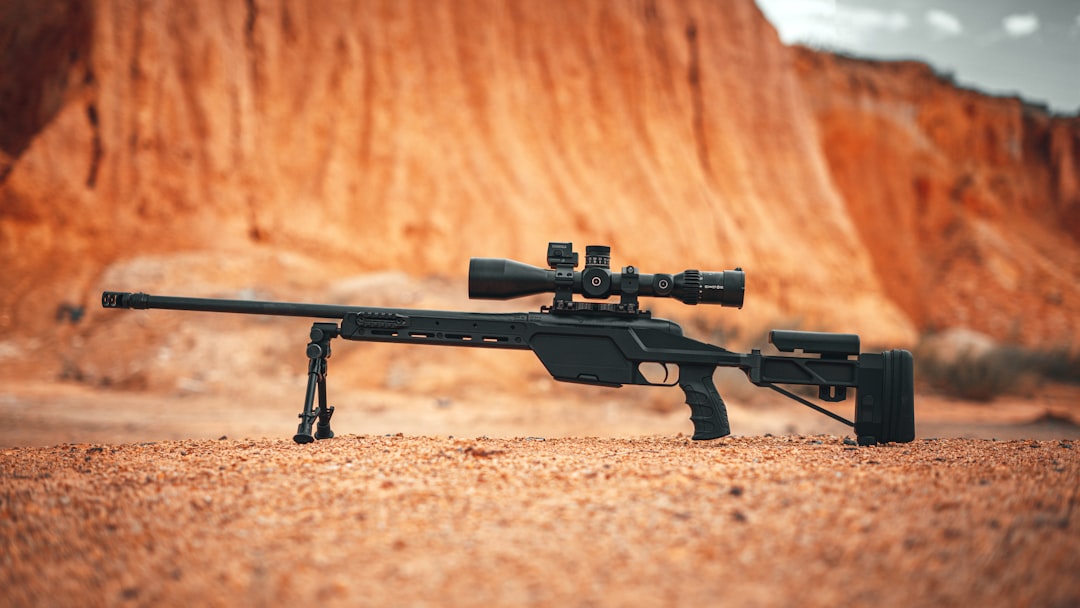
Best Budget Mule Deer Rifles for Western Hunters in 2026
From open sage flats to steep alpine basins, mule deer hunting demands accurate rifles that won't break the bank. This guide covers the top budget-friendly bolt-actions, chamberings, and optics combinations that serious hunters rely on across the West.
Related
Best Remington 700 Calibers for Elk Hunting: Cartridge Comparisons for Western Mountains
The Remington 700 remains the most popular elk rifle platform among western hunters, but choosing the right caliber matters more than the action. This guide compares proven elk cartridges chambered in the 700, from the .270 Winchester to magnum options, with real-world field performance data.

Next
Gunwerks Rifles and Revic Optics for Mountain Hunting: A Field-Tested Review
Gunwerks rifles paired with Revic optics deliver precision long-range performance in the backcountry, but the premium price demands serious consideration. Here's what mountain hunters need to know about weight, ballistics, and real-world reliability.