Species You Can Hunt
- White-tailed Deer
- Mule Deer
- Elk
- Pronghorn
- Moose
- Mountain Bighorn Sheep
- Mountain Goat
- Bear
- Bison
- Mountain Lion
- Wolf
State Overview
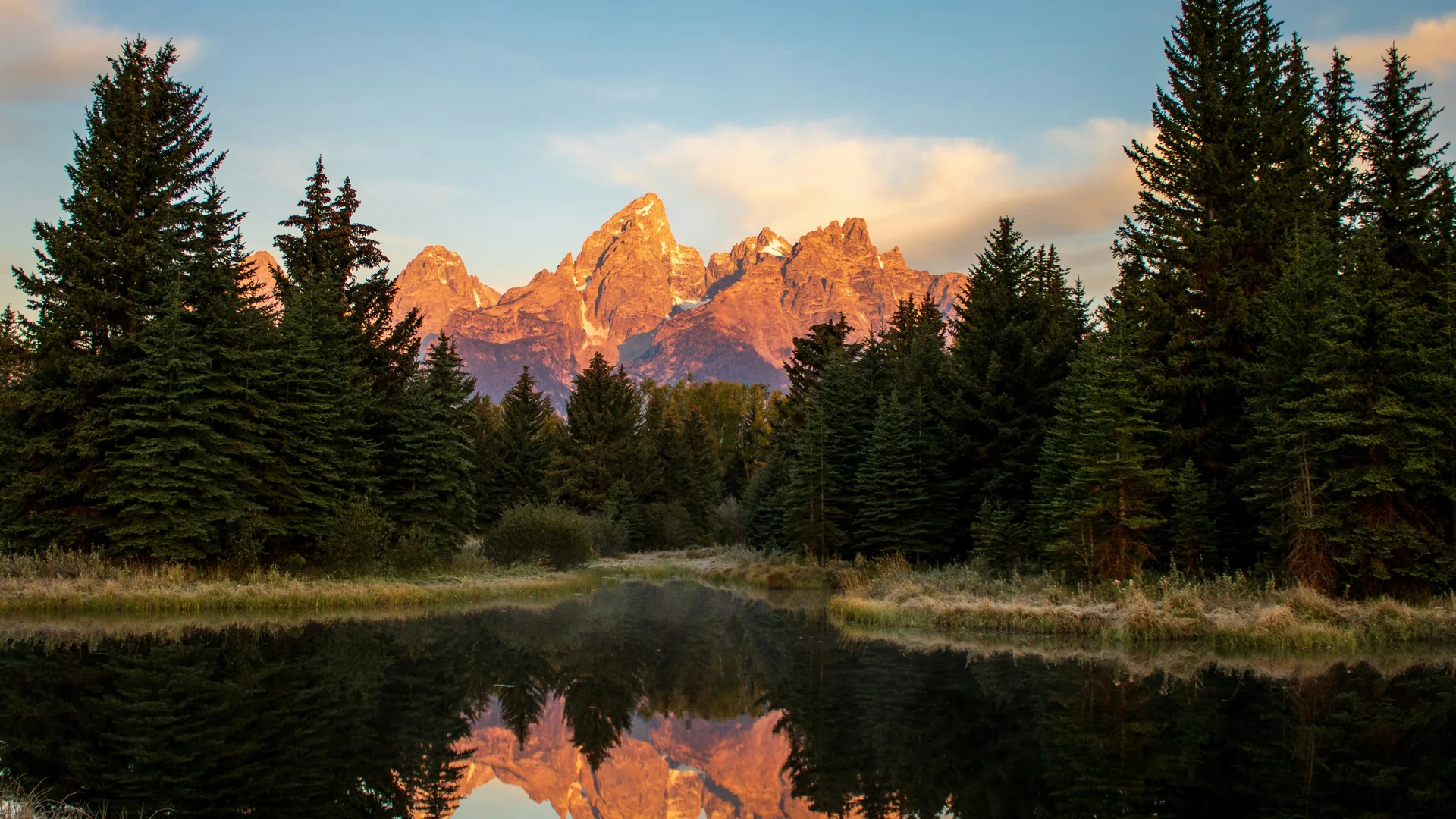
Wyoming is high plains and mountains—vast sagebrush basins and the Rockies, including the Wind River, Absaroka, and Bighorn ranges and the greater Yellowstone and Teton ecosystem.
The state holds elk, mule and white-tailed deer, the largest pronghorn herds in North America, moose, bighorn sheep, mountain goat, bison, and bear. With an enormous public-land base, Wyoming is a premier western destination, allocating tags by region and limited quota with an optional preference-point path for the toughest hunts.
Licensing & Draw
How it works
Wyoming's limited-quota big game hunting is run by the Wyoming Game & Fish Department, and it uses a preference point system rather than the bonus point systems common elsewhere. Preference points move you up a queue, so once you have enough points for a given hunt, drawing becomes nearly guaranteed.
For nonresidents, most species run a preference-point draw for 75% of the licenses and a random draw for the remaining 25%. Nonresidents also choose between a 'regular' and a higher-priced 'special' license tier, which draw against separate quota shares.
Preference points accumulate one per year and are applied in that year's draw. They're lost if you fail to apply (or buy a point) in consecutive years, or once you draw the license they apply to. You can buy a point-only during the designated summer window if you don't want to apply for a license that year.
The regular vs. special tier choice is a core Wyoming decision: special licenses cost significantly more but compete in a smaller, less crowded pool, so they typically draw at fewer points. Party applications average the members' points (to four decimals).
Applying & deadlines
Applications are submitted through the department's online licensing system, where you pick your species, hunt area, license tier (regular or special), and first/second choices, and declare whether you want a preference point.
After the initial draw, unclaimed licenses are offered in a leftover (random) drawing, and any remaining after that are sold first-come, first-served. Reduced-price (e.g., doe/fawn, cow/calf) licenses are also available for some species.
Deadlines vary by species and shift yearly, so confirm them in the current regulations. As a general guide, nonresident elk applications are due around late January, while deer and pronghorn (antelope) applications are due later in the spring (around the end of May).
Draw results are posted in the weeks after each deadline, followed by the leftover drawing for licenses that went unclaimed.
Draw mechanics
In the nonresident draw, 75% of licenses are awarded in order of most preference points (the preference-point drawing, which only benefits your first choice), and 25% are awarded in a random drawing where points don't matter. This means a low-point applicant still has a real shot through the random portion.
How TAGZ turns these mechanics into projected draw odds—including the point level where a hunt becomes effectively guaranteed—is covered separately in the odds methodology.
Fees at a glance
Figures are approximate—see the current fee schedule for exact amounts. Resident big game licenses are inexpensive (roughly: elk around $57, deer around $44, antelope around $34).
Nonresident licenses are much higher and depend on the tier: for example, a nonresident regular elk license runs several hundred dollars while the special elk tier is over a thousand; deer and antelope follow the same regular-vs-special pattern at lower prices. Applications also carry nonrefundable application/point fees.
How TAGZ Projects Odds in Wyoming
Wyoming uses a preference point system, which works differently from the bonus point systems common in other western states. Applicants are ranked by their accumulated points, and once enough points are held, drawing a tag becomes virtually guaranteed.
For most species, nonresidents go through a preference-point draw first, then a random draw fills any remaining tags. Residents of elk, deer, and pronghorn enter random draws only, since Wyoming does not publish resident preference point data. Mountain goat and bison are random draws for all applicants.
Our projections are based on five years of draw demand reports (2021-2025), weighted to give more emphasis to recent seasons. We first fill in any gaps in the historical data, then project forward, and finish with a check to make sure odds never decrease as points go up.
Wyoming's official reports express point thresholds in different ways — exact numbers, 'less than X,' and 'less than or equal to X' — which we convert to consistent numeric values. The point level at which a draw becomes guaranteed is read directly from the data as the lowest level where projected odds reach 100%.
Projections run from zero to 29 preference points per hunt, with separate projections for regular and special (higher-cost, better-odds) license tiers. Species covered include elk, mule deer, white-tailed deer, pronghorn, moose, bighorn sheep, and mountain goat.
Good to Know
Choosing regular vs. special is a strategy decision—paying for special can meaningfully improve your odds or lower the points needed. Reduced-price antlerless licenses and leftover licenses are good ways to hunt while building points.
Bighorn sheep, moose, bison, and mountain goat are once-in-a-lifetime species with a five-year waiting period after drawing. Nonresidents hunting big game in designated wilderness areas must be accompanied by a licensed guide or a resident companion.
Free to join
Access the full draw odds database for Wyoming
View up to date season schedule and projected odds across all units.
Regulations
Hunting Regulation Brochures for Wyoming
Official season brochures published by the state wildlife agency.

All Game Units
480 units — Unit details, topography, landcover, and access are open to everyone. Draw odds projections are available with a TAGZ account.