Species You Can Hunt
- Mule Deer
- White-tailed Deer
- Elk
- Moose
- California Bighorn Sheep
- Mountain Bighorn Sheep
- Mountain Goat
- Bear
- Mountain Lion
State Overview
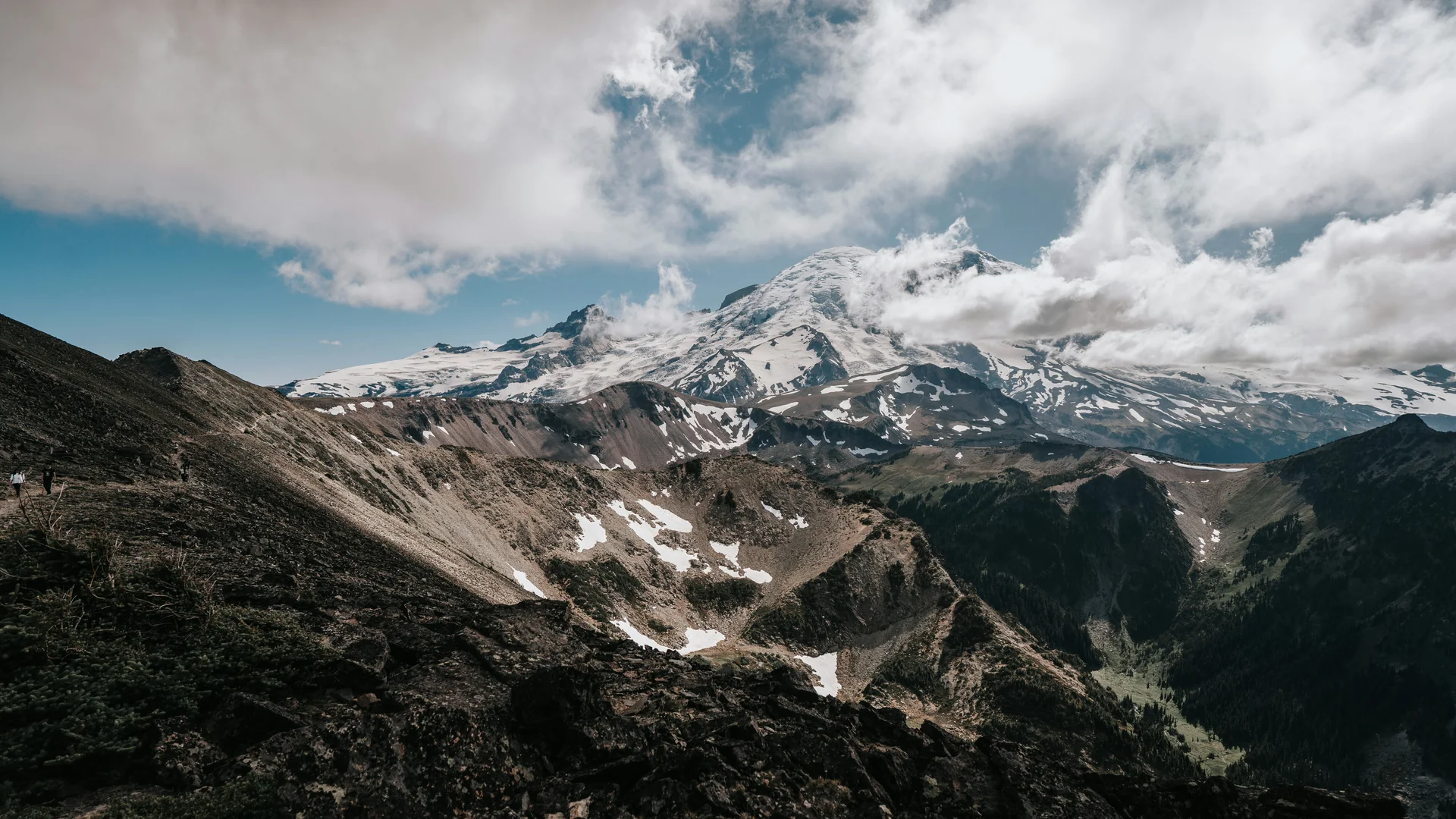
Washington is defined by the Cascade divide: a wet westside of rainforests, Puget Sound lowlands, and the Olympic Peninsula, and a dry eastside of shrub-steppe, the Columbia Basin, and forested northeastern mountains.
Hunters pursue black-tailed, mule, and white-tailed deer, Roosevelt and Rocky Mountain elk, moose, bighorn sheep, mountain goat, black bear, and cougar. General over-the-counter deer and elk seasons provide broad opportunity, with special-permit draws layered on top for premium and once-in-a-lifetime hunts.
Licensing & Draw
How it works
Washington's big game hunting is run by the Washington Department of Fish & Wildlife (WDFW). Deer and elk are largely available on a general license and tag you buy over the counter—no draw required to hunt the general seasons.
The draw mainly matters for special permits (extra or higher-quality hunts) and for the once-in-a-lifetime species. Washington uses a points system where accumulated points add entries to a weighted random drawing, rather than a queue where the most points always win.
You buy a big game license (options bundle deer, elk, bear, and cougar in various combinations) that includes the corresponding transport tags. A hunter education card is required before your first license if you were born after Jan 1, 1972.
For special permits, each point you accumulate adds chances in that species' drawing; points increase your odds but never guarantee a tag, and they reset once you draw. If you don't want to enter a given year, you can apply for a point only.
Applying & deadlines
Buy your license and tags at fishhunt.dfw.wa.gov, a vendor, or via the MyWDFW app, then apply for special permits by choosing hunt-choice numbers. When you buy a deer or elk tag you also choose a weapon restriction (modern firearm, muzzleloader, or archery).
Separate opportunities include a multi-season tag drawing (which lets one tag be used across archery, muzzleloader, and modern seasons) and raffle hunts for premium and once-in-a-lifetime species.
For 2026, the special permit application deadline is May 20, with results typically in June/July. Raffle hunt tickets are sold through mid-July, and the multi-season tag application runs the following winter (about Dec 1–Mar 31).
Confirm exact dates each year in the current regulations; the license year runs April 1–March 31.
Draw mechanics
Special permits are awarded through a weighted random drawing in which your accumulated points add extra entries, so more points meaningfully improve—but don't guarantee—your chances. Raffle hunts are a separate paid-ticket lottery.
How TAGZ turns these mechanics into projected draw odds is covered separately in the odds methodology.
Fees at a glance
Figures are approximate—see the current fee schedule. A resident deer license is about $62 and elk about $69; nonresident equivalents are far higher (about $599 deer, $686 elk). Combined deer+elk packages run about $117 resident / $1,020 nonresident.
Special hunt permit applications are about $9.61 resident (about $18.72 for 'quality' categories) and about $152 for nonresidents. Once-in-a-lifetime moose/sheep/goat special hunt licenses run about $457 resident / $2,279 nonresident. Online/phone purchases add a card processing fee.
Good to Know
You generally pick one weapon type per species per year; the multi-season tag is the way to hunt across weapon seasons. Moose, bighorn sheep, and mountain goat are once-in-a-lifetime species.
Every deer, elk, bear, moose, sheep, goat, and turkey hunter must file a mandatory harvest report by January 31 or pay a $10 penalty; reporting early also enters you in an incentive-permit drawing.
Free to join
Access the full draw odds database for Washington
View up to date season schedule and projected odds across all units.
Regulations
Hunting Regulation Brochures for Washington
Official season brochures published by the state wildlife agency.

All Game Units
186 units — Unit details, topography, landcover, and access are open to everyone. Draw odds projections are available with a TAGZ account.