Species You Can Hunt
- White-tailed Deer
- Mule Deer
- Elk
- Pronghorn
- Barbary Sheep
- Mountain Bighorn Sheep
- Desert Bighorn Sheep
- Bear
- Mountain Lion
- Oryx
- Ibex
- Javelina
State Overview
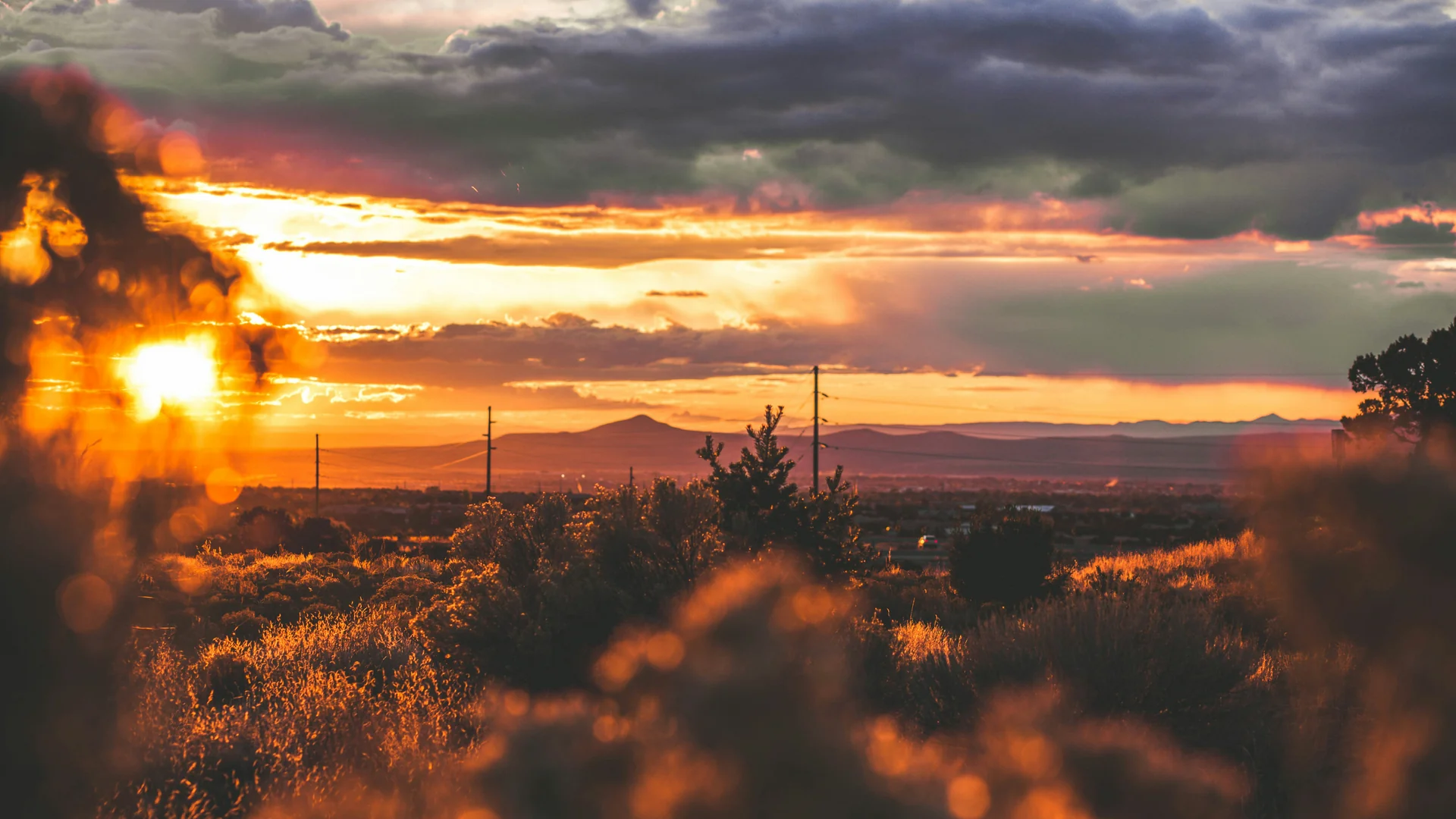
New Mexico blends high desert and mountains—the Chihuahuan Desert, the Rio Grande valley, the southern Rockies and Sangre de Cristo range, and forested high country broken by mesas and canyons.
It offers a distinctive big game mix: elk, mule deer, pronghorn, bighorn sheep, black bear, javelina, and free-ranging exotics like oryx, ibex, and Barbary sheep. With large tracts of public land and a pure random draw (no points), New Mexico gives every applicant a real chance at quality tags each year.
Licensing & Draw
How it works
New Mexico's big-game draw is run by the New Mexico Department of Game & Fish (NMDGF, now transitioning to the Department of Wildlife, NMDOW). It is a purely random draw: there are no preference or bonus points, and past applications give you no advantage.
By state law, the draw allocates each hunt across three pools — a minimum of 84% of licenses to New Mexico residents, 10% to residents or nonresidents who have contracted with a New Mexico registered outfitter, and 6% to nonresidents applying without an outfitter.
Before you can apply for any big-game draw, you must first buy a nonrefundable annual Game-Hunting License (or a combination Game-Hunting & Fishing License), plus a Habitat Management & Access Validation (HMAV) if you are 18 or older. A Habitat Stamp may also be required.
There are no points to build. Every year is a fresh, independent random draw, so there is no waiting period, seniority, or point balance to protect.
Applying & deadlines
Applications are submitted online through the NMDGF licensing site or by phone. For most species you can list up to three hunt choices (hunt codes), and for deer and elk you may add a fourth choice by quadrant if you are willing to accept any available hunt there.
Party applications are supported — one person starts the application and shares an attach code so others can join, subject to per-species limits. Applicants who have contracted with a New Mexico registered outfitter can apply in the 10% outfitter pool.
For the 2026-27 license year, the main big-game draw deadline (deer, elk, pronghorn, oryx, ibex, javelina, Barbary sheep, bighorn sheep, and private-land-only deer in Units 2A/2B/2C/4/5A) was March 18, 2026, with applications due by 5 p.m. Mountain Time; big-game draw results were posted around April 22, 2026. Bear and turkey draw permits close earlier (mid-February).
Deadlines shift each year, and prior-year harvest reports must be filed on time to stay eligible. Always confirm the exact dates in the current rules & information book before you apply.
Draw mechanics
Each application is assigned a random sequence number, then processed in that order. The system tries to fill your first choice within the 84/10/6 pool quotas; if it is full, it tries your second, then third choice, before moving on. A separate second draw hands out any leftover deer and elk licenses to fourth-choice applicants.
Because your place in the random sequence drives everything, drawing success is largely luck each year. TAGZ calculates and displays draw odds separately using historical draw data — that methodology is not part of this overview.
Fees at a glance
Costs vary by residency and species. The base Game-Hunting License runs about $25 for residents and roughly $90 for nonresidents, plus a small nonrefundable application fee (about $7 resident / $13 nonresident) and a $4 HMAV.
Resident big-game license fees are modest — roughly $60 (deer) to $185 (oryx) — while nonresident tags are much higher, from about $398 (deer) into the hundreds to low thousands, with bighorn sheep the most expensive (around $3,500 nonresident). These are ballpark figures; see the fee schedule in the rules & information book for exact amounts.
How TAGZ Projects Odds in New Mexico
New Mexico uses a pure random draw with no preference or bonus points. Every applicant has an equal shot each year, regardless of past history.
Our projections draw on five years of official draw data (2021-2025) with more weight given to recent seasons (2025 at 45%, down to 2021 at 5%). For hunts that show a consistent multi-year decline, we project that decline forward rather than diluting it with older, more favorable numbers. For newer hunt codes with only one or two years of history, we use those values directly and mark them with lower confidence.
New Mexico has many multi-unit hunts where a single application covers several game management units at once. We preserve this structure carefully so that the odds shown for each unit correctly reflect the shared applicant pool.
We also handle situations where historical data uses an older unit name — for example, 'Unit 2' — but the current draw has split that area into sub-units like 2A, 2B, and 2C. In those cases, we carry the historical odds forward to the new unit designations so applicants still see relevant projections.
Projections cover twelve species including elk, mule deer, white-tailed deer, pronghorn, bighorn sheep (Rocky Mountain and desert), oryx, ibex, barbary sheep, javelina, and bear.
Good to Know
No points means every hunt is a clean random draw each year — you can draw a premium tag on your first try, or wait years with no accrued advantage. Applying through the outfitter pool can improve a nonresident's odds, since it competes for the 10% allocation rather than the tighter 6% nonresident pool.
Some elk and antlerless hunts, and hunts on state Wildlife Management Areas, are resident-only. Private-land programs such as EPLUS (elk landowner authorizations) let hunters access private-land licenses outside the public draw, and special draws exist for prized species like oryx, ibex, and Barbary sheep. High-demand units draw far more applicants than licenses, so read each hunt code carefully.
Free to join
Access the full draw odds database for New Mexico
View up to date season schedule and projected odds across all units.
Regulations
Hunting Regulation Brochures for New Mexico
Official season brochures published by the state wildlife agency.

All Game Units
88 units — Unit details, topography, landcover, and access are open to everyone. Draw odds projections are available with a TAGZ account.