Species You Can Hunt
- White-tailed Deer
- Mule Deer
- Elk
- Pronghorn
- Moose
- Mountain Bighorn Sheep
- Mountain Goat
- Bear
- Bison
- Mountain Lion
- Wolf
State Overview
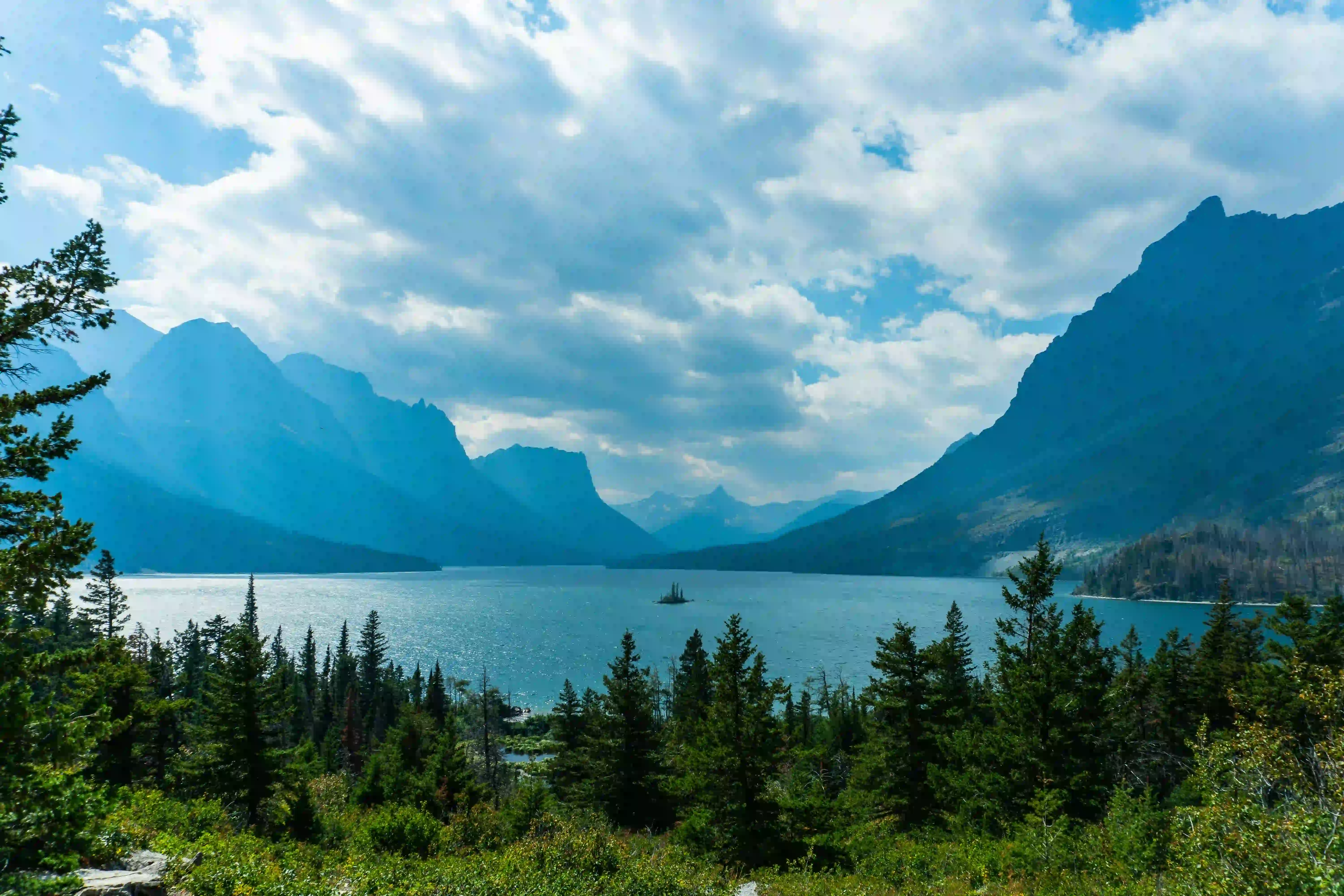
Montana lives up to its Big Sky name, with the northern Rockies and forested ranges in the west giving way to vast prairie, coulees, and river breaks across the east.
The state supports elk, mule and white-tailed deer, pronghorn, moose, bighorn sheep, mountain goat, and black bear. A large public-land base, combination general licenses, and a strong backcountry tradition make Montana a premier destination for self-guided western hunts, supplemented by limited-quota draws for premium areas and species.
Licensing & Draw
How it works
Montana's big game hunting is run by Montana Fish, Wildlife & Parks (FWP). Most limited licenses and special permits are awarded through random drawings, and Montana uses two different point systems depending on what you're applying for.
For special permits and most drawn licenses, Montana uses bonus points, which it squares before the draw to give you extra chances. Separately, nonresident combination licenses (the license that lets nonresidents hunt deer and/or elk statewide) use preference points, where 75% of licenses go to the applicants holding the most points and 25% are drawn randomly among those with no points.
Before applying, you need a Conservation License plus a base hunting license ($10 resident / $15 nonresident) and an Aquatic Invasive Species Prevention Pass. Nonresidents who want to hunt deer or elk generally start with a combination license drawing.
Bonus points are extra chances that accumulate one per year until you draw your first-choice license or permit; because Montana squares them, 10 bonus points give 101 chances ((10 x 10) + 1). You can hold different bonus point totals for each species, and you can buy a bonus point separately in a year you don't apply. Nonresident-combination preference points are capped at 3, and are lost if you skip applying in consecutive years or once you draw. A preference point can be purchased over the counter for $100 (July 1–Dec 31) if you aren't applying that year.
Applying & deadlines
Applications are submitted through FWP's Online Licensing System. Nonresidents apply for a single combination license, and both residents and nonresidents can then apply for the various species permits and B licenses (antlerless tags).
Up to 5 people may apply together as a party; FWP averages the party's points (to three decimals) to set the group's priority. On a combination-plus-elk-permit application you may select an 80% refund option, but taking it if you draw the combo resets your preference points to zero.
Dates shift slightly each year, so confirm them in the current regulations. As a guide: nonresident combination licenses are due around April 1 (application window roughly March 1–April 1), and deer/elk permits are also due around April 1 with results in mid-April.
Antelope and Deer B / Elk B licenses are typically due June 1 (results mid-June). Moose, bighorn sheep, mountain goat and bison applications are due around May 1 with results in mid-May. Deadlines are 11:45 p.m. MST.
Draw mechanics
For bonus-point species, everyone who applies gets one chance, and each bonus point adds squared chances on top; the lowest randomly assigned number wins, so more points strongly improve—but never guarantee—your odds. For nonresident combination licenses, 75% are handed out in order of most preference points and the remaining 25% go to a random draw of zero-point applicants.
How TAGZ turns these mechanics into projected draw odds is covered separately in the odds methodology.
Fees at a glance
Figures are approximate—see the current fee schedule for exact amounts. Resident big game licenses are inexpensive (general deer around $16, general elk around $20, antelope around $14). Nonresident costs are much higher: the general deer combination is about $744, elk combination about $1,078, and the deer-and-elk big game combination about $1,278.
Every application carries a $5 nonrefundable fee, except moose, sheep, goat and bison, which carry a $50 fee for nonresidents ($10 for residents). Once-in-a-lifetime species licenses (moose/sheep/goat/bison) run about $125 for residents and $1,250 for nonresidents.
How TAGZ Projects Odds in Montana
Montana uses a bonus point system where each point you hold gives you one additional entry in the draw — more points mean more chances, but nothing is guaranteed. Bison is the exception, using a pure random draw with no points.
Our projections follow a two-step process. First, we fill in any missing point levels within each year's historical data by estimating between known values. Second, we compute a weighted average across five years (2021-2025), giving more weight to recent seasons: 45% for 2025, 25% for 2024, 15% for 2023, 10% for 2022, and 5% for 2021.
After averaging, we run a final check to make sure projected odds never decrease as points go up. This can occasionally happen when different point levels have different amounts of historical data behind them, and we correct it so the projections stay consistent with how the draw actually works.
Each projection carries a confidence rating (high, medium, or low) based on how many real data years went into it. Montana covers nine species: elk, mule deer, white-tailed deer, pronghorn, moose, bighorn sheep, mountain goat, bison, and wolf.
Good to Know
Nonresidents typically need to draw a combination license before they can chase most deer/elk opportunities. B licenses cover antlerless animals and are often more available than antlered permits.
Moose, bighorn sheep, mountain goat and bison are once-in-a-lifetime species with long odds and waiting-period rules. Resident general deer and elk licenses are sold over the counter, so the draw mainly matters for special permits, premium districts, and nonresident access.
Free to join
Access the full draw odds database for Montana
View up to date season schedule and projected odds across all units.
Regulations
Hunting Regulation Brochures for Montana
Official season brochures published by the state wildlife agency.


All Game Units
381 units — Unit details, topography, landcover, and access are open to everyone. Draw odds projections are available with a TAGZ account.