Species You Can Hunt
- White-tailed Deer
- Mule Deer
- Elk
- Pronghorn
State Overview
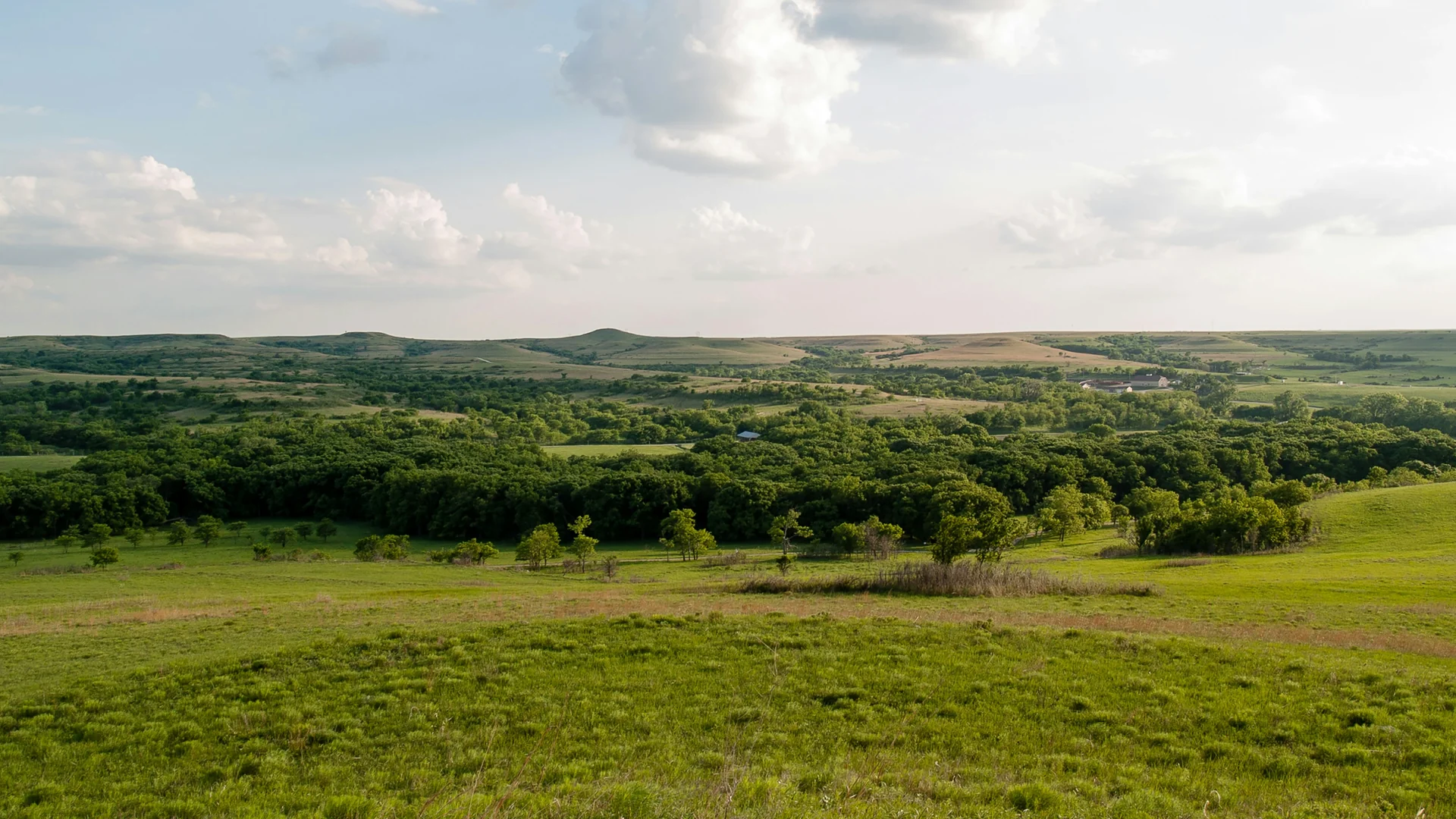
Kansas is Great Plains country, transitioning from the tallgrass prairie of the Flint Hills and wooded eastern river bottoms to shortgrass rangeland and canyons in the west.
It is best known for big-bodied, heavy-antlered white-tailed deer and quality mule deer in the west, along with excellent turkey and upland bird hunting. Most land is privately owned and farmed, and nonresident deer hunting is allocated through a limited draw by unit.
Licensing & Draw
How it works
Hunting in Kansas is run by the Kansas Department of Wildlife and Parks (KDWP). Unlike states where nearly every big-game tag is drawn, Kansas keeps many resident deer permits available over the counter (OTC) and reserves a limited-draw process mainly for the tags that are capped.
The tags that go through a draw use a preference-point system: the nonresident deer permit is draw-only, and firearm and muzzleloader antelope permits are drawn (residents and nonresident tenants only). Nonresidents can hunt antelope by archery permit only, which is sold over the counter/online rather than drawn. Elk is a separate, resident-focused draw.
Almost everyone needs two things: a valid Kansas hunting license AND a species permit (deer, antelope, etc.). A few exemptions apply — for example, residents and nonresidents hunting land they own or operate generally don't need a hunting license, and resident youth 15 and younger are exempt.
Preference points reward persistence. When you apply for a capped hunt (such as nonresident deer or resident antelope) and are unsuccessful, your nonrefundable application fee earns you a preference point toward next year's draw. Applicants with the most points are considered first, with ties broken randomly. You can typically hold only one new point per year, and for antelope you may buy a point without submitting a full application. Elk uses a similar bonus-point approach.
Applying & deadlines
Applications are submitted online at GoOutdoorsKansas.com (a phone option exists for applicants without internet access). You choose your season and unit when you apply.
For nonresident deer, the whitetail combo permit is valid in one designated management unit plus one adjacent unit listed on the permit. Nonresidents drawn in the western units (1, 2, 17, 18) for an archery or muzzleloader combo may additionally apply for a limited Mule Deer Stamp, which upgrades the permit to either-species (whitetail or mule deer). Resident firearm and muzzleloader either-species/either-sex deer permits are drawn by zone (West Zone or East Zone). For antelope, firearm and muzzleloader applicants pick one of the three management units (2, 17, 18).
These windows are from the 2025 regulations and shift slightly each year — always confirm against the current regulations before applying. Nonresident deer draw applications were due the last Friday in April. Resident firearm either-species/either-sex deer applications closed June 13.
Antelope firearm and muzzleloader applications ran roughly mid-May through the second Friday in June (May 13–June 13 in 2025), with antelope archery going on sale in early August. Antelope draw results were posted about two to four weeks after the application period closed, with permits arriving a few weeks later.
Draw mechanics
In plain English, a preference-point draw is like a line ordered by points: for each capped unit, KDWP fills the quota starting with applicants who hold the most preference points, breaking ties randomly. When a unit's permits run out, the remaining applicants go home with another point for next year.
This overview skips the odds math. TAGZ calculates draw odds separately using its own historical-data methodology; see the odds tools for unit-by-unit estimates.
Fees at a glance
These are approximate 2025 permit prices to give you a sense of scale — see the current KDWP fee schedule for exact amounts, and remember a separate hunting license is usually required on top of the permit.
Nonresident deer is the big one: the nonresident whitetail combo was about $477.50, with an optional Mule Deer Stamp around $150. A nonresident antelope archery permit was about $302.50. Residents pay far less — for example, a resident firearm either-species deer permit was about $52.50 and a resident firearm antelope permit about $62.50 (including the application fee). The antelope preference point was $12.50.
Good to Know
Nonresident deer permits are capped per unit, so popular units can require points to draw. Firearm and muzzleloader antelope are effectively resident-only (plus nonresident tenants), leaving nonresidents limited to antelope archery. One antelope quirk: if you apply unsuccessfully or buy a preference point, you can no longer purchase an over-the-counter archery antelope permit that same year.
Whitetail vs. mule deer matters. Mule deer generally require the limited Mule Deer Stamp (nonresidents) or an either-species draw permit (residents) and are tied to the western units. Meanwhile, many resident deer options remain OTC — including resident archery either-species, any-season whitetail, and up to ten whitetail antlerless-only (WAO) permits. Unit 10A (Fort Leavenworth) and elk on Fort Riley operate under special, restricted programs outside the general draw.
Free to join
Access the full draw odds database for Kansas
View up to date season schedule and projected odds across all units.
Regulations
Hunting Regulation Brochures for Kansas
Official season brochures published by the state wildlife agency.


All Game Units
24 units — Unit details, topography, landcover, and access are open to everyone. Draw odds projections are available with a TAGZ account.