Species You Can Hunt
- White-tailed Deer
- Mule Deer
- Elk
- Pronghorn
- Desert Bighorn Sheep
- Mountain Bighorn Sheep
- Bear
- Bison
- Mountain Lion
- Javelina
State Overview
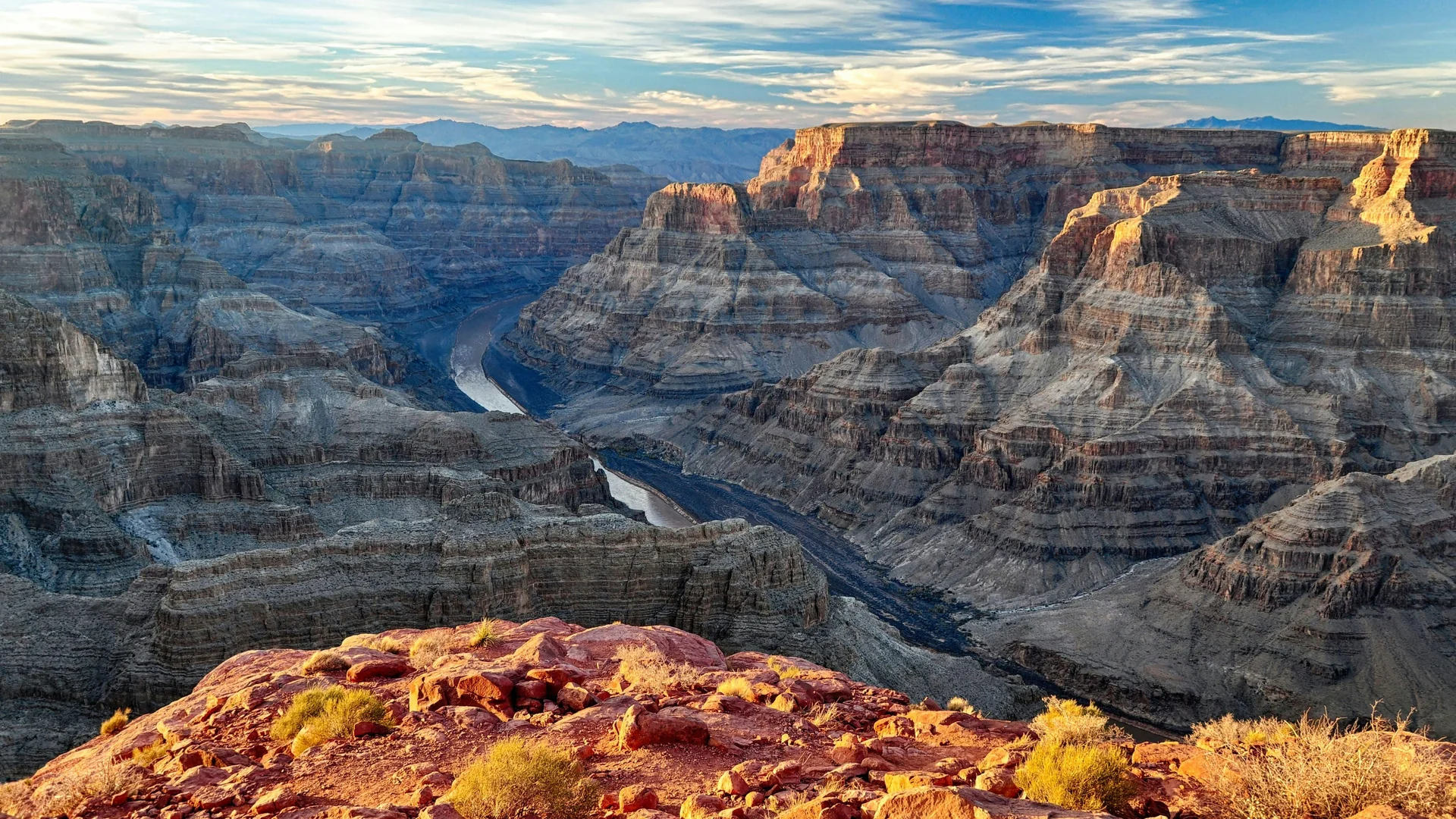
Arizona spans dramatic elevation and habitat gradients, from the saguaro-studded Sonoran Desert and rugged sky-island ranges of the south to the ponderosa pine forests of the Mogollon Rim and the high Colorado Plateau and Grand Canyon country in the north.
It is famous for trophy-quality hunting—giant elk, Coues whitetail, and desert mule deer—along with pronghorn, desert and Rocky Mountain bighorn, javelina, black bear, and turkey. With extensive BLM, national forest, and tribal lands, Arizona offers excellent public-land opportunity, though most premier hunts require years in the draw.
Licensing & Draw
How it works
Arizona's big-game hunts are run by the Arizona Game and Fish Department (AZGFD). Limited tags (hunt permit-tags) are awarded through a computerized random drawing rather than sold over the counter. Draw species include deer, elk, pronghorn, bighorn sheep, bison, javelina, and turkey, plus sandhill crane.
Arizona uses a bonus point system, not a preference point system: bonus points improve your odds each year you apply without drawing, but they never guarantee a tag — every applicant is still entered into a random draw. Residents and nonresidents apply the same way, but nonresidents pay higher fees and face a nonresident cap (generally about 10% of a hunt's tags; see "Good to know").
Everyone who hunts in Arizona needs a valid hunting or combination hunt-and-fish license, and you must hold one to apply in the draw. The tag is separate from the license and is what actually lets you take a big-game animal.
You earn a bonus point for each year you submit a valid application but aren't drawn for that species group (genus). Arizona also offers a one-time permanent hunter-education bonus point (per genus, the first time you complete an approved Arizona Hunter Education or Conservation Education course) and a loyalty bonus point (earned after applying for the same genus five years in a row, and kept only by continuing to apply annually). To build points without hunting, you can submit a "bonus point only" application — one per genus per draw.
Applying & deadlines
Applications are submitted online at azgfd.gov. You may submit only one valid application per species group (genus) per drawing, and each application can list several hunt-number choices (for example, a general hunt first and another weapon-type hunt for the same genus later, as long as they're in the same numerical series).
Group (party) applications are allowed — several hunters can apply together on one application. Be aware that if any group member is rejected, or there aren't enough tags for the whole group, the entire group is passed over.
Arizona runs three separate draw cycles, each with its own deadline. Pronghorn and elk are applied for in winter (the 2026 deadline was Feb. 3, 2026). Deer, fall turkey, fall javelina, bighorn sheep, fall bison, and sandhill crane are applied for in spring (the 2025 deadline was June 3, 2025). Spring javelina, spring turkey, spring bison, and raptor capture are applied for in the fall (deadline in October).
Regulations for each cycle come out a month or two before the deadline, and results are posted to your online portal account after the draw. These windows shift slightly each year — always check the current regulations for exact dates.
Draw mechanics
For each hunt, up to 20% of the tags are set aside for a first "bonus pass" that goes to the applicants holding the most bonus points for that genus (for sheep and bison this 20% is applied statewide). The remaining tags are then awarded in random passes — first honoring first- and second-choice hunts, then third-, fourth-, and fifth-choice hunts.
Mechanically, every application gets a random number, plus one extra random number for each bonus point, and only your lowest number counts. More points mean more chances at a low number — which is why points help but never guarantee a draw. TAGZ's per-point odds projections are covered separately in our odds methodology.
Fees at a glance
A resident hunting license runs about $37 (or roughly $57 for the combo hunt-and-fish license); nonresidents buy a combo license for around $160, and youth licenses are about $5. Each draw application also carries a per-species application fee of roughly $13 (resident) or $15 (nonresident).
If you draw, you pay the tag price, which varies widely: deer and pronghorn tags are modest for residents but several hundred dollars for nonresidents, while bighorn sheep and bison run into the thousands. These are ballpark figures — see the current AZGFD fee schedule for exact amounts.
How TAGZ Projects Odds in Arizona
Arizona uses a three-pass bonus point draw where each bonus point adds extra entries to your application, improving your odds but never guaranteeing a tag. Our projected odds come from official AZGFD Bonus Point Reports, which record exactly how many applicants applied and how many permits were issued at each point level.
We analyzed two years of reports (2024-2025) across Arizona's three independent draw cycles: fall (deer, bighorn, bison), elk and pronghorn, and spring (javelina, bison). For the spring 2026 cycle, the draw had already taken place at the time of our analysis, so we use actual results. For the fall and elk/pronghorn cycles, we project forward using a weighted two-year average that puts more emphasis on the most recent year.
Because Arizona's per-point data is only available from 2024 onward, most projections are based on two years of data, which is reflected in medium confidence ratings. We verify that projected odds never go down as bonus points increase, and we fill any gaps in the point range by estimating between known values.
The result is a complete odds picture from zero points up to the highest level observed (as high as 48 for some hunts), giving applicants a realistic sense of how their accumulated bonus points affect their chances across all draw species.
Good to Know
Nonresident cap: for antlered deer, bull elk, pronghorn, turkey, and crane, nonresidents receive no more than about 10% of the tags in a hunt; for bighorn sheep and bison the nonresident share is capped statewide. Bonus-pass limit: because at most 20% of tags go to the top-points pass, most tags are still awarded randomly.
PointGuard: for a small fee ($10 per species, or $25 for PointGuard Plus across three draw cycles) you can surrender a tag you can't use and have your expended bonus points reinstated. Once-in-a-lifetime species: bighorn sheep and bison carry a one-per-lifetime bag limit. Finally, many hunts are split by weapon and season (general/any-legal-weapon, archery-only, and muzzleloader), and some species (bear, mountain lion, some archery deer and elk) are available over the counter rather than through the draw.
Free to join
Access the full draw odds database for Arizona
View up to date season schedule and projected odds across all units.
Regulations
Hunting Regulation Brochures for Arizona
Official season brochures published by the state wildlife agency.


All Game Units
80 units — Unit details, topography, landcover, and access are open to everyone. Draw odds projections are available with a TAGZ account.