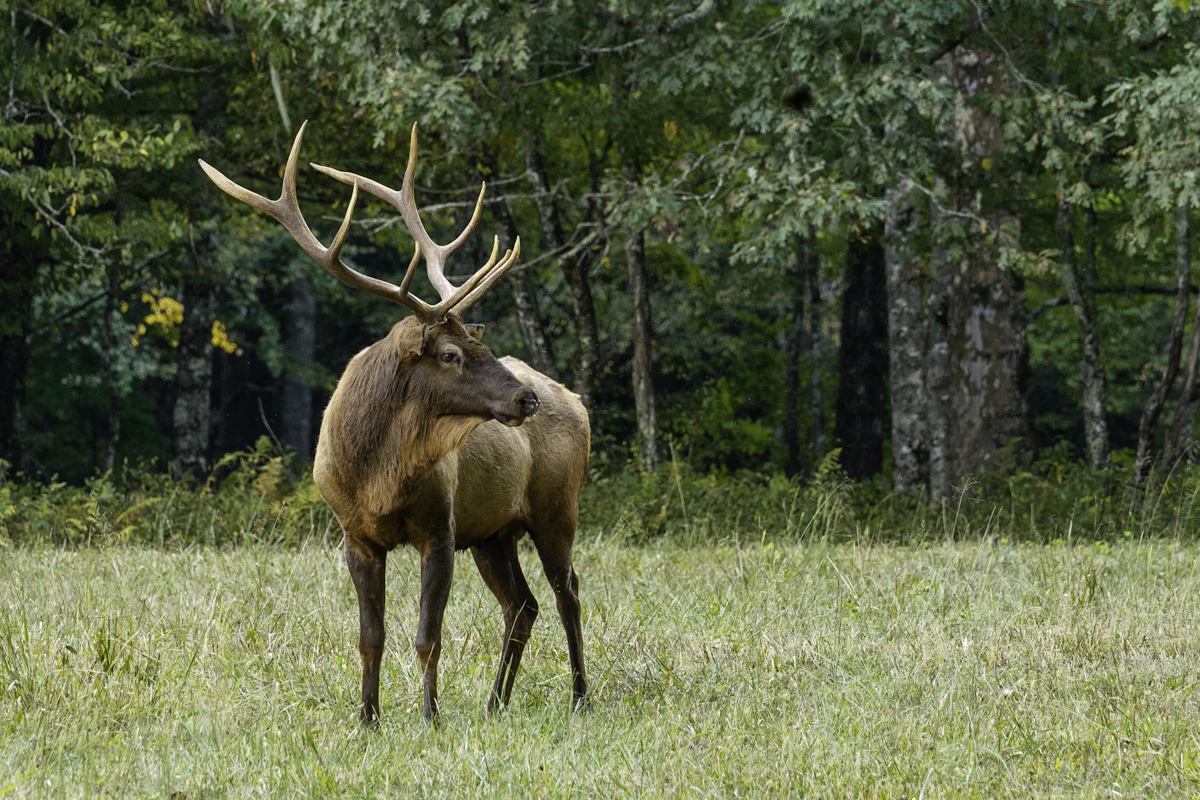
Does Virginia Have an Elk Hunt?
Yes.
Virginia restored elk to:
Southwest Virginia
beginning in:
2012.
Between:
2012 and 2014,
75 elk were translocated from:
Kentucky
to establish the modern Virginia herd.
Virginia held its first modern:
Elk Management Zone Hunt
in:
2022.
Where Are Virginia's Elk?
Virginia's:
Elk Management Zone — EMZ
consists of:
Buchanan County
Dickenson County
and:
Wise County.
This is the core area where Virginia manages its:
Restored Elk Herd.
Virginia's Elk Country
Much of Virginia's elk habitat is associated with:
Southwest Virginia's Reclaimed Mine Lands
and surrounding:
Forested Mountain Country.
The restoration has transformed portions of:
Virginia Coal Country
into important:
Elk Habitat.
Is Virginia Elk Hunting a Preference-Point Draw?
No.
Virginia's general elk lottery is:
Random.
There is currently no standard:
Elk Preference-Point System
or:
Elk Bonus-Point System
that gives repeat applicants increasing drawing weight.


Free to join
Download mobile app
- Detailed draw odds
- Point tracking
- Deadline reminders
- 18 states covered





Free to join
Download mobile app
- Detailed draw odds
- Point tracking
- Deadline reminders
- 18 states covered






Free to join
Download mobile app
- Detailed draw odds
- Point tracking
- Deadline reminders
- 18 states covered

Does Applying Every Year Improve Your Future Odds?
Not Through Points.
Applying in:
2026
and failing to draw does not give you:
A Preference Point
that improves your:
2027 Drawing Position.
Each year's lottery is:
A New Drawing.
Virginia Has Considered Point-System Suggestions
Hunters have previously suggested that Virginia create:
Preference Points
for the elk lottery.
But those public suggestions should not be confused with:
Current Rules.
Virginia's existing general elk lottery remains:
Random.
Can a First-Time Applicant Draw?
Yes.
Because Virginia doesn't currently use:
Preference or Bonus Points,
a first-time eligible applicant can potentially:
Draw An Elk License.
Does Applying Early Improve Your Odds?
No.
Submitting your application:
On Opening Day
doesn't give you more drawing weight than another valid application submitted:
Before The Deadline.
Apply early to avoid:
Account Problems
Payment Problems
or:
Missing The Deadline.
How Many Virginia Elk Tags Are Available?
For:
2026,
Virginia offered:
5 Bull Elk Licenses
through:
The General Elk Lottery.
A sixth special elk license was available separately through:
The Elk Conservation License Program.
These are:
Separate Opportunities.
Don't Automatically Assume Six Lottery Tags
This is important.
Virginia's:
General Lottery
and:
Elk Conservation License Program
are not the same drawing.
For 2026:
General Lottery — 5
Conservation License — 1
Total special EMZ elk hunting opportunities:
6
but only:
5 Were Standard Lottery Licenses.
What Is the Elk Conservation License Program?
Virginia's:
Elk Conservation License Program
allows DWR to reserve:
One Special Elk Hunting License
for a qualifying:
Cooperator or Wildlife Conservation Organization
whose proposal is determined to provide substantial conservation benefit.
That organization can then:
Raffle The License.
Where Does the Conservation Money Go?
Proceeds generated through transfer of the:
Elk Conservation License
must support:
Wildlife Conservation
or:
Wildlife-Related Recreation
within:
Buchanan
Dickenson
and/or:
Wise County.
Can You Enter the Lottery and Conservation Raffle?
The programs are:
Separate.
A hunter may potentially have opportunity through:
The General Elk Lottery
and:
The Separate Conservation-License Raffle
subject to the current year's rules.
Always review:
2027 Program Requirements
before entering.
2026 Virginia Elk Lottery Applicants
The 2026 general elk lottery received:
19,764 Applicants
for:
5 General Lottery Licenses.
A simple calculation of:
5 ÷ 19,764
is approximately:
0.025%.
That's roughly:
1 General Lottery License Per 3,953 Applications.
But this should be treated only as:
Overall Lottery Context.
It is not the exact odds for:
Every Resident + Nonresident + EMZ Resident Applicant.
Why One Statewide Percentage Is Incomplete
Virginia's lottery includes:
Residency Allocation Rules.
Therefore, your actual historical opportunity depends partly on whether you were:
A Virginia Resident
A Nonresident
or:
An Eligible Resident Of The Elk Management Zone.
Nonresident Elk Tags
Virginia limits:
Nonresident Elk Licenses.
Under the current lottery structure:
No More Than One
or:
10% Of Available Elk Licenses, Whichever Is Greater,
may be issued to:
Nonresidents.
With only:
Five General Lottery Licenses,
that means:
No More Than One Nonresident License
through the applicable lottery structure.
A Nonresident Tag Isn't Guaranteed
This is important.
Virginia's nonresident rule establishes:
A Maximum.
It doesn't necessarily guarantee that:
A Nonresident Must Draw Every Year.
Don't write:
"Virginia Gives One Elk Tag To Nonresidents."
Better:
"No More Than One General Lottery license may currently go to a nonresident when five licenses are offered."
Elk Management Zone Resident Allocation
Virginia also provides special consideration for:
Residents Of The Elk Management Zone.
Under the current lottery framework:
At Least One License
or:
10% Of Available Licenses, Whichever Is Greater,
is allocated to eligible:
EMZ Residents.
Who Is an EMZ Resident?
The Elk Management Zone consists of:
Buchanan
Dickenson
and:
Wise Counties.
The applicable residency requirements should be verified in:
The 2027 Lottery Rules.
Resident Odds vs Nonresident Odds
Don't publish:
One Virginia Elk Draw Percentage
for everyone.
Historical odds should be separated into:
Resident
and:
Nonresident
where data is available.
The nonresident cap can make:
Nonresident Opportunity Significantly Different.
2024 Historical Example
For the:
2024 Virginia Elk Lottery,
historical reporting showed:
Resident Applicants — 14,092
Resident Tags — 4
with approximately:
0.03% Historical Draw Odds.
Nonresident applicants:
5,670
Nonresident tags:
1
with historical odds:
Below 0.01%.
These are:
2024 Historical Results
—not:
2027 Odds.
Applicant Numbers Have Changed
Virginia's first modern elk lottery in:
2022
received:
31,951 Applicants.
The:
2023 Lottery
received:
24,378 Applicants.
The:
2024 Lottery
received:
19,764 Applicants.
And 2026 also had:
19,764 Applicants
according to current published historical draw reporting.
This shows why:
Applicant Demand Can Change Significantly.
Fewer Applicants Doesn't Mean Easy Odds
Even with fewer applications than:
2022,
Virginia still offers only:
A Handful Of General Lottery Licenses.
So:
The Odds Remain Extremely Limited.
2026 Virginia Elk Season
Virginia's 2026 Elk Management Zone hunt was scheduled for:
October 10–16, 2026.
That's a:
Seven-Day Hunt.
Use this only as:
2026 Historical Season Timing.
Do not publish:
October 10–16
as the confirmed:
2027 Season
until Virginia DWR establishes the final dates.
Free to join
Download mobile app
- Detailed draw odds
- Point tracking
- Deadline reminders
- 18 states covered
Free to join
Download mobile app
- Detailed draw odds
- Point tracking
- Deadline reminders
- 18 states covered
Free to join
Download mobile app
- Detailed draw odds
- Point tracking
- Deadline reminders
- 18 states covered
2026 Application Period
For 2026, Virginia's elk lottery opened:
February 4, 2026
and applications were accepted through:
March 31, 2026.
Use these as:
Historical Timing.
Verify the:
2027 Opening Date + Deadline
when DWR publishes the new lottery.
2027 Application Fees
Virginia approved license fee changes effective:
October 1, 2026.
Under the current fee schedule applicable going into 2027:
Resident Elk Hunt Lottery Application — $20
Nonresident Elk Hunt Lottery Application — $25
These application fees are:
Nonrefundable.
Important Fee Change
Older Virginia elk articles may show:
$15 Resident
and:
$20 Nonresident.
Those were the previous application fees.
Beginning:
October 1, 2026,
Virginia's published fees become:
$20 Resident
and:
$25 Nonresident.
A 2027 article should use:
The Updated Fees
unless DWR changes them again.
Special Elk License Cost
Virginia's current post-October 1, 2026 fee schedule lists:
Resident Special Elk Hunting License — $41
and:
Nonresident Special Elk Hunting License — $401.
These are the:
Special Elk License Fees
for hunters awarded a license through the applicable:
Department Elk License Program.
Basic Hunting License
Successful hunters may also need:
The Appropriate Virginia Hunting License
unless:
Legally Exempt.
Under the fee schedule effective October 1, 2026:
Resident Annual Hunting License — $28
and:
Nonresident Annual Hunting License — $136
for hunters age 16 or older.
Verify:
All Applicable 2027 Licensing Requirements
before hunting.
Application Cost vs Hunt Cost
Don't confuse:
Lottery Application Fee
with:
The Total Cost To Hunt.
A successful applicant may need:
Hunting License
Special Elk License
Travel
Lodging
Food
Gear
Meat Processing
and:
Taxidermy.
One Application Per Person
Virginia's elk lottery has historically limited applicants to:
One Application Per Drawing Per Person.
Duplicate, falsified or improper applications can be:
Removed From The Applicant Pool.
Verify this again for:
2027.
No Party Applications
Virginia's elk lottery is:
An Individual Drawing.
Don't build a:
Party Application Strategy
like you would in some Western states.
Elk Licenses Are Nontransferable
A Virginia special elk hunting license is:
Nontransferable.
If you're selected:
You Can't Simply Give The License To Someone Else.
Successful Applicant Deadline
Under Virginia's established elk lottery process, selected hunters receive a period to:
Purchase Their Special Elk License.
Historically, successful applicants have had:
30 Days From Notification
to purchase.
If a selected hunter fails to complete the purchase:
An Alternate Can Be Elevated.
Verify the exact:
2027 Purchase Deadline.
Virginia Draws Alternates
Virginia has historically selected:
Alternate Hunters
along with:
Initial Winners.
Alternates aren't necessarily announced as successful unless:
A License Becomes Available.
The Alternate List Can Matter
The inaugural:
2022 Hunt
provides a real example.
A Virginia resident originally selected did not purchase the license.
An alternate:
Nonresident Hunter From North Carolina
ultimately received the opportunity.
So:
The Drawing Isn't Always The Final Tag Holder List.
Are Virginia Elk Tags Bull Only?
Recent Virginia Elk Management Zone lotteries have offered:
Antlered Elk/Bull Elk Opportunities.
For 2026:
The Five General Lottery Licenses Were Bull Elk Licenses.
Verify:
2027 Sex + Bag Limit Rules
before publishing the final season information.
Virginia's First Elk Hunt
Virginia's first modern Elk Management Zone hunt took place in:
2022.
Six hunters participated:
Five General Lottery Hunters
plus:
One Conservation-License Hunter.
All six:
Harvested Bulls.
2022 Harvest Success
The inaugural hunt had:
100% Harvest Success.
Every hunter successfully harvested:
A Mature Bull.
But don't automatically convert that into:
Guaranteed Future Success.
Don't Say Virginia Elk Hunting Is Guaranteed
Historical success can be:
Very High.
But a hunting license never guarantees:
A Harvest.
Weather, elk movement, hunter ability, access and other conditions can:
Change.
2022 Bull Size
During the inaugural hunt, harvested bulls ranged from:
691 To 852 Pounds Live Weight.
Every bull was determined to be at least:
3.5 Years Old.
One harvested bull was:
11.5 Years Old.
Virginia Produced a 400-Inch-Class Bull
The largest bull from the:
2022 Inaugural Hunt
was an:
8×9.
It ultimately became a:
Virginia State Big Game Record
with a Boone and Crockett non-typical score reported by DWR at:
413 7/8 Inches Net.
That is a documented historical animal.
It should not be interpreted as:
The Typical Size Of A Virginia Bull.
Draw Odds vs Trophy Potential
Keep these separate.
Draw Odds
Measure:
How Difficult It Is To Receive The License.
Trophy Potential
Relates to:
The Animals Available In The Population.
A documented:
400-Inch-Class Bull
doesn't mean every successful applicant should expect:
A 400-Inch Elk.
Draw Odds vs Harvest Success
Likewise:
Drawing Probability
and:
Harvest Success
are different metrics.
Virginia can have:
Extremely Low Draw Odds
and:
High Historical Harvest Success.
Those facts aren't contradictory.
Access Is a Major Part of Virginia's Elk Hunt
Much of the Elk Management Zone consists of:
Private Property + Reclaimed Mine Lands.
DWR works with:
Private Landowners
to provide access for:
Successful Elk Hunters.
Free to join
Download mobile app
- Detailed draw odds
- Point tracking
- Deadline reminders
- 18 states covered
Free to join
Download mobile app
- Detailed draw odds
- Point tracking
- Deadline reminders
- 18 states covered
Free to join
Download mobile app
- Detailed draw odds
- Point tracking
- Deadline reminders
- 18 states covered
POWRR Access
Virginia's:
Public Opportunities for Wildlife-Related Recreation — POWRR
program includes private properties enrolled for:
Elk Hunting Access.
DWR currently reports more than:
3,000 Acres
of additional private lands enrolled specifically for:
Elk Hunting Opportunities
in the Elk Management Zone.
Lottery Winners Receive Access Information
Successful elk hunters receive:
Maps + Access Information
during the:
Elk Hunt Orientation Process.
Access to participating properties is restricted to:
Authorized Hunters + Applicable Parties
under the program's rules.
Don't Trespass Before You Draw
Some elk-access properties are:
Private Land.
General public access is:
Not Automatically Allowed.
Scouting and hunting access can require:
Prior Authorization.
2022 Access Example
For Virginia's inaugural hunt:
20 Landowners
provided hunters access to more than:
17,000 Acres.
That illustrates how important:
Private Landowner Partnerships
are to Virginia's elk program.
Virginia Elk Landowner License Program
Virginia also operates an:
Elk Landowner License Program.
This is separate from simply:
Buying Land + Automatically Receiving A Tag.
Landowner participation is governed by:
Virginia DWR Program Requirements.
Don't Mix Landowner Licenses With General Draw Odds
When calculating:
General Lottery Odds,
don't automatically include:
Landowner Program Licenses
or:
Conservation Licenses
unless the analysis clearly identifies:
Which Licenses Are Being Counted.
Elk Conservation License Is Also Separate
Likewise:
The Conservation-License Raffle
should not be included in:
General Lottery Draw Odds.
A hunter may have:
Multiple Paths To Opportunity
but each has:
Different Selection Mechanics.
Elk Outside the Elk Management Zone
Virginia's elk rules are unusual.
Outside:
Buchanan
Dickenson
and:
Wise Counties,
elk can currently be legally harvested under applicable:
Deer Hunting Rules
with the proper deer license/tag structure.
Outside-EMZ Elk Are Rare
Don't advertise this as:
An Easy OTC Virginia Elk Hunt.
Virginia DWR has noted that elk outside the:
Elk Management Zone
are relatively uncommon.
Historically, hunters have sometimes:
Passed Opportunities
or:
Attempted Without Success
outside the core zone.
Inside vs Outside the EMZ
Inside The Elk Management Zone
You need:
The Applicable Special Elk Hunting License
obtained through an authorized:
DWR Elk License Program.
Outside The Elk Management Zone
Elk harvest can fall under:
Applicable Deer Hunting Rules
rather than the:
Special EMZ Elk Lottery.
Always verify:
Current 2027 Regulations.
Don't Call Outside-EMZ Opportunity a Guaranteed Elk Tag
The legal ability to harvest an elk outside the EMZ doesn't mean:
Elk Are Readily Available There.
This is:
Incidental Opportunity
—not:
A Conventional OTC Elk Hunt.
Elk Hunt Terrain
Virginia elk hunting is very different from:
High-Alpine Colorado Elk Hunting.
Southwest Virginia can involve:
Forested Ridges
Reclaimed Mine Land
Open Grass Habitat
Steep Appalachian Terrain
and:
Private Property Boundaries.
Physical Preparation
Successful hunters should still prepare for:
Hiking
Steep Terrain
Uneven Ground
and:
Potentially Difficult Elk Recovery.
Don't assume:
Eastern Elk Hunt = Easy Hunt.
Elk Recovery
An adult bull elk is:
A Large Animal.
Plan before the hunt for:
Field Dressing
Quartering
Meat Care
and:
Transportation.
Virginia's volunteer and landowner community has historically provided significant support during:
The Special Elk Hunt.
Rifle Preparation
Use:
A Legal Firearm + Ammunition
that you can shoot:
Accurately + Confidently.
Don't assume you need:
Extreme Long-Range Equipment.
During Virginia's inaugural hunt:
Four Hunters Took Shots Beyond 100 Yards
and the longest reported shot was:
200 Yards.
That's historical context—not a recommended:
Maximum Shooting Distance.
Practice Before the Hunt
A successful lottery applicant should practice:
Standing Supported
Kneeling
Sitting
and:
Prone/Supported Positions
where practical.
Know:
Your Personal Shooting Limit.
Virginia Elk Orientation
Successful hunters should expect:
DWR Instructions + Orientation Requirements.
Historically, selected hunters have been required to:
Review + Acknowledge Elk Hunting Considerations
before hunting.
Biological Sampling
Virginia DWR conducts:
Elk Health Monitoring.
Successful hunters may be required to cooperate with:
Biological Sample Collection
and:
Harvest Reporting.
Follow the:
Current 2027 Instructions.
Virginia Elk Herd Management
Virginia's elk hunt isn't simply:
A Trophy Program.
The hunt operates within:
The Commonwealth's Elk Management Program
with goals related to:
Population Health
Habitat
Public Recreation
Landowner Relationships
and:
Conservation.
2027 Strategy #1 — Understand It's Random
There is no:
Point Strategy.
You can't improve future draw weight by:
Building Points.
If you're eligible and want the opportunity:
Apply.
Free to join
Download mobile app
- Detailed draw odds
- Point tracking
- Deadline reminders
- 18 states covered
Free to join
Download mobile app
- Detailed draw odds
- Point tracking
- Deadline reminders
- 18 states covered
Free to join
Download mobile app
- Detailed draw odds
- Point tracking
- Deadline reminders
- 18 states covered
Strategy #2 — Nonresidents Should Understand the Cap
Nonresidents can apply.
But with a:
Maximum Nonresident Allocation
and only a handful of tags:
Historical Nonresident Odds Can Be Extremely Small.
Strategy #3 — EMZ Residents Have a Separate Allocation Consideration
If you're an eligible resident of:
Buchanan
Dickenson
or:
Wise County,
make sure your:
Residency Information Is Correct.
The EMZ resident allocation can affect:
Your Drawing Pool.
Strategy #4 — Enter the Conservation Raffle Separately
If offered under the:
2027 Elk Conservation License Program,
the conservation raffle can create:
Another Independent Path
to a Virginia elk license.
Research:
Ticket Rules + Deadline + Organization
separately from:
The General Lottery.
Strategy #5 — Don't Skip Because the Odds Are Low
A random lottery has:
No Point Barrier.
A first-year applicant can potentially:
Draw.
You don't need:
10
20
or:
30 Years Of Points
to become eligible.
Strategy #6 — Don't Confuse Cheap Application With Good Odds
Virginia's application is relatively:
Inexpensive
compared with some Western systems.
That doesn't mean:
The Tag Is Easy To Draw.
Low application cost can contribute to:
Large Applicant Pools.
Strategy #7 — Be Ready to Hunt if You Apply
The Virginia elk hunt is:
A Rare Opportunity.
Before applying, consider:
Time Off
Travel
Equipment
Physical Preparation
and:
Meat/Trophy Logistics.
Strategy #8 — Watch the Purchase Deadline
If selected:
Act Quickly.
Historically, winners have had:
30 Days
to purchase the special elk license.
Failure to complete the purchase can result in:
The License Going To An Alternate.
Strategy #9 — Don't Book Around Unconfirmed 2027 Dates
Use:
2026 Timing
only as:
A Planning Reference.
Wait for:
Virginia DWR
to publish the final:
2027 Application + Hunt Dates.
Strategy #10 — Use Historical Odds Correctly
Use:
2022
2023
2024
2025
and:
2026
data to understand:
Applicant Trends.
But don't label:
Historical Percentages
as:
2027 Odds.
How TAGZ Should Display Virginia Elk Odds
For Virginia, TAGZ should show:
Year
General Lottery Licenses
Resident Applicants
Resident Licenses Drawn
Nonresident Applicants
Nonresident Licenses Drawn
EMZ Resident Allocation
Total Applicants
Historical Draw Rate
and:
Conservation-License Opportunity Separately.
Don't Show Preference Points
Virginia should not have:
Preference-Point Tables
like:
Colorado
Wyoming
or:
Utah.
Instead, show:
Random Lottery History.
Historical Applicant Trend
A useful TAGZ table should show:
2022 — 31,951 Applicants
2023 — 24,378 Applicants
2024 — 19,764 Applicants
and additional completed-year results as officially available.
This gives hunters context for:
Demand Trends.
Don't Predict Continued Applicant Decline
Even if applications decline over:
Several Historical Years,
that doesn't mean:
2027 Applications Will Decline.
Media coverage, fees, hunt success and hunter interest can:
Change Applicant Behavior.
Virginia vs Western Elk Draws
Virginia differs substantially from:
Colorado
Wyoming
and:
Utah.
There is:
No Multi-Year Point Investment
required to enter the Virginia lottery.
But there are also:
Extremely Few Licenses.
Virginia vs Idaho
Virginia is somewhat more similar to:
Idaho
in that the standard drawing doesn't rely on:
Preference Points.
But:
The Allocation Rules + Number Of Tags + Hunt Structure
are completely different.
Don't use:
Idaho Draw Odds
to estimate:
Virginia.
Draw Odds vs Hunt Quality
Don't interpret:
Extremely Difficult Draw Odds
as proof that:
Virginia Is Automatically A Better Elk Hunt Than Western States.
The low odds are heavily influenced by:
Only A Few Available Licenses
and:
Thousands Of Applicants.
Draw Odds vs Bull Size
Likewise:
Rare Tag ≠ Guaranteed Giant Bull.
Virginia has produced:
Impressive Mature Bulls,
including a documented:
400-Inch-Class State Record.
But every hunt and animal is:
Different.
How TAGZ Helps With Virginia Elk Planning
TAGZ helps hunters organize:
Draw Deadlines
Historical Draw Odds
Application Costs
State Rules
and:
Big-Game Opportunities.
Virginia is a perfect example of why:
Draw Systems Need To Be Explained Correctly.
There are no:
Preference Points To Chase.
Instead, hunters need to understand:
Random Odds + Residency Allocation + Tag Numbers + Alternative Opportunities.
Built by Hunters, Guides and Outfitters
TAGZ was started by hunters, guides and outfitters with firsthand experience navigating big-game application systems.
The goal isn't simply to tell hunters:
"Virginia Has Elk."
It's to answer:
Can I Apply?
What Does It Cost?
How Does The Lottery Work?
How Many Tags Exist?
Do Nonresidents Have A Chance?
and:
What Happens If I Draw?
Learn more through About TAGZ.
Does Virginia have an elk lottery?
Yes. Virginia offers a random lottery for a small number of special bull elk licenses valid within the Elk Management Zone.
Does Virginia use elk preference points?
No. Virginia's current general elk lottery does not use preference or bonus points.
Can nonresidents apply for Virginia elk?
Yes. Nonresidents can apply, but the number of licenses that may go to nonresidents is capped under current rules.
How many Virginia elk lottery tags were offered in 2026?
Five bull elk licenses were offered through the 2026 general lottery.
Is there another Virginia elk tag outside the lottery?
Yes. Virginia's Elk Conservation License Program provides a separate special license that can be transferred through a conservation organization's raffle.
How many people applied in 2026?
Published historical draw reporting lists 19,764 applicants for the five-license 2026 general lottery.
What are the actual 2027 Virginia elk odds?
They aren't known yet. Actual 2027 odds depend on the final number of available licenses and completed 2027 applications.
How much will a Virginia elk application cost in 2027?
Under Virginia's fee schedule effective October 1, 2026, the elk lottery application is $20 for residents and $25 for nonresidents.
How much is the special elk license?
The current fee schedule effective October 1, 2026 lists $41 for residents and $401 for nonresidents.
Where is Virginia's Elk Management Zone?
Buchanan, Dickenson and Wise counties.
Can you hunt elk outside Virginia's Elk Management Zone?
Under current regulations, elk outside the EMZ may be taken under applicable deer hunting rules. Hunters should verify the final 2027 regulations before relying on this opportunity.
FAQ — Virginia Elk Draw Odds and Tag Guide 2027
What are my odds of drawing Virginia elk?
There is no confirmed 2027 percentage yet. In 2026, five general lottery licenses were available among 19,764 applicants, but residency allocation rules mean one statewide percentage doesn't represent every applicant exactly.
Can I build elk points in Virginia?
No. Virginia doesn't currently use a preference- or bonus-point system for its standard elk lottery.
Is the lottery completely random?
The selection process is random, subject to applicable residency and Elk Management Zone allocation rules.
Can I apply more than once?
Virginia has historically limited hunters to one elk lottery application per person per drawing. Verify the final 2027 rules.
Can I apply with a group?
Virginia's elk lottery doesn't use a Western-style party application system.
Are the tags transferable?
No. Special elk hunting licenses are nontransferable.
What happens if a winner doesn't buy the tag?
Virginia draws alternates. If an initial winner fails to purchase the license within the required period, an alternate can become eligible.
Are the lottery tags bull elk?
Recent EMZ lotteries, including 2026, have offered bull elk licenses. Verify the final 2027 bag limit.
Is access available to successful hunters?
DWR works with participating private landowners and provides successful hunters with access information through the hunt orientation process.
Is Virginia elk hunting guaranteed to be successful?
No. Virginia has recorded very high historical success in its special hunt, including 100% success during the inaugural 2022 season, but no future harvest is guaranteed.
When do I apply for 2027?
The final 2027 application dates need to be published by Virginia DWR. In 2026, applications opened February 4 and closed March 31.
Final Virginia Elk Strategy for 2027
Virginia's elk draw is:
Simple To Understand
but:
Extremely Difficult To Draw.
There are:
No Preference Points.
There are:
No Bonus Points.
There is:
No Benefit From Applying Earlier Within The Valid Application Window.
For 2026:
5 General Lottery Bull Licenses
were available among:
19,764 Applicants.
For 2027:
Check The Final Tag Number.
Verify:
Resident/Nonresident Rules.
If you're an EMZ resident:
Confirm Your Residency Status.
Apply:
Before The Deadline.
Consider the:
Separate Elk Conservation License Raffle
if offered.
And if you draw:
Pay Attention To The License-Purchase Deadline + Orientation + Access Instructions.
The biggest advantage Virginia gives a new applicant is:
You Don't Need Years Of Points To Have A Chance.
The biggest disadvantage is:
Thousands Of Hunters Are Competing For Only A Handful Of Tags.
Use TAGZ to research big-game draw systems and application strategy.
Explore hunting and draw research through TAGZ Insights.
See how TAGZ works through TAGZ Product.
Learn about the hunters, guides and outfitters behind TAGZ through About TAGZ.
For authoritative Virginia elk information, use Virginia Department of Wildlife Resources.
For conservation-license information, use Virginia DWR Elk Conservation License Program.
For current license and application fees, use Virginia DWR Hunting Licenses & Fees.
For official access information, use Virginia DWR POWRR Properties.
Historical lottery results are planning information—not guaranteed future odds. Virginia's 2027 elk tag numbers, application dates, hunt dates, allocation rules and resulting draw odds should be verified when DWR publishes the final 2027 program information.
Was this article helpful?
Previous
California Bighorn Sheep Draw Odds 2027: Points, Zones & Tags
California bighorn sheep tags are among the most limited: Big-Game Tags in California. California uses a: Modified Preference-Point System for its public bighorn sheep drawing. That means tags can be divided between: Preference-Point Tags and: Draw-by-Choice Tags. Under current California rules: 1-Tag Hunt → 1 Draw-by-Choice Tag 2-Tag Hunt → 1 Preference + 1 Draw-by-Choice 3-Tag Hunt → 2 Preference + 1 Draw-by-Choice 4+ Tag Hunt → 75% Preference + Remaining Tags Draw-by-Choice This creates something extremely important: A Hunter Without Maximum Points Can Still Potentially Draw Certain California Sheep Tags. But: Possible Does Not Mean Likely. California sheep quotas are extremely small and applicant demand is high. Actual: 2027 California Bighorn Sheep Draw Odds will not exist until the: 2027 Drawing Is Completed. Use: 2026 + Earlier Completed Draw Statistics for 2027 planning.
Related
Colorado Mule Deer Draw Odds With Two Points 2027
Can you draw a Colorado mule deer license with: Two Preference Points in 2027? Yes. Two points can put hunters in range of multiple Colorado mule deer opportunities depending on: Hunt Code Game Management Unit Season Weapon Residency Quota and: Applicant Demand. But there is no single: "Colorado Mule Deer Two-Point Draw Odd." Colorado deer licenses are drawn by: Exact Hunt Code. A second-rifle hunt in one GMU can have a completely different point requirement from: Third Rifle Fourth Rifle Muzzleloader or: Archery in the same area. Actual: 2027 Colorado Mule Deer Draw Odds do not exist yet. Use: 2026 + Earlier Completed CPW Draw Results to plan for: 2027.
Next
Guided Rocky Mountain Bighorn Sheep Hunts 2027: Costs & Outfitters
A guided Rocky Mountain bighorn sheep hunt in 2027 can take two very different forms: Draw The Tag First + Hire An Outfitter or: Book A Commercial Hunt Where Hunting Access/Allocation Is Part Of The Package. Those two hunt types have: Completely Different Costs. Current U.S. guided services for hunters who already hold a state-issued sheep permit can commonly fall around: $9,000–$18,000+ depending on: State + Unit + Hunt Length + Horses + Camp + Scouting + Guide Ratio. By contrast, current published Alberta Rocky Mountain bighorn hunts that include access through the outfitter's allocation can reach roughly: $95,000–$120,000+ for 2027. Those aren't comparable products. One is primarily: Guide Service After Drawing A Rare Public Tag. The other can package: Commercial Hunting Allocation + Guide + Camp + Horses + Logistics. For U.S. draw hunts: Hiring A Guide Does Not Improve Your Draw Odds. You generally need to: Draw The Tag First.