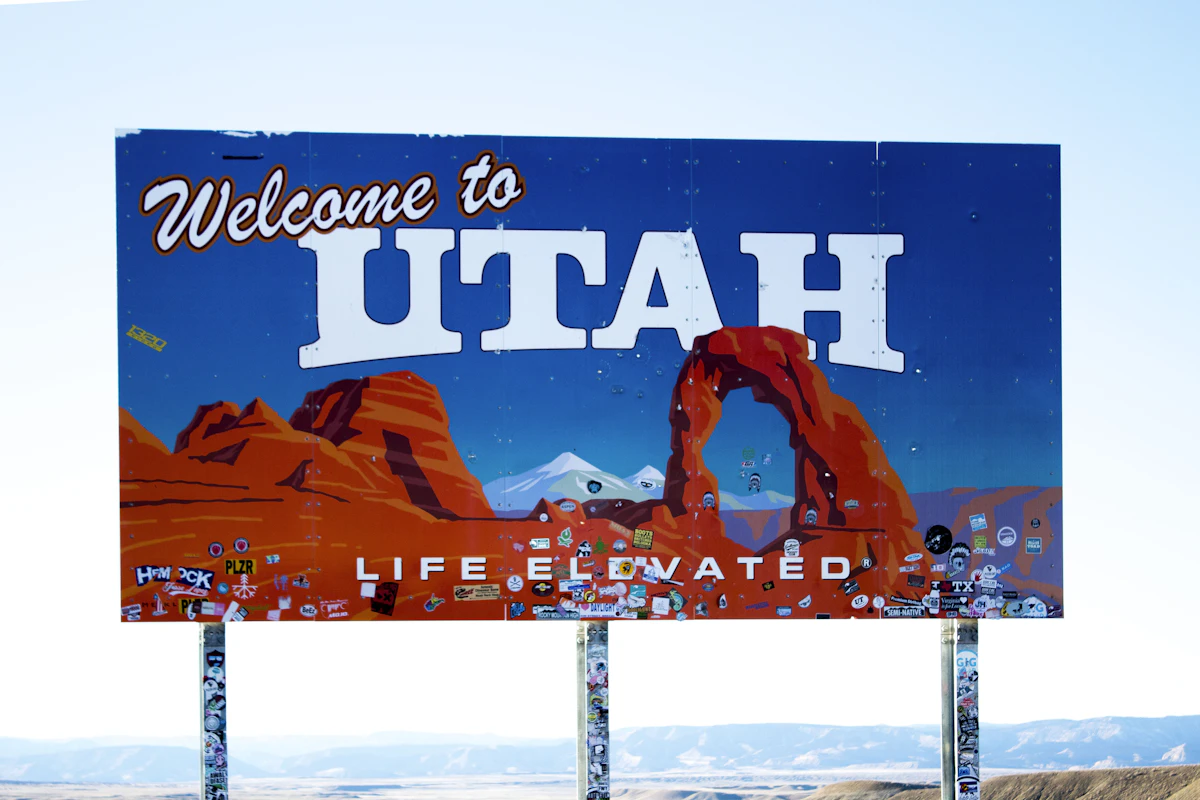
Utah Big Game Draw Guide 2027: Dates, Odds & Points

17 min read·Oct 6, 2026·Jim
Utah Big Game Draw Guide 2027: Dates, Odds & Points

Utah Big Game Draw Guide 2027: Application Dates, Bonus Points, Draw Odds & Hunting Tags


Utah Big Game Draw Guide 2027: Everything Hunters Need to Know

Utah is one of the most sought-after big game hunting states in the West. From trophy mule deer and limited-entry bull elk to once-in-a-lifetime moose, bighorn sheep, mountain goat and bison opportunities, Utah offers hunts that attract applicants from across the country.

But Utah's application system can be confusing, especially for nonresident hunters.

Different species use different point systems. Some permits are awarded through a combination of bonus-point priority and random selection. General-season deer uses preference points, while many general-season elk opportunities operate through separate permit sales.

Understanding those differences is essential before submitting a 2027 application.

This guide explains how Utah's big game drawing works, which species are available, how bonus and preference points affect your chances, and how to develop an application strategy.

Utah Big Game Draw 2027: Quick Facts

QuestionAnswerCan nonresidents apply?YesDoes Utah use bonus points?YesDoes Utah use preference points?Yes, for general-season deerCan hunters draw with zero bonus points?Yes, where randomized permits are availableAre nonresident permits limited?YesCan hunters apply for multiple species?Yes, subject to eligibility and application rulesAre all Utah elk permits issued through the draw?NoDoes Utah offer once-in-a-lifetime species?YesIs a qualifying hunting license required?YesHistorical 2026 application deadlineApril 23, 2026Confirmed 2027 application deadlineVerify with Utah DWROfficial agencyUtah Division of Wildlife Resources

1. What Big Game Species Can You Apply for in Utah?

Utah offers hunting opportunities for several big game species.

SpeciesPrimary Application SystemGeneral-season buck deerPreference-point drawingLimited-entry buck deerBonus-point drawingLimited-entry bull elkBonus-point drawingLimited-entry pronghornBonus-point drawingMooseOnce-in-a-lifetime bonus-point drawingRocky Mountain bighorn sheepOnce-in-a-lifetime bonus-point drawingDesert bighorn sheepOnce-in-a-lifetime bonus-point drawingMountain goatOnce-in-a-lifetime bonus-point drawingBisonOnce-in-a-lifetime bonus-point drawingGeneral-season elkSeparate permit sales and applicable regulations

Not every species or hunt is available to every applicant.

Eligibility, residency restrictions, permit availability and previous successful drawings can affect participation.


Draw odds
Alaska moose draw odds by unit, colored by draw, OTC, or no data
AdultNonresident

Alaska · Moose

Draw, OTC, and no-data units across the whole state.

Adult, Nonresident, Moose, no additional filters. Every unit is colored by its best matching draw odds; if nothing draws, it shows OTC; if neither, no data.

  • Alaska mixes draw and OTC moose hunts within the same region.
  • Green units are worth an application; purple units are OTC.
  • Filters stay applied when a unit is opened for hunt detail.
Draw odds
California mule deer draw odds ranked by unit in a list
AdultNonresident

California · Mule deer

Nonresident odds ranked unit by unit.

Adult, Nonresident, Mule deer, no weapon or season chip, so every matching hunt in a zone is combined into one badge and sorted by best projected odds.

  • D6 leads the list; a range like 8%–14% means more than one hunt code exists in that zone.
  • The list and the map read the same filtered hunt set.
  • 46 units are shown for this species and state alone.

Free to join

Download mobile app

  • Detailed draw odds
  • Point tracking
  • Deadline reminders
  • 18 states covered
Download on the App StoreGet it on Google Play
Unit detail
Wyoming elk unit detail, hunts tab, showing hunt windows on a timeline

Wyoming · Elk, Unit 3

Every hunt window inside one unit, laid out on a timeline.

Unit 3 has two hunt codes for elk. Each one shows its weapon, animal type, and season as a bar on a shared Aug–Jan timeline, plus a day-by-day moon phase strip.

  • Archery, then a long Any Legal Weapon window, then a late season — three opportunities in one unit.
  • The 100% badge at top means no real draw competition for the selected filters right now.
  • Weather & conditions expands below the hunt list without leaving the unit.
Terrain data
Colorado pronghorn unit detail, terrain tab, showing unit outline and key metrics

Colorado · Pronghorn, Unit 3

Unit boundaries and a complexity score at a glance.

The Terrain tab draws the unit outline against its neighbors and scores it for complexity, then breaks out area, public land, access, topography, forest, and water.

  • 849 sq mi, 55% public land, and flat topography make this a fairly approachable unit.
  • Each metric carries a short rating word — Vast, Some, Fair, Flat, Sparse, Moderate — with a tooltip.
  • The outline map shows adjacent units 2, 4, 13, and 301 for context.
State profiles
State Profiles screen listing states with wildlife agency and public land percentage

State Profiles

Each state's wildlife agency and public land share, at a glance.

State Profiles lists every covered state as a photo card naming its wildlife agency and, where available, its public land percentage.

  • Public land percentage shows right in the list, before opening the state.
  • Each card names the exact agency the regulations come from.
  • States without a public land figure yet, like Alabama here, are still listed.
Points wallet
Points Wallet screen with Colorado expanded, showing a point stepper per species

Points Wallet · Colorado

Every state and species point balance in one wallet.

Points Wallet lists each state with a species count; expanding a state, like Colorado here, shows a stepper for every species so a balance can be entered or adjusted directly.

  • Colorado alone tracks points across 10 species independently.
  • Species with no points, like Pronghorn here, still show a zero to stay visible.
  • Desert Bighorn Sheep is flagged as a random draw with no points system.

Free to join

Download mobile app

  • Detailed draw odds
  • Point tracking
  • Deadline reminders
  • 18 states covered
Download on the App StoreGet it on Google Play
Draw odds
Montana white-tailed deer draw odds filtered to any legal weapon, either sex, regular season
AdultNonresidentAny Legal WeaponEitherRegular

Montana · White-tailed deer

Nearly the whole state is OTC for this filter combination.

Adult, Nonresident, White-tailed deer, filtered to Any Legal Weapon, Either, Regular. Under this combination almost every unit turns purple — over the counter.

  • Switching weapon, sex, or season changes the picture completely.
  • Purple means the tag can be bought directly, no draw.
  • This is the tag-and-go read of Montana whitetail, not the point-based one.
Terrain data
New Mexico mule deer unit 5A terrain tab with boundary description and land cover breakdown

New Mexico · Mule deer, Unit 5A

A written boundary description, not just a shape.

Unit 5A's terrain tab opens with a plain-language paragraph about surrounding land, access towns, and ownership mix, then a land cover breakdown by percentage.

  • 72% open plains and 25% forested plains describe the terrain at a glance.
  • The boundary text calls out the exact reservation and forest lines that define the unit.
  • Access & pressure continues below the fold with mileage detail.
Draw odds
New Mexico mule deer draw odds by unit
AdultNonresident

New Mexico · Mule deer

Mule deer draw odds for every unit in the state.

Adult, Nonresident, Mule deer, all weapons and seasons. Each unit is colored by the same odds calculation used in the dashboard.

  • Green and tan together separate units worth applying to from units that are not.
  • Numbered units follow New Mexico's own game management unit boundaries.
  • Opening a unit shows the exact hunt behind the color.
Favorites
Favorite Units screen grouped by state and species

Favorite Units

Starred units from any state, grouped by species.

Favorite Units collects every starred unit across states and species into one list, grouped by state and species pair, so a saved unit is one tap away.

  • Arizona mule deer and Colorado pronghorn favorites sit side by side here.
  • Each row opens straight into that unit's detail view.
  • Unstarring from this screen removes it from the group instantly.
Deadlines
Deadline Reminders screen listing application and purchase deadlines by date

Deadline Reminders

Every application and purchase deadline, sorted by date.

Deadline Reminders filters by state and sorts by date, showing the deadline type, a countdown, and the state and species it applies to, with a link out to the source.

  • Countdown badges shift as a deadline gets close — "in 5 days" here, for example.
  • Application opens and closes are tracked as separate reminder types.
  • Each card links out to confirm the rule at the source.
Interactive map
Arizona elk unit boundaries overlaid on an interactive street map

Arizona · Elk

Unit boundaries laid directly over a real map.

This view overlays Arizona elk unit boundaries and labels on top of a street map, with a search bar pinned to state and species and a layer toggle in the corner.

  • Real towns like Prescott and Sedona sit inside their unit boundaries for context.
  • A location button and layer switch float over the map, clear of the unit labels.
  • A Filter button at the bottom opens the same filters used elsewhere in the app.

Free to join

Download mobile app

  • Detailed draw odds
  • Point tracking
  • Deadline reminders
  • 18 states covered
Download on the App StoreGet it on Google Play
Insights
Insights screen with a featured article and a latest articles list

Insights

Hunting articles, built into the app itself.

Insights opens to a featured article with a hero image, then a Latest list of recent posts, each with a thumbnail, read time, and publish date.

  • The featured slot rotates to the newest deep-dive article.
  • Read time and publish date show on every card, not just the featured one.
  • This mirrors the blog content already published on the marketing site.
Download on the App StoreGet it on Google Play

2. Utah Bonus Points vs. Preference Points

One of the biggest mistakes hunters make is assuming that all Utah big game applications use the same point system.

They do not.

What Are Utah Bonus Points?

Bonus points apply to limited-entry and once-in-a-lifetime hunting opportunities.

Hunters accumulate points through eligible unsuccessful applications or point-only applications.

More bonus points improve drawing opportunity.

However, they do not guarantee a permit.

How Do Bonus Points Affect the Random Draw?

In Utah's standard bonus-point drawing, applicants receive one random drawing entry plus an additional entry for each accumulated bonus point.

Bonus PointsRandom Drawing Entries011256101115162021

The table illustrates the basic random-entry principle, not actual drawing probabilities.

What Are Utah Preference Points?

Preference points are used for general-season buck deer applications.

The drawing gives priority to applicants with higher preference-point totals under the applicable rules.

This is different from the limited-entry bonus-point drawing.

Which Point System Is Better?

Neither system is universally better.

Preference points reward accumulated points more directly.

Bonus points preserve randomized opportunities for hunters with fewer points.

The best system depends on your hunting goals and the permits you are pursuing.

3. How Utah's Limited-Entry Draw Works

Utah uses a hybrid allocation system for eligible limited-entry and once-in-a-lifetime hunts.

The system generally divides permits between:

Point-Priority Allocation

and

Random Allocation

For hunts with multiple available permits, approximately half are allocated to applicants with the highest bonus-point totals.

The remaining permits are awarded randomly.

What Happens When Only One Permit Is Available?

A single available permit is generally awarded through the randomized portion rather than being reserved exclusively for the highest-point applicant.

However, nonresident permit availability must be considered separately.

A hunt with one total permit does not necessarily provide a nonresident drawing opportunity.

Can You Draw With Zero Points?

Yes.

A zero-point hunter can potentially draw a permit through the randomized allocation.

However, actual probability depends on the hunt.

4. Utah Nonresident Big Game Draw Odds

Nonresident hunters face additional competition because Utah limits nonresident permit allocations.

The number of available permits varies by hunt and species.

Why Nonresident Quotas Matter

A hunt may have a substantial statewide quota but only a small number of nonresident permits.

In some cases, no nonresident permit may be available.

This makes residency-specific draw information essential.

Are Utah Nonresident Draw Odds Always Worse?

Nonresident opportunities are often more limited, but exact odds depend on both quota and applicant demand.

A resident and nonresident applying for the same general area may face very different probabilities.

Best Strategy for Nonresidents

Compare:

  • Exact hunt code

  • Available nonresident permits

  • Historical applicants

  • Bonus-point distribution

  • Season dates

  • Weapon restrictions

  • Public access

5. Utah Elk Draw Guide 2027

Utah is known for its limited-entry bull elk hunting opportunities.

Some hunts attract applicants seeking mature bulls in high-quality habitat.

Limited-Entry Bull Elk

Limited-entry bull elk permits use Utah's bonus-point system.

Hunters can potentially draw with zero points through randomized allocation.

However, premium hunts can be extremely competitive.

Popular Utah Elk Areas

Hunters frequently research:

  • San Juan

  • Pahvant

  • Beaver

  • Manti

  • Wasatch Mountains

  • Fishlake

  • Plateau

These are areas worth researching, not a ranking of the easiest elk hunts to draw.

Early vs. Late Elk Seasons

Early-season elk hunts may attract strong demand because of their timing relative to breeding activity.

Late-season hunts can involve different elk behavior, weather and hunting conditions.

Some later hunts may have more favorable drawing competition.

However, exact historical results must be compared.

General-Season Elk

Utah also offers general-season elk opportunities under separate permit systems.

These may include:

  • Any-bull permits

  • Spike-bull permits

  • Applicable multi-season opportunities

Availability and eligibility vary.

Some permits are capped and may sell out.

General-season elk permits are an important alternative for hunters who want to hunt sooner rather than wait for a premium limited-entry tag.

6. Utah Mule Deer Draw Guide 2027

Utah mule deer hunting includes both general-season and limited-entry opportunities.

These systems should be researched separately.

General-Season Buck Deer

General-season buck deer permits use preference points.

Applicants with higher point totals receive priority according to the drawing rules.

However, the number of points needed varies by hunt.

Limited-Entry Buck Deer

Limited-entry deer permits use bonus points.

These hunts may offer opportunities to pursue mature mule deer in areas with more restrictive permit allocations.

Premium Mule Deer Areas

Hunters often research:

  • Henry Mountains

  • Paunsaugunt

  • San Juan

  • Other limited-entry deer units

These areas can attract substantial applicant demand.

Can You Draw Utah Mule Deer With Zero Points?

Yes, depending on the permit type.

A zero-point applicant may have an opportunity in a general-season deer drawing, while limited-entry deer hunts retain randomized drawing opportunities.

However, premium limited-entry hunts can be extremely difficult to draw.

7. Utah Pronghorn Draw Guide 2027

Utah offers limited-entry pronghorn hunting opportunities.

Pronghorn permits use bonus points.

What Affects Utah Pronghorn Draw Odds?

Important factors include:

  • Unit

  • Permit quota

  • Residency

  • Bonus points

  • Season

  • Weapon

  • Applicant demand

Can Nonresidents Draw Utah Pronghorn?

Yes, where eligible nonresident permits are available.

However, quotas may be limited.

Are Pronghorn Hunts Easier Than Elk Hunts?

Not necessarily.

Some pronghorn hunts can be highly competitive because of limited permit availability.

Always compare actual hunt-specific results.

Draw odds
Alaska moose draw odds by unit, colored by draw, OTC, or no data
AdultNonresident

Alaska · Moose

Draw, OTC, and no-data units across the whole state.

Adult, Nonresident, Moose, no additional filters. Every unit is colored by its best matching draw odds; if nothing draws, it shows OTC; if neither, no data.

  • Alaska mixes draw and OTC moose hunts within the same region.
  • Green units are worth an application; purple units are OTC.
  • Filters stay applied when a unit is opened for hunt detail.
Draw odds
California mule deer draw odds ranked by unit in a list
AdultNonresident

California · Mule deer

Nonresident odds ranked unit by unit.

Adult, Nonresident, Mule deer, no weapon or season chip, so every matching hunt in a zone is combined into one badge and sorted by best projected odds.

  • D6 leads the list; a range like 8%–14% means more than one hunt code exists in that zone.
  • The list and the map read the same filtered hunt set.
  • 46 units are shown for this species and state alone.

Free to join

Download mobile app

  • Detailed draw odds
  • Point tracking
  • Deadline reminders
  • 18 states covered
Download on the App StoreGet it on Google Play
Unit detail
Wyoming elk unit detail, hunts tab, showing hunt windows on a timeline

Wyoming · Elk, Unit 3

Every hunt window inside one unit, laid out on a timeline.

Unit 3 has two hunt codes for elk. Each one shows its weapon, animal type, and season as a bar on a shared Aug–Jan timeline, plus a day-by-day moon phase strip.

  • Archery, then a long Any Legal Weapon window, then a late season — three opportunities in one unit.
  • The 100% badge at top means no real draw competition for the selected filters right now.
  • Weather & conditions expands below the hunt list without leaving the unit.
Terrain data
Colorado pronghorn unit detail, terrain tab, showing unit outline and key metrics

Colorado · Pronghorn, Unit 3

Unit boundaries and a complexity score at a glance.

The Terrain tab draws the unit outline against its neighbors and scores it for complexity, then breaks out area, public land, access, topography, forest, and water.

  • 849 sq mi, 55% public land, and flat topography make this a fairly approachable unit.
  • Each metric carries a short rating word — Vast, Some, Fair, Flat, Sparse, Moderate — with a tooltip.
  • The outline map shows adjacent units 2, 4, 13, and 301 for context.
State profiles
State Profiles screen listing states with wildlife agency and public land percentage

State Profiles

Each state's wildlife agency and public land share, at a glance.

State Profiles lists every covered state as a photo card naming its wildlife agency and, where available, its public land percentage.

  • Public land percentage shows right in the list, before opening the state.
  • Each card names the exact agency the regulations come from.
  • States without a public land figure yet, like Alabama here, are still listed.
Points wallet
Points Wallet screen with Colorado expanded, showing a point stepper per species

Points Wallet · Colorado

Every state and species point balance in one wallet.

Points Wallet lists each state with a species count; expanding a state, like Colorado here, shows a stepper for every species so a balance can be entered or adjusted directly.

  • Colorado alone tracks points across 10 species independently.
  • Species with no points, like Pronghorn here, still show a zero to stay visible.
  • Desert Bighorn Sheep is flagged as a random draw with no points system.

Free to join

Download mobile app

  • Detailed draw odds
  • Point tracking
  • Deadline reminders
  • 18 states covered
Download on the App StoreGet it on Google Play
Draw odds
Montana white-tailed deer draw odds filtered to any legal weapon, either sex, regular season
AdultNonresidentAny Legal WeaponEitherRegular

Montana · White-tailed deer

Nearly the whole state is OTC for this filter combination.

Adult, Nonresident, White-tailed deer, filtered to Any Legal Weapon, Either, Regular. Under this combination almost every unit turns purple — over the counter.

  • Switching weapon, sex, or season changes the picture completely.
  • Purple means the tag can be bought directly, no draw.
  • This is the tag-and-go read of Montana whitetail, not the point-based one.
Terrain data
New Mexico mule deer unit 5A terrain tab with boundary description and land cover breakdown

New Mexico · Mule deer, Unit 5A

A written boundary description, not just a shape.

Unit 5A's terrain tab opens with a plain-language paragraph about surrounding land, access towns, and ownership mix, then a land cover breakdown by percentage.

  • 72% open plains and 25% forested plains describe the terrain at a glance.
  • The boundary text calls out the exact reservation and forest lines that define the unit.
  • Access & pressure continues below the fold with mileage detail.
Draw odds
New Mexico mule deer draw odds by unit
AdultNonresident

New Mexico · Mule deer

Mule deer draw odds for every unit in the state.

Adult, Nonresident, Mule deer, all weapons and seasons. Each unit is colored by the same odds calculation used in the dashboard.

  • Green and tan together separate units worth applying to from units that are not.
  • Numbered units follow New Mexico's own game management unit boundaries.
  • Opening a unit shows the exact hunt behind the color.
Favorites
Favorite Units screen grouped by state and species

Favorite Units

Starred units from any state, grouped by species.

Favorite Units collects every starred unit across states and species into one list, grouped by state and species pair, so a saved unit is one tap away.

  • Arizona mule deer and Colorado pronghorn favorites sit side by side here.
  • Each row opens straight into that unit's detail view.
  • Unstarring from this screen removes it from the group instantly.
Deadlines
Deadline Reminders screen listing application and purchase deadlines by date

Deadline Reminders

Every application and purchase deadline, sorted by date.

Deadline Reminders filters by state and sorts by date, showing the deadline type, a countdown, and the state and species it applies to, with a link out to the source.

  • Countdown badges shift as a deadline gets close — "in 5 days" here, for example.
  • Application opens and closes are tracked as separate reminder types.
  • Each card links out to confirm the rule at the source.
Interactive map
Arizona elk unit boundaries overlaid on an interactive street map

Arizona · Elk

Unit boundaries laid directly over a real map.

This view overlays Arizona elk unit boundaries and labels on top of a street map, with a search bar pinned to state and species and a layer toggle in the corner.

  • Real towns like Prescott and Sedona sit inside their unit boundaries for context.
  • A location button and layer switch float over the map, clear of the unit labels.
  • A Filter button at the bottom opens the same filters used elsewhere in the app.

Free to join

Download mobile app

  • Detailed draw odds
  • Point tracking
  • Deadline reminders
  • 18 states covered
Download on the App StoreGet it on Google Play
Insights
Insights screen with a featured article and a latest articles list

Insights

Hunting articles, built into the app itself.

Insights opens to a featured article with a hero image, then a Latest list of recent posts, each with a thumbnail, read time, and publish date.

  • The featured slot rotates to the newest deep-dive article.
  • Read time and publish date show on every card, not just the featured one.
  • This mirrors the blog content already published on the marketing site.
Download on the App StoreGet it on Google Play

8. Utah Moose Draw Guide 2027

Utah moose hunting is managed through its once-in-a-lifetime permit system.

These hunts are highly sought after.

Can You Draw Utah Moose With Zero Points?

Potentially.

The bonus-point drawing retains randomized opportunities where eligible permits are available.

However, drawing probability can be extremely low.

Are Nonresident Moose Tags Available?

Utah provides certain nonresident once-in-a-lifetime opportunities, subject to current allocations and eligibility rules.

Hunters must verify the specific hunt before applying.

Why Moose Tags Are Competitive

Moose hunting permits are limited by wildlife management objectives and available populations.

A relatively small quota combined with significant applicant demand can produce very difficult odds.

9. Utah Bighorn Sheep Draw Guide 2027

Utah offers both Rocky Mountain and desert bighorn sheep hunting opportunities.

These permits are among the most competitive big game opportunities in the state.

Rocky Mountain Bighorn Sheep

Rocky Mountain bighorn sheep inhabit rugged mountain terrain.

Permit availability is limited.

Desert Bighorn Sheep

Desert bighorn sheep occupy arid and rocky environments.

These hunts attract applicants interested in a once-in-a-lifetime sheep hunting experience.

Can Zero-Point Hunters Draw Sheep?

Potentially, through randomized drawing opportunities where eligible permits are available.

However, extremely limited quotas can make the probability very small.

Are Nonresident Sheep Permits Guaranteed Every Year?

No.

Nonresident availability must be verified for each hunt and year.

10. Utah Mountain Goat Draw Guide 2027

Mountain goat hunting is another once-in-a-lifetime opportunity in Utah.

Permits are limited.

What Makes Mountain Goat Hunts Difficult to Draw?

Factors include:

  • Small permit quotas

  • Applicant demand

  • Limited eligible hunting areas

  • Residency restrictions

  • Bonus-point distribution

Can Nonresidents Apply?

Eligible nonresidents may apply for available mountain goat opportunities.

However, not every hunt necessarily offers a nonresident permit.

11. Utah Bison Draw Guide 2027

Utah offers limited bison hunting opportunities through its once-in-a-lifetime permit system.

Bison hunting can involve difficult terrain, specialized logistics and substantial meat-recovery planning.

Can You Draw Utah Bison With Zero Points?

Potentially.

However, permit availability and applicant competition can make these hunts extremely difficult to draw.

What Should Bison Applicants Consider?

Before applying, evaluate:

  • Hunt location

  • Access

  • Season timing

  • Physical demands

  • Meat recovery

  • Transportation

  • Current regulations

A successful drawing is only the beginning of the planning process.

12. Utah Once-in-a-Lifetime Hunting Rules

Utah classifies several big game species as once-in-a-lifetime opportunities.

These include:

  • Moose

  • Bighorn sheep

  • Mountain goat

  • Bison

The restrictions generally prevent hunters from repeatedly drawing permits for the same once-in-a-lifetime species.

However, the exact eligibility rules differ by species and prior permit history.

Does Drawing One Species Prevent You From Applying for Others?

Not automatically.

A hunter's eligibility for another once-in-a-lifetime species depends on Utah's current application and permit rules.

Do Bonus Points Guarantee a Once-in-a-Lifetime Tag?

No.

Even applicants with substantial point balances may remain unsuccessful.

13. Utah Big Game Application Deadline 2027

Utah generally conducts its main big game drawing in the spring.

Historical 2026 Application Deadline

The 2026 Utah big game application deadline was:

April 23, 2026, at 11:00 p.m. Mountain Time.

This is a historical deadline, not a confirmed 2027 date.

When Will the 2027 Drawing Open?

The final 2027 application calendar should be confirmed through Utah DWR.

Hunters should monitor the official big game guidebook and application website.

When Are Utah Draw Results Released?

Results are generally released after the spring application period.

The exact 2027 release date must be confirmed through the official drawing schedule.

Draw odds
Alaska moose draw odds by unit, colored by draw, OTC, or no data
AdultNonresident

Alaska · Moose

Draw, OTC, and no-data units across the whole state.

Adult, Nonresident, Moose, no additional filters. Every unit is colored by its best matching draw odds; if nothing draws, it shows OTC; if neither, no data.

  • Alaska mixes draw and OTC moose hunts within the same region.
  • Green units are worth an application; purple units are OTC.
  • Filters stay applied when a unit is opened for hunt detail.
Draw odds
California mule deer draw odds ranked by unit in a list
AdultNonresident

California · Mule deer

Nonresident odds ranked unit by unit.

Adult, Nonresident, Mule deer, no weapon or season chip, so every matching hunt in a zone is combined into one badge and sorted by best projected odds.

  • D6 leads the list; a range like 8%–14% means more than one hunt code exists in that zone.
  • The list and the map read the same filtered hunt set.
  • 46 units are shown for this species and state alone.

Free to join

Download mobile app

  • Detailed draw odds
  • Point tracking
  • Deadline reminders
  • 18 states covered
Download on the App StoreGet it on Google Play
Unit detail
Wyoming elk unit detail, hunts tab, showing hunt windows on a timeline

Wyoming · Elk, Unit 3

Every hunt window inside one unit, laid out on a timeline.

Unit 3 has two hunt codes for elk. Each one shows its weapon, animal type, and season as a bar on a shared Aug–Jan timeline, plus a day-by-day moon phase strip.

  • Archery, then a long Any Legal Weapon window, then a late season — three opportunities in one unit.
  • The 100% badge at top means no real draw competition for the selected filters right now.
  • Weather & conditions expands below the hunt list without leaving the unit.
Terrain data
Colorado pronghorn unit detail, terrain tab, showing unit outline and key metrics

Colorado · Pronghorn, Unit 3

Unit boundaries and a complexity score at a glance.

The Terrain tab draws the unit outline against its neighbors and scores it for complexity, then breaks out area, public land, access, topography, forest, and water.

  • 849 sq mi, 55% public land, and flat topography make this a fairly approachable unit.
  • Each metric carries a short rating word — Vast, Some, Fair, Flat, Sparse, Moderate — with a tooltip.
  • The outline map shows adjacent units 2, 4, 13, and 301 for context.
State profiles
State Profiles screen listing states with wildlife agency and public land percentage

State Profiles

Each state's wildlife agency and public land share, at a glance.

State Profiles lists every covered state as a photo card naming its wildlife agency and, where available, its public land percentage.

  • Public land percentage shows right in the list, before opening the state.
  • Each card names the exact agency the regulations come from.
  • States without a public land figure yet, like Alabama here, are still listed.
Points wallet
Points Wallet screen with Colorado expanded, showing a point stepper per species

Points Wallet · Colorado

Every state and species point balance in one wallet.

Points Wallet lists each state with a species count; expanding a state, like Colorado here, shows a stepper for every species so a balance can be entered or adjusted directly.

  • Colorado alone tracks points across 10 species independently.
  • Species with no points, like Pronghorn here, still show a zero to stay visible.
  • Desert Bighorn Sheep is flagged as a random draw with no points system.

Free to join

Download mobile app

  • Detailed draw odds
  • Point tracking
  • Deadline reminders
  • 18 states covered
Download on the App StoreGet it on Google Play
Draw odds
Montana white-tailed deer draw odds filtered to any legal weapon, either sex, regular season
AdultNonresidentAny Legal WeaponEitherRegular

Montana · White-tailed deer

Nearly the whole state is OTC for this filter combination.

Adult, Nonresident, White-tailed deer, filtered to Any Legal Weapon, Either, Regular. Under this combination almost every unit turns purple — over the counter.

  • Switching weapon, sex, or season changes the picture completely.
  • Purple means the tag can be bought directly, no draw.
  • This is the tag-and-go read of Montana whitetail, not the point-based one.
Terrain data
New Mexico mule deer unit 5A terrain tab with boundary description and land cover breakdown

New Mexico · Mule deer, Unit 5A

A written boundary description, not just a shape.

Unit 5A's terrain tab opens with a plain-language paragraph about surrounding land, access towns, and ownership mix, then a land cover breakdown by percentage.

  • 72% open plains and 25% forested plains describe the terrain at a glance.
  • The boundary text calls out the exact reservation and forest lines that define the unit.
  • Access & pressure continues below the fold with mileage detail.
Draw odds
New Mexico mule deer draw odds by unit
AdultNonresident

New Mexico · Mule deer

Mule deer draw odds for every unit in the state.

Adult, Nonresident, Mule deer, all weapons and seasons. Each unit is colored by the same odds calculation used in the dashboard.

  • Green and tan together separate units worth applying to from units that are not.
  • Numbered units follow New Mexico's own game management unit boundaries.
  • Opening a unit shows the exact hunt behind the color.
Favorites
Favorite Units screen grouped by state and species

Favorite Units

Starred units from any state, grouped by species.

Favorite Units collects every starred unit across states and species into one list, grouped by state and species pair, so a saved unit is one tap away.

  • Arizona mule deer and Colorado pronghorn favorites sit side by side here.
  • Each row opens straight into that unit's detail view.
  • Unstarring from this screen removes it from the group instantly.
Deadlines
Deadline Reminders screen listing application and purchase deadlines by date

Deadline Reminders

Every application and purchase deadline, sorted by date.

Deadline Reminders filters by state and sorts by date, showing the deadline type, a countdown, and the state and species it applies to, with a link out to the source.

  • Countdown badges shift as a deadline gets close — "in 5 days" here, for example.
  • Application opens and closes are tracked as separate reminder types.
  • Each card links out to confirm the rule at the source.
Interactive map
Arizona elk unit boundaries overlaid on an interactive street map

Arizona · Elk

Unit boundaries laid directly over a real map.

This view overlays Arizona elk unit boundaries and labels on top of a street map, with a search bar pinned to state and species and a layer toggle in the corner.

  • Real towns like Prescott and Sedona sit inside their unit boundaries for context.
  • A location button and layer switch float over the map, clear of the unit labels.
  • A Filter button at the bottom opens the same filters used elsewhere in the app.

Free to join

Download mobile app

  • Detailed draw odds
  • Point tracking
  • Deadline reminders
  • 18 states covered
Download on the App StoreGet it on Google Play
Insights
Insights screen with a featured article and a latest articles list

Insights

Hunting articles, built into the app itself.

Insights opens to a featured article with a hero image, then a Latest list of recent posts, each with a thumbnail, read time, and publish date.

  • The featured slot rotates to the newest deep-dive article.
  • Read time and publish date show on every card, not just the featured one.
  • This mirrors the blog content already published on the marketing site.
Download on the App StoreGet it on Google Play

14. Utah Big Game Application Costs

Hunters should budget for several possible expenses.

Expense Description Hunting license Required for drawing eligibility Application fee Charged for applicable applications Permit fee Charged when a permit is issued under the applicable process Bonus-point application Available under applicable rules Travel Transportation to the hunting area Lodging Hotels, camping or outfitter accommodations Scouting Travel and equipment expenses Meat processing and transportation costs

Do Nonresidents Need a Utah Hunting License?

Yes.

Applicants generally need a qualifying Utah hunting or combination license.

Is the Hunting License Refundable?

A hunting license purchased for drawing eligibility is generally not refundable simply because the applicant is unsuccessful.

Why Annual Costs Matter

Hunters applying for premium Utah permits over many years can accumulate significant expenses.

Consider the long-term cost of building points before committing to a strategy.

15. Can You Buy Utah Bonus Points Without Applying for a Hunt?

Utah offers bonus-point-only applications for eligible species.

This allows hunters to build points without entering a particular hunt drawing during that application cycle.

When Does Point-Only Make Sense?

A point-only application may be appropriate when:

  • You cannot hunt that year

  • You are saving money for a future trip

  • You are prioritizing another state

  • You want to continue accumulating points

  • You do not want the possibility of drawing a permit you cannot use

However, point-only participation means you are not taking a randomized chance at a permit during that application.

16. Utah Draw Odds With Zero Points

Zero-point hunters can potentially draw several Utah limited-entry and once-in-a-lifetime permits.

However, the practical opportunity varies dramatically.

Species or Permit Can Zero-Point Applicants Potentially Draw? Limited-entry elk Yes Limited-entry deer Yes Limited-entry pronghorn Yes Moose Yes, where eligible permits are available Bighorn sheep Yes, where eligible permits are available Mountain goat Yes, where eligible permits are available Bison Yes, where eligible permits are available General-season deer Potentially, depending on hunt demand and preference-point competition General-season elk Separate permit sales and eligibility rules

Zero points does not automatically mean zero chance. But it also does not mean every hunt offers a realistic opportunity.

17. How to Find the Best Utah Big Game Draw Odds

The best drawing opportunity depends on the specific hunt.

Step 1: Identify the Species

Decide whether your priority is elk, deer, pronghorn or a once-in-a-lifetime species.

Step 2: Determine Your Residency

Resident and nonresident allocations differ.

Step 3: Confirm Your Point Total

Verify your bonus or preference points through Utah's official system.

Step 4: Identify Exact Hunt Codes

Do not rely solely on unit names.

Step 5: Compare Permit Quotas

Determine how many permits were available.

Step 6: Review Historical Applicants

Compare applicant demand across multiple years.

Step 7: Evaluate Point Distribution

For bonus-point hunts, determine whether permits were awarded through the point-priority or randomized allocation.

Step 8: Research Hunt Quality

Consider:

  • Wildlife population

  • Access

  • Terrain

  • Hunting pressure

  • Season dates

  • Harvest success

  • Scouting requirements

Step 9: Build a Multi-State Strategy

Utah may be one part of a broader western hunting application plan.

18. Utah Big Game Draw Strategy for Nonresidents

Nonresident hunters should consider both short-term hunting opportunities and long-term applications.

Strategy A: Apply for a Premium Hunt

This approach may appeal to hunters seeking a particular trophy hunting experience.

However, drawing probability may be extremely low.

Strategy B: Research Less Competitive Hunts

Some hunts may attract less demand because of season timing, weapon restrictions or difficult access.

Compare actual historical results before applying.

Strategy C: Pursue General-Season Elk

Eligible general-season elk permits may provide opportunities to hunt without drawing a premium limited-entry tag.

Strategy D: Build Points Across Multiple Species

Hunters may consider eligible applications for several species, subject to current rules.

Strategy E: Compare Other States

A multi-state application strategy can provide additional hunting opportunities.

However, application fees and annual license costs should be considered.

19. Utah Point Creep Explained

Point creep occurs when the point totals needed to compete for certain permits increase over time.

What Causes Point Creep?

Common factors include:

  • More applicants accumulating points

  • Limited permit quotas

  • High demand for premium hunts

  • Hunters with substantial points continuing to apply

Does Point Creep Affect Every Hunt?

Not equally.

Some hunts may experience substantial increases in competition.

Others may remain relatively stable.

What Does This Mean for New Applicants?

A hunter starting with zero points in 2027 should not assume that historical point-priority thresholds will remain unchanged.

However, randomized opportunities may still exist.

Draw odds
Alaska moose draw odds by unit, colored by draw, OTC, or no data
AdultNonresident

Alaska · Moose

Draw, OTC, and no-data units across the whole state.

Adult, Nonresident, Moose, no additional filters. Every unit is colored by its best matching draw odds; if nothing draws, it shows OTC; if neither, no data.

  • Alaska mixes draw and OTC moose hunts within the same region.
  • Green units are worth an application; purple units are OTC.
  • Filters stay applied when a unit is opened for hunt detail.
Draw odds
California mule deer draw odds ranked by unit in a list
AdultNonresident

California · Mule deer

Nonresident odds ranked unit by unit.

Adult, Nonresident, Mule deer, no weapon or season chip, so every matching hunt in a zone is combined into one badge and sorted by best projected odds.

  • D6 leads the list; a range like 8%–14% means more than one hunt code exists in that zone.
  • The list and the map read the same filtered hunt set.
  • 46 units are shown for this species and state alone.

Free to join

Download mobile app

  • Detailed draw odds
  • Point tracking
  • Deadline reminders
  • 18 states covered
Download on the App StoreGet it on Google Play
Unit detail
Wyoming elk unit detail, hunts tab, showing hunt windows on a timeline

Wyoming · Elk, Unit 3

Every hunt window inside one unit, laid out on a timeline.

Unit 3 has two hunt codes for elk. Each one shows its weapon, animal type, and season as a bar on a shared Aug–Jan timeline, plus a day-by-day moon phase strip.

  • Archery, then a long Any Legal Weapon window, then a late season — three opportunities in one unit.
  • The 100% badge at top means no real draw competition for the selected filters right now.
  • Weather & conditions expands below the hunt list without leaving the unit.
Terrain data
Colorado pronghorn unit detail, terrain tab, showing unit outline and key metrics

Colorado · Pronghorn, Unit 3

Unit boundaries and a complexity score at a glance.

The Terrain tab draws the unit outline against its neighbors and scores it for complexity, then breaks out area, public land, access, topography, forest, and water.

  • 849 sq mi, 55% public land, and flat topography make this a fairly approachable unit.
  • Each metric carries a short rating word — Vast, Some, Fair, Flat, Sparse, Moderate — with a tooltip.
  • The outline map shows adjacent units 2, 4, 13, and 301 for context.
State profiles
State Profiles screen listing states with wildlife agency and public land percentage

State Profiles

Each state's wildlife agency and public land share, at a glance.

State Profiles lists every covered state as a photo card naming its wildlife agency and, where available, its public land percentage.

  • Public land percentage shows right in the list, before opening the state.
  • Each card names the exact agency the regulations come from.
  • States without a public land figure yet, like Alabama here, are still listed.
Points wallet
Points Wallet screen with Colorado expanded, showing a point stepper per species

Points Wallet · Colorado

Every state and species point balance in one wallet.

Points Wallet lists each state with a species count; expanding a state, like Colorado here, shows a stepper for every species so a balance can be entered or adjusted directly.

  • Colorado alone tracks points across 10 species independently.
  • Species with no points, like Pronghorn here, still show a zero to stay visible.
  • Desert Bighorn Sheep is flagged as a random draw with no points system.

Free to join

Download mobile app

  • Detailed draw odds
  • Point tracking
  • Deadline reminders
  • 18 states covered
Download on the App StoreGet it on Google Play
Draw odds
Montana white-tailed deer draw odds filtered to any legal weapon, either sex, regular season
AdultNonresidentAny Legal WeaponEitherRegular

Montana · White-tailed deer

Nearly the whole state is OTC for this filter combination.

Adult, Nonresident, White-tailed deer, filtered to Any Legal Weapon, Either, Regular. Under this combination almost every unit turns purple — over the counter.

  • Switching weapon, sex, or season changes the picture completely.
  • Purple means the tag can be bought directly, no draw.
  • This is the tag-and-go read of Montana whitetail, not the point-based one.
Terrain data
New Mexico mule deer unit 5A terrain tab with boundary description and land cover breakdown

New Mexico · Mule deer, Unit 5A

A written boundary description, not just a shape.

Unit 5A's terrain tab opens with a plain-language paragraph about surrounding land, access towns, and ownership mix, then a land cover breakdown by percentage.

  • 72% open plains and 25% forested plains describe the terrain at a glance.
  • The boundary text calls out the exact reservation and forest lines that define the unit.
  • Access & pressure continues below the fold with mileage detail.
Draw odds
New Mexico mule deer draw odds by unit
AdultNonresident

New Mexico · Mule deer

Mule deer draw odds for every unit in the state.

Adult, Nonresident, Mule deer, all weapons and seasons. Each unit is colored by the same odds calculation used in the dashboard.

  • Green and tan together separate units worth applying to from units that are not.
  • Numbered units follow New Mexico's own game management unit boundaries.
  • Opening a unit shows the exact hunt behind the color.
Favorites
Favorite Units screen grouped by state and species

Favorite Units

Starred units from any state, grouped by species.

Favorite Units collects every starred unit across states and species into one list, grouped by state and species pair, so a saved unit is one tap away.

  • Arizona mule deer and Colorado pronghorn favorites sit side by side here.
  • Each row opens straight into that unit's detail view.
  • Unstarring from this screen removes it from the group instantly.
Deadlines
Deadline Reminders screen listing application and purchase deadlines by date

Deadline Reminders

Every application and purchase deadline, sorted by date.

Deadline Reminders filters by state and sorts by date, showing the deadline type, a countdown, and the state and species it applies to, with a link out to the source.

  • Countdown badges shift as a deadline gets close — "in 5 days" here, for example.
  • Application opens and closes are tracked as separate reminder types.
  • Each card links out to confirm the rule at the source.
Interactive map
Arizona elk unit boundaries overlaid on an interactive street map

Arizona · Elk

Unit boundaries laid directly over a real map.

This view overlays Arizona elk unit boundaries and labels on top of a street map, with a search bar pinned to state and species and a layer toggle in the corner.

  • Real towns like Prescott and Sedona sit inside their unit boundaries for context.
  • A location button and layer switch float over the map, clear of the unit labels.
  • A Filter button at the bottom opens the same filters used elsewhere in the app.

Free to join

Download mobile app

  • Detailed draw odds
  • Point tracking
  • Deadline reminders
  • 18 states covered
Download on the App StoreGet it on Google Play
Insights
Insights screen with a featured article and a latest articles list

Insights

Hunting articles, built into the app itself.

Insights opens to a featured article with a hero image, then a Latest list of recent posts, each with a thumbnail, read time, and publish date.

  • The featured slot rotates to the newest deep-dive article.
  • Read time and publish date show on every card, not just the featured one.
  • This mirrors the blog content already published on the marketing site.
Download on the App StoreGet it on Google Play

20. Utah Draw Odds vs. Harvest Success

Draw odds and harvest success are different measurements.

Draw odds measure the likelihood of receiving a permit.

Harvest success measures the proportion of licensed hunters who harvest an animal.

A difficult-to-draw hunt does not automatically guarantee a successful hunt.

Likewise, a relatively attainable permit does not necessarily mean poor hunting.

Research Both

Hunters should compare:

  • Historical drawing results

  • Harvest reports

  • Wildlife population trends

  • Season dates

  • Access

  • Terrain

  • Hunting pressure

21. Common Utah Big Game Application Mistakes

Mistake 1: Confusing Bonus and Preference Points

Limited-entry hunts and general-season deer use different point systems.

Mistake 2: Assuming Zero Points Means No Chance

Randomized allocations can provide opportunities for zero-point applicants.

Mistake 3: Ignoring Nonresident Quotas

Some hunts offer very few nonresident permits.

Mistake 4: Researching Only Famous Units

Well-known trophy areas can attract substantial demand.

Mistake 5: Assuming All Elk Permits Require Drawing

General-season elk permits operate under separate rules.

Mistake 6: Assuming General-Season Elk Permits Are Unlimited

Some permits have caps or sellout risks.

Mistake 7: Treating Historical Odds as Guaranteed Future Odds

Applicant demand and quotas change.

Mistake 8: Ignoring Application Costs

Annual licenses and application fees can accumulate.

Mistake 9: Applying for Hunts You Cannot Attend

A successful draw can create significant financial and scheduling obligations.

Mistake 10: Using Outdated Regulations

Always verify the current guidebook.

When is the Utah big game draw deadline for 2027?

The final 2027 deadline should be confirmed through Utah DWR. The 2026 deadline was April 23, 2026.

Can nonresidents apply for Utah big game?

Yes. Eligible nonresidents can apply for available Utah big game permits.

Does Utah use bonus points?

Yes. Bonus points apply to limited-entry and once-in-a-lifetime hunts.

Does Utah use preference points?

Yes. Preference points apply to general-season buck deer.

Can you draw Utah elk with zero points?

Yes. Zero-point applicants can potentially draw limited-entry elk permits through randomized allocation.

Can you draw Utah mule deer with zero points?

Potentially. General-season and limited-entry deer use different point systems.

Can nonresidents draw Utah moose?

Eligible nonresidents may apply where nonresident permits are available.

Can you draw Utah bighorn sheep with zero points?

Potentially, through randomized allocation where an eligible permit is available.

Are Utah mountain goat tags once in a lifetime?

Yes. Mountain goat permits are managed under Utah's once-in-a-lifetime system.

Does Utah offer bison hunting?

Yes. Utah offers limited bison hunting opportunities.

Can you buy Utah elk tags over the counter?

Certain general-season elk permits may be sold without the limited-entry drawing, subject to current quotas and availability.

Do bonus points guarantee a Utah hunting tag?

No.

Are Utah nonresident odds worse than resident odds?

Nonresident allocations are generally smaller, but exact odds depend on the hunt and applicant demand.

Are actual 2027 Utah draw odds available?

No. Actual 2027 results cannot be known until the drawing is completed.

Frequently Asked Questions About Utah Big Game Hunting

Is Utah worth applying for as a nonresident?

It can be, especially for hunters interested in premium elk, mule deer and once-in-a-lifetime opportunities.

However, annual application costs and low drawing probabilities should be considered.

What is the easiest Utah big game tag to draw?

There is no universal answer.

The most attainable opportunities depend on species, hunt, residency, quota and applicant demand.

Should I build points or apply every year?

That depends on your hunting objectives, budget and willingness to accept randomized drawing odds.

Can I apply for elk and deer in the same year?

Utah allows multiple species applications under applicable rules, but hunters must verify current application and permit eligibility.

Can I apply for all once-in-a-lifetime species?

Utah has restrictions on once-in-a-lifetime applications. Hunters should verify which applications can be submitted together under the current rules.

Do Utah bonus points expire?

Point retention depends on current Utah regulations. Hunters should verify the applicable requirements.

What happens to my points if I draw?

Drawing a limited-entry or once-in-a-lifetime permit generally affects accumulated points for that species. Review current surrender and restoration rules.

Does hiring an outfitter improve draw odds?

Hiring an outfitter does not automatically improve the standard drawing probability.

Can I hunt Utah every year?

Potentially, through eligible general-season opportunities and available permits.

How TAGZ Helps Hunters Plan Utah Big Game Applications

Utah's hunting system can be challenging because different species and permit categories use different application rules.

Hunters need to understand:

Bonus Points

Preference Points

Nonresident Permit Allocations

Limited-Entry Hunts

Once-in-a-Lifetime Species

General-Season Opportunities

and

Historical Drawing Results.

TAGZ helps hunters research western big game opportunities, understand draw systems and organize applications across multiple states.

For Utah hunters, this means comparing opportunities based on their points, hunting objectives, preferred seasons and available budget.

A hunter pursuing a premium limited-entry bull elk permit may follow a very different strategy from someone who wants to hunt general-season elk as soon as possible.

Explore additional state draw guides and hunting research through TAGZ Insights.

Learn more about the platform through TAGZ Product.

Read About TAGZ to learn about the hunters, guides and outfitters behind the platform.

TAGZ was created by hunters with firsthand experience navigating western big game applications and planning hunts.

The goal is to help hunters make more informed decisions before committing time and money to a drawing.

Final Utah Big Game Draw Strategy for 2027

Utah offers some of the most desirable big game hunting opportunities in the West.

However, understanding the drawing system is essential.

The state combines:

Limited-Entry Bonus-Point Drawings

General-Season Deer Preference Points

Once-in-a-Lifetime Hunting Opportunities

and

Separate General-Season Elk Permit Systems.

For hunters entering the 2027 drawing, the most important steps are to:

  1. Confirm eligibility and residency.

  2. Review current bonus and preference points.

  3. Identify the exact species and hunt codes.

  4. Compare historical applicant demand and permit quotas.

  5. Evaluate nonresident allocations.

  6. Research hunting access and season conditions.

  7. Consider general-season alternatives.

  8. Verify the final 2027 application schedule.

A zero-point hunter can potentially draw a limited-entry permit.

A hunter with many points can still remain unsuccessful.

The best application strategy is not necessarily choosing the most famous hunting unit.

It is selecting opportunities that match your hunting goals while understanding the probability, cost and commitment associated with each application.

Use TAGZ to research Utah hunting opportunities and organize your 2027 big game applications.

Better research leads to better application decisions—and better preparation for the hunt.

Official Utah Big Game Hunting Resources

Utah Division of Wildlife Resources — Big Game

https://wildlife.utah.gov/biggame.html

Official guidebooks, application schedules, regulations and permit information.

Utah Division of Wildlife Resources — Hunting

https://wildlife.utah.gov/hunting.html

State hunting information and species resources.

Utah Division of Wildlife Resources — Draw Results

https://wildlife.utah.gov/draw-results.html

Historical drawing results and related statistics.

Utah Division of Wildlife Resources — Hunting Licenses

https://wildlife.utah.gov/licenses.html

Current hunting license and permit information.

Utah Wildlife Licensing System

https://utah-hunt.com/

Official online licensing and application portal.

2027 Verification Note

This guide describes Utah's established big game drawing structure and historical application information.

The 2026 big game application deadline was April 23, 2026.

However, final 2027 application dates, permit quotas, hunt codes, nonresident allocations, license fees and eligibility rules must be confirmed through the current Utah Division of Wildlife Resources guidebooks.

Actual 2027 drawing results are not available before the drawing is completed.

Always verify official Utah regulations before applying for a 2027 big game permit.

Share

Was this article helpful?

Previous

Arizona Mule Deer Draw Odds With Zero Points 2027: What Can You Draw?

Arizona uses bonus points rather than preference points for mule deer. A hunter with zero species bonus points is excluded from Arizona's 20% Bonus Pass, but can still draw a mule deer hunt in the randomized first-and-second-choice pass. This guide explains how zero-point applicants should approach the 2027 Arizona deer draw, why hunt number and season matter more than unit reputation alone, how resident and nonresident rules affect opportunity, and when alternative deer tags may make more sense.
Arizona Mule Deer Draw Odds With Zero Points 2027: What Can You Draw?

Related

Arizona Nonresident Elk Draw Odds 2027: Points, Units & Tags

Arizona is one of the most sought-after elk hunting states in the country, especially for nonresident hunters pursuing mature bulls. However, Arizona's bonus-point system, 20% Bonus Pass, and 10% nonresident cap make the drawing more complicated than a traditional preference-point system. This guide explains how Arizona's 2027 nonresident elk draw works, whether hunters can draw with zero points, how bonus points influence drawing probability, why early archery and late rifle hunts have different demand, and how to build an application strategy around individual hunt numbers. It also explains application costs, deadlines, group applications, leftover permits, and how to interpret historical draw odds without confusing them with guaranteed future results.
Arizona Nonresident Elk Draw Odds 2027: Points, Units & Tags

Next

Finding Mature Mule Deer in Early-Season Habitat 2027 | Big Buck Scouting Guide

Finding mature mule deer during the early season requires understanding how older bucks use summer and early-fall habitat. Before the rut and major seasonal migrations, mature bucks often concentrate on reliable forage, secure bedding cover, water, and terrain that allows them to avoid disturbance. This guide explains how to identify productive mule deer habitat, locate bachelor groups, recognize mature-buck bedding areas, use thermals and wind direction, glass effectively, and adjust scouting strategies as hunting pressure and weather change. It also explains why the highest elevations are not always the best places to find mature bucks and how hunters can use maps and historical observations to narrow down large public-land areas.
Finding Mature Mule Deer in Early-Season Habitat 2027 | Big Buck Scouting Guide











