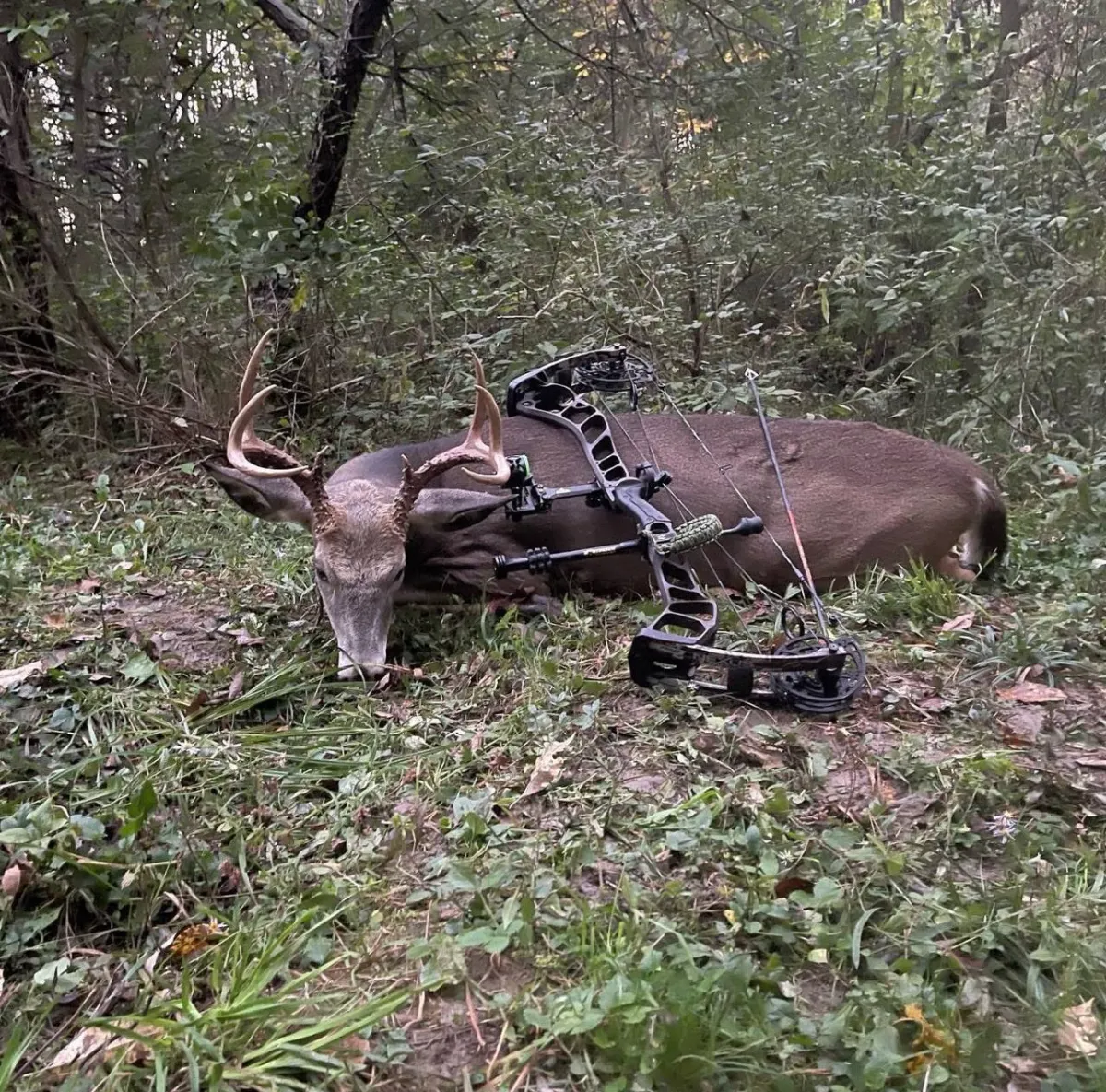
Shot Placement Guide for Big Game: Elk, Deer, Bear, Moose, Sheep, Goat, Caribou, and Muskox
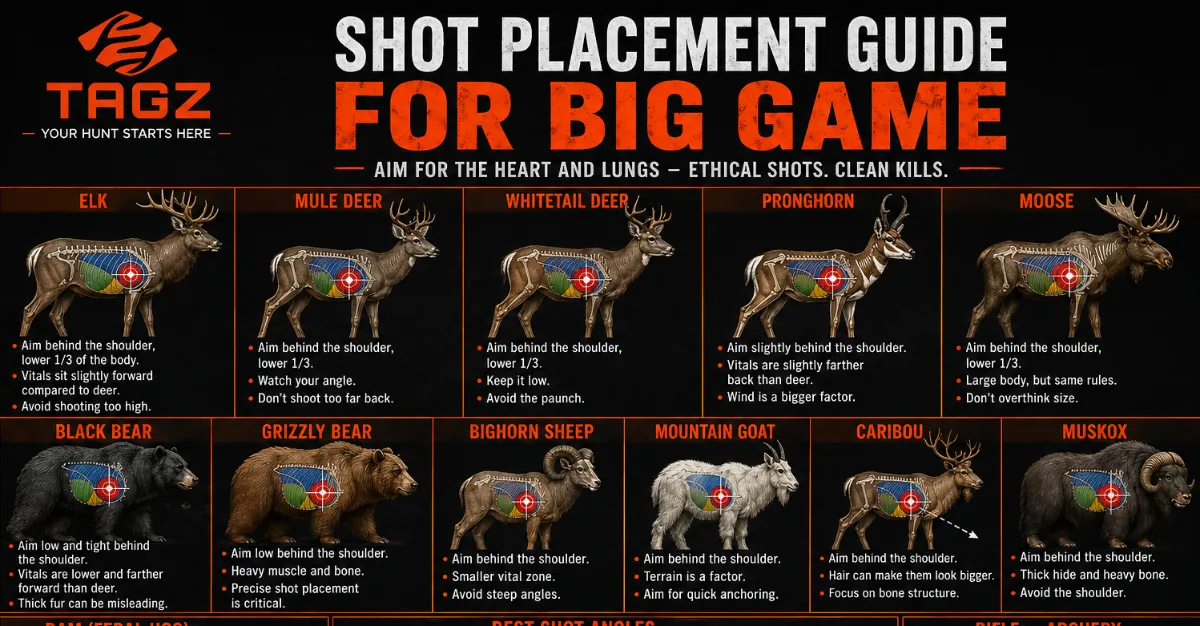
Shot placement is the one part of the hunt you can't afford to mess up. You can scout right, pick the right unit, and get into animals, but if the shot is off, the outcome goes sideways fast. Across every species the goal is the same, to put a projectile through the heart and lungs for a fast, ethical kill, and everything in this guide is built around that. The short version is simple: aim low, behind the shoulder, and don't force bad angles.
Understanding the vital zone
The vital zone is remarkably consistent across big game species. The heart sits low in the chest, tight behind the front shoulder, and the lungs sit directly above and slightly behind it, which creates a target area in the lower third of the body just behind the shoulder. That's where you aim, not the middle, not the top, and not vaguely "somewhere behind the shoulder," but low, tight, and intentional. When hunters miss the vitals it's rarely a gear issue, because most misses come from shooting too high, failing to account for angle, aiming at the animal instead of through it, or rushing the shot. The single biggest culprit is not understanding how the angle changes where you should aim.
Shot angles that actually work
Broadside is the highest-percentage shot and the one you wait for, offering full vital exposure, minimal bone interference, and clean entry and exit, so if you're unsure, hold out for it. Quartering away is often the best shot of all and where experienced hunters make clean kills, because you aim not at the near side but through the animal toward the far shoulder, producing a longer wound channel, better lung coverage, and higher recovery rates. Quartering toward is risky, since you're fighting bone and shrinking your margin for error as the shoulder closes off the vitals, so most of the time it isn't worth taking. A frontal shot is situational only, a small target with high risk that works at close range with perfect alignment but is rare enough that most hunts should skip it.
Placement by species
Although the vitals stay in the same relative spot, small differences matter. Elk are big, but their vitals sit forward and low, so aim just behind the shoulder in the lower third and avoid shooting too high or drifting too far back; elk can take a hit, but a double lung still puts them down consistently. Mule deer vitals sit slightly farther back than elk, so aim behind the shoulder and low, and watch for shooting too far back on quartering angles, keeping it on the lungs, not the gut. Whitetails are similar to mule deer but tighter in structure, so aim behind the shoulder and keep it low rather than mid-body, and don't overestimate the target. Pronghorn vitals sit slightly farther back than deer, so aim just behind the shoulder in the lower third, though here wind and distance matter more than anatomy. Moose are massive but their vitals are in the same place, so aim behind the shoulder and low and focus on structure rather than letting body mass fool you.
Bears are where a lot of hunters go wrong, because bear vitals sit lower and farther forward; on a black bear aim low and tight behind the shoulder, and avoid the common errors of shooting too high because of fur or aiming too far back. Grizzlies follow the same principles with even less room for error, so aim low behind the shoulder and respect the heavy bone and muscle that make placement critical. Bighorn sheep are thin-skinned with a smaller target, so aim directly behind the shoulder and avoid steep angles, keeping it clean and simple. Mountain goats are tougher than they look and often standing in bad terrain, so aim behind the shoulder and remember that a poorly placed shot can send them into country you can't recover them from. Caribou anatomy is similar to deer, so aim behind the shoulder and don't let their hair make them look bigger than they are. Muskox are heavily built with thick hide and bone, so aim behind the shoulder and avoid the front shoulder, because this is a precision shot, not a power shot.
Weapon choice, the real key, and where hunters go wrong
A rifle is more forgiving with angle, but you still aim for the lungs rather than bone, because placement matters more than caliber, and proven elk rounds like the 30-06, 300 Win Mag, 7mm Rem Mag, and 7 PRC all work when the bullet goes to the right place. With archery, angle matters more than anything, so quartering away is ideal and frontal or steep shots should be avoided, and your setup matters too, meaning a 60-plus pound draw weight, heavy FOC arrows, and fixed-blade broadheads, which are more consistent than mechanicals even though mechanicals can work. The real key across all of it is to think through the animal rather than aiming at the outside: ask where the shot enters, where it exits, and which organs it hits, and if you can't answer that clearly, don't shoot. Hunters go wrong by shooting too high, ignoring angles, rushing under pressure, letting excitement override judgment, and believing gear fixes bad decisions, when the real difference isn't equipment, it's discipline. Sound shot placement turns good planning into clean, ethical kills, and TAGZ helps with the planning side, draw odds, unit research, and hunt strategy, so you're set up for success long before you settle the crosshairs.
Was this article helpful?
Previous
Colorado GMU 1 Elk Hunting: A Travel-Style Guide to One of the West’s Most Coveted Units
Colorado Unit 1 is a premier, limited-entry elk unit built for hunters chasing mature bulls. With low pressure, strong habitat, and older age-class elk, it offers real trophy potential—but requires years of planning and a disciplined approach. Success comes from slowing down, hunting terrain intentionally, and capitalizing on rare opportunities when they appear.
Next
Pope & Young Scoring Simplified: How to Judge Archery Animals Without Overthinking It
Pope & Young scoring focuses on length, mass, and symmetry for archery animals. Set realistic standards and don’t overthink it.